
What’s Wrong with Liberalism?
Part One: The Problem

Wonderful and terrifying are many things, but none more so than man.
—Sophocles

By Christopher Bernard

Liberalism: The First, and the Last, Ideology


Ideas have always mattered, none more so than the ideas we assume without being fully aware of them. In company with such contemporary political thinkers as Patrick J. Deneen (whose book Why Liberalism Failed sparked this essay, though it is based on thoughts I have explored, at least peripherally, at least since the 1960s, and whose book Regime Change: Toward a Postliberal Future recently appeared), I would like to propose that, at the center of the many crises confronting the human species in the twenty-first century, lies an idea we take so much for granted it seems no more than reality itself; even more, that idea has become the foundation of our very sense of right, indeed of righteousness, whether we belong to the progressive left, the Trumpian right, or the middling center of the American political spectrum. To question it would seem not only irrational but morally wrong. It is beyond the pale for anyone to doubt it. Yet doubt it we may, and overturn it we must.

Because what drives many, if not all, of our crises – the climate emergency, collapsing biodiversity and the dangers to the global ecosystem, massive inequalities of wealth, neo-fascist political movements, the ongoing, even increasing, threats of nuclear and biological warfare, and the coming of artificial intelligence that, though it has been invented by and is entirely driven by humanity, threatens to destroy humanity – is precisely this idea. It is a political and social philosophy fully dominant in the world only since the fall of the Soviet Union, though its roots go back to the Renaissance.

This philosophy has various names, but the most popular, and the one with the longest lineage, is liberalism, at the core of which is the belief in the sovereign value of the individual over the social collective and of emancipation of the individual from all forms of non-consensual identity and obligation. In one word: the belief in freedom.

Liberalism (and its economic counterpart, capitalism) has been called by such thinkers as Alexander Dugin (another critic of liberalism) the last remaining ideology, after the destruction of fascism in the 1940s and the collapse of Soviet communism half a century later. It is also the first ideology, the fundamental matrix of ideas from which much of what we call modernity was derived. Its roots go back to the 1600s, from Francis Bacon’s positing of the goal of knowledge as power and the dominance of humanity over nature, and Thomas Hobbes’s myth of the origins of political order out of an original chaos of violent individualism.

It developed through Locke’s defense of human liberty, to the enshrining of liberal principles in the United States Constitution during the Enlightenment and the implementation of them in the capitalist economies of Europe and America through a blend of romanticized ideals and brutal realism that has come to define capitalist culture, and the flowering of liberal democracies that occurred periodically over the following two centuries.

Liberalism faced and defeated communism and fascism in the twentieth century, at the end of which it was heralded as the only possible ideology for the future of humanity; the much derided “end of history,” about which the cynics, as so often, were proven right.

Today liberalism is once again being challenged – in one of history’s many nasty ironies, its economic driver is turning against it, in the various forms of authoritarian capitalism in China, Russia, Hungary, Poland and elsewhere.

Yet even the most authoritarian forms of capitalism are premised on assumptions at the core of the liberal ethos: the emancipation of human power and the sovereignty of humanity over nature. Humanity comes first: the world, the universe itself (or, to use a simpler word, nature), is a resource for human consumption and liberation – and nothing more. Or, when nature proposes itself as our ontological equal, even our master, setting limits to the human will to mastery – and, after all (a fact we like to forget), nature created us – at that point it becomes our enemy.

The result has been two and a half centuries of prosperity – a creation of wealth and an assertion of power – such as humankind has never seen, and hardly dared to dream, except by megalomaniac emperors and delirious poets. And we now know its dark result: our success is in danger of causing our own dethroning by forms of artificial intelligence that may come to dominate and even eliminate us, or an even more ignominious extinction as we poison the one planet we know can sustain life, with the waste products of our success: we are in danger of drowning (as my late partner often predicted) in our own faeces.

In another of history’s lessons in irony, two of the doctrines that define liberalism – equality and liberty – have led to their very opposites: levels of inequality never seen in history and a sense that we are locked into a destiny from which we cannot escape, whether it is the climate catastrophe or the dominance of humanity by AI, the rising of the oceans or the sixth great extinction. Never has it become clearer that your liberty is my tyranny and your success my destruction – and we are locked in a combat neither of us can win.

*

How did this horrific, and, frankly, insane, outcome happen? I believe I can speak for most of my readers when I claim that none of us would have deliberately planned such an outcome simply as a result of living as we wanted. Even the greediest or most power-hungry or most frantically celebrity-seeking are not actually suicidal in my experience – though some are, clearly, psychopathic and would be doing themselves and the rest of us a service if they could be persuaded to undergo even the most interminable of therapies or secured in a humane mental institution.

The short answer is that liberalism made a bet – and lost. That bet was on the essential rationality of human beings (a bet, curiously, that the last liberals still standing, economists, still make, though with increasing desperation): that, if human beings are ensured equality of opportunity and liberty of thought, expression, and action, they will work out a set of arrangements for living together that will lead to the greatest happiness of the greatest number – in the kindest of liberal dreams, for everyone.

Liberals also convinced themselves that human evil – human selfishness, both of the individual and of the group, and the hatred and fear that result – is not radical or existential; that it is a result of faulty social and political arrangements and therefore can be corrected by the same means. And so what was important was getting those arrangements and the rules governing them right; with that, and an emphasis on liberty and equality as described above, society can only improve over time in its goal of decreasing human suffering and increasing happiness.

Liberalism is in many ways a beautiful, endearing, and almost childishly optimistic political philosophy and, as such, has much to recommend it. If there ever was a faith-based philosophy, it is liberalism. It makes many a religion look cynically materialistic. And there is in fact a great deal of human evil that can be neutralized through social and political reorganization. Liberal democracy, for example, has been far better than autocracy when it comes to stimulating human flourishing and decreasing human suffering, at least over that last two and a half centuries. There has been real progress – anyone who doubts it need only be shown the gigantic strides made in agriculture and medicine. If feeding humanity and curing and healing illnesses and injuries are in any sense good, then there is more good in our time than ever before.

Yet there is a problem here, as Plato’s Socrates pointed out: the fact we have saved more lives or made it easier to feed ourselves might have made it as much easier for human evil to prosper as human good. A man who almost died young from smallpox grew up to become a genocidal tyrant. A woman who almost died in childbirth or spent her life working the fields as a peasant later became a serial murderer, leaving behind a cemetery in her backyard.

Liberalism refuses to believe in the centrality of evil in human beings – and by “evil” I mean the delight in destruction, in death, for its own sake. Liberals believe, or pretend to believe, that evil is ancillary to human nature, an aberration, a sickness, or caused by crude political or social arrangements, and that it will disappear of its own accord when we get social and political organization right.

Yet a central problem of liberalism is that, however much it claims to respect science – and in particular, biology, sociology, and psychology – it is dedicated to an understanding of human beings that has long been obsolete. And dedicated liberals refuse to accept this. They insist on believing that human beings, as a group, can be counted on to respect facts and reason, and they see society as an arrangement of individuals whose only obligation is to empower them to live according to their personal choices and create their own sovereign identities, and let them work out their relations between each other consciously, deliberately, contractually – and, to use a controversial term that has become increasingly yfashionable, transactionally.

And this theory of humanity can work well – under limited conditions: namely, during periods of widely shared prosperity. Once the prosperity is over, liberal assumptions, and the promises they promote, collapse, and liberalism is in danger of being replaced by its evil twin and successor: fascism, the political revenge of the losers of liberalism and its economic driver, capitalism. Liberalism and its failures led to fascism in the early twentieth century, and they are leading toward similar political responses today, in the early twenty-first; indeed, many parallels between the two periods are uncanny.

It is easy to forget that the fascism of the twentieth century also was a democratic ideology: it was democracy against liberalism. And this is proof, if proof is still needed, that democracy is not, and never has been, inherently liberal. There is nothing in democracy that guarantees the rights of individuals. It is not unusual for democracies even to vote themselves out of existence, as nearly happened in the first democracy, Athens, and later in Rome: it was just this catastrophe that Brutus and his co-conspirators tried to stop when they assassinated Julius Caesar. But history has not been kind to them: rather than admiring Brutus as the tragic hero he was, many of us pity the dead Caesar.

This terrible consequence of democracy happened recently in Tunisia, where the “Arab spring” of 2010 began, and where it has now ended in a very bitter winter.

Liberalism (and capitalism) also made another bet: that nature would provide an infinite supply of resources to satisfy human wants. And then there was the presumption that human wants could be satisfied.

Tragically for our species, these bets and presumptions have gone wrong. Human beings are not driven primarily by reason and facts; we are drive by passion: greed, lust, hatred, fear. Nature does not have enough resources to satisfy eight billion humans – and human desires, in any case, cannot be completely satisfied; they are forever driven beyond every conceivable limit because they are essentially imaginary and have little bearing in the limited world of matter and energy whose final law is entropy. Humans are limited and mortal creatures with unlimited minds: we wish for three things that we can clearly conceive, imagine, and desire but that material reality cannot provide: we want to live forever, we want to be young forever, and we want to love and be loved forever. We cannot have any of these things, and therefore, we invent fantasies that will give them to us, if we are virtuous or believing, after we are dead; or, bitterly and resentfully, we “accept reality” and go after substitutes – money, power, sex, fame. But these substitutes cannot satisfy us. And the material world, which can supply only these things, and only for the few, cannot satisfy us.

But that is all that liberalism can promise. It tolerates all religions because, at heart, though it pretends to respect them, at heart it respects none of them. Liberalism sets us up for hope but leaves us with despair; it promises life but leaves us with death. Kind-hearted as it is, when approached for solutions to the human condition, all it can offer us is the same beautiful but empty illusions.

Capitalism, liberalism’s economic avatar, must grow or die. We now know that economic growth is the key threat to our physical survival on earth. Once growth becomes impossible, or exiguous in the extreme, capitalism will die a natural death. Unfortunately, it may take humanity with it, because capitalism is essentially amoral in its relentless pursuit of self-interest. The political and legal supporters of capitalism created the corporation and later (in the United States) named it a legal person, although it is nothing more than an imaginary entity with legal rights; it now drives much of the world’s economy even though it can, theoretically, succeed even if all human beings die in the process. The combination of the invention of artificial intelligence with the making of corporations legal persons makes AI’s conquest of humanity an almost inevitable outcome.

Liberalism made another bet it appears to be losing: that there is a necessary link between liberalism, capitalism, and democracy. But, as already mentioned, capitalism no longer needs liberal democracy; in fact, it has long feared democracy and only partnered with it in the decades-long conflict with communism. Liberalism has been the basis of the increasing democratization of such capitalist countries as the United States; after the bond between liberalism and capitalism is broken, it may only be a matter of time before both liberalism and democracy go the way of fascism and communism, leaving behind what one might call “neo-feudal capitalism” before the possibilities of economic growth reach the limit of earth’s resources, and the most irresistible of forces meets the most immovable of objects.

So, what is the way out of liberalism and the preconceptions on which it is based, while retaining the real good liberalism helped grow and flourish? No one wants to return to any form of authoritarianism – except of course the authoritarians! No one wants to lose the hope of freedom and the decency of equality excepts for the monsters we have unwittingly bred. So, how can we root out the preconceptions of liberalism that have created the dilemmas we are facing, and build a new understanding of the world in which humanity must live, of the role of life in the world, the role of humanity in the ecosystem of life on Earth – and the role of the individual within humanity?

Prometheus and Pandora

The preconceptions of liberalism are deeply embedded in Western and now in world culture: they are rooted in medieval scholastic philosophy, in particular the nominalism of William of Occam (as noted by the controversial Russian political philosopher Alexander Dugin), the materialism of Democritus, and, ultimately, Aristotle’s philosophical responses to Plato. Liberalism continued to grow with the Enlightenment and the industrial revolution to display the nature of human choice and the power of human will when coupled with an empirical investigation of the world in the sciences and the practice of instrumental reason in modern technology.

The result is that liberalism freed human powers as never before. Liberalism became the Modern Prometheus (as Mary Shelley subtitled her prescient romance Frankenstein). But it also let free the evils of humanity, in the doctrines of Bernard Mandeville’s notorious “Fable of the Bees” and Adam Smith’s doctrine of the invisible hand – and liberalism incautiously opened Pandora’s box.

It is an open question which of these will prevail, the heroes of Prometheus or the evils of Pandora. If the evils do, there will be no future for us of any kind. Or perhaps they will be locked in a stalemate until Earth’s limits are met and put a halt to the pathological growth of capitalism, causing the death of capitalism and its liberal ethos, if not worse for humankind.

In any case, whatever triumphs have been achieved by Prometheus’s heroes, once Pandora’s box has been opened, it is exceedingly difficult to force the evils back in again. In many cases, the heroic triumphs have become the evils.

Item 1: Liberalism has displayed definitively that our social, political, and cultural relations can be changed by deliberate acts of will. Once we realize that, it is impossible to see social relations of any kind as sacrosanct and unchangeable, even if that were the best attitude to have for most human beings in most times and places.

Item 2: Liberalism has shown that our relations with nature can also be changed by acts of human will. This has the same effect: we can no longer see nature as sacred – that is, until we find a boundary in nature we dare not cross without threatening our own survival. This today may finally have happened, with the multiple threats to the global ecosystem caused by our own acts: it is not too far-fetched to see nature as taking revenge on the hubris of one of her creations.

Item 3: Liberalism takes pride in its attack on the sacred in any form whatsoever. Everything must be secularized – which often means reduced to its smallest material roots. Only the lowest common denominator has intellectual respect: the quark, the string, the drives of selfishness, sex, aggression, fear. Contempt has become a driver of understanding, and reverence is ritually abused. The spiritual result is nihilism, just as the political result is fascism. And the philosophical result is the professionalized, weaponized sophistry of postmodernism when reason takes its final revenge: against itself.

Item 4: The faith that liberalism has cultivated in the scientific investigation of the world has undermined, not only that humans have a significant role to play in the universe, but even the belief that we are fundamentally rational beings: we now know we are not entirely in control of our own wills, let alone our emotions or even our perception of the world – even intelligence is only a web of illusions some of which have better practical impact than others. In fact, we may discover we are in principle unable to understand the world as it is, given the mysteries of quantum reality at the subatomic level and of dark matter and dark energy at the level of the universe, possibly even a multiverse that exists along dimensions we can only guess but never directly perceive. Physics and psychology may have boxed us into a corner from which there is no way out but the blind babblings of a character in a play by Beckett.

We have gained an inordinate power over our world and yet, at the same time, or so it seems, an incapacity to understand ourselves, the world, or even what we are doing. The tragedy of our kind looms as the tragedy of life on earth.

One answer to our plight has been a reassertion of Platonism, which, in the west, has been a typical response to Aristotelian excesses: the modern form can be found in the fundamentalisms of Christianity and Islam and the renaissance of religion across the globe, though this “cure” is in many ways worse than the disease, an anti-Renaissance attempting to resurrect pre-modernity, just as the Renaissance sought (though with more salutary results) to resurrect antiquity.

Another answer has been an attempt to found a political philosophy on the philosophy of Heidegger in a continuing attempt to undermine the supremacy of the sciences.

Many of us are desperate for a master, be it a religious leader or a philosopher, and what better master than someone whose obscurities can mean whatever one wishes them to mean, and whose lack of integrity, intellectual and otherwise, has made postmodernists from Derrida and Foucault to Žižek and Butler possible? Heidegger is a sophist of unreason. That his philosophy did not shield him from the seductions of Nazism should have placed him under permanent suspicion. But as Cicero said long ago, there is no belief so bizarre it has not been held by some philosopher. He would have known how to judge modern philosophy. His laughter rings down the centuries, liberating in its strangely hopeful skepticism. Here was a philosopher who knew not to take himself too seriously.

We will not soon know for certain how a post-liberal world will function before liberalism collapses. And we already see the outline of the collapse in the crises cited. An actuarial table was recently published that gave the likelihood of humanity surviving by the end of the next century if the current crises facing it are not solved: the likelihood, according to the table, is five percent. The global civilization based on liberal and capitalist principles will likely have collapsed long before then.

But just as an individual’s life results largely from choices, so is the life of a society, a nation, and a civilization.
_____

Christopher Bernard is a novelist, poet and critic as well as essayist. His most recent book, The Socialist’s Garden of Verses, won a PEN Oakland Josephine Miles Award in 2021. He is also a founder and co-editor of the webzine Caveat Lector.
Category Archives: CHAOS
Poetry from Mesfakus Salahin
Likes Just Likes

I like just counting the words of your letter.
I like to hear one thing again and again 'I love you and only you, my dear.
Forgive me for delaying my return home for a few days'.

You hide your love story in every letter. Why is it easy to run out of letters because the time is short?

You will write letters to me with all the water in the sea. The day that I do not cut does not cut and cut.

I haven't let you know how much I love you. I like just counting the words of your letter. I like to hear one thing again and again.

What is the scent that fills the soul with the passion of love? One day you will come as a hero at the end of the liberation war.

Maybe I won't be there that day, there will be love. The hope is that the country will be independent one day.

I don't want to accept your love before the country

I like just counting the words of your letter I like to hear one thing again and again 'I love you and only you my love."

Forgive me for delaying my visit.
Poetry from Chuck Taylor
The Velvet Lady, 1995


Topless bars, I’ve always loved them since they

first showed up on the urban scene. If I

could get over the blank looks on the dancers’

faces, if I could get over how many of

the working strippers that I’ve known relied

on heroin or speed to keep going,

I might spend half my life in this dim place.

How would you like to take off your clothes

in front of strangers, how would you care for

all those cruel cutting remarks the drunken

men shout up, if it was you dancing by

a pole? I’ve seen guys bring their girlfriends on

dates, as if they’re out to convert them to

lesbians.  I never spend a pile of

money. The mafia fuckers who run

these joints got men to park the car for you.

I park for free down the street. They charge you

when you go in, they charge you heavy for

the drinks. I like to watch the cash move in

the place, how it’s put in a dancer’s G-string,

or set on a tray. Always there’s a guy going

up and down these steps on the side to the

locked office high above the main floor where

there’s windows to watch what’s going on down

below, plus protection from a hold-up.

Gals come up to you and ask if they can

sit at your table; for more they cuddle

on your lap. My former stepson works here.

Jay spins the tunes. Jay calls the gals on his

shift his “stable.” If they don’t share some of

the tips they get, he’ll put crappy tracks on

that makes then fumble their strip-dance steps.

On the PA Jay makes constant tired

jokes about married men that cannot get

love at home. Jay sounds as bored as he is.

He’s married though his wife left. I did get

talking to one waitress. I’d stop often.

One time she pulled to the side her spandex

shirt and flashed a breast. I don’t know why I

liked it. In the genes? I’ve seen plenty of

breasts, but her daring made me feel good, shall

I say freer? A salaried man craves a

taste of freedom. She will put her hand on

your shoulder for a moment when she brings

a drink, or when you’re talking.  I know it’s

a trick to up her tips. The magic in

her cynical touch touches me. I used

to be a magician before I went

to work in an insurance office. She

hopes to create an act so I share

with her a few illusions she might use.

I want to think she cares for me. She is

raising a child by herself. I could be

of help, but I know it’s all an act. These

men at the club are so crazy lonely,

they’ll blow a week of pay on some babe that

sits on their lap nearly naked. Zombie

eyes should tell them she’s sealed her heart away.

They’re so pathetic, I’m pathetic too.

The dream of sex is a dream of freedom,

Around this place the dream seems to enslave.
Visiting Mom In San Angelo, Texas

Steam has swollen shut her motel door.

I stand outside in the cold pushing. The door breaks free in a Velcro sound.

My mother’s got four pots of water steaming on her little stove. I’m feeling heroic, the princely son rescuing his mother from the dungeon damp motel.

She’s eating on her bed a can of sardines using a plastic spoon. I’ve driven through many cold miles of semi-desert for her birthday.

She used to like to read Victorian novels, so I’ve brought a Charles Dickens in large print, wrapped in what I see now is Christmas paper covered with green trees.

“Opps!” I say,” at least the paper’s festive”.

“I only watch sports on TV,” she says. Mother claims to love to live alone. I’m starting to think it’s true. Twenty-five years she hasn’t tried again to kill herself.

I think mom’s pleased I’ve come, asking me to bring her Saltine crackers from a top shelf.

“See if you can fix that running toilette.”
Poetry from Grant Guy
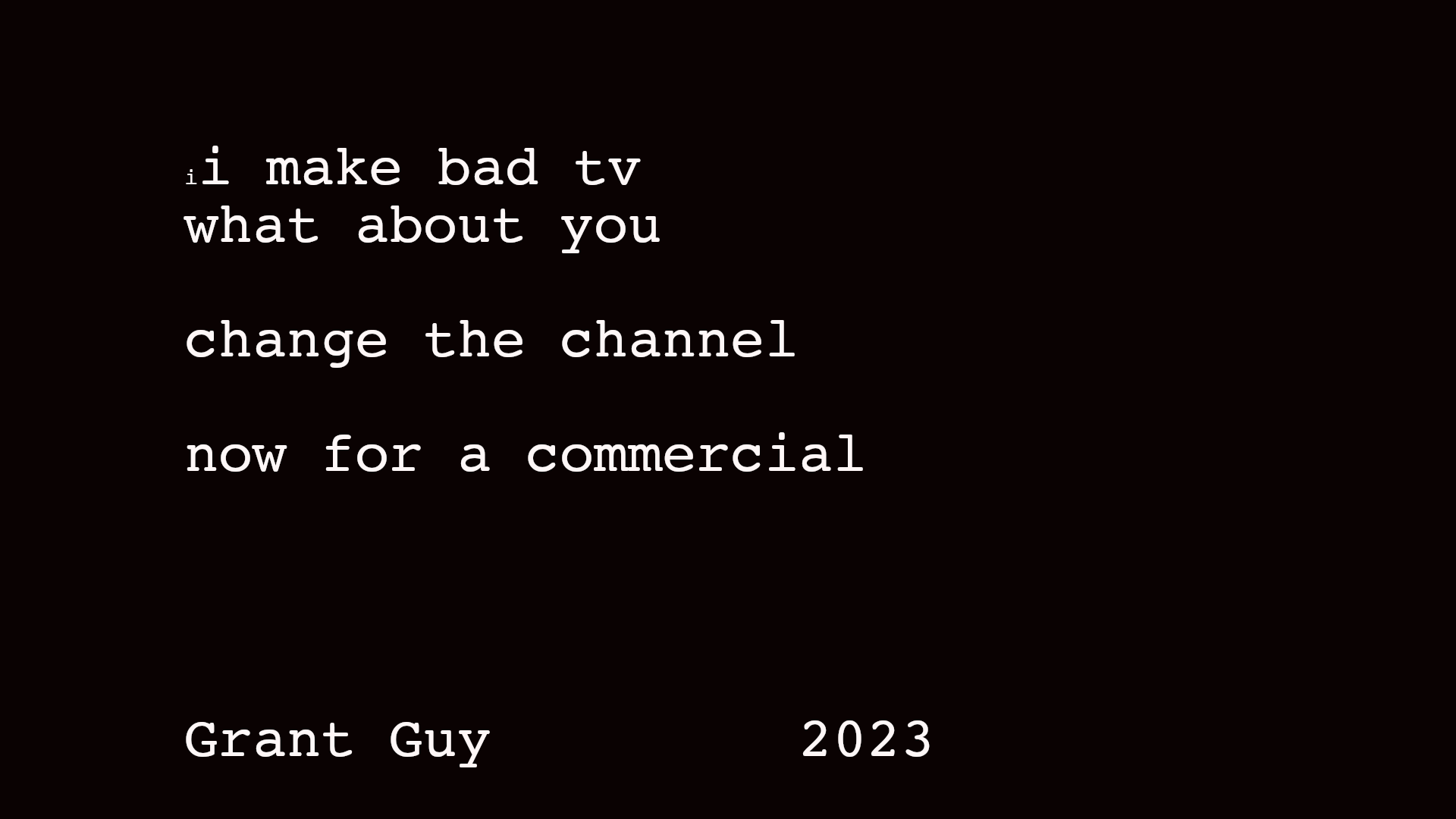
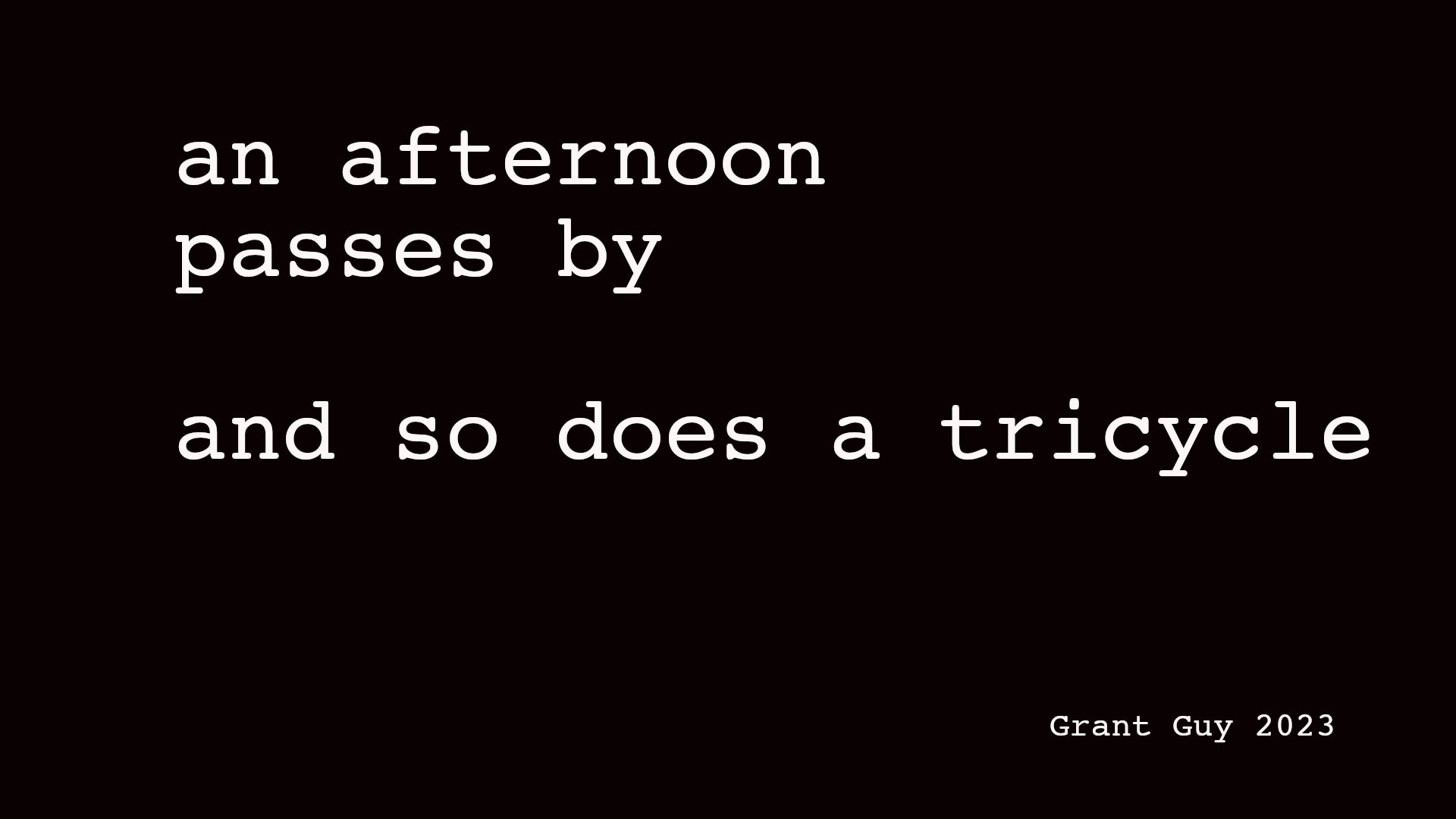


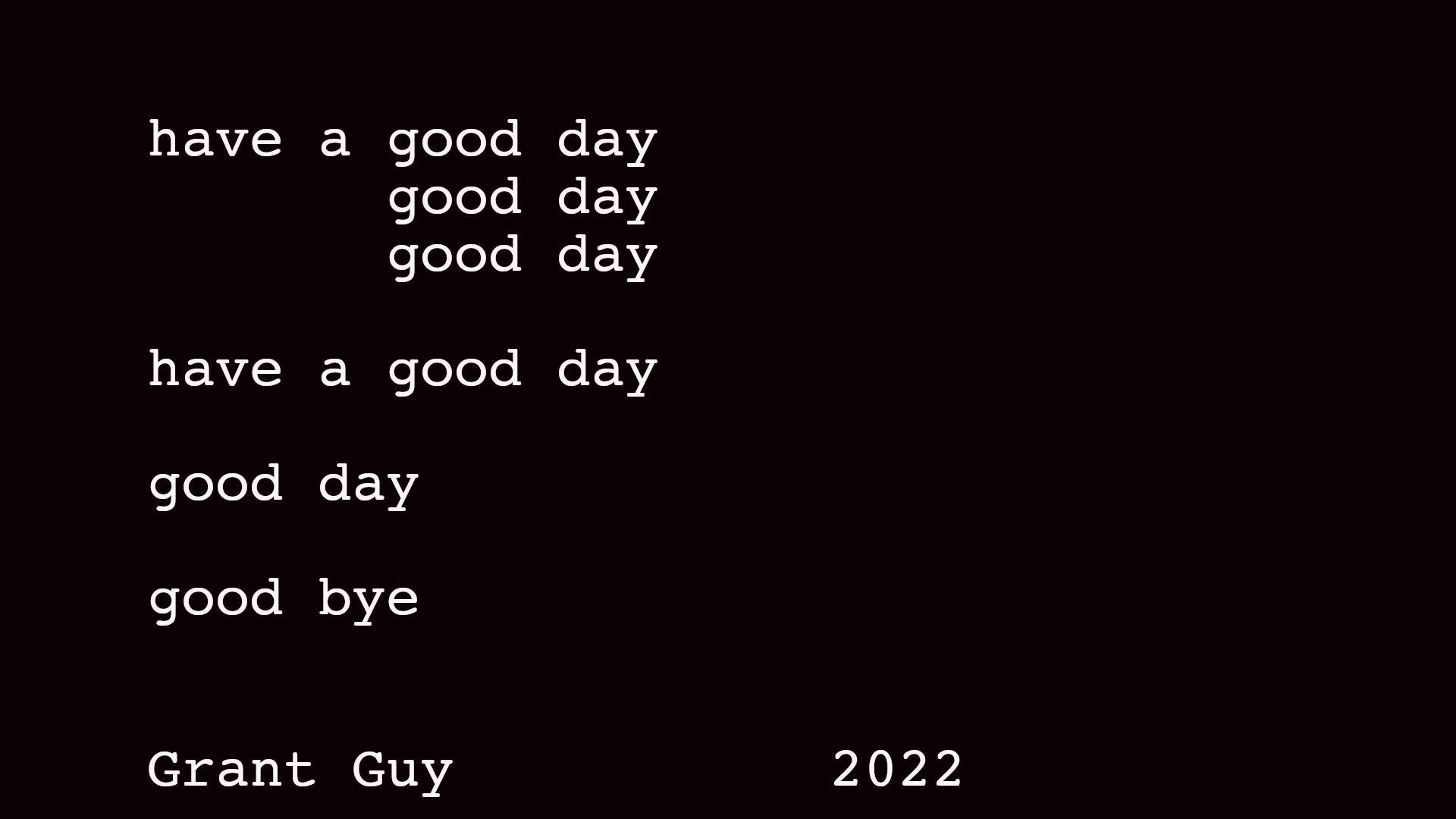
Grant Guy is a Winnipeg, Canada, theatremaker and poet. He has 6 books published and his poems and satories have been published internationally online and as hard copy.He was the 2004 recipient of the Manitoba Arts Council’s Award of Distinction and the 2015 Winnipeg Arts Council’Making A Difference Reward.
Essay from Ziyoda Khikmatillaeva
THE PSYCHOLOGICAL EFFECTS OF MUSIC ON THE UPBRINGING OF CHILDREN

Ziyoda Khikmatillaeva
Vocal teacher,
Children’s music and art school No 24,
Yashnabad district, Tashkent.
Annotation: This article discusses the psychological effects of music on people’s and children’s mind and its benefits, the recommendations of psychologists and the views of scholars in this field.

At the online meeting held on March 19, 2019 under the chairmanship of the President of the Republic of Uzbekistan, Shavkat Mirziyoev, "Five initiatives related to youth" were announced. It is not coincidence that the first of these five initiatives is aimed at increasing the interest of young people in music, art and other types of art. Currently, our government are taking advanced measures aimed at the development of music and art. At the initiative of the President, several music and art schools are provided with musical instruments, basic and sport equipments. These efforts are definitely a product of attention paid to the young.

President Sh.Mirziyoev claims that "We consider it our first priority to improve the act of all stages of the education and training system based on the current requirements."
In this regard, we should say that in the past centuries, our ancestors also paid special attention to music. We can mention many of our Eastern scholars, such as Abu Nasr Farabi, Abu Ali ibn Sina, and al-Khorazmi as an example. These scholars are considered as the founders of Eastern music theory. Especially Abu Ali ibn Sina emphasized and discussed music in his several medical treatises. He highly promoted music in his treatment method. He described music as "a great power that heals the human psyche. "

Moreover, he treated his patients who has mental disorders with music. Many psychologists have determined a person's psyche based on which genre of music one listens most. Not only in the East, but also in Europe all aspects of music oversaw rapid development in the 15th and 16th centuries. If we look at the life and work of many musicians who lived and worked in those times, we can observe that their psychology was totally different from each other. This is clearly visible in their works. If we consider the great Austrian composer V. A. Mozart, he was very funny by nature, and this was reflected in his works. When we listen to his works, we can certainly observe a bright character.

On the contrary, if we look at the work of the great composer L.A. Beethoven, we can see that he mostly created melodies in a sad mood. It also goes back to his mental state. Music is so powerful that it can't help but affect a person's psyche. Similarly, music had a great influence on Mozart's life. It is no exaggeration to say that music was the cause of his death. As you see, music is such a force that creates mental state that it is inextricably linked with human psychology.
Nowadays, the role of music in upbringing children in all aspects is incomparable. Music has a positive effect on the minds of children who are engaged in music. By nature, such children are brought up with very sensitive taste and  sensitivity to natural phenomena. Music helps to broaden children's horizon and teaches them to understand world sciences. Anyone can listen to music, even if they are not musicians, but not everyone can understand it. Only a musician can understand the language of music. There is a big difference between listening and understanding. Understanding music is a process that is both mental and emotional.

In his  works, the great encyclopedist Abu Ali Ibn Sina spoke extensively about music and its psychological and emotional effects. Discussing the education of sophistication, he said: "In order to strengthen the tamperament of the child, it is necessary to apply two things to him. One is to gently comfort the child, and the other is to put him to sleep. They are music and lullabies, respectively. Depending on the amount of acceptance of these two, the child's talent for physical education with his body and music with his soul is formed, the first belongs to the body, and the second belongs to the soul " said the scholar.

If we talk about his opinion in this regard, Ibn Sina firstly understands music as a means of communication between people. In expressing thoughts and feelings, he considers verbal speech to be primary and balanced singing as an even more perfect stage. "If the melody is decorated with rhyme and proportion, it has a stronger effect on the soul," explains the scholar. So, in accordance with his opinion, music has a stronger effect on people spiritually than speech. In fact, this view can be an example of our opinion that music controls people's minds and soul. Ibn Sina emphasized the importance of forming different emotions in children with the help of music, and in his work "The Laws of Medicine", he emphasized the need to develop musical emotions in children from childhood.

The psychological characteristics of music was analysed in Farabi's "Big book on music", "Book on musical rhythms", Ibn Sina's "Donishnama", "Treatise on the study of music" and other works, Fakhriddin ar-Razi's encyclopedia "Treasure of knowledge" Urmawi's "Book of Periods", al-Husaini's "Laws of Music Science and Practice", Kavkabi Bukhari's "Treatise on Music", Abdurrahman Jami's "Treatise on Music", Abdulkhaq Dehlavi's "Study of Hearing Matters" and a number of other scientific works. Furthermore - "Through his performance and composition, Farabi achieved such high levels of emotional impact on the listeners that it is known that he confused people by playing music and playing melodies, sometimes he put the energetic people into a state of silence, and sometimes he put the smart ones to sleep and surprised the sly ones."

Musical feelings, first of all, expand and develop children's concepts of kindness, value and their horizon. Along with strengthening their aesthetic views on life, it helps them to understand the world in a wider scope. Of course, it is self-evident that music is an essential element for children to beautify their lifestyle and enrich their inner world. This situation is a concept mutually related to psychology, and people who are engaged in music are applying their inner skills to life consciously or unconciously.

In the work "Nightmare", Kaikovus said "...if you are musician, be happy, be cheerful, keep yourself clean all the time, let a pleasant smell come from you, be eloquent, don’t speak rudely, don't be a heavy hearted. Do not always play hard music and do not always play easy musics, because the music should not be taken in the same way, because not all people are the same, and their natures are not compatible with each other, because the people are different ". How meaningful and wise these words are. Here, views on the important role of music practice in the system of social relations are expressed as a means of strong emotional influence on music.

Generally speaking, people who are involved in music have a kind and gentle nature. They are striving for beauty, possessing a unique taste, the manners of speech decorated with a very delicate and beautiful manner. Music can make people happy, calm, make them think, give them peace of mind, wake them up and put them to sleep at the same time. We can describe music as a miracle. So, of course, in order explain the meaning of this to the young people who are currently growing up more deeply and to educate our children to have a musical taste, we must organize conditions for them to engage in and practice music and increase their interest. To achieve this, we should raise children in harmony with music from childhood and it will certainly serve as a great strength for them to find their place in society in the future.

In many countries of the world, musical education of the young generation is of national importance and is considered as an important means of personality formation. As in other types of human activity, in the art of music, attention is an important and necessary condition for the effectiveness of human activity in all sensory (emotional), intellectual (mental) and moving processes. Attention is the concentration of activity on one thing at a certain time. There are mainly two types: involuntary and voluntary attention.

But one more specific type can be distinguished - it is characterized by the fact that it comes after voluntary attention and lasts for a long time. This is a very intensive and effective mental activity, which gives high efficiency to all types of work. In the art of music, all types of musical activity are related to attention. Attention is especially important in public performance. The raised hands of the conductor before the performance, the auftact, the gestures and movements between the soloist and the accompanist - all this is called attention in musical terminology. In modern psychology, its quality features are studied in the structure of attention. This includes the stability, shift, distribution, and volume of attention. It is also possible to include distraction and disorder in this list. Attention is one of the most important components of the learning process. All great musicians have extraordinary attention. For example, Mozart was able to write music calmly even in a crowded room and when outer voices were heard.

The Polish pianist and composer I.Hoffman answered the question about the only way of working with purpose as “Concentration is the first letter of the alphabet of luck”. Whereas Russian composer and pianist N.Metner said "Before starting work, it is necessary to concentrate well and know what and how to do, then the musician will be less tired and exausted ". I.Hoffman claimed "Work is successful only when it is done with full mental concentration".

However, "it should be remembered that the quantitative aspect of training becomes meaningful only when it is combined with the qualitative aspect". Mindfulness puts an end to the question of how long concentration should work. I.Hoffman recommended taking a break every half hour and never working for an hour or two without a break. L.Barenboim proposed exercises for improving concentration for musicians. S.Stanislavsky said that an artist's focus can be improved even without special exercises, if he is as attentive and disciplined as possible in his daily work, understands and responsibly approaches his professional work.

Moreover, all musicians emphasized that the ability to hear oneself from outside is considered very important in the formation of attention. That is why the ability of a musician to control what one plays, to be able to hear oneself from outside, is considered as one of the foundations of the art of music. A musician's focus can be different: wide and narrow, late and progressive. Automation of movements helps to focus attention on one place.

One of the main activities in the art of music is music performance. Listening to a great performance, we feel pleasure, joy, inspiration, or, as the Greeks say, "catharsis" - the process of inner, spiritual purification and renewal. The performer is the link between the composer, and the listener. Differences in the art of musical performance depend on the specific nature of the musical instrument, the form of solo and public performance, the genre and form of the musical work, and, in addition, the creative individuality, professional training and skill level of the performer in the first place.

For the performer, it is essential to understand and feel the psychology of the listener, correctly understand the requirements of aesthetics and the mood of the audience, skillfully deliver the author's opinion, subjugate the audience to his will, awaken beautiful aesthetic feelings in the listener and creative mood. Perception of music by listening should be considered as the main activity in the art of music, just like writing and performing music. Moreover, without listeners, the art of music loses its meaning and ceases to exist. Listening to music and perceiving it is such a type of musical activity that it is nurtured and trained from childhood.

It is said that everyone can hear music, but not everyone can understand it. The level of perception in the process of listening to music depends on the general moral and level of musical training of the listener, and is proportional to it. A complete and deep understanding of a piece of music also indicates the skill of the composer and performer. In this way, it can be concluded that the listening process is inseparable from the listener's upbringing, individual abilities and training. Music is psychology of education and training. This branch of music psychology is based on the guidance of psychology, helps to find specific ways of working with students.

This network is inextricably linked to music pedagogy, which directs the natural characteristics and abilities of students and allows them to develop musical ability. In addition to traditional methods such as the ability to hear music, musical memory, rhythm detection, checking, in music psychology tests have been made on musical intelligence, talent, identifying abilities, studying and working on a piece, preparing for a concert performance, interaction with students and concert team, etc.

We know from history that many famous musicians feel indebted to their teachers. Professional experience has been developed, enriched and continuously passed from generation to generation. The "master-disciple" school, widespread in the East, is a vivid example of this. According to it, the "student" not only took the teacher's lessons, but also lived in his house and mastered the secrets of musical art together with family household psychology.

Then, when the student reached a certain level of maturity, he himself established a similar "school of teachers". Representatives of this school often united as a large association and held mass cultural events and other holidays. Musicology and musical educational activities are aimed at studying and promoting the art of music. Music historians, critics, theorists, promoters, and music scholars analyze, enrich, develop, and conduct cultural and educational work among the masses promoting music in clubs, parks, vacation homes, radio, television, press, and in other places. Musical performance and creativity based on a solid foundation makes art more perfect.

Musical enlightenment introduces the audience to art, masterpieces and achievements of world music culture. In the psychology of music, an important place is devoted to the study of the intellectual and thinking activity of a musicologist, as well as the psychological features of the relationship between a composer, an author, a performer, and a listener. Psychology of technical support and technical equipment of musical art. This is another type of activity without which modern music art cannot be imagined. Professionals in the field of musical arts maintenance and technical equipment should have specialized technical knowledge, as well as musical knowledge, the knowledge and skills needed to build, repair, tune, record music, and work with hearing aids and should be familiar with the post and direction of musical performances, concerts, TV and radio broadcasts.

Modern music art relies more and more on new technologies. This is a completely different psychology that is connected with the technology, creative, performing, and listening activities. Functional music psychology. We see the use of music for practical purposes in the direction called functional music. With its help, aesthetics are given to everyday household life, especially in the field of production, this kind of music ensures that the labor process is carried out at a rapid pace to increase labor efficiency.

The use of music in the work process has its own laws related to the characteristics of nervous and mental states during the working day. It is of great importance to choose music that helps to solve production problems such as establishing the necessary rhythm for the labor process, increasing work efficiency, releasing increasing fatigue. The psychology of music psychotherapy. Music used for healing is studied in music psychotherapy. For this, listening and creating music is recommended. This field of music psychology is almost unexplored in our country, because it requires serious knowledge of both medicine and music. However, we can see research in this field in the studies of Ibn Sina. The ability of music to affect human health and emotional state, the positive impact of deep musical experiences in the process of listening and playing music is an important basis for conducting scientific research in both medical and musical sciences.

In conclusion, it can be said that the results of the psychological effect of music is a necessary element for musicologists who find solutions to problems, such as the development of children's minds, how to instill music in students, to introduce and interest children in music, to concentrate while listening to music, to feel music and rhythm, to have a positive attitude towards music. The science that deals with these problems is called music psychology. We can observe that the science of music psychology is considered a very important science not only in Uzbekistan, but also in foreign countries. We believe that all of the above-mentioned definitions will help to enrich the psyche of young people and their outlook and interest in music.


References

1. Mirziyoev Sh. Ensuring the rule of law and human interests is the guarantee of the country's development and people's well-being. Tashkent – “O`zbekiston”, 2017.
2. Decree of the President of the Republlic of Uzbekistan on “Five initiatives related to youth”. – T.: 2019.
3. Yо‘ldosheva S.H. О‘zbekistonda musiqa tarbiyasi va ta’limning rivojlanishi / О‘quv qо‘llanma. – T.: “О‘qituvchi”, 1985.
4. Raximov S.R. Психолого-психологические взглyaдi Абу Али ибн Синi. – T.: “О‘qituvchi”, 1979.
5. Matyoqubov O. Og‘zaki an’anadagi professional musiqa asoslariga kirish. О‘quv qо‘llanma. -T.: “О‘qituvchi”, 1983.
6. Sharipova G.M. Tojiyeva G.T. Musiqa metodikasi. О‘quv qо‘llanma. – T. 2012.
7. Matyoqub O. Og‘zaki an’anadagi professional musiqa asoslariga kirish. О‘quv qо‘llanma. - T.: “О‘qituvchi”, 1983.
8. В.И.Петрушкин. «Музикалная психология». – M. 1997.
9. Abu Ali ibn Sino. “Tibbiyot fani qonuni”. – T.: “О‘qituvchi”, 1956-1960.
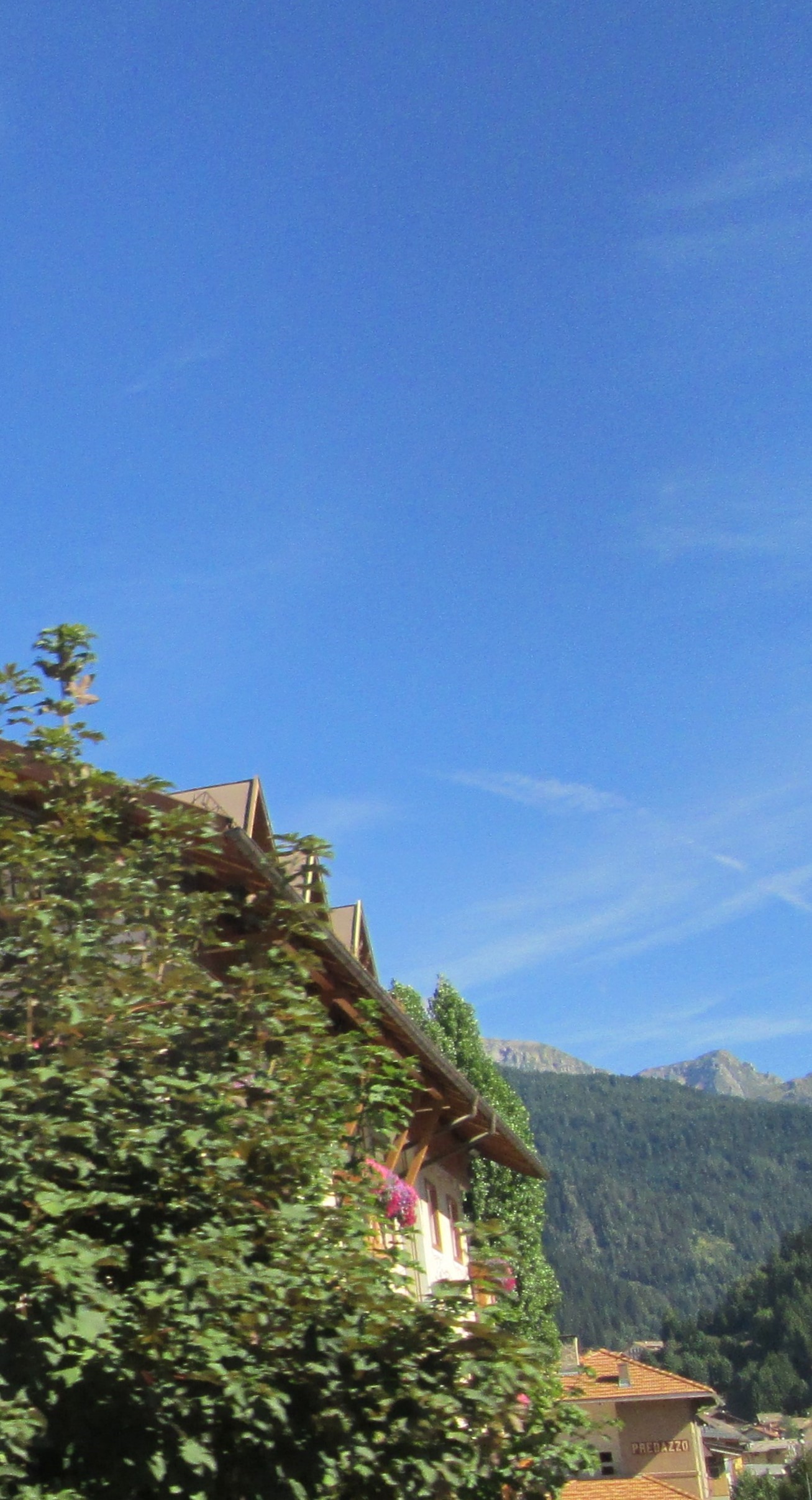
Photos from Channie Greenberg

Poetry from Sterling Warner
Nothing Like a Genie


Christine’s eyes flickered like kerosene lanterns

vacillating between vibrancy & shadows.


Her Duchenne smile warmed icy hearts during days

without flames & navigated nights without star shine.


We knew she’s among us if we deeply breathed,

inhaling Hypnotic Poison perfume oil by Christian Dior.


Christine’s combustible temper exploded without warning

yet shillyshallied like an oil lamp on a floundering whaler.


She sought public affirmation when her glimmer softened,

hanging around cafés flexing round hips like a streetwalker.


Tender evenings by firesides, telling stories on barstools sustained

Christine’s good nature, attracting suitors—repelling disparagers.


Powder Down


Blue herons alight

on the wooden pontoon

gangly long toes touch down

exert diaphanous pressure

spread the same sparse webbing

that navigated salty marshlands

only moments before the siege

took to the sky resting on a raft

long enough to stand motionless

then stab fish with switchblade beaks.


Friends and I coax conversation, skreich

kut, kut, kut-kaaaoh…kut, kut, kut-kaaaoh!

from the shoreline, distorting our arms

flapping imagined blue plumage on wings

engraving wet sand with temporal footprints.


We marvel at their behavior,

mimic feathered digitigrade skeow calls

anew—muted by restless, crashing tides,

fall face first into surging waves

attempting to emulate the flock’s

balance, poise, and equilibrium

standing peg-legged, posing

like gender neutral Bolshoi divas

locked in graceful Pirouettes, bouncing

Ballonnés and breathtaking Arabesques.


Sunday Song & Dance


Brandon wore his dancing shoes to church

each week, ready to stand when others

sat down, anxious to praise his lord

with the old soft shoe while mumbling

mantras invoking the spirits of Bo Jangles,

Rudolph Nureyev, Isadora Duncan, Gregory Hines,

& Margot Fonteyn—turning pivots, feeling

the fury of careening feet shuffling across floors

or standing on pointe, at one with a universe

cavorting in a sanctuary where parishioners

sang hymns in syncopated time, rollicking

down sacred aisles like Dorothy enroute to Oz.


Radio Daze


Hauling neighborhood kids in my crimson Radio Flyer

I misread love of a free ride as peer approval—

popularity defined by jokes, laughter & abuse.


Touching tired shoulders under sweltering Sahara

heatwaves, sweat chilling blistered cheeks,

my determined hands pulled two, three—four

siblings & their friends—as well as dogs & cats—

over concrete driveways, though granite landscapes,

pea gravel backstreets, & smooth city sidewalks.


My passengers later asked about sidewalk surfin’

donated pairs of roller skates entrusting me to perform magic

& transform them to hipsters, nailing the hard steel wheels

to crudely cut plywood…bending spikes, securing

parts of the composite idem like an expert craftsman

often eyeing my ruddy 4-wheeler on end—neglected,

gathering dust, corroding behind a hot water heater.


I willed my pitted wagon—once smooth & cherry red—

to Grandma’s garden spirit that sat on stacked fertilizer bags

& roamed her barren vegetable patches planting seeds

of encouragement as her corporal body lay six feet under.


Below waxing crescents, compressed rubber wheels

ungreased ball bearings groaned & squealed yet again,

lugging cartloads of manure enriching dry, depleted soil;

I’d glance outside bedroom windows each harvest moon

witness her apparition towing my reclaimed Radio Flyer

to the curbside crammed full of buffalo gourds, cucumbers,

squash, zucchini, warty Jarrahdale & classic orange pumpkins.


Fog


Fog signaled Biblical obscurity,

established paranormal grey zones

            where imagination found literary footing

            rooted in Zeus’s mist spread in Homer’s Iliad,

            Percival’s Holy Grail quest, Hamlet’s Elsinore Castle

            rampart; gothic characters renewed foggy tales

from Catharine and Heathcliff on the moors,

to Poe’s sweaty lampposts in The Rue Morgue.


Black and white films featured Gypsy caravans

wagon wheels cutting through grey wash

            condensation, rolling over damp cobblestones

            passing hazy painted backdrops, searching

            for body parts, lost souls, and graveyard clues,

            evaluating each mad scientist’s prognosis

hidden behind scholarly guesswork, flashing

electrodes, frosty steam pipes, pea soup clarity.


Universal Studio’s horror movies aside

Hollywood fog immortalized Jack the Ripper

            terrorizing Whitechapel’s murky streets,

            glazed over moody train station lovers, had

            Claude Raines and Humphry Bogart disappear

            into ebon veils that hung like airport vapor screens,

Casablanca dry ice melting as they anticipated

the beginning of an enduring friendship.


In the permissive 70’s, Adrienne Barbeau

enjoyed a love affair with fog, its damp caress

            featured the actress’s womanly assets to her

            best advantage, dropping like affectionate

            dew drops on her forehead lighting up brunette

            hair like a damp diadem or angelic halo;

groaning as she escaped the lighthouse with a golden crucifix

vengeful revenants returning as fog, decapitating a priest.
An award-winning author, poet, and former Evergreen Valley College English Professor, Sterling Warner’s works have appeared many literary magazines, journals, and anthologies including Danse Macabre, Trouvaille Review, Lothlórien Poetry Journal,Ekphrastic Review, andSparks of Calliope. Warner’s collections of poetry include Rags and Feathers, Without Wheels, ShadowCat, Edges, Memento Mori: A Chapbook Redux, Serpent’s Tooth, Flytraps, Cracks of Light: Pandemic Poetry & Fiction 2019-2022, Halcyon Days: Collected Fibonacci (1923)—as well as Masques: Flash Fiction & Short Stories. Presently, Warner writes, hosts/participates in “virtual” poetry readings, turns wood, and enjoys retirement in Washington.