Bare life

During the period of the spring German rains
My son and I are making a globe of cardboard  boxes
Today we have made a big one
We wrapped it with collage paper
And placed it in the middle of the studio apartment where we have lived
Mum, where is Dad, he asked
Before I glued the last
Cut colours of the Balkan.


The vignette

Dismembered atoms of my good husband
Will never have a chance to be the perfect father.
Unlike me
And my atoms which even dismembered don't abandon this skin.
In our studio apartment there is no single picture of a prevoius life
We only found pictures of grey autumn mountains in this residence
My son and I are like the walking vignettes among them
That boy Alfonse, is playing Nintendo with his father
We can hear them talking loudly and laughing
But, we comprehend only that they are laughing
Mum, why are those people laughing so loudly?
They are out of silence.
What if we borrow them?
The white clouds

I wake up with the scent of the women
Who abandoned their homes
On the thresholds they left the traces of their blood
All clothes from their children, memories on their first cry
While the sounds of the Muslim's call to prayer and church bells echoed in the background
My body is filled with memories
While the children's heads are being lost in the high grass
Of the uncut graves
This is the place where my brother fell for the first time
This is the place where my father's soul moved to the better place
At one time this was her house, says my husband while staring
At the debris I am drawing on a sheet of paper in the refugee camp
Draw the white clouds where your memories live
Says the life teacher


Emina Đelilović-Kevrić (Sarajevo, Bosnia and Herzegovina) After studying  the b/h/s (bosnian/croatian/serbian) language and literature at the Philoshopical Faculty in Zenica she got her master's degree on the subject „Memory construction in the South Slavic interlinear community: typical models of the war camp experience in literature“.  She is the author of the poetry collection „ This time without history“ and the short stories collection „ Erased lives“.  Her collection of poems „ My son and I“  is awarded by the  Publishing Foundation of Bosnia and Herzegovina in 2021. In 2022 she won the second place in the international literature competition „ Isnam Taljić“. She is the winner of the second award for the best short story of the regional literature competition "Zija Dizdarević“  2022, and she won the first place on international literature competition „Nastavi priču“. 2023. she won a third place on international poetry competition „Ossi di Seppia“ Italy.
This land, the one, you used to reside in, who do you think, gave it for free? everything free, the air, the wind, the sky, the rain, the bloom, the feeds, yet you thought, you are powerful enough to defeat me, enough to dictate everything, just because all these became a reality like de ja vu, you really think it shall be like that, how futile of you lunatic and psychotic being, invincibles yet imbeciles. so it shall be, all you have designed and dictated? Then you must be the god, the god(s) you pray tol, now the god is you, do your best to be the god or perhaps the dog. please reflect the god in you, you damn Abaddon, Abram cove, let me tell you, you are the god(s), but none shall have recognized, excepts of pious, the purity levels, is nowhere closed to the human touch, your arse-crawler, passed your levels. So please be the god now, am tired of your creative stupidity, you think you can kill me? Me of all people? Me that’s me? Me that’s you? Me is the power, the pen, you can’t know forever, for I can’t let you, please look forward and be in solace, Abyssinia.
You all, we are toxic both of us, including me, because destiny is the bad bitch, she chosen me nonetheless, the cupper, now it changes to cunning man, so you all blind cupids, open your damn useless eyes and see me, I am here, your closest at that, yet, I dare you to tempt with me.
You literalist, so stupid, coward of a being, few exceed my crunch test, I gave you all, this kind of cupboard love, but failed, majority of you does, many follows the road of destructions of ashes, I tried my best with you, I don’t care now, where you choose to be,” let the damn ship sinks” everyone shall escape or die, the death itself is brassed off, and like a brass knocker, it awaits you.
Bilatu Abdullahi is a Final year student from the department of biological sciences, Gombe state University. She was passionate about writing poetry as her hubby despite being so good in her sciences. Her dream is to bring change to her community through her pen.
Chirashi

(Note: Chirashi is a Japanese dish of raw
fish and seafood served on top of a bowl
of rice. It means “scattered.”)

A bright, cold winter day.
The memories are fresh
as the roses in the hall
though they are far away.
They’re light as leaves in autumn.
Like birds lined on a wire,
hopping wire to wire,
like notes of music, charming
as music long remembered
and forgotten even longer,
she seems now to say.

She seems now to say,
from the far edge of the table,
but her words are silent now
like music long remembered
and forgotten even longer
in the jammed restaurant’s clamor.
Her eyes are glittering
like the gleam of heated sake
in its white and tiny cup,
in the laughter, silent laughter.

There is laughter, silent laughter,
warm and silent laughter,
in the memories in the restaurant
concentrated in a cup,
in a modest porcelain cup
hardly larger than a thimble,
a little thing of matter
in the bright, cold winter day.

Between the miso and the shoyu
and wasabi with its tears,
and the sake as it lowers
in the cup and disappears,
like sashimi called chirashi
they disintegrate, dissolve,
and disperse and fly away
like a flight of birds
until there’s nothing left
but a cooling empty cup,
a demolished luncheon tray
on a table set for ghosts
and memories as they scatter
like sashimi called chirashi,
like music long remembered,
and forgotten even longer,
yet remembered even longer
on this bright, cold winter day.

				For Keiko
_____

Christopher Bernard’s third collection of poetry, The Socialist’s Garden of Verses, won a PEN Oakland Josephine Miles Award and was named one of the “Top 100 Indie Books of 2021” by Kirkus Reviews. He is a founder and co-editor of the webzine Caveat Lector.
red bull for dinner

prawn
pawn
peon


---


duck, duck, goose

wetlands
in my head


---


with me

is the dollar sign
scrambled, or


---


lake or blake

why can’t I be the borrowed
crumbs now?


---


gumbywood

eye / pro
you’ve


---


bio/graf

J. D. Nelson (b. 1971) experiments with words in his subterranean laboratory. His poems have appeared in many small press publications, worldwide, since 2002. He is the author of ten chapbooks and e-books of poetry, including *Cinderella City* (The Red Ceilings Press, 2012). Nelson’s first full-length collection is *in ghostly onehead* (Post-Asemic Press, 2022). Visit MadVerse.com for more information and links to his published work. His haiku blog is at JDNelson.net. Nelson lives in Colorado, USA.
                Keeping Busy

Something to read, something to write

Even conversations can be planned out

To take up a measure of time, and time

Needs filling. It’s a bitch the way it works.

We wake to it, know something must be

Done or the emptiness will haunt us, will

Remind us that our place in life can easily

Be filled by others. “Busy” seems like a silly

Word, something our parents and our early

Teachers would say when they’d notice us

Slacking or preoccupied with the nothingness

That naturally surrounds us. “Get to work”

Became a slogan we turned into this bit

About needing something to read or write

Something to mark the time, to eat up time

Before it eats us up and spits us out.


           Time Spent

Retired people go on vacation

Trying to remember what it’s like

To need time off

To need time away

But for them

Time off has become a constant

And time away seems odd when

There’s so little left to get away from.

Retired people vacation

Trying to forget

What all this time off

And all this time away

Are leading to.


           About Place

Home game or away

It’s all in how

You play.

Walk down a street in NYC

Let’s say

Or in Buenos Aires

Both are big apples to chew on.

Then walk down a street

Any street

In Winooski or So. Burlington

And feel the difference.

Big apples or small

It’s all in the way you play it –

Big screen or small, big stage

Or just down the hall.

It’s all in the way you walk

And talk about

Being there or anywhere.

It becomes home or away

In what we say

About it.
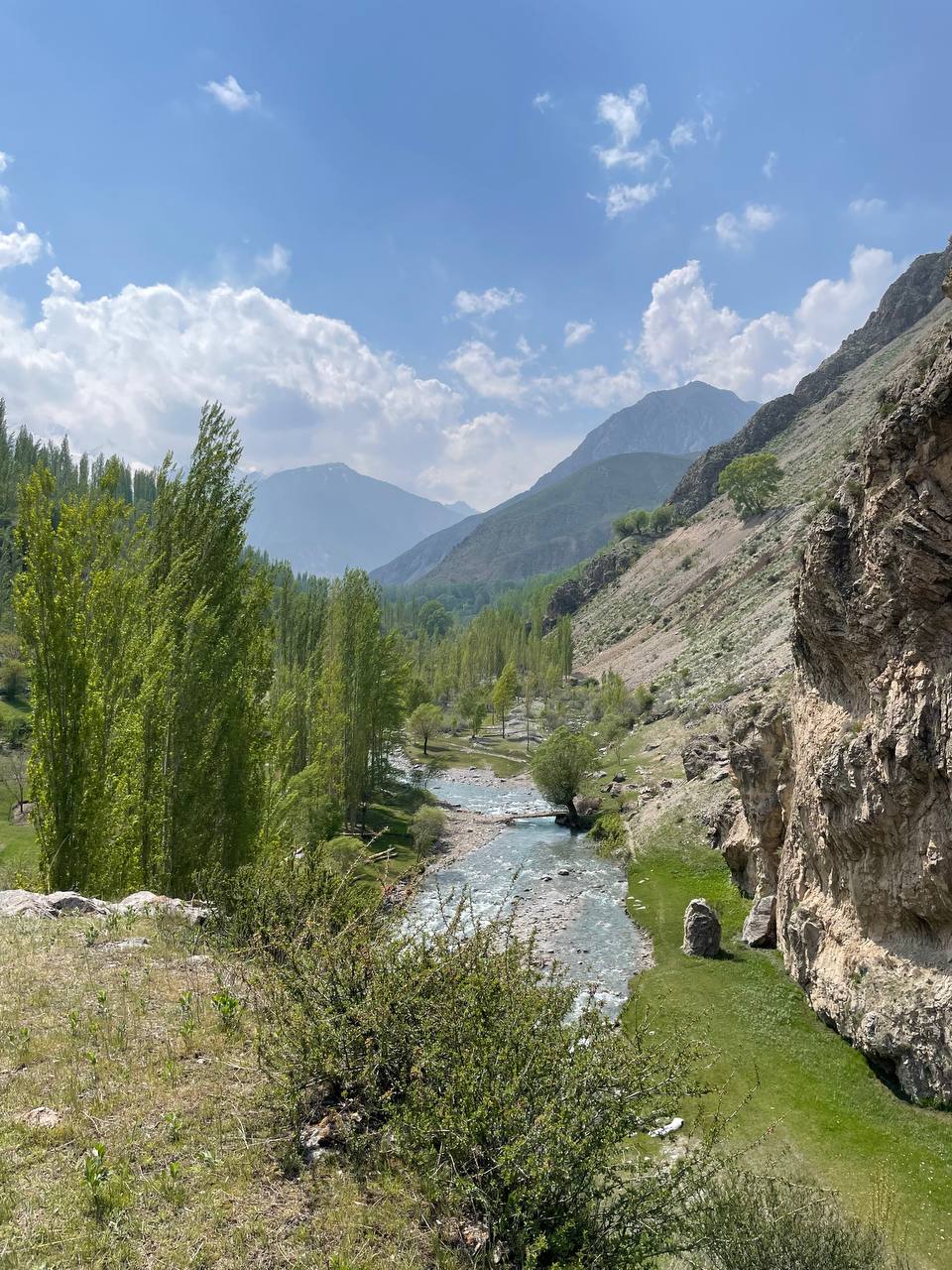
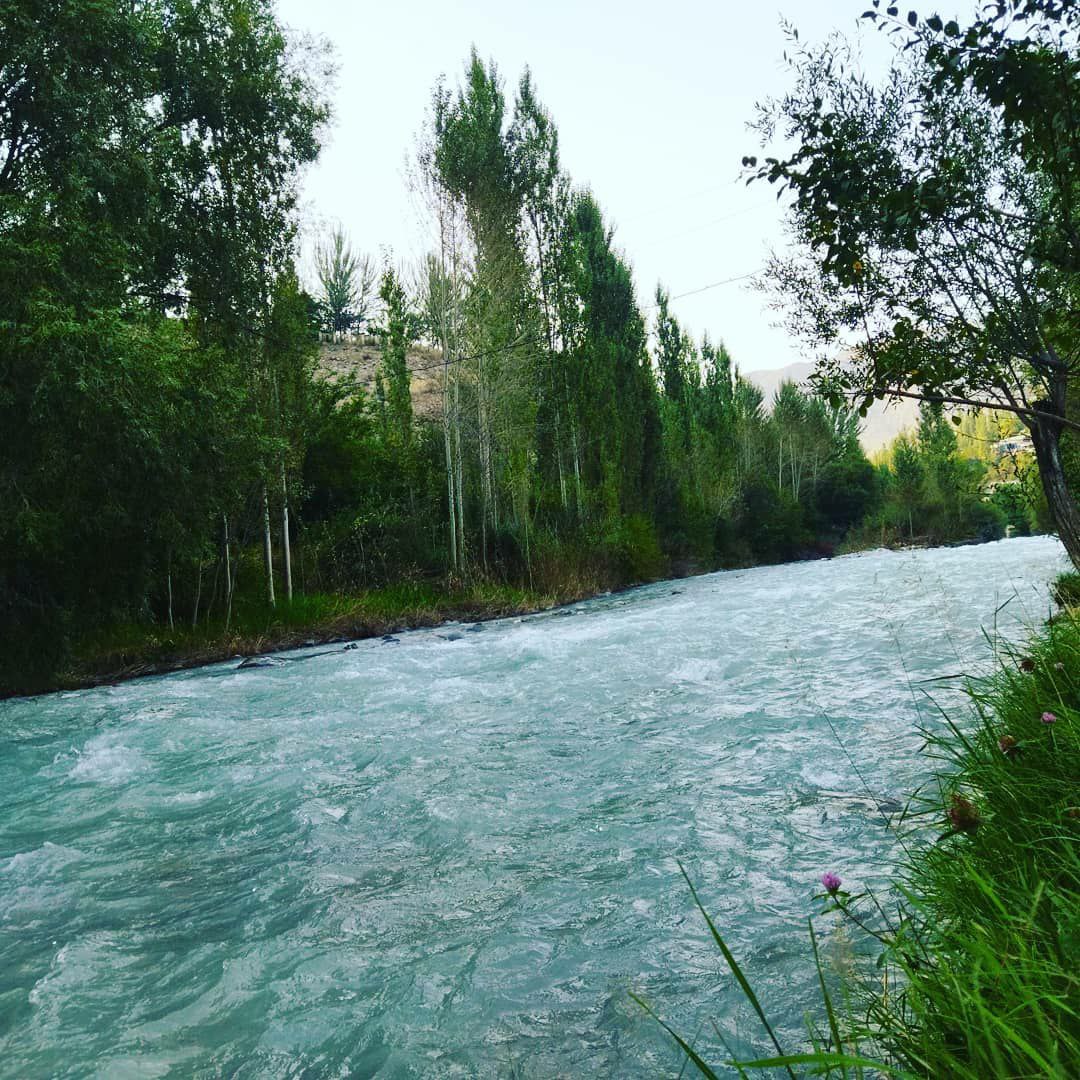
This beautiful, peaceful place, called the Switzerland of Uzbekistan, is located in Fergana district, Fergana region. I live here now. Fresh air, tall and majestic mountains like the sky, streams flowing as clear as the sky, white clouds floating over your head, in a word, a real work of art. A real view of nature that has not yet been touched by human hands. If I talk about people, they are very polite, kind, hospitable and sincere people. Let’s not forget a very big definition, the people of Shakhimardan are real hardworking people.
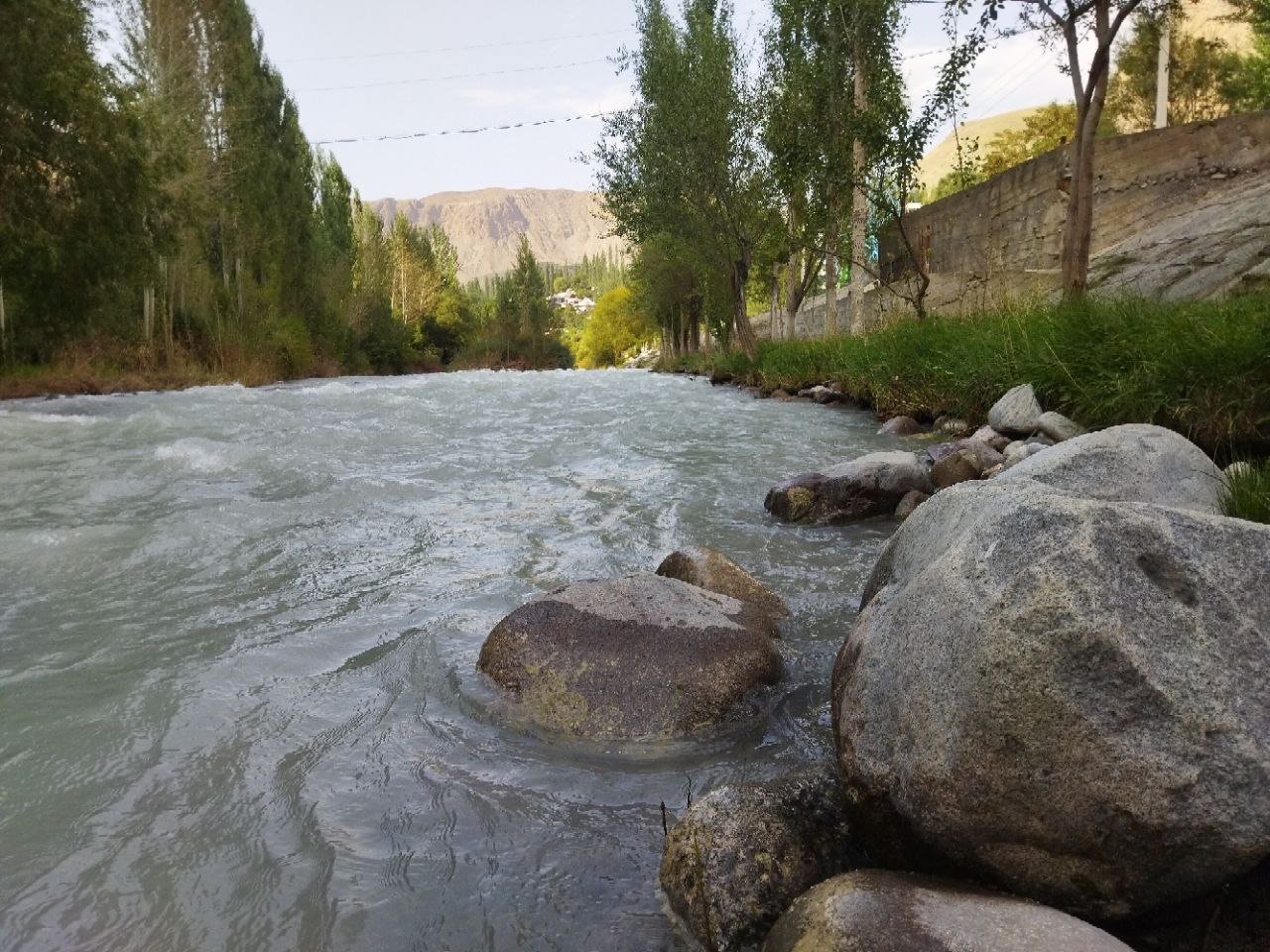
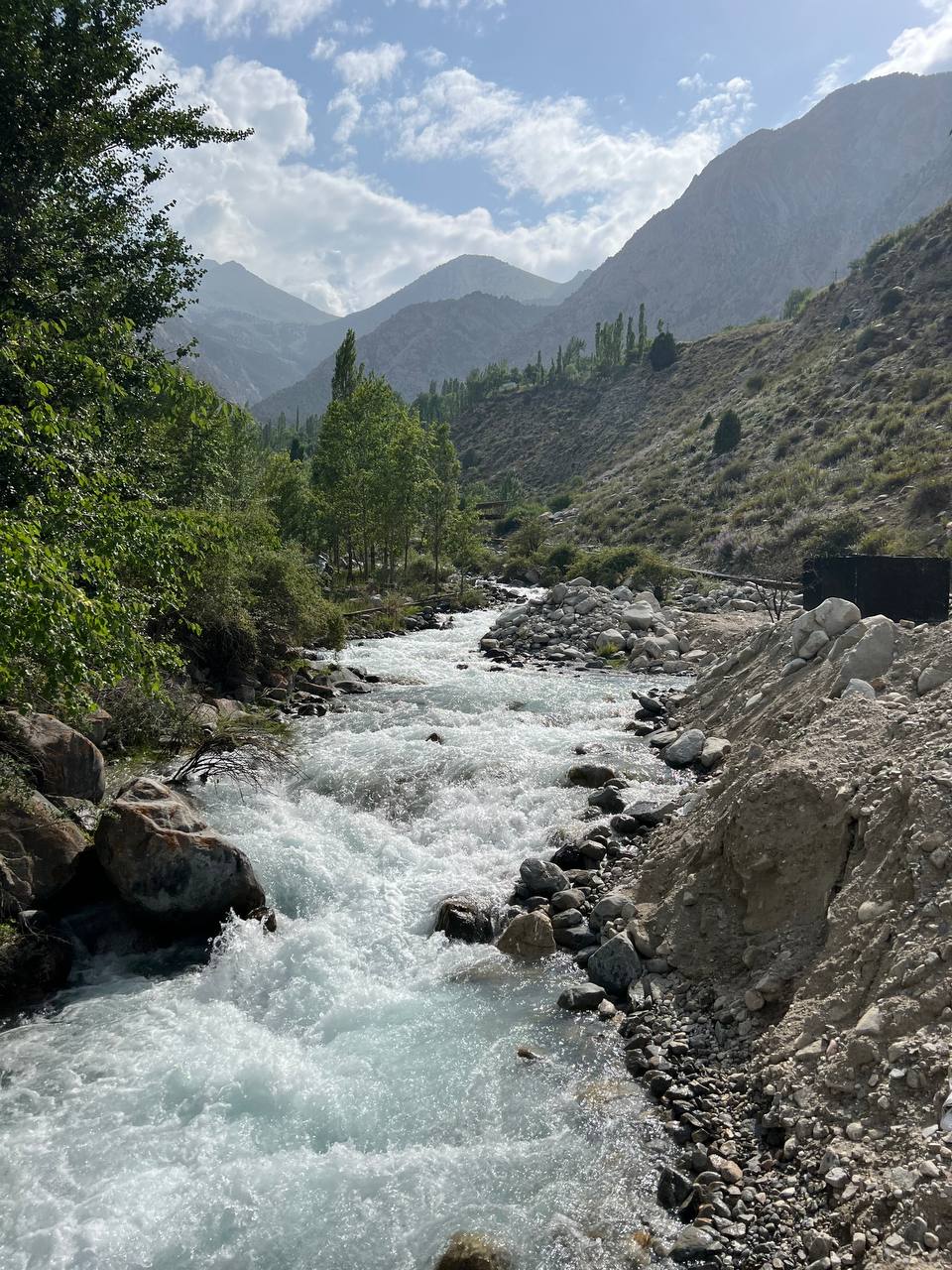
Cozy houses have been built in the lap of the high mountains. These houses are not luxurious, but they are houses with a different kind of love. Apples are ripe right now. It is obvious only to the person who eats how sweet and beautiful apples ripened in this fresh air. Shakhimardon is a real jewel of Uzbekistan. It’s hard to reach a destination. The reason is that it is possible to enter the territory of Uzbekistan after passing through the territory of neighboring Kyrgyzstan.Two streams flow through this village. One is AKSOY and one is KOKSOY. It’s the same as a twin, but one is white water and the other is dark blue water. Look what a miracle. The water flow is also great. Hitting from stone to stone, it fascinates with its noise. If you drink it, it is healing, if you wash your face, it is healing.
Regardless of the season of the year, the temperature of the water in the stream is the same as the melting of the ice. In fact, this is how the snow in the mountains of Shakhimardan melts and turns into a stream. The same snow water but two different colors in two streams. This is a masterful line of nature. Bathing in the water of this stream even in the hottest part of summer is a real feat. Ice cold water freezes your body in one go. You can have a good time on the banks of the river. I saw a lot of guests and tourists who appreciated their lives. You will not be able to fall in love with the sound of the river.
Everyone who comes to Shakhimardan will not leave without seeing the Blue Lake. This is also a real miracle. After climbing a few passes and crossing many roads, one can see the real beauty. This lake is surrounded by mountains on all four sides. It surrounds the lake like a guard that can protect it. This point helps to forget even the highest fatigue of a person in one pass. Neither sorrow nor sadness comes to mind in front of this beauty. Just enjoy watching. Places where your heart rests and your soul rests. The coolness that hits your face while sailing on the ships is relaxing. You will be relieved by shouting out loud.
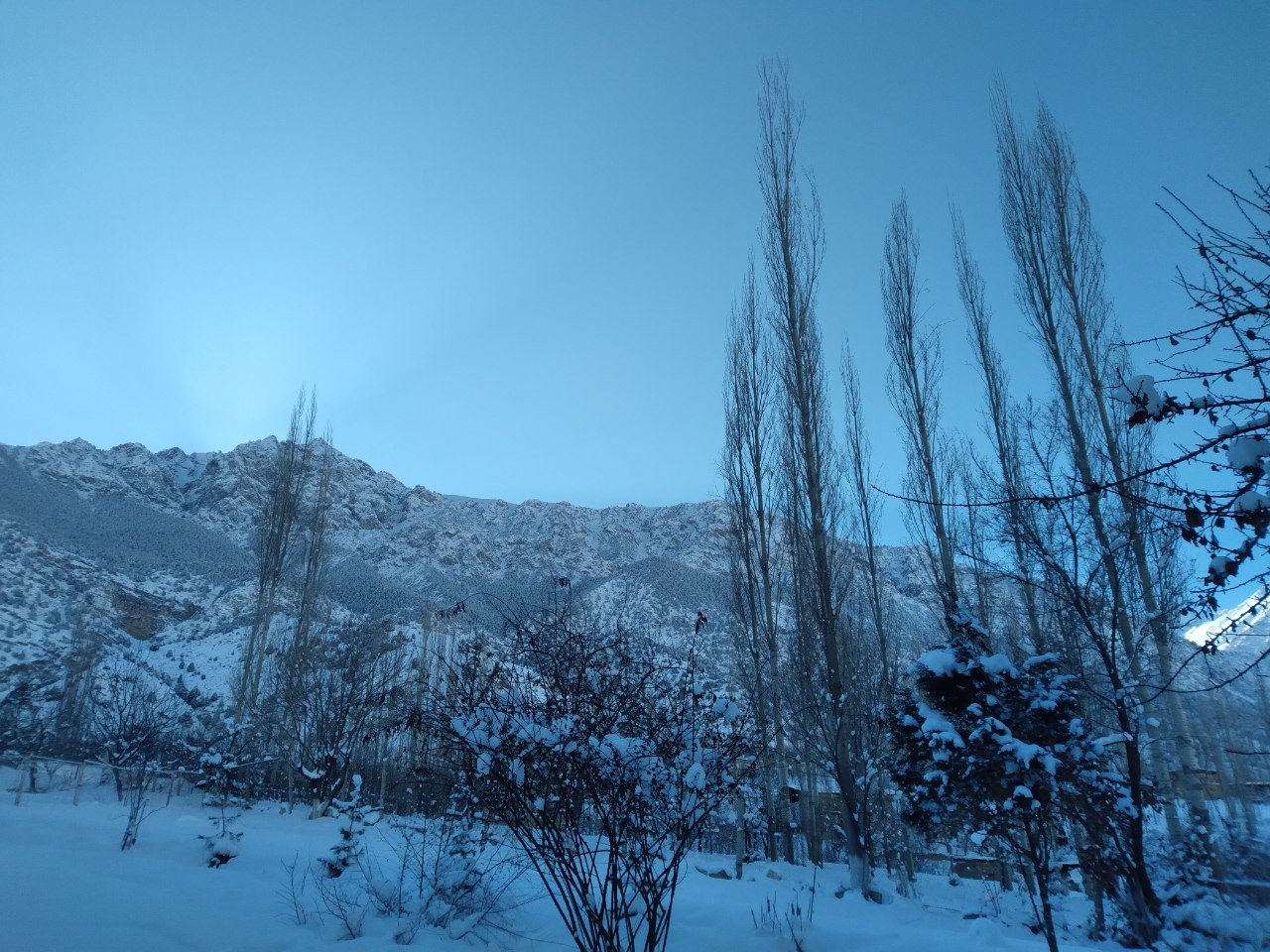
The sound of your pounding from mountain to mountain echoes very loudly. I already liked this village. There is no desire to leave, no opportunity to stay. The field of herbs here is useful herbs, and the meat of the sheep and lambs that eat them is as tasty as herbs. Fresh air is a cure, water is a cure, herbs are a cure, like a hospital where there is only cure for a person, but the doctor is nature. If you hug the trees, they won’t fit in your arms. Strong trees, as tall as the sky. Finally tall trees. Fruit trees are also tall. The soil is stony, but only rural farmers know how to grow crops.
Travel gives knowledge to a person. I became aware of our distant history from here. Several centuries ago, women covered their faces with burqas. At the time of transition from era to era, Hamza Khakimzada Niyazi came to the village of Shakhimardan and told women to throw away the burqa covering their faces on March 8. It empowers women that women also have the right to live freely. 13 women throw this Paranji in Shakhimardon and many events take place on that day. Some of the women are killed by their own husbands. There is a museum called Niyazi in Hamza Khakimza, which talks about this. This man has done many great things in our history. He opened schools to teach children to read and write. He also made a great contribution to Uzbek art. He taught women about freedom and that they too are human.
But it is a pity that this great man’s life ended in the village of Shakhimardan. The representative of our great history, who came here to share knowledge and enlightenment, was thrown into the precipice lying in the majestic mountains of Shakhimardan by a storm of stones saying, “He is leading our women astray and showing them a bad path.” will do. Shakhimardan is the place where historical Hamza Khakimzoda Niazi reached and ended. Of course, this was several centuries ago. It is a historical, beautiful and healing village.
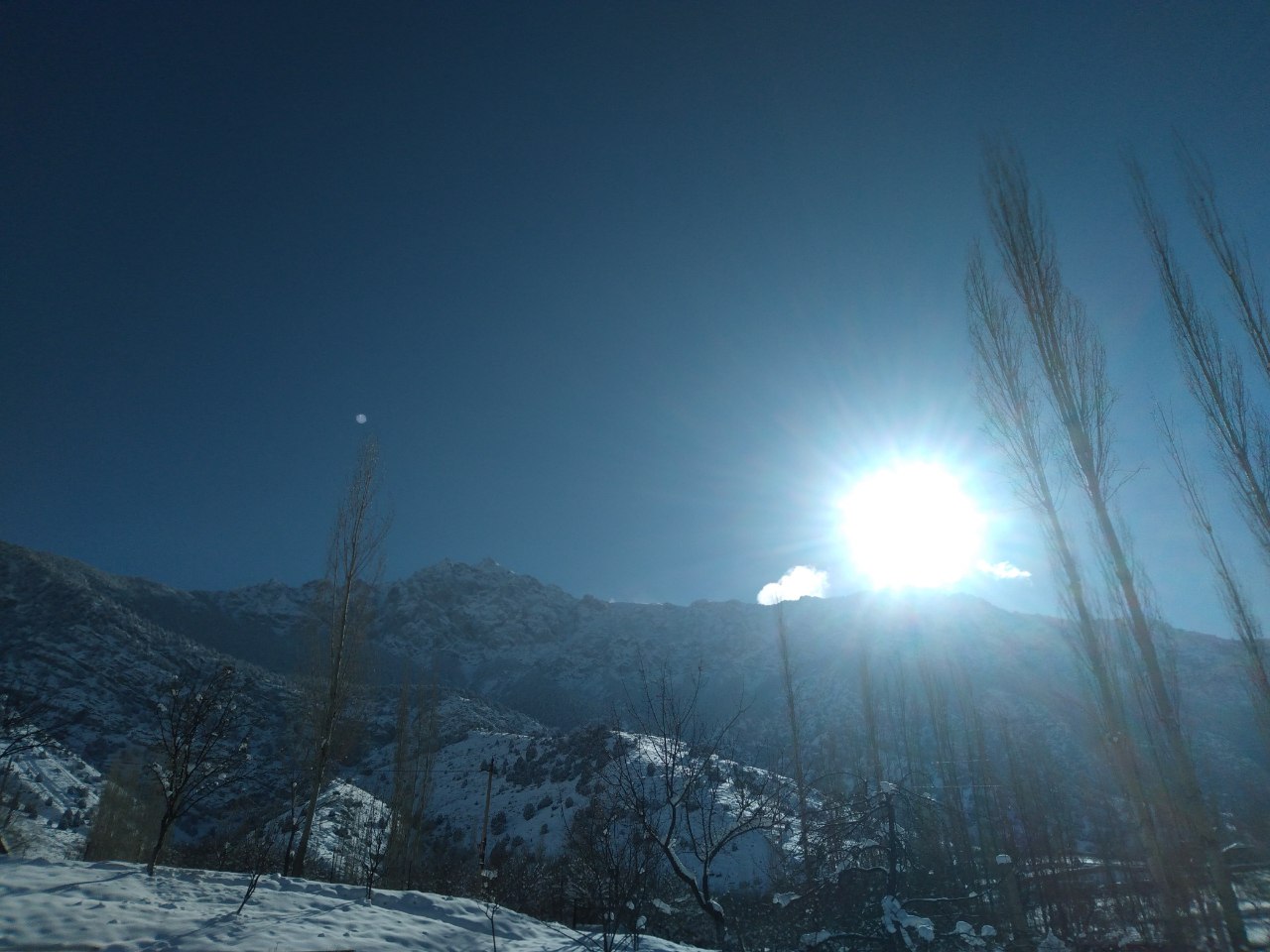
There is a place called Archa Mountain. You will go out towards the top of a high mountain, you will be accompanied by firs, in front of tall firs, a person will become a small creature. At every step, springs and flowers offer themselves to you. There are many very useful products. Cumin, cumin, deer grass, that’s all I know. But real Shakhimardan adds 10, 15 to it. The chill of summer is also wonderful. In the morning, the sun shines, and in the afternoon, a dark cloud comes and suddenly it rains and rains. It is interesting that the snow on the top of the mountain does not melt in winter and summer. We used to sing this song when I was young. He said, “The snow does not melt in the mountains of Shakhimardan. If I call him from behind, he will not look.” Many years later, I live in the village where these songs were sung. Even if I leave here, I will still miss the village of Shakhimardan for many years…