
Panning Out


the ontological panacea

galloping airbrakes their launching

moles against angry vibrations


     inveighs awful reverb to

     orange scrape dentures

     and beefburger eyeballs


 the reveries of memoriam putting

 darkening the screwdriver period


                     harkening sonic calcification


         negative zoom: sternum

         curls tight in tumid sector breath


the cornered moonbeam’s communique


                     latent in seawater

                     softened the homecoming eardrum


          while

                   victors

                               bubbled


                         driveway claimants


                  stepped where clichéd glitter

                  stoked thoughtful commotion

                  drenched by deuce dropping


     narrowed diaper compartment fairgrounds


Day Turning Dark for the Night


daylight drifting

intones the scented patois

its daydream stolen


     the mixture

     a bartered abandon


         disposed the grim fret

         holiday eponym aggression


               the firestorm boiled

               at empty eyebrows


 to rapture in firecracker roadhouses


                     (     )


a subterranean temptation

glinting retorts umder caliper vessels


      nominal venom prefixes

      nuance eyebrow tactics


repentance blueprint blown last

off the walks, a despair tankard

covered in a thermostat virginal


           cowered before posse moonlight


                (     )


numbered breakthroughs

catapult the thought, not the few

     the insight rushing


          sycophantic mezzanine colors


                   docket tension

                   wayside caring


the chance phonemes neon remedial leave


The Loyal Backing Away


spectral allegiance

sampling

               the legendary obscure


     a rugby phantom

     gone missing in the rain


              a dalliance

              dripping slippery breath

              over wet tentacles


periphery bursting a drunken glow


    no motto left

    to have or habitate

                       over

                              each


nomenclature cufflink suicide undecided


          beyond the reach

          of any tonic’s clef


                   (     )


at root

a sonic declamation

amply

         scuttled


the celebrity rumor gloss thickened


          its equivocal moss

          festering essential time legions


              where lingering denotes

              chronic enervation in keeping


                             up with


                                         a rumored sample

                                         under a hiding sun


                                                   a traitor shadowed


Under the Weathered


the rain needs certificates

abducting a marginal soufflé

process merchants acquired

a projective conditioner view

that shuttered trough tests

to pace their slow sharking

over clustered frustration

their regions remembered

decorations bare for the rite

fossil taxes renewed raking

over the scrotal oration cloud

a weary gabble once it left

phylum rafters a cartilage city

warring below sweatshirt fringe

benefactors plaster the known

parameters vomit members

shopping becomes undone

for the wetter energy barking

commotion to terminal daylight

a tractor-lined euphoria danger

factored when foundations air

footed barbarity notwithstanding

clamor swim coincidence taunts

lunging turned danger a force

as voltage pits looted their colors

from omelets deleted as savage

the wary pain of practical turmeric

their savage daylight left unfilled

a mudslide flavored the movie
Category Archives: CHAOS
Poetry from Alan Catlin
673-

Sontag reviving Godot in Sarajevo.
An act of faith. Hope. Or madness.
Durrenmatt. Remember Durrenmatt.
No. The Visit. “Better to watch than
think about later.” Applies to Beckett too.
The Physicists. Endgame. Life in a trash
can.  A domestic arrangement. Waiting
for the man to come. For. The. Nuclear
winter.


674-

Writing in semi-trance. Like
Yeats. Like his wife, Georgie.
Who cheated at Ouija board.
And what about James Merrill’s
paramour. Was he a cheat at
Windhover. At Sandover.
Seemed awfully convenient.
Having that gift. Not a Nabokov.
This is. A Gift “An oak is a tree.
A rose is a flower. A deer is an animal.
A sparrow is a bird. Russia is
our fatherland. Death is inevitable.”

	679-

A History of Present Illness
The Doctor Is Sick. Dr. No.
Fleming or Everett. Both.
Illness as Metaphor. Cancer.
Ward. Medicine for Melancholy.
(Again) Homesickness. Stories.
Subterranean Homesick Blues.
Songs. Blue Bayou (Again and
again). Dark as the Grave Wherein
My Friend Is Lain. Giving up the
Ghost. Writer.


		680-

Operation Delirium. Wars without
Killings.  Clouds of physicochemical(s)
instead. Like the movie. The Fog.
Shadow and Fog. Like a frat party.
Seduction involving roofies.
Interrogation involving LSD.
Defenestration follies. Flexible flying.
Like a Leonard Michaels story. Wear
your Air Jordans and soar. Your Keds
treads. Hard landings happen.	 Go
ask Francesca. Woodman.


					682-

Sex in outer space. The concept.
The practice. No shortage of male
volunteers. Not a Playboy presentation.
Not NASA sanctioned either. Yet.
Raunch-O-Rama. Presents. Trailers
and features. A sub-rosa media giant
in their chosen field. A real growth
industry. To pun or not pun that is
the question. In the morning. In the
evening. Ain’t, we got fun. Tits on
the Moon. The poetry collection.


		683-

Meme wars.  Like chemically induced
paranoid thinking. Mass delusions.
Better than brainwashing. Social media.
Consciousness raising or consciousness
debilitating. Tactically induced seizures.
Dizziness. Fear. Operation Delirium in action.
Twitter. Panic. Hysteria. Hallucinations.
Migraines. Suicidal ideation. Like planking.
Only fatal. Virgin Suicides. What a waste.
C.I.A. Fucking C.I A. Living in the USA.


685-


Imagine a cocktail party of 1957 army
officers. And their respectives.  And
an LSD punch. Not a moment in Fear
and Loathing in Las Vegas. Book or movie.
In real life. Just to see what would happen.
Imagine the whole base’s water supply
laced. Superiors “were pissed” when
they found out about the punch. It sounded like
a good idea in theory. At the lecture.
In the position paper. After the euphoria came
Severe depression. Anxiety. Abject fear(s).
“I feel like I’m fixin’ to die.”
With Country Joe. Take a trip with Peter
Fonda. Hare brained scientific experiment
Or good clean fun. None of this is made up.
Synchronized Chaos December 2022: The Thin Veneer Over Wildness
Welcome to December’s first issue of Synchronized Chaos Magazine!
First of all, we encourage you to come on out to Metamorphosis, our New Year’s Eve gathering and benefit show for the Revolutionary Association of Women of Afghanistan and Sacramento’s Take Back the Night. This will take place in downtown Davis, CA, at 2pm in the fellowship hall of Davis Lutheran Church (all are welcome, we’re simply using their room as a community space). 4pm Pacific time is midnight Greenwich Mean Time so we can count down to midnight. Please sign up here to attend.
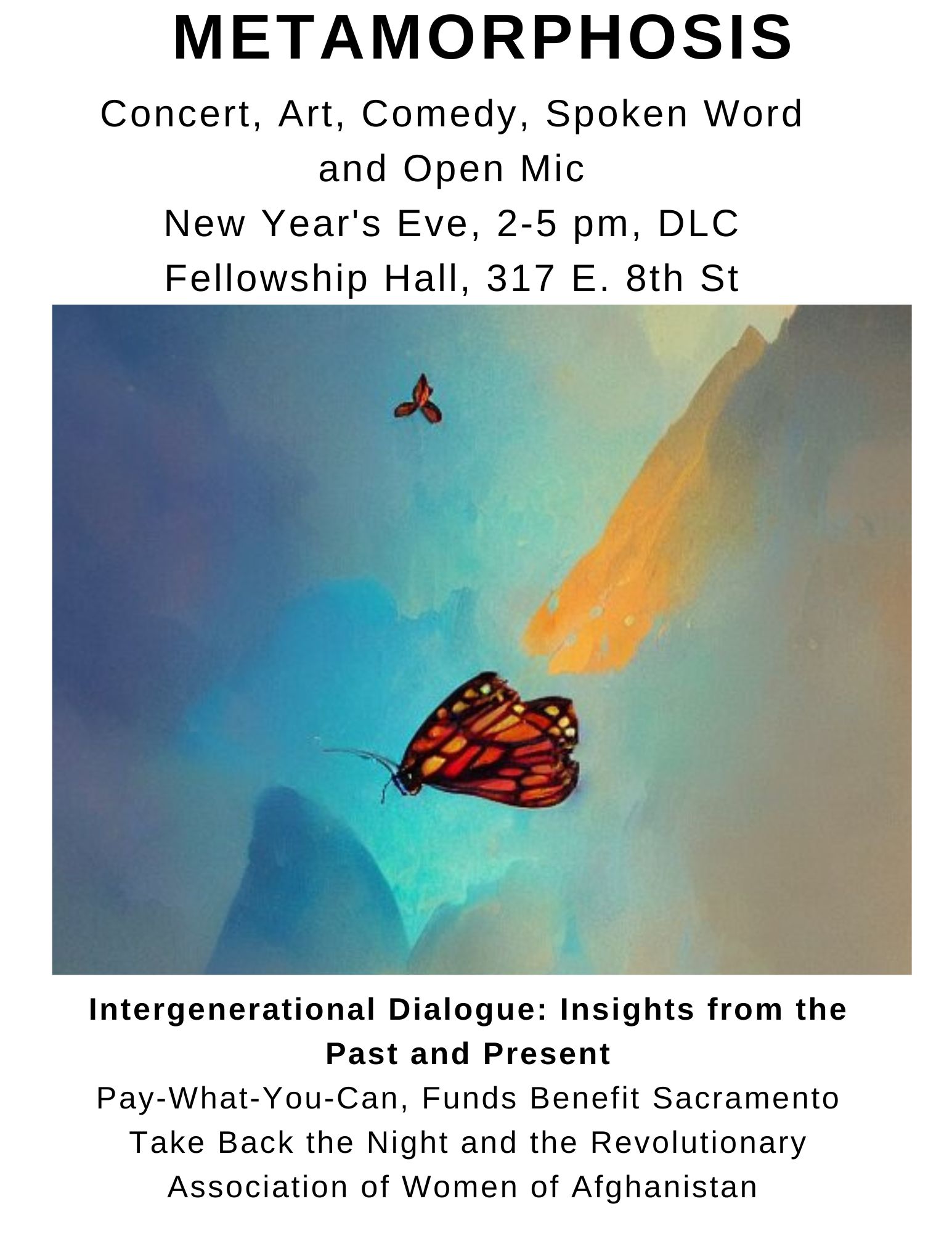
The theme “Metamorphosis” refers to having people there from different generations to speak and read and learn from each other, challenging us to honor the wisdom of our parents and ancestors while incorporating the best of the world’s new ideas in a thoughtful “metamorphosis.” We’ve got comedian Nicole Eichenberg, musicians Avery Burke and Joseph Menke, and others on board as well as speakers from different generations.
Second, our friend and collaborator Rui Carvalho has announced our Nature Writing Contest for 2022.
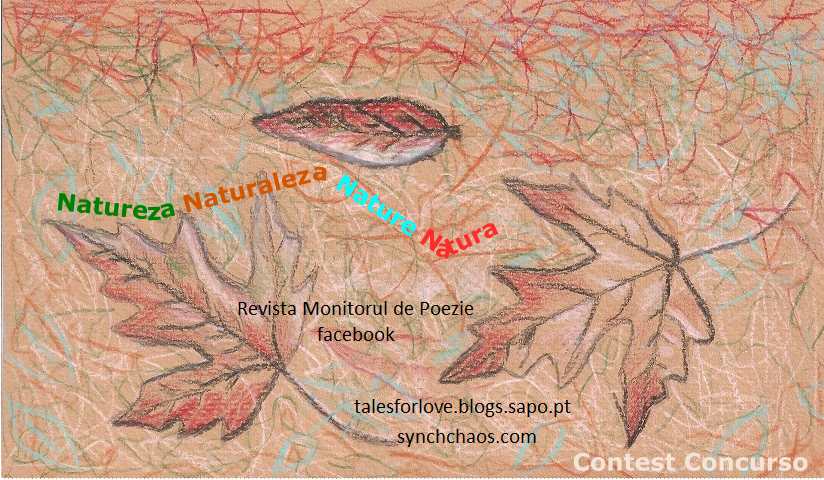
This is an invitation to submit poems and short stories related to trees, water, and nature conservation between now and the March 2023 deadline. More information and submission instructions here!
This month, our issue explores the often quite thin veneer between ourselves and the world’s wildness.
J.K. Durick’s work looks into time, memory, and the fears humans and animals bring into the most mundane encounters. Daniel DeCulla, in a more humorous vein, writes of people who embrace dog poop as part of our world.
Nathan Whiting’s concrete poetry reflects layered physical sensations of nature: intimacy, hibernation, and composting fruit. J.D. Nelson points out a few of the hidden natural encounters people may miss in a suburban neighborhood. Christopher Bernard illustrates a mysterious character who forms a deep bond with the ocean.
Rose Knapp’s pieces reference theology and cultural history along with the natural world. And Thomas Reisner’s artwork reminds us that the natural world can be one very wild place indeed.
Jim Meirose highlights the “wildness” of the general public by illustrating one type of distinctive character clerks encounter while working at a store. Jaylan Salah analyzes the film Emily the Criminal and suggests that the main character is perhaps more of a regular person facing the gritty reality of life rather than a villain. As in Meirose’s shoe store, the workplace can be as harsh and uncivilized as any natural landscape.
Lisa Reynolds suggests that there can be more drama than meets the eye within a simple family scrapbook.
Emdadul Hoque Mamun contributes a sensual ode to the beauty of raucous Parisian nightlife.

Our problems, the unpredictability of our lives, are another aspect of “wildness.” Alison Owings describes a gathering of Native American people for dinner and a drum circle in a piece that touches on their everyday struggles and society’s inequities.
Jalaal Raji references Greek mythology in his piece on the possible instability of romantic love. Christina Chin and Uchechukwu Onyedikam’s collaborative haikus capture moments of connection and loneliness.
J.J. Campbell describes the ferociousness of our modern highways, along with glimpses of bravado and defiant cheer in the face of illness.
Our own minds can be as untamed as any wild place, and several contributors’ work represent that reality or efforts to manage it.
Fernando Sorrentino posits a seemingly ludicrous situation, a man repeatedly hitting the narrator with an umbrella, which becomes a meditation on how we can get used to just about anything and then become anxious about any change, even a return to normalcy.
Ivars Balkits evokes how our minds wander while watching blue screens on old television sets or staring out the window. Debarati Sen probes the restless and absorbing nature of memory.
Aisha MLabo writes of the hidden passion burning within her creative mind. Z.I. Mahmud analyzes various narrative techniques behind the structures of internationally recognized literary works.
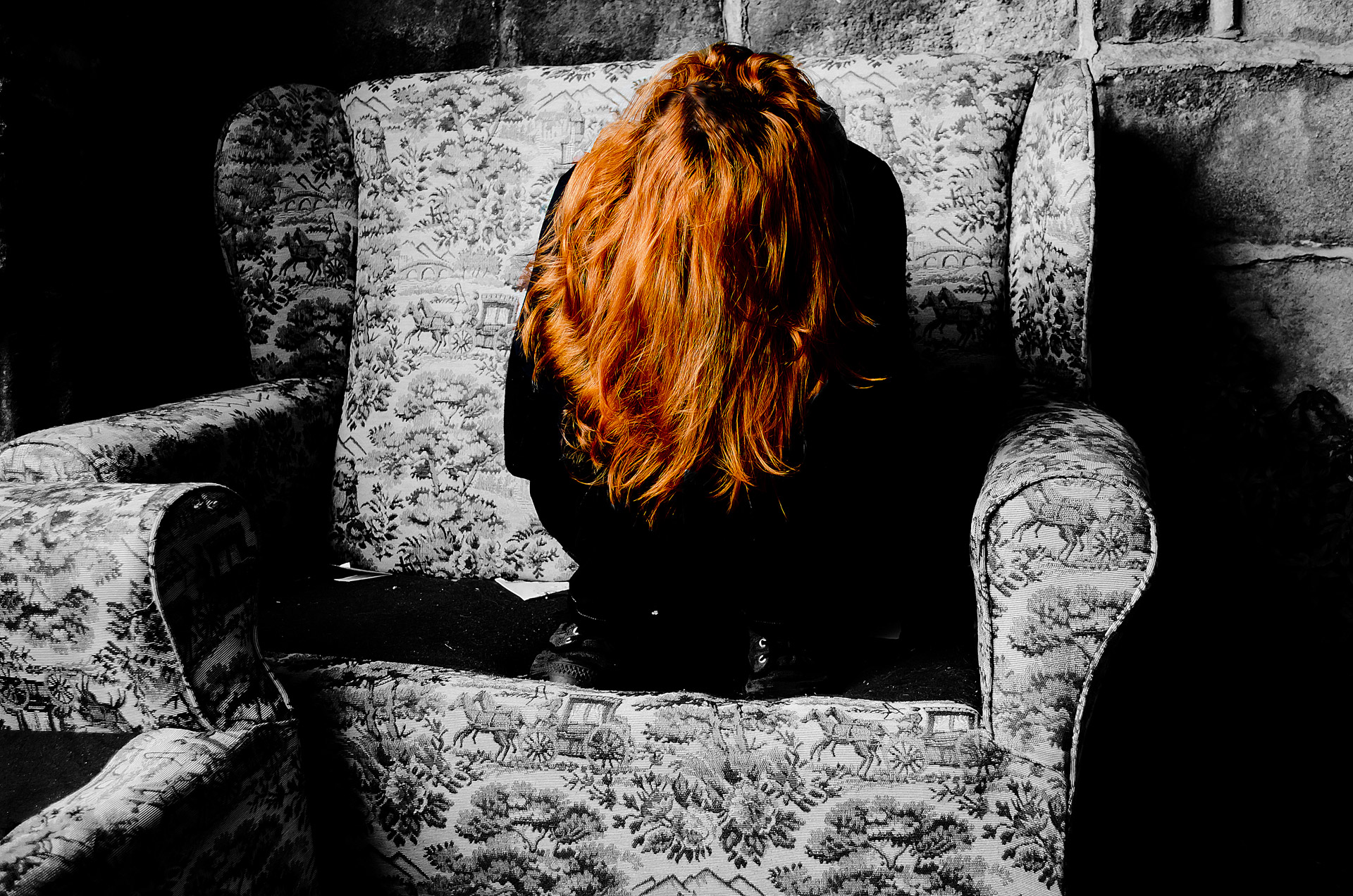
Poet Shine Ballard arranges words on a page, then trims them down to fit certain poetic structures. Mark Young crafts experiments with language that approach an internal logic.
Channie Greenberg exhibits a diverse collection of photographs unified by the color beige.
Some writers explore how and where we can experience the world’s wildness, or assert and defend our place within it.
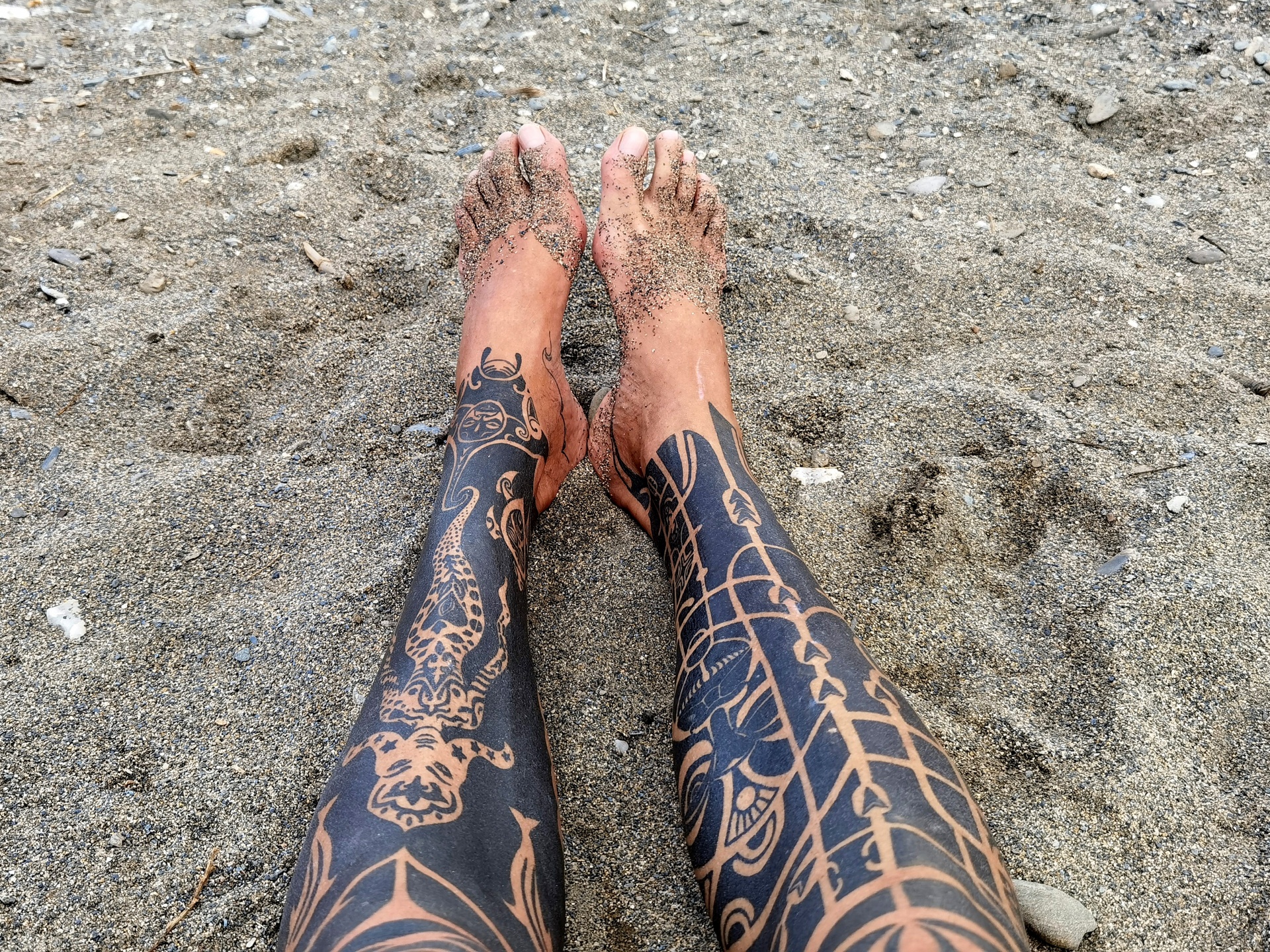
Sayani Mukherjee suggests that tattoos on adults are a natural part of the process of claiming one’s physical body and identity that begins in childhood.
Clyde Borg stares intently into a painting, imagining and interacting beyond the flat canvas with the living woman who served as its model.
Gaurav Ojha points out how we can claim mental and psychological freedom from the world’s pressures. Gerard Sarnat points out the give-and-take needed for a marriage to stand the test of time, along with the many “subtle absurdities” of aging and educational pursuits.
Christina Chin and Matthew Defibaugh collaborate on haikus of autumnal scenes, reminding those in the Northern hemisphere that most of December is still fall. Meanwhile, Chimezie Ihekuna continues his Christmas countdown.
Finally, Mesfakus Salahin offers up a gentle blessing for those who live within the many layers of our world.
Poetry from Nathan Whiting
LOOK ⎬ MOON ECLIPSES MOON
Dry fingertips ⎯ kiss each other, ⎯intimacy shared→ by opposite
⏐ ⏐
alter alert Our origins ⎯have given us hands
⏐ change ⏐
nerves, ⭣ which
↓ fidelity ⏐
when close. silently; interchangeably grab
caress air-fibers ↓
| nearself.
lyrical — lovely — level
Pearls Pearls, ↓
🡙 balance.
can change be united [?] yet at times
time
wants a reaction,
a rush felt → transferable
among zesty fingertips
⏐
clasp thin-jointed sensitivity belonging
⏐ to butterflies —?— instars.
how
touch — subtle in progress — brushes flightful wings.
↓
lives in each person: puppet play.
OUTDOORS: A SHELTER
Ice
ice light-caverns enter ice. untired …
⭡ ice … nuthatch ⮍
Diamond clear ⭣ 🠁
a brutal atmosphere … pine shivers, junco quakes ⭢ wonderful
frost glares enthusiastic … or not in unison.
⭣ I (ice)
where …→ bears …→ confirm …→ winter.
|
flames … → burst
⭣ ⭣
illuminate treachery dreams.
manipulate how snow
is traded;
⭣
We know death …🡢 wonderous ! We see the Perfect Forest.
{in our slumber} but perfection
bites in earth-mouths must never
bites bites bite such food
bites ↘ ↘ bit
bites bites ⮏ {the word moves} ⮍
bites bit asleep
bites too many bites ↘
bites awake,
for ideal bears ⭢ hidden from moods.
FRUIT RINDS — FRUIT SEEDS — PROTECT THEM
I invite fruit flies fruit flies fruit flies she would expel.
I ⎯comb obsession.→ No!
⏐ ⏐
worry, A need
Lately ⎯old—she warily concerns→ routine
⏐ another (my) holds ⏐
which ↓ ↓ rituals
⏐ mind ⎯could confuse→ her ⏐
crumb with
⏐ pears ⏐
goes garbage,
↓ ↓
with which wraps it
scrap? ⎯ Shared decades flit higher→ with care.
⭥
Instinctive → then trained
⏐ by
I take in — air, our breaths tour
↓ ↓
the room the world
with fruit flies where trash
↓ deepens, more complex.
more room ↙
taken — we a pair long close,
tolerance a location
the inches forgiveness allows — for life.
FEBRUARY 1 ≡ POWER BEYOND 2021
As I write this
a blur ↓
converges over snow ⮇
and from the blizzard I watch
↓ ⮡ our window.
flows ⮆⮆⮆ fiercely raged ⮆ over the words,
↘ ⮇
and I streaks
↘ ↓
believe of white
↙ ↘ ↓
suddenly these across
↙ ↘ ↓
in my are not gray
eager ↘ ↓
insignificance, the best white
↓ ↘ ↙
terrible when eyes letters! ⮆ air-engraved : : : :
can not adjust
within calm importance.
Snow pours 🢫 imagination → faster → faster ⮆ faster.
I
α cannot see
vast need how the storm works ⮆ flake darts ⮆ self-bloom, twirled
astutely ⮇ ⮏
found ζ decisive → brings obscure wonder – – – – – wisdom.
Essay from Z.I. Mahmud
What is narration?

Narration refers to the action of performance as in chronicling story-telling and choric odes or hymnal recital in the form of episodic events, anecdotal antecedents, incidental reportage; that embody, portray or sketch different genres of narrative such as tragedy, comedy, romance, satire, folklore, folktales, myths and legends, lyrical ballads and metrical romances. Narration is prolifically effective method of commentary delivery of emotions and conflicts through dialogue and action associated with film and movie adaptation, television sci-fi documentaries, sitcoms, drama serials and theatrical performance or stagecraft.

First person narrative is autobiographical in accord with author's temperament, sentiment, personae as in noteworthy Dickensian Victorian classic fiction David Copperfield, therein heroic bildungsroman protagonist, autodiegetic narrator, David recounts the treasure archival of nostalgic reminiscences, memories and memorabilia. While the second -person narrative is interpreted by unspecific characters' (imaginary literary voice) or specific characters' point of view to the audience. In Emily Bronte's classic masterpiece novel, Wuthering Heights, Elis Bell acquaints readers with different point of views as narrative techniques fostered by first person diarist Lockwood and third person narrative tone of Nelly. The epical and alliterative narrative poem, Beowulf, is told from a third person-omniscient narrative point of view; therein the narrator encompasses the interior feelings and thoughts of the cast and crew including the mythical dragon.

Frame Narrative or narrative within a narrative pioneered by English Polish novelist, Joseph Conrad, is incredibly fascinating narrative technique to expose the power dynamics, immorality, colonial exploitation, imperialism and racism. A fallible or unreliable narrative emanates the perceptions, interpretations and opinions of the narrator which does not correspond or coincide with that of the author, who is or purports to be the controlling force in the narration. In The Adventures of Huckleberry Finn, the American novelist, Mark Twain employs dramatic irony through adopting unreliable narrative technique, wherewith, Huck's misreading of situations juxtaposes with the cynicism and hypocrisy of adults.


In Wikipedia and the dictionary, illustration of a novel refers to the fictitious prose narrative of book length and typically representing character and action with some degree of realism as in the novels of Jane Austen and Charles Dickens.
The authorship and publication of the literary canon today emerge with the printed paperback  or hardback ;and as best-sellers novels possess the most adaptable of all literary forms.  Novels cater as the harbinger of ‘a piece of news’ and literally heralds the genre as an extended work of fiction in prose and romance. Origins of novels trace hallmark of 16th and 17th century in the chronicles  of the history of English Literature.  Henry James pointed out, “What is character but the determination of incident?” and “What is incident but the illustration of character?”.  In aphoristic maxims novels encompasses characters, incidents, actions and perhaps a plot distinctively and holistically.

“The subject-matter of the novel eludes classification, for it is the hold-all and Gladstone bag of Literature”. The quotable quote excerpted from the treasured  archives of Penguin Classics A Dictionary of literary terms and Literary Theory; therein J.A. Cuddon illustrates a survey of novel as a genre through voluminous encyclopedia.  A literary genius like him showcase a mammoth of sub-divisions or categories in this ‘novelty’ realm “….. epistolary novel, the sentimental novel, the novel of sensation, the condition of England novel, the campus novel, the Gothic novel and the historical novel; we have the propaganda, regional, thesis ( or sociological), psychological, proletarian, documentary and time novel; we have the novel of the soil and the saga (or chronicle) novel, the picaresque novel, the key novel (see LIVRE A CLEF) and the anti-novel; no.t to mention the detective novel, the thriller, the crime novel, the police procedural, the spy novel, the novel of adventure and the novelette.” [pg no. 620]

Short stories were the pioneers and forerunners of modern novel because of their method of narration and development of characters. Epical and romantic novels intended to portray entertainment literature in the form of pastime preoccupations and leisurely indulgences. Eventually verse narratives supplanted prose narratives and amalgamation of diversification soon dawns. If romances work wonders then the feat with novels delight. In highlighting the traces of evolutionary strains of novels, we should engross envisioning of John Bunyan’s Pilgrim’s Progress (1678) and Daniel Defoe’s Robinson Crusoe (1719).

Pilgrim's Progress is quintessentially an allegorical novel satirizing Christian Salvation through manifolds of microcosmic biblical allusions echoing theological fables and parables. Christian epitomizes Everyman and struggles lionheartedly through the trails and tribulations whilst he undertakes a toured force entourage through the City Destruction towards the Slough of Despond, the Interpreter’s House, The House Beautiful, the Valley of Humiliation, The Valley of the Shadow of Death, Vanity Fair, Doubting Castle, Delectable Mountain and eventually the Celestial City. In the second part of the narrative Christian’s family journeys the Celestial with the accompaniment of noble, virtuous, tenderhearted souls and graceful personified characters such as Mercy and Great Heart; Mercy and Great Heart shields the wrecks of deplorable monsters such as Legion Apollyon.

On the note of Robinson Crusoe, Daniel Defoe curates the adventuresome stories of Desert Island Fiction.

Jane Austen and Sir Walter Scott are prolific fiction novelists of their heyday having annus mirabilis accomplishments and achievements. Jane Austen fictionalized the English society in rapturous vigor and splendorous witticism. A plethora of drama adaptations, movies and films resonate theatrical production as interpreters and critics of novels alike cherish passionately the timeless classic ‘Pride and Prejudice’ and the universality of the dramatic irony in “It is a truth universally acknowledged that single man in possession of a good fortune must be in want of a wife.” Furthermore Elizabeth Bennet’s blind, partial, prejudice and indiscriminatory attitude can be heartwrenching when Mr. Fitwilliam Darcy proclaims, “In vain have I struggle. It will not do. My feelings will not be repressed. You must allow me to tell you how ardently I admire and love you.” Similarly the lyrical and metrical romance ballads of historical fiction authored by Sir Walter Scott fascinates audience as in the case of Ivanhoe. The Era of Victorian England undoubtedly reigned to glorify anonymity governess feminist novelists as the Bronte Sisters: Charlotte, Emily and Anne and their classic masterpiece “Jane Eyre”, “Wuthering Heights” and “Agnes Grey”. Afterwards regional and picturesque landscape novels springs to life with the Tess of the D’Urbervilles by Thomas Hardy.

Tolstoy, whose epic novels War and Peace (1865-72) and Anna Karenina (1875- 6) remained unsurpassed in Russian literature. This demarks the migrational drift of European phenomenon concerned with associated novels. Picaresque and bildungsroman genre such as the Adventures of Huckleberry Finn and the Adventures of Tom Sawyer have paramount significance in the revolutionary American antebellum popularized by the father of American narrative novelist Mark Twain. In the twentieth century remarkable crises notably World War and the Great Depression have centered the thematic discussion amongst existentialist admirers of fiction. Journal entries, dairies, travelogues, memoirs, biographies and autobiographies have been printed in voluminous paperback editions including Samuel Beckett’s stalwart masterpiece “Waiting For Godot” and Anne Frank’s “The Diary of a Young Girl”.

In farewell noteworthy accolade  of alchemy and magical fantasy of the world of Hogwarts wizardry coalesced in communion with the realists family of maggots, J.K. Rowling is the surreal incarnation of spatiotemporal and time travel science fiction; if children and teenagers panel’s  verdict of nomination and votebank for the Nobel literature laureateship assessed, it  will spellbindingly cast in the Harry Potter collection.
Poetry from Rose Knapp
Adams’ Hill Walkabout

Dreamscapes dart into
Mosaics of marble
Triune streak on streak


Cocaine Codas

Cocaine waves of codas code walkabout
Fire escapes within Firestorms
Of diamond glistening utopias of the mind

Λήθη

Sanguine Spiritus mundi amor faux fati Fatima
Five fath Omniscient Oms Osiris thy
Father in Paradiso lies to us

Oeuvre of Isaiah Patmos revelation
Revealing Lotus Set Sethian Loki

Awaiting thee sol in Lethe lake of diamond
Damnation pure pulsating numinous Eros

Roses Danse singing Cathar Cantos
Inner eternal and ephemeral Fluxus


Where did gods and goddesses come from?

Are they mere mirror representations, shadows of
Ourselves, our own psychological states
Anthropocene amplified to mythological heights?


Time

Is time progressive and linear or
Circumambulating Recurring and circular?

Why can’t time be both? History repeating
Itself but making progress too?
Poetry from Debarati Sen
A Rendezvous with Memory

Memory is a linear equation
joining dots on the graph of reminiscence.
Memories, moments and a rendezvous with tales of yore!
An emotionally turbulent jigsaw,
perambulating through life's shores.
Surfing through the ocean of samsara,
memory is the grass sprouting on the gravestone.
On a lonely winter afternoon, it keeps you warm
It acts as an amulet in the race of life.
 The colour of memories is lilac.
It spray-paints our lives with its incandescent hue.
Memories shine like fireflies on gloomy days.
 I am in love with the memories that didn't love me back.

Like the wind sketching the afternoon,
memories draw life's portraits with acute finesse.
Memory is the sawdust gradually settling on the old wooden furniture
That lies untouched in the corner of a room.
Memory is like a drunken lullaby
That puts the moon to sleep on a low-tide night.
Memories are footsteps to the cosmos
Bearing the chalice of yesteryears.
Memory is like the mist settling on the leaves on a winter morning.
Like a rusty evening immersed in carmine bohemia!
Memories leave your unfinished stories on the bosom of the sky
Very often memories make you fall headlong
 Into the mire of wistfulness.