Essay from Ivan Pozzoni (one of two)

Il tardomodernismo

Giorgio Linguaglossa solleva un interrogativo decisivo sul concetto di arte: «Come e dove orientare la ricerca del nuovo linguaggio poetico?». Dopo la fine dell’evo moderno e di ogni ontologia estetica modernista, decretata da Zygmunt Bauman e dalla new sociology contemporanea, ogni meta-filosofo post-modernista – come Jencks con l’architettura, Danto con l’arte o Fukuyama con la storia- ha la tentazione di irrogare la sanzione definitiva di condanna a morte dell’oggetto della sua filosofia, senza fare i conti teoretici con la lezione contenuta in La condition postmoderne e nel bellissimo misconosciuto Le postmoderne expliqué aux enfants di Jean-François Lyotard: il nucleo del post-modernismo consiste nell’ammissione della caduta di ogni «métarécits», cioè della delegittimazione delle metanarrazioni della modernità e della concezione e di «univers(o)alità». L’iper-modernismo, conscio della distinzione lyotardiana tra morte del discorso e morte del meta-discorso, resuscita l’arte e seppellisce l’everything goes di Danto: contro il post-modernismo si innalza l’iper-modernismo di Virilio, Baudrillard e Lipovetsky; contro il post-moderno si innalza l’iper-moderno di Bauman (liquid society) e Beck (risk society) [la post-modernità ha sempre mantenuto una certa vagueness confusionaria tra teoria (post-modernismo) o spazio storico (post-moderno)]. L’iper-modernismo, come ogni neo-avanguardia millenials (esempio italiano il mio neoN-avanguardismo), abbandona – come consolidato- il dibattito sull’anti-«univers(o)alismo» e si inserisce in continuità antagonistica con il modernismo, a differenza del post-modernismo, liberando i suoi missili Katjuša in direzione della delegittimazione di ogni forma di «canone» e «Tradizione», schiavo della sua vena neo-avanguardistica. Però, l’iper-modernismo, è un movimento della krisis. Chiusa la krisis, ogni avanguardia/neo-avanguardia, auto-criticandosi, si suicida artisticamente, e, finalmente entra in campo il tardomodernismo. Cos’è il tardomodernismo? Prima di tutto è, insieme, teoria e spazio storico: supera a sinistra post-modernismo e iper-modernismo dichiarando la fine definitiva dell’ontologia e il distacco totale dal modernismo, naturale o caricaturale; supera a destra post-modernità e iper-modernità, ufficializzando il trapasso dall’evo moderno all’evo tardomoderno (come ripetizione storica del trapasso tra evo antico ed evo tardoantico).

L’affermazione di Giorgio Linguaglossa è falsa: «La risposta che al momento possiamo dare è che oggi, nel 2025, non si può porre mano ad alcuna ermeneutica dell’arte a seguito della Fine della poiesis, di quella che un tempo si chiamava «arte» nel tempo della storia progressiva; oggi, nel tempo della storialità (cioè della storia non-progressiva), la fine dell’«arte» trascina con sé anche la fine della critica d’arte. E qui il discorso si chiude». Giorgio ricade nel post-modernismo di Jameson (1) e Danto, formalizzando, inavvertitamente, un’utopia della distopia, con una kitchen dystopian utopia. L’arte non è morta: è morta ogni meta-narrazione universale sull’arte, cioè ogni ermeneutica (critica) letteraria fondata sull’auto-dichiarazione d’essere un’interpretazione oggettiva dell’arte. L’artista, riunito in bund, kolektivne, assemblee aeriformi, nomadi e resilienti, metabolizzato l’errore della storiografia filosofica moderna sulla distinzione aristotelica tra ποίησις e πρᾶξις, rifiuta la nozione stessa di «poesia» o anti-«poesia» come creazione fantastica di un oggetto-linguaggio e, nel nome di una concezione pragmatics dell’oggetto-linguaggio medesimo, rilancia l’interpretazione autentica dell’artista contro ogni interpretazione soggettiva del critico letterario. La critica non è morta: è diventata interpretazione debole soggetta alla meta-critica argomentativa (Habermas) dell’artista. L’artista diventa agens (engaged poetry), da faber, organizza l’oggetto-linguaggio secondo i suoi fini, sostituisce l’ermeneutica con la praxeologia, si appropria del fare arte (discorso), del dire arte (meta-discorso) e del contra-dire arte (mega-meta-discorso), acquisendo il ruolo di artista, critico e meta-critico (contro-recensioni termonucleari), contro ogni tentativo di veramusement kitchen dell’arte e contro ogni ontologia del modernismo lirico/elegiaco. Dallo scivolamento, alla trasformazione, finalmente all’opposizione aperta (riots). La kitchen poetry, ferma a Danto, ostinata nel tentare una rifondazione ontologica di un veramusement della ποίησις uscita dal nucleo dell’arte, resta nella fase dello scivolamento tra modernismo e post-modernismo, non riuscendo, ancora, ad entrare nel tardomoderno. Il tardomodernismo è una praxis distopica che annichilisce ogni forma di ontologia e di fenomenologia dell’arte, sostituendo ontologia estetica e fenomenologia estetica con una socio/etno/antropologia (anestetica) estetica, KNSEAE, basata sull’«inter-azione» sociale (disconoscimento della decadimento della triade mittente/messaggio/destinatario). La riot poetry tardomodernista non «[…] prende un frammento (in chiaro) e lo getta sulla parete bianca della tela del nulla […]»: organizza un frammento (in clearity) e – come un ariete- lo sbatte sulle mura bianche della tela dello Stato Pontificio. Papa re mondadoriano, you’re under attack!

Il Kolektivne NSEA, riunito in Prezidium, analizza e interpreta il concetto di risonanza distopica, utilizzata dalle correnti kitchen, riot e frammentiste dell’opposizione allo Stato Pontificio lirico/elegiaco. Perchè una risonanza distopica deve necessariamente implicare una risonanza caotica (Morin e Maturana), senza affrontare la Rehabilitierung del pragmatismo contemporaneo (Rorty e Putnam), e non tradursi in risonanza magnetica? Precisiamo: diventa necessario, in letteratura, con una attenta serie di definizioni e ri-definizioni, non confondere la risonanza distopica (effetto) con la risonanza caotica (strategia): la risonanza distopica è l’effetto di un senso distopico che una strategia di risonanza cagioni sul lettore. La risonanza caotica, con i suoi trojan, con la sua volontaria alternanza tra emetico ed ermetico, sibilino e acufenico, corre il rischio di attivare, nel lettore (fake), una sensazione di spaesamento (risonanza distop-utopica). La risonanza magnetica, catalizzando l’attenzione del lettore (fake), con una serie di atti, praxeologici, di dédoublement, di carnevalizzazione, di остранение, di anti-frasticità ironica, crea un campo di «interazione sociale» idoneo a costruire una relazione tra artista e lettore (fake), λόγος, orientata al racconto, con massima clearity e osservazione indiretta (partecipante), sulla verità della situazione sociale attuale, intrinsecamente distopica. La realtà è distopica: diviene necessario introdurre una praxia (la ποίησις, nel tardomoderno, si è fatta πρᾶξις) neutra – come Gedankenexperiment– in grado, attraverso una strategia di risonanza magnetica, di maltrattare e terrorizzare il lettore (fake), in modo da influenzare il perseguimento di un futuro a-distopico. L’uso di una strategia di risonanza, caotica o magnetica, crea un λόγος, di spaesamento o di terrorismo, tra un artista e un lettore (fake): cade il fondamento teoretico neo-ontologico del rifiuto della triade mittente-messaggio-destinatario. L’utilizzare un effetto risonanza, implicando una sottostante «interazione sociale», conduce all’antinomia coll’affermazione del rifiuto della triade mittente-messaggio-destinatario. Qualsiasi effetto/strategia risonanza necessita di un mittente, l’artista, di un destinatario, il lettore (fake) e di un messaggio (spaesamento o terrorismo). Il tardomodernismo risolve l’antinomia teoretica di ogni nuova ontologia estetica ri-definendo la triade mittente-messaggio-destinatario, in doppio senso (Il contributo «neon»-avanguardista alla concretizzazione di un’originale anti-«forma-poesia»), utilizzando una strategia di risonanza magnetica terroristica e rifiutando ogni forma di «poesia», e di «poesia» distopica, sostituendola con «esperimenti» praxeologici atopici. Il tardomodernismo è atopico.

The late-modernism

Giorgio Linguaglossa raises a crucial question about the concept of art: «How and where to orient the search for the new poetic language?». After the end of the modern era and of every modernist aesthetic ontology, decreed by Zygmunt Bauman and contemporary new sociology, every post-modernist meta-philosopher – like Jencks with architecture, Danto with art or Fukuyama with history – is tempted to impose the definitive sanction of death sentence on the object of his philosophy, without taking into theoretical consideration the lesson contained in La condition postmoderne and in the beautiful and unknown Le postmoderne expliqué aux enfants by Jean-François Lyotard: the core of post-modernism consists in the admission of the fall of every «métarécits», that is, the delegitimization of the metanarratives of modernity and of the conception and of «univers(o)ality». Hyper-modernism, aware of Lyotard’s distinction between the death of discourse and the death of meta-discourse, resuscitates art and buries Danto’s everything goes: against post-modernism rises the hyper-modernism of Virilio, Baudrillard and Lipovetsky; against post-modern rises the hyper-modern of Bauman (liquid society) and Beck (risk society) [post-modernity has always maintained a certain confusing vagueness between theory (post-modernism) or historical space (post-modern)]. Hyper-modernism, like every neo-avant-garde millennials (an Italian example is my neoN-avant-garde), abandons – as consolidated – the debate on anti-«univers(o)alism» and inserts itself in antagonistic continuity with modernism, unlike post-modernism, unleashing its Katjuša missiles in the direction of delegitimizing every form of «canon» and «Tradition», a slave to its neo-avant-garde vein. However, hyper-modernism is a movement of the krisis. Once the krisis is over, every avant-garde/neo-avant-garde, self-criticizing, commits artistic suicide, and, finally, late-modernism enters the field. What is late-modernism? First of all, it is, at the same time, theory and historical space: it surpasses post-modernism and hyper-modernism on the left by declaring the definitive end of ontology and the total detachment from modernism, natural or caricatural; it goes beyond post-modernity and hyper-modernity on the right, making official the transition from the modern era to the late modern era (as a historical repetition of the transition between the ancient era and the late ancient era).

The late-modernist artist

Giorgio Linguaglossa’s statement is false: «The answer we can give at the moment is that today, in 2025, we cannot undertake any hermeneutics of art following the End of poiesis, of what was once called «art» in the time of progressive history; today, in the time of historiality (that is, of non-progressive history), the end of «art» also brings with it the end of art criticism. And here the matter ends». Giorgio falls back into the post-modernism of Jameson (1) and Danto, inadvertently formalizing a utopia of dystopia, with a kitchen dystopian utopia. Art is not dead: every universal meta-narration on art is dead, that is, every literary hermeneutic (criticism) founded on the self-declaration of being an objective interpretation of art. The artist, gathered in bunds, kolektivne, aeriform, nomadic and resilient assemblies, having metabolised the error of modern philosophical historiography on the Aristotelian distinction between ποίησις and πρᾶξις, rejects the very notion of «poetry» or anti-«poetry» as a fantastic creation of a language-object and, in the name of a pragmatics conception of the language-object itself, relaunches the authentic interpretation of the artist against any subjective interpretation of the literary critic. Criticism is not dead: it has become a weak interpretation subject to the argumentative meta-criticism (Habermas) of the artist. The artist becomes agens (engaged poetry), from faber, organizes the language-object according to his ends, replaces hermeneutics with praxeology, appropriates the making of art (discourse), the saying of art (meta-discourse) and the counter-saying of art (mega-meta-discourse), acquiring the role of artist, critic and meta-critic (thermonuclear counter-reviews), against every attempt at a veramusement kitchen of art and against every ontology of lyrical/elegiac modernism. From the slide, to the transformation, finally to the open opposition (riots). Kitchen poetry, stuck in Danto, obstinate in attempting an ontological refoundation of a veramusement of the ποίησις that has emerged from the nucleus of art, remains in the phase of the slide between modernism and post-modernism, still unable to enter the late modern. Late-modernism is a dystopian praxis that annihilates every form of ontology and phenomenology of art, replacing aesthetic ontology and aesthetic phenomenology with an aesthetic socio/ethno/anthropology (anesthetic), KNSEAE, based on social «inter-action» (disavowal of the decay of the sender/message/recipient triad). Late modernist riot poetry does not «[…] take a fragment (in clearity) and throw it on the white wall of the canvas of nothingness […]»: it organizes a fragment (in clearity) and – like a battering ram – slams it on the white walls of the canvas of the Papal State. Mondadori Pope King, you’re under attack!

Chaotic resonance or magnetic resonance? Late modernism is atopic

The Kolektivne NSEA, gathered in Prezidium, analyzes and interprets the concept of dystopian resonance, used by the kitchen, riot and fragmentist currents of the opposition to the lyrical/elegiac Papal State. Why must a dystopian resonance necessarily imply a chaotic resonance (Morin and Maturana), without addressing the Rehabilitierung of contemporary pragmatism (Rorty and Putnam), and not translate into magnetic resonance? Let us clarify: it becomes necessary, in literature, with a careful series of definitions and re-definitions, not to confuse dystopian resonance (effect) with chaotic resonance (strategy): dystopian resonance is the effect of a dystopian sense that a resonance strategy causes on the reader. The chaotic resonance, with its trojan, with its voluntary alternation between emetic and hermetic, sibilant and tinnitus, runs the risk of activating, in the (fake) reader, a feeling of disorientation (dystop-utopian resonance). The magnetic resonance, catalyzing the attention of the (fake) reader, with a series of acts, praxeological, of dédoublement, of carnivalization, of остранение, of ironic anti-phrasticity, creates a field of «social interaction» suitable for building a relationship between artist and (fake) reader, λόγος, oriented towards the story, with maximum clarity and indirect (participant) observation, on the truth of the current social situation, intrinsically dystopian. Reality is dystopian: it becomes necessary to introduce a neutral praxia (ποίησις, in late modernity, has become πρᾶξις) – as Gedankenexperiment – capable, through a strategy of magnetic resonance, of mistreating and terrorizing the reader (fake), so as to influence the pursuit of an a-dystopian future. The use of a strategy of resonance, chaotic or magnetic, creates a λόγος, of disorientation or terrorism, between an artist and a reader (fake): the neo-ontological theoretical foundation of the refusal of the sender-message-recipient triad falls. The use of a resonance effect, implying an underlying «social interaction», leads to the antinomy with the affirmation of the refusal of the sender-message-recipient triad. Any effect/resonance strategy needs a sender, the artist, a recipient, the reader (fake) and a message (disorientation or terrorism). Late modernism resolves the theoretical antinomy of every new aesthetic ontology by redefining the triad sender-message-recipient, in a double sense (The «neon»-avant-garde contribution to the concretization of an original anti-«form-poetry»), using a strategy of terrorist magnetic resonance and rejecting every form of «poetry», and dystopian «poetry», replacing it with atopic praxeological «experiments». Late modernism is atopic.


Poetry from Isaac Aju

Why Do You Keep Quiet At Me?

A long time ago 

I tried to press ‘Normal’ to the mode of the conversations I had with my parents,

I wanted everything to become normal again,

I wanted to start laughing again with them,

I wanted the joy of the child to come back again,

But none of the things I did worked out.

I tried many times 

Just to have my heart shattered again.

Mom was easier to manage 

But Dad was the most difficult 

Always bringing up the past

Always sounding so hostile 

And my fragile spirit suffered.

It happened for a long period of time,

Me trying to become a good child

And them being too difficult to placate.

Then I decided to stop.

I decided to stop trying so hard to please 

I decided to bar my soul from being wounded

I decided to start carving out joy for myself 

I decided to look for love elsewhere 

I decided to love myself,

Because for many years I had seen myself through the distorted views of my parents.

I had seen myself as someone who could never do the right things.

I had seen myself as someone who would be very unlikable.

I had seen myself as one who was very inferior.

I had seen myself as someone who was below the expectations they had for me,

So, on a good day, I decided to make peace with myself.

How did I do it?

I stopped to care about what anyone thought about me.

I stopped to crave for their love.

I distanced myself from people 

I no longer jumped into conversations 

I no longer laughed so hard.

I shielded my soul.

I became a bit rested,

Because I was no longer having arguments with my parents every now and then,

 Arguments that left me shattered and broken.

I was no longer having the exchange of bitter words.

I no longer allowed anybody’s bitter words to penetrate me.

But very soon,

My mom discovered how quiet I had become,

How taciturn,

How separated,

So she started sermons about the broom that is stronger when it’s in the bunch 

But becomes weak when it’s separated from the rest of the broomsticks.

I didn’t care.

Later her sermon changed to love.

‘If you don’t have love for your fellow human being, everything you are doing is a waste of time.’

I didn’t care.

Then one day she stopped being indirect and came directly to pose her question.

‘Why do you now keep quiet at me?

Why do hesitate before answering my questions?’

Silence.

I didn’t give an answer.

I just stared until she left the room.

What answer should I give?

They are the reason why I had become so quiet.


Isaac Dominion Aju is a Nigerian writer who has been nominated for the Pushcart Prize and Best Of The Net Awards. He’s appeared on international journals, including Poetry X Hunger, Kalahari Review, and Steel Jackdaw Magazine.

Essay from Ahmedova Zamira Shokirjon qizi

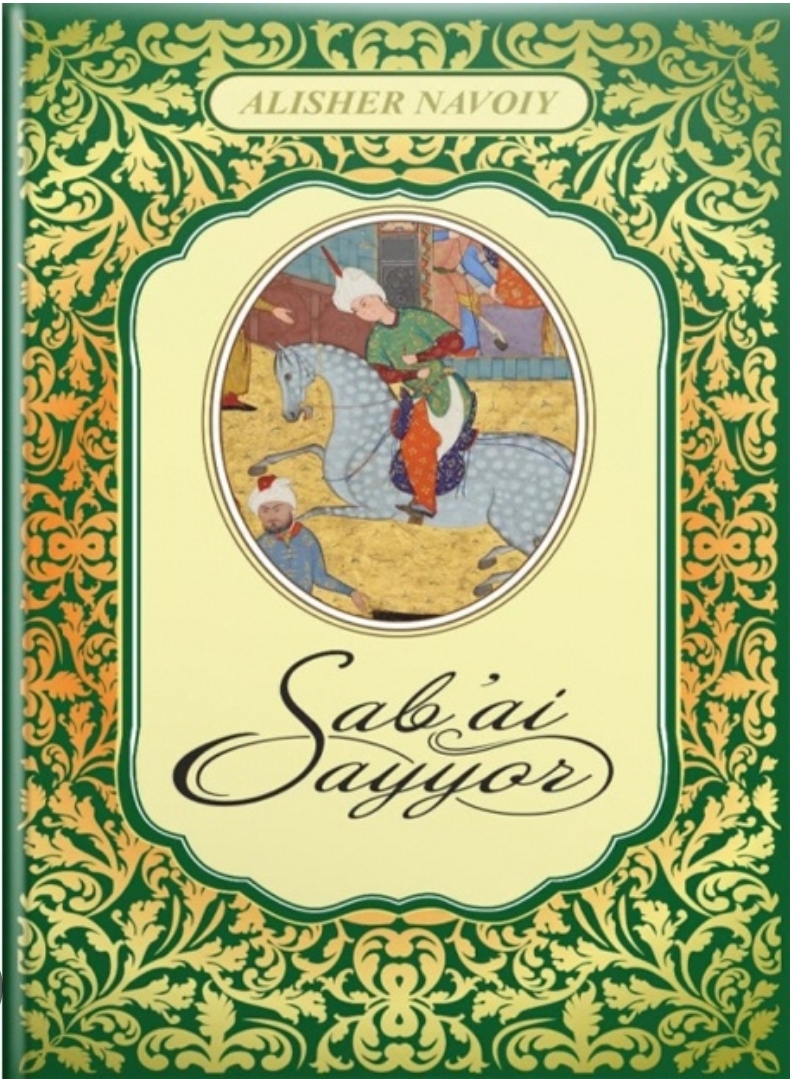
DIDACTIC ANALYSIS OF THE STORIES IN ALISHER NAVOI’S SAB’AI SAYYOR

Introduction

One of the greatest representatives of Uzbek classical literature, Alisher Navoiy, occupies a unique place in the spiritual and cultural life of the Uzbek people. His literary masterpiece, the Khamsa (Quintet), is considered one of the most valuable treasures of Eastern literature. Each poem within this cycle possesses not only high artistic merit but also profound educational and moral significance. Sab’ai Sayyor is the fourth poem of the Khamsa, in which the adventures of Bahram and Dilorom are used to explore themes such as human morality, spiritual perfection, justice, love, knowledge, loyalty, and ethical development.

A distinctive feature of the poem is the inclusion of seven stories narrated by seven princesses from different regions of the world. These stories enrich the ideological and artistic content of the work and serve as an important means of expressing Navoi’s didactic views. Through these narratives, the poet presents significant conclusions about human virtues, spiritual values, and social responsibilities. Therefore, the stories in Sab’ai Sayyor can be regarded not only as artistic elements of the poem but also as a unique school of moral and educational instruction.

This article analyzes the didactic essence of the stories in Sab’ai Sayyor, their educational orientation, and their role in cultivating the ideal human being.

Main Body

The Role of the Stories in the Composition of the Poem

Sab’ai Sayyor possesses a complex compositional structure. While the central plot revolves around the life of Bahram and his adventures related to Dilorom, the stories told in the seven pavilions enrich the ideological framework of the poem. Each story conveys a particular moral and philosophical idea and contributes to Bahram’s spiritual growth.

Navoi does not present these stories as isolated events; rather, they function as essential components of the poem’s overall ideological system. Through them, he depicts various challenges encountered in human life, the struggle between good and evil, and the power of love and loyalty. As a result, readers not only enjoy the artistic narrative but also derive valuable moral lessons from it.

The Didactic Interpretation of Justice

One of the most important didactic aspects of the stories is the glorification of justice. Navoi presents justice as the fundamental principle of both governance and human relationships. In the stories, virtuous and just individuals ultimately achieve success and happiness, while those who choose oppression, deceit, or betrayal face punishment.

Through these examples, the poet emphasizes that justice is an essential requirement of life. The destinies of the characters demonstrate that people should remain faithful to truth and fairness under all circumstances. This significantly enhances the educational value of the stories.

The Moral Significance of Love and Loyalty

Love is a central theme in many of the stories found in Sab’ai Sayyor. However, Navoi does not portray love merely as an emotional experience. Instead, he presents it as a force that purifies the human soul and guides individuals toward spiritual perfection.

The lovers in these stories undergo numerous trials and hardships. Their patience, devotion, and perseverance serve as exemplary models for readers. Overcoming obstacles in the path of love reveals inner strength and moral maturity. Through these narratives, Navoi demonstrates that true love is based on loyalty, patience, and self-sacrifice.

From a didactic perspective, these stories encourage young readers to remain faithful in relationships, to act sincerely, and to pursue their goals with determination.

The Glorification of Knowledge and Wisdom

The promotion of knowledge and enlightenment is one of the fundamental principles of Navoi’s literary and philosophical outlook. In the stories of Sab’ai Sayyor, intelligence and wisdom are portrayed as humanity’s greatest treasures. The success of many characters is directly connected to their knowledge, insight, and sound judgment.

Navoi condemns ignorance as a major obstacle to human progress. Characters who rely on reason and wisdom successfully overcome difficult situations, whereas those who act impulsively often encounter regret and failure.

This aspect enhances the didactic value of the stories and encourages readers to seek education, develop critical thinking skills, and approach life’s challenges rationally.

Moral Perfection and Human Education

The primary objective of the stories is the cultivation of the ideal human being. According to Navoi, a perfect person should not only be knowledgeable but also morally pure, just, generous, and compassionate. Throughout the stories, positive virtues and negative traits are contrasted with one another.

Generosity is opposed to greed, loyalty to betrayal, and honesty to falsehood. Ultimately, goodness triumphs over evil, allowing readers to distinguish clearly between desirable and undesirable forms of behavior.

Through these narratives, Navoi emphasizes the importance of self-discipline, striving for noble goals, and placing the interests of society above personal gain. These ideas remain relevant in contemporary society.

Symbolism and Its Didactic Function

The stories in Sab’ai Sayyor are rich in symbolic and allegorical imagery. Navoi frequently employs symbolic representation rather than direct expression, encouraging readers to engage in deeper reflection and interpretation. Symbolism enhances not only the artistic quality of the narratives but also their educational impact.

Motifs such as journeys, roads, trials, lovers, and beloveds symbolize humanity’s quest for spiritual growth and self-realization. These symbols deepen the philosophical meaning of the stories and strengthen their didactic message.

Conclusion

In conclusion, the stories contained in Sab’ai Sayyor embody Alisher Navoi’s profound didactic and philosophical ideas. Through these narratives, universal values such as justice, knowledge, love, loyalty, generosity, and moral perfection are promoted. The stories not only enrich the plot of the poem but also contribute significantly to the moral and spiritual education of readers.

Navoi employs storytelling as a powerful tool for shaping human character and presenting his ideal of the perfect individual. Each story conveys a distinct ethical lesson, guiding readers toward virtue, purity, and enlightenment. Therefore, the stories of Sab’ai Sayyor remain an important source of moral and spiritual wisdom not only for their own era but also for modern society. Their didactic significance makes them valuable resources for educating younger generations in the spirit of both national and universal values.

About the Author

Ahmedova Zamira Shokirjon qizi was born on July 12, 1991, in Varzik village, Chust district, Namangan region, Uzbekistan. She completed her secondary education at School No. 58 in her native village and later graduated from the Faculty of Philology at the Tashkent State Pedagogical Institute. Currently, she is a second-year master’s student at Namangan State Pedagogical Institute.

From an early age, Zamira demonstrated a strong interest in language and literature. Her stories and literary works on various topics have been regularly published in district and national media outlets, reflecting her creative talent and dedication to literature. Through her academic and creative activities, she continues to contribute to the promotion of literary and cultural values.

Zamira’s primary goal is to become a highly qualified specialist in the field of philology and to share her knowledge and experience with the younger generation, inspiring them to appreciate language, literature, and lifelong learning.

Essay from Sevara Matnazarova

How Reading Improves a Child’s Imagination

A child’s imagination is one of the most beautiful and powerful gifts in life. It is through imagination that children learn to dream, explore, and believe in possibilities far beyond what their eyes can see. Among the many things that help a child grow, reading stands as one of the greatest treasures. A simple book, filled with words and stories, has the magical ability to open doors to worlds children never knew existed. Reading does not only teach children letters and words; it teaches them how to imagine, feel, dream, and understand life in a deeper way. When a child opens a book, something truly special begins to happen. They are no longer sitting quietly in one room; instead, they travel to magical kingdoms, fly through the sky with heroes, dive into deep oceans, or walk through forests filled with wonder. A story becomes more than just words on paper—it becomes an experience. A child who reads about brave explorers may begin dreaming about adventures of their own, while a child who reads stories about kindness may grow into a more caring and understanding person. Unlike television or smartphones, reading requires children to build the story inside their own minds. When a book describes a castle, a dragon, or a peaceful village, every child imagines it differently. One child may picture a shining golden castle in the clouds, while another imagines a mysterious stone palace hidden in the mountains. This beautiful process strengthens creativity because children become creators of their own worlds. Their minds begin to think freely, shaping colors, faces, emotions, and places in ways no screen could ever fully provide.

       Reading also helps children understand feelings—both their own and those of others. Through stories, children experience joy, sadness, fear, hope, friendship, and courage. They laugh with happy characters and feel pain when a character struggles. Sometimes, a child may quietly see themselves in a story, finding comfort in knowing they are not alone in their feelings. In this way, books become silent friends, offering lessons, warmth, and understanding without judgment. Imagine a child sitting by a window on a rainy evening, holding a favorite book in their hands. Outside, the world may seem ordinary, but inside their imagination, extraordinary things are happening. They are climbing mountains, speaking with magical creatures, or solving mysteries with brave companions. That child may not realize it at the moment, but they are learning valuable skills—creativity, patience, empathy, and confidence. Reading shapes not only the imagination but also the heart.

Furthermore, reading gives children the courage to dream bigger. A child who reads stories about inventors may dream of changing the world someday. A child inspired by stories of brave leaders may grow up believing they, too, can make a difference. Books quietly plant seeds of hope and ambition in young hearts. Even the smallest story can leave a lifelong impact.

In today’s fast-moving world, many children spend more time watching screens than opening books. Phones, games, and videos can entertain them quickly, but entertainment is not always the same as imagination. Screens often show children exactly what to think and what to see, while books invite them to think for themselves. Reading teaches patience in a world of speed and creativity in a world filled with distractions. Parents and teachers play an important role in helping children fall in love with reading. Reading bedtime stories, visiting libraries, or simply allowing children to choose books they enjoy can create beautiful memories. Sometimes, the moments children remember most are not expensive gifts or big adventures, but quiet evenings spent listening to stories with someone they love. Those moments can shape a child’s future in powerful ways. A child who reads often grows into a person who thinks deeply, dreams freely, and understands others kindly. Imagination developed through reading can help children become better writers, artists, scientists, teachers, or leaders. More importantly, it helps them become compassionate human beings who believe that anything is possible.

       In conclusion, reading is much more than a school activity or daily habit—it is a journey of the heart and mind. It teaches children to imagine worlds they have never seen, understand feelings they have never experienced, and believe in dreams they have not yet reached. Every book a child opens becomes a small light guiding them toward creativity, wisdom, and hope. If we want children to grow into thoughtful, imaginative, and confident individuals, we must place books in their hands and stories in their hearts. Because sometimes, the greatest magic a child will ever discover begins with turning the first page of a book.

By Sevara Matnazarova (Uzbekistan)

Poetry from Jessie Vanderwall

Everything

It is only when I see the whole world

That I discover it is lonely.

I had never known loneliness

before I knew you.

I feel an absence deep in my chest

And on my skin, cold,

that I’ve never felt before,

that I’ve never had.

I stare into nothingness

and only everything stares back.

Only your eyes.

which I see as I lean on a wilted leg

towards a body which is not there,

which does not know I lean in its direction,

and surely never will.

I wouldn’t believe you if you told me now,

but looking out at everything, all I feel

is cold.

I have no hand to hold, 

no coat to take.

But then, 

I never did.

I had never known loneliness

before I knew you.

And how lonely it is,

to know everything.

Essay from G‘iyosova Mohinur Yoqubjon qizi

Methods of Developing Linguistic Skills in Grades 5–6

Introduction

In modern language education, one of the primary objectives is to develop students’ linguistic competence, enabling them to understand language structures and use them effectively in communication. Grades 5–6 represent a crucial stage in this process, as students begin to acquire systematic knowledge of phonetics, vocabulary, morphology, and syntax. Developing linguistic skills at this level not only enhances language proficiency but also strengthens critical thinking, communication abilities, and overall academic performance. Therefore, teachers should employ innovative and effective methods to facilitate the formation of linguistic skills among learners.

Main Part

The Concept of Linguistic Skills

Linguistic skills refer to a learner’s ability to recognize, analyze, interpret, and appropriately use language units in both oral and written communication. These skills are developed through the integration of theoretical linguistic knowledge and practical language activities.

Methods of Developing Linguistic Skills

1. Analytical Exercises

Analytical exercises encourage students to examine language structures and identify their functions. Activities such as classifying parts of speech, analyzing sentence structures, and identifying grammatical patterns help students understand the nature of language and improve their analytical thinking.

2. Problem-Based Learning

Problem-based learning engages students in discovering language rules through inquiry and investigation. Teachers present linguistic problems or questions, and students work collaboratively to find solutions. This approach promotes independent thinking and deeper understanding of language concepts.

3. Interactive Teaching Methods

Interactive methods such as brainstorming, clustering, role-playing, concept mapping, and group discussions increase student participation and motivation. These techniques encourage active learning and help students apply linguistic knowledge in meaningful contexts.

4. Text-Based Learning

Working with texts is one of the most effective ways to develop linguistic skills. Students analyze vocabulary, grammar, and stylistic features within authentic texts. They also practice summarizing, retelling, and interpreting texts, which enhances both comprehension and language production skills.

5. Educational Games

Considering the age characteristics of 5–6-grade students, educational games play an important role in language learning. Activities such as word-building games, language competitions, puzzles, and vocabulary challenges make learning enjoyable while reinforcing linguistic concepts and skills.

6. Information and Communication Technologies (ICT)

The integration of digital technologies, multimedia presentations, online quizzes, and educational applications creates an engaging learning environment. ICT tools provide interactive opportunities for practicing linguistic concepts and support individualized learning experiences.

Assessment of Linguistic Skills

The assessment of linguistic skills should include various forms such as written assignments, oral presentations, tests, projects, and classroom participation. Effective assessment enables teachers to evaluate students’ ability to apply linguistic knowledge in practical situations and identify areas requiring further development.

Conclusion

In conclusion, developing linguistic skills in Grades 5–6 is an essential component of language education. The effective use of analytical exercises, problem-based learning, interactive methods, text-based activities, educational games, and information and communication technologies contributes significantly to students’ linguistic competence. These methods help learners acquire a deeper understanding of language structures, improve communication skills, and foster independent and critical thinking. As a result, students become more confident and proficient users of language, which supports their academic and personal growth.

About the Author

G‘iyosova Mohinur Yoqubjon qizi was born on June 16, 2001, in Namangan city, Namangan region, Uzbekistan. She completed her secondary education at School No. 1 in Namangan city. Later, she graduated from the Uzbek Language Department of Andijan State University, where she gained a strong academic foundation in linguistics and language teaching.

Currently, she is a second-year master’s student at Namangan State Pedagogical Institute, pursuing advanced studies in the field of education and language teaching. Her academic interests include modern teaching methodologies, linguistic competence development, language education, and innovative approaches to improving students’ communicative skills.

As a young researcher, Mohinur G‘iyosova actively participates in scientific and educational activities, contributing to the advancement of language teaching practices and pedagogical research. She is dedicated to exploring effective methods that enhance students’ learning outcomes and foster their intellectual development.

Essay from Merojxon Ahliddin qizi Majidova

The Role of Phytochemical Components in the Therapy of Liver Diseases and Uterine Fibroids and Their Organic Chemical Classification

Senior Lecturer of the Department of Medical and Biological Chemistry

Fergana Public Health Medical Institute

Rozia Mamadaliyevna Nazirtashova

Second-Year Pharmacy Student

Merojxon Ahliddin qizi Majidova

Abstract

This article explores the biological and chemical interrelations of phytotherapy in the treatment of liver pathologies and hormone-dependent benign tumors, particularly uterine fibroids. The study mainly focuses on the chemical structures, stereochemistry, isomerism, and mechanisms of action of biologically active organic compounds such as flavonolignans, glycosides, and alkaloids found in medicinal plants including Silybum marianum, Rhodiola quadrifida, and Chelidonium majus.

Keywords: Silybum marianum, Rhodiola quadrifida, Chelidonium majus, silybin diastereomers, flavonolignans, phenylethanoid glycosides, chelidonine alkaloid, estrogen metabolism, hepatoprotective activity, uterine fibroids, phytochemical analysis, stereochemistry.

Introduction

In the human body, gynecological homeostasis and hepatobiliary system functions are closely interconnected. Liver cells (hepatocytes) perform the detoxification and utilization of excess steroid hormones, especially estrogen, which is considered the main stimulator in the pathogenesis of uterine fibroids. When liver function deteriorates or hepatocyte membranes are damaged, the metabolism of xenobiotics and endogenous hormones becomes impaired. As a result, the concentration of free estrogen in blood plasma increases, contributing to the enlargement of uterine fibroids, which are hormone-dependent tumors. Therefore, the use of phytochemical compounds promoting liver regeneration indirectly provides significant therapeutic benefits in fibroid therapy.

Main Part

Medicinal Plants Used in Liver Diseases

Silybum marianum (Milk Thistle) — Silymarin Complex

The active extract isolated from Silybum marianum fruits, known as Silymarin, is a polyphenolic compound belonging to the flavonolignan class. The most active component of silymarin is Silibinin (Silybin), with the molecular formula C25H22O10 and molecular weight of 482.441 g/mol. It naturally occurs as an equimolar mixture of two diastereomers: Silybin A and Silybin B. Their molecular difference lies in the spatial configuration of hydroxymethyl (-CH2OH) and phenyl groups at chiral centers.

Silymarin possesses antioxidant and anti-inflammatory properties. It is widely used to protect liver cells from toxins and to support treatment of liver diseases such as hepatitis and cirrhosis. It reduces damage caused by toxins, medications, and free radicals, stimulates protein synthesis in hepatocytes, and enhances liver regeneration. Silymarin is commonly prescribed as supportive therapy in chronic hepatitis and alcoholic or non-alcoholic fatty liver disease.

Typical dosage ranges from 100 to 300 mg daily.

Regioisomers

The extract also contains regioisomers such as Isosilybin A and Isosilybin B, Silychristin containing a benzofuran heterocyclic ring, and Silydianin characterized by a bicyclic ketone system. The biosynthetic precursor of these compounds is the flavanonol Taxifolin (C15H12O7).

For liver protection and профилактика, recommended doses are 140–280 mg/day. In chronic hepatitis and steatosis, 140 mg two or three times daily is administered. In Amanita phalloides poisoning, intravenous doses of 20–30 mg/kg/day are used to block amanitin uptake into hepatocytes.

Hypericum perforatum (St. John’s Wort) — Hypericin

Hypericin is a polycyclic aromatic compound derived from anthraquinone with the molecular formula C30H16O8. Due to its highly conjugated pi-electron system, it demonstrates anti-inflammatory and strong photodynamic activity. It reduces bile stasis in the gallbladder and hepatic ducts.

Hypericin exhibits significant biological activity:

– Antidepressant effects by inhibiting reuptake of serotonin, dopamine, and norepinephrine;

– Antiviral activity against enveloped viruses, including HIV and cytomegalovirus;

– Photodynamic activation under light exposure, producing reactive oxygen species capable of destroying cancer cells.

Because of its photosensitizing effects, hypericin may increase skin sensitivity to ultraviolet radiation, causing burns or rashes.

Medicinal Plants Used in Uterine Fibroid Therapy

Rhodiola quadrifida (Red Brush) — Salidroside, Phenylethanoid Glycoside

Molecular formula: C14H20O7. The molecule consists of glucose and p-tyrosol (aglycone) linked via a beta-glycosidic bond.

Salidroside possesses adaptogenic properties and stabilizes estrogen and progesterone balance. Since uterine fibroids are hormone-dependent tumors, chronic stress may disrupt hormonal balance and accelerate fibroid growth. Salidroside reduces cortisol levels and helps normalize hormonal status.

Its antioxidant and anti-inflammatory effects reduce oxidative stress and pathological fibrosis in uterine tissues. In vitro studies indicate that salidroside can suppress proliferation and induce apoptosis of gynecological tumor cells. However, sufficient clinical evidence confirming its effectiveness in shrinking uterine fibroids in humans is still lacking.

Chelidonium majus (Greater Celandine) — Chelidonine

Chelidonine belongs to the benzophenanthridine alkaloid group with the molecular formula C20H19NO5. Due to the presence of a tertiary amine group, it forms salts with acids and exhibits high toxicity.

Chelidonine demonstrates cytostatic activity by inhibiting mitosis, thereby suppressing hyperplasia and proliferation of fibroid tissues. However, unsupervised use may result in hepatotoxicity.

Chemical Basis of Antioxidant Mechanisms

The hepatoprotective effects of polyphenolic compounds such as silymarin and hypericin are associated with the hydrogen-donating ability of their phenolic hydroxyl (-OH) groups. Free radicals damaging liver tissue react with phytochemical antioxidants according to the following mechanism:

Ar-OH + R• → Ar-O• + RH

Table of Medicinal Plants and Their Active Compounds

Plant Name| Active Compound| Chemical Class| Molecular Formula| Main Function

Silybum marianum| Silibinin (A and B)| Flavonolignan| C25H22O10| Restoration of hepatocyte membranes

Hypericum perforatum| Hypericin| Anthraquinone derivative| C30H16O8| Choleretic and anti-inflammatory effect

Rhodiola quadrifida| Salidroside| Phenylethanoid glycoside| C14H20O7| Modulation of estrogen/progesterone balance

Chelidonium majus| Chelidonine| Benzophenanthridine alkaloid| C20H19NO5| Cytostatic inhibition of tumor growth

Conclusion

This study presents new scientific perspectives on understanding the pathogenetic relationship between liver diseases and uterine fibroids based on principles of organic chemistry and modern phytopharmacology. The findings indicate that the functional state of the hepatobiliary system plays a crucial role in regulating hormonal homeostasis, particularly estrogen metabolism.

Diastereomers and regioisomers of silibinin found in Silybum marianum stabilize hepatocyte membranes and inhibit lipid peroxidation, thereby enhancing detoxification capacity and indirectly reducing hormonal imbalance that stimulates fibroid growth.

At the same time, glycosides of Rhodiola quadrifida and alkaloids of Chelidonium majus exhibit selective cytostatic and adaptogenic effects on fibroid tissue proliferation. Nevertheless, the high biological activity of phytochemical substances and the hepatotoxic risk associated with compounds such as chelidonine require careful medical supervision during phytotherapy.

Considering the potential negative effects of phytoestrogen-containing plants in patients with uterine fibroids, phytotherapy should not be regarded as an independent treatment method but rather as a supportive synergistic approach complementing standard clinical therapy under physician supervision.

Future studies focusing on the molecular mechanisms of natural polyphenols and alkaloids may contribute to the development of new safe therapeutic agents at the intersection of gynecology and hepatology.