
Congratulations to contributor Jacques Fleury, who was chosen among 4,000 competitors from 83 countries as a recipient of the 2026 International Naji Naaman Literary Prize for Creativity!
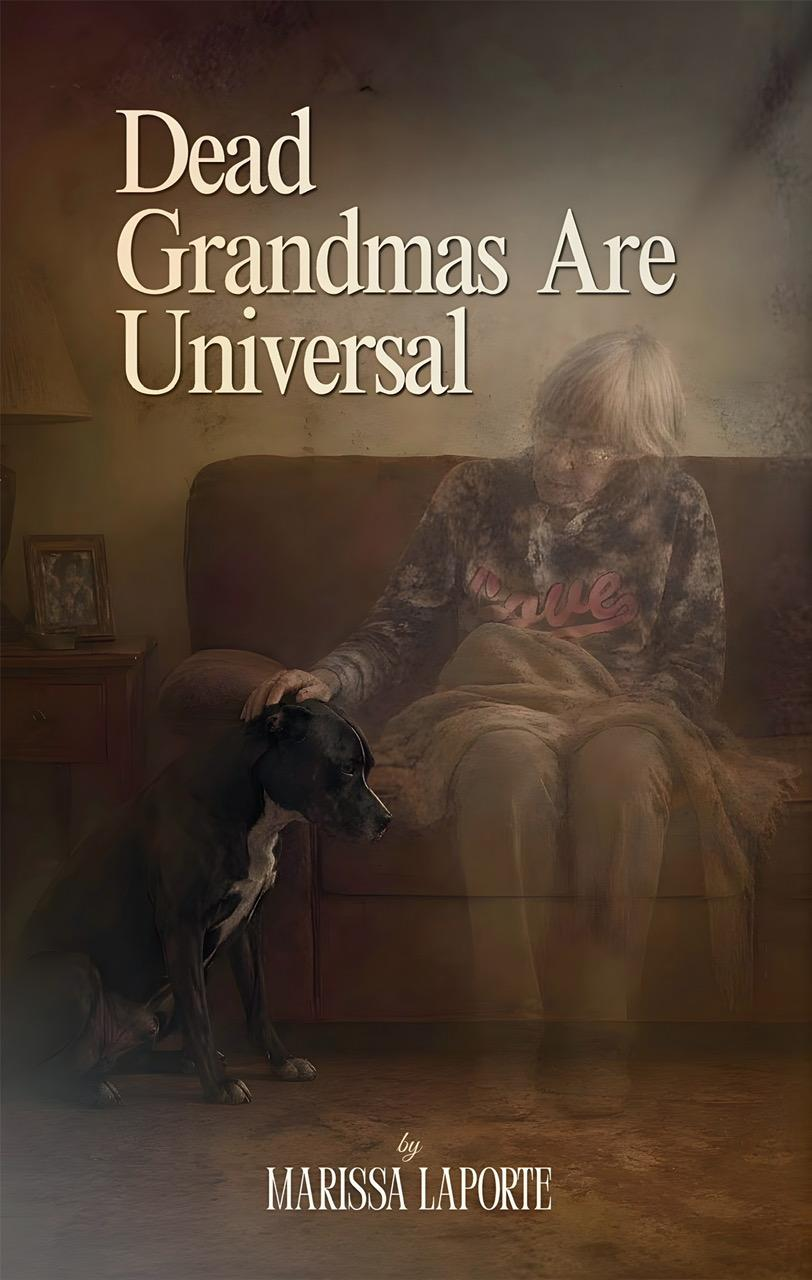
Also, Synchronized Chaos contributor Marisa LaPorte has a new book out, which includes a few poems Synchronized Chaos published.
Dead Grandmas Are Universal by Marisa LaPorte is a raw, intimate poetry collection that traces the emotional inheritance of trauma, grief, queerness, mental illness, and survival through the lens of womanhood. Across deeply confessional free verse poems, the author explores complicated legacies passed down through generations of women: addiction, abuse, self-destruction, resilience, and the desperate longing to be loved without disappearing in the process. If you’re interested in reading and reviewing the book, please let us know.
It’s been said that life isn’t so much about finding oneself as it is creating oneself. In this issue, contributors suggest that statement could also prove true about meaning in life, that it’s something we can build by ourselves or together over time.
Several contributors begin by confronting life’s darker realities. J.J. Campbell’s To Live Your Dreams, as reviewed by Cristina Deptula, expresses a deep desire for human connection and understanding despite loneliness, trauma, and despair. J.J. Campbell’s poetry later in this issue further develops the theme of alienation, including from one’s own aging, weakening body. George Gad Economou reflects on the allure and consequences of excessive drinking, reflecting on the bittersweet memories that remain long after moments of indulgence have passed. Nad Raf addresses loss, betrayal, and personal recovery, finding herself among the neglected and forgotten, while Elaine Murray finds solace in grief through her memories of love. Hussein Nasr Jabr looks at loss and others’ struggles with tenderness, while Stephen Jarrell Williams and Marisa LaPorte speak to relationships lost and those that drift apart. These works suggest that meaning often emerges through the honest confrontation of suffering.
Themes of power and vulnerability also appear throughout the issue. Alan Catlin creates a sense of dislocation in his work that demonstrates the psychological brutality of government authority and institutional control, while Mykyta Ryzhykh demonstrates the powerlessness of individuals confronting systemic violence. Mickey Corrigan excoriates those who believe their wealth and power insulate them from accountability. Anonymous issues a revolutionary declaration against Elon Musk. Fhen M.’s criticism of Bagulaya’s Marxist analysis of contemporary Waray Filipino poetry reminds us that our lives and imaginations exist on multiple aesthetic levels and cannot be reduced just to socioeconomics. Together, these works remind readers that artistic expression remains a powerful means of resistance and reflection.
At the same time, many contributors celebrate the everyday experiences that connect people to one another. Abbie Huh captures summer moments filled with warmth, welcome, and abundance. A. Iwasa’s review of Ivan Salinas’ Dealer highlights the ordinary beauty of these slices of life amongst classic cars. Mark Young finds a mixture of wry humor and joy in ordinary encounters and systems of social etiquette. Dianne Reeves Angel transforms interactions among women into a poetic song and dance, while Christina Chin’s illustrated haiga commemorates a simple yet meaningful exchange of craft. Soumen Roy and Mesfakus Salahin speak elegantly of love and connection as Lan Xin urges people searching for true love to continue to be kind and true to themselves. Bill Tope’s inclusive prom story similarly celebrates community and acceptance. Jacques Fleury’s poem speaks to getting out of one’s personal comfort zone to build bridges across social barriers. Jernail S. Anand celebrates the role many women have historically played holding families and communities together and promoting peace, as Danijela Ćuk urges the world to pursue peace and compassion. Naeem Aziz celebrates an act of heroic rescue where a man showed up for a young girl in need. Qahramonova Zahro Qahramonovna pays poetic tribute to her family and her heritage. Mahbub Alam honors a long-term loving marriage as Graciela Noemi Villaverde finds exquisite and delicate beauty in a newer relationship and Mirta Liliana Ramirez reflects on short, but meaningful loves. These works reveal the significance hidden within ordinary encounters and shared experiences.
Art itself becomes a source of connection and renewal throughout the collection. Joseph Ogbonna reimagines Leonardo’s Mona Lisa as a confident and engaging presence, bridging centuries of artistic admiration. Priyanka Neogi celebrates Charlie Chaplin’s artistry. Mohammed Al Gaddafi Masoud’s poetry celebrates creativity, joy, and human fellowship. Sayani Mukherjee reflects on the sacrifices involved with and the transcendent possibilities of artistic creation, acknowledging both beauty and impermanence. Noah Berlatsky humorously probes the limits of human logic and classification, while Thi Lan Anh Tran and Musharraf Hussa evoke elusive presences that linger at the edge of human consciousness. Together, these works demonstrate art’s ability to deepen awareness and foster connection across time and experience.
Nature serves as another important source of meaning. Duane Vorhees contemplates the cyclical patterns that unite human life with the natural world. Ananya S. Guha explores memory, imagination, and time through encounters with nature, while Nurbek Norchayev reflects on sorrow, happiness, and life’s purpose amid beautiful landscapes. Emmanuel Taiwo draws comfort from nature’s cycles of birth, life, and death, and Brian Barbeito pursues spiritual insight through both wilderness contemplation and the quiet observations of a summer poolside scene. Eva Lianou Petropoulou’s works celebrate peace, sunshine, childhood, love, and hope. Christina Chin’s haiku and art showcase dragon boat racing. Collectively, these contributions suggest that nature offers both perspective and renewal, helping individuals understand their place within larger cycles of existence.

Many writers also emphasize the importance of preserving and transmitting knowledge. Ismatova Dilnura highlights the role of books in children’s education, while Sharifov Sirojiddin Shavkatovich examines the history and significance of calculus as a cornerstone of human understanding. Akbarova Farangiz explores the use of folk proverbs as a literary device in Abdulla Qodiriy’s novel O‘tkan Kunlar (Bygone Days). Jasmina Qahramonjonova honors the dedication and achievement of athletes whose discipline inspires others. Timothee Bordenave seeks a rational and ethical framework for living that promotes both personal fulfillment and social well-being. Karimova Navbaxar Mahmudjanovna honors the importance and dignity of the teaching profession. These works underscore humanity’s ongoing effort to learn, grow, and pass wisdom from one generation to the next.
The collection further broadens its perspective by addressing collective responsibility and hope for the future. Dilnoza Jabborova’s examination of pollution in the Aral Sea serves as both a warning and a testament to the possibility of environmental restoration. Oʻktamova Sabrina Mahmud qizi urges mulching and natural soil enhancement to improve agricultural fertility. Shonazarova Parizod recognizes the often-unseen labor of volunteers whose efforts sustain communities. Maki Starfield proposes that humanity’s current crises may be addressed through a synthesis of scientific knowledge, spiritual understanding, and ancient wisdom. These contributions encourage readers to view personal meaning as inseparable from the well-being of society and the planet.
Taken together, these works reveal that our lives do not have to be meaningless. Meaning can emerge through memory and imagination, struggle and perseverance, learning and creativity, nature and community. Whether confronting loss, celebrating beauty, questioning authority, preserving knowledge, or imagining a better future, each contributor illuminates a different aspect of humanity’s ongoing search for connection, purpose, and renewal. The result is a rich tapestry of voices that affirms both the complexity of human experience and the enduring hope that gives it meaning.