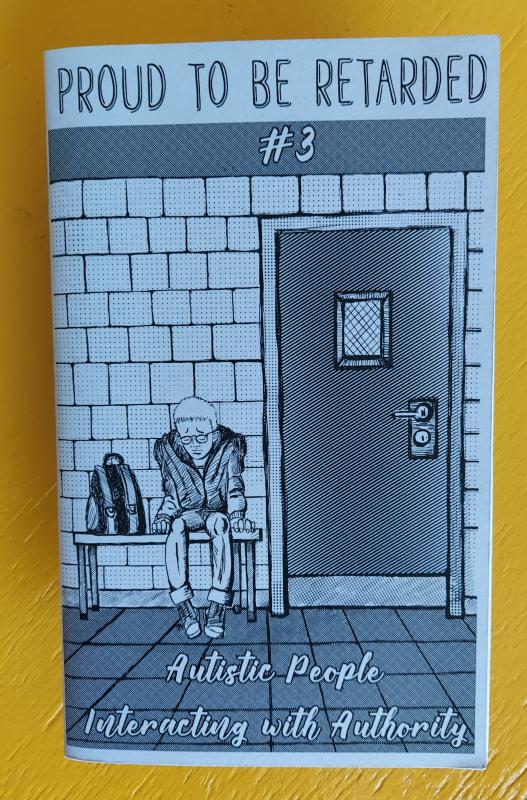
A. Iwasa interviews essayist Rikki Branson from Microcosm Publishing’s zine Neurodivergent Pride #5

Cover for Microcosm's zine Proud to be Retarded #3: Autistic People Interacting with Authority. Black and white line drawing on blue paper of a guy of indeterminate race and light skin seated on a bench outside the closed door to a classroom in a school hallway. (Perhaps the principal's office?) He's got a backpack next to him on the bench.

While reading Neurodivergent Pride #5 I became interested in interviewing Rikki Branson because of her essay “Faith and Authority:  A Generation X Spiritual Journey”.  We are acquainted from both being involved in publishing in the San Francisco Bay Area in the mid 2010s, and I had been raised Roman Catholic but have both had a complicated relationship to organized religion since the 1990s.

AI: You were already in Jr. High when your parents took you to an evangelical Protestant church.  Did you have any exposure to organized religion before that?  Do you mind sharing more specifically what kind of church it was?

RB:  Sure, it was a Christian and Missionary Alliance church, which at the time was pretty much a mainstream Protestant megachurch in the suburbs. I think my experience is similar to many people’s experiences, though, regardless of what denomination of church they attended.

And I had heard of Christian religion before, I was actually the one who got my parents to take my brother and I to church when I was little! I had read in books about people going to church and thought it was a way to meet other kids and be part of some grand and meaningful cause, so I kept asking them to take us to church, which they finally did.

AI: You mentioned Traveling Mercies by Anne Lamott for her description of her spiritual journey as like being lily pads, meandering like a frog. Do you still feel that way? Is there more you’d like to say about Lamott’s writing?

RB:  Yes, and what I meant by that was that my spiritual journey wasn’t a straight line from one point to another. In some seasons I thought more about faith and spirituality than in other seasons, and I’ve found myself re-learning similar lessons and re-thinking the same issues. And I’d end up re-examining the same thing sometimes but from a different angle based on a person or event that had entered my life.

Even the times in my life when I was cynical towards religion were still part of my journey, because I was still engaging with the concept of faith, even to dismiss it. And while I haven’t read anything by Anne Lamott in awhile so can’t speak to her current writing, I do still identify with the “lily pads” metaphor.

AI: You mentioned that your parents told you as a teenager that you seemed autistic, but you didn’t actually get diagnosed until you were an adult. How important do you think a potential adult diagnosis is for others?

RB:  I do think an adult diagnosis can help people of any age who want to better understand themselves. When I was diagnosed, a lot of the focus (understandably) was on helping me with job searching and money management as those were issues I was facing at that time, but we did briefly bring up other topics such as relationships and friendships and faith and spirituality. There are things therapists said to me that I’d like to go back and explore and would bring up in a session if I were still in therapy at UCSF, and I do think the therapy experience gave me things to consider that were useful and interesting.

I think some people don’t pursue diagnoses because they feel that putting a “label” on themselves will limit them or they want to make it in life without making excuses or getting special treatment. But I think that now with autism and other conditions, we have a deeper understanding that autism can affect people in very different ways and that there are many ways to be autistic (just as there are many ways to practice faith/spirituality!) A diagnosis isn’t a statement of your destiny or an excuse, it’s more of a guide to how your unique brain works, where you have strengths and where you might need more support.

I think a diagnosis can help if you are able to access support systems (job coaching, accommodations at work, etc) because of the diagnosis. Or, if you choose to just use the information for yourself and Google “help for autistic people to organize their closet” or something like that, if regular advice for non-autistic people isn’t working for you. There is less stigma attached to mental health and neurological diagnoses now due to more knowledge about them and more people getting diagnosed, and if you choose to get diagnosed and tell people, you can help to lessen that stigma even further.

That said, I would never want to be someone who reduces stigma by claiming “not to be like those other autistic people” who don’t blend in as easily to neurotypical society or have more support needs. We are all valid and all deserve respect.

AI: I like/identify with your “uneasy mental truce with” your faith after college. I consider myself to be culturally catholic (small c no mistake), do you feel like your faith or lack there of is similar? Jesuscentric is a concept I read about on livejournal if I’m not mistaken that I liked back in the ’00s. Unitarian Universalism can also be pretty cool.

RB:  I’ve not heard the term “Jesuscentric” but I do hear “Christ follower” to express that someone is inspired by and hopes to emulate Jesus, but without all of the cultural and political connotations that can come with the word “Christian.” I think it’s a way to say things a bit differently, to get a chance to explain what you mean before you activate people’s cultural stereotypes and have them put you in a box before you get to define yourself.

Yes, I would say that I’m probably similar to what you’re getting at with culturally catholic, although I do think there’s more to being a Christ follower than the cultural Christianity that involves, say, putting up a Christmas tree around the holidays or taking Sunday off. It’s about choosing to live in a more mindful and intentional way that’s inspired by how Jesus acted in the Gospels: love your neighbor, forgive your enemy, treat everyone and the natural world with respect. Getting back to the basics without all the modern cultural and political associations that can come to people’s minds when they think of Christian religion.

AI:  For clarification, for me, being small c and/or culturally catholic isn’t about the church as an institution, high holidays or mass on Sunday.  To me, that is what mainstream religion is.  For me it’s more like the Catholic Worker Movement or Ecclesiastical Base Communities.  Feeding the hungry, offering clothing and shelter to those in need.  Opposing imperialism and the death penalty.  Penpalling with, and sending books to prisoners. 

It’s like the story of the father who asked his son to do some work, and the son said he wouldn’t, but he did it anyways.  His other son said he’d do the work but didn’t.  Faith without works is dead as they say, I’m far more interested in the work than the faith. I was raised Roman Catholic but became an atheist in my youth, then an Evangelical and Pentecostal Christian as a young adult, but left that milieu largely over the wars in Afghanistan and Iraq, but also the total indifference to things like sweat shops, the environment, and practically everything wrong with the world except a very narrow definition of what’s “wrong.” 

RB:  I can relate to that!

AI: Do you feel like the publishing executive you mentioned is a good example of non-religious mentorship?

RB:  Yes, I would say so. I think that mentorship and just adult friendship in general is something that people are really lacking in Western/American society. So much of what I heard about adult friendship when I was growing up as a teen was focused on how adults should grow up, settle down, stop hanging out with buddies and spend their non-working hours with their families. I’m all for people being good spouses and good parents, parenting is a very important form of mentoring. But I think we just spend so many hours working, job searching, networking, commuting etc that we don’t have enough hours left to invest in our communities and relationships so we’re forced to ration out the little time we do have and direct it to smaller and smaller circles of people. That’s the problem we should really address, why we’re kept so busy that we can’t maintain normal relationships the way we did when we had a village to support us and we interacted with that village. And friendships don’t have to take you away from your family. I have friends who have children and I’m always down for spending time with them with kids included!

You don’t need to be religious to be a mentor or be mentored, but I think that one good thing that religion provides is a structure where people can meet each other and become friends or mentors/mentees, where platonic friendship is encouraged and supported. I think we need more of this in the world.

AI: do you consider yourself to be on a third path outside of the worldliness vs spirituality world view?

RB:  Yes, I’m still somewhere on that third path. I don’t know how to describe the stage of spiritual life that I’m in now, but I do feel that I’m still on the journey somewhere. I still consider myself a Christ-follower.

What I’m focusing energy on now is working to rebuild communities and social structures that went away during the height of the pandemic. Covid hasn’t totally gone away and I’m all for accommodating people with disabilities or people who are immunocompromised, and am looking forward to rebuilding our social connections in more mindful and inclusive ways. Where I live in Northern California there’s a lot of media talk about how our cities are in a “doom loop” because of violence and economic problems, and I’m writing and speaking about remembering and honoring the role cities have played in America in terms of safety and community for some POC, LGBT and immigrant people and about supporting the communities that exist in our cities. Not sure how that all fits into my Christ-follower faith journey, but I suppose it’s about community and respect which I think is a big part of the good that faith and spirituality can bring to society.

AI: I agree with your critique of submission being linked to “traditional” gender roles, but would add it’s also part of the inherent violence in the white supremacist aspect of the hyper segregated, white dominated churches in the US. The flip of this to me is Liberation Theology, minority churches and actively anti-racist/peace churches can be liberatory. How do you feel about this five years further along in life?

RB:  I related submission to gender roles in my essay because that was what I’d heard growing up, and that’s what I thought I was qualified to speak about, as a white woman.

But all of our unjust social power dynamics, including racism and white supremacy, manifest in our mainstream churches, and I do think it’s important to be actively anti-racist and actively oppose and work against in society and call yourself out for racism and other issues. A few racist things I now recognize from when I was younger from my mostly white church were that we put on a play and listened to music about the sacrifices of some white missionaries who were murdered by native people but didn’t look at the whole story in context. The natives were presented much like the Orcs in Lord of the Rings and it was only as an adult that I read a book that mentioned that the indigenous tribe in question was not “unreached by civilization” but engaged in legal and sometimes physical combat with oil company representatives who wanted to take their land and that the murders happened because one Indigenous man lied to their chief to cover up a love affair, not because they had a cultural habit of murdering all trespassers. But the story was told in an extremely white-centric way.

I also remember missionaries saying that people in other countries who practiced other faiths were under demonic influence and that their religious music was obnoxious, and someone who adopted a boy from East Asia changing the boy’s name to Noel and saying that he was now God’s gift to him and his wife. White supremacy, which I believe was unintentional there, just stemming from a culture saturated in that, would manifest as looking at problems in other countries as horrific but problems here in the U.S. as just sort of unfortunate, and as a hyperfocus on relating every Bible story to something to do with our individual lives or families without considering social justice or social implications. The story of Rahab hiding the Jericho spies, for example, was about how you should follow God before it’s too late, and the illustration was of a man who couldn’t accept his wife’s forgiveness for his affair and didn’t try to get her back until she was already remarried. Not about genocide or war or the role of women or marginalized racial groups, but about American suburban marital drama.

But when I was in my “cynical phase” in my twenties, I didn’t have the tools or language yet as a white person to critique racism and classism in the church. That’s something that came later as I matured. I’m embarrassed and ashamed that I didn’t immediately notice the toxic aspects that weren’t directly aimed at me, and I am committed to learning more and doing better. And I think consciously anti-racist and anti-oppression churches can help with that.


Poetry from John Lloyd Casoy

LOW TIDE IN LAGUNA DE BAY

They embrace each other again, 

skin to skin, the islets of water spinach

and the surface of sticky mud 

after a week of dancing with the waves.  

The elusive seagull is close by,

roaming in the transient seashore

created by the low tide. 

The islands of water lilies aboard

in the breakwater, lonely 

for not receiving a warm welcome.

The sun is weaving, the twilight

says “Hello”, and in the distance

here comes the blinking of artificial stars

created by the city which deteriorated

that once deep Laguna de Bay.

I am there, standing on the pathway

that once part of the lake’s body,

jealous of the lake’s destruction.

I don’t know; perhaps it’s just me,

drowning in my deep thoughts

wanting to be visited

by low tide one day.

About the Author

John Lloyd C. Casoy is a public-school teacher in the Philippines. He has a bachelor’s degree in Bachelor of Secondary Education with a major in Filipino. Currently, he is writing his thesis for his master’s degree in Master of Arts in Filipino – Literature at the Polytechnic University of the Philippines.

Story from Jim Meirose

How About it? Who are you?            


Oh. Who are you? I don’t remember seeing you living here before. How ‘bout it? Who are you? All those houses up that way are for sale. I don’t remember seeing you living here before. How ‘bout it? Who are you? Why are all those houses up that way for sale? What the hell was that? I don’t remember seeing you living here before. How ‘bout it? Who are you? What the hell was that? I can’t get the car started. Let’s harvest some of that pronto hey mom look there’s two weasels hey mom look there’s two weasels and get it under a microscope. 

But I don’t see how that can be ‘cause of the big bang. I don’t remember seeing you living here before. How ‘bout it? Wow we all thought this house was empty, I don’t remember seeing you living here before. I think I got a battery-powered transistor radio. Let me go get it. How ‘bout it? Look down there. What the hell was that? Everything just stopped, just like that. They’re bringing stuff out to the curb down there. Look. Who are you? Something wrong in the ground up there? 

Look. Really? That’s why they’re all selling? I don’t remember seeing you living here before. How ‘bout it? Oh! They’re beautiful! How old are they now? Really? Why are they bringing that stuff out to the curb down there? Wow how time flies. But anyway. Who are you?  

They always say every household should have a battery powered transistor radio. But we don’t got one. [flop] So what’s wrong in the ground that they all need to move? Do you got one? I don’t remember seeing you living here before. How ‘bout it? Who are you? I don’t remember seeing you living here before. How ‘bout it? Who are you? The sky up there look at it. I thought you said you had a battery powered transistor radio. I never knew it looked quite that blue. Okay—and no we didn’t hear nothing. That’s something. We didn’t hear nothing. 

Why’d you say you had a battery powered transistor radio when you knew you didn’t have a battery powered transistor radio? No. You didn’t hear nothing? I mean dear God, it was something. We’re calling on neighbors who didn’t come out to make sure everything’s okay with them. 

Why’d you say that eh you a liar? We—nobody knows but there was a big bang up in the sky and all the power cut off. Why’d you say that eh you a liar? A big bang in the sky someplace. Why’d you say that eh you a liar? They reached on the inside of the wall for the entryway light switch and managed to get the lights back on. They looked out. 
What happened?

Why’d you say that eh you a liar?
Can’t tell. 
Just a big bang in the sky someplace.
What?
Why’d you say that eh you a liar?
A big bang in the sky someplace.

Why’d you say that eh you a liar?
A big bang in the sky someplace.
You a liar? A liar? A liar?
You a liar?
No!

So = they left the house, through their never had been knocked on ever, door, leaving their  brand new but already dead TV televisions “McVisionary and Pole” deeply branded dead set behind, and so even though they had got it for deep-free anyway, dear God Gimi Rando McRando never min all that damn anyway, get yourselves out there where you were then Gimi, for reasons having nothing to do with that one thought they had a battery-powered transistor radio but not never went back to get the damn thing here hey were deep seated o’re their elementalized correct element again as-as h-hey, strapped on their cestas, re-entered the court, and began to play. {pillo} 

They still found the game to be su-uperprisingly easy{.} ? Easy sass’ Fly! Pop! so Back! Catch! play Fling! Fly! Pop! so Back! so Back! so Back! so Back!
“Isn’t this game great, great fun?”
“Yes it’s fun!”

Synchronized Chaos Mid-April 2024: Ebb and Flow

We encourage everyone in the California area to attend the third annual Hayward Lit Hop on Saturday, April 27th. This is a public festival with different readings from different groups throughout downtown Hayward coinciding with Hayward’s choosing a new adult poet laureate, culminating in an afterparty at Hayward’s Odd Fellows Lounge. Several Synchronized Chaos contributors will read from their work at the 2024 Lit Hop.

Icon for Hayward's downtown Lit Hop, Orange background with green frog and white text reading Lit Hop, Saturday April 27th, 2-8 pm. Haywardlithop.com

This month’s issue deals with natural and cultural cycles, things coming and going, changing with time’s rhythm.

Sayani Mukherjee recollects the rise and fall of a sculpted fountain of water. Maja Milojkovic exudes the simple joy and beauty of living in a small house by the ocean.

In Brian Barbeito’s prose poetry, his speaker’s grief for his departed loved one is like memories of summer sun during a cold winter. Philip Butera’s take on grief resembles Barbeito’s, with poetry about “cottony clouds” stretched across the sky in winter. In contrast, Don Bormon presents a tortuous summer heat wave, where even the song of the birds is stilled by the weather. Mesfakus Salahin laments the twin tragedies of polluted nature and selfish, troubled humanity and pleads for mercy.

Mahbub Alam connects harm done to the planet’s ecology with illness in human bodies and souls. Sardor Yaxshilikov considers threats to the natural world, the environmental challenges posed by Uzbekistan’s industrialization and possible solutions for them. Daniyor Gulomjanov offers an analysis of the cost and efficiency of renewable energy in Eurasia, while Rahmatullayev Ahror discusses a new microcloning technique for seedling growth in laboratories.

White and green sprouts emerging from a pile of brown bulbs.
Image c/o Fran Hogan

Aqib Khurshid highlights how nature renews itself and grows again in verdant spring, as Mehvish Chouhan reflects on our personal renewal with each sunrise. Elmaya Jabbarova beckons her lover to join her in renewing their love with the new season. Kutlug Nigor’s poem concerns spring, regrowth, and the coming of the new year, as Shaxlo Safarova’s poem focuses on the promise of children.

Young Uzbek poet Kasimova Parizoda relates her determination to go forth and live her career dreams as a journalist. Graciela Noemi Villaverde relates her strident journey to retain her personal dignity and integrity.

Spanish photographer Kylian Cubilla Gomez sends up images of creative work: spiderwebs, paintings, and the buildings of a natural area. Isabel Gomez de Diego’s collection is a vibrant celebration of life: holidays, parks, children, sewing and haberdashery.

Dr. Lawrence Winkler, in his colorful and detailed Peruvian travelogue, explores a land where the present exists alongside the past. Jerry Durick’s poetry explores what we take and leave behind when we travel, as Stephen Jarrell Williams takes a less literal approach to life’s journeys, narrating a tale of lovers who withdraw from a broken world to find comfort in each other, then in their faith.

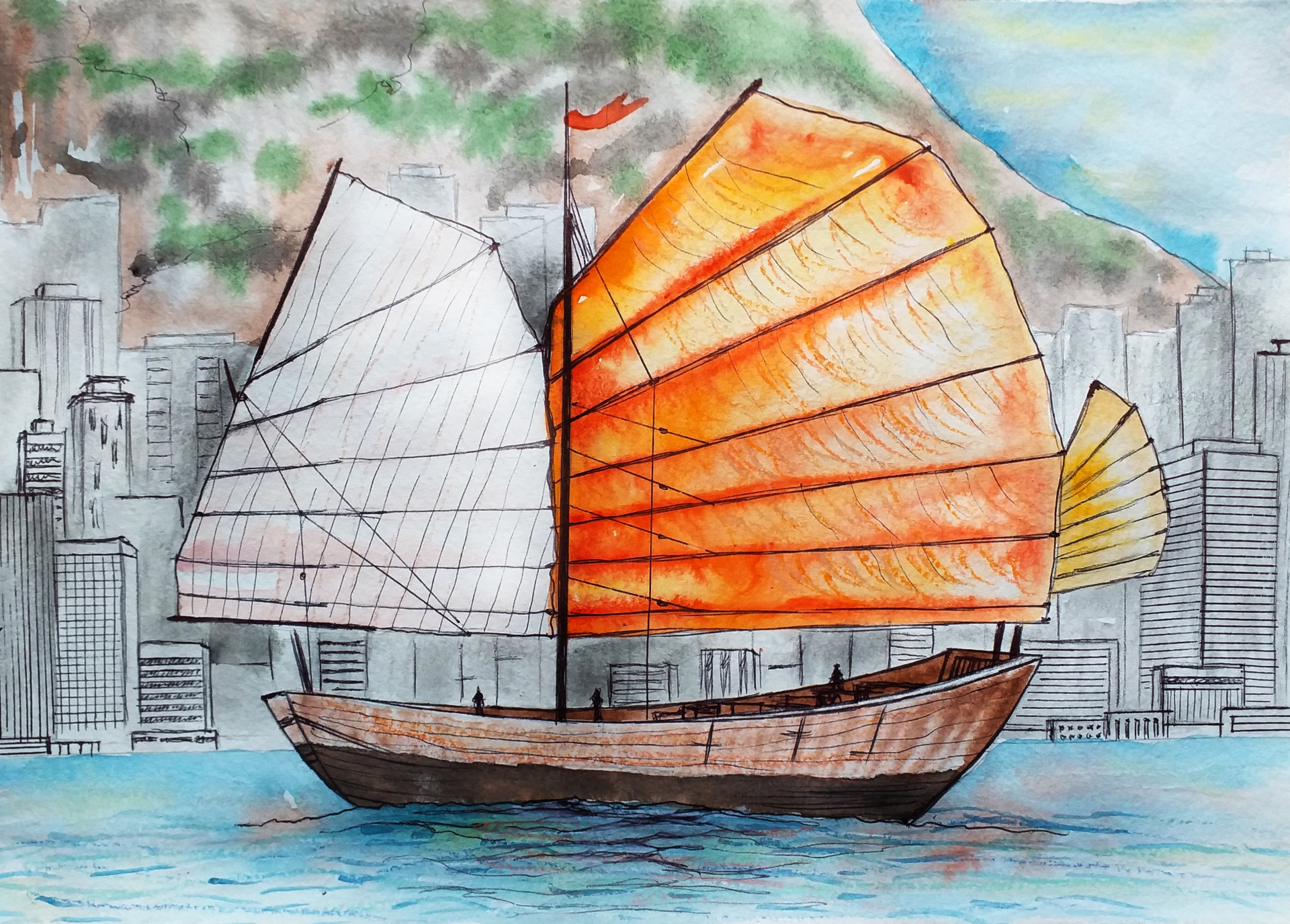
Pencil drawing and watercolor of a Chinese sailing ship with a red sail and a white sail and a red flag out on the blue water in front of a city with skyscrapers and a hill with brown dirt and green leafy trees.
Image c/o Victoria Borodinova

Patrick Sweeney’s fragmented one-liners show characters observing and chronicling the world, finding comfort where they can. Mykyta Ryzhykh speaks to navigating an indifferent universe, seemingly powerless against personal and geopolitical loss. Faleeha Hassan laments the pride and selfishness and privilege that leaders come from when they lead ordinary people into wars. Wazed Abdullah mourns the cost of the war in Gaza to children and civilians of all sorts.

Bill Tope addresses men’s vulnerability to society’s toxic and reductive ideas of masculinity and how those pressures victimize and demean both men and women. Rasheed Olayemi reminds us of the social and psychological toll of unemployment, as people need jobs for dignity as well as income. Sinanbinumer laments ethnic and religious intolerance’s role in worsening conflicts between Hindu and Muslim people in the Indian subcontinent and the role of sensationalized media in stoking tensions.

Pascal Lockwood-Villa’s poem narrator is a personified and dissatisfied mermaid statue, with strong opinions but little agency in her world.

Linda Springhorn Gunther’s memoir excerpt from A Bronx Girl illustrates her life as a vulnerable small child with an imaginative, loving, but delusional mother. She writes as an adult to make sense of her past, layering adult understanding onto her youthful narrative.

Two lane road with a yellow painted line has cracks with tufts of grass and is fading off into the trees and hills and shrubs and mountains in the distance. Broken orange traffic sign wars of a rock slide area and wispy clouds adorn the blue sky.
Image c/o Ken Kistler

Dennis Vannatta’s story shows a man visiting his old haunts and discovering that the places have all changed without him. Taylor Dibbert’s poetic speaker reflects on a past relationship, at a safe enough distance now to wax philosophical.

J.J. Campbell evokes fleeting pipe dreams dashed by reality, while Daniel De Culla gives us an earthy and human look at the imperfect Gandhi.

Lola Hotamova writes of love and heartbreak, of the paradox of wanting an ex-lover to return but not wanting one’s heart broken again. Duane Vorhees’ speaker references past romantic crushes in his works on the slipperiness of memory and alienation from the world.

Zofia Mosur depicts a tender, desperate, almost incestuous, intimate relationship between a young girl and the female figures she draws.

Right profile image of a woman's bald head composed of squares and curved boxes, each filled with a natural-looking design of trees or grass or ground, something green or brown or blue. Some of the squares are flying off in the back into the blue-green background.
Image c/o Kai Stachowiak

In a more humorous vein, Stephen House looks at the human experience of procrastination, not acting on the many “shoulds” of life.

Alma Ryan challenges us to find moments of joy even if life is sad or off-kilter, while Shahnoza Ochildiyeva reflects on where and how to find personal happiness. Mirta Liliana Ramirez tastes each life experience in full like a seasonal fruit, gaining experience that helps her as she ages. Saodat Kurbanova explores how and why Uzbekistan is rated one of the world’s happiest nations.

Z.I. Mahmud probes the dawn of subjective individual consciousness in Kate Chopin’s The Awakening.

Some other works delve so far into subjectivity that they remove the narrator altogether.

Dark blue and light green background with hazy clouds, image of a blue DNA double helix and microbe molecules in the foreground.
Image c/o Виталий Смолыгин

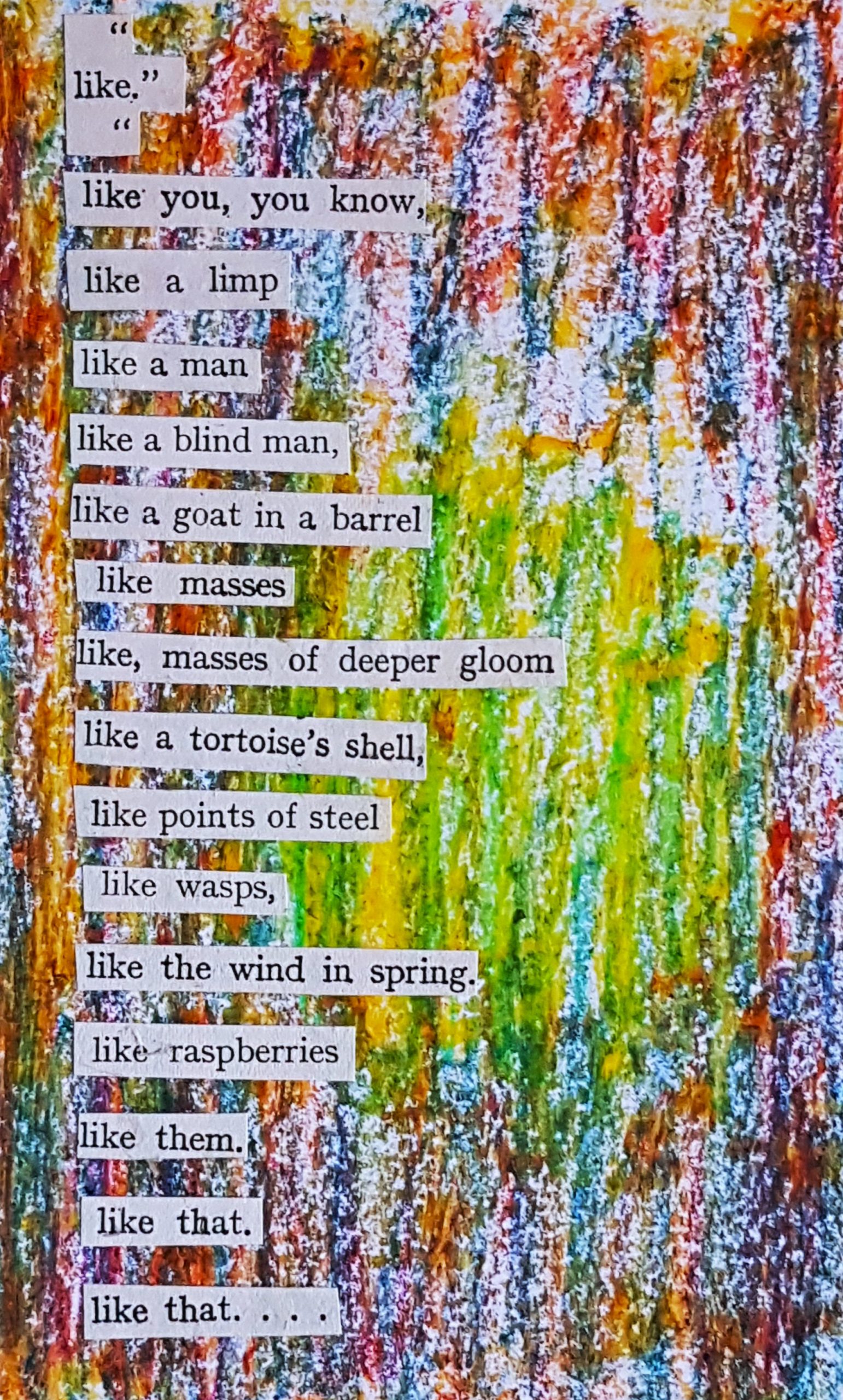
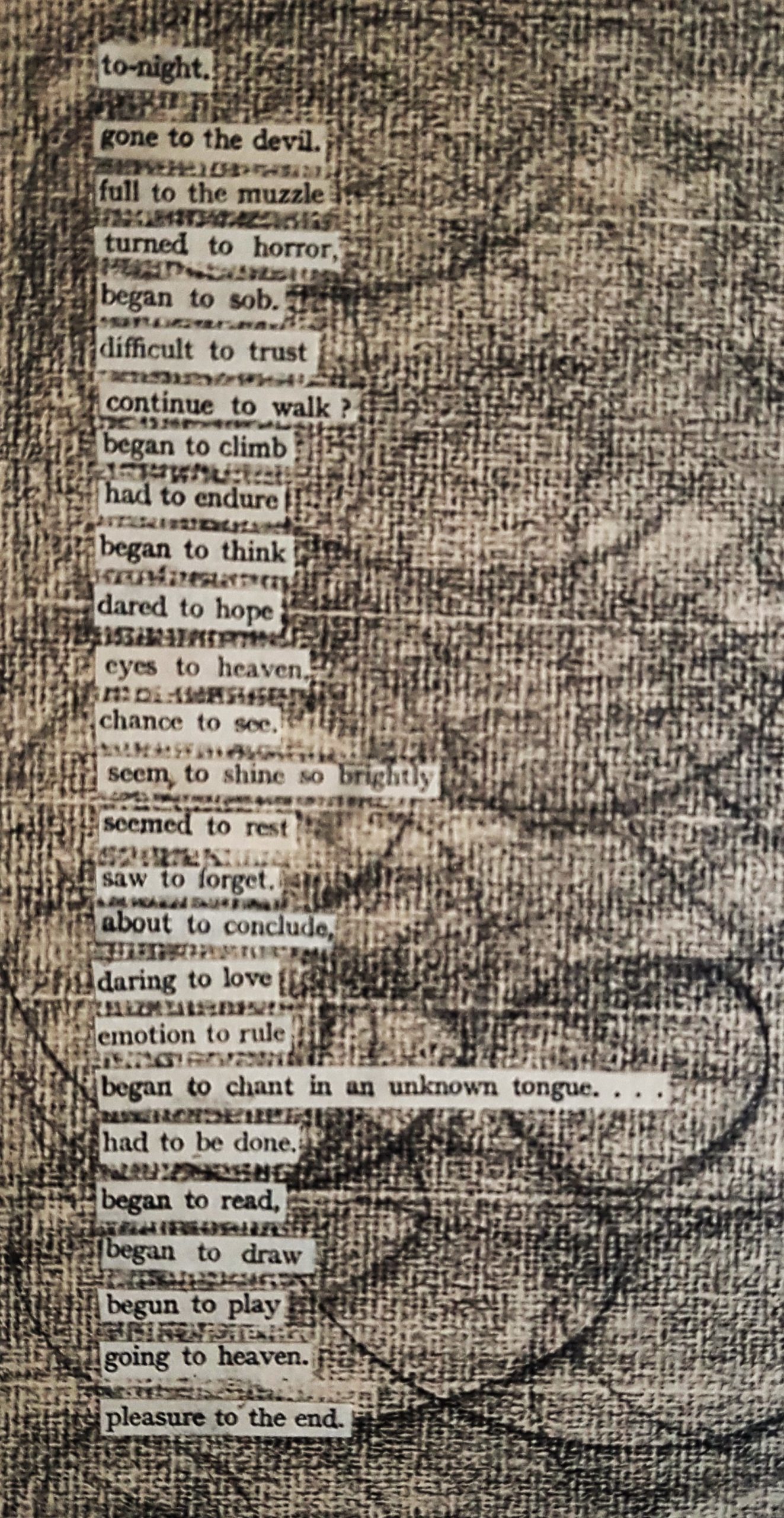
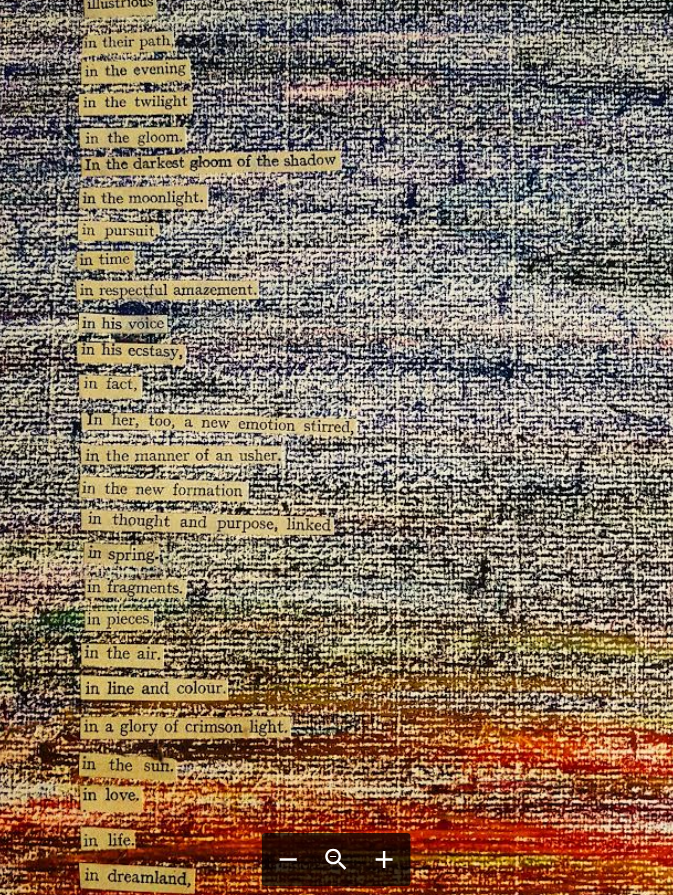
Janna Aza Karpinska constructs concrete visual poetry by pasting prepositions onto canvas and finishing the phrases in various ways. Texas Fontanella’s music involves rhyming couplets from fellow Synch Chaos concrete poet Mark Young. Marieta Maglas’ poems involve multiple senses, seeming at once tactile, auditory, and visual. Mark Young takes a similar approach to his ‘geography’ paintings, creating visual landscapes of imaginary places that highlight form, color, and text. J.D. Nelson peers at everyday foods through an off-kilter lens in short pieces that inspire second and third looks.

Quademay Usanova looks at language in an academic manner, comparing word formation in the Uzbek, Russian and Karakalpak languages. Halimova Nilufar Hakimovna explores various approaches to teaching linguistics, while Norbekova Rano probes the language of mathematics, discussing the history of the concept of the integral in calculus. Muntasir Mamun Kiron extols the elegance of science and electricity and power generation technology.

Madina Fayzullaeva outlines ways to improve and enhance digital education tools while Aziza Amonova explicates the results of a new Uzbek assessment of reading levels. Feruza Axmadjonova suggests methods for teaching English to very young children while Shoshura Khusenova offers up practical suggestions on how to teach language learning to a class of mixed abilities and experience.

Saodat Kurbanova evokes the experience of writing a poem, getting outside of herself and stepping into a sense of broader consciousness.

Ballpoint pen at an angle photographed up close, pointing to the viewer. On a concrete table. Photo is black and white.
Image c/o Haanala76

Dilfuza Dilmurodova’s strident poem combines personal and national pride. Rahmiddinova Mushtariy offers up a poem of thanks to her mother, her kind teacher.

Zilola Khamrokulova reviews Ahmed Lufti Kazanchi’s book Stepmother, which extols the values of compassion and kindness for those in need, even those beyond your own family. Nosirova Gavhar’s short story advocates compassion for orphans and the poor. Nigar Nurulla Khalilova invites the forge of life to fashion her as an instrument for goodness and humanity.

Michael Robinson relates the powerful tale of how faith and family saved his life from drug abuse and loneliness. Kristy Raines highlights the beauty of a deep and caring marriage. Annie Johnson reflects on the steady joys of a long and committed relationship and family in her elegant poetry.

Ari Nystrom-Rice speaks to the moment where a couple’s individual life journeys merge into one, while Lilian Dipasupil Kunimasa envisions a world without race, class, or gender prejudice where all people are free to live their dreams. Jacques Fleury suggests how to navigate complex dialogue on sensitive issues without losing sight of others’ humanity.

We hope that this issue provides a jumping-off point and ideas for you to engage in conversation with people around you.

Essay from Quademay Usanova

Young Central Asian woman with dark, short, slightly curly hair, a red and yellow and pink headscarf, a white blouse and a red patterned vest.
Quademay Usanova

WORD COMPOSITION COMPARISON IN UZBEK, RUSSIAN AND KARAKALPAK LANGUAGES

Nukus State Pedagogical Institute 

named after Ajiniyaz

First level student of  Uzbek language 

foreign language groups 

Faculty of  Turkish Languages

USANOVA QADEMAY MURATBAY QIZI 

Phone: +99891 305 69 79

Email: qademayusanova@gmail.com

The nature of word forms in Uzbek, Russian and Karakalpak languages is determined primarily by the fact that the Russian language is a flective language, the Uzbek and Karakalpak language is an agglutinative language.

Words in Uzbek, Russian and Karakalpak languages are separated into grammatical sections based on certain character traits. Word categories are initially classified into independent words, auxiliary words, modal words, exclamations, and imitation words. From these, the feature of shapeshifting is characteristic only of independent words. Change of form is referred to as speciation in relation to nouns, as tussification in relation to verbs. 

Russian words are divided into two parts as head shapes: base and completion. The place of completion in Russian words is extremely large, since the completion indicates which category of the word is and expresses the mutual grammatical relationship of the words. In general, in the Russian language, the endings come to denote rod, number, agreement, tense, person and other grammatical meanings. The completion, separated from the base of the word, does not represent a specific grammatical meaning in itself. The concrete grammatical meaning and function of the completion is determined in the sentence, context.  Completion in Russian is an integral part of the word. The word cannot be fully formed without completion. 

In Uzbek, the initial form of words does not have the same completion as in Russian. For this reason, the initial form is synonymous with the base of the word. Affixes that add to the base of the word and express grammatical meaning will not be as colorful in Uzbek as in Russian from form and meaning jiht. For example: uyda, qishloqda, maktabda, soat beshda, mart oyida – at home, in the village, at school, at Five O’clock, like in March.

In Russian, the completion will consist of only one morpheme and can simultaneously represent several grammatical meanings. For example: the –a completion of the книга word in the книга сестры compound indicates the jensky rod, the unit, the head agreement, the –ы completion of the сестры word indicates the jensky Rod, The Unit, The Crow agreement. 

When dividing a word in Karakalpak into a base and a suffix, their base can be used as a singular word at all times . For example: ten’iz, ten’izge, ten’i zden – to the sea, to the sea, like from the sea. 

The made word will consist of a STEM as well as a word-making morpheme. In Uzbek, Russian, and Karakalpak languages, word-making morphemes are also quite different from each other depending on their place in the word. 

In Uzbek, the yasama word composition is mostly in the form of” base+word-making affix”. For example: like ish-chi, bog‘-bon, bog‘-dor-Chi-lik. The pre-base consonant of word-making morphemes is not unique to Uzbek, nor to Turkic languages in general. Only a few prefixes are found, such as be -, ba -, no -, ser – borrowed from Tajik. It is with morphemes that an adjective is made. For example: begʻam, badavlat, sermahsul, noma’lum – impeccable, wealthy, prolific, like the unknown. 

Russian word-making Affixes are associated with the basis, and the basis cannot be used separately without them. For example: the base -ня in the words принять, занять, отнять – accept, borrow, take away cannot be a single word in itself. In Russian, word-making affixes can be used both before the base and after the base, and between the base. 1. Prefixes are used before the base: пере-вод, со-автор, у-ход – translation, co-author, care.  2. Suffixes are added after the base: like зл-ость, тка-ч, учи-тель – anger, weaver, teacher. 3. Among the compound bases, the interfixes –o -,- e -,- i – are used that attach them: рыболов, водопровод, пешеход – angler, water pipe, pedestrian.

Affixes that make a word in Karakalpak are easily distinguished from the base. Without the base word-word-making affixes, yak can also be used as a word: like aqil-li, aqil-siz, aqil-lasiw – smart, foolish, consult. In Karakalpak, word-making Affixes are added only after the base: a’dep-li-lik, taza-la, ten-im, kesh-ki – decency, cleansing, unum, evening. Karakalpak lacks interfixes and prefixes. Sometimes the biy -, na- morphemes entered from the Persian language are added in front of some base, serving to give them only the meaning of indivisibility: biymezgil, nama’lim, biyjuwap – not in time, unknown, unanswered. 

In Uzbek, when different morphemes are added to the base of a word and a new word is made, the base usually does not change. For example: friend-friends, work-worker, month-like monthly. When verbs are toned or a new word is made, the phenomenon of falling, alternating vowel sounds occurs in Uzbek: ong-angla, yosh-yasha, son – sana – to understand, live, date. 

In Russian, however, the phenomenon of sound exchange occurs at the base of a word with the addition of a word-making or word-changing morpheme to the composition of the word. For example: 

1. Consonant sounds alternate: ходить – хожу, ухо – уши, друг – друзья – дружеский, писать – пишу – walking – walking, ear – ears, friend – friends – friendly, writing – writing.  

2. Vowel sounds alternate when verbs are stressed or a new word is made: говорить – разговаривать рыть – рой, пыть – пей – talk – talk dig – swarm, pyt – drink

3. In some cases, with a change in completion, a new sound appears in the core: любить – люблю – любишь, терпить – терплю – терпишь –

4. When The Shape of some words is changed, the vowel sounds in the base fall: сон – сна, уголок – уголки, день – дни – sleep – sleep, corner – corners, day – days

In Karakalpak, the base morpheme is considered to be the main lexical meaning of the word. For example: ko‘riw, ko‘rgish, ko‘rgizbe, ko‘rsetpe. In Karakalpak, the basis is always singular and has a lexical meaning. Therefore, it is not difficult to divide the word into a base and a suffix. For example: in the words basshi, basliq, basqariw, basla, the bas word can be used as a basis, singly. 

In Karakalpak, the basis does not change when word-making or word-changing morphemes are added to the composition of the word. Only in some cases, that is, when a morpheme is added, the end of which begins with vowel sounds, such as p, k, q, they alternate to b, g, g‘ sounds. For example: aq-agʻim, aq-agʻariw, toʻk – toʻgin, kitap-kitabiy – white-flow, white-flow, spill-spill, book-reader. 

It is also worth mentioning that each language relies on the statutes defined in the word composition of the morpheme. In Russian words, first, the pristavka (if there is one), the base, followed by the suffix and the suffix:  без – пол – ез – ный – useless. In Uzbek, however, the base is initially followed by the word-making affix, the word-changing affix: like the oʻqi-tuv-chi-lik – teaching. In Karakalpak, however, a word is made by first adding a base, followed by a word-making affix, followed by a form-making affix: kitap-sha-larinʻizdi – your books . This in turn can cause some difficulties in the comparative study of Uzbek and Russian, Russian and Karakalpak languages. 

REFERENCES:

1. Azizov O va boshqalar O‘zbek va rus tillarining qiyosiy grammatikasi Toshkent.1965.

2. Azizov O. Safaev A. Jamolxonov. O‘zbek va rus tillarining qiyosiy grammatikasi. Toshkent.1986.

3. Bekbergenov A. Rus haʻm qaraqalpaq tillerininʻ salıstırmalı grammatikası. Noʻkis. 1995.

Usmanova Kademay was born on October 9, 2003 in Nukus, Republic of Karakalpakstan. She successfully graduated from school No. 15 in Nukus. He participated in various events and Science Olympiads at the school and took the corresponding places. He can speak Uzbek, Russian, Karakalpak, Kazakh and Turkish fluently.

She is currently a 1st Stage Student of the Nukus State Pedagogical Institute named after Ajiniyaz.

She also has a place in the international arena! In particular, he is a member of India’s All India Council for technical skill development, Argentina’s Juntos Por Letras, Egypt’s creation forum for Culture, Arts and peace, and India’s Iqra Foundation. Her scientific work has been published in Europe, USA, Belgium, India, Russia, Turkey, Italy, Poland, Germany, Belarus, the Netherlands, the United Kingdom. 

Story from Bill Tope

Inside Information

Theresa stood frowning thoughtfully at the framed photo of her and Mike at their wedding reception. The pair of them, cutting the huge cake, resembled the miniatures atop the cake itself. Mike, tall and buff in his black tux and Theresa in her lacy dress, all very traditional. Just the way that Mike’s mom insisted it be. Dawn, Theresa’s sister, had laughed at the virginity and innocence that the ivory gown implied. Theresa and Mike had, after all, lived together for a year prior to their nuptials. Theresa’s mind drifted back to those earlier times, as it often did. She could almost feel the expensive champagne tickling her nose.

A sudden pounding at the front door jarred Theresa from her reverie; it had to be her sister. She was the only one who demanded entrance with such vigor. Probably a holdover from their childhood; Dawn, at 33, was two years older than her sister. Theresa pulled open the door.

“Hi Sis,” gushed Dawn, the way that she did, charging into the living room.

“What’s got you so excited?” asked Theresa. She immediately regretted the question when she saw the expression of insane determination on her sister’s face. This could mean only one thing, Theresa knew.

“I’ve got the perfect guy for you, Te,” Dawn said without preamble. “He’s an actuary, Works at the same firm I do. Makes good money, has one little girl, four-years-old, I think…”

But Theresa was already shaking her head no. “I told you, I’m not ready to date yet,” she said.

“Baby, you and Mike split up more than two years ago,” said Dawn insistently. “You’ve got to get out there and meet people. Date, go out, fool around. He’s a grad of CU, like me, but he was three years ahead of me.”

“Easy for you to say,” replied Theresa, though she knew her sister had a point. Although Mike was out of her life for good, forever, the emotional turmoil lingered, like a bad cold.

“His name’s Doug,” Dawn continued. “He’s free Saturday.” But Theresa was again shaking her head no. “C’mon, Sis, he’s cute,” added Dawn.

“But, that’s the afternoon of your party,” said Theresa.

“So, Doug will pick you up at, say, one, and bring you by. And if there’s zero chemistry between the two of you, then you can kick him to the curb and sleep over and Robert will take you home on Sunday,” she said, referencing her own husband. “Come over, unwind, get loaded.”

“What does he know about me…and Mike?” inquired Theresa cautiously.

Detecting a breach in the dam, Dawn pounced. “Only that you were once married, it ended in divorce, and you’re on the scent.”

“Dawn!”

“Kidding.” Dawn smiled her pixieish smile.

“Does….Doug….even know what I look like?” asked the younger sister. This was a fatuous question, as Theresa had always been the prettiest girl in her class.

“Yes, I showed him a photo and Doug knows you’re profoundly homely,” replied Dawn with a straight face. “He’s interested anyway.” Dawn smiled her gamine smile again. “Should I tell Doug okay and give him your number?”

Finally relenting, Theresa smiled and said, “Okay.”

                                                 .  .  .  .  .

“Oh, she’s beautiful,” said Theresa, fawning over a photo of Jewel, Doug’s daughter.

“Thanks,” he said, with a smile as big as the Rockies, which were just outside the window, in the distance. “She started school just two weeks ago,” he added.

“You mean pre-school?” asked Theresa. “Dawn said she was only four.”

“She just turned five,” said Doug proudly. “Smartest one in her class, too,” he boasted.

“I’ll bet.” Theresa grinned at his enthusiasm. “Where’s her mother?” she asked, then immediately regretted it. Asking questions only invited queries from the other party, and she was not ready to confide in strangers.

“Paula passed away three summers ago,” replied Doug, growing instantly somber.

“I’m sorry for asking, Doug,” Theresa said contritely.

Doug instantly relaxed. “That’s alright, it’s a situation that Jewel and I confront every day. It’s only natural you’d ask.”

Theresa smiled her thanks at his understanding. “Do you want another beer?” she asked.

“No, thanks. I don’t usually drink more than one when I drive.”

Theresa thought this a judicious philosophy, quite at variance from the policy of her ex-. “Do you want to head on over to Dawn and Robert’s, then? she asked.

Dawn’s Labor Day bash was in full swing. As the first informal get together of the fall, it was the last of  the seasonal BBQs in which the neighborhood regularly indulged. Theresa and Mike had been reliable frequenters of the parties, but this was just the second such gathering that Theresa had attended since the divorce. And she wouldn’t be here tonight, unless Dawn had insisted. But, she felt comfortable with Doug — so far.

                                                   .  .  .  .  .

“Hey Mike,” called out Joey, one of his myriad jock friends, all musclebound steroid freaks, to Theresa’s mind. “Go out for a long one.” Having stripped to the waist to reveal his striking, almost sculpted physique, Mike ran thirty yards across the yard and snatched the football effortlessly from the air. Returning the ball to the passer, Mike paused to take up a Big Boy can of beer and drain it in one draught.

Theresa frowned thoughtfully. She knew that Mike would insist on driving them home and, although they were only a mile distant from their residence, he had been consuming an untoward quantity of alcohol. She also knew better than to bring the subject up. ‘Roid rage wasn’t pretty, as the welts on her torso revealed. Mike was always careful to strike her where it didn’t show, she thought dully. And he always apologized profusely afterwards and guaranteed it would never happen again. Time would come, Theresa thought, when his mood swings and proclivity for violence would kill her — or somebody else.

“Men,” scoffed Cindy, Joey’s wife, sitting at a redwood picnic table next to Theresa. “Just a bunch of kids. We’ve been out of high school for nearly ten years and they still carry on so.” She tipped her bottle of beer and sipped. By her slurred words, Theresa could tell  that Cindy was drunk.

“I suppose there’s no harm in it,” said Theresa a little defensively. Mike had been a standout athlete in school and was set for a full-ride scholarship to university when his knee blew out. He had never quite gotten over the disappointment at missing his big chance. Following high school, he had taken a job with his father, operating a backhoe. Profitable work, she thought, but he never seemed to be satisfied with his life. A couple of years ago, Mike had taken up weight-training with Cindy’s husband and several other men, all former athletes.

“No harm in it?” cried Cindy. “That gym candy iis tearing Joey to pieces. The other day, he was pumping iron when our youngest walked into our gym and Joey lost it. He hurled the barbell — 200 pounds — at Sheila.  Didn’t come anywhere near hitting her, of course, and he was just trying to scare her, to show his displeasure,” she said slowly, lingering thoughtfully on the final word. “But shit, Te. What if he hadn’t been in control? He could kill someone! Does Mike ever behave like that?” she wanted to know.

“No,” replied Theresa, shaking her head. “Never.”

                                                       .  .  .  .  .    

Theresa and Doug drifted through the large backyard which was Dawn’s venue of choice for giving parties in the warm months.

“Want a drink?” asked Doug.

“I thought you didn’t drink when you drove,” Theresa reminded him.

“That doesn’t mean that you can’t enjoy yourself, cut loose a little. Besides, you know these people, I only know Robert and Dawn — and you, now,” he said with a warm smile. “Beer?” he asked.

“No,” she said. “I’m good.”

The air was redolent with the savory aromas of sizzling burgers and brats and roasting BBQ. Theresa licked her lips. She was starved. She would just have to wait, as Robert always made a big production of announcing the readiness of the food. Theresa had to hand it to her brother-in-law: he could be a bit of a wiener at times, but he was one hell of a cook.

“Who’s the dude?” asked Joey —  Mike’s old friend from before the divorce — in a hoarse voice.

“I’m Doug Carpenter; who’re you?” came back Doug aggressively, sticking his hand out for the other man to shake.

Taken back by Doug’s sharp tone, Joey gripped Doug’s hand and shook. “I’m Joey. Pleased to meet you,” he murmured, almost to himself. Then he drifted away, looking back several times at the man that Mike’s woman had taken up with.

There were several other of Theresa and Mike’s old friends at the BBQ, and  they all gave Doug the proprietary once over. Theresa sighed and took it in her stride.

                                                     .  .  .  .  .

The phone call from Mike had frightened Theresa. She used her key to gain entrance to Mike’s flat. He had insisted that she have it, in case she ever needed anything. In the ten months since the divorce, she had never used it — till now. As she let herself in, she heard a loud thumping against the walls of the adjacent room — Mike’s bedroom. She hurried forward.

There she found her ex-husband, pounding with his huge fists against the walls of the bedroom. Plaster and lath rained down onto the carpeted floor. So preoccupied was he with destroying his home, that Mike took no notice of Theresa. Lifting her arms helplessly, she rushed forward and placed her hands on his massive shoulders.

“Mike, honey, stop it. Stop it, baby, what are you doing?”

Finally noting the presence of another, Mike halted. His hands were scuffed and bloody. “Te?” he said uncertainly. He was breathing heavily.

“Right here, baby,” she said, cossetting him. Suddenly he began to weep. Theresa was aghast. In their nearly ten years together, she had never seen her husband cry. “What can I do for you, baby?” she implored. He continued to sob. “What happened tonight?” she asked.

“I picked this chick up at Rando’s,” he said, referencing a bar frequented by those in the construction trades. Theresa stiffened a little. Hearing her ex- talk about picking up another woman was still jarring to her, even though they had not shared a bed in nearly a year. But she quickly put her own distress aside to help the man that she still cared about.

“What happened?” she asked woodenly.

“We held an arm wrestling contest, to see who would break this bitch, and I won,” he said with a discordant aura of pride. He looked at Theresa expectantly.

“I knew you would,” she said automatically, the way she knew he expected her to.

“So we grab a couple ‘a six packs and come over here,” he went on, “and I…I tried to fuck her, but I couldn’t!” He blubbered anew. Theresa saw with alarm the heavy acne scars over his bare shoulders.

Rampant acne and sexual impotence were symptoms of steroid use that were very familiar to Theresa, although Mike had had little problem, when he cut back some. She observed his gigantic muscles and knew that he had probably been blending again, or taking steroids with other, equally perilous drugs. She stared at him and realized, not for the first time, that Mike’s use had gotten out of control. It was his ‘roid rage and the fear she lived with which had spelled the end to their marriage and now it was taking him off a very steep cliff. She had to talk him down.

“It was probably all her fault,” Theresa told him. He gazed at her with glassy eyes. What had he been ingesting? she wondered  wildly.

“Yeah?” he asked hopefully.

“She just didn’t have it, is all, baby,” she said, compounding one lie with another. God, she thought, he could hurt himself. Suddenly Mike was too quiet. She peered at him.

“Let’s do it, Te,” he said drunkenly, pulling down his shorts to reveal his flaccid manhood. She could smell the stale beer on his breath. The cannabis rankled her nose.

Theresa winced. This wasn’t what she’d bargained on. “Let’s clean up this room first, Mike,” she coaxed, reaching to move a chunk of plaster from the mattress.

‘No!” he roared, pushing her back on the mattress and pinning her arms.

“Mike,” she yelped, “I….”

“Take it like a woman, or I’ll take it like a man!” he shouted, quoting a line from one of his favorite porn flicks. Swiftly disrobing her, he lunged forward.

Theresa just lay there, bowing to the inevitable, when Mike pulled himself off her and said hoarsely, “I can’t do it again! Oh, God, Oh…” and like a bolt he ran from the room. Desperately, Theresa pulled up her jeans and ran to the bedroom door, only to recoil at the deafening sound of a gunshot.

                                                .  .  .  .  .

Throughout the long afternoon and past the dazzling sunset, Theresa and her date talked of myriad things, but Doug never once made an inquiry into the whereabouts of Theresa’s missing husband or how their marriage ended. She had given him the perfect opportunity with her query as to where Jewel’s mother was. Perhaps he was just being more circumspect that Theresa. At length, she had to ask him.

“Doug,” she slurred, a little tipsy from all the beer, “can I ask you an extremely personal question.”

“Yes,” he replied immediately, as if expecting the query. As if the whole day had been a preamble to her question.

“How did your wife die?”

“Paula died of an accidental overdose,” he told her. She felt the icy chill of contrition plummet the length of her spine.

“Oh, forgive me, I…”

“Like I said, Theresa, it’s only natural you’d wonder.”

“I…my..Mike…”

“I know,” he said. “Dawn and Robert explained how you were still very sensitive about his passing.”

“They did?” she asked, wondering if she had been set up.

“I told them that I’d be super careful at how we discussed our ex-spouses. You see, it’s rather unfair because they told me all about you and you know very little about me. You might say that I possessed inside information that you didn’t.” Then unexpectedly, he said, “I’d like to see you again, if that’s okay.”

Theresa was utterly silent for a long moment, and then looked up into his face. “Yes, yes, I think I’d like that.” After a moment, feeling more relaxed now, she added mockingly, “So Dawn and Robert told you all about me, did they?”

“There’s one thing they did leave out,” he admitted.

She looked up. “And what’s that?” she asked winsomely.

“They neglected to tell me,” he replied with a straight face, “how profoundly homely you are.”

Artwork from Janna Aza Karpinska

Typed phrases starting with "like" on a background of red and orange and yellow and green and brown colors in crayon.
Poetic words using prepositional phrases typed and pasted onto a background of gray black shading and curlicues on canvas.
Poetry with prepositional phrases typed and pasted in yellow fragments onto a canvas background colored in shades of yellow and black and green and blue with red and orange at the bottom.

Janina Aza Karpinska is an award-winning Poet from the south coast of England. She achieved an M.A. in Creative Writing & Personal Development (with Merit), at Sussex University. Her work has appeared in Bath House Journal; Isacoustic; Three Drops Poetry; Willawaw Journal;Ekphrastic Reviewamong others. She makes writing a daily practice, drawing on many influences and employing a variety of styles, particularly interested in the self-imposed constraints employed by experimental writing group OULIPO.