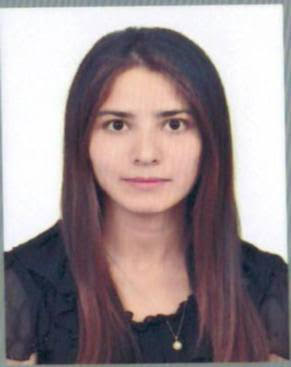
Poetry from Tasneem Hossain

Flowers for Solidarity: Give to Gain

Flowers- the word itself brings joy to all of us. It stirs our imaginations and creates a vivid visual of bright beautiful flowers swaying in the breeze. You can almost smell their fragrance. 

For centuries, flowers have been a powerful medium of communication, overflowing with hidden meanings and emotional symbolism. The tradition of employing flowers as symbols has its roots in ancient Greek, Roman and Egyptian cultures. Egyptians used floral symbolism in their art and religion, the Greeks and Romans associated flowers with their gods and goddesses. 

The captivating power and timeless appeal of floral symbolism have also been skillfully interwoven as a literary device in literature for a long time. Authors from different periods and genres have enriched their stories using the exquisite beauty and varied meanings of flowers. The charm of flowers in Shakespeare’s romantic sonnets; the soulful verses of Emily Dickinson and euphoric description of Wordsworth have breezed through time and continues to inspire both readers and writers. Even now, Floral symbolism plays a significant role in literature, art and  in personal and public celebrations. 

The art of giving specific meanings to flowers, known as floriography, is fascinating. This fascinating language allows meaningful interpretation through different flowers and their colours; the number of flowers and floral arrangements.

For example rose is the universal symbol of love and represents Aphrodite, the goddess of love. Depending on the colours, they have different meanings. Red roses symbolise passionate love and respect and yellow roses convey friendship and joy. Two roses symbolize mutual affection and love, six rose express infatuation. 

While the practice of floriography may not be as widespread today as it was during the Victorian age, the language of flowers continues to captivate us and inspire creativity. 

 “A flower’s appeal is in its contradictions — so delicate in form yet strong in fragrance, so small in size yet big in beauty, so short in life yet long on effect.” — Terri Guillemets

Flowers and women complement each other in a similar way: delicate yet strong.

A traditional way to celebrate International Women’s Day is sending flowers to the women in your life to express your support. 

What flowers should we send? 

Before we delve into this, let’s talk about International Women’s Day. It’s a global event held on March 8th each year to celebrate women’s social, economic, cultural and political achievements; to honour women and their contributions to the family, society and the world; create awareness and to take actions to dissolve gender disparity; focus on women’s rights where education, reproductive rights and violence and abuse against women are addressed. 

International Women’s Day (IWD) has its seed in the labour movement in the US in 1908. About 15,000 women walked through the streets in New York City demanding shorter working hours, better wages and their right to vote. Later women in Soviet Russia brought out processions demanding their rights to vote and this demand was accepted in 1917. It was later recognised as an annual event on March 8, 1975 by the United Nations. 

According to UN, since 2020 COVID pandemic, and conflicts have left millions of people to severe poverty. Conflicts and rising prices may lead 75percent of countries to cut public spending by 2025, negatively affecting women and their essential services. If immediate action isn’t taken 342 million women and girls might be the victims of poverty by 2030. 

Gender equality is also central to Goal 5 of the United Nations Sustainable Development Goals (SDGs), which aims to achieve gender equality and empower all women and girls. The SDGs recognize that sustainable development cannot be achieved without the full participation and empowerment of women. In order to bring in change and accelerate the transition towards a healthier, safer, and more equal world, investment in women sectors must become a top priority. 

We must also remember that Women’s rights are human rights. Women, in all their diversities, regardless of race, ethnicity, class, gender, age, sexual orientation, skin colour, health status, occupation, income and religion need to be celebrated.  

Investing in women and championing gender equality will pave the way to a future where everyone in society will have countless possibilities, flourish and become empowered. Thus, it’s necessary for governments to prioritise gender-responsive financing and increase public spending on essential services and social protection for women; develop and implement fair and transparent policies to protect women’s rights and ensure that women’s voices are heard in decision-making

Each year,  the United Nations observes International Women’s Day with a specific theme highlighting key global priorities. The 2026 theme, “Rights. Justice. Action. For ALL Women and Girls,” draws attention to the legal inequalities women continue to face worldwide. It emphasises that recognising rights is only the first step; those rights must also be protected and implemented in everyday life.

The campaign calls for stronger action to remove structural barriers such as discriminatory laws, weak legal protections, harmful social norms and limited access to justice. It encourages global efforts to promote safety, equal pay and fair opportunities for women in both rural and urban communities.

The campaign theme of 2026 by the International Women’s Day group is “Give to Gain.” This idea highlights the power of generosity, collaboration and shared responsibility in advancing gender equality. It encourages individuals, communities and organisations to actively support women by contributing time, resources, opportunities and knowledge.

Supporting women is an investment in society’s progress. Mentoring young girls, advocating for fair workplace policies, supporting women entrepreneurs, and promoting access to education are just a few ways individuals and institutions can contribute. When women succeed and thrive, communities grow stronger, economies expand and societies become more stable.

International Women’s Day is therefore not only a celebration but also a reminder of responsibilities. It encourages both women and men to work together to challenge discrimination and promote fairness. Achieving gender equality should not be seen as a women’s issue alone; it is a human issue that affects the well-being of entire societies.

IWD is a day to show solidarity with all the women in the world and has a logo. But in some parts of the world, it also has a floral symbol, the Mimosa. 

Though IWD was observed since the early 1900s in America and Europe, it wasn’t until March 8, 1946, that flowers began to be closely associated with this day. 

It originated in Italy. Though the first Women’s Day in Italy was celebrated in 1922, it took on a particular meaning in 1945, when the Women’s Union in Italy regained rights to vote lost under Mussolini’s Fascist regime. Three members of the Unione Donne Italiane (a women’s rights organisation) nominated the Mimosa flower as a symbol to represent IWD. Despite having delicate flowers, it grows even in harshest conditions just like women. It was picked as a symbol of strength, sensitivity, and sensibility. 

Since then, the tradition of giving flowers on this day to express solidarity and honour women has continued. Although the mimosa flower has a special significance, there are many other flowers to choose from. 

Gifting roses on any occasion is always a great idea. It’s estimated that flower shops sell more than 150,000 roses on this day in shops across Russia alone. Roses, generally, spread the message of love and romance. But different colors of roses have their own specific meanings. 

Since, the color theme for the day is associated with purple signifying justice and dignity, giving purple roses and pink roses are an excellent choice to express admiration to the women in your life. 

Carnations are a great alternative. These flowers signify respect and friendship. White carnations represent luck, and pink carnations represent admiration and gratitude. Red carnations are also a popular pick. 

Lotus symbolise creation, rebirth, and the sun. The blue lotus signifies spiritual enlightenment and the white lotus symbolises purity.

Lilies signify purity, beauty, passion and devotion. Also, according to the Greek myth lilies are associated with fertility, motherhood, and rebirth.

Chrysanthemums or Tulips can be wonderful options. Chrysanthemum not only  represent good fortune and happiness, but also symbolise honor and compassion. Tulips symbolize love, rebirth, charity and respect.

A combination of purple, green and white colour symbolises the equality of women which originated from the Women’s Social and Political Union in the UK in 1908. Green symbolises hope and white purity. There’s a new introduction of yellow colour representing a ‘new dawn’. It’s commonly used to signify a second wave of feminism. Thus purple with green represents traditional feminism, purple with yellow represents progressive contemporary feminism. Pink, purple, green and white, and green are the colors that are connected to the IWD celebration theme every year. 

To express your solidarity, a gift with the combination of flowers of these colours to the women, you admire, can work as a driving force for them. Our collective efforts to lift women up will help women break the glass ceilings. 

As we celebrate International Women’s Day 2026, let us reaffirm our commitment to create a more equitable and inclusive society for women around the globe. Giving them power and voice can bring a better, beautiful tomorrow. 

Let’s celebrate women’s achievements; take action for equality, stress on equity and invest in their welfare.

It starts from our own households first, then the society, educational institutions, our workplaces and the world around us. 

Be the one to champion women’s rights. 

Show your support by sending flowers to the special women in your life. 

Tasneem Hossain, a multi-lingual poet, author, educator, translator and columnist from Bangladesh has left an undeniable mark on the literary world. With a major in English language and Literature, she is a prolific writer who crafts poetry in English, Bengali and Urdu. Her works span from poetry, fiction, op-eds, translations and educational writings making her a versatile and influential literary figure.   

She has immersed herself in the timeless essence of literary creations. She believes, ‘poetry is music through words, an ever-flowing river reflecting all that surrounds us.’ Tasneem writes poetry only when her passion is aroused and this can be observed in the powerful flow of her ink.  

Her op-eds and columns create awareness about social and human rights issues- including domestic abuse, war and peace. Her writings are a powerful call to humanity to stand against injustice and war. As an op-ed writer, she has written more than 165 articles. 

Several of her articles and poems are utilized as teaching material in universities and academies in Bangladesh and China; some have found their way into university research papers and some have been referenced in university research papers.

She also conducts international workshops on haiku writing.

A strong literary presence, she is a multifaceted author, a talented and gifted soul, an experienced educator and a business leader. her profound and emotive writings have captured the hearts and illuminated the lives of countless of readers worldwide. Tasneem’s works have transcended geographical boundaries, reaching readers from diverse cultures and backgrounds. Her impactful writings have been featured in more than 280 esteemed anthologies, journals, daily newspapers and international magazines worldwide. Some of her books are available in 40 countries.

Adjudged the ‘100 most influential literary figures of 2025’, by Barcelona Adibia, She is the winner of The International Literary Association Creative Tribune, Walt Whitman 2025 Contest and first place holder in the English Language category of The International Literary Association CREATIVE TRIBUNA’s ” Friedrich Schiller International Literary competition 2025. She has won many other awards and recognition from different literary groups around the world. Her poems have been translated in 14 languages and her powerful writings are regularly featured in esteemed publications around the globe. A member of World Writers’ Union, she has been recognized as World’s Contemporary Writers 2024 in several anthologies and interviewed on several literary platforms in recognition of her contributions to world literature. 

She is the Editorial Ambassador, Bangladesh for the popular international literary magazine, Wordsmith International Editorial, USA and Board Ambassador of Literacy and Culture of the Asih Sasami Indonesia Foundation, Indonesia for five years (2025-2030). 

An author of three poetry collections—Grass in Green, The Pearl Necklace, and Floating Feather and a book of articles Split and Splice, she also leads an international poetry project and group called Life in Lyrics. Additionally, four more books are currently in progress.

She served as a faculty member of Business English at Chittagong University of Engineering and Technology. Currently, she is the director of the prominent human resource development organizations, Continuing Education Centre (Bangladesh), and Cansaz Services and Distribution LLC (Canada). With 28 years of experience, she is a highly regarded Business consultant, and English Language and Communication Management trainer. 

She actively participates in sports whenever the opportunity arises. She also participated in the national badminton championships in Bangladesh. For 10 years, she worked as a newscaster, commentary reader, interviewer and radio presenter for Radio Bangladesh. She has also directed plays, including Shakespeare’s ‘A Midsummer Night’s Dream’.

You can connect with Tasneem Hossain through email: cec.tasneem@gmail.com 

Linkedin: https://www.linkedin.com/in/tasneem-hossain-280b891aa/ 

Poetry from Dr. Jernail Singh Anand

Fingers Crossed 

I am thankful to the people

Who are committing evil

And getting disgraced 

I also have a storehouse of Evil

Thank God there are some 

Lighthouses of Evil

Whose presence obscures mine

Which I carry in little doses

While the world  believes

In spectacle 

And lionises only those whose 

Evil becomes public.

I am a petty inn keeper

Evil thoughts saunter in 

To spend a night 

And move off in the morning.

I wear great smiles 

Which ward off examination 

And help me pass for a gentleman.

Powers know I am useless 

So, they go for corporates of evil.

Who shine from afar and direct ml

Many a sailing bark of waters 

Where they are darker, denser 

And where chances of boot

Stand out as nearly certain.

Had they not been there

My evil would have come into notice 

Bringing disgrace to me

But see, 

I find evil centralised

In outstanding spaces

Which helps keep 

The general run of humanity 

Comparatively free 

From a sense of guilt.

Whenever a finger is raised,

I point my finger at the Lighthouse 

Making critics keep their fingers crossed.

Dr. Jernail Singh Anand, with an opus of 190 plus books, is Laureate of the Seneca, Charter of Morava, Franz Kafka and Maxim Gorky awards.  His name adorns the Poets’ Rock in Serbia. Anand’s work embodies a rare fusion of creativity, intellect, and moral vision. He is President of the International Academy of Ethics. 

Poetry from To’khtaboyeva Nilufar No’monjon qizi

Victory 

There are many choices, many, many

Don’t sit still, choose one 

Go for victory, striving

Start now, before it’s too late 

We, the descendants of Amir Temur

Let’s take a step without fear 

Let’s not give way to rivals Let’s be honest people 

We are children of an independent country 

Our president created the opportunity 

If you bring victory 

Our people are also happy every moment 

We won! Victory! Victory! 

May the voice of “We won!” come with blessings 

If we achieve victory 

May victories be blessed

To’khtaboyeva Nilufar No’monjon qizi, 1st year student, Faculty of Philology, Journalism Department, Namangan State University

Poetry from Dessy Tsvetkova

Hope

The most important for our life,

the most difficult to achieve,

it’s peace!

I do remember since

my childhood,

there were always war and conflicts

near Persian Gulf…

Today I see the Syrian girl with tears

in her eyes,

missing home.  

Let it be, peace! 

Peace for the world!

Christopher Bernard reviews Opera Parallèle’s production of La Belle et la Bête

La Belle et la Bête – Opera Parallèle (Photo: Stefan Cohen)

La Belle et la Bête

Opera Parallèle

Zellerbach Hall

Berkeley, California

Beast Against Beauty

A review by Christopher Bernard

Over a recent weekend in March, Cal Performances hosted an original production by the local company Opera Parallèle, combining movie and stage, of Philip Glass’s uniquely beautiful conversion of Jean Cocteau’s classic film La Belle et la Bête into a cinematic opera.

The original “Beauty and the Beast” was written by the eighteenth-century French novelist Gabrielle-Suzanne Barbot de Villeneuve and appeared in her book La Jeune Américaine, et les Contes marins. The story, set in a romanticized High Renaissance France of François Premier and Diane de Poitiers, was later revised and abridged by Jeanne-Marie Leprince de Beaumont in the version best known down the generations. The story’s magnetic appeal has never weakened; in the age of toxic masculinity, it has never been, in some ways, more timely.

To say nothing of the aggression inherent in all masculine sexuality: Has there ever been a sensitive young man in love with a beautiful woman who did not, at some time, darkly suspect that, in reality, he was ugly, disgusting, unworthy of either loving or being loved—a beast indeed? Has there ever been a woman who wasn’t afraid at some point of bringing out the beast in the man who claimed he loved her? And, the claims in the fairy tale notwithstanding, how often has it occurred, not that the beast turned into Prince Charming, but that Prince Charming turned into the Beast?

Cocteau’s film, a masterpiece of French surrealism from the middle of the last century, contains some of cinema’s most famous sequences: the line of chandeliers held by disembodied arms protruding from a corridor’s halls, the moving eyes in the faces carved into a mantel above a blazing chimney fire, a pearl necklace turning into a writhing snake in the hands of a wicked sister, the dissolves from beast to human and from human to beast, and Belle’s gliding down a night-time hallway with windblown curtains without apparently stirring a foot, to name only a few.

The original script, itself rich with poetry yet containing enough realism to empower the magic, and Georges Auric’s film score work with these magical images to create a world of consummate fantasy speaking the curious truths poetry is uniquely capable of expressing. Philip Glass’s decision, half a century after the film’s release, to strip out and replace not only the soundtrack and sound design but all the dialogue as well into an immense musical fabric proved to be, not only as provocative as any surrealist gesture, but brilliantly successful and entirely aligned with the soul of the work. Unlike the notorious mustache on the Mona Lisa, Glass’s gambit enhances and even completes the work in a way one can only feel the original artists (with, of course, the possible exception of the silenced M. Auric) would have completely approved. It doesn’t displace the original but provides a perfectly viable alternative.

When I heard about Opera Parallèle’s production, I imagined one of three possibilities: a straight screening of a silent version of the film, with sound provided by live singers and instrumentalists, much like what I was lucky to experience on my first exposure to Glass’s setting. Or it might be an entirely live staging, with a few discreet bows to the film. Or it might be the most interesting but most perilous of the three: a fusion of the film with live action. But if they tried the latter, how would they solve the problem at the heart of any such attempt: how integrate the two without their blundering regularly and clumsily into each other? Because if staging and film weren’t merged into a seamless whole, it could be, indeed would be fatal: the genius of the film would require equal genius, above all in judgment, taste, and tact, in the staging, otherwise it would be in danger of overbalancing, then irretrievably sinking, the performance.

If this third choice were attempted, surely (I thought) the director would realize that film and staging would need to alternate; presenting them both at the same time would have to be generally avoided, for obvious reasons: the audience would not know which one to watch, the staging or the screen (or if two screens were used, which screen?). Staging theater is not like staging a dance or a concert, where multiple strands of movement or sound can be processed by the human mind without what is aptly called brain freeze.

One of the main problems was that some in the audience might resent any attempt to deflect their attention from the brilliance of Cocteau’s film. Concentrating the audience’s focus is, of course, one of any stage director’s primary responsibilities; diffusing attention must be avoided except for brief periods and for reasons that are perfectly clear to the audience as well as emotionally telling, whether dramatic or comic. And deliberately dividing their attention can court disaster.

Alas, this production did not solve the problem described, mostly because it did not seem to realize there was a problem to solve in the first place. The film and the staging stubbornly refused to combine; at times, they even stood in hostile and irreconcilable opposition: the concept for the piece was often at war with the piece’s aesthetic, with frustrating consequences.

Almost all of Cocteau’s film was screened on a darkened wall placed mid-stage as part of the handsomely designed and lit set (kudos to the unnamed set designer). At apparently random moments, live singers, in full costume, walked onstage and, distractingly, more or less imitated what appeared on film. In a few instances the film was paused and the action of the story was given entirely by live singers on stage. These few scenes were the most effective in the performance; effective enough for one to wish there had been more.

To add to the problem of divided attention, there were also a (gratefully) few attempts to screen a second film, which again imitated the action in the Cocteau. The concluding scene of the production abandons Cocteau’s film entirely, replacing it with a shot-by-shot imitation of the film’s famous concluding sequence, this time of the singers we had seen live onstage. If this was meant to bring all of the elements of the performance together in a transcendent conclusion, it was only partly successful.

It is always dangerous to fiddle with a masterpiece once; to fiddle with it twice can be fatal.

Fortunately, the musical elements of the evening came off, for the most part, very well: Hadleigh Adams was in excellent form in multiple roles, including the Beast, as was Chen Kang as Belle. Sophie Delphis did fine double duty as both of the evil sisters, and Aurelien Mangwa was strong-voiced in three well-differentiated roles. Nicole Paiement conducted the small but powerful ensemble, perhaps pressing too hard at times on the volume. The wonderful costumes were designed by Natalie Barshow, and not to be forgotten, given the opulence of the era in which the story takes place, were the hair and makeup designs by Y. Sharon Peng.

_____

Christopher Bernard is an award-winning novelist and poet. His most recent book is the poetry collection The Beauty of Matter.

Synchronized Chaos First March Issue: Fingering the Spines

Tunnel of Books in a Prague bookstore, c/o Petr Kratochvil

Regular contributor Bill Tope has launched a new literary magazine, Topiary, which is now accepting submissions! Please send short stories to billtopiary1950@gmail.com.

In March we will have a presence at the Association of Writing Programs conference in Baltimore which will include a free public offsite reading at Urban Reads on Friday, March 6th at 6 pm. All are welcome to attend!

So far the lineup for our reading, the Audible Browsing Experience, includes Elwin Cotman, Katrina Byrd, Terry Tierney, Terena Bell, Shakespeare Okuni, and our editor, Cristina Deptula. If there’s time, an open mic will follow.

Our Urban Reads bookstore in Baltimore

Our next issue, Mid-March 2026, will come out Sunday March 22nd.

Yucheng Tao announces the winners of his poetry competition, Steve Schwei and Mark DuCharme. We’ve invited both winners to submit their poetry to Synchronized Chaos for everyone to read!

Now, for March’s first issue! This issue, Fingering the Spines, pays homage to our annual in-person reading, the Audible Browsing Experience. It’s a visual metaphor for looking through various titles in a global bookstore or library.

Genevieve Guevara rings in the dynamic energy of the Fire Horse for Chinese New Year.

Odiljonova Mohlaroyim Iqboljon qizi celebrates the many styles of Uzbek spoken word art. Umarova Gulsevar Ubaydullo qizi highlights the rich semantic and lexical expressiveness of the Uzbek language. Shuhratova Mohinur Abbosjon qizi explores the layered meaning of “k’o’ngil” (heart) in the Uzbek language.

Image c/o Lode Van de Velde

Jesus Rafael Marcano celebrates the beauty of France, likening the nation to butterflies. Timothee Bordenave honors the beauty and majesty of Christian faith, as shown through Notre Dame. Su Yun’s abstract work reflects a meditative, spiritual sensibility. Soumen Roy describes a physical and mental journey towards spiritual inspiration.

Abdumajidova Zuhroxon Ibrohimjon qizi explores themes of hardship and endurance, destiny, faith, patriotism, and loyalty in Shuhrat’s classic Uzbek novel Oltin Zanglamas. Iroda Ibragimova explores themes of resilience and human dignity through oppression in Shukrullo’s novel Buried Without a Shroud. Bakhtiyorova Zakro Farkhod qizi speaks to the role of the short story in Uzbek literature. Ro’zimatova Madinaxon Sherzod qizi analyzes themes of strength, weakness and humanity in Abdulla Qahhor’s story “Ming bir jon.” Anvarova Mohira Sanjarbek qizi contributes a heartfelt poem from the perspective of Gulchehra, a character in O’lmas Umarbekov’s “Being Human is Hard.”

Azimov Mirsaid draws on Ray Bradbury and traditional Uzbek crafts and hospitality to illustrate the value of human warmth and imperfection. Dr. Jernail Singh Anand urges humanity to look into the words of our past and present writers and philosophers for wisdom in this age of great technological advancement. Dr. Jernail Singh Anand also expresses hope for the continuance of human creativity in the age of artificial intelligence. Daniela Chourio-Soto renders all-too-human morning sleepiness with lively humor. Eva Petropoulou Lianou explores the feelings and inspirations of emerging Greek painter Vivian Daouti.

Author Victoria Chukwuemeka discusses her creative journey towards exploring psychology and the subconscious, becoming deeper and more straightforward in her words. Kassandra Aguilera’s work mourns her speaker’s incompleteness, probing whether we need observers to fully realize ourselves. Ananya S. Guha reflects on distance, separation, and reunion, how roads can both bring us apart and together.

Image c/o Petr Kratochvil

Emeniano Somoza poetically compares creative writing and glassblowing: arts where creators shape, rather than force, their materials. Poet Su Yun collects a set of poems from children at the East-West Public School in Bangalore on the theme of “the power of the pen vs the sword.” Taylor Dibbert’s short piece is almost anti-poetry, suggesting without communicating a metaphor.

Stephen Jarrell Williams’ poetry speaks to the risks and joys of openness to emotion and experience. Komilova Parizod reminds us to make the most of our lives and appreciate the joy around us. Priyanka Neogi urges us to act with wisdom and restraint. Boymirzayeva Dilrabo highlights the importance of motivation and discipline in reaching one’s goals.

Sobirova Oydinoy Nozimjon qizi discusses symptoms and types of neurosis. Mashhura Ochilova speaks with poignance and grace of a young woman’s inner battle with depression. Graciela Noemi Villaverde speaks to gaining wisdom through life’s losses. J.J. Campbell’s voice is older, raw, bruised, with hard-won exhaustion and experience.

Axmedova Gulchiroyxon expresses her tender love and concern for her mother. Nurmurodova Masrura Xurshedovna honors the patient, dedicated, behind-the-scenes love of her father. Gulsanam Sherzod qizi Suyarova explicates the value of friendship and how to be a good friend. Aminova Feruza Oktamjon kizi celebrates the beauty and innocence of young love. Qozoqboyeva Husnida yearns with devotion for her soulmate’s arrival. Mesfakus Salahin falls into a reverie about a fanciful love that exists between his imagination and his memory. Prasanna Kumar Dalai smiles through a delicate and tender love. Joeb expresses his hopes for personal and global love and peace. Lan Xin celebrates transcendent union with all others and the universe, with the world as her homeland, in her fanciful dinner piece. Husanxon Odilov laments a love which he acknowledges will never return. Nicholas Gunther reflects on a high school lost love or friendship through a casual ghazal. Bill Tope and Doug Hawley present an unusual relationship arrangement that seems to make several older people happy. Masharipova Yorqinoy Ravshanbek qizi celebrates the tenderness of a mother’s love. Brian Barbeito’s gentle childlike piece creates a surreal atmosphere rich in memory and care. Orzigul Sharobiddinova Ibragimova versifies her love and longing for her Uzbek homeland.

Image c/o Kai Stachowiak

Zarifaxon Nozimjon Odilova qizi highlights the historical contributions of Uzbek statesman and humanist leader Zahriddin Muhammad Babur. Toshkentboyeva Xumora outlines the contributions of Amir Temur to modern Central Asian statecraft. Poet Lan Xin highlights the wisdom and compassion of Chinese Dongba cultural leader Wan Yilong. Abdusaidova Jasmina explicates themes of spirituality, heritage, and love in Alisher Navoiy’s writing. Abduxalilova Shoxsanamxon Azizbek qizi celebrates the benefits of reading culture for society.

Murodova Zarin Sherali qizi explicates the importance of language learning in world communication and international and intercultural relations. Khusanjonova Mukhtasarhkon Khamdamjon qizi discusses how podcasts can help those learning English as a foreign language. Turdimuradova Zulfera Sattor qizi analyzes the use of blended learning in teaching English as a foreign language. Suyunova Zuhra Oybekovna speaks to the importance of writing skills to language learning.

Olimova Marjona Ubaydullayevna celebrates the literary heritage of Zulfiya and her themes of patriotism, women’s dignity, and compassion. Munisa Yo’ldosheva highlights how Zulfiya’s life influenced her works and her contributions to supporting emerging authors. Nozigul Baxshilloyeva discusses emotional and spiritual themes within Zulfiya’s work and how they affect Uzbek readers. Sultonova Shahlo Baxtiyor qizi highlights the literary and cultural influence of Zulfiya’s poetry. Jurayeva Barchinoy does the same, while also highlighting her commitments to education and women’s rights. Nematullayeva Mukhlisa Sherali kizi relates the value of Zulfiya’s work through a narrative story. Gayratova Dilnavo highlights the enduring legacy of Zulfiya’s work, especially what it means for many Uzbek women.

Loki Nounou’s piece dramatizes a woman stripped of her individuality in a toxic marriage, becoming only a vessel to hold others’ dreams. Abigail George probes the maternal and domestic as both sacred and violent, an origin and a wound, along with critiques of colonialism and the power of self-kindness. Manik Chakraborty calls for a natural, spiritual feminine awakening. Asadullo Habibullayev warns of the dangers and social injustices young women can face in Uzbekistan, even when educated, and calls for the younger generation to respect the wisdom of their elders. Eva Petropoulou Lianou urges respect for women and for the roles women play in society, including motherhood. Maxmarajabova Durdona Ismat qizi celebrates the love and care of human mothers and the value of Mother Earth.

Image c/o Sulvia

Zamira Moldiyeva Bahodirovna analyzes what the nature motifs in Alexander Feinberg’s work reveal about his thoughts on memory and identity. Noah Berlatsky draws on trees to illustrate our shared human heritage, how we connect to each other and hold each other up. Dilafruz Muhammadjonova presents a natural and cultural tour of Uzbekistan’s Andijan province. Suyunova Fotima Oybekovna reminds us of how crucial it is to preserve the environment. O’gabek Mardiyev outlines ways to improve the efficiency of solar power generation. Shavkatova Mohinabonu Oybek qizi urges improvements in Uzbek public transit to encourage tourism as well as benefit ecosystems. Sultonaliyeva Go’zaloy Ilhomjon qizi analyzes the social, cultural, ecological and economic aspects of tourism in Central Asia. Turgunov Jonpolat discusses the ways in which media framing of climate issues affects how people address the problem. Surayyo Nosirova highlights the need for more consistent communication from journalists to the public about climate change in Uzbekistan.

The works of primary school children in China, collected by Su Yun, reflect moments of happiness and ordinary summer fun in nature. Alan Patrick Traynor’s Irish-inspired piece becomes incantatory, mystical, inhabiting littoral and transitional zones at the ocean’s edge. Tea Russo’s spiderweb poem seeks both expansive transcendence and the peace of oblivion, melding into various aspects of nature. Turkan Ergor dreams of the permanence of the ocean’s waves. Eleanor Hill reflects on the calm strength and dignity of a whale, unbothered while creating waves and blowing bubbles. Ri Winters turns to the ocean and its kelp forests as metaphor for the deep, isolating, yet restful morass of depression.

Brian Barbeito sends up a preview of his book Of Love and Mourning, highlighting the original content and the memorials to beloved pets who have passed. Filmmaker Federico Wardal celebrates a film award for a very humane documentary about veterinary care that saved the life of a racehorse. Jerrice J. Baptiste’s piece, accompanied by gentle, colorful artwork, expresses a graceful and natural surrender to death. Sayani Mukherjee’s piece sits between devotion and restlessness, calling the sky a neighbor yet screaming at stars. Mykyta Ryzhykh crafts a fevered love elegy at the edge of war, eros, and annihilation.

Patrick Sweeney sends up a set of index cards from a memory archive. Mark Young’s altered geographies trace the outlines of innocence, memory, and rupture. John Grey’s urban character and landscape pieces show dry, unsentimental grace.

Image c/o Jacques Fleury

Duane Vorhees’ poetry meditates on time’s circularity, embracing contradictions and the past, present, and future. Ibrahim Honjo reflects that one day his home and everything he knows will fade into memory. Christopher Bernard continues exploring hope, ruin, and creative resilience in the second installment of his prose poem “Senor Despair.”

Maja Milojkovic speaks to the implacable ticking of conscience. Mahbub Alam laments the selfishness and wickedness of humanity. James Tian dramatizes the pain of being underestimated, dismissed, and misunderstood. Mark Lipman calls for greater taxes on the wealthy and for economic egalitarianism. Jacques Fleury hoists his commentary on the fragility of modern democracy on the scaffolding of an extended construction metaphor.

Rahmatullayeva Elmira Rahimjon qizi discusses how we form the value systems that guide our lives. Abduraufova Nilufar Khurshidjon qizi outlines the national values and traditions of the Uzbek people. Islomova Maxsudaxon Axrojon qizi explores ways to inculcate values into Uzbekistan’s young people in school through exposing them to the great thinkers of their heritage. Botirova Mubina looks into ways Uzbekistan’s civil society can uplift teens and prevent delinquency through communicating their national values. Abdullayeva Ezozaxon Qobuljon qizi highlights the importance of social and financial investment in education. Ismoilova Jasmina Shavkatjon qizi highlights the importance of quality education for social progress.

Axtamova Orastaxon Salimjon qizi outlines strategies to assist autistic children’s psychological development. Rajabova Nozima highlights methods of improving young students’ reading comprehension. Dildoraxon Turg’unboyeva outlines the effectiveness of play-based learning methods in education. Sevara Tolanboy Mahmudova qizi discusses educational games for preschoolers. Turgunboyeva Dilafruzxon highlights the importance of preschool education to a child’s development. Muxlisa Olimjon qizi Tursunaliyeva and Adhamova Irodaxon Akmal qizi discuss ways to help educate children with learning disabilities. Dilnora Habibullo qizi discusses interactive methods for teaching children with and without special needs. Burhonova Lobar outlines suggestions for working with children on the autism spectrum. Hikmatova Nigorakhon Hasanboy qizi discusses how to upgrade physical education and make the activities more interactive. Turg’unova O’g’iloy Ravshanbek qizi discusses ways to incorporate physical activity into children’s academic education. Shahobiddinova Sevinch explores the use of educational games in primary education. Arziqulova Adiba details various interactive strategies for engaging young children in educational activities at school. Mashhura Kamolova analyzes the limitations of examinations in terms of measuring student capabilities.

Image c/o Victoria Borodinova

Orinboyeva Zarina discusses how to help children psychologically and emotionally navigate their parents’ divorce. Botiriva Odinaxon elevates the teaching profession and calls for professional development and competence in those who educate young children. Nishonboyeva Shahnoza speaks to her wisdom and dedication towards her goal of becoming a preschool teacher.

Kadirova Feruzakhan Abdiyaminova discusses interactive games that could be useful in science education. Oroqova Nargiza outlines the rise of allergies in children and speculates on the causes. Umidjon Hasamov highlights the potential for artificial intelligence in medical diagnostics. Yunusova Sarvigul Siroj qizi highlights the importance of early screening for gastrointestinal cancer. Rajapova Muqaddas Umidbek qizi highlights the structure and function of the circulatory system.

Shohnazarov Shohjaxon highlights the impact of inflation on a nation’s economy and strategies for managing it. Mamadaliyev Kamronbek highlights the need for cybersecurity technology and cautions about cyberattacks as a weapon of war.

Dr. Jernail S. Anand calls out poets and academics whose lofty ideas don’t connect to present-day reality. While we are all capable of flights of fancy, we hope that this issue is grounded in our world and our humanity.

Artwork and prose from Jerrice J. Baptiste

A Woman and A Dove in A Dream

On my friend’s farm, I walk in hay. Stop at the sight of a dove with a broken wing. Its feathers are stained red with blood and eyes sink in their blue sockets fighting to remain open. The sun pierces gray clouds. My fingertips stroke its oat-colored silk beak, throat parched by yellow rays. I sit by the dove in the corner of my world reciting Hafiz’s verse, your separation from God is the hardest work in this world. Just rest.  Life sustaining force vanishes. And in the mauve nook of its wings, blood dries becoming darker, the red color of cherries’ flesh in June. My fingertips stroke the plumage of its crown. Both wings collapse in the hay absorbing essence of fluid from veins, arteries and dark chambers. I’m mourning a morning dove. Peace has been stained and the two of us wait for rain to cleanse our souls. My arms open to the drizzle, face in mist. Nature gives a little reprieve then it showers us with grace. My bare legs, and arms spread apart and back rest in the softest nest. A five-pointed star surrender to the universe. How did the dove know to rest its body in hay to take its last breath?  In this our home we gather our strength, then hand over the heaviness onto earth’s bed. 


Jerrice J Baptiste is a visual artist, poet, author of nine books. Her watercolor drawings on paper have been accepted or forthcoming in Synchronized Chaos, Las Laguna Art Gallery exhibit in California, MER, Spirit Fire Review, Jerry Jazz Musician Magazine. She’s presented her art work at The Omega Institute in Rhinebeck, NY in 2025. She’s been featured as a solo artist at The Mountain Top Library in Tannersville, NY in 2025 & 2026. Her most recent poetry book called Coral in the Diaspora is published by Abode Press in 2024. Her poetry has been published in numerous magazines and journals, Artemis Journal, The Yale Review, Mantis, Kosmos Journal and hundreds of others.