Poetry from Don Edwards

A Chicken Is An Egg

A chicken is an egg’s way of making another egg

First things first though as the circle arcs along

The days come and go bringing more of what has been

I think the light shows the way I should always go

But then the darkness comes and I know that I don’t know

Help me see the process before it falls below

Just beyond the horizon I believe it steady moves

Though I am left behind wondering what comes now

There’s always something special about a sunset

Reminiscent of the bright lit day it leaves again behind

Then it drifts into the night and shadow overcomes

I don’t see how to follow a guide that’s out of sight

I feel the loss of knowledge sunk by time’s constant flight

So I stumble slowly within the cold and now’s unsure night

When We Were Met

When we were met and the world was fine

Not a thing could hurt us

I was all yours and you forever mine

I discovered colors I had never seen

It all smelled of apple blooms

And I thought I knew everything

We walked together in hand along

We held each other close

We had become one with a love of our own

Then before us came distractions from our self

Temptingly unfamiliar feelings as familiarity set in

And before I could cry forgiveness you put me on a shelf

I asked my father to explain you to me

How I could want you so

Why you would walk away

Yet the sun keeps passing over my head

Against the blank blue sky

What I got was —

Where were you when I hung the stars

Where when I created the world and let it go

How can you even pretend to know

But tell me clean —

How a dream could take my soul

How it could then dissolve like a rainbow’s arc

Leaving me without reason or cause

Finding my self wandering through the hurt filled dark

I’ve got the horror — show me some love

I don’t need more lessons — show me how to love again

I give up on tomorrow

I don’t want to dream anymore

Take away this world of sorrow.

Just leave me alone

It is the last night before the final day

And all that has been given will be taken away

No hope can replace what’s gone to stay

I asked my father to explain you to me

How I could want you so

Why you would walk away

Yet the sun keeps passing over my head

Against the blank blue sky

What I got was —

Where were you when I hung the stars

Where when I created the world and let it go

How can you even pretend to know 

There are nights when the stars arrive

They cloud the domed dark heavens

And if you watch them slowly unwind their path

Sometimes one breaks loose

And flies across its way falling as it streaks

Like a doomed but sparkingly brilliant consequential light

Then gone

I asked my father to explain you to me

How I could want you so

Why you would walk away

Yet the sun keeps passing over my head

Against the blank blue sky

What I got was —

Where were you when I hung the stars

Where when I created the world and let it go

How can you even pretend to know

How can you even pretend to know

The First Ones Off

The first ones off the ship that night

Floated away to lives again

Those who deferred brave and selfless

Froze to death when the water came in

Those who were early to work that day

At desks when the planes crashed in

They’re the ones who suffered and died

Those wandering that way late only heard the pain

We’re taught to be strong and to do our part

Never shirk and always tell the truth

But reward isn’t promised to those who pull their weight

They’re the ones who are holding up the tent

So when enough of their brothers aren’t helping anymore

It all comes tumbling upon them crashing to the floor

She Bears The Touches

Like a new day she brightens the lobby air

All others pause in a Romantic pastiche

For some reason then she sees me and approaches

Though I’ve stopped as all the rest have

Then we are drinking in the lobby bar

Among the tired and swollen salesmen slouching

Hidden from their workphones talking sports and profits

Sidelong glances at her to tease their endless night

And we seem to be the one

The one between us

I have to leave tomorrow

But I don’t want to tell her

There can only be tonight

Unless she would leave her life for mine

And she bears the touches the many touches

The touches that leave their mark

Such beauty such grace tainted only by her life

Touches scar stunt and shape what is best

Until it fades and dies with time and experience

Oh such warmth found on a dark winter’s evening

She heats the bed like a drink of old brown whiskey

And slips across me like some delirious dream

As I respond with best guess touches of my own

When she kisses me her mouth is softy open

While she holds me down and under her stern need

And all I want is to see where this is going

Bright colors drift by and everything’s gone fuzzy

As we become the one

The one between us

I have to leave tomorrow

But I don’t want to tell her

There can only be tonight

Unless she would leave her life for mine

And she bears the touches the many touches

The touches that leave their mark

Such beauty such grace tainted only by her life

Touches scar stunt and shape what is best

Until it fades and dies with time and experience

She takes the night for her own and leaves me with the dawning

I can’t move to stop her as everything in me has drained away

She left me like the night falls slow then gone quickly

And I feel like something special’s happened

But I’m not sure how or why to find her

So I stay drinking in the lobby watching the door and waiting

Thinking we were to become the one

The one between us

I should have left today

But I don’t know how to tell her

There might only be tonight

Maybe she would leave her life for mine

But she bears the touches the many touches

The touches that leave their mark

Such beauty such grace tainted only by her life

Touches scar stunt and shape what is best

Until it fades and dies with time and experience

By Demens

I have signed away your soul and made you mine

As climbs the greedy moss upon the unexpecting tree

So stay and I will slowly take what you used to be

All of your joy — All of your happiness

I’ll extract all your dreams and memories as I steady grow

And encase them within my creeping quiet while you won’t even know

Nothing will I leave you

But for blank silence and shadow

Nothing to long for nor to move toward

While I make your body tingle constantly antic

As if the nerves only are alive

A buck scraping his antlers grunting in rut

A dog rubbing his nether across the carpet

Thoughtlessly frantic

Each touch will be your reason d’etre

And you’ll never sleep or even sit again

With declination you’ll forget to eat or wash or know until the end

As you wander blindfolded by me to the next sensation

Until you can no longer move

Your mind hidden from what surrounds you

Your body released on its own recognizance

To forage for touches and unimagined adventures

Neither aware nor remembered

This is the world I make for you

The horror that all is unrecognized

To be lost, displaced, and all is down

Then the wheelchair with you in the greasy gown

Finally fetal again clenched now a dumb dying child

Submerged within the last silence

Don Edwards lives and writes in Los Angeles.
Poetry from Jake Triola

The Golden Age of Menace

Something blocks me from knowing everything there is to know of another even of you, with whom I have spent some twenty-two hundred—
or two thousand, two hundred days, at home and abroad, searching for a skyline fit for bohemian ways and dreams that stretch beyond, slightly under and, on the bad days, adjacent to, if not directly so, the skylines we’ve known
all our lives, luckily spent in the same geographies and the same seasons
I don’t expect a reward
for this behavior but regularly find myself asking when
the recognition—
and by recognition, I don’t mean, again, reward but, rather, interaction, discourse, hearsay (well, maybe not the last one)
—will come
I don’t understand why perceived failures pass us by
as if we never had a say in them
as if we never recognized ourselves in the heat of the moment of
their passing as able to
take up the mantle, steer the ship of our lives as a place for choices choice may play a role, yes,
I don’t doubt that, but I definitely don’t doubt fate,
and yet, I’ve felt much closer to choice all my life, but who
says they’re in conflict with one another?
I wonder these things as I try to recall whether or not I blew out the candle in the
living room before heading to bed wouldn’t want to burn the house down but wouldn’t it burn regardless

with Fate at the wheel?
And wouldn’t it find its way around Choice if she decided
to make an appearance through me, through my actions as captain
of some vessel floating among a sea of passengers all equally
struggling with their own decisions?
I blow out a candle, and excessive current causes wires to overheat, leading to melted
insulation and sparks, resulting in
a full-blown electrical fire. Of course, these fires pose a major risk to you and your family, your family.
That’s right. You have a family.
The experiments in choice have led you to a family. A family
you’re dragging through this feeble century that feels
so poorly developed, like some Kaspar-Hauser child sans the mystery,
the intrigue of scandal which now lives out in the open air…
is it scandal—
is it corruption—
out in the open like that? For all to see?
Or was it always like this? Back in the days when you could try to beat The Turk in chess be seen as blessed as you
sauntered down the alley way to the place you know is just a vice…
“At least,” you say, “it’s not the worst one…” I cannot recall where I was going
I cannot remember my dreams
I hardly dream anymore and prefer it that way, anyway.
I’m not sitting around and waiting.
I’m taking action
toward a something better, a something good, in spite of the already good
to shed the skin of the disciple to hang it up to dry overnight for no apparent reason
to finish another’s sentences
against their will, apathetic to their wishes. It’s not a respect thing—I exude respect and admiration for the elites on their streets

paranoid beneath the bedsheets… It’s warranted, I suppose.
There’s not so much good in the world but there can be good in your world and this is why, perhaps, we are
better than God—higher than God because God created a world
not which is violent and unhinged
but one which is lackluster and mediocre and allows for oxygen to mingle with other things and form all variation of life that’s pretty good. But only that.
The birds scream, as Herzog says, and we mustn’t forget that.
Why does the dust settle?
Why do the ashes come and go so quickly? Phoenixes—Phoenices?—rising and falling from past lives prioritized
as a July evening grips you by your ankles in the Midwest heat and coming snow coming rain coming from the sky
the sun—Fortune’s number-one stronghold, a compass rose
depicting a red magnetic north among otherwise yellow directional arrows The Rite of Spring bears rotten fruit and it’s fine that we left it in the past, as a rose is a rose is a rose
no matter where is grows but how can we ensure our flowers go untouched
when the right to bear arms
is privileged over a drinkable well unblemished, not poisoned,
in tandem with dewdrops unspoiled by modern machines marching, consolidations, meeting in the middle of a middle hellbent on oblivion
on sending us to waste, abandoned, disgraced,
unlike everything we talk about loving as circumstances show a trend
toward the triumph of the will and of the fantasy of hierarchy
of that syrup dripping from your mouth that manipulates the masses
and turns them into assets for an empire in its sunset years, its autumn moon

it’s harvest time in these Balkans it’s Canterbury Tales without a point its people scream and shout, reckless abandon,
its creameries cremated for some clout by foragers, by those selling toys
and hocking things you’ve not seen
a respite from the manufactured sheen of supermarkets,
but all of this swallowed by the Culture Ministry, her new henchmen, and the stakeholders unnamed
I’d name them if I could
I’d name them if I knew their names
If they are reading this, I want them to know that I’d name them if I could
and think we always should but all this considered,
I don’t let my heart harden, and
I don’t let it go to waste, at the bottom of an apple barrel, going rotten, turning its back on the world,
in which, by the way, it certainly doesn’t want to participate, but I’m not the kind
to take up arms in a tinderbox, in The Golden Age of Menace, which doesn’t come from abroad
but from at home, in my own backyard, in my own chest,
and just as the seizures I’ve witnessed have woken me up to my own fragility, so the mirror in front of me
reinforces the primary illusion of all life


Two Streets

I’m standing at the corner intersection, I suppose, of two streets: one leading to Montreal, the other to
New Orleans, with a mountain in the middle, while the audience expects a few
magic tricks.

The problem is that I’m sick of magic, and tricks make me sick, but walking keeps me
going, keeps me showing up, stepping, one foot forward, another back
to a future I’ve already lived and a past which is only mysterious


But a Beast

Howling as the earth shakes
I pick a plum from the nearby tree and carry on singing
about something sweet but dead all those twentieth century ways of loving—and living
—that might just prove to be sinister in the eyes of Time


Why It’s Good to Go Out Walking

I go out walking and it doesn’t do much to
quell the craving, to bring anything new to the
dusty table, with its flies buzzing all around, but that’s exactly why it’s good to go out walking, to see that there’s nothing waiting, there’s nothing there, and when you return home, there is so much
there, so much more than you ever knew

Jake Triola is a writer, musician, and filmmaker from Erie, Pennsylvania currently living in Glasgow, Scotland. He studied cinema, photography, and comparative literature at Ithaca College, where he made the award-winning thesis film, Drawdown. He has since released nine albums and five EPs under the name “Kill Symbols.” His poetry has appeared in Hidden Peak Press, Spinozablue, and The Odd Review.

Poetry from Jacques Fleury

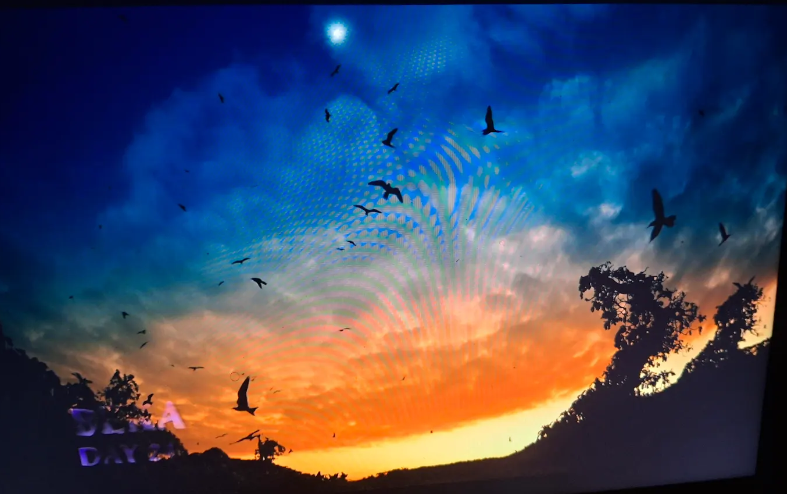
Sunrise outdoors in a clearing of trees. Yellow, orange, pink, light and dark blue sky with cloud cover and black flying birds.
Photo Art © Jacques Fleury All rights reserved

Dawn in the Forest: An Ode to Nature

The sun rises out of the belly of the earth
Like a giant orange over the mellow meadows
Birds singing their esoteric songs,
Honeysuckles bask in the morning dew
A doe rustling to life after a long sleep
Caterwauling creatures echo over hillsides
Below the canopy are vanguards of activity
Supple blow of the wind weaving in and out of the trees
Conglomeration of broods chirping in their nests
Cryptic mating calls abound
The forest miniature wilds
From aphids to beetles slugs to toads
All on a brownish tarnished tray in disarray on the forest floor
Centipedes skulk through soil caterpillars chomp though leaves
Beetles pelt in their holes trailing and gathering in a
Resilient resolve to cling to life in spite of natural strife
In the deciduous forest that scraps its skin in the fall
Nature calms like a mother
Spring awakens
Chipmunks come out of burrows
Baby katydids and tent caterpillars hatch
Queen bumble bees collect nectar from wild flowers
Azure butterflies greet the dawn
Luna moth squirms and scratches within its cocoon

Green tiger beetles with large eyes jumping spiders with sharp eyes
Pounce on prey!
Between the ferns at your feet and the tree over your head
Is the leafy understory
It’s the furrowed tree trunks weedy bushes brushing your shoulders
Old dead tree that lie on the floor expecting to be explored
Red spotted purple butterflies, ant lions and wood nymphs
Sunset descends as many animals become bed heads
Chipmunk heads to its burrow cicadas stop singing
Birds fly to their resting place
Bush katydid shed its skin in nocturne
All insects molt so they can grow
Winter is here…
Woods are lovely dark and deep says Mr. Frost
And its inhabitants have NO promises to keep
Icicles sparkle on bare branches
Downy white snow manteau the ground
Mysterious eyes carved obsidian in the moonlit dusk
The geese robins and monarch butterflies fly south
While the animals that stay germinate winter skin to stay warm
The air is pure and clean like a mountain stream
Now all bed heads head off to bed to sleep perchance to dream…

[Originally published in Litterateur Redefining World anthology and Fleury’s book: Chain Letter to America: The One Thing You Can Do to End Racism: A Collection of Essays, Fiction and Poetry Celebrating Multiculturalism] 

Silhouetted figure leaping off into the unknown with hand and leg raised. Bushes and tree in the foreground, mountains ahead. Book is green and yellow with black text and title.
Jacques Fleury’s book You Are Enough: The Journey Towards Understanding Your Authentic Self

Jacques Fleury is a Boston Globe featured Haitian-American poet, educator, author of four books, and literary arts student at Harvard University online. His latest publication “You Are Enough: The Journey to Accepting Your Authentic Self”  & other titles are available at all Boston Public Libraries, the University of Massachusetts Healey Library, the University of Wyoming, Askews and Holts Library Services in the United Kingdom, The Harvard Book Store, The Grolier Poetry Bookshop, Amazon etc…  He has been published in prestigious publications such as Wilderness House Literary Review, Muddy River Poetry Review, Litterateur Redefining World anthologies out of India, Poets Reading the News, the Cornell University Press anthology Class Lives: Stories from Our Economic Divide, Boston Area Small Press and Poetry Scene, among others…Visit him at: http://www.authorsden.com/jacquesfleury.

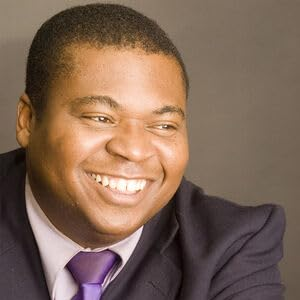
Young adult Black man with short shaved hair, a big smile, and a suit and purple tie.
Jacques Fleury

Poetry from Lilian Dipasupil Kunimasa

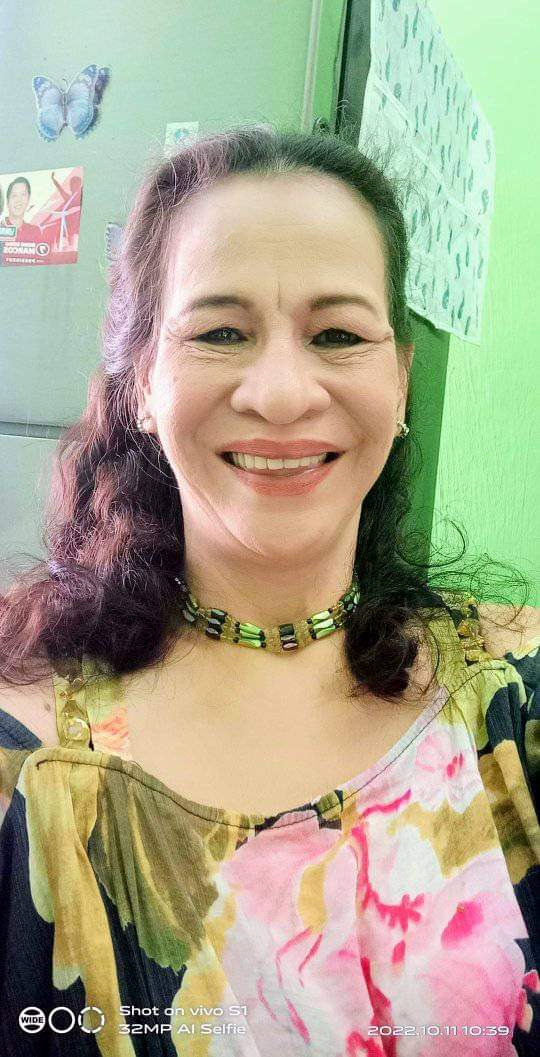
Light skinned Filipina woman with reddish hair, a green and yellow necklace, and a floral pink and yellow and green blouse.
Lilian Dipasupil Kunimasa

New Year, New Slate

It is easier to justify hurtful words

I can say I have been provoked by the cruel world

Or that I really needed to thrust the tongue’s sword

Still I cannot deny I have slashed a whip cord

How shall I connect a fallen leaf to its tree?

How shall I make a dead fish swim back to the sea?

How can I catch a caged bird that I have set free?

How can I mould whole a glass broken to three?

Whatever reason and situation might be

Whether it has not been done intentionally

Even if the offense done is not known to me

For hurting you I have to say I am sorry

The list of old year’s follies and mistakes to tear

Open heart to feel, eyes to see, and ears to hear

Awareness to make amends and set my path clear

A clean slate to celebrate the coming new year.

The King’s Star

A lone shining star in the sky

to guide three rich pious magi

they carry gifts for the king child

through different lands they travel

Of the lone star they do marvel

Centuries waiting for that star

Through times of peace and times of war

Their excitement are growing wild

Castles and king’s palace they searched

What they found their hearts greatly stretched

For the King lies in a manger

Their quest ended in amazement

Their quest ended in amazement

For the King lies in a manger.

Lilian Dipasupil Kunimasa was born January 14, 1965, in Manila Philippines. She has worked as a retired Language Instructor, interpreter, caregiver, secretary, product promotion employee, and private therapeutic masseur. Her works have been published as poems and short story anthologies in several language translations for e-magazines, monthly magazines, and books; poems for cause anthologies in a Zimbabwean newspaper; a feature article in a Philippine newspaper; and had her works posted on different poetry web and blog sites. She has been writing poems since childhood but started on Facebook only in 2014. For her, Poetry is life and life is poetry.

Lilian Kunimasa considers herself a student/teacher with the duty to learn, inspire, guide, and motivate others to contribute to changing what is seen as normal into a better world than when she steps into it. She has always considered life as an endless journey, searching for new goals, and challenges and how she can in small ways make a difference in every path she takes. She sees humanity as one family where each one must support the other and considers poets as a voice for Truth in pursuit of Equality and proper Stewardship of nature despite the hindrances of distorted information and traditions.

Synchronized Chaos Mid-December 2024 Issue: A Literary Snow Globe

Evergreen trees within a stylized painting of a snow globe.
Image c/o Circe Denyer

Contributing poet Howard Debs’ work has been included in Chameleon Chimera: An Anthology of Florida Poets, which has just been released by Purple Ink Press, including work by U.S. inaugural poet Richard Blanco and notables such as Geoffrey Philp, Jen Karetnick, David Kirby and many others.

Also, contributor Peter J. Dellolio’s new novel The Confession has just been released from Cyberwit.

The Confession is the first-person account of a serial killer on the evening before his execution.  It is literary fiction, and somewhat similar to Naked Lunch by William Burroughs.  There is suspense in the narrative, as there is some speculation as to whether or not the narrator is really guilty.

Now for this issue: A Literary Snow Globe. As with a real snow globe, we watch delicate bits and pieces of creative thought descend and fall wherever they may on the landscape of our world. Each time we shake the globe and let it settle, each time we read these works, we take away something different and view a unique scene.

Daniel De Culla’s poem glories in the exuberance and diversity of human creative expression.

Salihu Muhammad describes stages in his development as a creative writer.

Ilhomova Mohichehra’s poetry probes the creative potential of liminal dream-states, how emotions and imagination can be strengthened when we approach sleep. Mark Young incorporates color, texture, and text into subconscious, surreal images he calls “geographies.”

Jim Leftwich’s poem incorporates vivid imagery and wordplay, referencing animals, landscapes, and celestial bodies. It also includes philosophical reflections on time, thought, and human experience. Catherine Zickgraf’s work explores time, mercy and judgment, spirituality, and gender. Maja Milojkovic revels in the beauty of the world while acknowledging everything’s impermanence.

Duane Vorhees’ poems explore themes of love, loss, sexual intimacy, nature, and self-discovery. Cheryl Snell’s fictional drabbles look at moments of connection, humor, and tenderness, between humans and each other and other species. Lilian Dipasupil Kunimasa affirms her acceptance of her entire life journey and her acknowledgement of the different parts of her personality and character. Linda Gunther’s short story depicts a woman who finds her identity by finding her calling in life.

Ilhomova Mohichehra ponders the dreary sufferings of life as she stares out at a rainstorm.

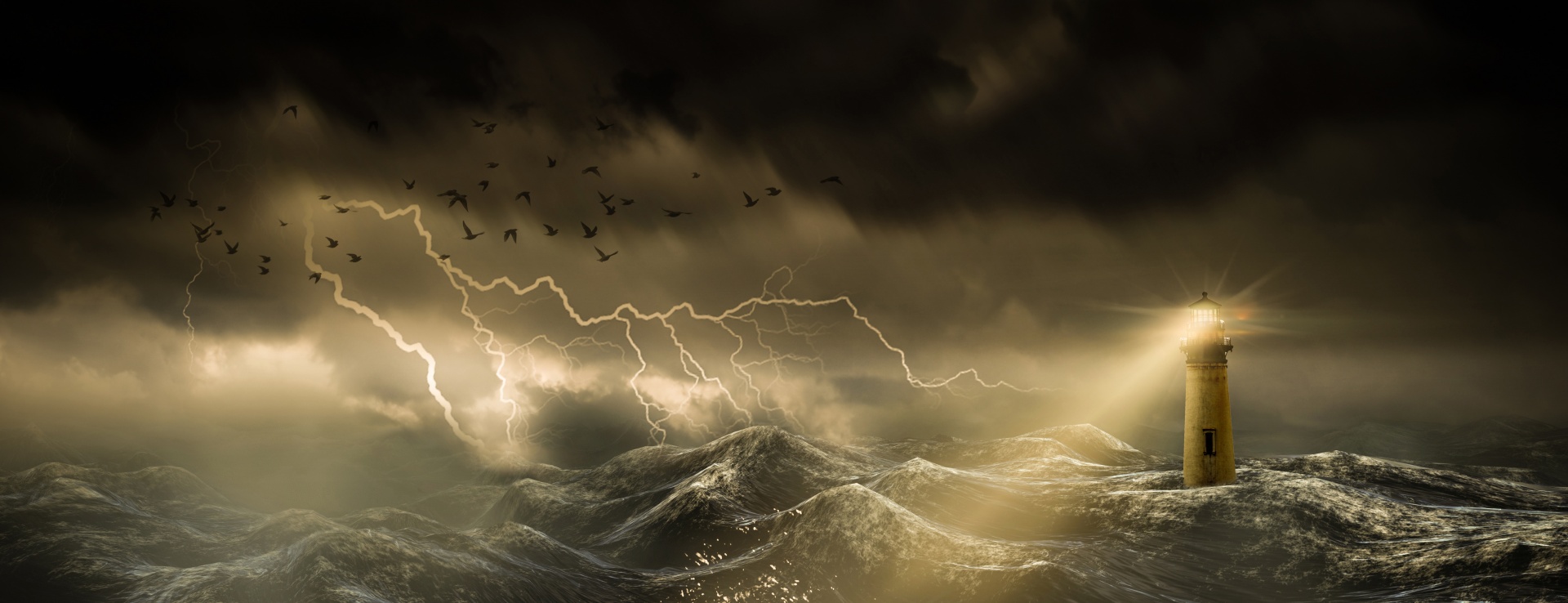
Dramatic painting of dark clouds and lightning and black birds over a storm whitecapped sea. A lighthouse on the right beacons with light.
Image c/o George Hodan

Mykyta Ryzhykh’s work offers a glimpse into a complex and troubled inner world through images of childhood, animals, fear, and death. Texas Fontanella’s poem expresses feelings of financial instability, frustration with societal expectations, and a desire for creative and personal freedom. He includes references to pop culture, politics, and literature, often in a fragmented and surreal manner. Mahbub Alam addresses humanity’s potential for great good or great evil and the need to make choices. Sayani Mukherjee speaks to the inner wilds: the vision, beauty, and danger we all carry within us.

Chuck Taylor’s poetry speculates on the nature of chaos, how it does not operate according to a holy book or an algorithm.

Nilufar Anvarova urges everyone to expand their horizons by reading. Kucharova Ugiloy celebrates the power of books and learning to expand one’s worldview.

Numonjonova Shahnozakhon reflects on how wonder and curiosity add color to life. David Sapp approaches outer and inner landscapes as a tourist and explorer, probing an office firing and the idea of his death with the same curiosity as he brings to Rome’s Trevi Fountain. Lawrence Winkler brings a sense of wonder to his trip to the Micronesian island of Pohnpei, exploring the history and culture of the place while witnessing his friends’ mishaps in international business. Santiago Burdon sketches a time and place in his Christmas tale from a rough Italian-American childhood.

Zarshid Qurbonov reads a book out in the grass on a sunny day and reflects on Uzbekistan’s literary heritage.

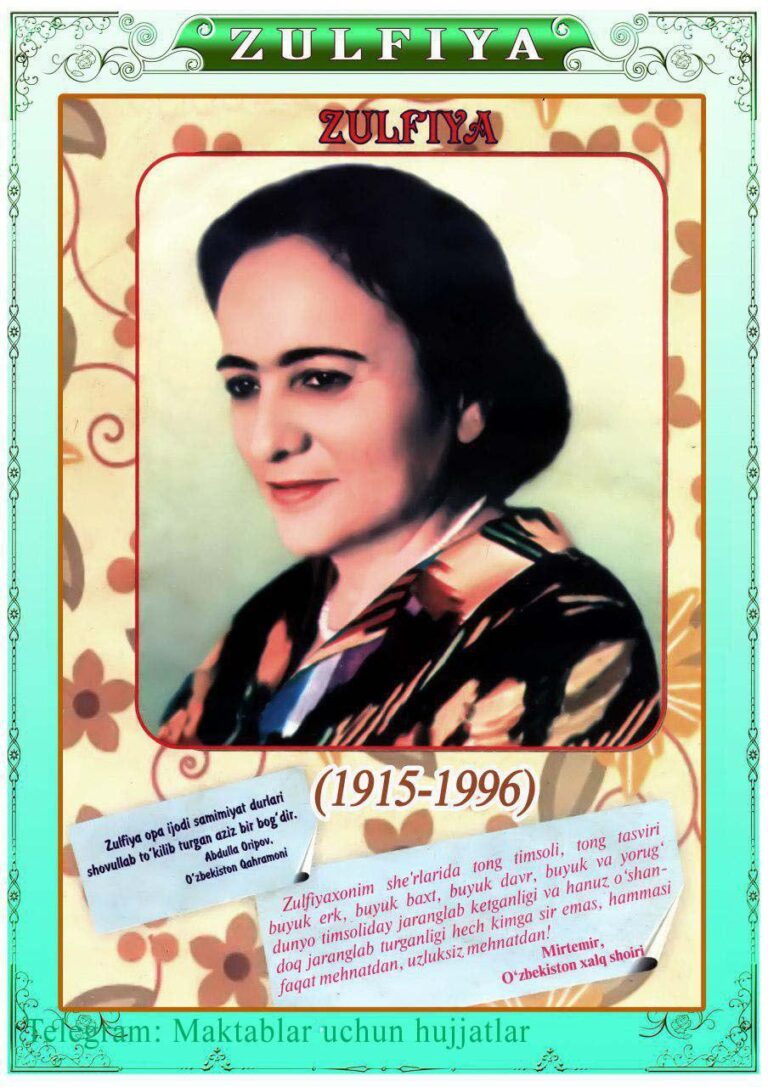
Farangiz Abduvohidova illuminates the work and life of Uzbek poet and magazine publisher Zulfiyakhanim, highlighting her qualities as a kind human being as well as her writing skill. Murodova Muslima Kadyrovna also honors the legacy of Uzbek woman poet Zulfiyakhanim.

Poster of a Central Asian woman in a colorful blouse with short dark hair. Words underneath her photo in Uzbek discuss her legacy and the years of her life are listed, 1915-1996.
Image c/o Savol Javob

Dilbar Koldoshova Nuraliyevna dreams of becoming a teacher or journalist so as to shape the minds of her fellow Uzbeks towards good. Gulsevar Xojamova highlights the Uzbek Youth Academy’s role in developing the creative potential of many young people.

Ibragimova Rushana outlines various techniques for teaching languages. Aziza Umurzoqova highlights the role of student-directed technology for language learning. Jonpolat Turgunov elucidates the history and value of the Ibrat Farzandlari Project, an online resource for learning foreign languages. Durdona Ibrahimova suggests possible innovative roles for technology and online apps and games in language instruction.

Abdumalikova Mushtariybegim celebrates the Internet but encourages balanced and moderate use of technology.

Fayzullayeva Gulasal outlines technical and financial problems within Uzbekistan’s industrial chemical industry.

Sarvinoz Quramboyeva conveys the daily determination of the Uzbek people to move their society forward. Shodiyeva Mexribon celebrates the hard work, hospitality, and honor of the Uzbek people. Ilhomova Mohichehra praises the kind and hardworking villagers of Uzbekistan. Sitora Otajonova honors the rule of law and social progress and community spirit of her native Uzbekistan. Mahzuna Habibova speaks to her native Uzbekistan as a friend, urging the land to hold onto its freedom and glory.

Farangiz Abduvohidova elucidates the history and culture of Uzbekistan’s Azim Bukhara region as Tuliyeva Sarvinoz describes the Uzbek historical castle monument of Tuproqkala. Ismailov Sanjar describes in detail the shrine of Sa’d Ibn Abu Waqqas in Uzbekistan. Through his photographs of an Afro-Caribbean festival in Boston, Jacques Fleury celebrates the region’s vibrant cultural diaspora while outlining the historical and psychological significance of the Caribbean rara celebrations.

Young Black woman in a sequined costume with a yellow mask and headdress dances in a city street.
Photo c/o Jacques Fleury

Sarvinoz Tuliyeva recollects her Uzbek childhood: fragrant trees on her street, parents baking bread in the oven, her father crying as she grows up too fast.

Alimbayeva Diana reflects on the constant care and provision of her father for her whole family. Zabuna Abduhakim writes a succinct verse of gratitude for her caring parents. Makhmasalayeva Parizoda Makhmashukurovna praises her father’s selfless love and sacrifice. Sobirjonova Rayhona honors her kind-hearted sister. Diyorbek Maxmudov praises her father’s tender love. Azimjon Toshpulatov’s verse honors the warmth and love of her mother. Ilhomova Mohichehra reflects on how blessed and lucky she is to have loyal and caring family members. Akmalova Zilolakhan Akobirkhan speaks to the consistent love and practical care most people receive from their parents. Faleeha Hassan speaks of children in the winter, nourished and warmed by caring parents. Muhammed Sinan offers up a tribute to the love, dedication, and integrity of his father.

Audrija Paul’s poetry reflects the determined patience of a lover as Jonborieva Muxlisa Rahmon reflects on the value of friendship and what you gain by being a good friend. Norova Zulfizar reflects on a love so joyful and nurturing it reminds her of spring’s flowering and her parents’ care. Mesfakus Salahin employs a variety of poetic images to convey a gentle and kind romance. Sobirjonova Rayhona urges her fellow young people to live happy lives and treat their parents with gratitude and respect.

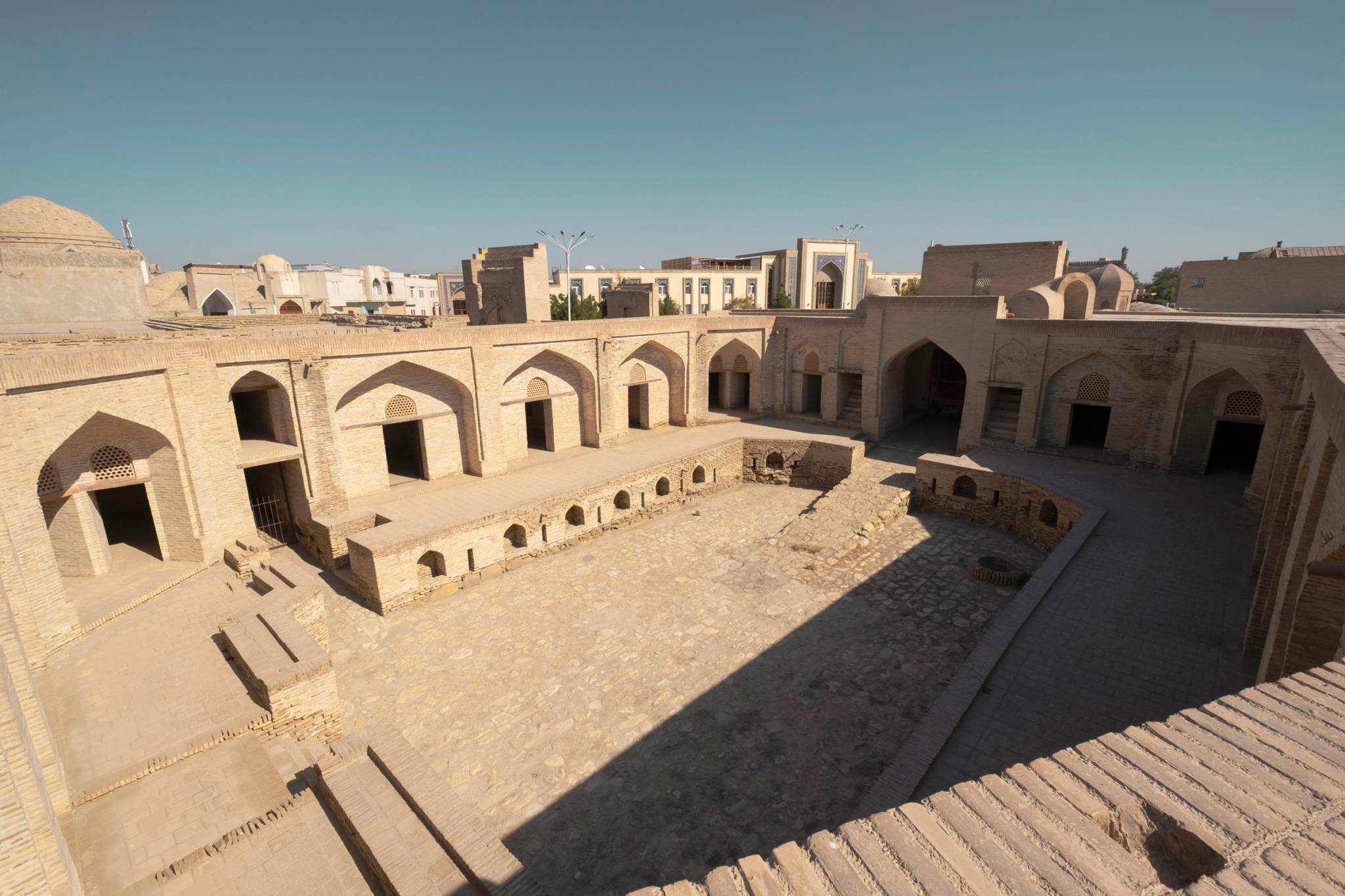
Uzbek historical monument of Bukhara. Stone city plaza with doorways and stairs and a skyline.

Nurullayeva Mushtariy illustrates the heartache that comes when the younger generation does not have compassion for their parents. Shahnoza Ochildiyeva remembers how she began to empathize with and befriended some children who were originally annoying bullies, because she realized they lacked the care of loving parents.

J.J. Campbell reflects on having survived decades of broken dreams, troubled relationships, and abandonment. Yet, as he acknowledges, he has survived. Abigail George reflects on love, loss, mental health, family relationships, spirituality, and her artistic dreams in a prose poem formulated as a letter to her niece. Graciela Noemi Villaverde grieves the death of a husband with whom she shared a tender love.

Z.I. Mahmud explores masculinity and romance in D.H. Lawrence’s Sons and Lovers and how various social and psychological pressures drive the protagonist away from his fiancees. Eva Lianou Petropoulou’s poem, reviewed by Williamsji Maveli, explains how both psychological issues and societal problems such as discrimination and violence against women can interfere with loving relationships.

Somber closeup photo of a man in the shadows resting his head on his hand. He's of indeterminate race, we see him from the side.
Image c/o George Hodan

Kass’ piece explores themes of heartbreak, regret, and the lasting impact of a past relationship. Grant Guy’s poetry reflects on daily routine, loneliness, the lack of intimacy, and loss of identity within some relationships.

Chimezie Ihekuna elucidates the struggles of men in his native Nigeria and elsewhere in the world: being disrespected and viewed only as a source of money in an economy where decent jobs are hard to come by. Maftuna Rustamova also reflects on materialism and the tragedy of reducing human value to money. Don Bormon laments the suffering of the poor out in the cold during winter, while acknowledging the beauty and the harshness of nature during winter months.

Sandro Piedrahita’s short story dramatizes another tragedy, the Pinochet regime’s murder of singer and guitarist Victor Jara. Odera Chidume highlights the effects of war in Nigeria on everyday people through his story of remarkably resilient teenagers.

Vernon Frazer’s poems explore themes of wealth disparity, societal decay, and existentialism, often using vivid imagery and unconventional language. Howard Debs reflects on the human and ecological losses of 2024 and the changes many societies are experiencing.

Before we can fully take stock of 2024, though, there are the December holidays.

Pink, blue, yellow and green outlines of stars on a black background.
Image c/o Andrea Stockel

Taylor Dibbert recollects an awkward encounter with a stranger as Doug Hawley’s memorable anecdote recounts a Christmas filled with physical and relational peril.

Brian Barbeito’s poem illuminates the beauty of our world and highlights the importance of appreciating nature and loved ones, at the holidays and any time.

Bill Tope’s short story explores human compassion, connection, and perception. Another of his pieces depicts a kindly Jewish shopkeeper whose gift makes some young girls’ Hanukkah very special.

We hope that this issue will be a gift to you, and that as you read, the particles of snow in our literary globe will land in interesting ways that resonate with you.

Essay from Jonpolat Turgunov

For the time being, I would like to elucidate and describe enough and total information on one of the beneficial and attractive project in Uzbekistan—Ibrat Farzandlari.

Initially, it had better introduce about why this project was named Ibrat Farzandlari-for, there was a great and honourable, admirable individual in the near history of Uzbekistan. His name was Is’hoqxon Ibrat, actually you have a question why? His name has been given to this tremendously effective project-so long as Is’hoqxon Ibrat was a famous polyglot more and more common languages in the world this is why. 

You can see his picture below. 

Painting of a medieval Uzbek scholar with a white turban and a beard and coat and collared buttoned shirt.

Ibrat Farzandlari Project . This project was organized in 2022 year by one of the agency in Uzbekistan —Youth Affairs Agency and its director Alisher Sa’dullayev and Rustam Kariyev -also the international English teacher at Ibrat Farzandlari. This project is totally based on online or remote learning on you tube.

There are more than 22 languages are being taught by internationally expertise teachers. Such as, Uzbek, English, Spanish, Russian, Japanese, Korean, Greek, Vietnamese, Chinese, Italian, German, French, Malay, Urdu Arab languages and so on. Surprisingly, Ibrat Farzandlari called over 500.000 passionate and curious youngsters around itself . In the future, it is going to increase the amount of learners up to 1 million and this is just a mind-blowing and respectful action and works. The followers of project is more than 100 .000 on telegram, Ibrat Farzandlari is more active in social and interactive life.

These days, project is being showed its genuine and clear results instantly, coz you know, not every person can learn languages because of financial and disability situations and circumstances, however it is not a numerous problem for Ibrat . It has been opening the gate of opportunities for every young person.

By learning English language, I am able to write this article fluently and perfectly and I attained bunch of achievement on the path brushing my skills upon the languages. I took an exam on national English proficiency test -Cefr -B2 score and these days I am practicing teaching the school students in English language . I learned more things and experiences from the teachers of ibrat , in the light of their charismatic lessons, I immortalized my result as a best learner of Ibrat. I am likely to be a generation of Ibrat Farzandlari.

Not only am I, but everyone. So, the honorable president of Uzbekistan, Shavkat Miromonovich Mirziyoev also supports this project by himself, due to the fact that our president says , we need youngsters or adolescents who can speak more than 3 or 4 foreign languages, in our new Uzbekistan we back up the future of our country who are the teenagers, therefore this project was introduced to the president and our president confirmed this is one of extraordinary and indispensable one. Coz, nobody has to pay to learn or watch the language lessons.

One of the advantages of this project is it teaches rare languages in the world for example Urdu and pushti or malay or Spanish languages, in our Uzbekistan there are few education centers and teachers to teach or instruct these Linguas. I also learned Spanish language during summer three months, until now I have never heard about that language and no adequate data, but my Spanish teacher who is named Makhfuza Ortikova .

She has sufficient expertise in this field and having taught Spanish more than 10 years . She was also the member of international journalists association member . By attending her lessons , I realized that how Spanish language is more and more captivating and attractive language. I filled my world with one new language.

A new era in language learning has begun today. Join this intellectual movement, as this project aims to create bridges between world cultures, enhance communication, and provide the opportunity for smooth interaction from any corner of the world!

The main goal of the project is not just to teach languages but to prepare global leaders from Uzbekistan. To facilitate language learners, the “Ibrat Farzandlari” project has developed the “Ibrat Academy” app. Through this app, learners can not only watch video lessons but also continuously check their language level, complete knowledge-strengthening tests, and enhance their vocabulary interactively. 

Initially, learners need to download the app and create a personal profile. Then, they can subscribe to their language of interest and determine their level through the “Placement Test.” Based on this, the app recommends lessons and test exercises appropriate to the user’s language proficiency. The app can be used both online and offline, with features to download video lessons, files, and topic-related exercise materials for offline use. 

The key to speaking any language fluently is vocabulary. To assist users in this regard, “Ibrat Academy” offers a dictionary of Uzbek words and phrases. The dictionary contains over 100,000 words and phrases, which can be learned through 8 types of exercises. 

The app also features a nationwide “Leaders Board” that is continuously updated. The best learners will be suitably rewarded. To receive unexpected gifts, it is required to download the app, be an active user, follow the project, and participate in the final competition among the top learners of the app. 

In the future, the app is expected to integrate artificial intelligence functions. This will allow for individual interactions with each user. The AI function will check assignments, communicate with the learner, and provide feedback and recommendations on errors and shortcomings. 

There is no age limit for using the app. All language enthusiasts can learn various languages in a simple, effective, and most importantly, free manner. 

A new era in language learning has begun today. Join this intellectual movement, as this project aims to create bridges between world cultures, enhance communication, and provide the opportunity for smooth interaction from any corner of the world! 

The main goal of the project is not just to teach languages but to prepare global leaders from Uzbekistan! 

Here you you can find Ibrat Academy on the Google play store 

Ibrat Academy 

https://play.google.com/store/apps/details?id=uz.ibrat.farz andlari

About the author

10 

My name is Jonpolat. I am from Uzbekistan. I live in Andijon. I am 16 years old , studies at the 11 the grade of high school. I can speak 4 languages, Uzbek, English, Russian and Spanish language, it is my common hobby . I learned all of them by ibrat farzandlari project . I am also a teacher from English language. I organized a home school or education center at my home. I wrote an article about IBRAT FARZANDLARI project. I hope you gained enough information. Thanks for your attention.

Essay from Abdumalikova Mushtariybegim

The influence of the Internet on humanity

In modern society, the concept of the Internet is embedded in the mind of almost everyone. Although the first computers and global networks appeared not so long ago, it is no secret that the Internet has already firmly established itself in our lives and mind. People of our time have reached the point where they can not imagine their lives without the Internet. The Internet is the fastest and easiest way to get the information you need at any time. However, like any innovation, it has its pros and cons.

First, letʼs talk about the positive aspects, it brings the distance closer, the information can be found in one place, e-books, online stores, the possibility to save time… So the number of positive aspects. But just as there are two sides to a coin, the Internet has its fair share of downsides. The Internet is making people lazy.
Children are not playing together in the streets like before, some children do not even know who their neighbors are and this is a very sad situation.

Earlier, people used to look forward to serials, movies and cartoons on TV, but now they donʼt know how to use TV. At the same time, the Internet causing a number of serious problems. For instance: stress, depression, sleep disorders, increased anxiety. In addition, while the Internet saves time bringing people closer, some people are wasting their precious time on idle networks. What I mean by this, keep in touch with your friends and loved ones offline, and remember that friendship is a treasure! From time to time, organize days without the Internet and do not lose touch with the real world by getting wrapped up in the virtual world.

Abdumalikova Mushtariybegim daughter of Mashkhurbek.
She is a student of the 11th school of Khojaabad district, Andijan region.