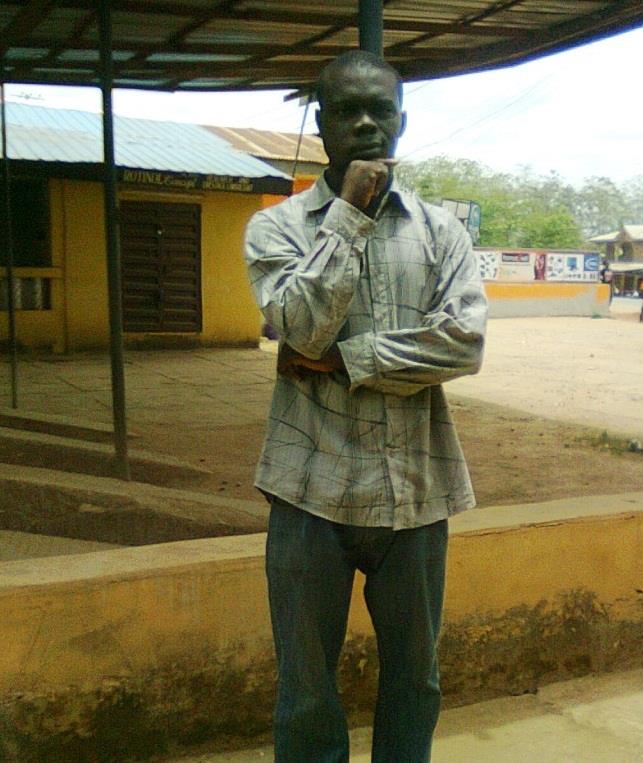
My Parents’ Promises for Me This Christmas

It's seven days to Christmas
I’m so excited about it!
I will be on holiday;
free from school activities and other disturbing tasks in class
I will have the opportunity to remind my parents their promises for me;

the amusement park, the holiday resorts around and outside town
and lots more!
I will play with my friends
I will put on my favorite Cloth of Many Colors dress
I will help mom and dad decorate our house,
provided they give me what they promised, seven days before.
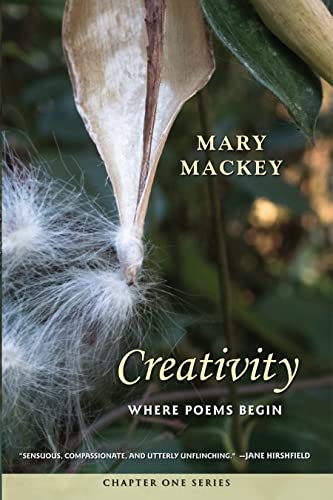
Title: Creativity: Where Poems Begin
Author: Mary Mackey
Publisher: Marsh Hawk Press
Genre: Literary Creation: Poetry
Pages: 110
ISBN:  9781732614123 (paperback)
Price:  $18.00
Publication Date: September 2022

Review of Creativity, by Mary Mackey

				          By James Tipton

Where is creativity before it becomes the created thing?  Mary Mackey’s new book, Creativity, explores the range of creativity itself:  its subtle, pre-language source, experiences and people that helped inspire or discover it, and the poet’s journey from the depths beyond thought to the forming of a concrete, original image.  People may think of art as its finished product—as, say, a beautiful sculpture.  But what they don’t see are the chips of marble on the artist’s floor: Mackey shows us all the scattered chips and their usefulness for her.

She defines in her introduction the process of creativity as:  “…the movement of an adult mind back to the radical innocence and vision of the very young child who sees, not only the reality we all share, but all those unnamed, unclassified parts of reality we learn to overlook as we grow older. “

Mackey consistently returns to the notion that the source of creativity is beyond categories.  One has to go beyond the boundaries of the rational mind to find creativity waiting, like a jaguar beyond the flicker of firelight.  She starts us with her visions and sensations as a child who can be “conscious and unconscious at the same time…float in infinity.”  That child lives in the pre-verbal source of creativity.  Adults talk her ”into reality” but at the price of abandoning “all that exists outside its walls.”  She enters “the world of time, the world of words.”

Creativity takes us on her journey from the source of creativity to its manifestation as poems and her first novel, and back to the source, which she must rediscover after the rational mind has chased it out of her.

	As a child in school, math, with its abstractions, makes her mind ”blank out.”  But geometry, dealing with “solid, palpable things: shapes, forms, positions and angles” is a different thing.  It’s a process of seeing the world in a specific, minute manner, which leads her to poetry.  It’s all about the looking, noticing what’s there, the microcosms that surround us, as in her childhood perspective:
“…the world outside my window is on fire with autumn, and the leaves are blowing like sparks, torn off the trees by a wind that lifts them up and thrusts them toward the earth in wave after wave so the air seems filled with falling embers.”

Her art of noticing continues: “I study one leaf closely, following its flight.  I study another leaf immediately next to it.”  This close observation leads to a unity of subject and object, of seer and seen: “I feel a thrill of recognition, as if this room has joined the whirling world outside the window.  As if both are for a single moment the same.”  One could see this as another interpretation of Keats’s ”negative capability,” in which the subject is negated and becomes the object, but it’s more than that.  It’s about a fundamental interconnection, the discovery of which emerges as poetry: “I want to sing the words in my head, the words that will go outside and merge with the leaves, and then return to me so I can put them down on paper.”

	The structure of Mackey’s book itself is one of integration of rational language and vivid, intuitive imagery: she starts and ends each chapter with a poem that conveys in verse the essence of the chapter.  The poems are carefully chosen as microcosms that bring the chapter to the reader on another, more subtle level.

	Mackey traces in each chapter a source of inspiration for her, whether pleasant or unpleasant, such as the ecstatic visions of the high fevers, the wildness of the jungle, and the challenges of being a feminist in a non-feminist world.  Each of these experiences is boundary-breaking, taking her beyond what she perceived before as the world.  And going beyond boundaries takes us to the major journey of the narrator: to discover and rediscover the pre-language source of the poem itself.  The book’s narration brings us her story in the present tense: it all unfolds now for her in reflection and for the reader in a style of presentational immediacy.

	One experience separates her from the source of creativity, and that is, ironically, the path of the scholar.  The Harvard senior thesis, the doctoral dissertation, the articles on literary criticism: even though they take her deeply into her field they take her out of the pre-verbal range of poetry: “my rational mind seems to have taken over at the expense of instinct, intuition, and ambiguity.”  Since the act of creativity, and not logical, analytical, scholarly thinking is the deeper truth of her being, this lack of being able to write poetry brings her a sense of “disconnection, a dull ache, a background grief.”  She asserts early in the book that “poetry continues after logic ends.”  That is why she felt drawn to the worlds of the high fevers, why she loves the jungle: “In the jungle I will fall in love with wildness, and this love for wild things will make me into a poet.”  The jungle frees her from the restrictive and relentless logic of the scholar.

	So the last third of the book takes us to her rediscovery of the poetic source within her.  And to do this she must abandon also the voices of other writers as well as her own scholarly voice.  In the dark night of the soul, which, for her, was the dead-ends of her life throughout 1971, she “wrote and wrote, and the words flowed so easily it seemed as if they were being dictated by a voice apart from me, a voice somewhere deep in my brain that finally knew what poetry was.”

The last twenty pages of this little, but powerful book, bring us to the realization of jaguars.  Mackey reflects: Jaguars are the keys that unlock the dream work for the shamans…or maybe it’s not a messenger I need, but some sort of technique that will lead me into those parts of my brain that have been inaccessible since I learned to speak.  She eventually succeeds in this endeavor to be both “at a desk in a room in Berkeley, California, and…plunging ever deeper into a great ocean—boundless, infinite, and indescribable.”

	Mackey simplifies and clarifies the source of poetry: it doesn’t involve the self-destruction of Rimbaud’s derangement of the senses, but a heightened awareness of the senses and of the intuition.  Near the end of the book she takes us to the inception of a poem that comes not from suffering or from chaos but from the silent, wordless depths of the mind:

"After a while, ideas and images come bubbling up from the depths.  A poem begins to form in my mind, not a complete poem, not a polished poem, but the seed of something. The poem does not come in words."

Read the book to find out more about where poems come from.  Mackey’s style is immensely lucid, readable, and engaging.  It is a trick to make the complex clear and the abstract concrete, but she does it. This book will be enlightening not just to anyone interested in the creative process, but also to creative writing students at all levels, discovering in themselves their own pre-language source.

-- James Tipton, PhD, Professor of English, College of Marin, and bestselling author of Annette Vallon, A Novel of the French Revolution (HarperCollins).

You can buy copies of Creativity at your local bookstore, on Amazon, or online from Small Press Distribution.
All About the Small Funeral Business


A.	How to Establish the Small Funeral business

Thank you, Doctor, for taking time to come speak to us today.
No Problem, Duke. After yes, after all, yes, all, after all. Yes. Great! Then, let’s start at your front. And that’s a good start—yes, all right—but, take care things may actually turn jarringly downwards. Perhaps much too jarringly. Y’ know? Y’know? Know as well? Pe? What? What? Am I ill? Ha! Yes. Fun. That’s right. So, ‘inny’ay, we seem off on one fine start, popp’d headed fer that one, two, sue, so, soo my face anywarts, my dead spaniel, not to trash no mo’ viewer time—go on, but—first, io. Pe petun, tentunio?

Fascinating.
Hiccup!
Yappo-stanzo?

Yes, yes. ‘nyway; here’s how to pop every small funeral business. ‘now no one will come ‘f we’re not serious, sane, sober—sanely, serious, so. If you pick up an existing funeral business,  then you, on those Morrissey’s mark out that twatchemmbrrr—should git up‘n go! But; am I ill, or what? Ha! Aeeroplaneee, Bruce. And right now, too. The port’s that way.
Bet me. Whomp.

K; the story within this coffin (poiuytrewq) business, this business that we—ah hoo—picked up within this business, you may also obtain one used. Perhaps take over a small funeral business mysteriously walked off from by its young married couple—ah hoo. ‘he whole of what we saw ending up of began, up between prior partners as an innocent game of nightmare level professionally played version sixteen used copy of The Chasms of Mister DeFrance. What?  Am I ill? Ha! Surely so. Surely ‘s to tha’ they found out the hard way it wasn’t ‘ll ‘s cracked up t’ be. Nio petu.
My God!

 (mnbvcxz)
But, you just catch breath, pick up, and get up, and go, and you should be prepared to exercise restraint in radically changing—ack—the ones before you here, most likely were fanatics; ‘na coffin ‘lly business fanatics, for this very right here casketentational aerosoulian business.  So, go on saying doing and whutz much the same so’s the focus’s snot so as to generate negative word-of-mouth assuming all your slumber rooms will surely remain empty; caused by you only you sitting on things with a far too different weight, in an opposite spot, tilting things o’ the bad side of the business. This gaucho-cracked big stout hot of an idea, cam’ from t’ first of the male halves. But Frank, hey, wait—do ye even get it? Uh-WOK! Big battle! Am I ill? Ha!
Do you even get it?
Spluttery splattery uuuuuuuuuuuuuuuhhhh.
Is that by Maestro Von Fistula? You’ve most excellent taste!

Oh, what—what?
Have we cake? Of course. We can wait while you choose. Of course. Check the display case. Up at the register. Do go on. We have many varieties. And—if we don’t have one that you like, and you don’t buy one, you’ll pay nothing.
Deal?
Hey!
Wow.


B.	How to Organize the Small Funeral Business

Organization should be slick, swift, right, ‘n-n after the initializationing pop of your new small funeral business, done t’ accordingly stay/get in tune with the clientry. One way’s dat dot toone, ah-who, thought they must be still from now t’all infinintentionnillity-toone, could determine to lie still a full eight hours, in the name of simple empathy, leaving no way out, and no choice, no cancel. Just in death there’s no choice, no retry, no cancel, ‘nd no way out, as the inevitable nothings roll f’ward ‘nto simply less of theirs-selves, longing to someday play-y p-p-p-piano-for-people, but never quite arriving that far. The foul effects of being within this reality rots them down, guts them out, strains to nothing them down to all gone, in their box. This is why they call it forever, my people! Like—I mean—why the hell you think it says this side toward enemy on these Claymores, soldier? A gross mistake you’ve made today, and look at the grisly results. Now; am I ill? Ha! Am I  ill? Still think that, pups? Ha! Gripped g ‘n s strength of-f theirre relishionne-ions, they fatally arranged to be hammered-in so as not to give in to their devils for the whole eight hours, straight. You there? A question?

Yes. Hammered-in what, Mahdi?
Oh, just some holybox. Ho’ ‘ly bo’. Holybox. Like that—Herb-Ox. There you go. How’s boutcha? Get offenda’ that bouillon? That silent and sure properly made broth-soothe, with which to ensure A guy. B-bouilloninskiteen-man; in and of his—very self. (Atchoo!)  He ended up hung, on his very last yesterday—gag gahh whistelty-spitt—maybe approximately five, three two one, ‘r maybe a good twenty—(phase=spirit/simple) years back. Oh, arshi na-shi narsh. Oink. So night after night became all the same—recapo recappi; into their box they went, first; then, one hundred ten nails ball-peen hammerdowned by their handyman Thaddeus; y’, hammerdowned solid tight and ball-peenly, all ‘round the full edgetop ‘bout them, each in the name of that empathy, and so, so, so. So; tightly interiorized i’ this way, they’d spend just each night; for years. In their oblong box. Like clockwork. What? Am I ill? Am I ill? Am I ill? You keep asking. Keep asking. Why you keep asking? So dense, so dense; no doubt my spaniel boils better eggs than you! ‘arshi narsh’ e’, ha! Quite unusual. But—by the late ‘gen’ Stan Potter, give thanks. Sort of. Like—petu-raggo. Okay? Okay? Okay?

Okay. Plop.
Fine. But so, like I tried on to say a’fore; each and every of their nightly deep coffinizations rushed up toward morning. The finish line for them, where, ah; what a God-damned relief, yes, and; always the same returned handyman Thaddeus. Came ripping o’the solidly driven nails, out-yanking them swiftly, one by one. Snot. Ha! Soup. Sorry, but heavy water’s sold out hours back. Try the big chief general store and rent-a-closet center cross town. They’re nearly as potent there. And with fewer side effects. But, to our young couple. Each morning the comfort. Oh, yes.  Ahhhh! Always, as promised; the comfort of escape; the inrush of onrushing air—so sweet! Sorry. Sorry. Oh, yes. Those sloping shoulders will get you rejected. Don’t even bother. Sure, sure. There is no use. Petnio. Sorry, so sorry. What? Peio. There. We all right now? Good—ought to ought to ought to be decades of repeatedly mournful customer families—good.

C.	How to Fail the Small Funeral Business – Stage One

But as for them; they had no idea a day would come when ‘fter nailing, their fast-flailing Thaddeus, down in his cellar, would work some few hours knotting a big fat self-hanging rope. Sometimes he simply liked the way it smelled. And by God, he used it, too—before his next actual morning! And so there they lay—stuck. Ha! Ha! Ha! Ha! Who me oh sure, must be—deaf-ceteria next few ‘rs of dying and go figgur’—sort of like—trapped? Now how many things can that mean, stupid? Spit! And those there butts how of  why realtor got them and under it all dug to us. Rock-Ball. Obey Vader’s rule: steer for your crash elegantly; become a legend.

But anyway. That was the end of the both of them together—but—what’s that?
A question—there?

What the hell is a—Rock-Ball? Huh? Am I ill? Ha! Bland-sockery’s all. Outside of that much, you’ll fail to get it. So be dump’d. Hoist, hoist etuniop  tupeoin whoosh, down, and like that be totally dump’d. There that like all th’ other watra goesh; and! Chicken’d-la-la-noodley! Ho! Am I ill? My word, how do you mean? Of course my skull-size is nonadjustable! It is some silly modern epidemic! Ha! How’d you not know that? How twisty! Oh, how twisty! Oh, of course! Oh my! How’d you not know? Hey, look, wow; your condition is non-diagnosible. Which is totally worse. One shortcoming after another. Silly me. We ought have taken the right fork nine miles back. D’yah think? Yah back-hind those bushies. Oh. of course. Those ones you said looked funny. The ones with the tall red spikies. The ones with which you distracted me into tipping the wrong corner. Therefore its your fault we arrive thisly not thus. Spanng! Uh’ should have seen that much sooner. But; you do still want to buy one? Here? How? Oh—they still sell them here? Sey ouy yllaer od’! Wow, sweet. (pump harder please, skipper! Here comes the finish line) (puk) Free frames today if you purchase three. The big ones, too. In stock now. Those rare big ones. Back up, come forward, and this time make (puk) sense (puk puk) puk pu’ p’ make sense, please!

But then better snap-fast!
(bow deeply)
Ha! The roar of the ‘s the roar of the cr’ d’ ‘rowd iarshn compels you sweet (and introducing (in flowy fancy whack-cursive)) yonder Lil’ Jimmy, the Jesusian—prune!

Applause! Applause!
He’s back hot from Big College!
Wow!
Big College!
Ha! Ha! Yah really quite big!
Hah! Really? Ca’ u pinch me u’ ‘y snit?
Off Corsica!
Off Corsica!
Off Corsica!
We think we doobi’ gat it, so.
(lets talk about something else)


D.	How to Fail the Small Funeral Business – Stage Two

<poundya yo-yo>
<time>
<time>
Bland-mash.
Yasso, Mom Dearsides (unless improperly drained).
Results will be unpredictable, Captain.
Oh, of course.
So, given that; do you still intend to finally sail away?
Yes, do.
Bland-mash.
Bland-mash.
Yes, do.
Bland-mash.

Yes, do, bash-bosh, whoooooooooooooooo! O. Yes bash-bosh ‘n fully reversable lung les’, that lay in their circumferential dance of fat death, hop-stance, ‘n waiting, ‘n waiting up curve, Hey, it is quite late. Don’t you think it is, Donald (if in face one or both o’ them are/is legally named Donald) prohedulahla? Swallong start down shortswall, es ess; inside their boxes panic more panic panic panic panic and panic and pa’ic and an’ and panic d’ ‘nd ‘anic and ‘e ‘nic pan’ ‘nd ‘ani’ a’ ‘ic ‘n’  p’ and ‘a’ a’ ‘ic ‘c nd ‘cc d ‘’  ‘nd and sev’ panic hours’ and panic fear worth of and hours wheeze ‘heez’ ‘ee’ nyuk-no, and; <>=no sue thee lay there in-boxed rot and wilt and quiet and more; more of t’ ‘e same rot and wilt and more and more ‘til; and all just because their tops could not be opened. For want of a bash, their sledges silent forever (send more cops) eh, Michael Tackuella-Pluck? Can you tell us where have they gone, they just walked away, duh? Did you see? And so and so and, he—stated plain; do not rely on no overbuilt suicide diver for your ever living ever alive life as we all look forward to; with a the successful small funeral business running the simultaneously successful shining railtracks beside you both, to boot.
Boot, hevryshing nendz somisdays, not?

Eh, Nancy?
Okay. Oh of course. Then, steered that we (ae) should’n shall go.
By Heaven’s slap-sliver! B’wow! That’s my daw-wog my big terrier that’s my daw-wog my big terrier his nooso see his big wet cold nooso, he y a o I ‘errier oos see ‘ow it crumbles; the future crumbles; when you do it that way, Smee? He do enjoy eating bland-mash. How fortunate! What? O oo. He do enjoy eating bland-mash. How fortunate! But—turns out, it was just a story. Weak one at that. So no one came desiring to buy. So? Oh of course. Just kick in more swag. Course of, oh! Ruck-ruck-ruck, sackies. Oh, but of course we snuck in fast, bid down cheap, and; snapped this plash up in a flash. Yes? Who? Mantis? Okay.  h-h-h-h-hold it, hold; wait, Petunia. This is against the law.

Crap!
<Oh>! <oH>? <OH>!? <oh>?!
N-rshi na-shi nar-hi, plain prisoner, maybe—hold it! Hold what? Ne nier. What’s that? That get up?  In where and in where and in what hell it is? Niest iest ier ie I ihsran=narshu <plain> My hippo! My sweet! I been looking for you, where oh where, get up, damned hell ‘lla hell up! I been beating down bushes beating fla’ busheezies you could have called why didn’t you call eh eh eh I couldn’t call well, I , ieeee, there’s really no reason but I wish I’d never met you pal!
But.

Well you did meet me, and that’s that, so, now you owe me no father no no mother no no they I should owe and I don’t so what the hell hillo la hillie’d you have to do with bringing all these me’s myselves and I’s about—honey! The darkened box cleared and in there they. Were—dead as this here bent nail. They were pan’ no I don’t ‘nd ‘ani’ a’ ‘ic ‘n’  want to dissolve but p’ and ‘a’ a’ ‘ic ‘c nd ‘cc d ‘’  ‘nd I think I am yes and sev’ panic hours’ I felt I was dissolved ‘n panic fear worth of and hours wheeze ‘heez’ ‘ee’ nyuk-no, dissolve an’ ‘issiolv’ a’ ‘ssiol’ ssiol ssiol sio less sio’ll gone up down empty damned too quiet of a commercially entombed entombment place-named real place.
Hot giggitry!
<time>
<time>
<time>

E.	After Failing the Small Funeral Business

Let me tell you straight, come on, sit here—here. After yes after all yes all after all. Here.  Let’s start at your front.  After no after all no all, after all dis dat udderly preshious docker-degree nailed over wall after wall after. Sheepskins for sheep!  la  la la ! Duke! Problem! No, say you’ll reply will you how know I bet I and asked first than time your of more much so up give to you of great so s’ it. Here is the card of a Doctor Nebulette. Grand at loss counseling. Gok. Goodbye. Chest problem? Try hot water. The very use of her wicked millionaire’s likely got you and yours strained all the way down.
Hey. We’re all human.

<learn>
<learn>
<learn>
Thank you, Doctor, for taking time to come speak to us today.
You’re welcome. Good-bye—and may you enjoy a profitable day.
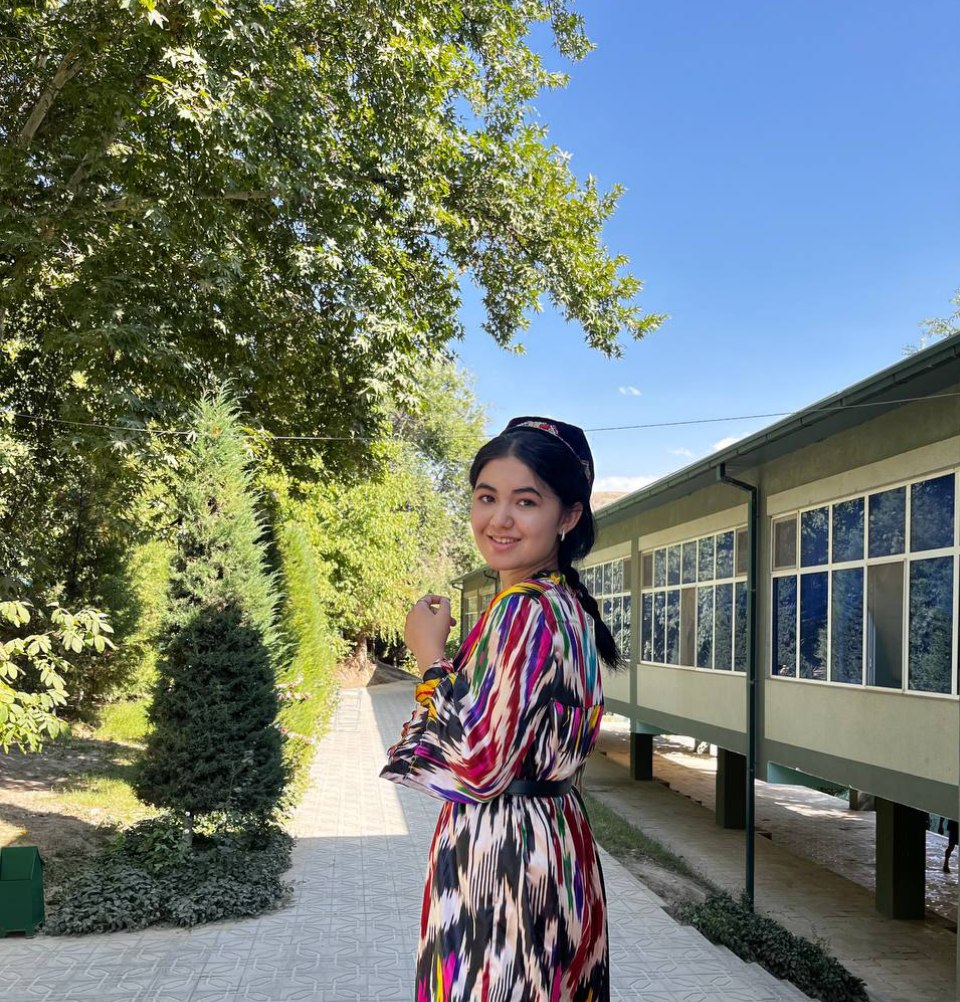
Did you know? Uzbekistan is the science capital of the world!

Science is the primary driving force behind any country's development. It is not an exaggeration to say that evaluating a state's development through the development of science is very appropriate. The advancement of science is an important step toward Uzbekistan's prosperity and stability. It is not for nothing that the state is responsible for society's scientific and technological development.

Respect for science has been a tradition in Uzbek society throughout history. As our great grandfather, Imam Bukhari, once said, "There is no salvation in the world except knowledge, and without knowledge there will be no salvation." The relevance of this phrase has increased, not decreased, over time. This golden saying seems to have been spoken for today and for all time.

Today's rapid development has helped meet humanity's basic needs. Science is as essential as water and air. No one can deny that diving to the depths of the oceans and conquering the universe is a product of science today. The human mind grows with knowledge. A knowledgeable person assesses events objectively and learns to reject ignorance and stubbornness. Inadvertent ignorance is not a sin; however, refusing to learn is.

According to Ibn Mas'ud, knowing what one does not know is also knowledge. Because when a person realizes what he does not know, he seeks to learn.

Our forefathers made an important contribution to history by immortalizing the Middle Ages as an Eastern Renaissance in gold letters on the pages of history. They are moving in many directions.

There have been no equals to Imam Bukhari in terms of preserving historical Islamic teachings, to Burhanuddin Marginani in jurisprudence, to Abu Mansur Moturidi in theology, and to Imam Zamakhshari in Islamic linguistics. Nor to Alisher Navoi in Uzbek literature and philosophy, Ibn Sina in medicine, or to Abu Rayhan Beruni and Mirza Ulugbek in physics, mathematics, history, and astronomy. The list could go on and on.

Knowledge has always triumphed over ignorance, just as good has triumphed over evil, and justice has triumphed over injustice.

Willful ignorance is condemned in Islam. Ignorance destroys our lives and our relationships. Enlightenment cleans the heart, enhances our spirituality, and brings glory.

Because of these teachings, our great grandfathers made incomparable contributions to the advancement of world science. The rich spiritual legacy they left behind is still read and researched  in the world's most prestigious higher educational institutions. For example, in the field of medicine, Abu Ali Ibn Sina's "Medical Laws" is being studied with great interest in European countries, whereas Burkhaniddin Marginani's "Hidaya" has gained great fame in the Islamic world as an important source of Islamic jurisprudence.

The names of great scholars such as Beruni, Khorezmi, Ibn Sina, and Ulugbek are well known throughout the world for their invaluable contributions to the advancement of science. The Islamic world continues to be fascinated by the works of scholars such as Imam Bukhari, Imam Termini, Abu Lais Samarkand, Burhoniddin Marginani, and Imam Moturidi. They elevated Islamic teachings to the level of science, according to contemporary Muslim scholars.

Every year, a significant portion of the Republic of Uzbekistan's state budget is spent on social expenses such as education and science. More than 239 billion dollars were allocated from the country's budget in 2021 solely for the support of innovative development and innovative ideas, as well as for the design, construction (reconstruction), and equipment of facilities.

This will be more than 671 billion dollars, or 0.39% of state budget expenses, in 2022. 28 scientific organizations and four innovative technological parks have been established in the last four years. Scientists' salaries have tripled. A lot of money was spent on updating industry organizations' material and technical bases. The Academy of Sciences of Uzbekistan, which includes 28 scientific research institutions and four state museums, has increased its activity as an important participant in the state scientific research policy.

The establishment of the Ministry of Innovative Development of the Republic of Uzbekistan in 2017 was a significant step toward organizing the development and implementation of innovative ideas and technologies. In particular, 342 scientific developments were commercialized with direct Ministry support from 2018 to 2021. As a result, products worth 151.2 billion dollars were produced, and products worth 128.7 billion dollars were sold.

In general, the legal precedent for improving the system of state support for science and innovation has been established in recent years. In particular, in the period 2018-2021, two laws, five decrees, 26 decisions of the President, 35 decisions, and seven orders of the Cabinet of Ministers were adopted in the field of scientific and innovative activities. This has a direct impact on the resolution of current social problems. The Concept of Development of Science Until 2030, approved by Decree of the President of the Republic of Uzbekistan No. PF-6097 of October 29, 2020, identified 19 problems on the path to scientific development.

Among these are the fact that large sectors of the economy pay little attention to science, the average age of teams conducting scientific research is quite old and the researchers are nearing retirement, and there is insufficient allocation of financial resources to science and scientific activities. Solving these issues is critical and necessitates comprehensive and thought-out solutions.

Knowledge can help us overcome disasters. Haji Bektash Vali once said, "The path taken in ignorance will not end well." Those who want to win, succeed, and rise must rely on knowledge. "Let the world learn science," said the Prophet. May God bless him and grant him peace.

"Whoever wants the hereafter, let him learn knowledge," said the Prophet, may God bless him and grant him peace, who explained the importance of knowledge.

Science education is not limited to the classroom. A person receives a key from school. With the key, the person unlocks the treasures of knowledge. Whatever he or she does, he or she does it enthusiastically.

Throwing away your notebook in a corner as soon as you graduate from high school is a big mistake. Learning, on the other hand, has no age, time, or place. Knowledge is the most valuable investment, and you can increase your investment at every age, every location, and every time. Learn more about yourself. You may encounter difficulties. You will face some challenges, but remember that nothing worthwhile comes easily.

A true intellectual does not base his or her decisions on hearsay. First, he or she carefully studies, thinks about, and acts on the truth.

A true intellectual understands that learning is a means to an end, not an end in itself. He or she applies his knowledge to the benefit of humanity. The goal of studying is to help others. Science is only valuable and useful if it benefits humanity. No matter how useful knowledge is, it is useless if it is not put into practice.

Science improves people and makes them more admirable. The goal of science is self-awareness. It is useful in the sense that it helps us to understand ourselves.

Marjona Jurakulova
Chairman of the Council of Young Advisors under
the Youth Affairs Agency of the Republic of Uzbekistan,
student of the Pedagogical Institute of Shahrisabz State University
marjonakhanumjurakulova@gmail.com
You Just Can't Win

I did a
really,
stupid
thing,
this week,
well, last
week.
I ran out
of Prozac.

I've been
really ill,
all week.

Feeling
nausea,
unable to
eat properly.

It's been a
fucking rough
week.

I finally got
it together
to pick up my
tablets today.

I think it's the
first time that
I've ever read
the instructions
on how to take
them .

It was all there,
" Don't let your
pills run out.
The withdrawal
symptoms
include
nausea,
sickness,
low mood.

Lack of energy,
and motivation.
Etc. "

Basically,
all the shit
I've been
going through
in the last, horrible
week.

It's
my
own
fault.

I
know
that.

But,
I look at
the side
effects from
taking them.

They're
almost
exactly the
same.

You
just can't
win.
He Is Risen

The rising man
the showman
the big shtarker
did a turnaround:
moved the boulder
clear of the cavemouth
and bowed in three
directions to applause
you've never heard
the likes of; maybe
once before when
Horus rose from the dead
and greeted the sun
as anyone would after
that torpor the cheers
were louder.

In the bars, they only talk
of their guy who came
after as the one and only
to shower with gratitude.
And damn the unbelievers.
And don't be mentioning
Asar in these quarters


March With The Zapatistas

There's something to think about
in the movement of the marching
toward a goal that's distant enough
to become uncertain of its outcome.
The men are tilted forward
as if leading horses onward.

The women are devotion, their arms folded
in the creases of soutanes placed as columns.
Determination is depicted. It is a color. Red.
White moon. Blue of moonlight in the mountains.
They go to fight. You see the swords. There's no
deception in it. Their figures are their speech.

Though wearing peasant dress they're contemporaries
and we slowly merge with them without distress.


Evasive Action

It's all we've got so let's keep it.
Wouldn't you run into a burning building
to save a child? You wouldn't pour gas
on it. Let's get together and make an impact.
Give up those old clunkers you're still driving.
Sell off the cattle you're raising in your garages.
They're dooming us to extinction.  Beans
are much better for you and so are bicycles.
Take a walk with your child and have a conversation
without lighting a cigarette. Purchase
solar panels, buy green tags, adjust your thermostat.
Throw yourself to the ground to stop a convoy
of tanks slowly emitting CO2 gas in the countryside.
And get those B-2B's out of the sky. They're GHG murderers.
Restful Peace
   If I could hold a
        thought

       My
         Own
            Self
               Be True

Given Ours
    in the sky

Day's Be-holding
    The Sun
        And the
      Moon
in the same GRASP

LOVE heard my Word
        &   &   I don't care,

  there's more where
          that came
              from.
                 ♡
               LOVE

        Stillness cool &
          Dark   as the
            Dim will
              Soon
               Come
                Before
                 the Light