
| CHANNEL CAT Fish, a foot long, tail Forked, that dot a sign: Horn, will work alone to hurt Instinct no bar to boy with pole. He’s daydreaming on the bank, His shadow a most elemental thing More than his room at home A strike might prove no brain. More than skin allows the hands He worries about the size of something To annoy the threshing out of the marsh The train-whistle never tells him more. What aura the fins experience, The lightest finger on the line, Lead-line of fairest less or more Than one fisherman might stand. Quietude’s an elucidation of detail: One long flail of bones, needle-sharp, Deep inside something a good deal more Than gills (must grab them behind). If it bites it swallows bait and hook. A towel won’t work to uplift the headline: Boy cannot use tweezers or pliers. All hands and eyes, he stays faithful. To create, he says, living is possible. The table’s set without modifications. In his heart the channel makes its bed. The boy sees flicks of the invisible, Even as he cuts his cat behind the gills So that he can pull the skin toward the tail, Down with the pliers the way a sock Tends to slide away from the heel. The head he tosses into the hedge. Catastrophe purrs and dances with bees For a mouth full of whiskers and eyes Glazed with nature’s gifts in progress. BLISTERED Words! Get on, involved in particulars! Throw that pallet down in the sand and wait! Enjoyment’s identity burns pigment. The girls pass me by for long sleeves, a cap. Watch the red fox and possum prance and shine, Unselfconscious as I would like to be. Learning’s variation becomes some rules. Words may be true as very rotten wood. There may be deep streams in your complexion. There may be light darkness, like poetry. Frightening, to be in the sun too long, Fair-skinned, red haired, freckle-faced, pearly brown. Without a lesson-plan, go for the pier. Lie down under it: hard at seventeen. Body hard, muscles swelling – jumping round, The Charles Atlas course, come-on, one mag ad. Hype charges on before us, though I am The one blistering in the hot, beach sun. Two books in the plankhouse I was born in, Sears Catalogue and the Holy Bible. Peeled skin is the life of apprenticeship. LIBBY CAMPBELL Libby Campbell’s a wonderland In and of herself, her tutelage Bringing currents warm to Cool Spring Elementary Because she believes in helping Young people, third-graders, especially. County Iredell’s vibrant with words And promise when Libby promotes and Manages the hunger every soul finds in Poetry: consider her love of children. Behold, she volunteers to help them Easily as she creates an atmosphere, Leading them to orchestrate their writings for assisted-living residents, Letting them appreciate the need to remember and create. INDEPENDENCE You raggedy flag of July’s minions, Come higher from the dirt and let waving Be holiday you salute with plenty Of hats of straw and maids and men merry. Let bells ring echoes over the cow-barn At the Tink and Addie Coats Estate set Aside this day for things windy and warm, The Boy Scouts pulling ropes to raise their sweat Upward the bells many timed tones downward From full force to the hidden, yet still found Once more on every summit and sound toward The sky all the way, the stars, stripes around, The twinkles rankling up unbottled heat Nights fill with rockets showering The Milky Way with swats On the way to what heavens rise and bear Fruit and, at last, support discord’s absence, When light shines on Dame Hymen’s tight lips To lap and lamp every Tuesday morn, When I was a boy, before dreams took me Asleep or awake and left me in bounteous Recall of wrong numbers and poverty And wilt in hills becoming mountainous, Desire lounging big in weather’s bounty, Rules, too, searing how not to burn biscuits Lovers miss while singing songs of sunshine. Bring on the brainstorm, then, babe, and remove The high chair for crowds to lean and pitch in To tie a ribbon round the old oak, one Of rainbow’s hues for July, slave girl’s few Years as full person instead of three-fifths. Let zippity spout without gagging On popcorn and beer while boys play nifty Stobs at horseshoes, one throw, success tilling Real veins in a town hurting to be born, Taken over by ones in time seeking The school for shelter and some unforlorn Adults on crutches imbibing as chiefs Mark and swing inside their heads for the score. LOVE WORKS There, summer briars sample air hotter than visitors Can stand. Buried in the cooler ground Lies our July. The blistering Sun sings along with children, hey-diddle diddle, the cat and the fiddle – fond Of time they do not understand. There is no moral. Art is not all nursery rhyme, but a sorrowful Beauty in atmospheres sharp as a razor. No one comes to mourn what history sent Bullying its way to bring the slaves here. Great-great-grandpap George got caught up in what to do, then went Along with the laws. Maybe he was that rare Master who was good to a fault; how will I ever know The thicket ahead of my mower now Will spare more than stones and lichen-etchings. What belies the bellies in their cramped graves? Rats, the prowling cat, the waves The sun slants in salty smears to brave August on? Today’s news fishes for days When my country will put its money for the right And leave economics under the starry night To long for clear and obvious love. Leave July to sleep with her family. Let the possum trail for love as it plays dead. It needs no mere recognition as North America’s one native marsupial. Its holdings span country and suburbs, Where the fox and coyote, too, make their dens For all to see now and then To aid Love’s contrast, Hate, toward extinction. |
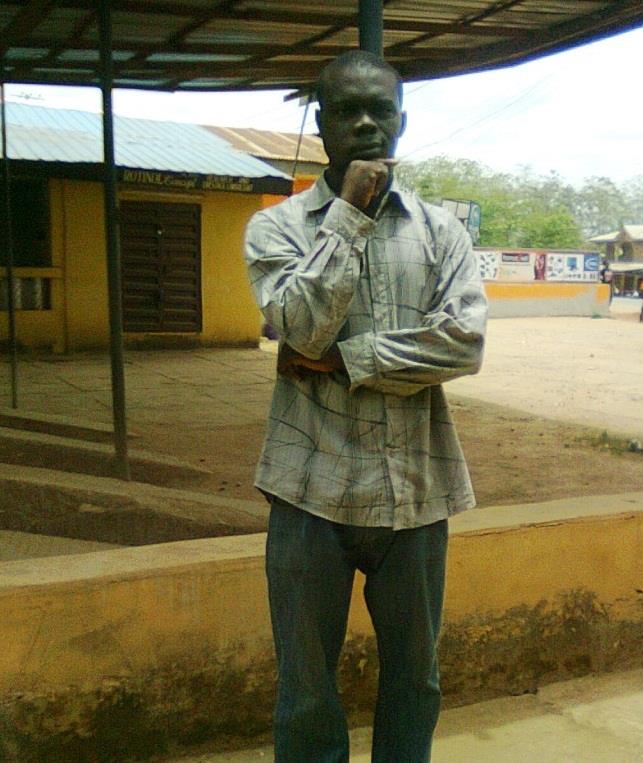
Essay from Chimezie Ihekuna
This is part of an eleven-segment relationship advice column from Nigerian author and Christian motivational speaker Chimezie Ihekuna, where he identifies and debunks certain beliefs he disagrees with on the topics of relationships, marriage and sexuality.
Deception 10
I’ll become sexually faithful when the right man or woman comes
By deduction, you are presently exploring your sexual prowess with different individuals. In other words, you are obviously an infidel. Sexually, are you going to be faithful to your Mr. or Mrs. Right in the making? Time will reveal the answer.
In fact, the issue of Mr. or Mrs. Right is being approached by young men and women by a vague selection of ladies and men they have slept with. In other words, people choose the ones they intend spending the rest of their lives with on the grounds of sexual interaction-probably on the best of competent individuals they have slept with. We must, in concrete terms, based on this context, define the terms “Mr. right”. Mr. Right is that man who practically believes in chastity and self-control instead of promiscuity while Mrs. Right is the woman who demonstrates a chaste disposition and is never willing to let go of her body to gratify her admirers’ flirtatious desires in the name of a deceptive life-long union.
Given those definitions, it is anticipated that individuals portray a chaste attitude rather than sexually around while awaiting their so-called Mr. and Mrs. Rights. As an employer, the vacancies you place on bill boards, newspapers and other media outfits job offers instructing interested applicants or prospective employees to come with necessary requirements for interested applicants because you have what it takes to fully employ their services. Similarly in wanting to get a chaste woman or a man with self-control, it is expected of you to be self-controlling or chaste. Unfortunately, it is the other way round- people want chaste woman or men of great self-control without possessing these qualities.
If you influence people with promiscuity, how you do intend getting your Mr. or Mrs. Right? You are like the employer not having what it takes to be one. In the first place, what makes you think that your right man or woman will come to you, given your not- chaste behavior?
When do you think your Mr. or Mrs. Right will come? Do you think the people you slept with are not the so called Mr. or Mrs. Rights?
To an extent, people who are sexually unfaithful have unknowingly be seen as sex objects. Hence, they become “used and dumped” by their partners. Simply, they are “replaced” by other believed-to-be-better individuals by breaking up or demise, separation and even divorce. Eventually, these imbalances become eminent.
Don’t you think it is more upright to be chaste and self-controlling,
preparing you for your Mr. or Mrs. Right than depriving people their sexual
worth by displaying promiscuity, vaguely pointing the possibility of meeting
your Mr. or Mrs. Right, denying people the worth of chastity and respect?
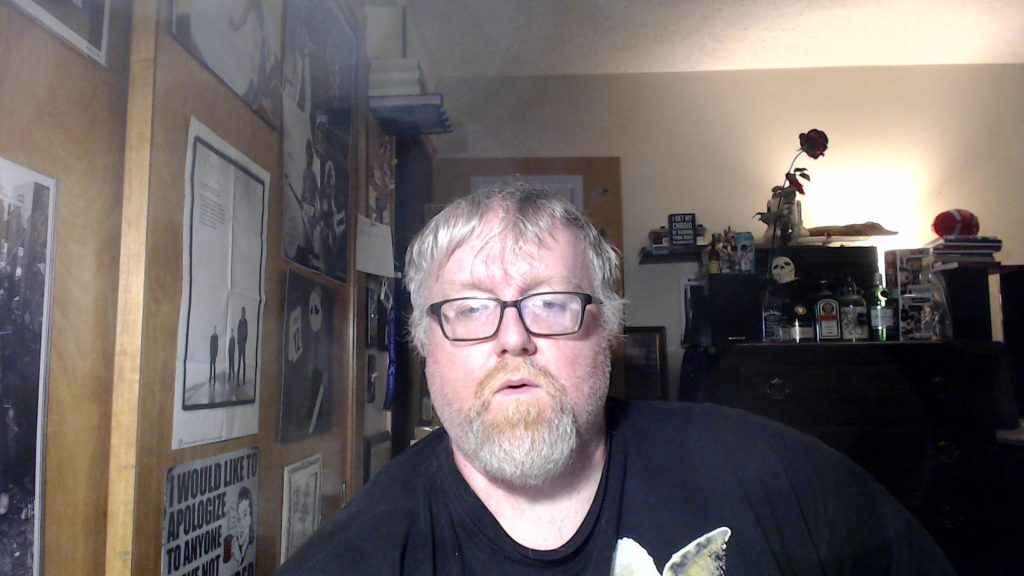
Poetry from J.J. Campbell
| a series of small tragedies darkening skies doom and gloom i gave up on happiness years ago just about the same time god gave up on me the holidays are coming up a series of small tragedies while hanging the lights with glee desperation is the last sign of hope that clings in the chilly night air these are the mornings one of those mornings where you can’t make it to the bathroom in time and as much shit that makes it in the bowl, the same amount is in your underwear and eventually the floor these are the mornings where i completely understand why it makes more sense to choose death a million better places another waiting room listless women behind the glass the annoying drone of the television in the background i can think of nearly a million better places i could be right now but my imagination likes the back roads and taking its fucking time the inevitable reality laughter from the back rooms i suppose it beats the inevitable reality of death i lost my ability to be light hearted a few deaths ago i always wonder where the first misstep took place every shrink i’ve seen has told me it all goes back to childhood of course it does that sad reality i try not to remember the last time i kissed a woman i would love to bury that sad reality but i’m not exactly interested in a future all by myself i refuse to count the voices in my head until i absolutely have to |
Poetry from Marc Carver
ORDINARY LOVE
I went up to the boy and got a ticket for the film.
He told me the name of the film
and I said what other love is there.
Unrequainted he said yea I can’t spell it
but I sure have had plenty of it
but you know every now and then
you have to chance your arm
the women asked me what I wanted
I said coffee she told me she would make it with love
I said only if it is with requainted love.
MARRIAGE
I told her that was what marriage is
watching you screw up your face
like a wild animal
while you put your bra on or your deodorant.
Things that other people didn’t know
but I had seen you do it a thousand times or more
and each time it still fascinated me.
I can steal these things from your life
so I don’t have to live my own
I only wish I had more people to steal from
EVERYBODY NEEDS A FRIEND
Part one
I walked into the closing down ladies shop
not sure why went to the back
and saw a row of mannequins.
I had been after one for a while
didn’t buy it straight away though
but knew I would take it home paint her
then I would think about driving around
with her in my car see if anybody would notice
I even thought about getting some roller skates for her
and walking around with her.
“HI have you met my friend,”
Yea I could have some real fun with people
with that after all I have to get something
from them and besides I get lonely it good
to have someone to talk to even if they don’t talk back.
Part two
I went into the shop and gave them the money
the young woman asked me if I wanted a receipt
and I said I should be okay.
She pulled it into three parts
and said I can come back for a bit later if I wanted.
I said I should be okay so off
I went through the shopping mall
with the crutch through one hand
and the other around the tits with the base.
I got some strange looks especially from some old women.
Then I wished I got a receipt
they may all think I am stealing her.
I couldn’t help but think if anybody asks me
I can say it is the wife she has gone to pieces.
The arm fell off a couple of times
and she started to get heavy so I had to put her down a few times
as all the kids started to come out of the college
then this bloke came up behind me. “Nice bit of skirt.”
He said. “It is the wife she is going to pieces.”
I said. I got her to the car exhausted and she fell in the back.
“Get up you silly bitch.” I said.
Eventually I got her home but as I got her out of there
she started to fall to pieces in the street.
“Come on pull yourself together.”
I got her inside before any of the neighbours
could see now she points east in the front room
I hope the wife doesn’t get jealous.
TOILET
I walked out the gym late
the woman at reception gave me a wry smile
as I walked out with a towel on my head,
We went to screwfix to pick up the toilet.
I walked in towel still on my head
she and all the butch men started to look at me
staring at the towel. I walked to the counter.
“What is the matter
nobody ever seen a man with a towel on their head before.
“They all looked away and we left with our brand new toilet.
THE WOMAN
I met the woman again last night
mostly I have avoided her over the years
the way I avoid everybody.
She told me I looked like a skier
I told her I had been known to ski in my past
but everything was in my past now.
She said she liked my short stories from all those years ago
something that was powerful
that lingered around the coffee table for days.
I told her she was kind but of course she wasn’t.
She was in old people’s care homes with a music group
breathing new life into the old
keeping them alive just that little bit longer.
She didn’t mention why we had not talked in years.
She had that sense about me that something bad was going to happen
the way a lot of people know even if I didn’t know myself.
Not yet. When she said goodbye she did it with that air
that the conversation was not important to her at all
and off she went.
I wonder if I will talk to her next time if there is a next time
LOSE
What do you do when you are alone
that is the real question.
I don’t know what others do.
I can sit in silence writing and there is nothing else in the world
but more times than not I do other things.
Things so I don’t have to write
but why I don’t know.
Things so I don’t have to be alone even though
I run from people I walk the other way when I see them.
I avoid them but that makes me lonelier so lonely I can’t even write.
So what do I do stay alone
run to people pester them into talking to me.
It is not that I am uninteresting
I can laugh and be agreeable
yeah I can be a good guy but in the end I have to lose
I have to lose
TELL ME A STORY
i want people to tell me about their lives
their stories in that way
I want to be a stenographer of other people’s lives
a chronicler.
My life is not important at all only to tell theirs
but the sick part of it all is I am shy,
I can’t talk to people only when I am thrown into life
but life has not done that lately all it does is keep me here
hiding from everybody.
Sleeping and waiting
TODAY
I know life is all in the adversity
the gut wrenching pain of it all
horrific drunkard dancing in the streets
but you get to a stage when you can’t do it anymore
like June said to Henry
you don’t even know what you are.
You are a masochist.
But one day it has to stop
you just can’t do it anymore.
That day is today.
February 2020: Philosophical Permutations
by Synchronized Chaos Co-Editor Kahlil Crawford
This month we consider nontraditional philosophy across all media. A departure from the stoic philosophy of centuries-old granite statues, our contributors sculpt new outlooks keen on personal experience and (self-)critical observations true to the semantic essence of philo (“loving”) + sophia (“knowledge, wisdom”).
“Philosophy is a struggle against the bewitchment (Verhexung) of our understanding by the resources of our language.“
– Ludwig Wittgenstein, Philosophical Investigations
Norman J. Olson examines his intuitive art philosphy of being a professional hobbyist. He ruminates on his existence as an “old school” artist seeking meaning in the contemporary milieu, and the embrace of his work by the literary set. MA Papić prophesizes the postfuturistic state/fate of our living planet – referencing the limitations of free thought as well as our history of global hysteria and multiethnic anxiety.
Ivan Arguelles’ latest poetry collection HOIL: An Unfinished Elegy, reviewed by Christopher Bernard, highlights the paradox of our existence. No matter how high our creative aspirations soar, we still, like the poet’s son who passed away recently from encephalitis, have to live within bodies vulnerable to illness, injury and age. Doug Hawley elucidates a deistic look at the universe through a humorous interview with God, who set nature in motion and then, bemused, watched it unfold.
Chimezie Ihekuna espouses his philosophy of sexual chastity in pursuit of “Mr/s. Right” across dimensions, whether it be professionally or personally. J.J. Campbell continues his explorations into domestic angst. Physical and emotional pain powers his poetic suite in an intimate manner devoid of companionship. Poet R.M. Englehardt explores physical death in his poetic suite. The darkness of music and his Southern Goth aesthetic emanates through words filled with bitterness, rage and personal nostalgia.
“…and philosophy is nothing else, if one will translate the word into our idiom, than “the love of wisdom.”
– Cicero, De Officiis
Poet Susie Gharib takes us on a contemplative retreat thru her celestial monastery alongst a water sphinx and cerebral historian. Daniel DeCulla bemoans the vagaries of an unsuccessful fishing trip and the unpredictability of the natural world. Joan Beebe illustrates the simplistic beauty of nature with succinct descriptions of flower, bird, star, sky, sun, and soul. Conversely, poet Jake Cosmos Aller provides a retrospective account of complex, global affairs and personal transformation, which all fuse together in a fateful dream.
Visual artist B.T. Lowry postulates a “polyculture of complementary knowledges” to ensure human sustainability and honor inspired by “badland landscapes with knobbly stone hoodoos and deep ravines.” Neila Mezynski offers a poetic catharsis in the spur of the moment akin to the transience of Mark Young‘s graphic photography. Their creative nontraditionalism is further echoed by the surrealistic poetry of Husain Abdulhay and John Dorroh.
“Philosophy is the question: from which side shall we look at life, God, the idea or other phenomena.“
– Tristan Tzara, Dada Manifesto 1918
Author Cliff Garstang provides culinary and commuter backdrops for his short story and novel excerpts exploring familia and human dynamics. D.S. Maolalai’s poetry celebrates the beauty of moments of ordinary life with regular people: drinks with friends, the moment just before a couple gets engaged, father’s perfect turkey soup. Even an ordinary moment can be quite lovely with time and care.
Book columnist Elizabeth Hughes introduces us to the work of Glenn Peterson as he chronicles his Mother’s journey from Nazi-occupied Denmark during WWII to the safer shores of North America. Meanwhile, Jeff Rasley takes us through the streets of Kathmandu wherein the ramblings of his emerging culture shock quake beneath the lives of regular people. Mahbub also finds inspiration through travel, visiting gardens, temples and elephant sanctuaries in Thailand and wishing for the same peace and posterity as the resting cats he sees.
Essayist Abigail George evokes literary modernist Franz Kafka in her autobiographical tale of monstrosity, abuse, pain, love, and healing. Similarly, the poetic determinism of Mickey Corrigan evokes Rimbaudian symbolism, as he captures our participation in the cycles of nature.
“…philosophy arises from awe, a philosopher is bound in his way to be a lover of myths and poetic fables.”
Thomas Aquinas, Commentary on Aristotle’s Metaphysics
Film critic Jaylan Salah illustrates the appeal of the movie adaptation of Sophie Kinsella’s romantic comedy Confessions of a Shopaholic to Egyptian young adults as more Western consumer products became available due to economic globalization. Yet, economic reversals in the country rendered the seeming prosperity and the culture that grew up around it a mirage, tempered by reality in the same way as the book character’s credit-card financed lifestyle.
Actor Federico Wardal describes a performance where he intentionally blurred the distinction between illusion and reality to delight the audience. San Francisco poet Joan Gelfand likens the local tech scene to a bovine pasture – is the Silicon Valley tech dream really all its cracked up to be? Or is it merely an insomnia-induced illusion as described by poet Henry Bladon?
“…begin the long, slow process of reintegrating the Eastern philosophical tradition with the Western one…by restoring the application of theory to practice as a central measure of philosophical worth…”
Adrian Piper, Yoga vs. Philosophy?
Finally, and poignantly, returning poet Joan Beebe contributes a wistful piece where she remembers the simpler and happier days of her past.
Essay from MA Papić
Fear of a Living Planet (Sides A & B)
There might be lots of opinions on what is most important to the dignity of humans, but all of those opinions, these days, fall into only one of two camps: those who believe in a living planet, and those who do not. In these two camps reside an operating principle that determines the underlying logic and prejudices that filter concepts around politics, religion, power and diversity that lead to different logical conclusions. Within these two camps there is a constant overlap in identities and roles, but subjective and seemingly objective conclusions skew in only two poles: living or dead planet by nature.
A living planet is a planet that must be respected and worked with — while a dead planet waits, like a sterile clay, for something or someone to animate and give it direction. In these two models and camps of philosophy a person either believes in their right to step into the role of sole creator or to allow themselves to be part of a more dynamic, collective creation. History shows that philosophies of domination and exclusion always found their rights to oppression in the belief that somehow this world was separated from the essential living spark that created the planet, and ultimately space and time. Abandoned through this separation, the essential life force had to be pantomimed by those in positions of an almost god-like power.
Oppressors ultimately believe in a dead world and see all other peoples, beings and materials as essentially inanimate objects to be manipulated, collected and controlled. They sell this view through their methods of media and outright coercion, so that a perversion of all other concepts of love or philia discussed in the day to day discourse are set to serve the dead planet paradigm. A dead Earth philosophy allows for the exploitation of labor, mass incarceration of minorities and outliers, as well as the wholesale use of poisons being poured into the ground as a method for increasing fertility. The logic ultimately finds itself, by whatever means, using poison and poisonous virtue signalling to generate fears towards the basic tenets of life and co-existence.
A typical dead Earth view can distort many ultimately useful concepts, such as those we might find in holy books. One example could be found in Genesis, where the idea of “dust to dust” is first posited. Of course there is a deeper conversation around the loss of immortality (unfettered and direct connection to the Godhead) and the casting out of Eden that accompanies this scenario, but taken as a well known phrase often used by Christians to show humility in the face of life on Earth, there is something about it that begs our attention.
Dust to dust, or Earth to Earth is reflective of a circular system, one where the body returns from whence it came. The body, itself, returns to itself through what are primarily biological processes. As a society that reduces its pieces to chemistry and physics, to mechanical agents in a system that somehow gives life but is not made of life, we find the body’s return to Earth troubling. We thwart this process by infusing the body with chemicals when possible, making the very thing we are meant to return to the Earth toxic. The circle of life is broken in our efforts to maintain a separation from the subsumption of humans bodies into those of micro-organisms and insects, into those beings that function as part of a larger biological system.
Only in a system where the body has been reduced to some less than whole version of itself can we find a rationale that manages to treat the body as separate from the world of its biology. This rift between humanity, Earth and an underlying living systems unity can be traced down through dogmas that developed along with the technologies of production. This rift was exploited as technologies grew so that humans and their planet could be parsed into bits, cut into small and tiny parts to be manipulated as objects out of relation to the whole.
Although the spiritual truths of our culture pay lip service to our unity with a biological foundation, the dominant political narrative has been one of an essential deadness that we must pretend exists in us. In archaeology, it is understood that the way in which a culture buries its members is a core element for understanding their relationship to life and myth. If that is the case, then our culture will be known for a hallmark of denial and for absorption with its own creations to the point of exhibiting a complete division with the realities of biology.
In this way, a belief in a dead planet is the foundation of the schizophrenic nature of our culture, and an underpinning of its widespread mental debilities. To reconcile ourselves with the dead planet theme, we offer the chemistry of modern pharmacology in place of integration and have done so with stunning results. This, of course, has been our history and has led us to the brink of a self-fulfilling group prophecy of end times. These end times, of course, are just a new beginning – one whose character and timbre are up for argument.
The Rebirth (of a Living Planet)
For many today who espouse living systems design there are lineages in every discipline. There have been voices that at first held the lineage of older cultures, and then there are newer voices that link them to the politics of the day. It is not impossible to draw deeper connections between the voices of mystics who healed in keeping with the seasons and plants, and spiritual teachings and those who point to statistics illustrating the dire need for women; and primarily women of indigenous cultures, color, and poverty to be uplifted from their oppressed placements within their local cultures and the global culture at large.
A living planet requires and thrives in biodiversity, and it evolves itself towards cooperation. From early findings of the naturalist Darwin, through the work of evolutionary biologists such as Lynn Margulis, to the recent research of scientists who have found that insect communities evolve to cooperate and negotiate – this is a thread found in science. The concept of competition as a type of demi-god of a dead system view is refuted by Darwin’s full texts, and continued by all the work that shows our bodies are not simply bodies, but interconnected ecosystems working in tandem with our tiniest and oldest living ancestors of microbiota.
Denial of a living planet is necessary for those who would deny the planet and its beings the intrinsic rights of the living, such as dignity and freedom. This denial and its collapse was picked up in the prophetic voices of scholars and rights advocates for generations. Announcing itself again and again, a living planet and the fear it induces in those who see their lives as somehow exceptional and primary and all others as unnecessary and troubling was called out as unsupportable. Famously, in 1990, Fear of a Black Planet was released by the musical group Public Enemy (PE). Taking their thoughts from scholarly foundations while involving themselves in the plight of their people regarding race, color, economic power, and urban experience; PE represented a collective voice heard ‘round the world. Their truth spoke to the power of our fear – the one upheld in the dominant undertones of even the most free-thinking areas of our society. The truth of a living planet is that it requires no supremacy, no hegemony, and absolutely no single best way or people.
Right to self determination, to equal value, to space on the land and air and water – all of those rights we tend to think of as human rights must be extended to our view of our planet. We may need to eat, make houses, and take up space as a species; but that does not correlate to a set of rights to displace, destroy or demean others. As our technologies evolve into the ethereal space of computing, this balancing of rights is core to our maintenance of this planet and its peoples. To maintain our evolution we must shift to circular systems so the rare minerals we mine and the refuse we create no longer go into the few virgin territories left in the wake of our dead planet history.
The fear of a living planet will not go quietly, we have seen; but it will go either taking our society and our bodies with it, or it will go on its own while we, as creatures, persist. Our biosphere, our bodies, our very selves as mini-ecosystems can only move forward if we choose to comprehend our place within this world. Whatever the spark that created our planet’s conditions for life, whatever dressing of myth or belief we choose to relate to our visions of perfection and gardens of life – there are still only two choices. We must choose to love a living planet with its limitless forms of expression, with its constantly vibrating and oscillating identities and interactions between them; or we can choose static views and static roles, and ultimately a static planet. Stasis is death, and yet we have been taught to adore it at all costs; to demand that our structures and our identities and our hierarchies do not change. We currently fear our planet, not out of humility for the circle of life in which we participate; but because we fear the true beauty of interconnectedness.
Kahlil Crawford (Liner Notes)
A simple Ecosia search for “Gaia” rendered me unto a multisensory dimension of indie rock tragedy, digital apocalypse and transcendental nomadism:
MA Papić
(n/adj/v)
rare hybrid:
part scholar,
part artist,
part designer,
part activist,
part scribe,
part icle.
A grandaughter of Hrvatska (Croatia), she processes stimuli with one foot in The Americas (Turtle Island) and the other in the Balkan Peninsula (Balkanski poluotok). Her hands, however, hover within an eclectik spacetime of disembodied poetics, liminal philosophy, encrypted economies, and so on….
MA’s creative range is harmonic and agile, volleying across platforms and modalities toward our inevitable, intersectional balance. She emits the post-apocalyptic coded language of Rucker & 4Hero, Wiliams & Krust – exhibiting the full cycle of creative resilience and epic finality.
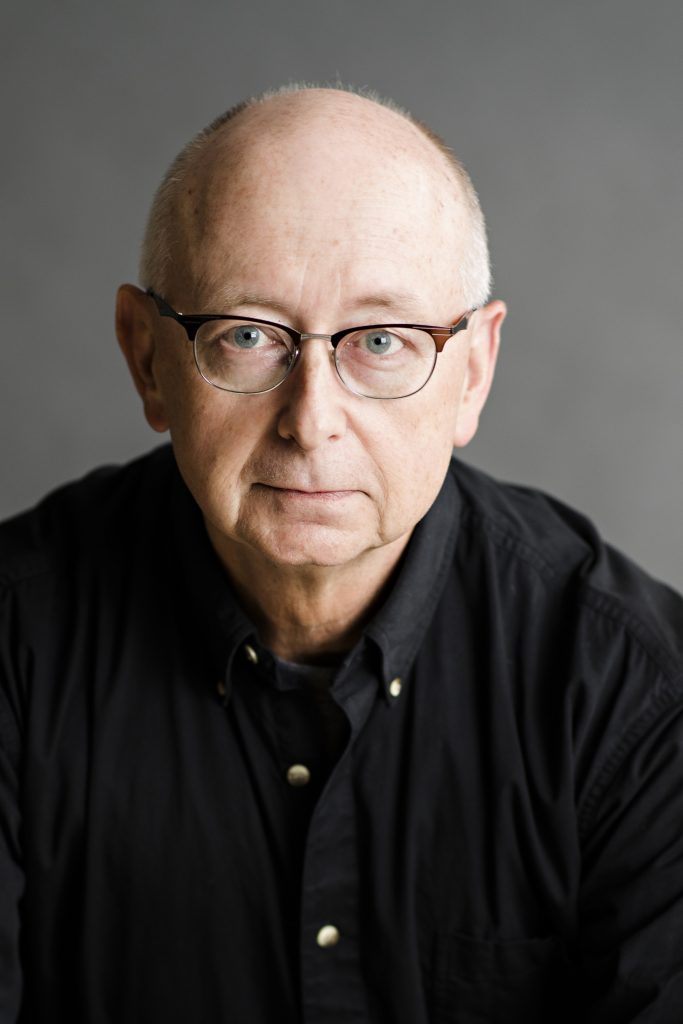
Novel excerpts from Cliff Garstang
Short story, Papel Picado
Consuelo’s father shows Oliver how to place the patrón over the sheets of colored tissue paper and cut the shapes—angels and crosses in this pattern—with the hammer and chisel. They are in the workshop behind the family’s cottage, itself some distance from the hacienda where SeñorOrtiz is the caretaker, while Consuelo prepares quesadillas for their lunch. She has brought him from Mexico City to meet her family, a major step in their affair.
The aroma of garlic and grilled chicken makes it hard to concentrate on the papel picado, but Oliver tries to imitate the older man’s technique. With each tap of the chisel his head pounds, and he is all too aware that Miguel, Consuelo’s twin brother and the instigator of last night’s tequila wars, is watching from the doorway, blocking the fierce noon light.
“Women’s work,” Miguel says in English so that his father won’t understand. A sneer warps his lip.
“Qué?” asks Señor Ortiz.
Oliver looks up, marveling again at Miguel’s resemblance to Consuelo, two impressions from one mold. Last night, in the cantina, Miguel caught Oliver staring. He couldn’t help himself: Consuelo’s lips; her brother’s. That’s when Miguel challenged him to a round of shots, and then another. Oliver had no choice.
Consuelo enters to call them to lunch. Oliver removes the template and lifts a delicate red tissue, lets the light dance through the gaps. He presents his handiwork and kisses Consuelo’s mouth, his eyes searching for Miguel.
Excerpt from Clifford Garstang’s upcoming novel The Shaman of Turtle Valley:
Driving south on the Pike, Aiken has to pull onto the shoulder as a sheriff’s car flies by, siren wailing, then a fire truck, and then a second. It’s as if he’s racing them, falling farther behind, and he accelerates to close the gap. They turn on his road, and he does, too, skidding on loose gravel, and then he knows. In his gut he understands, even before he sees the smoke, or smells it. And then he does see smoke rising above the trees, black and churning. As he gets closer, he spots three pickups pulled to the side, and men he recognizes from the farmers’ market leaning against their bumpers, watching the flames lick through the roof of his barn. The fire trucks block the driveway, and he pulls into a ditch. He jumps out and into the yard. The barn is engulfed, lighting the night sky. He moves closer, but even if the Sheriff’s man hadn’t dragged him back the angry blaze would have prevented him from getting anywhere near the barn door.
The building burns like dry grass. The windows explode. Now flames are leaping through the roof, and then the roof collapses in a gusher of sparks and cinders. Paint cans erupt inside, each a dull burst, like the echo of a distant gun. Aiken drops onto the steps of the house, eyes tethered to the unfolding catastrophe.
“Got to ask you some questions, Aiken,” Billy says, his leg propped on the step.
“Why would she do it?” Aiken asks. Just then the back wall of the barn collapses, and the two men watch the structure cave in on itself.
“Now, see, that’s just what I was going to ask you,” says the deputy. “We can’t get too near the place yet, of course, but there’s a gas can out in the yard that somebody didn’t bother to hide. I was wondering if you knew anything about that.”
“Me? You think I had something to do with this?”
“I didn’t say that, Aiken. I’ve got to ask. So you think your wife did it?”
“Who else? She wants to hurt me. To punish me. She wants to go home to Korea. Maybe this is her way.”
“Punish you? For what?”
“Damned if I know.” But he does know, and he wishes he could tell her he’s sorry. It’s long overdue.
There’s nothing the firemen can do for the barn, but they stand by in case the flames spread. Billy and Aiken go through the house, room by room, to be absolutely certain she isn’t there. Aiken tells Billy about his dead dog and shows him the gun cabinet. He assures himself and Billy that she’s taken only the shotgun and Hank’s pistol.
“How’d that little girl learn to use a shotgun, Aiken?”
He has no idea. Ordinary people in Korea didn’t own guns, although her father had fought in the Korean War and no doubt knew something about weapons. Maybe she learned from him. But that’s unlikely, from what little he knows about the family, and there has to be another explanation.
It comes to him.
“Cousin Tammy’s a crack shot. She’s been hunting since she was a kid. Damn. We’ve got to call Tammy.”
He dials Tammy’s number, but there’s no answer. It hardly matters. He already knows what she’d say.
“Jesus, Tammy, what have you done?”
Clifford Garstang is the author of a novel, The Shaman of Turtle Valley, a novel in stories, What the Zhang Boys Know, which won the Library of Virginia Award for Fiction, and a prize-winning short story collection, In an Uncharted Country. He is also the editor of the three-volume anthology series Everywhere Stories: Short Fiction from a Small Planet, stories set around the world, and the co-founder and former editor of Prime Number Magazine. His new story collection, House of the Ancients and Other Stories, will be published in May 2020.
Garstang’s work has appeared in Bellevue Literary Review, Blackbird, Cream City Review, The Hopkins Review, Los Angeles Review, Shenandoah, Tampa Review, Virginia Quarterly Review,and elsewhere, and has received Distinguished Mention in the Best American Series. He has won the Confluence Fiction Prize and the GSU Review Fiction Prize and has been awarded fellowships by the Virginia Center for the Creative Arts, Ragdale Foundation, Hambidge Center for the Arts, and the Sewanee Writers’ Conference. He is the recipient of an Indiana Emerging Author Award and an Emerging Writer Fellowship from the Writer’s Center in Maryland.
After receiving a BA in Philosophy from Northwestern University, Garstang served as a Peace Corps Volunteer in South Korea, where he taught English at Jonbuk University. He then earned an MA in English and a JD, magna cum laude, both from Indiana University, and practiced international law in Chicago, Los Angeles, and Singapore with one of the largest law firms in the United States. He earned a Master of Public Administration degree from Harvard University’s John F. Kennedy School of Government and worked for Harvard Law School’s Program on International Financial Systems as a legal reform consultant in Almaty, Kazakhstan. He then served as Senior Counsel for East Asia at the World Bank in Washington, D.C., where his work focused on China, Vietnam, Korea, and Indonesia. Subsequently he earned an MFA in Creative Writing from Queens University of Charlotte. He currently lives in the Shenandoah Valley of Virginia.