+


WALKING Water
       Support my feet

Looks like Liquid
       feels like street

I'm Heart filled Dreaming
     I could go Home

But Bring Here Heaven
      just now on loan

LOVE lift my thought
     Above Being tried

As STEPS ON Liquid
          are not denied

WALKING Water
       Support my feet

Looks like Liquid
       feels like street

                                                ............
by John Edward Culp Saturday Morning February 18, 2017
The Survivor


The once healthy cell

Has been invaded like hell

The once healthy hair

Has fallen throughout this fair


Like drifting wood in the river afloat

Winter snow on the ground, melt it connotes

Sunlight cascading to the forest floor

Feeling uncertain, thus, you close the door


The strength you have to surpass them all

Unwavering faith will not falter His call

You fought the illness uncalled for

You’re the greatest survivor of them all.


Life


If life is like picking the right song

Choose the one that bangs the gong

To the rhythm of the beat that is in bloom

Like the windy beat of air in a lagoon


Swiftly flowing, the rhythm in your ear

That’s how smooth you want life to appear

Like trees laid into the sunny rays

Field of dancing flowers full of grace


If life is like picking the right song

Choose your band and favorite song

Trials in reality you cannot shun


Yet after the rain the sun will surely shine


Facade


When I met you decades ago

We were young, free and on the go

Uncaring for whatever it might be

My heart throbs for you endlessly


You got my heart from the start

Yet treated me wrong from the day we start

You tricked me with all the lies

It was long enough for me to realized


What we had were all facade

Made most of my days gloomy and sad

My brain unquestionably says No!

But my heart undoubtedly says Go!


Behind the hidden memories

Lies all the troubles and worries

A painful yesterday

Is now a memory far away


Too many years have been wasted

With all the trials busted

Facing all challenges to pursue


Until one day... I’m so over you


Youth of Yesteryears


Those were the budding days

So young & carefree with your ways

All you do is play the race

Until the beaming sun hides its rays


Those were the youthful times

When life doesn’t have to rhyme

When folks’ counsels do not matter

Never sorry for a dreadful scatter


Those were the blossoming years

Shedding pointless tears

Dwelling on wasted years

For some worthless fears


Those were the years gone by

Treasured mem’ries long gone by

Old secret mem’ries gone by


Reminiscing will give you a little cry
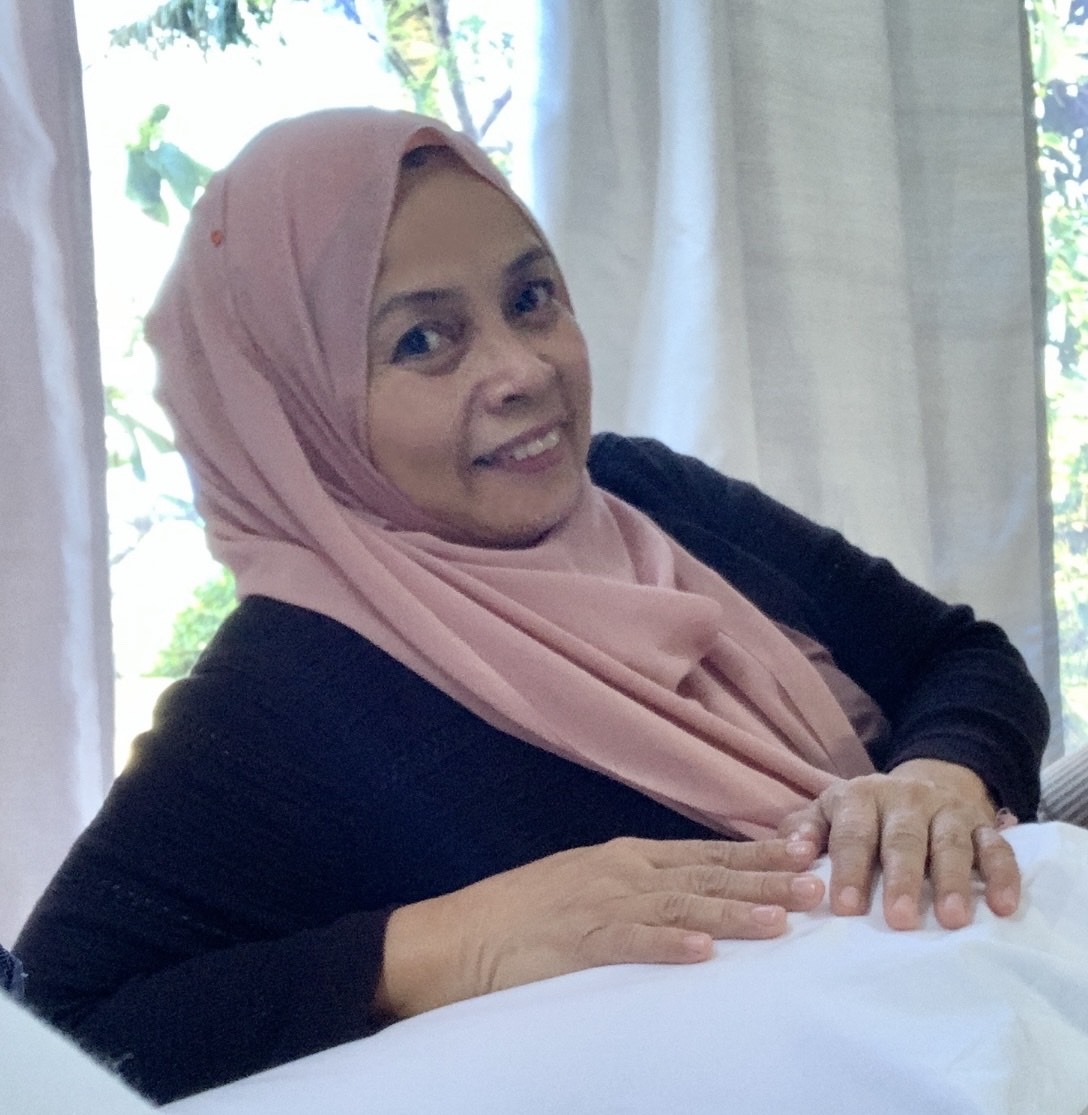
Jazira Munding Ismael aka Jazira Mi
A published poet, photo enthusiast, and an aspiring novelist, she is a registered writer/author with the National Book Development Board (NBDB), Philippines. Her passion for writing awakened her curiosity to explore genres like romance, and fantasy, mystery and dystopia.
Her poetry collection entitled “Poems of Life” speaks for itself as life’s intertwined roads are filled with wonders, challenges, both highs and lows. She also has a booklet on marriage vows called “I Do”, both of which, were published by 8Letters Bookstore and Publishing, Philippines.
She regularly lectures and critics poetry writing contests of Poetry Hub, an international online platform of aspiring poets from countries like Nigeria, India, Somalia, Zambia, and its neighboring countries. She has gained notable following on Instagram (My writing Journey- Jazira Mi) as well as in her photography world: Fotografia y Viaje Alrededor.
The end of the world is nigh. So what? This doesn’t change things. All my life I’ve been wishing to do something important, go down in history and now I know that it’ll never happen. So let the apocalypse come, who cares. Finally something really democratic. Not even the greats of the past ages are safe, everything will disappear from the face of the earth. Pardon, that’s going to disappear too. The Big Crunch, the return to the singularity: few believed that it would really happen.
I was talking about that with a female friend just yesterday.
– I don’t see why we should get desperate. In any case, each one of us would have to die sooner or later.
– You’re insensitive as usual.
– At least we’ll die together – I said, although my love is unrequited.
– You creep me out – she replied, and started chatting with her friends on Facebook.
I remained at her disposal anyway. Shortly thereafter, she ordered me to go and rent all the disaster movies I could find because she would throw a party that night.
They want to overcome the fear of death, I said to myself, by mocking it, laughing at it. It was a good guess: on my return, I find her making out with two guys in skeleton costumes.
– The best is yet to come – she says.
– I’m partying too?
– There’s always the dog.
That was one of her friends. Soon after other people dressed up as the occasion demands – gravediggers, ravens, worms and whatnot – walk in with crates of beer and any kind of commercially available drug.
Moral: there was little interest for the movies and only I and the “dog”, wearing a tombstone costume, watched them, until she left me to participate in an orgy with two skeletons, a coffin and a mausoleum towards the end of the night.
At dawn they had all sunk into comatose sleep, as in one of those music videos that stage the typical post-party morning of the latest pop star. I walked out in the garden and watched the sun rise.
I’m still here now, contemplating the sky. It won’t be long until the end.
Komm, süßer Tod!
Really, that’s what life was? We could do without it, thanks. Adieu.
Maurizio Brancaleoni has been widely published in several journals and anthologies. He has a bilingual blog where he posts literary gems, interviews and translations. The original version of “Who Cares About The End of the World” was first published in 2012 in an anthology of apocalyptic short stories.
All are welcome to attend this multi-venue literary event on Saturday April 22nd, starting at 2pm in Heritage Plaza across from the library. As it’s also Earth Day, we will begin with a group of poet laureates from the East Bay giving environmentally themed readings and then move to a selection of different downtown venues before re-congregating for the afterparty at the Sun Gallery. Several Synchronized Chaos contributors will read from their work.
This month, Synchronized Chaos’ contributing writers and artists map the inner journeys many of us embark on as creators or simply as human beings.
Christopher Bernard reviews William Kentridge’s Sibyl at UC Berkeley’s Zellerbach Hall, a production evoking humanity’s continual search for answers we may never find. Jaylan Salah interviews Jim Frohna about Apple TV’s show Shrinking, which confronts mental illness in a unique way by showing a character’s search for truth and his life’s purpose. Maja Milojkovic renders internal journeys between people and within oneself through esoteric and painterly metaphors. Graciela Noemi Villaverde expresses the inner passion and turmoil of someone in the depths of romantic attraction through her dreamscape poetry.
Robiul Awal Esa celebrates his country of Bangladesh by reflecting on its founder’s creative work of statecraft. Wazed Abdullah also honors his Bangladeshi homeland by singing of its natural and human history.
Luis Cuauhtemoc Berriozabal reflects on where our minds wander when we stare out our windows. Jerome Berglund observes everyday objects – scoreboards, prickly pear cacti, chia planters – in ways that are unique and uncanny. Noah Berlatsky finds enlightenment in a single moment: a computer chatting from an algorithm with no biological past, a tiny house with no room for hoarded objects from the past, a sailing ship, and a spiritual meditation on the present moment.
Barbara Gaiardoni superimposes words onto closeups of plants to encourage people to think and contemplate our place within nature.
Philip Butera writes of his creative process, search for inspiration, and the loneliness of art-making. Scott Thomas Outlar’s poems also explore psychological questing, artistic creation, and his soul’s evolution. Jerry Durick writes of individual identity from three different perspectives. Ivan Jenson alludes with humor to how intimately intertwined technology has become to the processes of finding and creating ourselves.
Stephen Jarrell Williams sends up a post-apocalyptic fantasy sequence about holding onto one’s truth and identity in hopes of recreating a better world. Roodly Laurore speaks to finding hope in the midst of desolation and violence in Haiti.
David Woodward evokes through surrealist poetry the history of broken treaties and legal stratagems used to remove Indigenous people from their lands. Clive Gresswell peers into the underbelly of modern British society, unearthing poverty and decay. Faroq Faisal laments human greed and environmental destruction. Michael Ceraolo satirizes power relations of all sorts, political and professional.
Chimezie Ihekuna’s song lyrics relate how he remains open to the possible need to question everything he’s been taught. Henry Bladon’s humor probes the meaning of life and death and explores the limits of nihilism.
Nilufar Ruxillayeva reflects on how the path to happiness can be different for each person.
Mehreen Ahmed reminds us that our bodies and psyches need recharging as much as our devices. Mahbub Alam finds renewal through peaceful retreats to nature, imagining himself loved and encouraged within his sacred space. Don Bormon wishes he could bring happiness to the world like the sun as it returns at the end of winter.
Some people’s work looks into how we grow as we pass through different stages of life and common experiences.
Richard Simac’s story of male self-discovery and bonding during puberty echoes with references to the garden of Eden and the maturation of humanity.
Shelby Stephenson reviews Stephen E. Smith’s poetry collection Beguiled by the Frailties of those Who Precede Us, a book of poems addressing family relationships and the pain caused by prejudice and racism. Z.I. Mahmud examines Alexander Pope’s famous poem that satirizes his society’s expectations for high-class women.
Duane Vorhees speaks of physical and cultural evolution, how we are all inevitably shaped by our pasts. J.J. Campbell shares how he relives memories for comfort and excitement amid the slow passage of present-day time. Norman J. Olson, in a letter to a friend of his on the occasion of the passing of poet Steven Richmond, reflects on what it means to have had a lifetime of literary success.
John Grochalski illustrates the world-weariness of a returning traveler and points out how many people share that feeling looking at today’s American society.
Linda Gunther captures place and time while recollecting a high school romance, tied to her past while tiptoeing into adulthood.
Abigail George’s essay probes the journey of heartbreak, compounded by the sense that her past partner viewed their whole relationship as a mistake. We see how grief elongates time and heightens perceptions as the narrator processes strong emotions and seeks to reclaim herself, drawing on literature and history as touchstones.
Chris Butler explores another type of heartbreak in a different way, through a horror tale of a mother and daughter’s doomed search for connection. Az Emina Krehic writes of the slow fade of memories of a departed person, another source of grief.
Other contributors illumine care, connection and compassion for others as a pathway towards spiritual growth, how relating to others changes us.
Taylor Dibbert’s speaker devotes himself to care for a sick dog, while Mesfakus Salahin illuminates the gentle renewing power of love, and John Culp finds peace in the natural rhythm of a long-term relationship.
Cheryl Snell crafts moments of tenderness between fragile, mortal humans, as Ann Christine Tabaka celebrates love shining through a dark wilderness of broken souls and bodies.
Finally, some art and writing turns outside the human psyche to explore the world.
Russell Streur chronicles haiku poetry’s 1950’s cultural moment in the United States while questioning whether anyone could truly create authentic haiku in languages other than the traditional Japanese.
Mark Young’s poems consist of sentences that make sense individually and fit together structurally, if not content-wise. Michael Barbeito’s photographs are lush, complex renderings of scenes with several layers of detail. Maurizio Brancaleoni’s drawings focus on line, shape, shading and color.
Channie Greenberg’s natural and artistic representations of birds illustrate how beauty can be found in both nature and in human-crafted artwork. In the same way, Daniel De Culla juxtaposes images of dogs and statues, clowns and Santa Claus, the real and the crafted.
This issue encompasses a variety of human thoughts, quests, and journeys, and we hope it inspires you to ask and seek answers to your own questions.
EVERYTHING IS PLACED ON YOU

 What will I do after receiving
 the gifts of poverty,
 and the clarity of the strings
 that fall on my skin
 Like an old perfume?
 Everything is placed on you:
 the reflection of the moon,
  your indefatigable eyes igniting
 the sunset that falls into the depths
  Of my soul/
 If I had the solution of this love
 I would wait next to the pieces of pain
 But it's impossible to find you... You're so far away!
 The snow falls on your landscapes,
 while time vanishes in a kiss
 Everything is placed on you:
 I can't find the words to
 describe you,
 you are an active participant in my dream
 through the curtains of memory/
 undress me in that open place
 as your desires/
 While I remain here immobile/
 Expecting…
 Sometimes I try to run away
  is unknown
 that place where the gods are born/
 And I hide behind the humble offering
 of my letters,
 or the scattered books
 next to my bed...
 Please!
 Open the chests of imagination
 So that you can understand,
  this madness /
 I have cried your absence,
  on the reflection of the tide
 violent/
  Everything is placed on you:
 Now I can confess to you
 I live under the light
 of the moon,
  like all your thoughts


Graciela Noemi Villaverde
 Argentine poet writer based in Buenos Aires
 She has a degree in letters, author of 7 books of the poetry genre. She has been awarded several times worldwide. She works as the World Manager of Educational and Public Relations of the Hispano-Mundial Union of Writers UHE and World Honorary President of the same institution.
Letter to a Departing City Official

January 27, 2022

I read in the weekly paper today
that you will be leaving at the end of next week,
moving from our inner-ring suburb,
only a handful of employees under you,
to take a job in the big city
where you will oversee hundreds of employees
and tens of thousands more housing units,
offering you the opportunity
for illegal and unnecessary demolition
on a much greater scale

Legalities be damned!
Environmentalism be damned!
Homelessness be damned!
Keloization forever!

Congratulations to you
Condolences to the tens of thousands
of your future victims


A Speech

And in conclusion,
                            once more
                                             from our leaders:

"We've polished up the American dream"
"the legal right of the millionaire to his millions"
"Sure, I'm one of the fat cats"
"I'm the fattest cat"
"What kind of society isn't structured on greed?
"Forget loyalty"
                        "an oft-invoked ideal
that applies to fewer and fewer people"
"Liquidate labor,
                        liquidate stocks,
                                                 liquidate farmers"
"our scheme does not ask any initiative in a man
We do not care for his initiative"
"How come when I want a pair of hands
I get a human being as well?"
"This isn't rocket science"
"It's the economy, stupid"
"it is an existing evil"
"and we must endure it
and give it such protection
as is guaranteed by the constitution"
"Greed is even more contagious than fever"
"Anything worth doing is worth doing to excess"
"I have,
            I fear,
confused power with greatness"
"Power is the ultimate aphrodisiac"
"do not let so great an achievement
suffer from any taint of legality"
"A man always has two reasons for what he does---
a good one and the real one"
"If I am to speak for ten minutes,
I need a week for preparation;
if fifteen minutes, three days;
if an hour, I am ready now"
"a virtually limitless supply of bullshit"
"God ordained that I should be
the next President of the United States"

Thank you,
and good night


Affliction

Though not yet named,
and with no diagnostic criteria, or treatment,
it is the most common mental defect in America:
thinking everyone else is as stupid as you are


Too Close to Home?

The editor said he enjoyed reading the poet's poems, but he wanted more personal work for his journal.

So the poet sent a piece about his misadventures with a different editor.  And the editor, perhaps thinking the poet was referring to him, never bothered to respond to the submission.
Michael Ceraolo is a 65-year-old retired firefighter/paramedic and active poet who has had two full-length books (Euclid Creek, from Deep Cleveland Press; 500 Cleveland Haiku, from Writing Knights Press) published, and has two more in the publication pipeline.”