
Wild Child

I was six months old when my father was sent to Vietnam. We left Oklahoma, where my father had been stationed in the army, and moved back to Nebraska, where my parents had grown up. My aunt stayed with us while my uncle was serving in the National Guard. My brother found his photo, crumpled it up, and threw it in the garbage can. “This is my daddy’s house,” he said. “This is not your house, Aunt Judy.” I used to wake up early and screech from my crib. My mother kept sleeping while my aunt got up and comforted me. Soon I was pulling myself up over the wall of my crib, dropping to the floor, and crawling around the house. I was my mother’s wild child.


Father, Stranger

I learned how to whistle, then talk, while my father was in Vietnam—wading through rice paddies and trekking through jungle, carrying a heavy pack and cooking his C rations with rice and bullion, surviving after his chopper crashed in a hot zone and losing his best friend in an early morning ambush. I didn’t recognize him when he came home. My brother sat in the front seat of the car chatting away. I sat in the backseat silent. Eventually I crawled over the backrest and sat between my brother and father. I kept my head down the whole time.


Digging to China

When my father left the army, we moved to Nebraska where he earned his Master of Business Administration. My brother and I dug a hole in the backyard. I said I was digging to China, inspired by my grandfather who flew cargo over the Himalayas—the hump—from India to China during World War II. My mother snapped a photo of us with mud all over—from face to toe—and my father kept it on his desk when he became a businessman.


You Don’t Own the Street

We played baseball on a dead end street across from our house and we used a rock in Mr. Dellapoli’s yard as first base. Once, he came out and yelled at us. I was a little kid but I wasn’t afraid. I put my hands on my hips and shot back, “M. Dellapoli, you don’t own the street!”


Karol Nielsen is the author of the memoirs Walking A&P and Black Elephants and three poetry chapbooks. Her first memoir was shortlisted for the William Saroyan International Prize for Writing. Her full-length poetry collection was a finalist for the Colorado Prize for Poetry. Her poem “This New Manhattan” was a finalist for the Ruth Stone Poetry Prize.
Category Archives: CHAOS
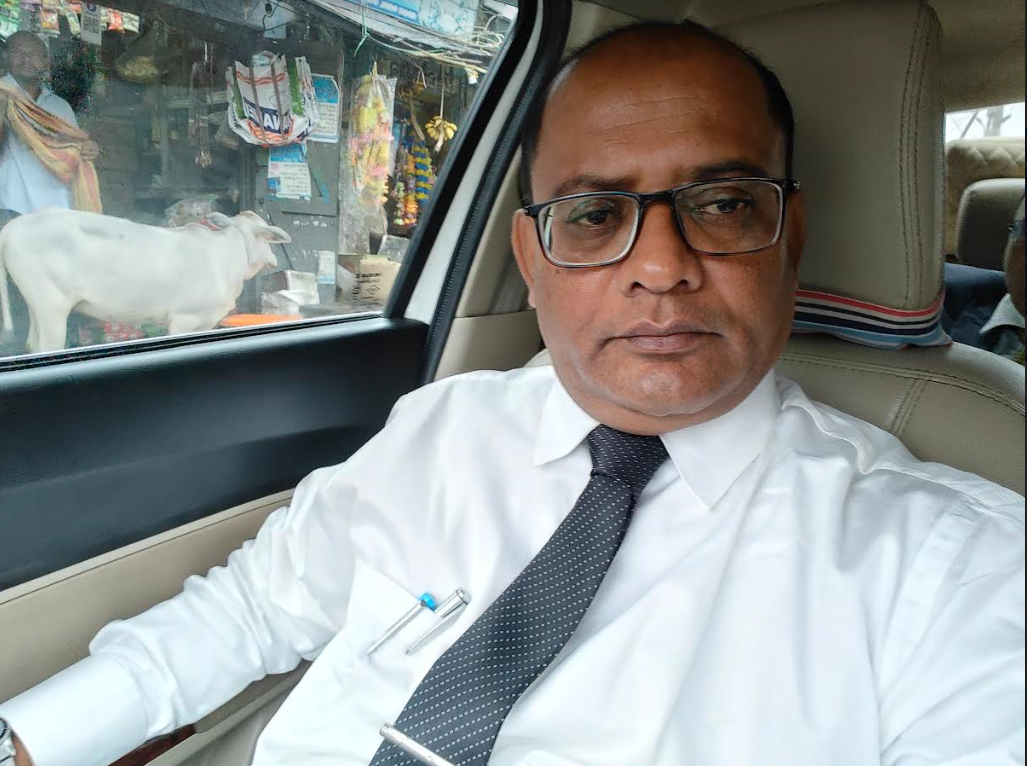
Poetry from Dr. Prasana Kumar Dalai
YOU'RE  MY SECRET!

In my words you come every moment
They all bear your name of my breath
Do stop when I don't take your name
When you're annoyed to be honest
Whenever it happens I am with you
Know not why I care for you so much
I find you and I do accept your entity
But just can't stay away from yours
You're so close for you're my secret
Honestly I exist for your good self only
I can't think of staying away from you.


MEMORIES OF YOUR TORMENT!

After crossing the road of our love
We met leaving far behind everything
How about walking to the no man's land
Hardly do we know eachother though
I feel as if I 've got my soulmate in you
Days go by ; nights don't seem to glide
Memories of yours do torment me a lot
The world has reduced me to this state
Sitting and clutching my wounded past
Cause you're so close to me , you know
But I think you're out of my reach now .


NOTHING IN MY HAND!

I wish your presence when I am awake
Always in my dreams if I shut my eyes
I've recorded my world in your name
For the first time in my life you came
My eyes were wet while laughing
Nothing in my hand ; me empty &  lonely
Your entity you know essential to me
My palm lines aren't perfect though
It is clear you've accepted me as I am
There was loneliness in my heart and
In your presence I feel heavenly bliss .


 I BELONG TO YOU!

The pain and anguish won't be lost
But I 'll be yours all the days ahead
I 've scattered myself around you
Love has bloomed in your fragrance
I accept it whatever be consequences
I belong to you and I do live in yours
I care not if the world stands against
Call me faithless and I won't mind ever
I see my heaven burnt ere even built
Now where 'll this affliction of love reside
I crave for you no matter what you're .


Biography of the Author

Dr. Prasana Kumar Dalai (DOB 07/06/1973) is a passionate Indian Author-cum-poet while a tremendous lecturer of English by profession in the Ganjam district of Odisha. He is an accomplished source of inspiration for young generation of India .His free verse on Romantic and melancholic  poems appreciated by everyone. He belongs to a small typical village, Nandiagada of Ganjam District, in the state of Odisha.

After schooling he studied intermediate and Graduated In Kabisurjya Baladev vigyan Mahavidyalaya then earned a MA in English from Berhampur University PhD in language and literature and a D.litt from Colombian Poetic House in South America. He promotes his specific writings around the world literature and trades with multiple stems that are related to current issues based on his observation and experiences that needs urgent attention. He is an award winning writer who has achieved various laurels from the circle of writers worldwide.

His free verse poems not only inspires young readers but also the ready of current time. His poetic goal right now inspiring others, some of which are appreciated by laurels of India and across the world. Many of his poems been translated in different Indian languages and got global appreciation. Lots of well wishes for his upcoming writings and success in future.

He is an award winning poet author of many best seller books. Recently he is awarded Rabindra nath Tagore and Gujarat Sahitya Academy for the year 2022 from Motivational Strips. A gold medal from world union of poets France & winner Of Rahim Karims world literary prize 2023.The government of Odisha Higher Education Department appointed him as a president to Governing body of Padmashree Dr Ghanashyam Mishra Sanskrit Degree College, Kabisurjyanagar. Winner of "HYPERPOEM" GUNIESS WORLD RECORD 2023. Recently he was awarded from SABDA literary Festival at Assam.
Story from Nosirova Gavhar
Boot

As soon as I opened the window, the drops of the pouring rain hit my face, wafting the smell of rain-soaked soil. I fell in love with the rain with my tiny heart, my dreams led to Niagara. In front of our door, under a large rainbow-colored umbrella, my father sat and worked without looking up. Passers-by would one by one go in that direction, show their shoes, and throw something as if they were teaching a lesson. The big box under the foot was quite full. It seems that today
will be a busy day.

At that moment, my mother’s words: «Be still, my girl, your
breakfast is ready, don’t be late for school» could be heard from the kitchen. When I was getting ready and going to school, I witnessed my father’s good mood:

- I’m going to school, don’t be tired
- «Study well my child» - he said.

Dawn was gradually giving way to day. When I returned from school upset, my father, who was still working without raising his head in front of our house, saw me and asked: «What happened?» - he looked worriedly.

It’s hard to say that the water got through your boots again, my feet are frozen, bring me a new one?! My father was deep in thought, sighed and said: «Don’t be sad, my girl, I will take you for new shoes» and left his work , went with me towards the market.

When I saw a brand new pair of boots that had just arrived in the store, soft and white inside, I wanted to buy them. My father said «OK» and went to bargain with the merchant.

After a long argument, I immediately put the boots on my feet. When we were walking down the street, my father said: «walk on the side of the road, my girl, it’s drier.» I happily told my father:» No, let’s walk in the street with my new boots for a while under the rain». My father would not be able to say «no» again.

Sometimes I would jump into the puddles and watch the water splash. On my way home after walking around the bazaar for exactly two hours, I entered the house after my father and praised my mother for my boots. My mother, who did not say a word, smiled and hung my father’s socks next to the oven to dry.

When I went and looked, my father, whose feet were soaked in water, turned pale and shriveled, had started mending his boots, which he had not mended twice. With tears in my eyes, I was hugging my father tightly and crying, my father hugged me and smiled calmly and said: «Study well my girl.»

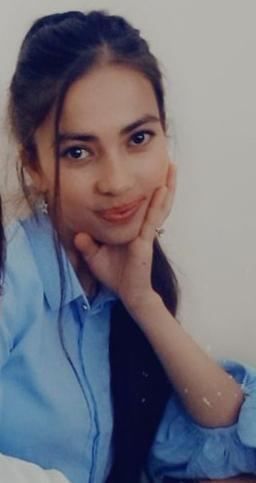
Nosirova Gavhar was born on August 16, 2000 in the city of Shahrisabz, Kashkadarya region of Uzbekistan. Today, she is a third-year student of the Faculty of Philology of the Samarkand State University of Uzbekistan. Being a lover of literature, she is engaged in writing stories and poems. Her creative works have been published in Uzbek and English. In addition, she is a member of «All India Council for Development of Technical Skills», «Juntos por las letras» of Argentina, «2DSA Global Community». Winner of the «Korabl znaniy» and «Talenty Rossii» contests, holder of the international C1 level in the Russian language, Global Education ambassador of Wisdom University and global coordinator of the Iqra Foundation in Uzbekistan. «Magic pen holders» talented young group of Uzbekistan, «Kayva Kishor», «Friendship of people», «Raven Cage», «The Daily Global Nation», Argentina;s «Multi Art-6», Kenya’s «Serenity: A compilation of art and literature by women» contains creative works in the magazine and anthology of poets and writers.
Essay from Adkhamova Laylo Akmaljon
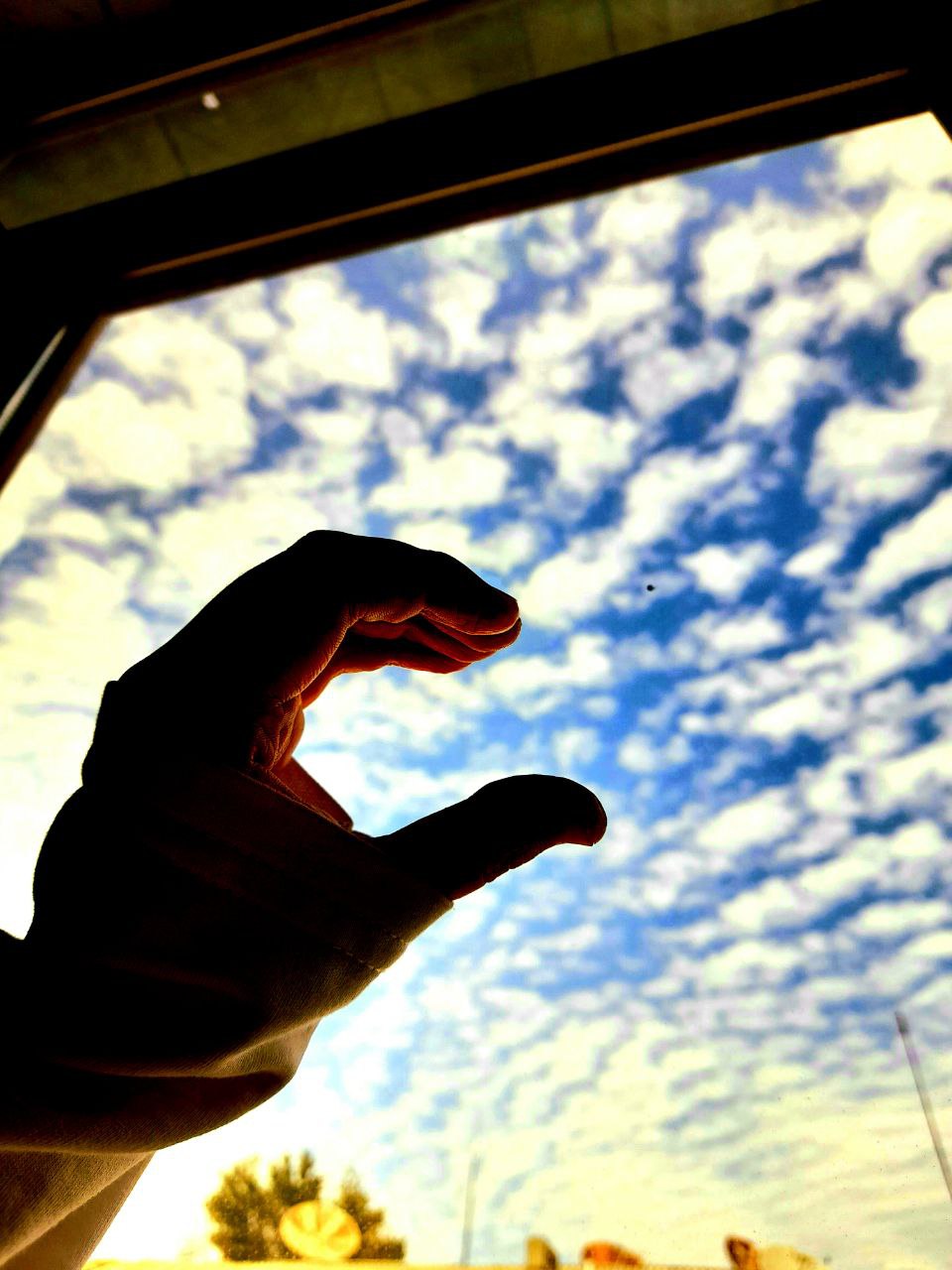
Always have confidence before you start anything, confidence plays an important role in the first place. You should always believe in the great success that follows your faith. Trust is the first priority in communication with people. No one will look at a person who has lost faith! Friends Lovers And of course, first of all, there should be trust between partners. What should we understand when we say trust? For example Trust is a big mountain, it stands strong for years, but if there is a strong earthquake once, it is also easy, so try not to lose your faith. When will a person realize that he is a person, of course, when everyone trusts him! First of all, protect your trust, I believe in you! You will definitely do it all Act as if failure is impossible! This is a test for you, you have the strength to continue! I believe! And of course I love you ♡
Brian Barbeito reviews Jacques Fleury’s You Are Enough: The Journey to Accepting Your Authentic Self
A Well Organized and Thoughtful Work Has Been Written by Jacques Fleury
Publisher, Author House
2023
By Jacques Fleury

Jacques Fleury’s book is a fine read, and will be inspiring and informative for many readers. The book is about the author’s journey of self discovery and acceptance, spanning an entire life still being lived. Students of many disciplines will gain from reading it including but not limited to sociology, philosophy, psychology, religion and spirituality, and social justice.
The structure of the book is well done with headings that are interesting and informative quotes from other authors. Fleury is a careful and considerate writer who has put much thought into his project. The reader is in soucient, capable hands.
I see the author through this work not only as a survivor, but a thriver. From Haitian Christian school that was difficult, and then emigrating to North American soil, the author addresses issues, but does not become cynical or jaded in his journeys. Obviously well read plus practiced at writing, he expresses his thoughts on everything from diet and physical health, to education and spirituality. He is on a journey of self discovery as a human and as a writer.
Among particularly interesting aspects of the book are the parts on modern mental health pharmacology. Without demonizing the industry, the writer has the talent to articulate the idea that people encountering that industry via its adjacent industry of therapy might want to proceed with caution, and self advocacy are the words of the day. This is a timely and important message in the current climate of so many pills to solve so many problems.
Another topic covered well is the idea of masculinity and what it is versus what it is thought to be. It seems the author is able to identify what historically is the case for masculine behaviour and when not wholly accepting it still accept himself. This is courageous and an educational, thought provoking and an empowering aspect of the book.
‘We must follow the energy that awakens the fire of the heart, and greet life with gusto and optimism, not sorrow and pessimism’ page 150. This is a great quote in the Fleury book that encapsulates the message of the book. In these troubled times of economic strife for many, homelessness, environmental decay, wars, continued racism and classism and other harmful isms, the book does not lose faith in people but strengthens the idea and hopefully reality that each person can through some awareness and self advocacy, create a better life.
You Are Enough: The Journey to Accepting Your Authentic Self, is a thoughtful, well crafted and well rounded work of introspection and positively that we should all take the time to read.
⁃ Brian Michael Barbeito
You Are Enough: The Journey To Accepting Your Authentic Self is available here.
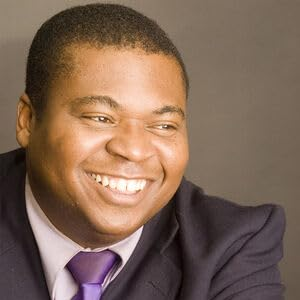
Jacques Fleury is a Boston Globe featured Haitian-American Poet, Educator, Author of four books and literary arts student at Harvard University online. His latest publication “You Are Enough: The Journey to Accepting Your Authentic Self” & other titles are available at all Boston Public Libraries, the University of Massachusetts Healey Library, University of Wyoming, Askews and Holts Library Services in the United Kingdom, The Harvard Book Store, The Grolier Poetry Bookshop, amazon etc… He has been published in prestigious publications such as Muddy River Poetry Review, the Cornell University Press anthology Class Lives: Stories from Our Economic Divide, Boston Area Small Press and Poetry Scene among others…Visit him at http://www.authorsden.com/jacquesfleury.
Poetry from Kristy Raines
Waiting for You in Your Dreams

If you feel lost and can't find me in the moment
have peace that I am in your heart as you are in mine
Life is lonesome at times and I despair in those moments
Then, in my dreams you appear with your sweet smile
and I know I am not really alone
Never fear of me forsaking you
As long as we are both dreaming of each other
how could those desires ever disappear?
Yes, I feel empty during the day without you
I miss your handsome face and your gentle spirit
But when I fall asleep at night, your whole being surrounds me
and I am comforted knowing that you are with me there

So, when you lay down your head every night
know that you will find me waiting for you in your dreams...


I Cross My Heart

Reach for the stars and there you'll find me
The ray from the moon will be your path
Reach for my hand and I will not let you fall
That is a promise I will never break
What is behind us is gone
It is ahead where we'll find a peaceful place
Time is unpredictable, here only until it ends
Don't wait to tell me the things you never could
Once that moment is gone, it never returns
So don't keep them from me even if you leave
for in our sorrow will still be our moments of love
Beautiful memories will never be forgotten
and my desires will never end for you
Standing far away, holding my heart in your hands,
is where our story ends for now
But I will be back to search for you,  as I always do...

I cross my heart  ❤


No "Once Upon a Times" for Me

When you bow down in prayer
Ask Him, if you must live without me
If so, then what is the purpose of falling in love?
Though we have been separated for a time
The cries of our hearts are still as loud
In this life, we survive much torture
Some more than others
This, I am used to
I don't cry tears anymore because I know
how to live with endings more than beginnings
I know your heart still searches for me
I can feel you when you look at my picture
I feel numb as I hear harsh words coming from you
Fortunately, I am used to unhappy endings in my life
No, "Once upon a times" for me
I close the door to my empty heart again for the last time

I can't go through this again..


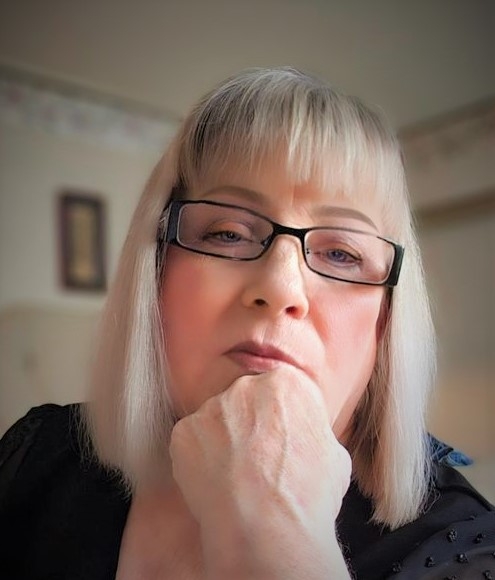
Meet Kristy Raines.
A poet, writer, and author, born in Oakland, California, in the USA.
Kristy is retired, married, and has two children and three granddaughters.

She has five books waiting to be published. One anthology with a prominent Poet from India, Dr. Prasana Kumar, Dalai,  which will launch sometime in 2024 called, "I Cross my Heart from East to West", two fantasy books of her own called, "Rings, Things and Butterfly Wings" and "Princess and The Lion",  an anthology of her poems  called, "The Passion Within Me, and her autobiography called,  "My Very Anomalous Life".  Kristy has received many literary awards for her unique style of writing.
She is also an Administrator for Chaucer's Square and Motivational Strips Literary Groups on Facebook.

Kristy enjoys music, making pottery, painting, and raising awareness for the Rohingya people and friends who live in the refugee camps of Cox's Bazar and also raises awareness on human trafficking internationally.
Poetry from Muntasir Mamun Kiron
Binary Ballet

In the digital dawn, where circuits hum,
Science and Technology intertwine,
become one.

Their dance, a rhythm of logic and wonder,
Weaves a tapestry of progress, pulling us under.
Science, the sage with inquisitive eyes,
Peers through telescopes, reaching the skies.
It whispers equations to the cosmic breeze,
Unraveling galaxies, unlocking celestial keys.

Technology, the artisan of silicon and wire,
Crafts innovations that spark our desire.
From microchips to quantum realms,
It bridges the gap between dreams and realms.

Together they tango, a harmonious pair,
In labs and data centers, they declare:
“Let there be light, let there be code,
Let curiosity guide us on this cosmic road.”

Science observes, questions, and seeks,
While Technology builds bridges, peaks.
They birth revolutions, pixel by pixel,
In this grand symphony, their notes enthrall.

So raise a toast to this binary ballet,
Where ones and zeros waltz, night and day.
For Science and Technology, hand in hand,
lead us forward, toward a future so grand.

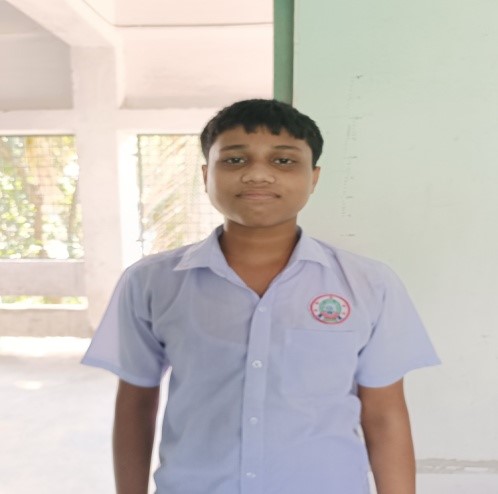
Muntasir Mamun Kiron is a student of grade 10 in Harimohan Government High School, Chapainawabganj, Bangladesh.