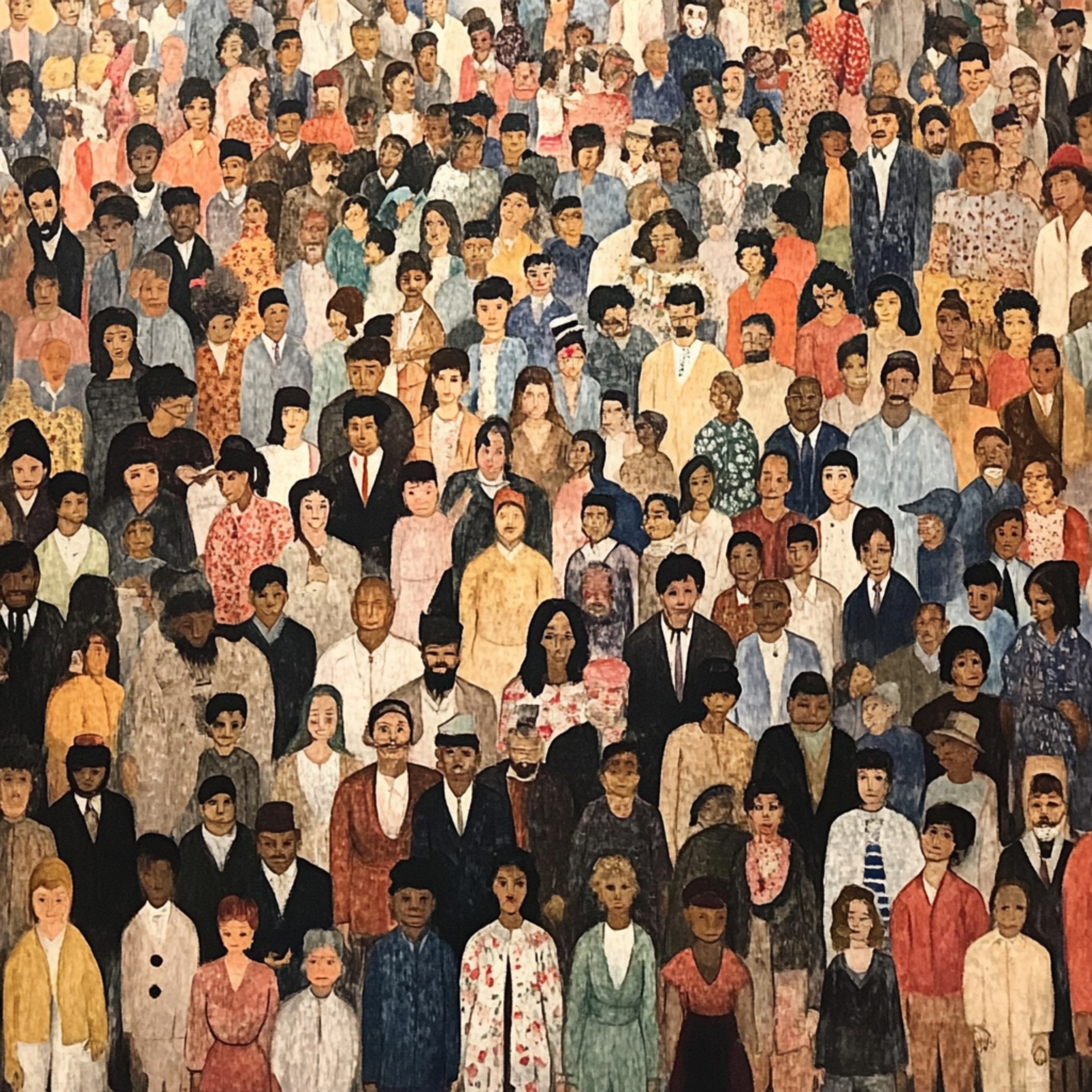
The Age of War

For most of a life now long enough
to be half buried in history,
the country, half-despairingly,
I call my own—
half-decadent, half-barbarian,
and wholly crass—
has been, above all things, at war.

Not only the kind that bleeds headlines.

A frigid civil war, scar
of a hot one long ago,
between a party drunk on virtue
and another, aggrieved and vengeful.

A war between races,
nations, tribes,
for which will tyrannize
the seven continents.

A war between generations
as callous adulthood sends its children
to the slow death of lack of enough
money, or drones and killing.

A war of the rich on the rest of us,
rooted as old as time
now a monstrosity
beyond obscenity.

A war between the sexes
whipped into a frenzy;
a war man and woman refuse
either truce or loss.

War on war on war across
decades I do not wish to count—

at times almost about to gamble
a cagey ceasefire,
only to be pulled underground
in cunning retreat,

like a wild fire that forever burns,
threatening at points that cannot be known
to claw and tongue into the air again
and sweep away to ashes
the wilderness of mankind.

I do not see an end to them.
Perhaps they cannot end:
perhaps they are as old
as mad, foolish humankind,
and so they will end only
with the last human sigh.

And so they are tearing us to pieces.
_____
Christopher Bernard’s book The Socialist’s Garden of Verses won a PEN Oakland Josephine Miles Award and was named one of the “Top 100 Indie Books of 2021” by Kirkus Reviews. His latest book of poetry, appearing in the fall of 2025, is The Beauty of Matter.
The coach behind MMA’s determination and victories
Many people have different opinions about MMA. Some consider it a bloody fight, a competition without rules. Some even criticize it as a “game of street thugs.” In fact, MMA is a mixed martial arts, which also has strict rules and regulations. People who know this sport well understand that skill, discipline, and hard work are in the first place.
In 2018, the MMA Federation was established in our country, opening the doors to the international arena for our athletes. After that, MMA quickly became popular in Andijan, Bukhara, Kashkadarya, Samarkand, and Fergana regions. Today, Chiraqchi district is also becoming one of the leading regions in this regard.
Bahrom Haydarov’s role in this development is incomparable. He is a 10-time Uzbek champion, 2-time Asian champion, and world champion in MMA. He has also achieved many victories in professional MMA. Today, he is sharing his experience with young athletes.
Bahrom Haydarov’s training is a school of its own. He trains his students as if they were fighting in the octagon. The requirements are strict: an athlete who is late for training will not be allowed to compete. Of course, where there is order, there will be progress. Although the coach is very strict, it is a good experience for his students. “Where there is no discipline, there will be no progress,” he says. The strict coach teaches his students not only the secrets of fighting, but also life lessons.
Our hero is training more than 100 athletes. About 20 of them have already won championships in our country and international competitions. Students such as Anvar Pardayev, Mirjalol Yusupov, Aziz Nurjonov, Jasmina Abdumoʻminova and Shahboz Ortikov are his pride. They are flying the flag of the country high and introducing the younger generation to MMA.
Bahrom Haydarov’s work proves another thing: true heroism is not in the ring, but in teaching others his knowledge, inspiring young people. Today, young people who train under the guidance of their teacher have big dreams and are working tirelessly to achieve them.
Therefore, the young champions emerging from the Chiraqchi MMA School are becoming the pride of our tomorrow.
Abdisattorova Khurshida Suvon qizi was born on November 9, 1997 in the village of Almazar, Chiroqchi district, Kashkadarya region. She is a 3rd-year student of the Sports Journalism Department of the University of Journalism and Mass Communications. Currently, her articles have been published in the newspapers “Hurriyat”, “Vaziyat” and on the websites “Olamsport” and “Ishonch”. She is a participant in the international scientific and practical conference “Future Scientist _ 2025”.
Annotation: This article looks at blended learning as a new way of teaching that combines traditional classroom teaching with digital tools. It talks about the main problems with blended learning, like digital inequality, teacher readiness, and student self-discipline, as well as the main benefits, like flexibility, personalised learning, and better student engagement. The analysis stresses that to make blended learning work, you need to plan ahead, get help with technology, and change the way you teach. The results indicate that blended learning, when implemented effectively, can substantially improve educational quality and foster a more equitable and forward-looking instructional approach.
The fast growth of information and communication technologies has changed the way schools around the world teach. Blended learning, which combines traditional classroom instruction with online or digital learning activities, is one of the most popular methods in recent years. The goal of this model is to combine the best parts of both in-person and online learning to make the experience more dynamic and focused on the learner. Blended learning does offer many ways to make education better and more accessible, but it also comes with a lot of problems that teachers and schools need to solve.
One of the best things about blended learning is that it gives both students and teachers a lot of freedom. In a traditional classroom, students can only learn at certain times and places. With blended learning, students can access educational materials whenever and wherever they want. For instance, learners can upload lecture videos, digital readings, or recorded presentations to online platforms so they can study at their own pace. This is especially helpful for students who work or have family responsibilities because they can change their study schedules to fit their other commitments. Additionally, accessibility implies that students are not constrained by physical or geographic boundaries. By connecting to the institution’s online system, a student in a remote location can take a university-level course without having to move. Additionally, students who find it difficult to follow along in in-person classes can go over online resources several times until they grasp the material completely. For example, if a student struggles with a mathematical concept, they can practise with interactive exercises, pause at complicated steps, and replay the tutorial video—something that is frequently not possible during live classroom instruction. Thus, accessibility and flexibility not only increase educational inclusivity but also give students the ability to take charge of their education. By removing barriers of time, location, and pace, blended learning supports a more personalized and student-centered educational experience.
Blended learning makes it possible to make lessons more fun and interactive. Digital tools encourage students to take part, which is different from traditional lectures where they often just sit and listen. Teachers can use online quizzes, polls, or game-like platforms to make learning more interesting, for instance. For example, a history teacher might use interactive timelines or virtual tours of museums to make history come alive. Moreover, blended learning lets you use multimedia tools like videos, animations, podcasts, and simulations. Such resources are good for students who learn in different ways, such as by seeing, hearing, or doing things. This keeps them interested as well as motivated. Students are more likely to remember what they learn and use it in real life when they are more interested in it. Blended learning changes the classroom from a static place to an active process of exploration and discovery by combining discussions with digital interactivity.
Blended learning also helps students get more done in class. The “flipped classroom” method lets students get theoretical materials online ahead of time, so class time can be spent on more in-depth discussions, problem-solving, and group work. For example, in a science class, students might watch videos of lectures about chemical reactions at home and then do lab work or group projects in class. This method not only helps people understand better, but it also promotes teamwork and critical thinking. So, blended learning turns the classroom into a place where students can learn actively instead of just taking notes, which makes the most of the value of being in person. Instantaneous and ongoing feedback is another advantage of blended learning. Features like discussion boards, progress trackers, and automated tests are frequently found on online platforms. With the use of these tools, educators can keep an eye on students’ progress in real time and modify their lessons accordingly. For instance, if most students do poorly on an online test, the instructor can pinpoint the issue and bring it up again in the following lesson. Students also gain from immediate feedback, which enables them to improve their comprehension and fix errors before going on to new content. In addition to improving learning outcomes, this ongoing cycle of evaluation and feedback keeps teachers and students engaged in the learning process.
However, not all students have equal opportunities for blended learning, despite its many advantages. The digital divide, or the difference between those who have access to dependable devices and the internet and those who do not, is a significant problem. In comparison to their peers, students from low-income families or those living in rural areas may not have access to laptops, tablets, or reliable internet connections. For instance, a lack of digital resources or poor connectivity made it difficult for many students to fully participate in online components of blended courses during the COVID-19 pandemic. The inclusivity that blended learning seeks to foster is in jeopardy because of this inequality. Governments and organisations must make infrastructural investments, offer reasonably priced internet access, and give students the digital tools they need to overcome this obstacle.
Another challenge is not all educators are prepared to successfully implement blended learning presents another difficulty. In addition to technical expertise, pedagogical creativity is needed for creating online resources, overseeing digital platforms, and incorporating technology into lessons. Many educators may feel unprepared or even opposed to making the switch to digital teaching, particularly those who have spent years working in traditional classroom environments. Without the right instruction, they might either completely avoid technology or use it in ways that don’t actually improve learning. An instructor might, for example, merely post lecture notes in PDF format without including interactive features like discussion boards, tests, or multimedia materials. This method may even lower student motivation while underutilising blended learning. Similar to this, some teachers might find it difficult to effectively oversee online discussions or keep an eye on students’ involvement, which could result in communication and assessment gaps. To prepare teachers for this new methodology, professional development programs, peer mentoring, and ongoing institutional support are therefore crucial. Training should focus on creating engaging digital content, balancing online and in-person activities, and using learning platform data to enhance instruction rather than just teaching fundamental technical skills. Teachers are more likely to accept blended learning as a valuable tool for improving education rather than viewing it as an additional burden when they feel secure and supported.
Students enrolled in blended learning must possess a high degree of independence, dedication, and self-discipline. Online components mainly depend on students’ time management and motivation, in contrast to traditional classrooms where the teacher is present to oversee attendance, direct activities, and give prompt reminders. Younger students or those with poor organisational abilities may find this especially challenging. The efficacy of the blended model may be limited by students who procrastinate, miss online classes, or fail to turn in assignments on time. For instance, when new materials are introduced, students who disregard recorded lectures in the hopes of catching up later eventually fall behind. Others might only use digital platforms to finish the bare minimum of tasks without really participating in the learning process. The achievement gap between highly motivated students and those who have trouble learning on their own may eventually widen as a result of this lack of discipline. Teachers and institutions must establish supportive structures and offer clear guidance in order to address this challenge. Students can maintain accountability by using techniques like establishing clear deadlines, sending automated reminders, keeping an eye on their online activity, and incorporating graded checkpoints. Furthermore, incorporating interactive components like discussion boards, tests, and cooperative group projects can promote steady participation. Teachers can help students develop better self-management skills—which are crucial for blended learning as well as for lifelong learning in the modern world—by balancing digital freedom with structured supervision.
One of the most revolutionary approaches in contemporary education is blended learning, which strikes a balance between the benefits of digital technology and conventional classroom instruction. It is a potent instrument for raising the standard and inclusivity of education because of its advantages, which include flexibility, accessibility, individualised instruction, and increased engagement. However, there are some difficulties with the strategy. For blended learning to reach its full potential, issues like unequal access to technology, inadequate teacher preparation, low student self-discipline, technical challenges, and worries about assessment integrity must be carefully addressed.
Ultimately, meticulous planning, robust institutional support, and continual professional development for teachers are necessary for blended learning to be effective. Under these circumstances, blended learning can transcend from a short-term fix or fad to a long-term approach that gives students the adaptability and abilities needed for lifelong learning in the digital age.
References:
1. Alammary, A., Sheard, J., & Carbone, A. (2014). Blended learning in higher education: Three different design approaches. Computers & Education, 71, 216–225. https://doi.org/10.1016/j.compedu.2013.09.007
2. Al-Kahtani, N. S., & Al-Ahmari, A. (2022). Online assessment during COVID-19 pandemic: Challenges and opportunities. International Journal of Medical Education, 13, 231–239. https://pmc.ncbi.nlm.nih.gov/articles/PMC9330967/
4. Ghanizadeh, A., & Jahedizadeh, S. (2017). EFL teachers’ perceptions of blended learning: Benefits, challenges and suggestions. International Journal of Research in English Education, 2(3), 85–96.
5. Han, F., & Ellis, R. A. (2019). Identifying consistent patterns of quality learning discussions in blended learning. The Internet and Higher Education, 40, 12–19. https://doi.org/10.1016/j.iheduc.2018.09.002
6. Kocdar, S., Karadeniz, A., Peytcheva-Forsyth, R., & Stoeva, V. (2018). Cheating and plagiarism in e-assessment: Students’ perspectives. Open Praxis, 10(3), 221–235. https://doi.org/10.5944/openpraxis.10.3.873
7. López-Pérez, M. V., Pérez-López, M. C., & Rodríguez-Ariza, L. (2011). Blended learning in higher education: Students’ perceptions and their relation to outcomes. Computers & Education, 56(3), 818–826. https://doi.org/10.1016/j.compedu.2010.10.023
8. Rasheed, R. A., Kamsin, A., & Abdullah, N. A. (2020). Challenges in the online component of blended learning: A systematic review. Computers & Education, 144, 103701. https://doi.org/10.1016/j.compedu.2019.103701
9. Suartama, I. K., & Setyosari, P. (2024). Student self-regulated learning challenges in blended learning environments. Frontiers in Education, 9, 1457367. https://doi.org/10.3389/feduc.2024.1457367
10. Widjaja, M. A., & Rahman, M. S. (2024). Teachers’ readiness and challenges in implementing blended learning: A qualitative study. BMC Medical Education, 24, 5213. https://doi.org/10.1186/s12909-024-05213-8
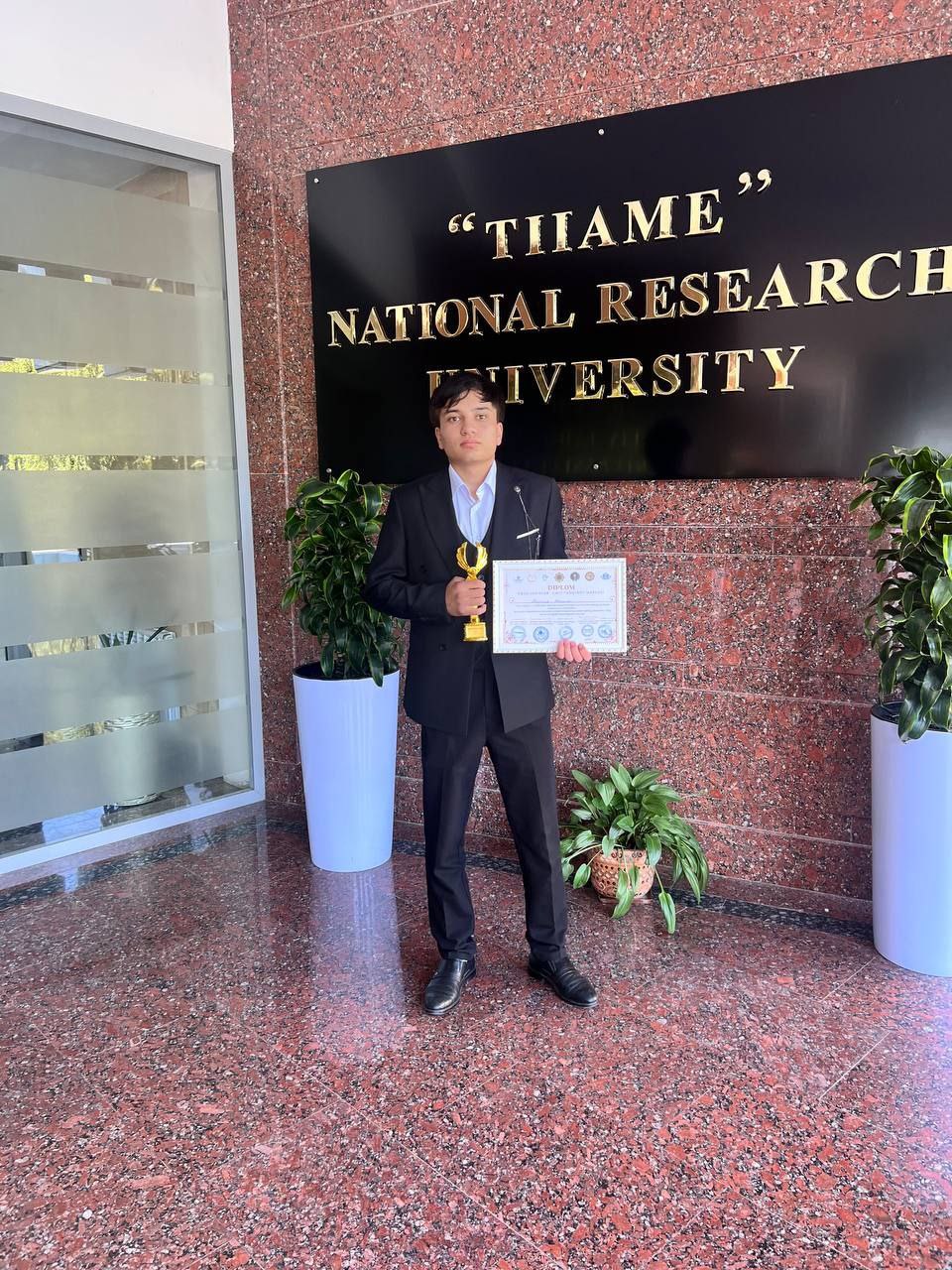
Panoyeva Jasmina O’tkirovna was born on November 14, 2006, in the Shofirkon district of Bukhara region. She graduated with a gold medal from School No. 13 in Shofirkon, demonstrating academic excellence and dedication throughout her studies.
Currently, she is a first-year student at Bukhara State Pedagogical Institute, majoring in Foreign Languages and Literature. Jasmina is an intellectually curious and active young woman who regularly participates in the “Zakovat” intellectual game, showcasing her critical thinking and broad knowledge.
In addition to her academic and intellectual pursuits, Jasmina has also contributed as a volunteer to several environmental projects, reflecting her strong sense of social responsibility and commitment to sustainable development.
With her passion for learning and active involvement in both academic and social initiatives, Jasmina continues to grow as a promising and motivated student, ready to make meaningful contributions to her field and community.
When I was in a little pain, you always came to me,
You always cared for me,
You were kind like a mother, always worried
You worked day and night like me
Thank you, Shoira Master, a thousand times
I am grateful that you meet me on my fateful paths,
Every time I see you, I feel happy,
Thank you for the knowledge you have given,
May you always be healthy for my happiness
Thank you, Shoira Master, a thousand times
Happy Stay by my side in my days,
Children, enjoy your happiness,
Know that you are the most important thing for me,
May you always be surrounded by beautiful happiness
Thank you, Shoira teacher, a thousand times
Who was I, a simple writer,
A pained person who shared his pain with the you
With you in my life, it is beautiful to live
I will definitely make you the happiest teacher
Thank you, Shoira teacher, a thousand times
I LOVE YOU MASTER SHOIRA OBIDOVA
Sobirjonova Rayhona, a 11th-grade student of the 8th general secondary school in Vobkent district, Bukhara region. She was born in December 2008 in the village of Chorikalon, Vobkent district, in a family of intellectuals. Her parents supported Rayhona from a young age. She started writing in the 3rd grade. Her first creative poem was published in the newspaper “Vobkent Hayot”. She has also published extensively in Synchronized Chaos International Magazine, India’s Namaste India Magazine, Gulkhan Magazine, Germany’s RavenCage Magazine and many other magazines and newspapers. Actively participated in many competitions, won high places and won many prizes. She is still busy creating.
Contributor Abigail George would like to share a new project of hers: a blog called Mentally Sound that features articles, updates, a magazine, poetry, and uplifting music. In this day and age, so many things can affect our mental health. Please feel free to join the blog and blog about your own experiences or loving someone who has a mood disorder or an individual who is suffering from depression. Log in, blog, do read the posts and leave comments to inspire our growing community!
For we are all bound in stories, and as the years pile up they turn to stone, layer upon layer, building our lives. – Steven Erikson
This month’s contributions deal with the complexities of nature, history, culture, language, or even the psyche of a single person. Everything we choose or experience builds upon itself to make us who we are, even short-lived experiences.
Yucheng Tao’s poetry collection April No Longer Comes,published by Alien Buddha Press and reviewed by Cristina Deptula, explores moments of love and beauty that are wonderful and transient, like the season of spring. Sean Lee’s poems remind us that even fleeting moments can be meaningful and beautiful. Jian Yeo’s poetry touches on the pain and beauty we can find in mortality. Mykyta Ryzhykh contributes surreal images of life, death, and the cycle of modern existence. John Grey’s poetry explores comings and goings, presences and disappearances.
Yoonji Huh presents nature, family tenderness, and humor with a color scheme that looks historical and weathered. Gwil James Thomas speaks in several tough-minded pieces to memories and dreams and our sources of inspiration. Sean Lee’s artwork evokes the power of the imagination to illuminate daily life. Alina Lee’s poetry suggests that our pasts and futures comprise layers of each moment in which we find ourselves. JK Kim’s poetry looks at summer scenes with a calm nostalgia, after events have passed. Alexis Lee’s poems probe what we choose to value and remember, what we invest in and find beautiful. Olivia Koo probes the nature of memory, how multiple moments combine to craft a mental impression and feeling. Ah-Young Dana Park’s poetry comments on our changing memories and perspectives as time passes and we age. Chloe Park’s art revels in exquisite detail, probing culture and memory with intricacy. Sally Lee provides poetic snapshots of moments in time, considering whether they have meaning or value without context.
Seoyun Park’s visuals speak to how we observe and confront life, the dangers we face and those we pose. Ethan Lee’s poems remind us of the underside of our world: the everyday grotesque and the many layers of the ordinary. Irene Kim’s work explores the strain and melancholy that can permeate ordinary moments. Austin Chung’s poetry illustrates various kinds of disorder and dispersion as Taylor Dibbert vents his annoyance at the common problem of loud museum patrons. Lauren Kim stays with a single scene from everyday life for an entire poem, probing its layers. Haeun Regina Kim’s poetry examines ordinary objects and animals in depth, sharing details and language to create an off-kilter feel.
Brian Barbeito also explores deeply, focusing in on the flora and fauna of an Aruba resort. Debabarata Sen celebrates the verdant beauty of Costa Rica. David Sapp’s poetic speakers become waylaid by the arresting color and beauty of nature. Dylan Hong’s pieces present a gentle, abstract, even whimsical peek at nature. Grace Lee’s poetry crafts dreamlike, gentle, floating scenes. Terry Trowbridge’s pieces on peach harvests evoke the challenging economics and natural realities of farming. Mahbub Alam reminds us of the innate rough wildness of nature: storms, volcanoes, huge predators.
Sayani Mukherjee evokes the rhythm of a public piano played for big city pedestrians in a rainstorm. Eva Petropoulou Lianou waxes poetic about the beauty of the moon. Noriniso Kasimova shares memories of spring in her hometown and her father’s love. Chinese poet Su Yun collects a group of short poems from elementary school students, mostly impressions of natural scenes. Dhani M.’s artwork stylizes natural scenes to create emotional senses of calm, curiosity, and wonder. Jinwoo Brian Park’s art suggests that we can re-incorporate the old into the new, the natural into the artificial.
Mark Young contributes a fresh set of fanciful geographies. G. Emil Reutter humorously describes noisy construction’s impact on local residents. Erin Kim’s artwork explores the upsides and downsides of civilization’s technological progress. Katie Hong’s work critiques our isolation and obsession with technology as Xushnudbek Yakubov warns of the dangers of online misinformation. Sophie Yoon’s art critiques our complex relationship with consumption and the natural world. Eugene Han’s art explores who we are and where we’re going as humans, and our relationships with nature. Shabbona Abdurashidova highlights the importance of sustainable ecology in Uzbekistan. Jahin Claire Oh’s work speculates on how the world’s other creatures might see us: mimicking and learning from them, drifting into or penetrating their environments.
J.K. Durick speaks to new, wild, and real frontiers in modern nature and technology, commenting on our efforts to understand and control them. Pulkita Anand evokes the mental and physical disorientation brought on by the colonization of one’s land.
Ahmed Miqdad calls the world to action to help suffering civilians in Gaza. Patricia Doyne also calls the world’s attention to starvation in Gaza. Stephen Jarrell Williams speaks to the numbing, mindless destruction of war.
Abdisattorova Xurshida highlights the contrasting legacies of Genghis Khan and Amir Temur. Abdisattorova Hurshida reflects on her admiration for Uzbek martial artist Abdulbosit Abdullayev. Maftuna Rustamova and Chorsanbiyeva Gulnoza poetize in honor of the military personnel who serve and guard Uzbekistan. Zumrad Sobirova celebrates the poetic beauty and pride of her Uzbek heritage. Jumaniyozova Nazokat encourages Uzbekistan’s young people to develop a greater appreciation for their heritage by visiting points of historical interest.
Nilufar Moydinova’s essay highlights language’s inextricable interconnection with thought, life, and culture. Mauro Montacchiesi creates a dialogue of philosophical thoughts and poetry between Dr. Jernail Singh and Rabindranath Tagore. Federico Wardal speaks to his long admiration for artist Andy Warhol and director and screen writer Federico Fellini. Orolova Dinora explores layers of meaning in Antoine St. Exupery’s The Little Prince as Surayyo Nosirova celebrates the heritage of Uzbek author Alexandr Faynberg.
Reagan Shin revels in the comfort and ecstasy and happy memories she finds in books. Mushtariybegim Ozodbekova highlights the power of books and stories to transcend time, culture, age, and space. Panoyeva Jasmina O’tkirovna highlights ways language teachers can help students develop fluency through relevant speaking and grammar practice. Turg’unov Jonpo’lat explores techniques to help children of all abilities to learn foreign languages. Nafosat Jovliyeva and Dilshoda Jurayeva illustrate gamification and other creative strategies for language learning. Rahimova Dilfuza Abdinabiyevna discusses ways to improve student competence with writing and speaking. Hilola Badriddinova outlines strategies used throughout the developed world to teach foreign languages.
Linda S. Gunther contributes a craft essay on “interviewing” your characters to better understand them as a writer. Paul Tristram’s poetry explores the heroic narratives we create through our writing and our lives. Gloria Ameh evokes the visceral sensations of writing on topics close to the bone.
Abigail George writes a stream of consciousness essay on her vulnerabilities from mental illness and just plain existing as a female-bodied person and how enduring them inspired her to write. Soumen Roy also connects beauty to vulnerability, speaking to the fading Mona Lisa and the union of joy and sorrow as fellow travelers.
J.J. Campbell reflects on disillusionment, loss, and the eternal quest, against all odds, for love. Mesfakus Salahin speaks evocatively of his quest for love and freedom. Baxtiniso Salimova’s poetry tells an epic love story. Mirta Liliana Ramirez relates intense grief at the loss of her lover. Dilnoza Islomova expresses her gratitude for her mother’s tender care. Bill Tope and Doug Hawley collaborate on a love story that turns unexpectedly tender. Urazaliyeva Sarvinoz shares an emotional tale of jealousy, love, and forgiveness between two twin sisters. Sarvinoz Orifova expresses gratitude for her parents’ constant love and care. Wazed Abdullah expresses his love and gratitude for his mother. Ozodbek Narzullayev expresses his love for his mother and invites her to share her life struggles with him for support. Xurshida Abdisattorova shares the story of a mother’s complicated grief for an imperfect husband and father who passes away in a sudden accident. Shoxrukh Fayzulla o’g’li Dusmatov speaks to his mother’s love and care and how wealth alone matters little without compassion and humanity.
To’raqulova Pokiza Sanjarovna speaks to the need for human compassion, wisdom, respect, and personal development. Hamza Kamar’s poetry expresses his powerful hopes for a transcendent hero. Bhagirath Chowdhary expresses his determination to avoid the next life until he has finished roaming this world, offering blessings to others. Charles Taylor’s short story probes our ethics and the extent of the compassion we owe our friends and fellow humans.
Julia Kanno reminds residents of the USA that most Latino immigrants are hardworking people with lives and dreams. Bill Tope presents a tale of a survivor’s search for justice for a sexual assault that shattered her psyche. Abdisattorova Khurshida presents a tale of thievery exposed.
Graciela Noemi Villaverde shares a poem on the joy of community and diversity and welcoming special education students. Haeun Regina Kim’s artwork explores unity and acceptance of others, as well as harmony among rural and urban areas. Nabijonova Madinabonu outlines how sharing coffee can help us build building friendship and community. Khudoyqulova Shahzoda highlights Uzbekistan’s programs to enhance economic opportunities for low income women and families and the disabled.
Nazarova Moxiniso looks into discipline and student character development as part of Uzbek preschool education. Ulsanam Ulmasovna outlines Amir Temur’s contributions to the Uzbek education system. Islomov Inomjon describes the Geoment, a device to teach mathematical reasoning to children with low or no vision.
Bozorboyeva Iroda offers encouragement for young people to find and follow their own dreams. Khudoykulova Shahzoda points out consequences of and solutions to youth unemployment.
Various contributors celebrate notable people who should be better known, or highlight important research work. Sobirjonova Rayhona outlines the career and accomplishments of Uzbek woman mathematician and teacher Shodmonova Hilola. Eshmurodova Sevinch highlights the need for training for employees in Uzbekistan’s banking industry in digital technology to modernize industry. Muslima Olimova highlights strategies corporations have used to adapt to stay on top in a digital world. Jo’rayev Ulug’bek outlines engineering techniques for strengthening concrete structures. Mirzaolimov Mirabbos probes the medical relationship between diabetes and cardiovascular diseases. Ostanaqulov Xojiakbar speculates on how to improve web search engine optimization to improve online communication and website findability. Orozboyeva Mohina Nuraliyevna outlines the role and history of psychology as practiced in Uzbekistan.
On a more psychological level, Duane Vorhees’ poetry covers and highlights human complexity: different aspects to our personalities, different choices we can make, how we can change with time. James Benger’s poetry explores the fear and tension underlying our individual existences, the danger from geologic pressure, storms, raw meat – and how we sometimes find hope to carry forward.
Andrew Ban shares restless, random thoughts, finding commonalities with all humanity while acknowledging the need to protect and defend himself if needed. Dongeon Kim’s work presents scenes of intense human and natural energy while Texas Fontanella revels in the pure sound of non-representational language. Dennis Daly wanders through a variety of human feelings, from nostalgia to frustration to faith. Michael Robinson shares his journey and heritage of faith, how he found a spiritual home and refuge in Christ and the church. Muhammad Sanusi Adam speaks to struggle, resilience, destiny, creation, and faith.
Gaurav Ojha seeks out meaning in a confusing and vast world, ultimately affirming everyone’s ability to find their own truths. We hope that reading this issue helps you to find a smidgen of truth for your own life.