Who am i?

The character of people is different, each one is completely different from the other. It is no exaggeration to say that there are 8 people in the world and 8 billion characters as well. However, psychologists and neurobiologists have generalized some characters according to some aspects. Now we will talk with you about them, introvert, extrovert and ambivert.

An introvert is a person whose energy is directed to the inner world. He is not bored by himself. He is calm and thoughtful, attentive to details and careful in his decisions. Introverts are sometimes seen as gloomy, taciturn and downright antisocial. But actually they are very good people. Just social connections drain their energy. There are only two or three people in the close circle of an introvert. An introvert who does not talk well with strangers is ready to discuss interesting topics with people close to him for hours. For an introvert, loneliness is a lack of involvement in someone's life. He can fell lonely even in a crowd. Reading a favorite book ir taking a meaningful walk is the best way for an introvert to recharge.

Who are extroverts? An extrovert is a person whose energy is directed to the outside world. He is polite, open and active. He approaches everything positively. He is not afraid to take the initiative and be a leader. Extroverts can sometimes seem silly because of their quick temper. But don't confuse emotionality with superficiality. Extroverts get energy from interacting with others. Loneliness for an extrovert is the absence of anyone around, not being able to find someone to talk to. They have many friends and relatives. You won't get bored with extroverts. In order not to get tired of the sameness and light the inner fire, they go to the crowds or invite guests.

Now let's get acquainted with the third type, ambiverts. They naturally engage in a flexible model of negotiation and listening, ambiverts express confidence and motivation enough to persuade and close sales, but are more inclined to listen to their customer's interests and are overly enthusiastic or arrogant is not visible. Therefore, representatives of this third type are neither extroverts nor introverts. We can simply call them neutral persons.

By Ifora Olimjonova
Uzbekistan
16-year-old girl
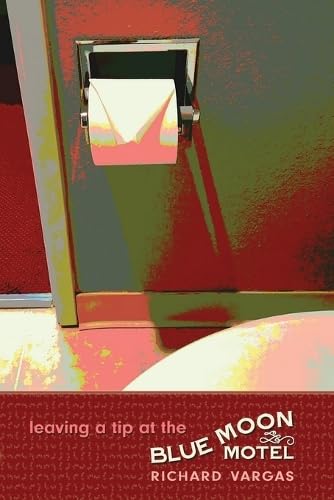
I want to hit on about three things, all of which intersect, in praising Richard Vargas’s collection, “leaving a tip at the Blue Moon Motel.” I want to talk a little bit about what it means to do a ‘political poem,’ in the loosest sense that this means. Meaning: I want to talk about writing from direct experience, as opposed to writing from theory. This brings up Vargas’s unique sense of empathy. And last, I want to talk about style just a little bit, to remind us all that clarity and clean writing is not an abandonment of it. All these things explain why I like Richard Vargas’s poetry.
In an anthology of essays titled “Poetry and Politics,” edited by Richard Jones, I want to say I recall the poet Denise Levertov making a succinct point about some of what we call “political poetry.” She alluded to Bertolt Brecht’s version of the political poem as something akin to “marching orders.” I remembered this and wrote it down and it has stuck with me, but I don’t have the patience to re-read her essay right now. So if she did not characterize some political poetry, like Brecht’s, as something like “marching orders,” then let me do so now, and continue to credit her with the idea, just in case.
Don’t get me wrong. A theoretician or an academic poet who cares about humanity, without having experienced the bad jobs or prison experience he or she writes about, is still on the human and not the dehumanizing side of things. Bertolt Brecht was on the side of humanity. But when poets write about such things from some place other than their own experience, they must invariably do so in the third person, or do so in an abstract or at least imagined way. We, as readers, tend not to relate as much to such work. But Vargas only writes about what he has experienced himself, without assuming to understand worse. He wonders about it, and more on that later, but he never presumes.
In my view, this is a better kind of political poetry: it reads more like reportage than propaganda. It does not begin with theory. It begins with personal experience. And it recounts such experience without apology or excuse. This is exactly what Richard Vargas’s work does. Such poems, even if implicitly political, for having described a horrible class-based economy, for having described the dehumanizing corporate experience of the worker crammed into a room with minions fielding an onslaught of insurance claims over the telephone lines, such poetry still somehow manages to keep the reader from saying – “aha, a Marxist,” or “aha! A liberal, I knew it!” It simply recounts the bad realities, but without the intellectual’s insistence that the way out is this way or that way or another. It is not ideological. It is human. Richard Vargas’s poems are just that, and that is more than enough. When “listening” to his poems, we are sitting next to a friend talking to us from the barstool next to our own, not listening to a party leader or a tenured professor.
Vargas recounts the experience of working at the Goodwill, of working for the giant insurance company, of working for the chain retail bookseller. He recounts the dehumanizing experience of being baited into one job only to be subjected to terms of employment that have already been switched out, in favor of the owners over the workers. He recounts these experiences, without any calls to arms, mind you. He does this by writing from direct experience, and doing so with a rare honesty. Nazim Hikmet did it, and so did Charles Bukowski, and while it is no secret that Bukowski was not a Marxist theoretician, and Hikmet himself was a bit of a Red and as a result an exile in his own country, whose government imprisoned him, what such poets have in common is that they tell us what they know based upon what they have lived.
Richard Vargas belongs to that family tree of poets, whether they strike us as apolitical, as Frank O’Hara was, telling us about his coffee in the morning; or apolitical but more implicitly political, like Bukowski, telling us about the broken down delivery truck that left him at Pico and Western when he needed to get home before hot Miriam left the flat; or whether they can’t hide the politics behind what they are saying, as with Hikmet. What they all have in common is that they are incapable of playing the ‘know-it-all’ games played by more academic writers. They can’t help it, this thing about their work, which is this: it is incapable of bullshit. They write from life, not theory. They are reporters and not propagandists.
In the case of Richard Vargas’s collection, ‘Blue Moon Motel,’ what is most remarkable upon reading it is the extreme, really super-human empathy that constantly emerges. Richard’s empathy for others does more than punctuate the collection; it effectively defines it. Vargas somehow manages to do two things at one and the same time: he manages to write from his own discombobulating economic experience of this culture, and yet manages to write almost exclusively about other people. I italicize it to emphasize it. This is so even in the most autobiographical works in the collection: “time traveler’s advice” comes to mind, in which Vargas is still addressing other people. He is speaking about another person when he speaks about the ten-year old and twenty-year old versions of himself. The reader is reminded of a particularly touching Buddhist lesson: that we all both carry all of these stages of ourselves around with and within us, but that we are obligated to love these “other people” we carry within. But the reader of this particular poem can’t help but also conclude, given the surrounding collection, that it is written in large measure as a gift for those who have shared similar trying experiences.
To go further with proof of this great capacity for empathy: when Richard writes about stocking clothes at the Goodwill store, it’s not ever about his long hours, not ever about his low pay, and even if he mentions it, it’s not about his blushing face. It’s about the donors, their lives, and what they meant, or, better still, what they could have meant. His poems about his own grind turn out, in practically each instance, to be about his humanity, because they are about all of us, his brothers and sisters, and the grind any one of us can live. That ability, whether honed or innate, to both write from one’s own experience yet simultaneously address so many experiences of so many others, is itself a kind of style.
Ezra Pound, in the “ABC of Reading,” wrote about the need to bring subject and form together, to make the poem’s topic and its language match. This is a horrible oversimplification. Then again, so is fascism. But if Pound’s premise is correct, then “leaving a tip at the Blue Moon motel” is a successful book. Leaving bullshit off to the side means writing clearly, cleanly. When I think about poets like Frank O’Hara or Charles Bukowski (who must have a place in Vargas’s own family tree, lineage traceable back through Gerald Locklin as it could be), or even the few poems Hemingway left, I realize that being a reporter before being a propagandist, and being understood, unlike so many experimental poets, language poets, or surrealist poets, does not mean an abandonment of style. It simply makes for a clear, understandable, and, because personal, a unique expression. After all, as Isaac Bashevis Singer once said in an interview, a writer does not attain originality by coming up with a new style, or by writing about a new subject; he or she attains originality by giving everything of themselves. I paraphrase. But you get the idea.
This is a very, very good book, by a very, very good poet. Richard Vargas, in this book, manages to connect, empathically, with more of us in sixty-some pages than other poets merely speak to in the hundreds they produce. He does it with clarity and clean prose. He manages to inform our politics without preaching about them. And he does it with a remarkable and, unfortunately rarely-seen, sense of empathy for his readers and their own lives.
Please buy and read this book. Then place it on your shelf alongside similarly honest works.
– J.T. Whitehead
(may be cut as needed)
About the Reviewer
J.T. Whitehead earned a law degree from Indiana University, Bloomington. He received a Master’s degree in Philosophy from Purdue, where he studied Existentialism, social and political philosophy, and Eastern Philosophy. He spent time between, during, and after schools on a grounds crew, as a pub cook, a writing tutor, a teacher’s assistant, a delivery man, a book shop clerk, and a liquor store clerk, inspiring four years as a labor lawyer on the workers’ side.
Whitehead was Editor in Chief of So It Goes: The Literary Journal of the Kurt Vonnegut Memorial Library, briefly, for issues 1, 2, 3, 4, and 6. He is a Pushcart Prize-nominated short story author, a Pushcart Prize-nominated poet, and was winner of the Margaret Randall Poetry Prize in 2015 (published in Mas Tequila Review). Whitehead has published over 350 poems in over 125 literary journals, including The Lilliput Review, Slipstream, Nuthouse, Left Curve, The Broadkill Review, Home Planet News, The Iconoclast, Poetry Hotel, Book XI, Gargoyle, and The NewYork Quarterly. His book The Table of the Elements was nominated for the National Book Award in 2015. Whitehead lives in Indianapolis with his two sons, Daniel and Joseph, where he practices law by day and poetry by night.
Forty Days of SadnessPsalm 16:1-3
1 Keep me safe, my God, for in you I take refuge.
2 I say to the LORD, “You are my Lord; apart from you I have no good thing.”
During the past forty days, I experienced the loss of a friend, and not for the first time. I knew of children in my community whom we had lost at an early age. Jesus was my friend, and I talked and prayed, knowing he was there for me. In my early childhood, I had come to know Jesus. We talked, and in my innocent child's spirit, Jesus was alive.
During Lent all was going to change. He was to be taken to the Cross to die. I was an altar boy during that period. I witnessed Christ's suffering and death at the Stations of the Cross. His death was real to me at that time. My friends who had passed didn't come back to me. Serving each Station of the Cross Friday night for forty days brought sadness within me. I knew how this was going to end. Jesus was marched to Calvary to die.
Each Friday during that time was a reliving of his suffering on his way to the Cross leading up to the black Friday when he died. The whole forty days were darkness for me, not just during the Friday evening service but throughout the week.
I spent time in the church praying as the candle flames flickered. There was a realization that my friend Jesus wasn't there to share my life. Easter Sunday was so far away without my true friend Jesus.
I knew Jesus was real because there was always a feeling of comfort when I talked with Him and felt him beside me. My foster Mother talked about how Jesus was alive to her. I, too, felt that Jesus was alive. She was convinced of Jesus' presence. Those good Fridays were indeed challenging because we remembered the end of Jesus' life. I knew that on Easter I would get new clothes to wear to church for the celebration of Jesus' return.
Come Easter Sunday there was a feeling of having my friend come back to me. On Easter, when I talked and prayed, it brought me great comfort and peace.
The Independence of Bangladesh

Through 71's war we got independence
We are free hence.
In the heart of Bengal,
A nation's pride,
Independence Day,
A journey's stride.
With courage and hope, they took their stand,
Freedom's flame ignited,
Across the land.
Bangladesh's story, in history's rhyme,
A nation's spirit, enduring through time.

Wazed Abdullah is a student of grade nine in Harimohan Government High School, Chapainawabganj, Bangladesh.
We are hosting our Metamorphosis gathering again! This is a chance for people to share music, art, and writing and to dialogue across different generations (hence the name, the concept of ideas morphing and changing over the years). This event is also a benefit for the grassroots Afghan women-led group RAWA, which is organized by women in Afghanistan who are currently supporting educational and income generation and literacy projects in their home county as well as assisting earthquake survivors. (We don’t charge or process the cash, you are free to donate online on your own and then attend!)
This will be Saturday April 6th, 2-4 pm in the fellowship hall of Davis Lutheran Church at 317 East 8th Street in Davis, California. It’s a nonreligious event open to all, the church has graciously allowed us to use the meeting room. You may sign up here on Eventbrite.
Also, we encourage everyone in the California area to attend the third annual Hayward Lit Hop on Saturday, April 27th.This is a public festival with different readings from different groups throughout downtown Hayward coinciding with Hayward’s choosing a new adult poet laureate, culminating in an afterparty at Hayward’s Odd Fellows Lounge. Several Synchronized Chaos contributors will read from their work at the 2024 Lit Hop.
Now for our second March issue: One Wild and Precious Life. Poet Mary Oliver said, “Tell me what it is that you plan to do, with your one wild and precious life!” In that spirit, this month’s contributors wonder and dream and fear and love and plan, all in the face of human mortality.
Susie Gharib comments on the tragedy and transience of life on Earth, while Duane Vorhees ponders the weight and influence of human ambition and history on an individual’s life.
Jacques Fleury celebrates Black history and encourages respectful and nuanced portrayals of Black people in media.
Gulyaho Karimova’s essay outlines the life and legacy of Jaloliddin Manguberdi, patriotic Turkish hero from centuries in the past. Z.I. Mahmudlooks to the past and the influence of a single person in his essay on Walt Whitman’s elegy to Abraham Lincoln. Muntasir Mamun Kiron rhapsodizes in his poetry about Bangabandhu, the military and political leader considered the father of modern Bangladesh.
Xushroy Abdunazarova’s poem concerns the beauty of the Uzbek language while Adhamova Laylo discusses the structure of the Korean alphabet. Sarvinoz Mamadaliyeva urges support for the education of women and girls. Zulaykho Kosimjonova outlines strategies to improve students’ reading comprehension while Malika Oydinova compares the advantages of distance versus in person learning. Bill Tope reminds us of the value of free access to information in his protest story about book bans and censorship while Faleeha Hassan highlights the power of writing and creativity in her narrative prose poem on the cataclysmic effects of writers’ block on her imagined worlds.
Xabibullayeva Madina writes of the elegance of her Uzbek heritage, spring, and femininity. Graciela Noemi Villaverde illuminates the wonder, beauty, and strength of women. Annie Johnson celebrates romantic love and the divine feminine archetype as grounded in nature and culture.
Brian Barbeito speaks to the timelessness and mystical quality of natural landscapes and our place in them. Sayani Mukherjee describes how thoughts align in her brain like a choir or a forest of trees. Umid Qodir’s poem urges people to have the courage of a flower in the rain, while Maja Milojkovic compares committed love to a flower continually receiving needed water from nature. Christopher Bernard compares a graceful female dancer to a fountain of water. M.P. Pratheesh’s concrete photographic poems illustrate red rocks lined up and covered to varying degrees. Kristy Raines writes of the return of spring, spirituality, compassion, and lost love with a sensitive spirit. Mahbub Alam writes of swimming at dawn with a beloved, immersing himself in water and his tender feelings. His daughter Monira Mahbubcrafts gentle scenes of village life and connection among people. Maurizio Brancaleoni contributes clever haikus on winter cold and human nature.
Mykyta Ryzhykh also speaks to human nature, with lonely modern, or post-modern pilgrims wandering alone, wondering who they are and what they are looking for in life. Our prophet of lonely wanderings, J.J. Campbell, returns with pieces on the joy and precarity of romantic and family relationships, conveying the lostness he felt with his family of origin.
Nathan Anderson addresses questions of human nature in an even less linear manner, playing with punctuation and spacing of letters on the page. Mark Young renders images from his neighborhood into mixed media art images, providing a unique way of seeing things where reality melds with imagination. Clive Gresswell, in his new book Shadow Reel, reviewed by Cristina Deptula, explores our unconscious, how ideas and words continue to resonate in our brains past the point of linear thinking.
A. Iwasa provides a comical essay about his encounters with dopplegangers. J.D. Nelson’s haiku presents encounters with the unexpected: minor mishaps, strange combinations, reunions. Grant Guy’s concrete poems about surrealist artist Alfred Garry evoke the whimsical nature of his work and the tragedy of his short life.
Mesfakus Salahin ponders how he will prepare to meet the implacable force of death, while Jerry Langdon sings the blues for a soul doomed to damnation.
Ivan de Monbrison describes physical and mental pain as a force mangling the brain and body, permeating our structural integrity and the wholeness of our relationships with each other.
Taylor Dibbert reflects on the end of a relationship while Bill Tope relates the tale of a lonely woman who feels rejected in love and commits suicide. Farangiz Murodova’s breakup poem provides an elegant rendering of loneliness.
Zebo Ibragimova writes of the global scourge of drug addiction and the many lives affected. Pat Doyne speaks to questions of personhood and government authority in her poem satirizing a recent American court decision concerning in vitro fertilization. Emina Delilovic-Kevric evokes images of civilians oppressed by German military forces in a piece about the mental toll of society’s inhumanity.
Meanwhile, in a more abstract vein, Clive Gresswell crafts surreal images of invasion, decay and destruction.
Noah Berlatsky sends up a poem about the daily matters of life, such as breakfast, which continue even when our lives are in chaos. Wazed Abdullah compares the journey of life to a piece of music, to be experienced in all its different stages and moods.
Sherbekjon Salomov writes of the future potential of youth in Uzbekistan. Isabel Gomez de Diego revels in the beauty of a children’s playground in her photography.
In her literary essay on Tolstoy, Ravshanbekova Asalkhon discusses the author’s deep empathy for the poor and downtrodden. In Mashhura Umaraliyeva’s story, simple human kindness helps a girl lonely at summer camp. Sarvara Sindarkulova speaks to the importance of respect for parents. Muhammed Sinan describes his quest for goodness and compassion and Anila Bukhari’s poems reflect a deep faith and tender compassion for the human condition.
Ahmad Al-Khatat writes of learning from fellow immigrants how to move from fear to dreaming and hope, while Ellie Ness addresses the precarity and joy of travel.
Eva Petropoulou speaks of seeking love and human connection, more family love and general compassion than romance. Lilian Dipasupil Kunimasa writes of respect and empowerment for women and also crafts a tale of an eccentric character finding welcome in a small town.
We hope that you might also find a welcoming home for your own creativity within this issue, with its many poignant, tender, amusing, strident, thoughtful, eccentric, and inspiring pieces.
Shout out

My eyes are covered with pain,
Think of my crying look without him.
The guilty part is handed over to the Haqq,
Sing a song for the unemployed heart.

Name your song love tune,
After all, I did not find "freedom" in the world.
Step by step, stepping on the threshold of pain,
The fate we have been waiting for is coming.

You read your book quietly,
The heart is dying before your eyes.

You can read a little bit.
Even your mind is as bright as a deer.

Write about me on the pages,
Because life does not die in lines.
Completion is in minutes,
If you forget, I'll die.

From broken buds of hope,
A bud will emerge.
I release my heart from the knots,
Because the story of my life has an end.

read my eyes know the truth
I loved you without seeing it.
Don't even think about it.
I met you in the spring...

Murodova Farangiz Asliddin's daughter was born on September 25, 2004 in Gallaorol district, Jizzakh region.
“Maybe I could take just one,” murmured Holly, seated on her sofa and overlooking the long wooden coffee table upon which all the medications were arrayed. Fumbling with a plastic vial of sedatives, Holly spread the contents out onto the table and began lining up the pills in various ways. Then she upended the oxycodone left over from her mother’s operation nearly two years ago and untouched until now. Finally, she poured out the pain pills she took every day for her neuropathy. She began counting.
After she finished counting—153 pills, caplets, and capsules in all—she began moving them about again. She wondered how many of this kind it would take to kill her. She bit her bottom lip, concentrating. What had brought her to this point, she wondered for perhaps the hundredth time. Well, Jack leaving her was the start of it all, claiming he “felt trapped” and “wanted to see other people.” Yeah, yeah, yeah, she’d heard that before. The kiss off. There would be no reunion, as he pretended. Finito.
Then Misty, her best and only real friend, took Jack’s part and called Holly an “ass.” Then she unfriended her online. And today, to cap it all off, she was sent home from the nursing home where she worked after testing positive for COVID-19. And she hadn’t worked there long enough, they told her, to qualify for unemployment benefits. And finally, it still hurt that her mother had died last year, leaving her this house and thousands of dollars in debt due to medical bills.
Holly took a deep breath, then sighed wistfully. Why was she alone, she thought, when she felt this bad? Other people should share her crappiness. Wasn’t there anyone she could call? She glanced up at the clock over the fireplace. Ten p.m. Sure, there was someone she could call: her ex-friend Misty. She was still her friend, deep down. She put the call through; it went immediately to voice mail. Damn it! “I know,” she murmured, “I’ll try her land line.” She put through the call, and the phone rang and rang and rang some more. She disconnected.
“I’ll call Jack,” she said softly and put through the call. Again, voice mail. The land line: again, it rang and rang. Irritated, Holly slammed up the phone. Where was everybody, she wondered? Everyone should be home by 10 p.m. Jack was probably out “seeing other people,” and maybe, just maybe, Misty was with him. She began a slow burn, imagining the unimaginable.
She went to the kitchen and returned with a bottle of beer—Jack’s brand—and resumed her seat behind the table with all the drugs. How could they do this to me? She wondered, distraught. Her best friend and her lover—ugh! Impulsively, she reached across the table, took a pill, and popped it into her mouth. She washed it down with a gulp of beer. She froze, not knowing what to expect. When there was no physical response to the pill, she was a little disappointed. Damn Jack anyway, she fumed, then took up two bright yellow capsules and swallowed them with another drink of beer.
She called Misty and Jack each four more times, and still the phones rang. Every time her bid for companionship was rejected, she took more pills. “I’ll show them,” she muttered, eating more sedatives and painkillers and draining, finally, her third bottle of beer. She hiccupped and swept her hair back from her face. She didn’t know if the drugs were doing anything, but she was getting a little tipsy. She hiccupped again. No, she corrected herself; she was drunk. She returned to the kitchen and pulled two more bottles of beer from the fridge.
Always an easy drunk, she drained one bottle, and some of the suds splashed down her sweatshirt. “Damn it to hell,” she raged, then tried to stand up but fell back heavily onto the sofa. Her head was spinning, and her movements were clumsy and sluggish. She shook her head, puzzled, then glanced down at the coffee table. Only about fifty pills remained. That means she had taken… Oh God! “What am I doing?” she said softly, then tried to stand again—without success.
She had been drunk before, she thought, and this wasn’t it. The pills! Moving slowly, she reached a clumsy hand out and pulled the telephone book from the nearby telephone table. She was too out of it to use her cell phone directory. Turning to the Yellow Pages, she looked up Poison Control Center and placed the call. The phone rang and rang, then rang some more. Didn’t they have anyone answering the phone there? Maybe, she thought bleakly, no one got poisoned after six p.m.
She had another idea. Looking up the number of the suicide prevention hotline, she placed yet another call. Her vision was getting bleary, and she was a little short of breath. God, what was happening? She didn’t mean to kill herself; it was all a kind of game. Her hearing appeared to be diminishing too. She put the phone on speaker. The phone continued to ring. Again, Holly attempted to stand but fell back heavily, knocking her bottle of beer askew and inundating what remained of her pills.
Holly felt lightheaded but also strangely calm, almost serene. Fumbling, she hung up the bleating telephone and fell back onto the sofa on her back. She pulled the thick afghan her mother had made over her body and tucked it under her chin. She began to have daydreams at night. She chucked softly, faintly amused. She wasn’t at all sure what at. All she knew now was that, finally, she was warm and comfortable and didn’t have a care in the world. Who knew that killing yourself could bring such pleasure, such comfort, and such relief? A pang of panic jolted through her, and she stiffened, but the pills took over, and she was calm again.
Suddenly, her phone began to ring urgently. She barely heard it and tried to ignore it, but as a child of the twenty-first century, she placed the phone on her chest and peered at the screen. Jack! If only he’d called an hour ago, things would have been so different, but now she didn’t care. She phone slipped to the floor and rang and rang and rang some more.