Synchronized Chaos January 2024: Through the Hourglass, Darkly

3D gold letters saying Happy New Year 2024 on bumpy ground with a yellow firework exploding in the background.
Image c/o Freddy Dendoktoor

Welcome, readers, to a new year! This time, Synchronized Chaos Magazine focuses on time’s passing, whether that represents new growth and fresh possibilities or the sobering reality of grief and loss.

Regular contributor Channie Greenberg has a new book out, Subrogation, which includes many of the images she’s published with us.

Otkir Mulikboyev celebrates the New Year with festivity and hope and celebrates a new morning with energy and passion.

Adhamova Laylo Akmaljon urges people, as much as possible, to maintain a positive attitude while Dilfuza Salomova encourages people to take action on their hopes and dreams. Shahnoza Ochildiyeva reflects on her 2023 accomplishments and comes into 2024 with excitement and hope. Elmaya Jabbarova beckons readers to step forward, away from lingering griefs, into the new loves awaiting in the new year.

Ike Boat broadcasts the news of a spectacular dance show and concert in Ghana.

John Edward Culp illustrates people who connect with childlike innocence, finding and then losing and finding each other again. John Mellender shows heartbreak transmogrifying into inspired creative writing and the beauty of platonic friendship between people of different genders.

Duane Vorhees evokes natural beauty and romantic, sensual, and spiritual love in his poetry and Aminova O’g’iloy celebrates the lush floral beauty of a Central Asian spring. Graciela Noemi Villaverde highlights the singular moment of capturing a rainbow at the dawn of the New Year. Sterling Warner arranges symphonic bouquets around themes: waterfalls and rapids, a woman’s silk clothing, astronomy and cosmology.

Munnavar Boltayeva encourages compassion and unity among the world’s people while Maid Corbic details his personal quest for a world of freedom and mercy. Kristy Raines declares her holiday and New Year and perennial wishes for a world of kindness and tolerance. Jerry Langdon crafts a ballad asking Santa to bring him peace and hope as an adult, while in another piece paying tribute to personal heroes.

Diyora Kholmatjonova finds and claims her identity and self-esteem in a world where people can abandon and forget each other, as Jamshidbek Abdujabborov expresses her human insecurities and hopes for the future.

Winding dirt path heading through a green field with a few leafy trees and a blue signpost in the distance.
Image c/o George Hodan

Michael Joseph comments on the journey through life, as our paths narrow and focus as we age and feel the impact of our choices and circumstances.

Noah Berlatsky reflects on how life goes off in its own directions regardless of our plans, while Devin Rogan probes the stories we tell ourselves and each other about our origins and existence. Bill Tope reminds us that physical and emotional attraction will take its own course, regardless of our plans and thoughts.

Christopher Bernard describes ways to subsume our small human consciousnesses into the larger, ever present Cosmos.

Maja Milojkovic writes of her desire to stop time and preserve a moment with her lover.

Ian Copestick suggests that not everyone needs to reminisce about their pasts and some should happily move forward into the future.

Peter Cherches’ vignettes add some whimsy back to our existence and Jim Meirose crafts a fanciful deck of cards with surreal conversations and images.

Isabel Gomes de Diego comments on the passage of time with photos of small children in front of the skeletons of extinct prehistoric animals. Daniel De Culla renders the trip to the Museum of Human Evolution (Burgos, Spain) into poetry.

Daniel De Culla illustrates love and nature in ways that are at once exotic and commonplace, and also remarks on death through a skeleton’s fanciful trip to the dentist. Robert Fleming “reports” on weather conditions in the Rocky Mountains through a set of photographs that bring up thoughts of climate change, chemistry, nature, culture, and humor.

Mark Young creates synthetic “geographies” of fictional lands that carry their own forms of symmetry and intricacy. Stephen Bett creates new metapoetry by riffing off of existing metafiction and postmodern novels. J.T. Whitehead probes and questions our senses of certainty with his poetry, destabilizing our perspectives and opinions, yet returning us to a sense of awe and wonder at the universe, symbolized by a majestic flock of birds.

Mitchel Montagna‘s poems lament the inevitable losses of our world and our lives, while Mukhlisa Safarova laments love’s losses to betrayal and death in lyric poetry. J.J. Campbell captures the chilly monotony of winter suburban loneliness while Sherova Orzigul laments cruelty and social isolation that can begin in childhood, and Zofia Mosur’s poetic speaker hides herself away in grief, taking solace from the moon.

Vanitas style composition with skulls, old books, a rolled up paper, candles, leaves, and an hourglass.
Image c/o Kai Stachowiak

Gabriel Flores Benard writes of life’s impermanence and our overwhelming universe through the metaphor of stellar death.

Henry Bladon probes our own minds’ shiftiness and confusion, sifting through the surreal landscape many find in our interior. John Grey probes the different layers of our existence, the assorted things, people, and experiences who together shape our identities. J.D. Nelson conveys scenes from everyday life and develops a narrative around a person’s developing bond with nature in the form of an old crow.

Faleeha Hassan’s speaker expresses how she is only a normal woman, not as reminiscent of the scriptural figure of Maryam as the people around her seem to hope and believe.

Adolatxon Shermuhammedova looks forward to the time after death when she believes she will be forever free from sin and temptation.

Brian Barbeito’s poetry expresses how “the world is too much with us” and lets us escape into nature, as Skye Preston recollects a visit to their aunt’s home and colorful garden and Gulsevar Khojamova compares the beauty of her country to the colors of the rainbow. Mahbub Alam writes with grace of his tender love for and intimate knowledge of both the winter and spring seasons in his country.

Meanwhile, Azemina Krehic crafts evocative language on how human bodies and minds adjust to darkness.

Blue Chynoweth illustrates the difficulties of being feminine and vulnerable and dealing with society’s insults to the female body and mind.

Mesfakus Salahin grapples with the question of how to be a good man when visiting sex workers where there is clearly an economic and power imbalance.

Z.I. Mahmud explores the role and social position of women in Victorian times through an analysis of novels by Charles Dickens and Charlotte Bronte.

Mykyta Ryzhykh’s pieces highlight the absurdity of wars, especially those waged by the powerful for abstract reasons, as Aituvova Khurshida outlines the need for and ways to purge Uzbekistan’s government of corruption and Akhmadjanova Muslimakhon urges Uzbek leaders to make rooting out bribery a priority on moral, cultural, and pragmatic grounds.

Odina Xonazarova outlines Uzbekistan’s friendly cultural relations with other countries in the region and the importance of embassies and diplomacy.

Two hands holding a blue ball and a small sparrow in the foreground.
Image c/o Linnaea Mallette

Manzar Alam renders his hopes for a more peaceful, socially just, and ethically managed nation through the very personal metaphor of a tiny baby. He wants a better future for the small child, whom he sees as uncorrupted.

Ahmad Al-Khatat reflects on the nurturance and comfort people find in each other in a healthy relationship. Stephen Jarrell Williams illuminates the beauty of a romance between people who find unity despite their differences.

Baratov Quvonchbek translates a poem by Rumi that reminds us that true love requires caring action. Annie Johnson crafts multi-layered morning and evening moments of perfect stillness and communion between people in long-term love and with nature.

Wazed Abdullah sends up a simple, heartfelt tribute to his friends, and the importance of friendship.

As a teacher, Sitora Mamatqosimova relates an experience of encouraging and befriending a shy student, while Madina Abdullayeva reminds us of the preciousness of children and encourages compassion for orphans.

Surayyo Xolmurodova describes the mixture of care and guiding discipline she received from her father and Zuhra Ruzmetova reflects on her mother’s constant care and nurturance. Munisa Narzulloyeva finds joy and comfort in the love of her family.

Eva Petropoulou Lianou pays tribute to the mothers of Gaza who are going on with parenting in difficult wartime conditions, in a piece translated into Swahili by Charles Lipanda Mahigwe, a refugee from Congo resettled into Malawi and part of the African Youth Artistic Poetry organization.

Lilian Dipasupil Kunimasa gently encourages people to retain hope, especially at the turn of the year, because one’s circumstances can always change and there is still beauty in the world.

Nasiba Kamalova explores what a person needs to feel happy and suggests that joy comes through contributing to one’s society and achieving one’s goals, rather than just through wealth or comfort.

Behruz Toshtemirov urges Uzbek youth to live up to their ancestors’ ideals, while Lobarxon Bazarbayeva outlines the history and architecture of the Grandfather Sultan Uwais Pilgrimage Complex.

Farrukh Amirov envisions his future literary career reading his own poetry to enthused audiences amidst the world’s despair. Jullayeva Sitora laments the inadequacy of her craft to inscribe the merits of her home country while Shahzoda Imomova reflects on her passion for poetry, developed at a very young age.

Abdunazarova Khushroy celebrates the poetic beauty of the Uzbek language while Lobar sings the praises of Uzbekistan’s centuries of literary heritage and Nigunabonu Amirova highlights the state of the literary, publishing, and journalistic scene in Uzbekistan.

Yahya Azeroglu pays tribute to the departed Bangladeshi literary writer Abubakar Siddique in a poetic essay.

Old style printing press, text and gears and paper in view.
Image c/o Petr Kratochvil

Chexrona Pulatova extols the personal and professional benefits of learning a foreign language, particularly English as a second language. Sarvinoz Mamadaliyeva describes the intellectual growth she experienced through learning another language.

Qurbonova Shakhriyo describes the growing respect and societal support for and professionalization of teaching in Uzbekistan.

Aziza Amonova encourages educational leaders to incorporate and facilitate creativity in the curriculum alongside practical skills, as Shloka Shankar harnesses song lyrics from now and yesteryear to comment on the creative process.

Iroda Bahronova encourages Uzbek children and youth to make their country proud by excelling in academics and sports, while Farkhodova Nodira takes pride in her country’s athletic prowess and urges young people to take up sports and exercise.

Rosiyeva Gulbahor outlines new directions in Uzbek vocational programs while Maftuna Torayeva probes possible new directions for Uzbekistan’s primary school system.

Cartoon image of a man in a suit embracing a light bulb descending from a blue sky with a few wispy cirrus clouds.
Image c/o Gerd Altmann

Saidabonu Abdumakilova explores the possibility for human and machine translators to work together.

Abdurahmonova Lazokat discusses better methods for agricultural fruit drying.

Kadyrova Arofat Abdukarimovna explores the prospects for geothermal energy’s use in central Asia and encourages the development of renewable power. Muslima Najmiddinova points to the possibilities of privatizing oil and gas firms within Uzbekistan’s developing economy. Mashhura Ikromova looks at energy use in heating and cooling buildings and suggests what we have to gain through improved efficiency.

Hilola Hojimamatova explores how to define values in mathematics, and Akmalova Nargiza outlines the mathematical properties of square and triangular numbers.

Old time diagram of astronomical devices and models of the solar system.
Image c/o Andrea Stockel

Omondi Orony’s protagonist describes the complicated relationship he has with his brilliant father, whom he comes to respect over time as he grows.

Maftuna Yusupboyeva reminds us that we can’t expect to be wildly successful every minute of our lives and to achieve things in a moral way even if that takes longer.

This perspective may temper some of our ambitions, but it reflects wisdom and patience that comes through life experience.

We hope you will benefit from the thoughtfulness and insights within this issue.

Essay from Lobar

Young Central Asian woman with a crown on her head standing outside in a flowing blue-green dress with a crown on her head. She's at some sort of exhibition, out on a lawn where there are tables showing off jewelry and colored cloths.
Lobar

Ulugbek treasure of Uzbek

People’s writer of Uzbekistan Odil Yaqubov, the owner of the “Friendship” and “El-Yurt” orders, won the name of the beloved creator of our people with his works of incomparable value. classified as “.Until now, the writer, who used to write on modern topics, now began to search for historical scenes in his imagination. He carefully studies many historical documents and sources related to the history of Ulugbek. At first, the writer wants to write a story about the tragic history of the library of Ulugbek. but he continues his work to cover this topic more widely and turns the story into a novel.Ulugbek is great for me not only because he was a famous scientist of the Middle Ages, but also because he was a scholar who experienced the worst tragedy in the history of our nation,” said our famous writer Chingiz Aitmatov. – I read it when I was 9 class. Because I studied in the Russian class, I rarely read the works of Uzbek writers. This novel made me fall in love with Uzbek literature.he fact that our grandfather Mirzo Ulug’bek is a master of knowledge in every field, and that he is even described as an astronomer and a king who ruled the country with justice until now I would like to quote sentences from the book that impressed me as proof of my words.

They say that there are two stars among the countless stars shining in the sky. When they approach, great people are born who can change the fate of mankind. What is the name of these stars? How many times during the last two thousand years, which great beings were born to those who came close to them during these happy moments? Then 8-year-old U’lugbek answered with his heart pounding again:

The names of the auspicious stars you mentioned are Zuhal and Mushtari. They approach once every eight hundred years. Therefore, they have approached three times in the last two and a half thousand years. The first time he approached, the great world conqueror Alexander the Great was born.

I will not be wrong if I say that these verses awaken a sense of pride in the hearts of every Uzbek child.

Essay from Maftuna To’rayeva

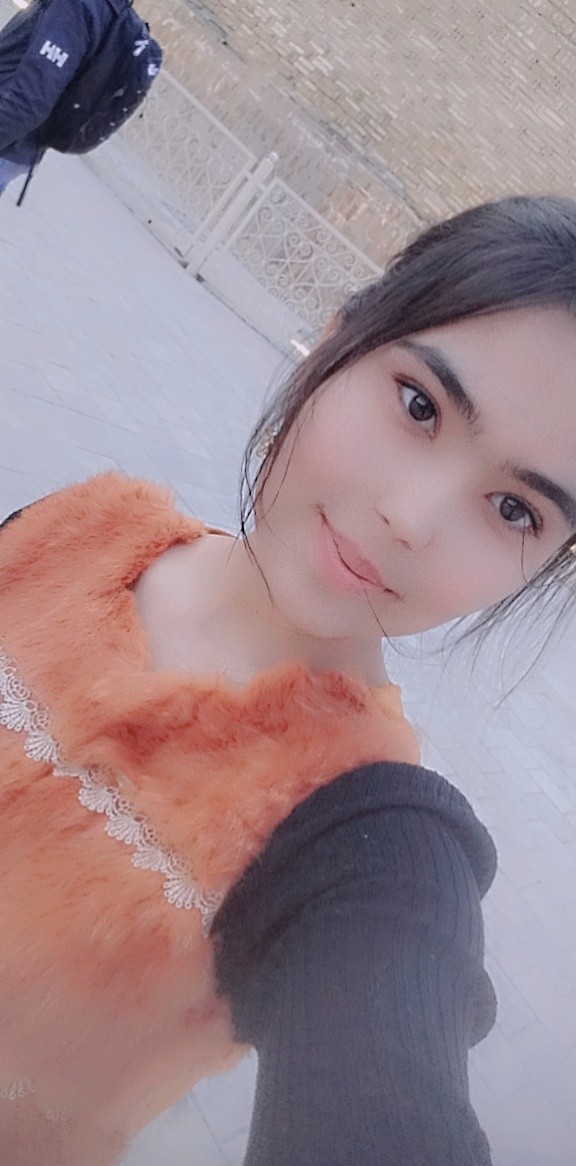
Young Central Asian girl with black hair and eyes standing in a classroom with empty desks. She's wearing a top with black polka dots.
Maftuna To’rayeva

Modern society depends on the education system of the young generation, including its first stage – sets new requirements for primary education. State of entry into force one of the main tasks of providing primary education and upbringing according to the educational standard one is to educate a new generation of children with high creative potential.

But the problem is not finding talented, intelligent children, but children going to school purposeful formation of creative abilities in all children, non-standard in the world development of appearance lies in a new way of thinking.


The way a child of primary school age is formed, such is his life
will be. Therefore, to bring out the creative potential of every child
it is important not to miss this period. Children’s consciousness is a deep way of life and with traditional ideas about how things should be
is not limited. It allows them to invent, spontaneously and predictably
things that we adults have ignored for a long time allows you to notice.


Practice has shown that traditional forms of work cannot fully solve this problem. It is necessary to use new forms, methods and technologies. Effective pedagogical technologies for the development of creativity in children one is TRIZ – the theory of inventive problem solving. This is the 50th in our country famous Russian scientist, inventor, fantasy writer Heinrich Saulovich appeared through the efforts of Altshuller. TRIZ is unique ideas that it is possible and necessary to find, develop a creative personality and teach creativity
a unique means of proof.


TRIZ technology came to schools in the 1980s. But, nevertheless,
it remains a relevant and in-demand pedagogical technology.
TRIZ technology child adapted for children of junior school age
It allows teaching under the motto “Creativity in everything”.


The beginning of the TRIZ concept for a child of junior school age
point is the principle of conformity to nature in education. A teacher teaching a child it must come from his nature. TRIZ technology in primary education the purpose of use is, on the one hand, flexibility of thinking, mobility, consistency, dialectic, secondly, inquisitiveness, striving for novelty, speech and creativity is the development of qualities such as the development of imagination.


TRIZ for Elementary School Children: This is not to change the core program, but to improve its effectiveness is a system of team games and events designed to maximize. As G.S. Altshuller, the founder of this theory believed, ―creating a new one, of course a process combined with calculation, logic, and intuition.


Children’s creative and mental activity is significant when using TRIZ elements activates at the level, because TRIZ makes them think broadly, ongoing teaches to understand the processes and find his own solution to the problem. Invention is creative is expressed in the imagination, then various types of children’s activities – play, speech,
invents things that are manifested in art and others.


The use of TRIZ in teaching children of primary school age
allow them to grow into true inventors, who are inventive and innovative at an older age becomes a producer of ideas.

TO’RAYEVA MAFTUNA ODILJON QIZI

3rd year student of Termiz State Pedagogical Institute

Essay from Akmalova Nargiza

Square and triangular numbers

Akmalova Nargiza student of Tashkent State Pedagogical University named after Nizami

Annotation: This article is about square and triangular numbers and their properties. You can get useful information about square and triangular numbers through the article.

Keywords: square, triangle, square numbers, triangular numbers, number, math.

          Numbers may vary. In school lessons, operations are mainly performed on natural numbers, fractional numbers, whole numbers, rational numbers, irrational numbers and real numbers. At the same time, students may have a question: “What other numbers are there in mathematics?”. Of course, there are many types of numbers in the world of mathematics. One such interesting number is the square number.

           Square numbers. Almost everyone knows the shape of a square. A square is a rectangle with equal opposite sides or a rhombus with right angles. (Figure 1). Square numbers, like their name, are numbers that can be placed in the form of a square (Figure 2).

Filled in blue square


Square numbers illustrated through 1, 4, and 9 blue dots.

Everyone knows how to calculate the square of a given number, especially if it is not too large. 2 2 = 4, 3 2 = 9, 4 2 = 16 and so on. The answer to the question why the act of multiplying a number by itself is called a square is related to square numbers.

Triangle numbers. Triangular numbers owe their name to a similar construction, now of triangles. Actually we already used triangular numbers in the proof of Lemma 3 above. Triangular numbers are in the form 1, 3, 6, 10, 15, … The general formula is that for every n the number N = n(n+1)/2 is triangular and describes the number of points arranged in a triangular shape with n points on a side as shown below. Where n is the number of crosses on the side of the triangle.here n is the number of crosses on the side of the triangle. (Figure 3)

Triangular numbers starting with one dot, then three dots, then six dots, then ten dots, lined up in numerical order of dots. 1, 1 and 2, 1 and 2 and 3, 1 and 2 and 3 and 4

Properties of triangular numbers:

1.Half of the third triangular number n of the sequence of triangular numbers n is multiplied by n + 1:

2.The sum of the previous triangular number and the nth triangular number, i.e. equal to (n-1)-th n squared:         

3. The difference of n-triangle minus one minus n-triangle is equal to n:

4.The sum of the first n triangular numbers is called the tetrahedral number Sn and is equal to one sixth of the product of n multiplied by (n + 1) and multiplied by     (n + 2):

n 

5.Every natural number is the result of the sum of three triangular numbers:

References:

1.    What is a number?, Site link:  http://www.cut-the-knot.org/do_you_know/numbers.shtml#square

Poetry from Maid Corbic

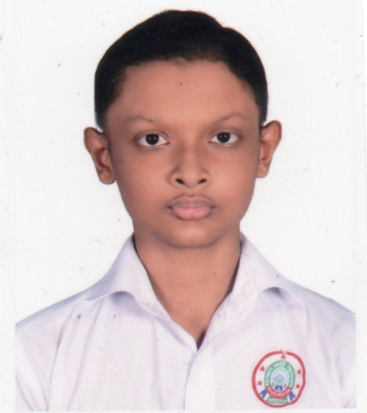
Young European adult man with green eyes, short brown hair, clean shaven, and white collared shirt with school or sports uniform type decals
Maid Corbic
JUSTICE TO THE WORLD

This world has no mercy!
I look and observe people
What does harm to others knowingly
And I think that people have become strange today
Because they only look at themselves, not others around them

May justice finally come to the world
And let life reverse its course
Before it's too late for humanity
Because people have something evil in them

Credit to individuals, I always say
Because justice and freedom for all
Reba should always be consistent with good people
Which are ready to give peace and unity

Let love spread through the lonely fields
And one day, peace will be born in all our yards
Because I always believe that peace is necessary
For humanity as a whole; people need to know
That in fact everything is in peace

Because one day when everything stops
People will not understand where and what they are doing wrong
That's why I always say that peace is my justice
Which I struggle with every day
As a peacemaker of songs!


FLIGHT TO FREEDOM

I dreamed of a bird
How high it flies in the sky
And I didn't repent, because I know
That she is everything in the world to me

I fly freely and without rules
I don't live according to other people's opinions
Because I always give love to everyone
To the world in the hope that they will understand
That everything is as black as they think

I know that the flight to freedom is moving forward
Life and people gradually change
But justice will come one day
Then when we least expect it
Only patience is required

I always say to myself
Being alone is sometimes a good option
Because there are no crazy people around me
Who would defend my freedom

And when darkness comes one day
Eternal when it covers me, I understand
Yes, after all, it is important to be
Free and without tudena rules!

I'M SPEAKING FREEDOM

I'm talking bodies
I talk about freedom to people
And I don't care about the consequences

It's freezing outside
My soul forever hides darkness
And no one can open it

I'm not an easy person
Although I'm good at heart
I am aware that I am defeating myself in this way

I am consciously destroying myself
Freedom for all good people
Who are just like me - naive

Some day there will be some truth
Which only the good will recognize
I speak with freedom of thought
Bodies and states of mind

I don't remember bad things about people
I can only remember actions
Which I pass lightly

Because I am human, they are not
The link of life without stopping
And a dash of wisdom to everyone!


Maid Corbic from Tuzla, 24 years old. In his spare time, he writes poetry that has been praised on several occasions, as well as awarded. He also selflessly helps others around him, and is the moderator of the WLFPH (World Literature Forum Peace and Humanity) for unity and world peace in Bhutan. He is also the editor of the portal of the First Virtual Art Universe, led by Dijana Uherek Stevanović, and the selector of the competition on the page of the same name, which aims to connect all poets around the world.

Many works have also been published in anthologies and magazines (Chile, Spain, Ecuador, Bosnia and Herzegovina, San Salvador, United Kingdom, Indonesia, India, Croatia, Serbia, etc.) as well as printed copies of the anthology of poems "Sea in the palm of your hand", " Stories from Isolation ", and" Kosovo Peony "and others. Through his efforts and work, he has reached numerous acquaintances around the world, and in 2020 he was named Poet of the Year in the Indo-Universe Group, which also engages in charity around the world.

He has been writing for over thirteen years, and the beginning dates back to elementary school, when professors recognized the enthusiasm for the written trail, which was initially conducted through competitive competitions, and later with the development of technology outside their country in online format. This author is also even representative in order to represent his country in various international writing competitions, and soon his works will be translated into several languages of the world (Chinese, Italian, French). He is also known for often supporting other authors around the world and is happy to advise on certain concerns with a smile on his face.

Winner of numerous awards, among them the association "KNS - Nova Svjetlost" in Sarajevo, during which he won a bronze charter for his work, which was evaluated by an international jury. Numerous revisions have been written about him, and he has also published many pages about both the world and the domestic scene. He is also the winner of the competition "Poets who touch love" with the Golden Triptych about his work, which had a character on the occasion of St. Trifundana. His works are an inspiration even to well-known people who really give great revisions and support.

Ambassador of cultural differences in Syria, and recently presented on the blog "New Story" as a young author who has won numerous awards and a person worthy of attention. In 2020, the winning country was Montenegro. He is currently on the jury of the Galaxia International Competition for Unpublished Poetry in Spain in 2021 as the only author in the Balkans to be an author, and was soon promoted as a global artist.

He is the winner of the BigBang competition that was organized in Tuzla in 2021. He is the winner of the Arts and Culture category by the Jury, but is also a translator in the Chateau Square group where he revises poetry and prose, as well as in Point Editions in Germany, which also translates written works. In ILA Magazine's he is also a travel translator, as well as in the Association of Balkan Artists as a selector. He is a translator on the ITHACA site run by Germain Droogembrodth from Germany, and is also the author with the highest number of successes in his industry, poetry that has over ten thousand successes virtually, as well as several publications around the world that have been published.


Essay from Ike Boat

Arti-Blog (AB) : *Shatta Wale Sets Record @ Blue Top Villa 

 #BTV Hotel *.

Shatta Wale
Huge crowd of people gathered to watch singer/dancer Shatta Wale perform on stage.
Fans watching Shatta Wale perform at the Blue Top Villa Hotel

 It’s sunny day-light and cool evening at the Blue Top Estates in Kasoa, Central Region of Ghana, West Africa. Well, it’s been weeks of thorough event-planning as the Prime Manager (PM) of *Blue Top Villa* #BTV Hotel in the person of Sir *Joel Bremang* and Events Organizer as well Programmes Manager of *Lucky TV*,Mr *Osei* had office meeting with Mr *Samuel Atuobi Baah* (Sammy Flex) as Artiste Manager of the Iconic Dance-Hall King *Shatta Wale*,thus as a means to host him on a show dubbed *Home-Coming Of Dance-Hall King Shatta Wale*. It’s highly publicized event on the main-stream media with both radio and television stations such as *Base One TV*,*Sammy Flex TV* and *Lucky TV* being media partners. There’s influential social media promotions and publicizations to ensure audience attractions.

Aerial shot of crowds of people watching performer Shatta Wale.
Aerial view of fans watching Shatta Wale perform at the Blue Top Villa Hotel

      Factually, from eye-witness perspective it’s incredible sold-out ticket event coupled with tight security measures so as to ensure orderliness and success. Quite remarkably, at 5pm the surroundings of Blue Top Estate, off Nyanyano Road, started attracting fans of *Shatta Movement Empire* #SME and other music lovers. Specifically, as a means to ensure ticket purchase in order to pave the way of entrance and corporate celebration of the Christmas Eve (24th December,2023) in a grand style. It’s an outlook like Caribbean Carnival! Well, some of the lesser known Artiste who performed in the evening includes: *Angie Wood*,*Odeneho Cannella*,*Don Milla* just to mention a few.

Performer Shatta Wale, in a white jacket, black top, and orange pants, sings on stage in the spotlight to a crowd of fans.
Shatta Wale performs on stage

      Indeed, one of the Top-SM-Leader in Kasoa to give worth-while mention is popularly known as *Shatta Sabali*,a close long time friend of the Dance-Hall King *Shatta Wale* as he coordinated well with the entire event planning team in Kasoa. The duo-primary MCs of the show were *MC Barimah* and *MC Big* alongside *DJ Richie*,*DJ E Fresh*,*DJ Crampy* (Baby DJ) as well as Shatta Wale’s personal DJ on his performance selection of songs. It’s evening of fire-works in the air and continuous cheerful chants of ‘Wale, Wale, Wale’ by the multitude at the Event Arena of *Blue Top Villa* #BTV Hotel. Thus, making history as Super-Star A-List Musician to Set Record in terms of populous attendees ‘over flow’ inside the premises and outside various routes of the Blue Top Estate in Kasoa, Central Region of Ghana, West Africa. Believe you me, it’s visible outlook of vehicles ranging from cars, bicycles and tricycles at various part of the residential area. Incredibly, drown captions of the event was like helicopter hovering over the *Blue Top Villa* #BTV Hotel.

Shatta Wale up close in a red and white jacket and black top holding the microphone.
Shatta Wale up close performing

      Finally, his ‘In Coming’ I mean entrance of the premises was through strategic back-stage door-opening with enormous security personnel such as the Police, Army, Bouncers as well as Body Guards on orderly arranged queue, viz straight to the stage. Momentarily, it turned all lights-off to bring about thunderous and joyous dramatic stage appearance of Africa’s Dance-Hall King *Shatta Wale* the ‘Multi-Award-Winning Artiste’. It’s beautiful Christmas dawn of 3AM Monday,25th December,2023 as he commenced unstoppable hours of outstanding electrifying performance coupled with dances of ‘Shatta Movement’ #SM fans from all walks of lives. It’s well attended festive season event remarkably sponsored by the CEO of *Blue Top Villa* #BTV Hotel in the high profile personality, Mr *Samuel Bremang* an Industrious dual citizen of United Kingdom ‘UK’ and Ghana respectively. 

Black man with a black cap, sunglasses, an earring, large gold and silver necklaces, a red and white motorcycle jacket, and a black top sings into a microphone.

       Arti-Blog ‘Written’ By *Ike Boat* 

Poetry from Elmaya Jabbarova

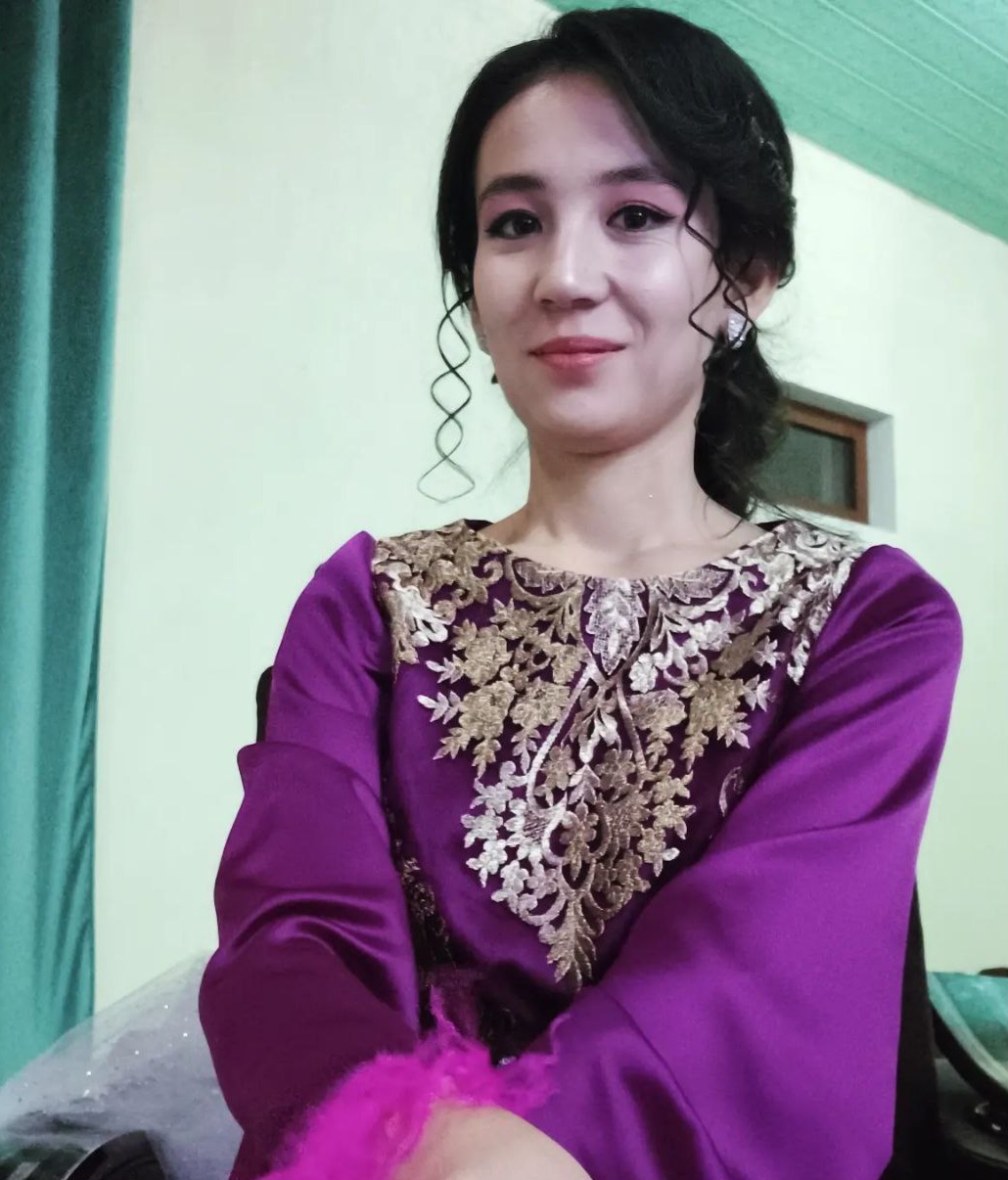
White woman with long black hair and a black blouse with flowers on it.
Elmaya Jabbarova

New Year Song 

The caravan of the long road, 
Choose a pure address, 
Purify every person, 
Every year when the last month comes. 

Joy fills my heart, 
When every New Year comes, 
Spring is coming to my life, 
When I hear a message from you. 

I wait patiently 
My love remains with a deficit, 
A year passes with algebra, 
Grief, sadness when strength comes. 

This is how I spend my life 
I'm secretly worried 
My heart just laughs 
When your voice comes. 

I have a wish my love, 
Get out, my grief, 
You be mine, I'll be yours, 
When our soul is the same.
 
Let's sing a new song 
Let's knit verse by verse, 
Let's create a poem, an epic, 
When every New Year comes. 

Elmaya Jabbarova - was born in Azerbaijan. She is a poet, writer, reciter, and translator. Her poems were published in the regional newspapers «Shargin sesi», «Ziya», «Hekari», literary collections «Turan», «Karabakh is Azerbaijan!», «Zafar», «Buta», foreign Anthologies «Silk Road Arabian Nights», «Nano poem for Africa», «Juntos por las Letras 1;2», «Kafiye.net» in Turkey, in the African's CAJ magazine, Bangladesh's Red Times magazine, «Prodigy Published» magazine. She performed her poems live on Bangladesh Uddan TV, at the II Spain Book Fair 1ra Feria Virtual del Libro Panama, Bolivia, Uruguay, France, Portugal, USA.