ROCKEFELLER CENTER REUNION

It was early winter 1964. In our one-bedroom Bronx apartment, we sat together, my Nana, Mommy, five-year-old sister, nine-year-old brother, and ten-year-old me, about to have ‘Chicken Delight’ which had been delivered to our door by a teenage boy wearing a chicken suit. My brother and I rushed to the door to get a glimpse of him as he handed the dinner boxes to Nana.

The aroma of the peppery spices they used on the breading filled our tiny apartment as she carried the food into our living room. My mouth watered in anticipation.

The TV was on and in the living room we readied to watch a repeat of the ‘I Love Lucy’ show which aired every Thursday at seven in the evening. Nana handed out the dinner boxes.

Perched on the couch, in her navy-blue pleated skirt and pale blue turtle-neck, Mommy placed her dinner box on the coffee table. She folded her hands in her lap and looked at Nana who sat on the other end of the brown and gold tapestry-covered couch. “We’re having lunch with Monty on Saturday,” Mommy said.

A piece of fried chicken flew out of Nana’s mouth and landed in her cardboard take-away box, something that was far out of character for my usually graceful grandmother. I could barely catch my breath hearing Mommy’s announcement. See my dad after all these years?

I sat in the brown fake leather easy chair, a wide strip of black masking tape hiding a rip my brother made on its arm a couple of months ago. My legs crossed, my dinner box in my lap, I checked my clothes and hoped a cockroach wouldn’t run across my blouse like it had a few nights before.

“Gloria, you sure you want do that?” Nana asked, her eyes narrowed.

“He said he’d give us money,” Mommy replied. “Finally! But not unless I bring the kids with me.” She rolled her eyes and rubbed the back of her neck. “He’s taking us to lunch at Rockefeller Center. You know, that fancy restaurant overlooking the fountain.”

Nana dabbed her manicured fingers on her white paper napkin, picked off another small piece of chicken, and placed it in her mouth.  Ronnie, my brother, eleven months my junior, sat on the throw rug in front of the coffee table, close to the TV screen because of his lazy eye. He stuffed fries one after the other into his mouth and made a grunting sound.

“Ronnie, slow down,” Nana said. “Move to the side so we can all see the TV.” He wriggled his body to the left, losing a few fries on the rug, then swooped them up and shoved them in his mouth.

The show had started. On the black and white TV, I watched Desi Arnaz (1) open his apartment door and call out in his Cuban accent, “Lucyyyy, I’m ho-ome,” his Fedora hat in one hand, a dark trench coat over his arm. I gazed at the screen crushing on Desi. Lucy got on my nerves, especially when she made goofy facial expressions.

“Who knows if he’ll even show up,” Mommy said. “God-damn viper. Haven’t had a cent from him for two years. Bastard!”

“Gloria! The kids.” Nana scolded, glaring at Mommy at the other end of the couch. Pammy, my five-year-old sister, had complained of a stomachache that afternoon when she got home from kindergarten and was fast asleep, sprawled out on the couch between Nana and Mommy.

Mommy opened her take-away box and took a bite of the crispy fried chicken. She picked up a French fry, and threw it back in the box, wiping her fingers on her napkin. My mother didn’t eat much. “I need to keep thin and fit, she often commented. “With this petite frame, I have to be careful what I eat.”

In contrast, my Nana loved food, whether home-cooked or good take away. She was short and full-figured. She sat on the couch enjoying the ‘Chicken Delight,’ two napkins spread out on her lap, her red lipstick as fresh as first thing in that morning. She wore a black wool dress with a red sparkly fake gem brooch at her neckline, gray stockings, and black pumps, in the clothes she had worn to work that day. She had a full-time job making fancy hats downtown in the garment district. Although low paid, she always looked nice, her dark hair sprayed and set in a chin length bouffant.

Even at ten years old, I appreciated chic clothes, yearned to look as fashionable as my Nana. I’d need to get a part-time job as soon as I hit my teens was the thought I often had as a young girl, the same desire I’d bring later into adult life.

As I sat in the chair savoring the ‘Chicken Delight,’ the half-rusted metal radiator in the corner of the living room sputtered and creaked, drops of water falling every few seconds onto the wood floor below. In the middle of winter even with the heavy curtains drawn and the radiator turned up ‘full blast,’ it was cold.

Nana glanced over at Mommy. “Well, you technically left him,” she said, and shrugged her shoulders. “It’s five years. You haven’t let him see the kids even once. This visit might be a good thing all-around.”

Nana closed her take-away box and placed it on the lace placemat which sat in the middle of the walnut coffee table. She pulled a crocheted blanket from the back of the couch and placed it over my sleeping sister, who laid on her side, her legs bent in a fetal position, her hands together tucked under one ear. Her long blonde curls were draped over her face, her mouth half open.

From the easy chair, my eyes traveled across the room where I spotted two copper-colored cockroaches headed down the dimmed narrowed foyer towards the kitchen. It was the downside of living in a Bronx apartment during the fifties and sixties. Cockroaches galore and tiny skinny silverfish bugs I sometimes found in my clothes when I opened the dresser drawer in the morning.

“So, we’re going to see Daddy?” I asked, keeping my voice low-key. I took a bite of the buttered flaky biscuit that came with my dinner.

“Don’t count your chickens too soon, Becky!” Mommy snapped back, curling her lip. “Right now, that is my plan.” She gave me the facial expression I disliked most on Lucille Ball, the same one I dished back to Mommy on occasion.

My brother’s eyes and ears were glued to the TV. He didn’t seem at all tuned into the conversation around him. We sat in silence for a while, staring at the screen where Lucy and Ethel wrapped chocolates as they came down the conveyer.

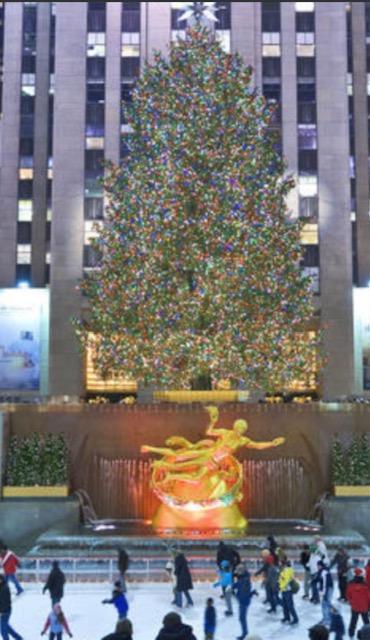
“The Christmas tree is up at Rockefeller Center,” I said. “We’ll see it Saturday, right?” My goal was to de-emphasize the excitement I felt bubbling inside at the prospect of seeing Daddy. God, I didn’t want her to change her mind which she often did when it came to important events.

“I suppose we will,” Mommy said, her tone flat.

Nana pressed her lips together in disapproval and looked over at me. “Yes, honey. you’ll see that stunning Rockefeller Center tree. That will be nice.”

“Comes at a nasty price,” Mommy barked. “Having to see that damn bastard so we can get some money out of him!”

“Gloria! Enough,” Nana said, and stood from the couch to collect the take-away boxes from each of us.

“Any more fries?” my brother asked, emerging from his TV trance.

“You can have your mother’s,” Nana replied. “She doesn’t eat fries.” She picked up Ronnie’s empty container and passed him my mother’s well-stocked one.

On the TV screen Lucy and Ethel were side by side, bent over the conveyer belt which was moving as fast as a galloping horse. They frantically stuffed chocolates in their mouths and inside their factory uniforms. My brother spit out a French fry, emitting a belly laugh as he dropped more fries onto the throw rug and snatched them up as he rolled around out of control.

I opened my library book, ‘The Good Earth’ by Pearl S. Buck, and looked at the reading comprehension worksheet where I had to answer questions for my fifth-grade homework assignment. My stomach flooded with butterflies. My mind wondered what it would be like to see Daddy. Would I even recognize him? I remembered that he resembled Cary Grant; tall, handsome, warm dark eyes, that Mommy and Nana referred to him as Monty, that his formal given name was Henry Junior and that he’d been a World War II fighter pilot.

I tried to concentrate on the questions on my worksheet, started to draft possible answers in my head but didn’t attempt to write anything down. I avoided writing in front of my mother unless I was willing to struggle. I was a ‘lefty.’ If she caught me, she’d immediately berate me. Are you possessed by the devil?” she’d say, grab my pencil and push it into what she called the ‘correct’ hand. To steer clear of her angry words, I learned to use my right hand when in her presence, but only when I was forced to write in front of her. When she’d enter a room where I was doing homework or jotting events of the day in my diary, I’d quickly switch hands. That’s how I became semi-ambidextrous.

During Open School Week, which happened twice a year, it was always uncomfortable for me. Mommy spent one full day in my classroom, which meant I had to use my right hand for hours at a time. But there was an upside. Somehow, that developed ability made me feel powerful, flexible, adaptable. Was Daddy a ‘lefty’ like me? I thought as I sat there looking at my school worksheet and listening to the TV show.

Two long days before we’d get to see him. My fingers were crossed. I walked on eggshells with my mother, in a good mood, with no defiance. On Friday, the night before we were scheduled to take the ‘D’ train downtown to Rockefeller Center, crammed in the queen-sized bed between my sister and mother, I thought about what to wear the next day to impress Daddy, make him proud of his eldest child. I had my navy-blue dress coat with the gold buttons. That was a ‘definite,’ and probably my red jumper and soft white mohair sweater underneath. My navy-blue tights and patent leather Mary Jane’s would be a nice complement.

Would he hug me? Kiss my forehead? I ran through a series of questions as I battled to fall asleep so the morning would come quickly. Does he love me? I prayed that my mother wouldn’t change her mind. In the corner of our bedroom, on his cot, my brother made slurping noises as he sucked on his thumb. I didn’t get much sleep that night. I found myself grinning up at the dark ceiling as I imagined seeing my Daddy at Rockefeller Center, running into his arms. It might turn out to be the best day of my life.

We arrived at the restaurant at Rockefeller Center exactly at 12:30 the time Mommy said we’d meet Daddy at the restaurant. The dining room was spacious, centered with a crystal chandelier, white table cloths and napkins, and lots of silverware on every table. Soft music played, a classical piano solo. Once led to our round table by a pretty woman in a red dress, I noticed that there were so many glasses of all shapes and sizes. I counted ten - double what we needed for five of us.

My mother requested a high chair for my sister who sat between me and my mother. Pammy banged her spoon on the wood tray top. Although five years old and in kindergarten, she acted like a toddler in many ways, truly the baby of our family. I didn’t understand why she needed a high chair for her. It seemed ridiculous to me.

I stared at the menu wondering if I should have the burger or something more elegant but I didn’t know what escargot was or Caesar salad or chicken cordon bleu. I’d likely stick with the cheese burger and fries, hoping the fries weren’t crispy skinny things like I heard they did in France. We weren’t in a French restaurant but the menu sure looked foreign to me. Maybe when Daddy arrived I could ask him to explain some of the weird dishes to me.

My mother pulled out her make-up mirror and freshened her lipstick, tried to shape a wisp of her dark hair into a curl. She touched a fingertip to her tongue and twisted it around the strand of hair. She looked at her watch. “He’s twenty minutes late. Bum.”

My brother took a pack of chewing gum from his pocket, leapt from his chair and over to the floor to ceiling picture window that swept around the restaurant. We had one of the best tables, and could see the Rockefeller center fountain, the giant Christmas tree, and in front of both, the oval skating rink. I was disappointed that the tree was not yet decorated but then remembered that they wouldn’t have lights and bulbs completely up until the Wednesday after Thanksgiving, still several days to go.

A waiter dressed in what looked almost like a tuxedo came by and whispered to my mother “Pardon me, but can you have everyone sit in their chairs and not touch the windows with their hands?” He pointed to my brother who was rubbing the window, his thumb wet with spit. “Thank you, Madam,” the waiter said and walked away. My mother ignored his request and tapped her fingers nervously on the table.

“Bastard,” she said under her breath. Thirty minutes late. Her finger-tapping got faster and louder. Pammy wouldn’t stop banging on the high chair tray with her spoon. Ronnie took the chewing gum out of his mouth and stuck it on the window. A woman wearing a fox fur wrap at an adjacent table stopped the conversation she was having with a man with a gray mustache, and looked over at my brother.

“What a rude boy,” she said. The man shrugged.

“Ice skaters,” my brother shouted, jumping up and down.

“This is ridiculous,” my mother said, “I’m taking Pammy to the bathroom. She stood and lifted her out of the high chair. “Becky, stay here!”

Pammy cried out, “I want sister to take me.” She reached her little hands out to me.

“Becky’s not your mommy,” Mommy said and kneeled down in her Navy-blue pleated skirt to pull up Pammy’s pink knee socks which had sagged down almost to her ankles on the walk from the train station to the restaurant. “Becky doesn’t love you like I do,” Mommy added, giving me a curt smirk.

She took Pammy’s hand and looked over at my brother who was busy pressing his index finger into his chewed wad of gum stuck on the window.

“Ronnie, you need to tinkle?” Mommy called to him.  He nodded, flattened the gum in an oval on the finger-smudged glass and followed behind them. The woman at the other table shot me a dirty look. I got up, picked up my starched white cloth napkin, walked around the table to snatch the grayed gum from the window.

Once I sat back in my chair trying to avoid any more evil-eye from the woman, I turned my head to gaze out the window at the skating rink. I watched as a little boy wearing a red knit cap and long red scarf fell down on the ice. A man picked him up and steadied him, keeping a hold on the boy’s waist from behind as he tried skating again but with parental support; something I often wished I had as a little girl.

I looked down at my Cinderella watch which was three years old, its once pink leather strap faded to a dirty white color. It was 1:09 and Daddy was supposed to have arrived at 12:30. Thirty-nine minutes late. My stomach growled. I turned back to the table to take a sip of water and saw a man walking towards me wearing a brown leather jacket and tan slacks that had little tucks at the waist. His shoes were bark brown a shade darker than his jacket. I thought maybe they were Cordovans, like the ones I had seen in the shoe store window a week before. He was well-dressed yet casual and I liked that. When he reached the table, he smiled, his teeth gleaming, his brown hair shiny, a widow’s peak at the middle of his forehead. He had dark brown eyes that seemed to bulge out just a little. He wasn’t that tall, maybe 5’9” or a bit more, had broad shoulders and was neither fat or thin. Not a Cary Grant look alike but definitely decent enough to be my dad.

He pulled out the chair across from me and stood behind it. “Becky, I presume?”

I nodded and bit my lower lip. My mother appeared at the table. She came up really close to him, my brother and sister behind her.

“You’re a jerk making us wait this long.” She poked her finger several times on the sleeve of his leather jacket.

“Gloria, I got stuck. Alright? Shoot me.” He took off his jacket, put it around the back of his chair and sat down.

“You’re a loser, Monty.” Picking up my sister in her arms, she came around the table and put Pammy back in the high chair. My brother went back to the window where he had stuck his gum, shrugged when he didn’t see it and rushed back to our table to sit in the velvet blue cushioned chair beside me.

“Are you really our dad?” Ronnie asked.

“I am. And you are Ronald?” Daddy had a deep voice like Rod Serling, the man on The Twilight Zone TV show.

“Nobody calls me that,” my brother made a face like he hated the taste of something. “My name is…”

“Ronnie, that’s what we call him,” Mommy interrupted. “That’s how the god damn world refers to him,” she said, her voice raised, high-pitched. My father looked down at the silverware on the table, opened the cloth napkin, and placed it on his lap.

“You know absolutely nothing about your own kids,” Mommy said.

“Only because of you.” His eyes narrowed. “Five years you didn’t let me near them.”

The waiter approached. “Ahh, everyone is here. Ready to start with some drinks?”

“Gin and tonic for me,” Daddy said.

Mommy shook her head. “Figures.” She looked at the waiter. “I’ll have a soda water with a slice of lime, please. And three lemonades. You have lemonade?”

“Yes, we do,” the bald-headed waiter replied. “We don’t have a children’s menu here, but you’re welcome to ask for a half order of any entrée at half price or we can also do split dishes.”

I grinned. He was trying to be really nice after a stern request that Ronnie stop with his sticky fingers on the window. The waiter noticed and gave me a wink.

“Any specials?” Daddy asked.

“Yes sir. The ribeye is a specialty on weekends and today served with a red wine mushroom reduction, baby carrots and garlic mashed potatoes. And we also have a second special, Spaghetti Bolognese.

“My lucky day,” Daddy said. “I’ll take the ribeye. Medium rare.”  I noticed his dimples when he smiled which made him look more handsome though not at all like Cary Grant.

My mother seemed flustered that Daddy had won over our waiter. She rolled her eyes and slapped the napkin down on her lap.

“Cheeseburger,” I said, “with French fries.”

“Me too,” Ronnie shouted.

“And they’ll have their own, no halving needed,” Daddy added.

My sister smacked her spoon on the high chair tray. “You’re our Daddy, she sang out. “Yay, we have a daddy. We have a daddy.”

“I’ll have the chicken piccata,” Mommy said. “No potatoes, just extra vegetables. And my youngest will have a hamburger on a plate, no roll, and no cheese.”

“She doesn’t eat cheese?” Daddy asked.

“Pammy doesn’t like any kind of cheese,” I said.

“Oh, that makes sense,” he said. “I’m the same.” I smiled.

Mommy folded her arms across her chest and sat back in the high-backed chair, shaking her head. “You’re worthless as a father,” she said, her tone sharp.

The waiter cleared his throat. "I-I guess we’re all set on lunch selections?” He closed his order pad and picked up our menus. My father nodded, his face red with embarrassment.

When the waiter was gone, Daddy tapped his fingers on the table and glared at her, “Gloria, did you have to do that? What’s wrong with you?”

 “So, you have the money with you?” she said. “The thousand you promised?”

“Can we have a nice lunch first? Yes, I have the money with me.”

My sister threw her spoon on the floor. The busboy arrived with our drinks. I handed Pammy her glass of lemonade, put a straw in it and gave her my spoon. Daddy downed his gin and tonic in two gulps.

“You’ve got three kids but you don’t give a crap,” my mother said, her voice loud.

The woman in the fox fur at the next table looked over at us. Her red painted fingernails were wrapped around her martini glass, her giant diamond ring glimmering. She looked old but her cheeks were rouged and the skin on her face tight.

“Mommy, did you take your pill?” I tried to whisper but the words came out too loud.

“Your pill?” Daddy said. “You do need to calm down.” He tilted his glass, and crunched on an ice cube, shaking his head.

She leaned across the table. “Do you have a clue what it’s like raising three kids on your own?”

“Do you know what it’s like listening to you?”

My chest tightened. I took a few sips of lemonade and a deep breath, hoping things would get better.

The food arrived. It all looked delicious. The French fries were perfect. “Anything else I can get for the table?” the waiter asked.

Daddy raised his glass. “I’ll have another round,” he said. The waiter nodded and left.

“Still a drunk, I see,” Mommy said.

I looked at Daddy, my eyes pleading for him not to react. He didn’t. Instead, he cut into his ribeye. The red juice oozed out on his white plate. We were quiet as we ate our lunch, except for my sister. She poured salt and pepper into her glass of lemonade, and mixed it with the spoon, then took a few slurps before adding more condiments to the mix. She seemed to do this every time we ate out to get attention.

The busboy cleaned off our table at the end of the meal. Daddy had finished his second gin and tonic. Pammy sat in Mommy’s lap tapping the spoon on her sleeve.

“Let’s have some dessert,” Daddy said. “Gloria, can you order me some coffee? Just going to the toilet.” He got up and half-folded his napkin on the table. I could see the inside of his leather jacket on the back of his chair, a light tan fabric with black airplanes sprinkled across the lining.

“Not surprising you need coffee,” my mother said, “with that much liquor."

Daddy came around my side of the table before he went off to the toilet. He tousled my hair and gave me a quick peck on my cheek. “You’re beautiful. So grown up,” he whispered in my ear. I giggled, feeling like a million dollars. He walked away.

Mommy ordered each of us an ice cream sundae.

“Extra cherries?” the waiter asked.

My mother shrugged.

“Yes,” I said, “and Daddy wants coffee.” The waiter nodded. It was a few minutes before our dessert arrived. The busboy lifted a pot to pour coffee for Daddy who hadn’t yet returned. I watched the brown liquid flow down into the white ceramic cup. It seemed to cascade in slow motion. A splash hit the white tablecloth which the busboy tried to wipe away with a small towel. But the dark stain remained.

It had been more than ten minutes since Daddy had left the table. My brother and I finished our sundaes. Mommy put my sister back in the high chair and helped Pammy pick at her sundae. Ronnie went to the window and pressed another wad of gum to the glass. I looked at my Princess watch. It was fifteen minutes, maybe almost twenty since Daddy left the table.

“Can I eat the two cherries on Pammy’s sundae? I asked. It was my attempt to lighten the mood. I don’t think she heard my question. Her eyes were fixed across the table on Daddy’s empty chair. I noticed her swallow hard and then take a long sip of water.

“Mommy,” I said. “Do you think Daddy’s coming back?” She looked over at me, her eyes brimming with tears.

The waiter placed a black leather folder near the edge of the table, and picked up some plates. He eyed Daddy’s chair and raised his eyebrows, then looked at my mother. “Here’s your bill but please take your time. I hope you all enjoyed lunch,” he said.

“H-he didn’t pay it?” Mommy asked.

The waiter shook his head. “No, he didn’t. But he must be coming back,” he said pointing to the empty chair. “His jacket is still there.”

“I don’t think so,” she muttered.

The waiter didn’t seem to believe her. “No problem, I’ll return in five minutes or so,” he said and hurried away.

Mommy stood up, grabbed Daddy’s jacket and searched the outside and then inside pockets. She threw the jacket on the seat of the empty chair, and sat back down. Opening her handbag, she pulled out her wallet and extracted money – two $5 bills and three $1 bills. She closed her eyes and gritted her teeth.

Is that why Daddy pecked my cheek before he left? He was saying good-bye?

In the high chair, my sister made noise with her concoction of lemonade, pepper and salt. She got up on her knees, reached to the table and snatched up two packets of sugar. After ripping them open, she emptied the contents into the glass, stirred furiously, the metal spoon clanging on the glass.

Even at ten years old I’d sometimes got headaches. The sound of that clanging brought on a dull pain behind my eyes. My mother put her elbows on the table, and dropped her head in her hands. Her shoulders trembled.

The waiter approached. “He didn’t come back?” he asked gently. Mom looked up, her mouth half open, her eyes in a squint. She was struggling but I didn’t know what to say or do to help. Inside, I was a mess. My thoughts swirled with confusion.

“Madam, would you like to speak privately with our manager?” the waiter asked.

“I-I’m so sorry, she said. “He’s such a jerk.” She exploded, her voice getting louder as she spoke, her head wagging back and forth. “Son of a bitch. Son of a bitch.” She opened her handbag and yanked out the money she had counted earlier. “I don’t have close to seventy-nine dollars.”

The woman at the next table who had chided my brother stared at us. Her red lips were smeared from drinking martinis. She shot us a look of disgust, her eyebrows raised, shook her head and seemed to grin privately to herself.

Our waiter glanced at the woman. He patted Mommy’s hand. “Madam, let’s see what we can do,” he said in a hushed voice. “Please come with me to speak with my manager.” Mommy clutched her handbag and stood up.

“Would you children like some more lemonade?” The waiter asked.

“Yes,” my brother hooted. “I’m still thirsty.”

As the waiter and my mother walked away, I felt embarrassed, ashamed, like everyone around us was staring. Daddy never did return to the table. In a few minutes Mommy came back, the waiter close behind her. He picked up the black folder containing the bill and pressed it to his chest. “I wish you a happy Thanksgiving and a merry Christmas,” he said, and quickly left.

Mommy pulled Pammy from the high chair and rushed us out of the restaurant leaving Daddy’s leather jacket on the chair. I wished I would have taken it with me, some proof that he was there.

We walked the three blocks to the train station and took the “D” train back to the Bronx. Pammy fell asleep on the long seat, her head on my lap, my mother between me and my brother who sucked his thumb and rocked with the motion of the train. Mommy didn’t say a word for the whole forty-five-minute journey. She stared straight ahead, her hands folded in her lap, her eyes slowly opening and closing as if in a trance.

As the doors slid open at the 125th Street train stop, I placed my hand on top of hers, something I didn’t remember ever doing before. People rushed out. A crowd of teenagers jostled in, laughing and shouting, taking all the vacant seats around us. A few of them stood holding onto the leather straps hanging from the train car ceiling.

The doors banged shut. I kept my hand on my mother’s clasped hands and moved my fingers gently back and forth. In that crowded train car, maybe for the first time in my life, I wanted her to know that I was there for her.
Footnotes
(1) From the 1930s until the mid 1970s, Desi Arnaz, born Desiderio Alberto Arnaz de Archa III (1917-1986), achieved prominence first as a musician and later in film and television. After leaving Cuba in 1933 due to the arrival of the Batista government, Desi and his mother fled to Miami where his father later joined them.
Desi Arnaz joined Xaiver Cugat‘s band in 1934 and toured with the group before striking out on his own. Earning renown as the “Miami Rhumba King,” the musician and eventual bandleader went north to perform in New York nightclubs. Later in life, Arnaz taught classes in studio production and acting for television at San Diego State University. He also served as the United States ambassador to Latin America under Richard Nixon. Arnaz’s autobiography, A Book, was published in 1976.
(2) When the Great Migration from Puerto Rico to the mainland began in the 1940s, thousands of Puerto Ricans settled in the South Bronx. Between 1946 and 1950, over 100,000 Puerto Ricans arrived in New York City paving the way for the city’s first sizeable Hispanic population yet still considerably less than 1% of New York City’s population at the time. Today the Bronx is a predominately Hispanic/Latino borough with 54.8% of the population identifying as such.
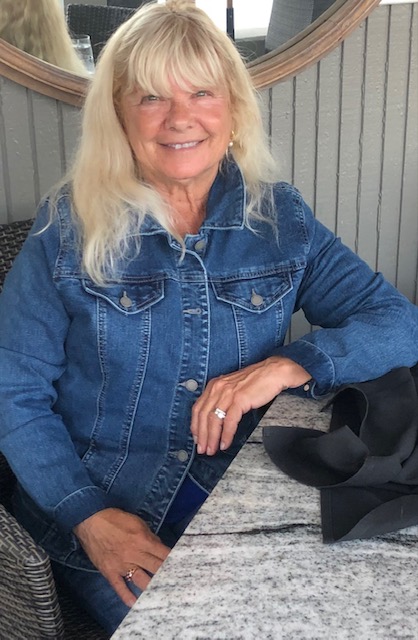
Linda S. Gunther is the author of six published suspense novels: Ten Steps From The Hotel Inglaterra, Endangered Witness, Lost In The Wake, Finding Sandy Stonemeyer, Dream Beach and most recently in 2021, Death Is A Great Disguiser.
Her short stories have been featured in numerous literary publications. Linda’s passion for travel and continuous learning fuels her fire to create vivid fictional characters and unforgettable story lines.