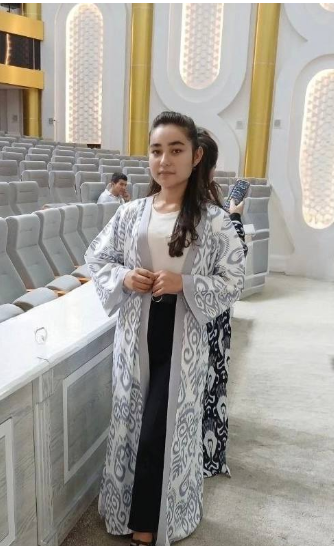
Essay from Dildoraxon Turgʻunboyeva

Dildoraxon Turgʻunboyeva

Student of the Faculty of Pedagogy and Psychology, School of Preschool Education, Kokand State University

The Effectiveness of Play-Based Learning

Faculty of Pedagogy and Psychology, Preschool Education Program, Kokand State University

Turgunboyeva Dildorakhon Bahromjon qizi

Abstract:

Play-based learning plays a highly significant role in preschool education. Play is a natural need and the primary form of activity for children, serving as an essential means of their comprehensive development. For preschool-aged children, play primarily provides a natural and comfortable environment for interacting with the surrounding world, communicating with peers, freely expressing their thoughts, and acting independently. Play activities effectively influence children’s social, intellectual, physical, moral, and emotional development. Through play, children’s observation, thinking, curiosity, and worldview are formed.

Keywords: play activity, preschool education, child development, didactic games, educational value, creative thinking, socialization, psychological development, learning process, personal development.

Play activity is considered one of the fundamental needs of preschool children. During play, children move actively, discover new images, perform interesting roles, and enhance their communication skills with peers and adults. At this stage, children comprehend the surrounding life, social roles, family and society, as well as daily situations through play and learn in their own way. Therefore, play activity not only develops children’s existing knowledge and skills but also forms an essential part of their perception of the environment, adaptation to changes, and socialization processes. Through play in preschool education, children’s thinking, speech, social behavior, emotional world, and personality develop extensively. During play, children can express their emotions and acquire advanced imaginative and creative skills. In the course of play, each child independently develops roles and rules, which enhances their ability to think independently, find original solutions, communicate effectively, and manage situations. Moreover, play helps children develop self-control, adhere to moral norms and values, and maintain polite interactions with others.

Play activity increases children’s physical activity and creates effective opportunities for developing their reasoning, concentration, and imagination. Play enriches children’s emotional world, encourages happiness, joy, and active living, which form a vital foundation for their healthy development. By organizing play activities, educators implement pedagogical objectives, teach children social norms and rules, and support their adaptation to society. Additionally, play plays an invaluable role in fostering children’s independent activity, cooperative communication, mutual assistance, respect, friendship, and solidarity. The significance of play as the primary activity of preschool children occupies a special place in achieving high results in health, intellectual, and moral education. Through play, children gain real-life experience, understand the essence of surrounding phenomena, and develop their imagination. Play expands children’s imaginative world and provides opportunities to independently solve complex life situations and think critically. Through play, children test their skills, acquire new knowledge, enrich their imagination, and demonstrate their creative potential.

Play activity also facilitates the transmission of religious, national, and modern values to children. In play, moral qualities such as honesty, integrity, friendship, kindness, and mutual respect, along with environmental awareness and polite behavior, are developed. Children internalize the rules presented in play, comprehend the true essence of social life, and grow up respecting family, national, and universal values. It is essential that play activities are organized in accordance with each child’s individual characteristics and developmental level.

When organizing and managing play, educators should consider children’s age, interests, and aspirations, selecting appropriate games and guiding them properly while accounting for their spiritual and physical well-being. Through play activities, children develop essential life skills such as independence, initiative, strong memory, decision-making, timely task completion, and proposing new ideas. Play plays a crucial role in the comprehensive development of preschool children, enriching their consciousness, accelerating socialization, and expanding creative potential. Educators and parents should actively participate in this process, acting as guides, motivators, and supporters of children’s play. As an integral and fundamental component of preschool education, play establishes a solid foundation for children to grow into independent, mature, and well-rounded individuals.

Through play activity, each preschool child gains the opportunity to demonstrate their individual abilities and potential. Their thinking, speech, emotional world, physical development, moral behavior, and social skills are formed and strengthened specifically through play. In preschool education, play supports the development of children’s personal attitudes toward life, people around them, loved ones, and society, helps them set clear goals, and strive to achieve them. Play fosters intellectual growth, independent thinking, creativity, and self-regulation.

Through play activities, children enrich their life experience and develop initial professional and creative skills. Play is the primary domain in children’s lives and represents the most enjoyable, easy, natural, and beneficial process for every child. Games provide children with joy, positive emotions, freedom of movement, and excitement of achievement. Therefore, in preschool educational institutions, play activity should be widely implemented as a fundamental teaching method, and special attention should be given to its moral, educational, psychological, and pedagogical significance.

Conclusion:

In conclusion, the role and significance of play activity in preschool education are exceptionally great. Play enriches children’s lives, making them meaningful and colorful, and serves as a key factor in ensuring their comprehensive development. Through play, children learn independent thinking, communication, moral values, organizational skills, friendship, and socialization. When educators and parents organize play activities purposefully, children’s social, spiritual, and psychological potential further develops, enabling them to grow into beneficial and well-rounded members of society. Play is the school of life!

References

Ashurova, S. (2022). The Importance of Play Activities in Preschool Educational Institutions. Scientific Approach, 4(10), 127–131.

Babayeva, D., Ochilova, X. (2022). Educational Games and Their Importance in Preschool Institutions. Proceedings of Scientific Conferences, 3(12), 44–52.

Hamroyeva, D. (2018). The Role of Play Activities in the Development of Preschool Children. Primary Education, 1(2), 98–104.

Juraeva, S. (2019). Issues of Socializing Preschool Children Through Play. Preschool Education and Upbringing, 3(5), 55–61.

Sharipova, Sh., Islomova, Z. (2022). Play Activity as the Main Form of Teaching Preschool Children. Journal of Pedagogy and Psychology, 2(7), 63–70.

Toshova, S. O. (2021). The Essence and Peculiarities of Play in Preschool Children’s Activities. Scientific Education and Psychology, 4(2), 15–21.

Khojayeva, K. (2020). Didactic Games and Their Importance in Preschool Child Development. Interpretation and Research, 3(1), 89–95.

Essay from Abdumajidova Zuhroxon Ibrohimjon qizi

1st-year student, Faculty of Humanities and Languages, Kokand State University, Uzbek Language and Literature program, Jahonobod village, Rishton District, Fergana Region

THE COMPOSITION OF THE NOVEL “OLTIN ZANGLAMAS”

Annotation:

This article analyzes the artistic and ideological aspects of Shuhrat’s novel Oltin zanglamas, one of the major representatives of Uzbek literature. The novel explores important issues such as the difficult social environment during and after the war, repressions (qatag‘onlar), human destiny, conscience (vijdon), faith (e’tiqod), and loyalty (sadoqat). Through the novel, the author depicts the trials faced by the people, their perseverance, and the enduring nature of human virtues. Through the central characters of the work, ideas of honesty, patriotism (vatanparvarlik), humanity (insoniylik), and spiritual resilience are highlighted.

Keywords: War (urush), repression (qatag‘on), patriotism (vatanparvarlik), humanity (insoniylik), faith (e’tiqod), perseverance (matonat), family (oila), loyalty (sadoqat), spirit (ruhiyat), justice (adalat).

Shuhrat (real name and surname: G‘ulom Aminjonovich Alimov) was born on April 19, 1918, in Tashkent. He was the son of an artisan. He debuted as a poet in 1936 with the poetry collection Mehrol. He is the author of the novels Rustam, Bir kechaning fojiasi, Shinelli yillar, Oltin zanglamas, and Jannat qidirganlar. Many of Shuhrat’s works have been translated into foreign languages. He also translated the poems of Pushkin, M. Lermontov, T. Shevchenko, as well as Japanese, Vietnamese, and Azerbaijani poets. Shuhrat once wrote about his work: “I have always been inside this life, not around it. If I had not created something on this topic, my heart would not have been at peace.”

The novel was written between 1963 and 1965 and published in 1967. Its main idea emphasizes the strength of human faith, belief, and moral values. The characters do not lose their faith even when faced with severe trials such as war and hardships. This is expressed through the phrase “oltin zanglamas” – like real gold, pure human virtues never rust and survive trials. Its educational significance lies in fostering patriotism, honesty, family affection, and the upbringing of a healthy generation. The novel depicts the tragedies of war and repression, teaches the value of peace, and stresses the importance of maintaining humane relationships. It also provides moral and ethical guidance through values such as family harmony, love, and mutual support during difficulties.

The novel covers themes including war and its victims, effects on families and human psyche, human character revealed under trials, love, friendship and family relations, defense of the homeland (Vatan himoyasi), courage (mardlik), and the opposition between loyalty and betrayal (sotqinlik).

Character system in the novel:

Characters differ in their ideological and aesthetic significance. They are categorized as main (bosh), secondary (ikkinchi darajali), and episodic (epizodik) characters.

Main characters:

Sodiq – The protagonist. An honest, conscientious, straightforward, and intelligent teacher. As a school director and in life, he is active, demanding, and strict, which causes some lazy, immoral, and low-level staff to dislike him. Misunderstanding his impartial advice, they conspire with Mirsalim to accuse and imprison him. Sodiq never bends under life’s trials and values justice and truth above all.

Jannat – Sodiq’s life companion and symbol of loyalty. She does not fear difficulties, trusts her spouse, and supports his honest path. Her patience, humility, and dedication stand out throughout the novel. She is depicted as a moral pillar maintaining family harmony. Her only unfulfilled wish is to have children.

Adolat xola – A wise, experienced woman guiding everyone on the right path. Despite being childless, she lives happily for fifteen years with Sodiq and Jannat, giving advice and nurturing them. She treats Sodiq and Jannat as her own children.

Qodir – Sodiq’s younger brother. Open-hearted and in love with Aziza. Due to false accusations against Sodiq, he is expelled from school and cannot find work. He does not succumb to hardships and believes the truth will eventually prevail.

Aziza – A pure and modest young woman. She values sincere emotions and rejects lies and betrayal. She expresses this in her father’s words: “Are you afraid? Will you lose your position?” She desires to be spiritually close to honest people like Sodiq.

Mirsalim – Aziza’s father. Cunning, ambitious, envious, and self-interested. He seeks personal gain in every interaction. Skilled in manipulation, he betrays his wife and homeland and ultimately meets his end for treachery against the homeland.

Musharraf – Sodiq’s second wife. Opportunistic and deceitful. Initially shy, her true manipulative nature emerges, especially during pregnancy and Sodiq’s imprisonment.

Marat – Son of Sodiq and Musharraf. Though born from Musharraf, he is raised with maternal care by Jannat.

Dilovarxo‘ja – Former bandit using multiple identities to avoid capture. A traitor meeting a tragic end.

Pushkaryov – NKVD officer, Sodiq’s investigator. Younger than others, compassionate, and fair.

Bogun – Sodiq’s friend, killed by Dilovarxo‘ja. Known for his kindness and thoughtfulness.

Secondary characters:

Mirsalim’s wife – Kind and forgiving, sympathizes with Jannat.

Mikola – Sodiq’s friend.

Sodiq’s uncle – The kindest of his five uncles, keeps in touch during Sodiq’s school years, has five children.

Shukurov – Alcoholic, neglectful of family, fears Sodiq.

Episodic characters:

Ikrom ota – Elderly school staff, provides assistance to Sodiq’s family.

Sobiraxon – Middle-aged teacher, busy with household, five-year-old son.

Mavjuda Abdurahmonova – Candidate for female student representative.

Plot components:

Exposition – Introduction. Begins with Qodir meeting Aziza. The village environment, Sodiq’s life, social conditions, and relationships are described. Themes of honest work, loyalty, and humanity are established.

Rising action – Sodiq goes to the city, encounters Mirsalim, and gains a position. Self-interest and injustice in society intensify conflicts.

Climax – Sodiq remains on the path of honesty and justice, faces envy, false accusations, imprisonment, yet fights for the homeland.

Resolution – Truth prevails. Sodiq dies bravely but is vindicated, his son Marat continues the lineage. Mirsalim dies; Qodir and Aziza marry; Adolat xola dies contentedly.

Conflicts:

Interpersonal:

Sodiq vs. Musharraf – honesty vs. self-interest.

Sodiq vs. Mirsalim – justice vs. deceit.

Adolat xola vs. Musharraf – righteousness vs. opportunism.

Jannat vs. Musharraf – love and family vs. manipulation.

Internal (psychological):

Sodiq’s conscience struggles during family and separation crises.

Jannat’s endurance and suffering for her happiness.

Character vs. environment:

Musharraf’s actions affect family dynamics and societal expectations.

Artistic devices:

Antithesis – Honesty vs. corruption, conscience vs. self-interest, truthfulness vs. lies.

Simile (Tashbeh) – Sodiq’s will is as strong as gold; his conscience is pure like a mirror.

Personification (Jonlantirish) – Adolat jim turmadi (Justice does not remain silent).

Metaphor – Soft broom, bitter grief, sweet memory, peak of hope, sharp tongue, river of life, wounded heart, heavy day, black day, voice of conscience, wind bride, etc.

Conclusion:

The novel portrays the fate of many people, particularly emphasizing the honorable and challenging profession of teaching. Sodiq’s devotion, loyalty, and love for students, his steadfast conscience, readiness to sacrifice for honor and homeland, are highlighted. Readers can gain valuable lessons from the life and virtues of Sodiq.

References:

Shuhrat. Oltin zanglamas. “SHARQ” NASHRIYOT-MATBAA AKSIYADORLIK KOMPANIYASI BOSH TAHRIRIYATI. Toshkent, 1995.

Shuhrat (2018). Oltin zanglamas. Yangi asr avlodi.

Shuhrat. Oltin zanglamas. Toshkent: Zukko kitobxon, 2023. 512b.

Essay from Zarifaxon Nozimjon qizi Odilova

1st-year student, Faculty of Humanities and Languages, Kokand State University

Zahiriddin Muhammad Babur – The Legacy of a Great Commander and Thinker

Zarifa Odilova Nozimjon qizi

1st-year student, Kokand State University

Scientific Supervisor: D.O. Hasanova, Doctor of Philology (DSc)

Abstract

The article discusses the role of the great poet and statesman Zahiriddin Muhammad Babur in world civilization, his life principles, and his acts of public service. Babur’s humanistic ideas and his contributions to introducing Eastern culture are highlighted.

Keywords: Zahiriddin Muhammad Babur, statesman, great historical figure, India, prominent personality, poet, historian, Baburnama.

Introduction

February 14 holds special significance for the Uzbek people and the entire Turkic world. This day is widely celebrated as the birth anniversary of the great commander, eminent statesman, talented poet, and unique historian Zahiriddin Muhammad Babur. Over the centuries, Babur has left an indelible mark on human history through his courage, intellect, and rich spiritual legacy.

Babur was born on February 14, 1483, in the city of Andijan, into a family belonging to the Timurid dynasty. His father, Umarshaykh Mirza, was the ruler of the Fergana region. At the young age of twelve, Babur ascended the throne and faced the complex currents of political life. Battles for Samarkand, internal conflicts, and political instability strengthened his young heart. Despite these hardships, he acted with courage and determination—qualities that later elevated him to the status of a great historical figure.

During a period of political turmoil in Transoxiana, Babur set a new goal for himself. He captured Kabul, established a secure base, and began his campaign toward India. In 1526, he achieved victory at the Battle of Panipat, founding the powerful Mughal Empire in India. This empire later became a center of political stability and cultural advancement in South Asia for several centuries. Under Babur’s reign, science, art, and architecture flourished.

The most remarkable aspect of Babur’s personality was his mastery of both the sword and the pen. While he demonstrated courage on the battlefield as a commander, he also expressed his delicate sensibilities in the creative realm. His famous work, the Baburnama, is one of the rare treasures of world literature and historical scholarship. In this work, the author provides detailed and sincere accounts of his life, the political events of his era, cities, natural landscapes, and the customs of the people. The clarity of language, vivid descriptions, and authenticity make the work uniquely valuable.

The Baburnama is not only a historical document but also a literary masterpiece. It includes valuable observations on the nature, climate, flora, and fauna of Fergana, Samarkand, Kabul, and India, reflecting Babur’s broad worldview and keen powers of observation.

Babur’s poetry also deserves special attention. His divan contains ghazals and rubais celebrating love, loyalty, longing, patriotism, and human virtues. Poems written during his years away from his homeland express deep feelings of nostalgia and yearning. Babur was also a builder; he established gardens in Kabul and India, paying attention to landscaping and beautification. The gardens he created later became famous as “Babur Gardens,” standing as vivid examples of Eastern architecture and landscape art.

Today, Babur’s legacy serves as a model for younger generations. His life demonstrates that hardships and trials should not deter a person. On the contrary, those who face challenges with courage achieve great heights. The name Babur symbolizes glorious history, strong will, and profound intellect. His birth anniversary reminds us to revisit our history and rich cultural heritage. Studying Babur’s legacy, promoting his works, and instilling them in the consciousness of youth is our sacred duty, as a nation aware of its history has a bright future.

References

Baburnama. Tashkent: “Yulduzcha,” 1989.

Zahiriddin Muhammad Babur. Divan. Tashkent: Literature and Art Publishing House named after Gafur Ghulam, 1965.

V. Zohidov. Babur and His Literary Heritage. Tashkent, 1960.

R. Nabiyev. Babur’s State and Diplomacy. Tashkent, 1994.

History of Uzbek Literature. Vol. 5. Tashkent, 1978.

National Encyclopedia of Uzbekistan. Vol. 2. Tashkent, 2002. Article: “Babur.”

“Humanistic Ideas in the Personality of Zahiriddin Muhammad Babur,” 2022.

Essay from Sevara To’lanboy qizi Mahmudova

Sevara To’lanboy qizi Mahmudova, first-year student of the Preschool Education program, Namangan State Pedagogical Institute.

Yangi To’da MFY, Pop District, Namangan Region.

THE EDUCATIONAL AND UPBRINGING SIGNIFICANCE OF DIDACTIC GAMES IN PRESCHOOL EDUCATION

Zohidaxon To’lanboyevna Qoraboyeva

Associate Professor, Department of Preschool Education, Namangan State University

Sevara To’lanboy qizi Mahmudova

1st-year student, Preschool Education, Namangan State University

ABSTRACT:

This scientific article provides a comprehensive analysis of the educational and upbringing significance of using didactic games in preschool education. The role of didactic games in developing children’s cognitive activity, independent thinking, logical reasoning, speech, and creative abilities is examined. Additionally, the development of social skills, teamwork, mutual cooperation, discipline, and moral qualities in children during play is scientifically explained. The article discusses the types of didactic games, methods for their effective implementation in the educational process, and pedagogical outcomes through examples.

Keywords: Preschool education, didactic games, educational significance, upbringing significance, cognitive activity, creative abilities, social skills, pedagogical process, education through play.

Over recent years, significant efforts have been made in our country to raise children into healthy and well-rounded individuals, as well as to establish an effective preschool education system that implements efficient teaching and upbringing methods. In particular, educational-methodical, didactic materials, and literary works for preschool organizations have been selected and incorporated into classroom activities.

Play is the leading activity for preschool-aged children. Learning through play is one of the approaches for children’s education and development. Play is a natural way for children to explore themselves and the surrounding world. It develops the child’s personality, cognitive abilities, social-emotional skills, creativity, and physical development. Interaction with peers and educators during play enhances speech, social skills, and motor development. Play provides opportunities for cooperative learning, taking risks, making mistakes, and overcoming challenges. Most importantly, play makes learning enjoyable and fosters imagination and creativity.

Play can take various forms: completely free initiated by the child or group, minimally guided, or fully organized by the educator. While recognizing the importance of free play, the decisive role of the educator in guided play should also be acknowledged. The educational process should provide opportunities for play, and a supportive environment contributes to it.

Didactic games, in particular, enhance critical thinking, attention, memory retention, and quick reasoning. Creating the conditions for play—providing children with sufficient time, space, supportive resources, and toys—is crucial. Educators working with preschool children should actively facilitate children’s play.

A key element of didactic games is rules. Adhering to rules ensures the content and objectives of the game are achieved. Didactic games are directly related to education and serve as a teaching method suitable for preschool-aged children. Experienced educators use these games to engage passive children in group activities and encourage them to perform tasks without fear. Didactic games should always be planned based on clear objectives.

Didactic games help children play together, align personal and group interests, assist each other, and experience joy from peers’ success. They also foster positive personal qualities such as honesty and sincerity. As practical activities, didactic games allow children to apply knowledge gained during lessons in various ways, helping them connect learning with real-life situations.

Examples include games like “Find by Color” or “Find by Shape” for younger children, and “What do workers do?” or “What do farmers grow?” for older children. Didactic games reinforce knowledge about the surrounding world, develop thinking, creativity, sensory skills, and help organize acquired knowledge.

Didactic games make learning easier and more enjoyable. Age-appropriate and engaging activities allow children to complete intellectual tasks naturally and effectively. The more playful elements included, the greater the enjoyment for children. The central aspect of a didactic game is its guiding idea, which generates interest and motivates participation, such as games like “What’s in the Bag?” or “Who makes which sound?”

Each didactic game has content, rules, and activities closely linked; removing any component prevents the game from proceeding. Rules in didactic games govern children’s actions, interactions, and help cultivate self-regulation and mutual control. Evaluating the outcomes from both children’s and educators’ perspectives is important. From the children’s perspective, one should consider moral and educational gains, intellectual effort, reasoning, attention, and memory. Positive experiences increase self-confidence and bring joy. From the educator’s perspective, it is necessary to assess whether the objectives and intended outcomes were achieved. A game is considered successful if it both engages children and meets planned pedagogical goals.

Rewards and recognition can motivate children, but they should not be the sole incentive. Game actions include moving objects, organizing, classifying by color, size, or shape, and performing critical thinking tasks. Older children engage in more complex group interactions and coordinated activities.

The game’s outcome is the specific achievement of the didactic game, such as solving riddles, completing tasks, or demonstrating reasoning. The game’s content, concept, actions, and rules are interconnected, and the educator guides the process, incorporating children’s questions, suggestions, and initiatives to enrich and expand the game. Timing the start and end of the game effectively is crucial.

Didactic games can be conducted in classrooms, halls, playgrounds, forests, fields, and other spaces, enhancing impact, variety, and children’s engagement. Considering children’s age and individual characteristics, adjusting pace and rhythm, and proper evaluation by adults are essential.

TYPES OF DIDACTIC GAMES

Tabletop games: Help children organize knowledge about the environment, develop thinking (analysis, generalization, description). Examples include lotto, matching pairs, dominoes, and mazes.

Verbal games: Develop listening, quick thinking, and the ability to express ideas clearly. Typically conducted with older preschool children.

Object and toy games: Played from early childhood to school age, focusing on attention and imagination. Children learn about objects’ properties, functions, and characteristics.

In conclusion, play is a fundamental activity for preschool children, shaping personality, social behavior, and future learning, labor, and interpersonal skills. Didactic games are crucial tools for intellectual, moral, labor, and aesthetic development, and their careful planning and implementation support effective preschool education.

References:

Resolution of the Cabinet of Ministers of the Republic of Uzbekistan, December 31, 2019, No. 1059, “On approval and implementation of the Continuous Spiritual Education Concept.”

Resolution of the Cabinet of Ministers of the Republic of Uzbekistan, December 22, 2020, No. 802, “On approval of the State Standard for Preschool Education and Upbringing.”

F. Qodirova, Sh. Toshpo’latova, N. Qayumova, M. A’zamova. Preschool Pedagogy. Tafakkur Publishing, Tashkent, 2019.

I.V. Grosheva, G.E. Djanpeisova, U.T. Mikailova, M.A. Ismailova et al. Learning through Play / Methodical Guide. 1st Edition, Tashkent, 2020.

D.Sh. Mirzayeva. Preschool Pedagogy, Tashkent, 2022.

Sh. Sodiqova. Preschool Pedagogy, Tafakkur Publishing, Tashkent, 2013.

Poetry from Axmedova Gulchiroyxon

I am Axmedova Gulchiroyxon, a second-year undergraduate student at Kokand State University, Faculty of Primary and Technological Education, specializing in Primary Education. I actively participate in numerous competitions and assessments.

Oh God, Take Away My Mother’s Pain

Oh God, take away my mother’s pain,

Her heart half-closed, her gaze in rain.

See how sorrow drives her to despair,

Longing for spring, tears fill the air.

Oh God, take away my mother’s pain,

I’ve yet to lead her on pilgrimage’s lane.

A heavy question weighs upon my soul,

Why each day I failed to make her whole.

Oh God, take away my mother’s pain,

Though I spoke my love, some days in vain.

Today my eyes at last open wide,

To cherish her, with nothing to hide.

Oh God, take away my mother’s pain,

Illness should not touch her radiant face again.

She says, “Waste no time, don’t let life fall,”

Yet I ignored her golden call.

Oh God, take away my mother’s pain,

Her trials and hardships she must sustain.

Her sweet words drip like gentle balm,

Her conversations bring the heart calm.

Oh God, take away my mother’s pain,

Let no tear fall from her eye again.

All her burdens, let me bear them all,

Keep her safe, let no harm befall.

Oh God, take away my mother’s pain,

My hands in prayer shall never wane.

It’s in Your power, O Lord above,

I beg You, answer my plea of love.

Oh God, take away my mother’s pain,

My gentle angel, pure heart’s domain.

Place the key of hope within my heart,

Her presence makes my whole life start.

Oh God, take away my mother’s pain,

Your healing shines as truth’s own reign.

As our people say with reverent call,

Heaven lies beneath a mother’s thrall.

Essay from Adhamova Irodaxon Akmal qizi

Student of Fergana State University

Faculty of Foreign Philology

Major in Foreign Language and Literature (English)

2nd-year student

OLIGOFREN CHILDREN: PSYCHIC DEVELOPMENT CHARACTERISTICS AND EDUCATIONAL CHALLENGES

Annotation: This article provides a scientific analysis of the concept of oligofrenic children, their cognitive development characteristics, and the challenges encountered in the education and upbringing process. The study examines cognitive activity, thinking, memory, attention, and speech delays in oligofrenic children, as well as the special pedagogical methods used in their teaching and upbringing. Methodologically, the article is based on theoretical analysis, observation, and comparison. The results indicate that early identification of oligofrenic children and the implementation of individualized programs and specialized approaches effectively promote their development and social adaptation.

Keywords: oligofrenic children, special pedagogy, psychology, oligophrenopedagogy, cognitive development, correctional lessons, pedagogical methods.

Introduction: In modern society, the socio-economic development of a country places new and responsible demands on the education system. In particular, identifying children with intellectual disabilities and organizing effective educational and upbringing processes for them is one of the pressing issues. Failure to adequately consider the psychological and individual characteristics of oligofrenic children during instruction reduces educational effectiveness and prevents children from fully realizing their potential. Practical experience shows that many oligofrenic children are forced to study in general education institutions, which creates additional difficulties in their cognitive activity. Insufficient use of special pedagogical approaches and the lack of individualized educational programs exacerbate the problem, leading to decreased interest in learning and slower social adaptation.

Proper inclusion of oligofrenic children in educational processes is not only pedagogically but also socially important. Scientific, systematic, and goal-oriented approaches are necessary to prepare them for independent life and societal integration. Therefore, it is crucial to study the cognitive development characteristics of oligofrenic children, identify challenges in education, and develop solutions. This article examines the concept of oligofrenic children, their levels of intellectual development, psychological characteristics, and educational challenges from a scientific perspective.

Methodology: The study used theoretical and practical research methods to explore issues related to oligofrenic children, based on scientific perspectives from special pedagogy, psychology, and oligophrenopedagogy. The analysis of scientific and pedagogical literature was employed to examine the concept of oligofrenia, its causes, levels of cognitive development, and psychological characteristics of oligofrenic children. Comparative analysis and generalization of sources were used to draw key conclusions. Observational methods were applied to identify difficulties in cognitive activity, speech, behavior, and learning. Data were analyzed using synthesis methods to ensure scientific validity. Pedagogical approaches were also assessed to evaluate their effectiveness in teaching and upbringing oligofrenic children. This methodology ensured achievement of research objectives, scientific substantiation of the topic, and practical conclusions.

Discussion and Results: Theoretical analysis and pedagogical observations indicate that the unique characteristics of cognitive development in oligofrenic children require special approaches in the educational process. Cognitive processes—thinking, memory, attention, and speech—develop slowly, making it difficult to assimilate learning materials. Therefore, traditional teaching methods alone do not yield sufficient results and may cause excessive stress and discouragement. Visual aids, repetition, and activity-rich lessons demonstrate high effectiveness. Individualized lessons increase students’ engagement, strengthen self-confidence, and positively influence social adaptation.

Early identification and referral to specialized educational institutions significantly enhance educational effectiveness. Special methods, including individualized programs, correctional lessons, labor activities, and daily life skill tasks, play a crucial role in developing independent functioning. Additionally, teachers’ knowledge, preparation, and empathetic approach directly impact the social and psychological development of children. Family and social support further contribute to personal development, facilitate social integration, and enhance self-awareness.

Conclusion: Research and analysis confirm that scientific, systematic, and individualized approaches are essential in working with oligofrenic children. Cognitive delays in thinking, memory, attention, and speech determine challenges in education. Specialized pedagogical methods—visualization, practical activities, repetition, individual approaches, and labor-based tasks—ensure high effectiveness. These methods enhance engagement, independent functioning, and social adaptation. Teacher expertise, family support, and societal conditions directly influence children’s development. Early identification, referral to special educational institutions, and individualized programs maximize developmental potential. Applying scientifically-based, individualized pedagogical methodologies not only improves educational outcomes but also ensures social adaptation and preparation for independent life. Continued research and development of effective methods in special pedagogy remain critical both scientifically and socially.

References:

V.S. Rakhmonova. Fundamentals of Defectology and Speech Therapy. Tashkent, 1991.

S.Sh. Aytmetova. Oligophrenopedagogy. Tashkent, 1996.

C.Sh. Aytmetova. Psychological Development Characteristics of Students in Auxiliary Schools. Tashkent, “Teacher”, 1984.

Sh.B. Akhmedov. Methodology for Teaching and Educating Oligofrenic Children. Tashkent: Teacher, 2018.

T.M. Boboev. Special Pedagogy and Corrective Education. Tashkent: Fan, 2020.

A.R. Karimov. Oligofrenia and Intellectual Development Disorders. Tashkent: Ilm, 2019.

Essay from Muxlisa Olimjon qizi Tursunaliyeva

1st-year student in the Oligophrenopedagogy program,

Faculty of Pedagogy and Psychology,

Qo‘qon State University

OLIGOPHRENIC CHILDREN: FEATURES OF PSYCHIC DEVELOPMENT AND PROBLEMS IN EDUCATION

Abstract: This article analyzes the concept of oligophrenic children, their features of mental development, and the problems they face in the educational process from a scientific perspective. The study examines cognitive activity, thinking, memory, attention, and speech delays in oligophrenic children, as well as the special pedagogical methods applied to their teaching and upbringing. Methodologically, the article is based on theoretical analysis, observation, and comparison methods. The results indicate that early identification of oligophrenic children, the use of individualized programs, and special approaches effectively ensure their development and social adaptation.

Keywords: oligophrenic children, special pedagogy, psychology, oligophrenopedagogy, mental development, corrective exercises, pedagogical methods.

Introduction: In today’s society, the socio-economic development imposes new and responsible tasks on the education system. In particular, identifying children with intellectual disabilities and effectively organizing their educational process remains a pressing issue. Inadequate consideration of the psychic and individual characteristics of oligophrenic children during teaching leads to reduced educational effectiveness and prevents children from fully realizing their potential.

Practical experiences show that, in many cases, oligophrenic children are obliged to study in general education institutions, which creates additional difficulties in their cognitive activity. Insufficient application of special pedagogical approaches and the lack of individualized educational programs exacerbate this problem. As a result, these children lose interest in learning, and their social adaptation process slows down.

Proper involvement of oligophrenic children in the educational process has not only pedagogical but also social importance. Scientific, systematic, and goal-oriented approaches are required to adapt them to society and prepare them for independent life. Therefore, it is essential to deeply study the features of mental development in oligophrenic children, identify the problems encountered in education, and develop ways to address them.

This article scientifically analyzes the concept of oligophrenic children, their levels of mental development, psychic characteristics, and the problems they face in the education process.

Methodology: In preparing this article, both theoretical and practical research methods were used to study the problems related to oligophrenic children. The methodological basis of the research relied on the scientific perspectives of special pedagogy, psychology, and oligophrenopedagogy. The study applied the method of analyzing scientific-pedagogical literature, which allowed a deep examination of the concept of oligophrenia, its causes, levels of mental development, and the psychic characteristics of oligophrenic children. Comparison and generalization of existing scientific sources were used to draw key conclusions on the topic.

Practically, the observation method was applied, which was crucial in identifying the cognitive activity, speech, behavior, and educational difficulties of oligophrenic children. The obtained data were processed using analysis and synthesis methods to ensure scientific validity. In addition, methods for evaluating pedagogical approaches and their effectiveness were used, allowing assessment of the importance of special techniques applied in teaching and upbringing oligophrenic children.

This methodology contributed to achieving the research objectives, scientifically substantiating the topic, and deriving practical conclusions.

Discussion and Results: The theoretical analysis and pedagogical observations showed that the specific features of mental development in oligophrenic children require a special approach in the educational process.

The study results indicate that cognitive processes in oligophrenic children—thinking, memory, attention, and speech—develop slowly, creating difficulties in mastering educational material. Therefore, traditional teaching methods alone are insufficient and may lead to additional stress and frustration.

It was found that methods based on visual aids, repetition, and practice-oriented activities are highly effective when working with oligophrenic children. Using visual materials, games, practical exercises, and real-life situations enhances children’s interest and ensures stable learning outcomes. Individualized lessons increase engagement, strengthen self-confidence, and positively influence social adaptation.

The study also shows that early identification of oligophrenic children and their placement in special educational institutions significantly improves learning outcomes. Special methods, including individualized programs, corrective exercises, and tasks aimed at developing labor and daily life skills, play a crucial role in fostering independent functioning. Furthermore, the teacher’s knowledge, experience, specialized training, and empathetic approach directly affect the social and psychological development of the children.

Observations also highlight the importance of social support from families and society. Family and pedagogical assistance together positively influence personal development, facilitate adaptation to society, and enhance self-awareness. Therefore, applying a systematic, scientifically based, and individualized pedagogical approach in teaching and upbringing is essential to achieving positive outcomes.

Overall, the analysis shows that scientifically based pedagogical approaches, individual programs, and special methods in working with oligophrenic children support cognitive development, prepare them for independent life, and successfully facilitate social adaptation. The teacher’s professional competence and family support play a critical role in this process.

Conclusion: Research and theoretical analysis indicate that scientifically based, systematic, and individualized approaches are the most crucial factors in working with oligophrenic children. The findings confirm that cognitive delays in thinking, memory, attention, and speech create educational challenges, and traditional teaching methods alone are insufficient.

Special pedagogical methods, including visual aids, practical exercises, repetition, individualized approaches, and labor-oriented tasks, are highly effective in working with oligophrenic children. These methods increase interest in learning, develop independent functioning, and enhance social adaptation. The teacher’s professional preparation, family support, and societal conditions directly influence child development. Early identification, guidance to special institutions, individualized programs, and systematic approaches in education maximize the development potential of oligophrenic children.

In general, applying scientifically based, individualized pedagogical methods not only improves educational effectiveness but also ensures social adaptation and preparation for independent life. Thus, further research, development of new effective methods, and practical implementation in the field of special pedagogy are urgent scientific and social tasks.

References:

V.S. Rakhmonova. Basics of Defectology and Logopedics. Tashkent, 1991

S.Sh. Aytmetova. Oligophrenopedagogy. Tashkent, 1996

C.Sh. Aytmetova. Features of the Mental Development of Students in Auxiliary Schools. Tashkent, “O‘qituvchi”, 1984

Sh. B. Akhmedov. Methods of Educating and Teaching Oligophrenic Children. Tashkent: O‘qituvchi, 2018

T. M. Boboev. Special Pedagogy and Corrective Education. Tashkent: Fan, 2020

A. R. Karimov. Oligophrenia and Mental Development Disorders. Tashkent: Ilm, 2019