Poetry from JoyAnne O’Donnell

New Year’s 

This year like a fresh white page

Still warm from the press of tomorrow.

Midnight spills sparkling light on the snow

Time exhales, fast but taming.

We step forward carrying new seeds in our pockets,

Dreams as seashells,

Morning waves of calm

Singing a vibrant new song,

Sunlight rinses the dust 

For our new plans

Like a sea of healthy rhythms

For our new days

To breathe steady as waves

Learning our shore.

Hope stands tall

with a strong tree in winter 

And now a new beginning we grow.

Essay from Federico Wardal

Young light skinned man with short dark hair, sunglasses, and a purple coat and burgundy scarf next to an older, nearly bald Italian man in a tan coat and lightly colored sweater out under a tree.

Adriano Aragozzini: The Most Extraordinary Artist Manager in the World

Rome. It’s the last day of 2025, and Adriano Aragozzini, the most extraordinary impresario in the world, has dedicated his latest book to me, a bestseller not only in Italy, entitled: “Tonight who sings is me “(Questa sera canto io), 462 pages that you devour in a few hours. 

Adriano has an irresistible personality, and his book reflects it, taking us on a journey around the world with Tina Turner, Domenico Modugno, Sammy Davis Jr., Patty Pravo, Ray Charles, Gino Paoli, Sarah Vaughan, Luigi Tenco, Gloria Gaynor, and the Sanremo Festival, which Aragozzini made popular worldwide. 

In this adventurous panorama, film stars such as Gina Lollobrigida and my mentor Federico Fellini and Andy Warhol, who competed with Fellini for my image, stand out. 

Same two men under a sign reading "Cuccurucu"

Aragozzini recounts with unusual sincerity the “splendors, miseries, passions, betrayals, secrets, and transgressions,” as written on the book cover, of celebrities who are part of the fabric of our history from the 1960s to today. 

An important chapter of the book tells of a truly unique experience, also because the protagonist of the episode, which spans years, is a singular character: the singer Patty Pravo, brilliant and iconic in all her manifestations and often in conflict with Aragozzini’s plans to increase her fame. 

Aragozzini introduces Patty Pravo to Federico Fellini, who offers her a role in his film “Casanova”: Casanova duels with a man, and with his sword, tearing his antagonist’s shirt. This action reveals a breast, the true sex of this person. 

Same two men inside a car

At that time, in 1975, Fellini was the most famous and well paid director in the world, and Patty Pravo the most special and famous singer in Italy. 

A considerable chance for Patty Pravo to probably establish herself worldwide. 

Do you think the artist said “yes”? Of course you do! 

Middle aged Italian man with a suit and dark hair standing next to a middle aged woman with thick curly black hair and a think black dress.

It was, instead, a firm “no” from Patty Pravo and a consequent disappointment for Aragozzini. 

The reasons? 

Patty Pravo has a rather masculine voice and an androgynous physique.  

Perhaps, then, Fellini’s idea didn’t seem very original to Patty Pravo.

Older Italian man, nearly bald, in a black suit and white shirt standing next to a very blonde middle aged light skinned woman in a think black jacket.

Aragozzini introduced Patty Pravo to Andy Warhol, who didn’t offer the artist a role in his film, as Fellini had done, but instead proposed that the diva be the protagonist of his film. 

Do you think the artist said “yes”? Of course you think the diva said “yes” to Andy Warhol! 

Andy Warhol talked and talked, and Patty Pravo remained quite silent. 

Middle aged Italian man in a suit coat and collared shirt next to Tina Turner, middle aged and black, with a big beaded necklace and thin sleeveless top, sharing a meal. Black and white photo.

Aragozzini was embarrassed. 

Then Warhol, rather annoyed, left Patty Pravo’s apartment in Rome , and after the legendary Warhol’s departure, she performed magical rituals to ward off Warhol’s energy, which she perceived as negative. 

Another great disappointment for Aragozzini, but one can’t judge: if you perceive negative vibrations from a person, it might not be a good idea to have a project in common with that person, since obstacles and conflicts could be anticipated. 

However, Aragozzini did help Patty Pravo sell millions of records and increased her fame, which is a priority for an impresario. 

And Aragozzini did this by launching songs that have made history and are themselves part of history and culture. 

Poster for Adriano Aragozzini, microphone closeup next to stage lighting.

Aragozzini, an impresario who was skilled at creating significant synergies between Italian and international music stars, who made the Sanremo Festival, the Italian song festival, known throughout the world, and who, if he likes an artist, launches them internationally.

There’s great news regarding Aragozzini: a few days ago, he added a new and unique award to the thousands he has already received: the “Courage for Freedom Award” for his tenacity and courage in promoting artists who symbolize freedom and supporting musical institutions to the entire world. 

The award is based on the principles of the hero of two worlds, Garibaldi, who fought for the freedom of many peoples and countries, including Italy and Rio Grande do Sul in Brazil. 

Garibaldi was a hero, also a writer and poet. 

The award originated in LA, during an exchange of ideas between me and the hero’s descendant, Francesco Garibaldi Hibbert and on that occasion, the multi-award-winning film “Anita” was also conceived, based on a sublime poem by Giuseppe Garibaldi about the premature death of his companion, the heroine Anita.

Francesco Garibaldi and Adriano Aragozzini, an honorary citizen of NYC thanks to me, have become great friends, and Aragozzini rightfully joins the award’s honorary committee, along with other distinguished recipients, including Michael Poryes, author of Hannah Montana, Moe Rock, founder of the Los Angeles Tribune, Elena Panarella, a renowned journalist for the widely read newspaper “Il Messaggero,” Ibrahim Shehata, president of the Egyptian “The Times International “ ,  Enrico Bernard, writer and screenwriter, and Victoria Wilder, daughter of the absolute Hollywood cinematic legend Billy Wilder, about whom I will share sensational news exclusively for Synchronized Chaos.

The cinematic version of the “Courage for Freedom Award,” is named “Courage for Freedom Film Award ” and was assigned to Angela Alioto for “Kamilah the Miracle Filly,” to Emily Letran and Jenny Thai for “Book of Death,” awarded by Pope Francis, Pope Leo XIV, and the Dalai Lama, and to “Chrysalis,” on the life of Daniel Winn, which we will see starting in April 2026, masterfully directed by Jordan Robert Schulz.

Poetry from Robin Beernaert

(No title yet)

There was no door she opened only a thought. And suddenly, she was there, in the city no one ever comes from.

Maya had no idea how she had arrived. There was no bus, no train, no discernible route from past to present. She remembered only the urge to run from what she did not understand, and from those who did not understand her. Everything around her seemed to continue, to move forward, while she remained still suspended in a reality that felt either irrelevant or unreadable.

And then, there was nothing. No sound, no wind, no weight. Only a void that refused to let her forget. Her breath did not feel like her own. The city was unreal or perhaps she was. She felt no hands, no feet, only the aching distance between what had been lost and the emptiness that had taken its place.

Maya looked around: streets that led nowhere, houses that seemed to breathe. Everything blurred mist-wrapped, undefined, refusing form. The sky bore no color, or at least none she could name, yet it folded around her like an invisible presence. The city was full of people nor rather, figures. Shapes that drifted through the streets, faceless, yet moving as though they remembered being human. And Maya, caught in her paralysis, seemed to mirror their strange stillness. But she was not one of them. Not really.

She stepped into a street, her feet gliding over the soft ground, which gave no sound in return. She looked up at the buildings or were they houses? Everything was in motion, yet the shapes refused to settle into anything familiar. The city itself shifted with every step, every thought. And yet, it always remained the same: a grey swirl that promised nothing but the quiet ache of loss.

It wasn’t the first time she had been here, she realized just as she caught sight of a woman in the distance. Maya understood, without knowing how, that the woman had been waiting for her. The woman had no face or perhaps it was that her face always slipped away, dissolving into the air itself. Maya stood still, her gaze fixed on the woman. There was something about her, something that struck a chord deep within, though she couldn’t say why.

She wanted to speak, to ask something but her voice was gone, like an echo you can’t catch, like sound turned inward. The woman looked at Maya or rather, seemed to look through her, as if Maya were not really there. It wasn’t coldness, nor absence, it was something else. A kind of stillness that held everything. A silence that embraced.

“Where am I?” Maya asked at last, the words dragging from her mouth with great effort. Her voice sounded hollow in the space, so hollow that it startled even her. The woman smiled, though it was not a smile meant to comfort. “You’re simply here,” she said. “Where you don’t belong, but cannot leave.” Maya wanted to ask her something else, but a strange sensation overtook her. She couldn’t quite name it, but it felt as though the question itself had slipped away. Or perhaps it had always been lost, long before she stepped into the city.

“Am I dead?” Maya asked.

The woman shook her head.
“You’re alive, but not truly here. This is the city where the living and the dead never meet. Where you arrive when you’ve lost your grip on reality.” She paused. “You are at the edge of the world. At the edge of what’s real”.

Maya felt her heart begin to race. Was this real? Was this all that remained? The woman looked at her like a mirror, her eyes reflecting everything Maya wished she had never lived through.

Stretching between them like a string that may break if one of them breathed too loudly, the quiet was tense. Maya looked over her shoulder, wishing to see a doorway, a street, some remnant of the life she knew, but she saw nothing. All she could see was a huge, moving cloud that pulsed like thinking, retreating anytime she attempted to concentrate on it. The ground underneath her didn’t feel steady or strong, but soft, like standing on a vague memory. She moved ahead cautiously one step a time, as if walking might help her remember where she was. There were tiny murmurs in the air, more like incomplete phrases circling in search of someone who could still listen. She believed they were calling her name, but every time she tried to hold the sound, it vanished. Maya realized for the first time that she might not be following the lady at all, but rather that she might be going into the shape of her own absence, as the woman remained.

Longing

The sky is not breath,
but the trace of somewhere I once belonged.
The city is not a street,
but a path I’ve long forgotten.
Where am I, and where are you,
if home is never a place we reach together,

Grief is the presence of what shaped me,
but also the absence of what can never be.
What I seek I cannot find,
because it is not the city,

This place reflects quietly who I’ve become,

In the absence of what held me.

“How can I leave?” she asked finally.

The woman ignored her. “That depends”

“On what?”

“On wheter you still believe that you must.”

Maya parted her lips, then shut them again. The response didn’t feel incorrect, but it also didn’t make sense. There was a long pause, that neither of them filled. Maya started to notice that you weren’t rushed here. The things you often tried to outrun were able to sit with you.

She looked at her feet. They were bare, though she didn’t remove her shoes. The ground felt soft, like walking on recollection. Something behind her echoed, it might have been laughter, it might have been nothing.

“What if I spend too much time here? Maya enquired.

The lady cocked her head. “Nothing. That’s the danger.”

A bird flew overhead, or she believed it was. It had too many wings, Maya’s gaze was unable to focus on it. Her looks might be deceiving. It disappeared before she knew for sure.

“I’m not sure how to return” Maya remarked.

“You will.”

“And if I’d rather not?”

“Then you’ll remain. Until it becomes too much.”

She looked up at the anonymous woman. “Have you spent much time here?”

The woman didn’ respond.

A City Without Maps

I walk without knowing

Unsure if I’ve just wandered here

Or simply drifted here.

Nothing happens,

Everything waits.

Time loses its manners.

Doors open without hinges.

Shadows emerge.

Before the light knows why.

What’s the search?

The city keeps showing me
things I nearly recall.

That’s plenty for now.

Maya didn’t really follow the woman as she kept walking next to her, unsure if they were actually going forward or just repeatedly going around the same area of the city.

Every now and then, they went by someone, a blur of a person, drifting by with their eyes obscured or perhaps not there. Nobody said anything or made contact. There was too much silence in the air surrounding them for sound to seem normal. There was light even though there was no sun. It was all dark yet discernible.

Maya was unsure of her feelings. She kept expecting to feel panicked, afraid, or even sad, but she didn’t. Everything felt muted, as if her emotions had chosen to take a break while the rest of her continued to move.

“Do people live here?” She asked eventually, breaking the silence.

“No” the woman said. “They wait.”

“For what purpose?”

“To remember who they are. Or forget why they came.”

Maya scowled. “That sounds passive.”

The woman gave a nod, nearly grinning. “That is grief.”

The walls leaned too closely together as they turned down a tight lane. Maya sensed the breathing of the bricks, as though the city itself was dreaming while it slept. A flicker, a slow flash of something like lightning but without thunder, was visible somewhere above them. The sky rippled as she peered up.

Maya slowed. “I feel as though the city is observing me”.

“It is.”

“But only because it remembers what you don’t”.

Maya wasn’t sure what that meant, and didn’t ask.

There was a dim glow behind the glass of a window they passed. A figure inside stood motionless, gazing at nothing. A plate, a fork, and a glass of water are on the table next to them. Untouched.

Maya gazed for a while. “That looks like.. .”

She stopped herself.

The alley eventually led to a larger area that wasn’t exactly a square or courtyard. It was nameless. A fountain stood in the center, dry, yet the sound of water was audible.

Maya took a seat at the edge. Even though she hadn’t realised it yet, her legs were beginning to hurt.

She whispered, “did I bring this place with me? Or has it arrived already?”

The woman sitting next to her answered, “both, this city doesn’t build itself. It reflects.”

Maya tried to examine the woman’s face once again, but it kept slipping. The hint of a smile. A crease that might have been a scar. Or a shadow. Or a trick of the light.

She questioned, “why can’t I remember?”

“You do, but not all at once.”

They spend some time there.

Maya observed a partially formed cat moving across the stones. With every stride it wavered, as though it wasn’t sure it wanted to be there. Nevertheless, it walked. Determined.

She became strangely emotional over it. She refrained from crying. It didn’t seem permitted by the city. But her chest began to feel heavy. Not crushing, just a heavines she was unaware off.

A few figures went by them. One of them paused and glanced at Maya, so it looked. The figure then continued to move. Not intentionally, just … moving

She said, “I don’t want to be one of them.”

The woman remained silent.

“Will he be here? Maya asked, without glancing at the woman. Her voice gently rose above the wind.

Maya thought she hadnt heard the woman, since she was silent for so long.

“You might see the shape of what you miss, but not the person.”

“Why not?”

“Because he isnt here, just what you remember about him.”

“That’s unfair”

“No.” The woman said softly? “It isnt.”

Once more, they walked.

The city opened into a park. The trees had pale, drooping leaves that resembled coiled papers. Not a bird no breeze. All that was waiting was the soft hum.

Maya sat again, by a bench near one of the trees. Her body had become calm, as if it wanted to do nothing except remain motionless, but she didn’t feel exhausted.

The woman stood a couple of feet away.

Maya studied her hands. The outlines of her scars were visible. The ones she recognized from childhood scrapes, one from a cabinet corner, and one from something she couldn’t even recall. She still had them. Her body seemed to remember all her head had forgotten.

Maya closed her eyes and layed back on the bench.

She felt still inside, for the first time since arriving.

Auto pilot

I didn’t come here seeking healing,

Or closure,

Or acceptance.

Just arrived

Where I miss you

after the world turned sideways.

This is not a place,

It’s a moment between pain and comprehension,

A pause.

The day, or what passed for it here, deepened into a sort of dark gloom, and the air became heavier. With windows that flickered like half remembered eyes, the buildings leaned closer. Faint chimes might be heard somewhere in the distance, the sound of a clockstriking an imaginary hour that never happened.

Maya, not sure why, stood up. Already, the woman was moving. Her motion was more like the drifting of fog. Maya trailed faster, but every step seemed like a silent rewriting of herself. The streets grew narrower, doors ermerging where walls had been, each with symbols that disappeared is she stared too long.

The air was heavy with the scent of paper, rain and something metallic. Now the city seemed older, weary or overly nostalgic. At that moment, Maya saw a door standing where no building should, with a faint blue glimmer in the distance. The structure had no windows, just a door. She wasn’t sure why but felt drawn to it. She stretched out her hand for the handle, but hesitated when her fingers touched the cold doorknob, pausing a few seconds to see if she felt panicked but the only thing she felt was wonder.

She pulled the door open.

Inside, there was more room than she had anticipated. There was a high ceiling, wooden floors, the smell of old paper lingered and what smelled like coffee, although there was no cup in sight. File cabinets were arranged in endless rows along the walls. Every drawer had a label with a name that vanished as soon as she attempted to read it. A table in the center of the space caught her attention. There lay an unopened letter on it. No name. No adress.

She remained still. Something delicate and serene hung in the air of this place. As though one had to be very adept at being silent to be in this place. She ran her hand over the envelope. Nothing happened. She didn’t open it even though she wanted to. Maya flinched, the woman was suddenly behind her. She seemed to have heard her thoughts when she said, “you don’t have to know everything.”

“But I would like to,” Maya replied quietly.

“And that’s the start,” the woman stated. “But not of responses. Of inquiries you can tolerate.”

Maya looked at her. “Is it awful that you don’t know who you are anymore?”

“Just if you think you ever truly did.”

The letter was left behind. Without turning around they left the building.

They walked again. It seemed different even though the scenery had barely changed. Everything felt a bit lighter, as though something had been released by the air itself.

She saw a woman who was sitting on a bench farther down, writing in a notebook. Her face was a whirl of shadow, not empty, like the moments before waking up from a dream.

She grinned as she looked up. Maya wasn’t afraid, just calm. The woman next to her remarked, “she writes what no one dares to say.”

As though she understood Maya nodded. Perhaps she did.

They eventually arrived at a gate. Open, rusty and simple. Grass beyond it, no fog, only a tree and a field. Not magnificent, not enchanted. Just a big tree.

Without being asked, Maya approached it. There was a stone underneath the tree. Her name, but in a different font, was on it. The letters seemed incomplete. She sat down on her knees and took the stone in her hands to take a closer look. And suddenly she realized that you don’t just vanish, you maintain your shape while you slowly slip away.

Falling or fading?

We don’t dissapear,

We deteriorate.

Like breath on glass,

Every layer thinner than the one before it.

Tougher to see, but still there.

More difficult to keep.

The same appearance, the same voice

Something shifts

An absence perceived.

And by the time you realize it

It has already shaped who you are.

Maya spent a long time near the tree. Weighing less than it should have, the stone lay in her palms. When she looked back down, her name had disappeared. Even the stone seemed to have forgotten, leaving only the faint impression of the letters.

There was no sign of the woman.

Maya briefly believed she heard her voice, but it was more like something grazing her mind than a sound. Not so much a message as a suggestion: It’s time to leave.

So, Maya got up, there was no breeze, but the grass swayed. The air had started to stretch into a sort of stransculent sheen. Behind her the tree leaned into as mall sigh, like an exhale.

Maya started to move, but she wasn’t sure which way she was going. Despite the lack of path, or the woman that felt like a support, her feet managed to find one.

She lost the ability to look back, which is why the field behind her appeared to fade rather than actually disappear. Quietly, the horizon curled in on itself, rewriting proximity and erasing distance. Every footfall conveyed the tiniest sound, like a heartbeat, yet left no trace. The air ahead trembled, but it was neither light nor shadow, only a shaky hint of both. It felt like the universe was starting to knit itself around her as she extended a hand and felt warmth. Walls gathered instead of rising and corners formed. Above, the sky grew thinner until it reached the ceiling. When she blinked, the field vanished and was replaced by a hallway that had always existed, only for her consciousness to catch up. She could still smell the grass somewhat on her skin, but it was now mixed with an electrifying hum of a world that had been breathed into existence, rather than constructed. It seemed thin, infinite and echoing at first, like wandering inside her own breath.

The same pattern seemed to permeate every hallway, like a whisper without a mouth or an echo without a source.

Maya did not walk to get away, but rather because the silence here made her feel as though she had to give up on something she didn’t fully comprehend. As if the world were composed of the leftovers of thought, the air had thickened into a milky delicate form of light.

She ran her hand along a wall. Warm and slightly shaking, it was like the skins surface recalling a touch. She thought she heard her name again from behind her. But here, she knew, names were pointless. They simply indicated the forms of those who had already moved on. She questioned whether this was what sadness turned into when it forgot itself, a building of unfulfilled need rather than agony or sorrow.

Every hallway was like a breath that was never entirely released. Unfinished sentences pressed into the walls, waiting for a listener who might never come, caused the air to tremor with what could have been voices. As if the labyrinth required her movement to survive, the light changed in time with her heartbeat, growing brighter when she moved ahead and diminishing when she halted. She experienced a sense of both necessity and haunting, as if walking prevented the world from falling apart.

The hallways curved gently never sharply, it wasn’t like a maze. There was a corridor or a reflection of one at each curve. There wasn’t actually a ceiling, only a slight bend in the sky that wavered when she inhaled too deeply.

“Is there an end?” Maya asked.

The light faded, as if breathing before speaking, but the walls remained silent

She started to notice faint markings along the walls as she descended further. It was more like the residue of words that had been considered too often, than words or language.  She felt a pulse when she put her fingertips on one. She briefly had a glimpse of another person’s memory: a kitchen table, a hand going over a picture, and a voice calling out to return. Then it disappeared, leaving nothing but warmth.

She came to see that every wall was constructed from memories that were no longer her own. A sort of collective forgetting. It occurred to her that perhaps this was what the deceased had left behind. Traces of attention rather than ghosts or spirits. Their gestures and incomplete affection were still present in the planet itself.

The labyrinth was a huge archive of things that could not be stored, not a tomb. Every surface was a storehouse of almosts: nearly understood, almost expressed, almost forgiven.

Maybe this was where the labyrinth first appeared, a place of relics rather than traps. Everything that was unreleasable had gathered here, waiting for someone with the courage to continue moving forward.

She recalled a passage she had read in a book named looking for Alaska written by John Green. He had described living in the labyrinth of suffering and constantly worrying about how you might one day get out of it. His persona had questioned whether the path out was dying, truly living, forgiveness or something more subdued like choosing while still lost in it.

She had read the book more than once in the hopes that the solution would become clear. But the author concluded it with an opening rather than a question. She was stuck in suspense, wondering if there would ever be a way out.

Now when she was most in need of an explanation, she discovered that she still lacked one.

However, his words now remained in her like a dim light flowing along the walls, asking her how to stay with the anguish without breaking rather than how to escape.

Then Gabriel Garcia Marquez silent query from the general in his labyrinth, “isn it straight and fast?” Emerged. It was an older line that had been carried over decades and oceans. He had also been talking about getting away.

Maya reasoned that perhaps all escapes start out as echoes, murmuring endurance rather than exits.

These writers, each carrying a lantern that merely lit a portion of the walkway, seemed to be strolling beside her like echoes. In her imagination their inquiries had become into doors. She wanted to ask them why it still hurts if forgiveness is the solution. Why does love resound more after death, if death is the release?

But, what if grief didn’t follow you, but in stead became a part of who you were, weaving itself into the way you walked until the labyrinth wasn’t around you but within you?

Mayas eyes were closed. Her chest began to fill with air.

The hallway moved slightly as she let out a breath, moving through rather than away.

At that moment, she understood that she was learning to breathe differently rather than looking for a door. Like a lung, the labyrinth adjusted to her beat. It’s gradual patience and readiness to continue remaking itself until she ceased resisting the shape of her own suffering were almost palpable to her.

She started to see that each time she believed she had identified a path, it was altered. It curled inward each time she attempted to map it, bringing her closer to an unidentified object. She questioned whether that was the definition of “healing”.

Learning to walk without demanding an exit, rather than figuring a way out.

She was afraid of the idea. It had always been said, that healing was an arrival, but what if it was simply constant movement? What if serenity was a rhythm rather than a state of calm, an understanding with time itself that everything would keep coming back until it was sufficiently visible to remain?

There was a location were the air shimmered differently, far ahead, or maybe below?

She instantly followed it.

At first it appeared like a mirror. But as she approached, she saw it was reflecting her. It was showing a series of lives she might have lived. Versions of herself untouched by loss.

One laughed effortlessly.

One had never left the city of the living.

They all had a serene, even convincing appearance. None of them felt real.

Maya walked away because she understood that serenity without recollection was a different type of death.

For the first time she started to cry, not out of sadness, but out of clarity. The labyrinth had shown her what she believed she wanted: ease and happiness. But she realized, with a weird sense of appreciation, that she no longer wanted those things without the weight that made them real.

A life devoid of sadness would be shallow.

An appetite for myself

How does one become?

When the self lies beyond reach,

Searching for what I cannot see,

Towards a self I do not know,

The seeking only fueling more pursuit.

Pure existence,

Flowing naturally,

Growing without the weight of what its mean to be.

You would think the answer lies in simply being.

Allowing what is to unfold.

Well, I think that’s beautiful.

Naïve.

But beautiful.

So, what then?

When the answer isnt in the search,

When the stillness isn’t fed

Where does one go?

You stay,

For you are your own labyrinth.

Essay from Ubaydullayeva Saodat

Central Asian woman with straight dark hair and brown eyes, a small necklace, and a white coat and white blouse, standing at a white lectern near chairs and a flag.

The role of English in tourism

Ubaydullayeva Saodat

1st-year student, Faculty of English Philology, Uzbekistan State University of World Languages 

Annotation 

In today’s era of globalization, tourism occupies a special place among the most developed and profitable sectors. This article provides information about the role of the English language in the development of international tourism.

Keywords.

English, tourism, development, culture, communication, language

Introduction

Today, the tourism sector is developing rapidly throughout the world. The increase in the number of tourists and the strengthening of cultural and economic ties between countries also increase the demand for qualified specialists in this field. This process is directly related to foreign languages, especially English.

Main part

English is not only a means of communication but also the heart of the modern tourism system. It is known that English is not only an international language but also the native language for half of the world’s population. From this, we can see that English is the most widely spoken language in the world. The main goal of tourism is to provide high-quality services to tourists from different regions. For this reason, it is important and mandatory for tourism industry employees – guides, administrators, transport drivers, restaurant and office workers – to know foreign languages. Because employees who can communicate in a foreign language improve the quality of service, increase the number of tourists, positively affect the country’s reputation, and enhance the overall service quality. Therefore, knowledge of foreign languages – particularly English – ensures the sustainable development of tourism and its competitiveness in the international arena. It is no coincidence that many countries of the world do not recognize English as the “language of international communication.” It should be noted that almost every tourist traveling internationally first asks for help in English.

Advertising banners, websites, brochures, orders, and invitations are often made in English. The reason for this, of course, is that this language has an audience of global speakers. Tour companies with employees with excellent language skills are always among the top positions. And allows you to attract a large audience around the world. After all, tourists primarily pay attention to information in a language they understand.It is vital to have a general understanding of English when referring to routes, safety regulations, evacuation instructions, and providing and requesting medical assistance. The information provided to guests of standard service processes, I mean, they, the definitions – all are in hegemonic languages in order to adapt to international standards. International flights and services at international ports are also conducted in English. If there are no misunderstandings from travelers during the trip, no difficulties related to language, and if tourists are satisfied with the trip, repeat visits will increase. Forms a positive image of the regions

Additionally, regardless of your field, having a solid knowledge of foreign languages, particularly English, is the key to securing a well-paid, prestigious job with a welcoming atmosphere in the tourism sector. This includes positions in hotels, airlines, travel agencies, and at international meetings and events.

With the help of the English language, it becomes easier to understand other cultures, customs, and values, as well as to establish good relationships with tourists. Knowledge of English not only facilitates communication but also fosters mutual understanding, respect, and cultural exchange between different peoples. This is the main strength of tourism – bringing the peoples of the world closer together. Language serves as a bridge in this process. The majority of today’s global media and Internet platforms operate in English.

This strengthens the role of the English language in introducing national cultures to the world. The publication of English catalogs, guides, and articles about historical monuments, along with the maintenance of YouTube channels and Telegram blogs, serves as the primary focus for promoting cultures. In the process of explaining pilgrimage sites, mausoleums, historical buildings, works of art, museums, and mosques, there are many special concepts. While their correct translation and interpretation in English is important for conveying the true meaning of the culture without distortion, understanding and speaking English makes these processes easier and makes the journey meaningful. The soft power of states is manifested through cultural diplomacy. Foreign tourists get their first impressions of countries through cultural heritage and communication with people.

Conclusion

In the sphere of tourism, the role of foreign languages, including English, is invaluable. Because in this field, there is a high demand for qualified personnel who are fluent in foreign languages. If we want to travel the world, discover new knowledge and places, stay informed about news, we need to learn English. We know that they are the first to tell the world about events in English. Moreover, the Uzbek people don’t say in vain: “A nation that knows a language knows.”

References

1.https://www.cbi.eu/market-information/tourism/how-manage-risk-tourism

2.https://universaljurnal.uz

3.https://inlibrary.uz

4.https://researcher.uz

Essay from Zamira Moldiyeva Bahodirovna

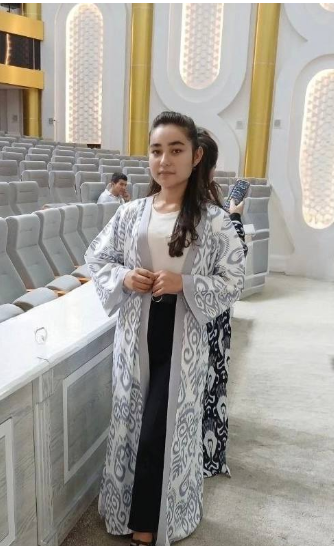
Young Central Asian woman with long dark hair, a white blouse, and a black and white patterned sweater and a long black skirt. She's standing in front of a photo of a man in a suit and near a flag.

The Advantages of Having a Hobby

Zamira Moldiyeva Bahodirovna,

Student of English filology faculty, UZSWLU.

Email: zamiramoldiyeva219@gmail.com

Scientific advisor: Zulxumor Bannopova

Abstract: Engaging in hobbies — leisure activities pursued for pleasure rather than for work or obligation — offers significant benefits for mental and physical health, cognitive functioning, emotional well-being, and social connectedness. Empirical research indicates that regular involvement in hobbies reduces stress, anxiety and depression, improves mood and overall life satisfaction, promotes resilience, and enhances social support and community belonging. Additionally, hobbies can contribute to improved cognitive performance and long-term health outcomes. This article reviews key findings from recent studies to outline the multiple advantages of having a hobby and argues that hobbies play a crucial role in holistic personal development.

Keywords: hobby, leisure activities, mental health, stress reduction, well-being, social support, cognitive function

Introduction

In the fast-paced, stress-prone context of modern life, people increasingly seek ways to preserve mental balance, reduce anxiety, and maintain a sense of meaning and satisfaction. One of the simplest — yet most powerful — ways to achieve this is through having hobbies. A hobby is a regular, voluntary activity pursued for enjoyment, relaxation, creativity or social connection, rather than for material gain. As shown by recent research, hobbies serve as more than just pastimes; they are vital tools for mental health, emotional regulation, social bonding, and long-term well-being. This paper examines existing empirical evidence to highlight the advantages of having a hobby, focusing on mental health, stress reduction, social and community benefits, and cognitive and health-related advantages.

Discussion

1. Mental Health, Stress Reduction and Emotional Well-being

Multiple studies link hobby engagement to improved mental health and lower stress levels. For example, a recent review of empirical studies concluded that participating in hobbies is associated with lower levels of depression, anxiety, and stress, and with greater life satisfaction and quality of life. 

Leisure activities — whether creative (art, music), physical (sports, gardening), or social (clubs, group activities) — provide a “break” from daily pressures. According to an article from UCLA Health, hobbies help boost mental well-being, support cognitive function, and may reduce risks of chronic disease. 

A study of students in China using a daily-diary method found that on days when students engaged in leisure activities, they reported more positive emotions, even in the context of academic stress. 

Thus, hobbies act as an effective buffer against stress, contribute to emotional regulation, and help maintain mental health in periods of high demand.

2. Social Connection and Sense of Belonging

Hobbies often foster social interaction and build community, which in turn enhances a person’s sense of belonging, support network, and social well-being. A recent review on hobbies and well-being found that social interaction and community belonging are among the main benefits of hobby participation. 

Engaging in group hobbies (sports clubs, music groups, art classes, social clubs) or hobbies shared with others helps individuals build friendships, share experiences, and support one another — which is particularly valuable in reducing loneliness and improving social support. 

Such social benefits can also increase life satisfaction, improve resilience, and provide emotional support in challenging times.

3. Cognitive Function, Creativity, and Personal Growth

Some hobbies — especially those that are mentally stimulating (e.g. painting, writing, learning music, puzzles) — support cognitive functioning, creativity, and lifelong learning. According to UCLA Health, hobbies may help improve cognitive function and offer protective effects against cognitive decline.

Moreover, engaging in hobbies can foster a state of “flow” — deep immersion in an activity, associated with intrinsic motivation, enhanced focus, and satisfaction. 

Such flow experiences can enhance self-esteem, sense of achievement, and personal growth over time, supporting mental resilience and capacity to deal with stress.

4. Physical Health and Long-Term Well-being

Many hobbies — particularly physical or outdoor activities like sports, gardening, walking, dancing — contribute to physical health: improving cardiovascular health, reducing stress-related hormones, improving energy levels, and supporting overall well-being. 

In addition, by reducing chronic stress and promoting relaxation, hobbies may help lower risks associated with long-term stress exposure, such as heart disease or other stress-related illnesses. 

Thus, hobbies support both mental and physical health — an important combination for holistic personal wellness.

Conclusion

Having a hobby is more than a pastime: it is a key to better mental health, emotional balance, social connection, personal growth, and long-term well-being. Research strongly supports that regular engagement in hobbies reduces stress, anxiety, and depression; boosts mood, life satisfaction, and resilience; fosters social support networks; enhances cognitive functioning and creativity; and improves physical health outcomes. Given these wide-ranging benefits, individuals — especially students and people under stress — should be encouraged to identify and maintain hobbies that resonate with their interests. For societies and educational institutions, promoting access to recreational and creative activities can contribute to population-level mental and physical health, better social cohesion, and improved quality of life.

References:

1.Cleary, M. et al. (2025). Exploring the Impact of Hobbies on Mental Health and Well-Being: A Scoping Review. (Review of 11 studies). 

2.Zhang, J., & Zheng, Y. (2017). How do academic stress and leisure activities influence college students’ emotional well-being? A daily diary investigation. Journal of Adolescence. 

3.Pressman, S. D., et al. (2009). Association of Enjoyable Leisure Activities With Psychological and Physical Well-Being. Psychosomatic Medicine. 

4.UCLA Health. (2025, May 15). 3 Proven Health Benefits of Having a Hobby. 5.Lagunes-Córdoba, E., et al. (2022). A better way of life: The role of leisure activities on self-perceived health, perceived stress, confidence in stress management, and social support. Frontiers in Psychiatry.

Essay from Dilshoda Nodir qizi Nurboboyeva

Young Central American woman with short dark hair, brown eyes, and a small necklace and dark blue blouse.

THE IMPORTANCE OF PSYCHOLOGICAL LITERACY IN ENSURING GENDER EQUALITY

Turon University

Faculty of Psychology, 3rd Year Student

Dilshoda Nodir qizi Nurboboyeva

Annotation: The article is dedicated to the importance of psychological literacy in ensuring gender equality. It analyzes the role and significance of psychological literacy in promoting gender equality within society. The study examines how individuals, through psychological literacy, can make conscious decisions to resist stereotypes and social pressures, explores the formation of gender stereotypes, and presents ways to reduce them. The research emphasizes the importance of strengthening psychological approaches within education, family, and community systems, and provides practical recommendations for promoting gender equality among both youth and adults.

Keywords: gender equality, psychological literacy, stereotype, social awareness, psychological culture, family, community, social change.

Аннотация: Статья «Важность психологической грамотности в обеспечении гендерного равенства» посвящена анализу роли и значимости психологической грамотности в процессе обеспечения гендерного равенства в обществе. Рассматривается, как индивид через психологическую грамотность может принимать осознанные решения, противостоя социальным стереотипам и давлениям. Также исследуются механизмы формирования гендерных стереотипов и пути их уменьшения. Подчеркивается важность усиления психологического подхода в системе образования, семьи и общества, а также приводятся практические рекомендации по продвижению гендерного равенства среди молодежи и взрослых.

Abstract: The article “The Importance of Psychological Literacy in Ensuring Gender Equality” examines the role and significance of psychological literacy in promoting gender equality within society. It analyzes how individuals, through psychological literacy, can make conscious decisions that counteract social pressures and stereotypes. The study also explores the formation of gender stereotypes and strategies for reducing them. Emphasis is placed on strengthening psychological approaches within education, family, and community systems, while providing practical recommendations for promoting gender equality among both youth and adults.

Keywords: gender equality, psychological literacy, stereotype, social awareness, psychological culture, family, community, social change.

INTRODUCTION

In modern society, the issue of gender equality is of central importance at both national and international levels. Governments, non-governmental organizations, and educational institutions increasingly emphasize the need to provide men and women with equal opportunities in social, economic, and political spheres. This aligns with global frameworks; for example, the United Nations recognizes gender equality as a key factor for sustainable development in its Sustainable Development Goals.

At the national level, Uzbekistan has implemented significant measures to strengthen gender equality, including legal reforms, political initiatives, and educational programs aimed at supporting women and developing social awareness. Nevertheless, various social, cultural, and psychological barriers limit the full implementation of gender equality principles. One of the main challenges is the persistence of gender stereotypes, traditional roles, and unconscious attitudes that affect decision-making and social interactions.

Research in psychology and education shows that psychological literacy plays a key role in understanding psychological concepts, self-awareness, and social perception, which are critical for ensuring equality and reducing the negative effects of stereotypes. Psychological literacy enables individuals to critically evaluate social norms, make conscious decisions, and engage in socially responsible behavior. This capacity is particularly important in addressing gender issues, fostering critical thinking, empathy, and inclusive attitudes in family, education, and community environments.

Given the international and national focus on gender equality, it is essential to study the role of psychological literacy in reducing gender stereotypes and promoting equal opportunities. This article aims to analyze the importance and role of psychological literacy in ensuring gender equality, its theoretical foundations, practical applications, and impact on policy and social development.

OBJECTIVES AND RATIONALE

The primary aim of this article is to determine the importance of psychological literacy in ensuring gender equality and to examine its influence on higher education, workgroups, and social relations in society. The study considers gender equality not only from legal and economic perspectives but also explores individuals’ and society’s attitudes toward gender stereotypes, mechanisms for their reduction, and the formation of social awareness through psychological literacy.

Key considerations in defining the objective:

Global and national significance of gender equality. International experience shows that gender equality is not limited to protecting women’s rights but also contributes to economic development, social stability, and the quality of education. Psychological literacy serves as a key tool for understanding gender equality, combating stereotypes, and creating an equitable social environment. Studying gender psychology and enhancing individual literacy in this area plays a vital role in national development strategies.

Level of study in the field. While gender equality issues are widely researched in economics, sociology, psychology, and education, the concept of ensuring gender equality through psychological literacy is relatively underexplored. Most studies focus on the rights of girls and women or gender disparities in the workforce, but psychological stereotypes in individuals, their modification, and promotion of equality through psychological tools remain insufficiently studied.

Specificity of the chosen problem. The issue of psychological literacy in ensuring gender equality focuses on analyzing relationships between individuals and society, identifying stereotypes, and developing concrete psychological strategies to overcome them. This problem differs from general gender equality issues because it is directly related to knowledge, awareness, and psychological behaviors rather than just economic or legal measures.

Research objective:

To determine the importance of psychological literacy in ensuring gender equality and to study its impact on individuals’ social attitudes, responses to stereotypes, and gender relations in higher education and society.

The research aims to deepen understanding of gender equality issues and provide scientific foundations for reducing stereotypes and promoting equal opportunities in society and higher education.

DESCRIPTION AND SOLUTION OF THE SCIENTIFIC PROBLEM

Today, gender issues are significant not only socially but also psychologically. In ensuring gender equality, psychological literacy—knowledge of gender roles, stereotypes, and equitable relationships—plays a crucial role. Insufficient psychological literacy leads to increased inequality between male and female students in higher education, persistence of societal gender stereotypes, limited individual potential, and slower economic and social development.

Current research highlights that Bem (2004) emphasized the importance of understanding gender roles and psychological approaches against stereotypes. Baker and Jones (1993) identified a connection between gender equality and educational outcomes across countries. In Uzbekistan, however, research in gender psychology is relatively limited, and psychological stereotypes among male and female students in higher education are insufficiently studied.

Empirical data indicate that in higher education, girls comprise approximately 39% and boys 61%. This disparity is influenced by psychological, social, and economic factors, with stereotypical values restricting girls’ access to education.

Thus, the scientific problem can be defined as: societal and higher education-related stereotypes and insufficient development of gender-related psychological literacy hinder the achievement of gender equality.

Solutions to the scientific problem include:

Increasing psychological literacy: Provide students and teachers with regular training, seminars, and courses on gender psychology, combating stereotypes, and equal rights; integrate gender equality topics into curricula; and organize interactive exercises and role-playing activities.

Reducing societal stereotypes: Implement programs promoting gender equality among parents and families, expand girls’ access to higher education, disseminate gender equality and psychological literacy information through media and online resources, and conduct awareness campaigns on equal opportunities.

Empirical research confirms the importance of psychological literacy. For example, among students aged 15–17, responses to the question “Who should have access to higher education?” were as follows:

Object

Percentage (%)

Boys

71.3

Girls

7.5

Most capable

19.0

No response

2.3

Opinions on the importance of higher education for girls by age and gender were:

Object

Percentage (%)

Boys

78.8

Girls

78.9

Women

71.6

Men

55.5

These results indicate that most of society recognizes the importance of higher education for girls, highlighting the potential for psychological literacy to strengthen gender equality.

Thus, the main approaches to addressing the scientific problem are: enhancing psychological literacy, reducing societal stereotypes, and applying a systematic approach based on empirical data. This strategy serves to improve gender relations not only in higher education but across society, ensuring equal opportunities for both girls and boys.

CONCLUSION

Ensuring gender equality in higher education and raising psychological literacy in society are of significant scientific and practical importance. Research results indicate that psychological literacy directly influences the reduction of gender stereotypes and inequalities in education. Promoting knowledge and social values related to gender equality among students helps form the concept of equal opportunities for girls and boys, ensuring effective functioning of higher education.

Empirical research, such as surveys conducted among students of the Economic Lyceum under Tashkent State University of Economics, shows that society—including boys, girls, and adults—recognizes the importance of girls’ higher education. However, persistent stereotypes (e.g., prioritizing boys as the main household earners, early marriage for girls) remain, which can be mitigated through enhancing psychological literacy. This underscores psychological literacy as a strategic factor in ensuring gender equality.

The analysis demonstrates that achieving gender equality requires not only legal and economic measures but also the development of societal psychology, education, and social values. Psychological literacy enhances access to higher education for girls and boys, contributes to sustainable societal development, improves human capital quality, and reduces gender stereotypes.

Key outcomes include:

Enhancing psychological literacy equalizes opportunities for boys and girls in higher education;

Changing societal gender stereotypes and values increases social activity and professional development for girls and women;

Implementing psychological literacy programs with the participation of parents, teachers, and the public can ensure genuine equality in higher education and society.

In conclusion, psychological literacy is a central element in ensuring gender equality and a primary tool for developing equal opportunities in higher education and society. By increasing psychological literacy, reducing stereotypes, and updating social values, genuine gender equality can be achieved, enabling girls and boys to fully realize their potential and participate actively in economic, social, and political spheres.

REFERENCES

Bem, S. L. (2004). Linzı gendera: Transformation of views on gender inequality. Moscow: ROSSPEN.

Saralieva, Z. Kh. (2004). Sociology of gender relations: Textbook for students of higher educational institutions. Moscow: ROSSPEN.

Baker, D. P., & Jones, D. P. (1993). Creating gender equality: Cross-national gender stratification and mathematical performance. Sociology of Education, 66, 91–103.

UNESCO. (2015). Education and gender equality: Monitoring and evaluation guidelines. Paris: UNESCO.

World Bank. (2012). Gender equality and development report. Washington, DC: World Bank.

Akramova, F. A. (2020). Problems of gender equality psychology in higher education. Psychological Journal.

UNICEF. (2018). Gender equality in education: A global perspective. New York: UNICEF.

Eagly, A. H., & Wood, W. (2003). The nature–nurture debate on gender development. American Psychologist, 58(2), 15–25.

World Economic Forum. (2021). Global gender gap report 2021. Geneva: WEF.

Kabeer, N. (2016). Gender equality and women’s empowerment: A critical analysis. Journal of Development Studies, 52(12), 1672–1688.

Essay from Axmadqulova Sapuraxon

Young Central Asian woman with straight dark hair in a bun, small earrings, and a white ruffled blouse with black trim, outside near a tree.

INNOVATIVE AND CREATIVE APPROACHES TO FORMING ENVIRONMENTAL AWARENESS IN PRESCHOOL EDUCATION

ANNOTATION. This article examines the formation of environmental education in preschool-aged children from both scientific-theoretical and practical perspectives. Research emphasizes that the foundation of environmental awareness is laid during the ages of 3–7. In particular, American educator and scientist J. Davis notes that direct interaction with nature in childhood strongly influences a child’s future ecological behavior. According to UNESCO experts, environmental education in preschool settings is effective only when conducted through play, observation, and hands-on activities. The article highlights creative methods, project-based activities, STEAM approaches, and the importance of cooperation between families and educational institutions in organizing environmental education. The research results show that ecological education fosters conscious, careful, and responsible attitudes toward nature in children and helps cultivate love for the environment.

KEYWORDS. Environmental awareness, preschool education, ecological education, creative methods, project-based activities, STEAM approach, nature conservation, observation.

INTRODUCTION. Today, environmental problems have a direct impact on human life at a global scale. Environmental pollution, depletion of natural resources, and loss of biodiversity pose significant challenges to society. Addressing these issues is closely linked to changing humans’ attitudes toward nature. In this context, the preschool education system represents the initial and most critical stage of ecological education. During this period, children form their first understanding, emotional responses, and simple ecological behaviors regarding nature. If ecological education is organized systematically and correctly at this stage, it increases the potential to raise conscious and responsible individuals in the future. This article examines innovative and creative ways to develop environmental awareness in preschool education and analyzes their practical significance.

1. Features of Environmental Awareness Formation in Preschool Children.

Preschool children perceive the environment primarily through sensory experiences and direct interaction. They understand natural phenomena by seeing, hearing, touching, and observing. Therefore, in ecological education, real observation and practical activities should take precedence over abstract concepts.

During this age, environmental awareness develops in the following areas:

Recognizing and naming natural objects;

Observing changes in nature;

Understanding cause-and-effect relationships;

Demonstrating careful and respectful attitudes toward nature.

The process of forming environmental awareness in children is effective only if conducted consistently and continuously. Random or episodic activities cannot develop stable ecological perspectives.

2. Developing Observational Skills through the “Nature Explorers” Project.

Project-based activities are one of the most effective pedagogical approaches for preschool children. The “Nature Explorers” project engages children as active participants, developing their observation and independent thinking skills.

Within this project, children:

Observe the growth of plants;

Record weather changes;

Compare the conditions of water and soil;

Learn to draw simple conclusions.

Such activities increase children’s interest in nature and sense of responsibility. Most importantly, children acquire ecological knowledge through personal experience rather than as pre-packaged information.

3. The Role of Play Technologies in Environmental Education.

Play is the leading form of activity for preschool-aged children. Ecologically themed games help children consciously adopt simple rules for protecting nature.

For example:

Games focused on waste sorting;

Role-playing games about water conservation;

Dramatic games about caring for animals.

During play, children learn to follow ecological rules naturally rather than as a compulsory requirement.

4. Environmental Education through STEAM Approaches.

The STEAM approach allows ecological education to be organized through interdisciplinary integration. This approach enables children to observe ecological phenomena, conduct experiments, and analyze results.

Examples include:

Planting seeds and measuring growth rates;

Observing the evaporation process of water;

Creating simple ecological models.

The STEAM approach develops not only ecological knowledge but also logical thinking and problem-solving skills in children.

5. Cooperation between Families and Preschool Institutions.

The effectiveness of environmental education largely depends on collaboration between families and educational institutions. If ecological education is not continued at home, its impact is short-lived.

Cooperation with parents can include:

Family ecological campaigns;

Home exercises on waste separation;

Discussions on nature conservation.

Such collaboration helps children integrate ecological behavior into daily habits.

CONCLUSION. In conclusion, forming environmental awareness in preschool education is a complex but extremely important process. To organize it effectively, innovative and creative approaches must be applied, children’s age-specific characteristics considered, and collaboration with families established. Ecological education fosters love, responsibility, and conscious attitudes toward nature in children, contributing to the sustainable development of future society.

REFERENCES.

Law of the Republic of Uzbekistan “On Preschool Education.”

“First Step” State Educational Program.

UNESCO. Early Childhood Education for Sustainable Development, 2021–2024.

Davis, J. Young Children and the Environment, 2020–2023.

STEAM Education in Early Childhood. International Journal of Early Learning, 2021.

Axmadqulova Sapuraxon was born in the Marxamat District of the Republic of Uzbekistan. She is a student at the Andijan Branch of Kokand State University, Faculty of Pedagogy, specializing in Preschool Education. She has participated in international competitions. She is a recipient of the “Future Scientist” and “People’s Ambassador” chest badges awarded by the Association of Young Scientists. Her creative works are indexed on Google, and she is the author of numerous articles.