
Dreams... Like a person, dreams never lived.., From every trace, finding without love, A million questions in his heart, Hope waited, dreams of a false covenant...Buried. The faithfulness of love is buried, Ishq. I made a mistake in your trust, The life of the heart is shriveled, thoughts disappearing from pain...Astana. Don't make me feel that you don't love me once I lived. Pampered and deceived dreams...Tell the world! What is love? One question. Was it our fault that Laila Majnun was crazy? Halfway, we lost half of us, Mountains cry in my thoughts. Thoughts...It came without a trace and left without a trace, without noticing...Dreams...Zafar NUR, Uzbekistan, Navoi
Category Archives: CHAOS
Poetry from Niginabonu Amirova
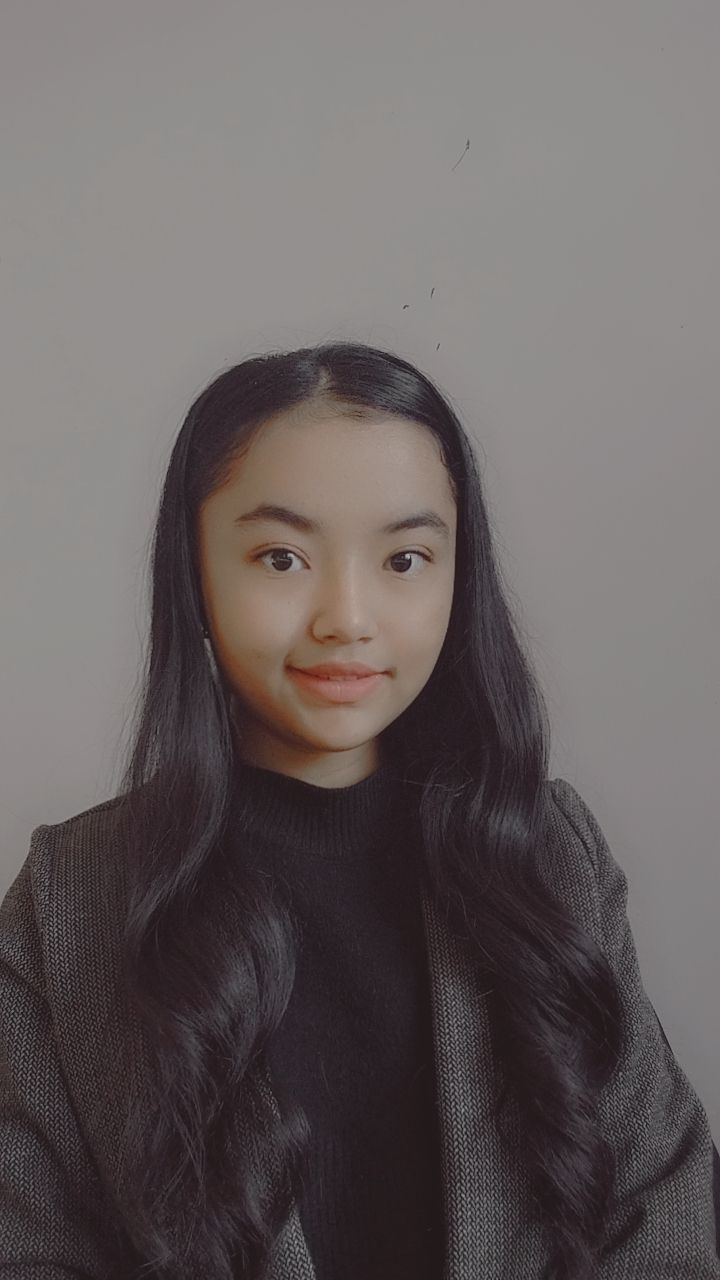
Greetings
Saying hello is actually
A piece of decency,
In the language of Uzbek,
A wish to say.

Haw many years have passed?
It is a legacy for generations.
Shame and modesty,
It is characteristic of the Uzbek people.

About this in hadiths,
A useful world is collected.
It is permissible to acquire knowledge,
Haw little we know.

The habit of greeting
Begins to be good.
Those who follow it,
Takes a right step.
Poetry from Duane Vorhees
FUnowTUwasRE


Ecstatic electricity freezes into pulse as biologies become magnets / your eyes lip my cheeks / my koi mouth plumbs your pond / our trunks forest together, organs tromboned by desire fingers / perpetual fleshmachines yinyang existences / masses gasseate / consciousness shrinks to cosmos / our my-your selves merge, we share atoms

we downlings deitise


TAKE ME IN


"Take me in," the poet said, "take me in." The prophet hid.

"Take me in," the poet prayed, "take me in."

No banker paid. "Take me in." The soldier fled.

"Sink or swim," the lawyer pled. "Take me in,"

the poet said, "take me in."

A woman did.


"Make me warm," the woman cried, "safe and warm."

The poet sighed. "Words are thin," he did reply, "weak and thin.

But yet I'll try. Weak and thin, but yet I'll try."


In the bin by page by page,

in the bin the books were laid,

inch by inch were set ablaze.

Line by line the match was lit.

Word by word

the poems all went.


"Now I'm warm," the woman said,

"safe from harm. But poet's dead."

Poet dead?

Poet dead?

He lives on inside her head.

Words go on inside her head.


ESOTERIC


as eager initiates

in lovers’ freemasonry

that true and ancient order

we are illuminati

of the night’s old mysteries

through its well-established rites

its scripts, shared grasps, finger codes,

its postures, pledges, passwords

we advance by slow degrees

our prescribed intimacies


CONTRETEMPS


The tense contentment of the nights before

now in contempt

give way to temptation.


YOU SAY I SAY


You say

your bees come alive

when I prod your hive.


I lift your balloon

and hold you to ground.


I say

I pour and pour ghee

and you absorb me.


...
Jacques Fleury reviews a performance of the Blue Man Group

“In age of consumerism and materialism, I traffic in blue sky and colored air.” --James Turrell

Exploring the Arts: Nothing “Blue” About Blue Man Group
By Jacques Fleury

[Originally published in Oddball Magazine & Fleury’s book You Are Enough: The Journey to Accepting Your Authentic Self]

In a world maligned by socio-political division, our society is most definitely overzealous for something to mitigate its intermittent malaise.

Then comes Blue Man Group:  an American Performance Art Company founded in 1987 like a fast moving storm, boldly rushes into The Charles Playhouse to strut their wildly colorful rapid-
fire Ritalin paced show! The Canadian Company Cirque Du Soleil purchased the company in 2017.

The show, which was surprisingly interactive, started out with the audience following the directions of a scrolling marquee. The audience was engaged in reading the words out loud which was meant to be like a warm up before the Blue Man made their blue
appearance. Another thing, which stroked me as peculiar, was that the first three rows of people were wearing raincoats. I must admit, since I was in a suit, I experience some minor anxiety not knowing what was going to happen. All I could think of was the performance artist “Gallagher” smashing watermelons to whet his audience’s appetite for a meticulously planned mess. Toward the middle of the one hour and forty-five minute show, the Blue Man squirted banana juice all over the eager audience! Interpret that as you wish!

Essentially, the show had the flare of a circus with something for everyone! It was what I would call edutainment, a mixture of education and entertainment. At one point, it became philosophical by encouraging us to appreciate the here and now instead of
worrying about what’s coming up next. Then on the other hand it was engaging when the Blue Men picked a female audience member, brought her up on stage and strapped a blue-breasted suit on her. Their comedic talents became evident when all they did for a
few minutes was just sit there behind a table all aligned in a row and stared while their “victim” masquerading as their date waited patiently for the Blue boys' next move.

Eventually they began to interact with her by playing romantic music, setting flowers on the table and sharing their “Twinkies” (described as a finger shaped cake filled with white cream) with her. Again, interpret that as you wish! Then in a disgusting twist, the newly digested Twinkies turned into yellow liquid and began to pour out of their chests, which emanated a drone of disgust from the audience.

All in all, the Blue Men were innovative and alluring. They even parodied what they call “The new Rock ‘n Roll” band as a bunch of choreographed boy bands who eventually disband to break out into their separate “projects” when they reach their height of success as a group. In doing this, they demonstrated their versatility as performers, gyrating their limber bodies to dance music. I was particularly pleased with their drumming, a sound that penetrating my pores so that the drum beats became synonymous with my own
heartbeat. The finale had pounding dance music and rolls of white toilet paper falling from the ceiling in a white fluorescent light reaching a crescendo of climatic proportions! Everyone was
on their feet, saturated in a creamy white glow and giggling like children during recess on the playground.

Then the Blue Men even waited in the lobby for picture opportunities and signed autographs with blue paint. The audience, a mixture of the young and the young at heart, left beaming from ear to ear. And that’s why the Blue Men are here in Boston to turn our moods from “blue” to blissful and for a brief moment, forget about our woe and foster a sense of unity and camaraderie in spite of our disparate identities.
Poetry from Faleeha Hassan
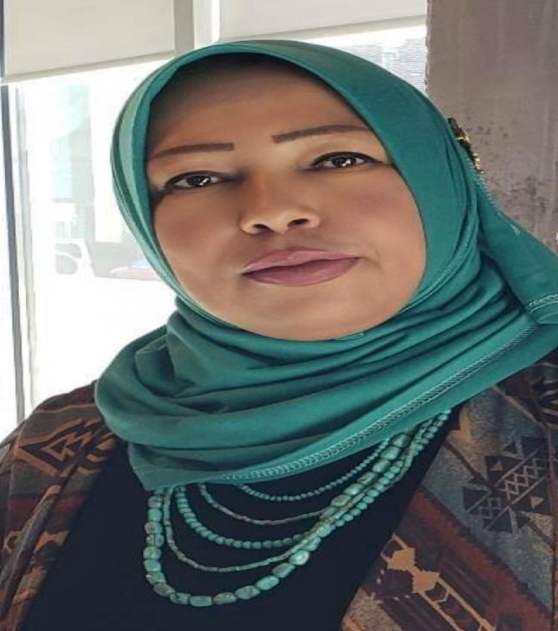
When I drink tea in New Jersey

Like a girl who writes poetry about a boy she has never seen
My day sits with all this disappointment
Counting her fleeting moments
 I remember my mother using the smell of onions
 To shed her tears in the kitchen
For the absence of my father
 Who climbed his life war by war
Whenever he wore his military belt
 He wished that war was just an old shoe
He could take it off whenever he liked
And he didn't need to think of fixing it at the cobbler's shop
I remember my brother
Who asked in his letters--
When will the war understand that we are not good at dealing with death?
I remember us forty years ago
We were kids, very much kids
With colourful clothes and hearts
It was enough for us to see a balloon
To drown in big laughter
I remember all this now
When I drink my tea
And
I practice my loneliness.

Faleeha Hassan is a poet, teacher, editor, writer, and playwright born in Najaf, Iraq, in 1967, who now lives in the United States. Faleeha was the first woman to write poetry for children in Iraq.

She received her master's degree in Arabic literature, and has now published 26 books, her poems have been translated into English, Turkmen, Bosnian, Indian, French, Italian, German, Kurdish, Spain, Korean, Greek, Serbia, Albanian, Pakistani, Romanian, Malayalam, Chinese, ODIA, Nepali and Macedonian language.

She is a Pulitzer Prize Nominee for 2018, Pushcart Prize Nominee for 2019. She's also a:

Member of International Writers and Artists Association.
Winner of the Women of Excellence Inspiration award from SJ magazine 2020,
Winner of the Grand Jury Award (the Sahitto International Award for Literature 2021)
One of the Women of Excellence selection committees 2023
Winner of women the arts award 2023
Member of Whos’ Who in America 2023
SAHITTO AWARD, JUDGING PANEL 2023

Cultural Ambassador - Iraq, USA
Email : d.fh88@yahoo.com
Synchronized Chaos May 2024: Motherhood/Bringing To Life

Happy Mother’s Day! This issue celebrates motherhood, parenthood, nurturance, and love.
Orzogul Gofurova offers up a sweet poem as a tribute to their mother, while Gulsanam Qurbonova’s essay highlights the true dignity of the complex homemaking and family-building work her mother performs in their household.
Sarvinoz Giyosova draws on spiritual language to express her respect for her mom, as Orzigul Sherova shares her eternal and sentimental love for her mother.
Abramat Faizulloev pays tribute to his honorable and caring mother as Ismailova Orastabonu honors the resilience and nurturance of Uzbek women. Lola Hotamova celebrates the love of mothers and the long heritage of honoring them in Uzbekistan while Xushroy Abdunazarova reminds us of the importance of kindness and respect for parents in the Islamic faith. Gulhayo Karimova urges all people, no matter how busy they are, to make time to honor their mothers and parents.

Nosirova Gavhar writes of a father’s sacrificial love for his young daughter as Don Bormon speaks to the beauty of friendship. Taylor Dibbert’s poetic speaker reflects on finding solace at a local dive bar after the end of a marriage.
Shahnoza Ochildiyeva relates a tale of kindness to a couple traveling with a sick child.
Stephen Jarrell Williams sends up sweet, gentle love poems in an issue that also showcases a poetic collaboration between Dr. Prasana Kumar Dalai (India) and Kristy Raines (USA) that is a conversation between lovers.
Dr. Prasana Kumar Dalai’s solo poetry illustrates the intensity of romantic feelings while Kristy Raines‘ poems highlight the power of romantic love and emotion to affect one’s life, whether or not the relationship lasts. Ike Boat’s piece is the plea of a lover not to be forgotten.
Lilian Dipasupil Kunimasa’s pieces acknowledge the sad end to a romance. Sadullayeva Darmonjon speaks of poignant instances of love given and lost, or not returned. Mesfakus Salahin laments the loss of a personal love and the loss of gentleness in the world.
Christine Tabaka’s concrete poetry deals with loss: of one’s sense of self, of life during war, and the passing of the “golden age” in art and cinema. Avaungwa Jemgbagh vividly remembers the day their father passed away.
Duane Vorhees writes of the passage of world history and of loves past their lusty prime that have evolved into sources of solace and comfort. Gulmira Nurmuhamedova reflects on the passage of time, her memories of her past and how her present will also, in time, become a memory. Not all changes that happen with time are necessarily losses.
Graciela Noemi Villaverde describes a smooth talker who breaks hearts while Nigar Nurulla Khalilova points out how humans can be as predatory as any creature in nature.

Faleeha Hassan mourns a friend lost to war as J.J. Campbell evokes his feelings of powerlessness in a personally alienating world. Tuyet Van Do’s haikus capture the grisly atmosphere of Gaza as Mykyta Ryzhykh mourns the world’s casual violence and homophobia through a variety of metaphors, including a dead kitten.
Karol Nielsen writes of the effects of the Vietnam War through the eyes of an American child left behind to play while his father fights. While less tragic on the surface than other pieces that present death and suffering, it still shows the separation caused by war.
In her poetry, Lidia Popa urges humanity to care for each other and the natural world.
Mahbub Alam laments the increasing heat and changing climate of Bangladesh and urges a return to environmental stewardship.
Sayani Mukherjee evokes the comforting presence of innocence and delicate natural beauty in a world that also contains genocide and war. Muslima Murodova finds peace by looking up into the vastness of the sky.
John Lloyd Casoy describes a moment of contemplation out at low tide in the wetlands while Lorraine Caputo recollects moments and interactions from her Central and South American travels in her “postcards,” J.D. Nelson notices small moments of surprise and relief in nature and human society, and Dr. Maheshwar Das sends up elegant poems of nature and spirituality.
Devika Mathur contributes an evocative description of the experience of meditation. Mark Young also turns inward, with his systemically generated poems from bits of text, recipes and instruction manuals, regurgitating life in the subconscious. Shamsiya Khudoynazarova Turumovna probes the depths of meaning hidden behind silence. Vernon Frazer’s jazzlike syncopated rhythms of poetry adorn this issue, while Steve Brisendine explores our perceptions and artistic inspirations.
Muntasir Mamun Kiron crafts a poetic ode to the elegance and joy of technology: the creativity it represents and that it can make possible.

In a more satirical take on technology and global politics, Terry Trowbridge satirizes world governments’ battle over the cultural “real estate” of social media.
Referencing battles much earlier in American history between government and media companies over press freedom and defamation, Michael Ceraolo dramatizes controversies and contradictions in early American history through his poetry.
Jim Meirose crafts an off-kilter piece about neighbors and friends playing with different communications and entertainment technology.
Maja Milojkovic highlights the power of poets’ words to turn the world towards justice, compassion, and inclusion.
In a thoughtful essay, Jacques Fleury urges Black men to embrace a more complex, diverse, and expansive idea of gender and masculinity.
Bill Tope’s story critiques the way our society tolerates, but does not fully embrace, “others” such as older women and people with disabilities. Brian Barbeito’s piece reflects on a lonely hawk and on the solitary elderly, while Noah Berlatsky explores and lampoons the self-absorption at the heart of some self-improvement schemes.
In a different light, Brian Barbeito reviews Jacques Fleury’s book You Are Enough: The Journey To Accepting Your Unique Self in the context of psychological survival in tough times rather than as a privileged form of self-pampering.
In another exploration of nuance, A. Iwasa interviews essayist Rikki Bransen about her piece “Faith and Authority: A Generation X Spiritual Journey” published in Microcosm Publishing’s zine Proud to be Retarded, where she discusses her individual relationship to autism, Christian religious practice, being female, and being middle-aged.

In another look at the journey of an individual towards wholeness and personal achievement, Adkhamova Laylo Akmaljon encourages readers to have confidence and enthusiasm in the pursuit of their dreams. Akramov also highlights the importance of perseverance in achieving one’s life goals.
Abdurazakova Murad offers tribute to an important teacher who showed her the value of daily practice for the skills she wanted to learn. Charos Maqsudova outlines how teachers can support the mental health as well as the academic promise of their students.
Dilfuza Namazova speaks of the importance of learning foreign languages, English in particular. Norsafarova Nilufar outlines the role of various parts of speech in Uzbek sentence construction.
Ogultuvak Atajanova highlights the importance of early education and enrichment for preschoolers and kindergarteners and the value placed on children in Uzbekistan. Botirali Sayifov highlights the importance of universal education to a free and productive society.
We at Synchronized Chaos intend our publication to celebrate literacy, education, and the diversity of experiences from people around the world. We hope that you enjoy and learn from this issue.
Essay from Ogultuvak Atajanova
Children’s education in Uzbekistan
Today, Uzbekistan pays great attention to children's education, because the saying "The future is in the hands of the youth" is not in vain. This is the real reason why so much attention is paid to this education. Not only the Republic of Uzbekistan, but perhaps the whole world has paid attention to children's education.

In particular, the establishment of a step-by-step educational program for children in Uzbekistan and the establishment of free school education are proof of the trust and respect shown to them. By 2022, the rate of admission of children to preschool education, i.e. kindergarten, has been raised in Uzbekistan. Earlier, kindergarten education was not considered mandatory, but today it is determined that it is necessary in all regions.

In this regard, laws and regulations are also being adopted. Various laws have been adopted to set the age of admission to kindergarten at three years old, to manage their daily food rations, and to prevent the educators from committing various violations.

Kindergarten should be a place where every child can be taught basic knowledge, manners and respect.

Laws and regulations are also being adopted in this regard. To govern the students' daily food ration, establish the entry age of kindergarten at three years old, and stop the teachers from breaking numerous rules, various laws have been adopted. Every child should be able to learn basic information, manners, and respect in kindergarten.

The major objective of kindergarten education is to get kids ready for school by teaching them fundamental ideas in straightforward
language.
Between 2016 and 2022, major improvements in kindergarten   instruction were seen in Uzbekistan.
Between 2016 and 2022, there will be a difference in the number of  rural children and their kindergarten attendance.

Today, there is a wide range in the caliber of education in rural areas as well. Children receive a lot of attention because they will be the future's   leaders. For their healthy development, a variety of clubs are being organized.

The tradition of Eastern thinkers places a high value on educational  issues. They gave a lot of thought to the family and the upbringing of children within it in particular. The challenges of raising a kid in a family and solutions to those  challenges are outlined in the writings of intellectuals such Abu Nasr  Farabi, Abu Rayhan Beruni, Kaikovus, and Alisher Navoi.

Preschool Education is currently being attempted using the strategy of deploying "mobile kindergartens" to enroll preschoolers in rural areas.

Four specially equipped buses dubbed "Aqlvoy" mobile kindergartenswere introduced to the area and are now serving children in remote  communities in the Hazorasp, Bogot, Yangiariq, and Khiva districts. Eleven stations in total are being set up, and a list of kids who will be taken to mobile kindergartens is being created.

With the start of the new school year, this approach will enable 384

additional children to enroll in pre-school programs.
Student of Karakalpak State University named after Berdakh, faculty of biology first course. Atajanova Ogultuvak