Mobile Phone

In hand it rests, a portal bright,
With every tap, it brings delight.
Sent, calls so clear,
The mobile phone, our modern seer.
From dawn to dusk, it never tires,
Connecting us with all desires.
In a frame, a world's embrace,
Our mobile phone, a magic space.

Wazed Abdullah is a student of grade nine in Harimohan Government High School, Chapainawabganj, Bangladesh.
Country!!! Did you feel the power of that one word? You say that this word did not shake the hearts of some, and did not make them cry! There is a world of meaning in a five letter word. So what is Homeland? The homeland is the place where the blood from the navel of man and his descendants was shed. The homeland is the abode of the ancestors, the land where the nation grew up, where its language, religion, history, culture, traditions and values were truly formed and developed. The homeland is each of our breaths, our beating heart, our innocent eyes full of love...

The more the country is described, the less it seems. Therefore, in a nutshell, Homeland is the place where every person was born and raised. As the homeland is dear to everyone, my heavenly and beautiful homeland is also dear and holy. My homeland is UZBEKISTAN.

      Our country has all the conditions, only one thing is required of us. As they say, "A child who reads a book now will lead a hundred children who watch television in the future." This is the requirement of our time.

People have to deal with problems carefully throughout their lives, even if they are small. After all, problems that seem insignificant to us can radically change our lives. In fact, our daily life and every action consists of these tests. If we courageously overcome these obstacles, we will undoubtedly achieve our goals in life. I think all young people in the country need attention and conditions. Because every young generation living and growing up in this country has the right to receive an education. We can only justify the confidence of the whole country if we unite and become one force. Because "Strength is in unity".

If the children of the world unite and concentrate all their efforts on acquiring knowledge, no dangerous idea can defeat such a noble force.

In my imagination, a peaceful world is an example of the sea. The calmer and more peaceful the sea, the more peaceful the aquatic creatures at the bottom of the sea. The same is true for humans. When the whole world is at peace, people in all countries live in peace and freedom.

For young people to have a peaceful future, it is necessary for them to work together, learn innovative ideas, exchange ideas with young people from other countries and exchange knowledge and skills based on experience.
Mahmudjonova Zahroxon is one of talented girls of Uzbekistan. She was born on November 14, 2006 in Almazor district of Tashkent city. Nationality is Uzbek. Art direction – field of flute. In 2016, She was awarded with a 2nd degree Diploma at the “Zolotoy Fenix” international competition held in St. Petersburg, Russia. In 2021, she was awarded the 1st degree Diploma in the essay competition dedicated to the 580th birthday of Mir Alisher Navoi. In 2021, she was awarded the “Praise Label” for her excellent studies and exemplary behavior. In 2021, she was awarded the 1st degree Diploma at the International competition “Rainbow art’s” held in the city of Karaganda, Republic of Kazakhstan. In 2021, she was awarded the 2nd degree Diploma in the “Smart Girls” competition. In 2021, she was awarded the 1st degree Diploma at the “Snejnyy Bars” International Competition held in Moscow.
In Tashkent (ensemble)she was awarded with the Grand Prix. In 2023, she was awarded with the 1st degree Diploma at the international competition “Melody leto” held in Tashkent. In 2023, she was awarded the 1st degree Diploma in the “Best Play Performance” competition held at the school level. She was awarded the 2nd degree Diploma at the 30th International Competition named after “A. Jubanov” held in Almaty, Kazakhstan, from October 30 to November 3, 2023
In 2023, she was awarded with the 1st degree Diploma at the international competition “Melody leto” held in Tashkent. In 2023, she was awarded the 1st degree Diploma in the “Best Play Performance” competition held at the school level. She was awarded the 2nd degree Diploma at the 30th International Competition named after “A. Jubanov” held in Almaty, Kazakhstan, from October 30 to November 3, 2023.
THE NATURAL CAUSE OF THINGS

I've heard
from old stories
that some Gypsies
taught a horse how to starve.
It died after a while.
/as soon as they taught it how
to starve, it dropped dead/

It will be heard
from our story
that a poet
taught a woman how to get over.
She left after a while.
She learned how to get over
and fell in love with someone else.

/the natural course of things/

*

A CLOUD IN TROUSERS

During those years
I was a cloud
In trousers.
I was Mayakovsky.
And I did not want
To be a poet
Not at least your poet
Or theirs.
I did not want them to say
How I lived
Or died because of you.
How I died because of love.
I wouldn't want them to be wrong.
I lived love
With you
And with everyone of them.
During those years
I was a cloud in trousers
With a hole on the belt.

*

Dušan Stojković was born on June 27, 1994.
He lives in Grdelica (Serbia).
He published the collection of poetry "YOU ARE NOT CURSED - It entered the chest, it came out (2021) and the collection of poetry "GRIEF - You irretrievably went to the fields" (2023).
Together with Jelena Sarić Cvetković, he is the founder of the Association MUK (Young Artists of Culture), he is the general director of the international chamber of writers and artists CIESART for Serbia, he is a member of the BUKA Association and the International Association of Writers and Artists GORSKI VIDICI from Montenegro.
The park

In the park where dreams take flight,
Beneath the trees so green and bright,
Children's laughter fills the air,
As they play without a care.

Birds above in graceful flight,
Their songs a melody of delight,
Flowers blooming, colors array,
Creating a beautiful display.

Families gathered, picnics spread,
Love and joy, no words unsaid,
Couples walking hand in hand,
Creating memories so grand.

Oh, park so serene and fair,
A place of peace beyond compare,
In your embrace, we find respite,
A sanctuary, a pure delight.

-Don Bormon
The creek runs behind

my house so regardless of

my underuse and

has come to disrespect my

distress with tall leggy weeds

____

Feasting flurries come
lordless and scintillant,

picking clean

____

Scream you ever and long
from earth no reply but

echoes feel right or wrong

____


Presence and a knot --

design intimidates but
this strand inviting
________

It gave a gurgling gasp.


It would be I purported to have done that … as anyone might. My ground I stood. Yes, I remember.


I knew in my current state that the now silent apparition did not beseech; it was only ending my life by mocking the beginning of my death. It had no more to say.


Well, now. Hadn't I always said, Death, when it comes, is bound to find me cooperative? The old man that I was began to affect something like a fit of the ague and at last to summon a ghastly utterance of his own, but—


And this, dear reader, brings us to present.


~~~~~

Noel Pratt is an editor and writer who finally had it and moved to the country. Most of his schooling has been in theology and theatre, each equally marketable. Pratt also spent time in India and lived to take a fiction-writing course at Santa Monica College.
First of all, letting everyone know that we’ve picked a date for the Hayward Lit Hop, a community festival with different readings and events up and down B Street in Hayward, CA.
The third annual Lit Hop will take place the afternoon of Saturday, April 27th and we encourage everyone reading this who is in the area to attend! More information and a video clip showing off the Hop and how it works here on our website.
Secondly, Clare Songbirds Publishing House (CSPH) is launching its inaugural Elizabeth Royal Patton Memorial Poetry Competition. More about poet and English teacher Elizabeth Royal Patton here.
The Elizabeth Royal Patton Memorial Poetry Competition will be blind judged by a panel of five judges and cash prizes will be awarded to the top three poems. An anthology will be published with all the poems that make it through the first round of judging and each poet with an entry in the anthology will receive a free copy. All submissions must be sent via Submittable and the full rules and the link are here. The submission period will be from February 1 through April 18, 2024.
Now, for this month’s second issue, Grief and Joy. These feelings coexist here in abundance.
Nosirova Gavhar offers up a playful and happy glimpse of winter while windswept canyons drive E.T.’s speaker to silence.
Nigora Togaeva revels in the natural and cultural beauty and richness of the Uzbek region of Kashkadarya. Sayani Mukherjee’s work radiates the beauty of a cluster of golden poppies. Mahbub Alam remembers the wondrous scenes he’s seen in person and in his mind’s eye.
Peter Magliocco also speaks of memory, and aging and fading romantic and sexual desire while J.D. Nelson expresses his quiet weariness facing everyday life and its mishaps.
Taylor Dibbert reflects on the life of his beloved dog. Isabel Gomes de Diego surrounds us with our mortality with her images of the Chapel of Bones in Evora, Portugal while Bill Tope’s taut horror story presents retribution for thefts from beyond the grave.
Stephen Jarrell Williams speaks of different types of loss: the lack of physical and relational and spiritual homes, a departure on a train, and the fading of sunshine. George Gad Economou shares his booze-fueled dreams of leaving the past behind to move into the future.
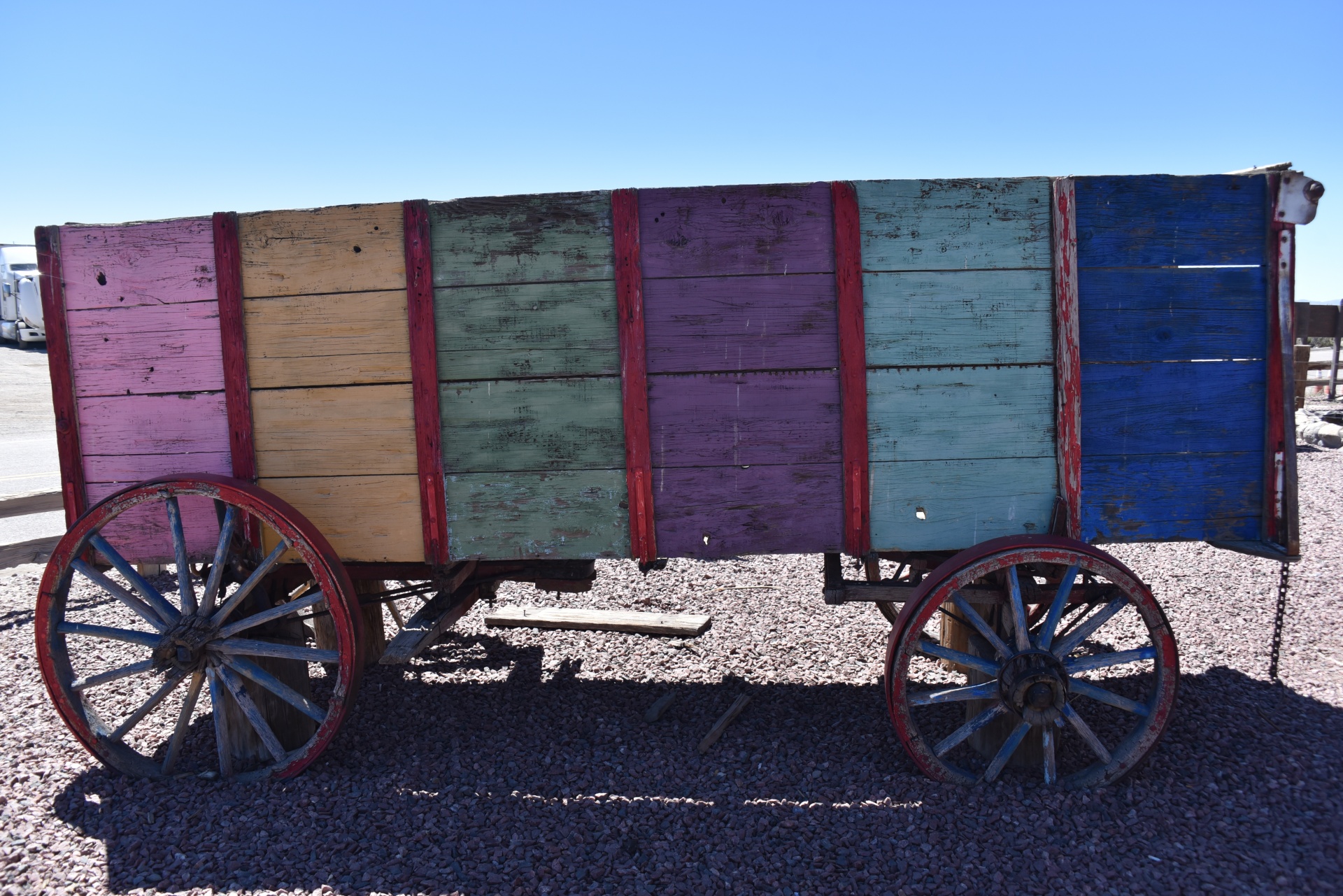
Faleeha Hassan’s speaker plods along on a heavy wagon ride weighed down by sorrow. Safarova Zarnigor expresses the angst of being an old soul looking for love in a new world while J.J. Campbell searches for connection in a lonely town and stage of life.
Eva Lianou Petropolou laments how the children of Gaza will come of age in a time punctuated by war. Mykyta Ryzhykh speculates on unheard perspectives and untold stories buried under rubble. John Mellender relates a night in jail after an intense political protest in mock-epic verse while Daniel De Culla makes a mockery of the obscenity of war and power-hungry leaders. Walter Shulits also lambastes American political and economic power brokers in his epic series of poems while Ian Copestick blasts racism in law enforcement.
Sabrid Jahan Mahin urges us to be strong in a harsh and selfish world. Gulsanam Qurbonova encourages readers to think positively and avoid useless gossip while Lobar Davronova encourages moderation in the use of social media.
Yoldosheva Farangiz illustrates the transformation of a boy guided away from a life of mindless distraction to one of study. Guzal Sunnatova thanks her sister and her teacher for their encouragement to write and study poetry.
Tolquinboyeva Odinaxon writes of awakenings, moving from a hot summer to a fresh new autumn school year.
Continuing with the school theme, Sevinch Tulquinova describes technical tools that can help college students learn language. Meylieva Zebiniso discusses psychological and pedagogical teaching techniques. Madina Fayzullayeva points out resources to help students organize and cite research papers. Baratov Quvonchbek encourages students to learn fundamentals of media literacy to be able to evaluate information. Maftuna Umaraliyeva discusses methods of helping English language learners grasp idioms while Asilabonu Sobirova outlines ways to help English language learners improve their reading skills.
Alan Catlin constructs numbered short verses that link ideas and fragments in unusual, but resonant, ways. Vernon Frazer joins and juxtaposes fragments to suggest nebulous processes: the slow destruction of a reputation, the passage of human history. Patrick Sweeney crafts thoughtful one-liners that request multiple readings.
Shahnoza Ochildiyeva exults in the many wonderful summer activities available to Uzbek school children. Gulasal Nematjanavna highlights the optimism of and the opportunities open to Uzbekistan’s fresh generation of youth leaders.
Bangladeshi poet Muntasir Mamun Kiron extols the glorious historical tradition conveyed in the Bangla language. Barnokhan Ruziyeva describes academic programs in linguistics and translation that propel Uzbekistan into thought leadership in those fields.
Zuhra Ruzmetova finds nurturance in the bosom of her motherland of Uzbekistan. Others find care and companionship in more personal relationships.
Lilian Dipasupil Kunimasa celebrates life and friendship in pieces that peal with gentle musicality. Annie Johnson evokes the sweet comfort of sleep and memories of love and care.
Elmaya Jabbarova evokes the mysteries of how love begins, and how it fades. Graciela Noemi Villaverde suggests that passionate love can bring us to a form of divine eternity in our own minds while Maja Milojkovic compares deep, spiritual love to religious practice. Kristy Raines’ speaker describes a close intimate relationship that has brought her comfort and peace.
Ahmad Al-Khatat urges men who have found true love to appreciate the women dear to them. John Edward Culp invites listeners to hear love’s eternal story. Duane Vorhees describes sensuality and human thought and feeling through clever metaphor.
Jerry Langdon crafts a love poem that resembles a pop song, along with describing serious depression.
Diyora Kholmatjonova poetically grieves her departed mother while Sevinch Omonova encourages hers to find happiness in life. Nilufar Tokhtaboydva urges respect for parents due to the countless ways parents care and sacrifice for their children.
Gulsevar Xojamova provides a poignant reminder that not everyone has parental support while Akramova Shiringul Furqatjon illustrates the miracles that can happen through compassion and noticing the suffering people around us.
Nilufar Ergasheva illustrates her family and village navigating the change of seasons and a long winter, while Christopher Bernard’s poem points out small ways people hold onto warmth and the hope of spring in a bleak midwinter.
Mark Young’s “geographies” suggest maps and construction and our built and natural environments while Brian Barbeito finds the extraordinary in seemingly daily natural scenes, drawing on alien and spiritual metaphors.
We hope that this issue will help you find the beauty and grace in daily life, where pain, ecstasy, comfort and wonder all make up the panoply of our experiences.