The hallway lays quiet.

Pin.

Michael stands halfway through, brows wrung ahead. He can feel the triggers that usually precede---

WHAM!

He jumps, his heart stuck in his throat, as the novel he's been sucking up before the need to take a piss arises drops from his trembling hands. It's the sixth time this is happening in two weeks.

A pin-drop silence, where everything from the tick of the clock to the whoosh of the air seems to cease, is always the start.

He regrets now that he lives alone. With a livemate, this prolly won't have to recur. Lie. He's tried it once. Stayed out in a hotel, but She visited. Like every other time. Like now.

Nothing but his heart is ticking. He swallows, his gaze still pinned on the way down to the bathroom. It's always like She'll pop out somewhere, but he knows the fashion with which she ensues. The quiet at the bottom of the hallway just won't get him moving. His breaths come a little longer after the last, the first of his serialized published novels lying still at his feet.

Another gulp of a shaky breath, and he stoops to pick the book, his stare unbuckled from the hallway. C'mon, book. His fingers brush the floor, then the book spine just before a trill zips across the back of his skull. He loses footing, catches his fall only by planting his palm on the wall.

She's here.

Please. He winces as tendrils or what seem like them poke around the inside of his skin, such that he flops on his butts to the ground and his face tips skyward. His eyes are magnified; they see differently now.

They see what She discerns, not the ceiling of the hallway that the last of his own very senses catches, but a jumble of nothingness, and "get up," She's telling him.

No. Not today. Michael won't let her have her way.

He drags his butts across the floor, stops when he reaches the wall against which he nails his back, and, with his hands on the wall, thrives to his feet.

“Write,” her voice comes again, the same whiny but poisonous, leaving him groaning and clasping his head in his hands. His eyes are wide-open, but are as useless as having them blindfolded. You go only where She wants you to. You see and do only what She wants you to.

She's asking now that he goes to write. Why must he be the one to write her stories? Why?

He pushes himself off the wall and starts to move, blind. It's a scattered run, what he's doing, colliding only once or twice with the wall, and soon he loses track of the whole world. Because now the thrill has returned.

He stops lurching, and arms held out like he's going to push himself into the air, he shrills as the poison ripples through his throat. He doubles up in pain, his hands fastened around his Adam's Apple, and then a leg forward, he slips.

"Aarrgghh!"

He's flitted unknowingly to the staircase, so down the stairs he goes tumbling, ramming his head, shoulders and knees against the stair planks.

He plummets from the last stair, lying on his back on the floor. Again now he screams. The poison travels down his insides and is now twisting the point where his belly button sits.

He curls himself into a ball, grasping his lower belly when her cold voice sifts through his throbbing head. "You never try to run."

Now does he bend to her will. So he can live.

He scrambles onto his elbows and knees slowly as the twitching at his inners subsides. He's shaking so wrecked, and again he curses why She's chosen him for her inexplicable task before crawling down the hall.

He comes before a pair of glass doors, and stops. To catch his breath. He stares through the glass, at the computer inside--She lets him see it--on which lay her stories. Stories for which he's almost gotten himself killed.

Outside, noon packs up, sucking away much of the daylight.

Michael watches the sunless beam envelop the hall, then breaks a breath. God,  don't let me die.

He steers his gaze to the glass, whipping it almost immediately behind him. Nothing but the hall is there. He peeks back at the glass and She's standing there.

Two balls of terror. Staring. Down at him.

She has on a red halter-necked blouse, a sequin embellished crush-silk skirt, and her kinky hair falls over her face, locks obscuring her eyes. But Michael can see them: dark and hollow. They blink.

Then she steps closer behind him, reaching a long pale hand towards him.

No. No. Michael bursts into shrieks, nudging the last of his strength as he reaches up and grabs the knob. He opens up, crawls fast inside, still shrieking, and slams the door behind him.

“Write!”

He grunts, and, tormented enough to want to be defiant, continues palming to his writing desk.

There, he clambers up the chair to sit, and a shaky hand of his finds the power button of the personal computer. He looks wasted--so the screen pictures--as he waits for the device to boot.

Why has she chosen a writer of romance fiction like him to tell the tales of some past? Why?

Michael shakes his head, afraid of focusing on his reflections. Do this shit and be done with her.

He (with trills under each one of his fingers) refreshes the homepage as it flickers on, and there on the desktop, he opens the document saved not by him as:  BODIES. He remembers the document saving with that title by itself just when he's got two paragraphs on her first possessing him.

Now. This is the part most dreaded. He should have gotten used to this, but with his heart walloping at his chest, he creeps a glance around. Shelves with tons of books stare back at him so hushed and creepy he veers his gaze back to the computer.

Not that part. Please. Please. His fingers, placed on the keyboard, are a mess, wet.

Suddenly, an air warmer than the temperature of the room nuzzles the back of his neck and her voice is in his ear. “Now.”

TRR! The fear gnawing at his spine spikes. The black of his eyes has gone all the way up too, leaving him to a world of clouds. The same peculiar trance. Stabbing. Blinding. Reeling. And the venom in his fingers is hell as they launch into work, scenes morphed in his mind.

***

“Dad! Can you please help me with a dress?” I pouted, staring at the heap of dresses huddled carelessly around me.

The hinges of the door chirred and my dad, in his black tuxedo and sweatpants that regally stuck to his burly build, scurried inside.  His hair had never been allowed to grow taller than three inches as though if allowed, it would make him look like a caveman.

I sighed and made way for him to shuffle through the frustrating heaps.

“Oh goodness! Loretta, we're damn late for the party.”

I frowned. “Am I supposed to go shark naked?'' When he said nothing, I continued. “Then Dad, I need a dress.”

A honk blared from outside.

I cantered to the window, pulled the curtains aside. “Poppa is here.”

A man had just stepped out from the dim outline of what was his car, dim in the moonlight. I turned and stared at what my dad was flashing before me.

It was a halter-neck red blouse. “What about this?” He flung the blouse aside and fished out a sequined crush-silk dress that was sure to hang inches above my knee caps.

“Well, there's no time now. Poppa is here.” He rolled his eyes, thrilled.

I snatched the dress from him and rushed for my bathroom to get dressed, Dad's grin caught as he strode out to meet his lover. Well, the story is: I was born out of  surrogacy and of course, they lived apart to deter despised suspicion from hovering individuals.

Giddy with excitement, I got dressed and dashed out to the front yard to see them kissing. I coughed and they pulled apart, grinning. I lurched toward Poppa and jumped on them. Their hands firmly clasped around me. “Poppa!” Even as a soon-to-be eighteen year old, I couldn't stop being childish around them. After all, they were my father too.

“Hey, baby girl.” They pecked my cheeks, carrying me to the back seat.

“Not again, Loretta, behave!” my dad's stern tone would have made me frightened but I giggled.

“Oh Chuk, please drive and leave her alone.” Poppa nudged me closer to their body as they climbed into the back too through the other side, such that my head laid on their chest.

The blare of music startled me, my eyes snapping open. The mist in them took a moment to clear, then I realized we were damn close to the location of the party meant for the workers at my poppa’s workplace. I sat upright.

“You are awake.” Poppa's voice coasted around me. It was close now, the music, and oh, we were still in the car. My dad drove inside the garage, beeping the car off. We stepped out, out of the garage, and I shielded my eyes from the dazzling lucent chandelier bulbs gleaming above us and snakes of little multiple-coloured bulbs zigzagging around the wall.

My eyes soon cleared, accustomed. I saw around us people on the outdoor dance floor, at the bar cubicle ordering drinks, and some chattering on the bench beside the swimming pool, which blueness glistened.

“Come on, let's go.” Poppa extended their hand, which I grabbed, and they led me to an empty couch.

My eyebrows crinkled. Where is dad? I mouthed an O as I spotted him at the bar cubicle.

He returned with three glasses.“Here, one for each.”

I stood up. “I need to use the ladies.”

My dad pointed at a waitress. “Ask for directions.”

I nodded and shuffled towards her.

***

Michael falls out of the chair to the floor, clutching his nape, his eyes rolling in and out of focus. A pain has just skidded through his veins there at the back of his neck, and now it streaks down his spine, biting, knotting his skin. He screams, writhing. He rolls on his stomach and begins to grovel towards the door, leaving a trail of rosy fluids in his wake.

Suddenly, as though whacked with a plank, stars twinkle above his eyes. His sight clouds over slowly, then there's darkness. He quits his groveling, slaps around the floor to discern where he is, when a chilly sensation that leaves him breathing hard surges at his skin.

She's gone.

His thoughts meander around aimlessly and him they allow darkness to engulf. She's gone now.

“Oh my goodness! Mike, are you alright?” whimpers a faint voice from afar.

Michael grunts, whipping his eyes open. He shakes his head to clear off the vision of an opaque figure towering above him, flashing into two, three, then back into one again. He holds his forehead, sitting upright.

Sight clear, he gasps, scrambling away from the figure  but  breathes when he realizes who it is. “It is me, Mike. What happened?”

It's David, his lover. David gives him a glass of water, watching him with an outstanding puzzlement as he gobbles up the water.

Michael tosses the tumbler, once empty, aside, darting his gaze around. “She’s gone. She's really gone.”

He ruffles his head and stands, noticing with tears in his eyes his clothes smeared with blood. “Why does the damn transformation always have to be this painful?”

He shakes his head then limps to his PC. The document, he finds once at the computer, has not only saved the new entries on it; the window has closed wholly, the usual. Michael turns, hoping, even though he knows there's been no resolution to the story, that this is the last he'll write, only to see David’s plowed eyebrows.

“I'm lost. Who is gone and what transformation are you talking about?”

Michael sighs, grabs David’s wrist. “I wish I could explain but... but my tongue'll be hacked.” He glances around. “She's possibly lurking around, ready to strike again. Believe me, babe, believe me, when it's time, I will tell you everything. Everything ”

David frowns. “I can't make a tail or head of all this.”

“Soon, you will.” Michael nods. He retracts his pained hand from David's, and muttering, "got to use the bathroom," heads out of the room, disbelieving that he's still alive, after that whole wreckage. He hates to even think he's urinated on his person as he hits the hall with wet pants away to the bathroom.

***

Michael realizes just now the silence idling between them--David and himself--occasionally broken only by the clattering of spoons on their dishes. He sighs, then says as casually as he can summon. “Quit watching me, will you, and eat your food.”

David--he, Michael, knows so well--isn't the type to have nothing to say, but he does quit the stare and forks at his steak. One, two, the fork doesn't stick, and David's face whips his way again, his eyes cold this time. “But why should I when I arrived here to find you half-dead?”

Michael says nothing, not like he chooses to; he only can't find words. He readjusts in his chair to face David. David drops his cutlery, stares harder.

Michael chuckles, cups David’s chins in his hands, and brings his head closer. “I'm afraid you might grow a headache if you go worrying. This all,” he lets out a great sigh of frustration, "is just a thing I have to suffer alone, not like I know why."

David looks like he's going to argue that his not knowing whatever is happening to him is so out of it, but he seems to think it over, then breathes. "Okay, if you say so, I won't bother you or myself about it anymore." Turn back to his food, that's what Michael expects, but David offers. “Want to go out?”

***

Michael shakes his head. He knows nothing of why they have come here. ShopRite. His choice. Why can't he complain openly now? He wheels the trolley cart, grabbing groceries of which he knows he has a spare at home or will not be needing now.

“Do you really need all this?” says David, who's dragging behind him, and the grocery picking stops now as they veer to the cloth column.

Now also does David walk ahead.

I'm sorry. Michael watches him check the price tags for males' outfits. He's sorry for what his man is having to pass through because of him over something he can't share with him. He stands, and wiggles his fingers, numb from the springy typing earlier and now from clasping around the trolley’s bar for so long. He's thought and thought of why a ghoul has chosen him to ghostwrite for her, but, knowing so sure to not have hurt any girl, has never come up with a reason. And now he's not ready to think again. He peers down at his purchases, and tries spelling out the French translation of the name of the maker of a Macaroni he's picked amidst the lots of foodstuffs when---God, no!---the ghoul crippling trill thing tours his temples.


The trolley judders under his weight as he keels over, catching his fall just with the food laden wheel. His hands grasping the bar tighter, he exhales, lowering his head to gather himself.

This can't happen now, not this crowded place. He remains still for seconds, then as he tries to move his feet, he makes for the ground.

“Micheal!”

He flinches at David’s shriek and suddenly feels himself caught in David's arms. “Are you okay, Mike?”

“I (don't) think so.” He stares at David, trying to look fine, but David’s gasp makes his heart wallop for the umpteenth time at his chest.

“You are bleeding! Come on, let's take you home.” David yanks the trolley off Michael's grip. Michael's cheeks flush in embarrassment, at the attention centred on them from other customers.

Ignoring them, David takes Michael under an arm, and the other hand on the cart, wheels them away to the cashier desk.

“Ah!” Michael's knees buckle as bolts of pain storm through his spine. He tries to hold himself but his legs give, and he drops on his knees, blood sloshing out of his mouth.

David is frenzied now. “No, no. Not here, let's be off before y-you paint this place red.”

The attention in the extravagant mall has tripled, heads poking out from around shelves and stares hard from customers dining at the tables.

Michael's hands continue to quiver, clamped over his mouth. He can't let his blood smear the supermarket floor. He can't.

"C'mon, c'mon." David snaps his fingers at the pair of cashiers behind the desk, his other hand on Michael's shoulder, patting him.

The cashiers, amid shock, scan swiftly and bundle up the purchases.

David grabs the bags from them, retrieves his card with which he's paid, and helps Michael up, bearing him under his arm out of the place.

As they reach the car outside, Michael scrambles inside the back seat, groaning as the pain intensifies. He lies on his back, and his fists clench as the car jerks to life and gallops forward.

Michael fidgets, clasping his ears shut. He bites his lips to keep the scream wanting to tear his lips apart. He drifts in and out of consciousness, feeling a third-party hacking his mind.

Michael dabs his nose, his hands drenching in blood. Shit! Shit! Michael's body ascends off the seat and propels down in a thug. The tug on his mind becomes unbearable that he screams, tossing. The car halts. The back seat clicks open.

“Goddess! You're bleeding from the ears.” Michael takes David's hands and slides out from the car. The moment winds spanks  across his face, he bolts to his door,  not of his own will now and latches it shut. “Mike, open the door!”

Michael gulps, eyes shut, ignoring David's voice and hands banging on the door. “Go away, you're not needed here.” he flinches at the coldness of his voice. It's not his and a frosty sensation surges through his veins. Goosebumps bites his skin, fingers soggy.

“Write, now!” the voice propels. Michael's body moves against his will, heading to his writing office. He kicks the door open, collapsing on his desk. “Write.” as usual, this time, it's soothing his fear. His pain.  It plunges him into truce. Scenes visualize in his mind and his hands begin to move on  the keyboard.

*****
“Loretta, oh goddess. What was that?” Poppa scooped me into their hands, sniffing my neck. They stared at my face, frowning. “What  have you been doing there?” I fidgeted, my eyes bugged open in fright. I shook my head at them, pointing at the car. “you want to go home?” they asked.

I nodded, sighting my dad scurrying towards us. “Where have you been, Loretta?” My dad scolded me.

“That's what I'm asking her right now. The party is almost over. Are you sure you have been In the restroom?” I couldn't speak what I saw because my teeth were clattering together. Who did I see? What did he want with my family? It was terrifying. My mind twirled with terrifying thoughts. Poppa led me to the car, gliding me inside without making an attempt to enter. “Chuk, take her home. I will meet you guys after I have a conversation with the celebrant,”  Poppa said, hugging my dad.  I glimpsed my dad sniffing their neck, leaving pecks at his wake. Strange.

I jumped on my seat. At the sound of glass clattering. It wrapped around me, a cold chill snaked at my skin. I hugged my knees, shuddering. The air wasn't in terms with my skin now. “I want to go home,” I stammered. They pulled away and my dad slid into the driver's seat and booted the car alive. He drove out from the birthday party.

The drive home was droned in horrifying silence. The ray of the street lights aren't glistening enough for me to see where we are heading to. This would be the four times I caught my dad glancing at me from the rear mirror. Again this looks strange. My dad doesn't do that.

I cast my gaze out the car's window, noticing for the first time, the unfamiliarity of our surroundings. “Dad, where are we going?” I stuttered, gazing at him.  “This isn't the way home.” I'm terrified at his silence. Fear gawned my skin. There aren't enough beams of street lights except for the glow coming from the few houses. The car stopped.

I quickly glanced at the brooding darkness shrouding any object that should have been close by. It was pitched black and piercing.

“Get out!” I flinched at the coldness of his tone. This isn't my dad. I crawled away from his towering figure.

“You are not my dad...” hands grabbed me and tried to shove me out.

“Do I look like your stupid dad to you ?” I gulped hard, watching as he pulled off the facial mask he wore. It revealed an entire stranger. “Surprised? Your dad is on the car's truck. The poison he drank will soon wear off, so let's go!”

“How... Is...that...”

The stranger flashed a phone torch at his face. He had this one eye that seemed to be closing, a bit smaller than the one at his right side. Scar zigzagged from his earlobe to his chin, coupled with a few wrinkles that appeared under his brows. life had dealt with him back to back. “Do you know me, Loretta?” I shook my head and said nothing. I don't know who he is. He continued.“ impersonating your dad was damn fucking easy and his ew-lover couldn't spot the differences. Now get out from the car!” but I did. I found out that something was amiss. My dad wouldn't show affection to poppa in public. The neck sniffing and peck wasn't my dad's style and it was too late to realize it.

He slammed the car's door shut as though he remembered something. I glimpsed him heading to the car's truck. When the car's door  opened again, a gun was pointed at my face. I stepped out, shivering. “Move!” I detected the warning in his tone. He carried my dad as if he weighed nothing. I gulped.

 I searched my blank mind for an escape. The darkness and coldness of the air hung on my shivering skin. There weren't any options other than to run! I bolted away from him, adrenaline pumping at my spine. I suddenly screamed at the pain that soared around my body. I stumbled onto the floor. I've been shot at my neck. I fell on my stomach and glimpsed the full moon appearing before darkness welcomed me.
****

  “No!” Michael sees himself thug on the ground, his head banging on the tiled floor as his vision blurs. “How? How?” he lunches at his writing desk and halts. Michael stares, wide-eyed, at the figure behind him from the  blank screen of his PC.
“Dad!” he flinches and flies backward, trying to crawl away from the-first-time-to-reveal-herself figure of his tormentor.

Dad, huh? He creases his brows at her, noticing the hole on her neck, punctured for a baby hand to squeeze through. “You
—are...” words refuse to form as Micheal darts his finger at her. She looks horrifying. Her blouse is torn from her waist, cloaking her charred skin.

“It’s  me, Loretta.” Michael notices her lips aren't moving but her voice rings loudly on his head.

 He grunts. “You are dead. Go away!”
“So are you, dad,” she replies, limping forward.  “We have to leave once the full moon is out.”

“No!” Michael scrambles away from her, dashing at the door. He realizes it's closed and can't open no matter how he tries.

“Dad, I know you're in there.” What is she saying?

Michael huddles against the door, heaving.“I’m not your dad. I'm alive, not dead! Go away!”

“You are not dead, Michael.”

Huh? What is she saying again? I thought she said I'm her dad? “ Why are you calling me dad?”

“Because my dad lives inside you.”

“What!” Michael flies away from the door, trashing his PC as his hands try to grab hold of his writing desk to steady his feet. Oh God! My goddess! He scampers to his feet, his hands come in contact with darkish blood that has been dripping off her cloth. It stinks.

“Come . Let me show you how to leave, dad.” She lumbers to the door and Micheal strides after her.

“How did your dad start living inside me?” Michael asks, terrified to glance at himself.

“That night I died. The full moon was out and I waited for my dad's spirit so we could transcend to the other world together. But I didn't realize he wasn't dead until the moon was almost gone. I searched for his spirit and noticed he had embodied someone else since the door to the other world had been shut.”

“That means you have been searching for the embodiment of his spirit?” Michael asks.

“Yes. And I found you because your soul was pure and wasn't tainted with homophobia.”

“Homophobia?”

“I was born out of surrogacy under the union of two gay couples. Unfortunately my dad's lover had been secretly working for his company rivalry and was the mastermind of his demise.”

 Michael cringes. Homophobia irks him and he does all in his power to fight the homophobes, knotting and biting under their skin. Gratefully, his lover is on his side. Together, homophobia must end!
Michael notices they are outside now, away from the comfort of his flat. He probes his gaze at the sky. The firmament is graced with a half moon, dotted with a few sparkles of stars.

“The full moon will be out soon.” he cringes at her voice and scrambles away at their proximity.

“How will your dad leave my body?” he asks, gazing at her. She's floating.

“His spirit has been stirred by the scene of my death in your mind. He will be out once the crescent moon turns whole.” they wait seconds. Minutes. An hour and Micheal paces, tapping his hands on his laps impatiently. Is he going to spend the night here waiting for the moon to turn whole? But he doesn't get to finish his thoughts as the crescent moon morphs into a full moon.

It mysteriously glints on him alone. Michael shields his eyes and suddenly pain skids across his body. The pain he hasn't experienced before slam into him. He can feel like his skin is peeling off. He falls on his knees and screams, scratching his body. Michael's eyes blur with tears and he rolls around. His body grows heavier and heavier in seconds and then begins to feel almost weightless.
Michael daubs his eyes faster, catching the silhouette of a man in a tuxedo suit and the glowing vortex  before him.

“Dad!” he hears Loretta's excited voice. It's the first time he's perceiving the change in her tone.

“Loretta, let's go,” her father says, glancing at Micheal. “Thank you for housing me.”

And everything wanes as though it didn't happen in the first place.
Publish the document, Loretta faint voice tugs on his mind. Michael lies on his stomach and allows the darkness tugging at his mind to take him. Publish the document and tell Chuk everything.
Ikechukwu Henry is a Nigerian writer who seeks to explore the adversities and darkness of human minds and a myth enthusiast, Kdrama and book lovers. His works have appeared/forthcoming in Kalahari Review, Afrihill Press, Trash to treasure, swim press, Icreative Review and others. He won the first runner up in RoNovella Writing contest first edition and awarded at Tenacious Writer's Award 2022 for fiction and nonfiction. You can connect with him on Twitter @Ikechukwuhenry_
 A Journey of the Couple Soul

Two landless souls emerge from one land of earth,
Breaking the wall of border,
Crossing the bondage of fear,
Going to ignite the fire of lust
Like with sparrow's passion,
Wearing tilak of phoenix bird's ashes
That they can wander throughout the whole world,
To set fire on every injustice,
To offer love to all.
They want to give birth a new world of unity
Where everyone will get sunshine, air and water equally.
The wing of couple soul has apparently started journey to the way of the world,
To spread aroma of peace across the World Village.


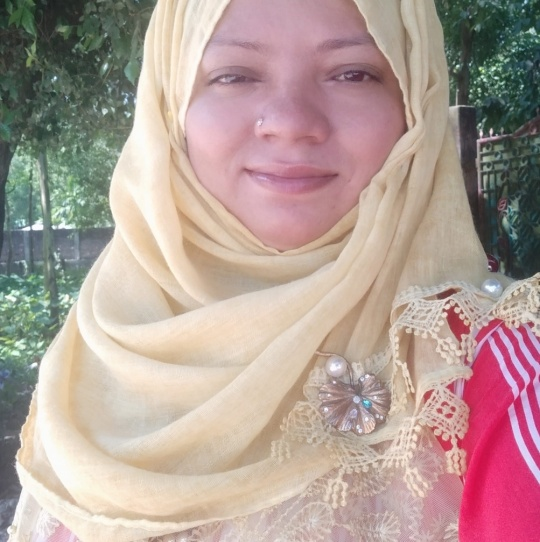
Aklima Ankhi, poet, storyteller and translator from Cox'sbazar, Bangladesh. Born in Mymensingh, Bangladesh. She has a published poetry named "Guptokothar Shobdochabi" written in Bangla.She is a post graduate in English Literature. As a profession she is a Lecturer in English.
As the world becomes increasingly interconnected, the ability to communicate in English is becoming more and more important. Many parents want their children to start learning English as early as possible. This is where teaching English in kindergarten comes in. Teaching English in kindergarten can be a rewarding experience for both teachers and students. It is a great opportunity to introduce children to a new language and help them develop their language skills at an early age. As for the benefits of teaching English in kindergarten are numerous. First and foremost, young children have a natural ability to learn languages. Their brains are wired to absorb new information quickly and easily. This means that if they are exposed to English at a younger age, they are more likely to become proficient in the language later in life. Additionally, learning English in kindergarten can help children develop important cognitive skills. Learning a new language requires children to use their memory, attention, and problem-solving skills. These skills can then be applied to other areas of their lives, such as math and science. Furthermore, teaching English in kindergarten can help children develop social skills. Learning a new language requires children to communicate with others and work together to understand new concepts. This can help children develop empathy and self-confidence.
Despite these benefits, teaching English in kindergarten also comes with its challenges. One of the biggest challenges is teaching young children requires a different approach than teaching older children or adults. Teachers must be patient, creative, and able to engage children in fun and interactive activities. Another challenge is ensuring that children are not overwhelmed by the new language. Young children have limited attention spans and may become frustrated if they are expected to learn too much too quickly. Teachers must strike a balance between challenging children and keeping them motivated and engaged.
With the right approach and resources, it can be easier to teach foreign languages in the early ages. There are numerous tips to teach English for young children. Firstly, using visual aids. Visual aids are an essential tool for teaching English to young learners. Children learn best when they can see and touch things. Using flashcards, pictures, and other visual aids helps children to understand new vocabulary and concepts. Secondly, play games can be a great way. Games are a fun and effective way to teach English. If the games involve movement and interaction, such as Simon Says or Duck, Duck, Goose, it will be easy children to recognize new theme with fun way. Board games and puzzles in teaching vocabulary and grammar structures are also great tip. Moreover, storytelling, song singing are also considered effective ways.
+


Even on a  Bad Day
          Good process teaches
                    the Heart the way

 for  none  evaporate
             the Broth of  Gift's
                                 Comforts

  Bring  me  my Love
              I know  I AM worthy

Even on  a Sad Stray
         the  Left Behind  are Lifted
                                      in sight

the  Merits of Life

      Trust
                 My Eyes
                     touch
                          Fresh
                            Glances
           of Light

for me   touch
           that  I may   know
         I AM  not  Separated

Divine   Trust
           invisible
                  Yet  still   on the way

                        ♡
                                                               ............


by   John Edward Culp
    Morning of August 17, 2023
MIRACLE REDEEMS A MAN, LIKE A BLOOMING FLOWER IN A DESERT

(for Charles)


i.
my grandmother, before her death, said: surviving a war is the greatest miracle.
& i paint a portrait of war as a ravenous beast, that slakes its thirst with blood, leaving trails of shattered bodies in its wake.

ii.
she fed me with anecdotes of how she survived the civil war, how she rolled into her skin at the sound of deafening blast of grenades.

iii.
to survive an explosion, you must not bunch up with the crowd. take cover after a bomb has fallen & lie flat on your belly. let your hands bury your fears between the clip of your teeth.

iv.
what if the war is not without, but within? how then would i escape the battlefield of my mind?
& she replied: pray & wait for a miracle.

v.
a man’s greatest battle is not that of grenades and ammunition, but the mêlée that comes from within, a struggle that lurks in his mind & plagues his thoughts, filling him with uncertainties. by this i mean, the war within is a parasite.

vi.
but miracle redeems a man, like a blooming flower in a desert.

vii.
& the greatest miracle is to survive a war—within or without. so, i choose to confront my chaos & navigate this battle. if i’m lost in this sphere, let it be known that i faced my cacodemon with intrepidness, but if i emerge with my head up high & my victory flag flapping, call me a miracle.
Bangabandhu

In a land where hope was draped in despair,
A voice emerged, bold and rare,
Bangabandhu, the harbinger of light,
Guiding his nation through the darkest night.

His words resonated with a fiery passion,
Igniting flames of freedom in every heart and emotion.
With his unwavering determination,
He fought for justice and liberation.

Through trials and tribulations, he stood tall,
A beacon of courage, inspiring us all.
Bangabandhu, the father of our land,
Led us towards prosperity, hand in hand.

He dreamed of a nation, free from chains,
Where equality and progress would reign.
He fought for the rights of the oppressed,
In his vision, humanity was blessed.

His conviction and sacrifices were profound,
As he built a nation on solid ground.
With love and unity, he bridged divides,
A symbol of strength, where hope resides.

We remember Bangabandhu, a true leader,
Whose legacy echoes, making us stronger.
His spirit guides us, even today,
To strive for a better world, come what may.

Let his words echo in each generation,
Inspiring us with unwavering dedication.
Bangabandhu, the hero of our land,
Forever cherished, we proudly stand.


Chapainawabganj

Chapainawabganj, a place where rivers flow
A land of beauty, where stories grow.
With fertile fields and green landscapes wide,
This place fills my heart with joy and pride.

The Padma River gracefully winds its way,
Through the heart of this town, day by day.
Its gentle ripples and soothing sound,
Echo the charm of this sacred ground.

Golden paddy fields stretch far and wide,
Underneath the sun's warm and golden tide.
As farmers toil with sweat on their brow,
Nature's blessings surely doth endow.

The mango groves fill the air with sweet perfume,
As spring arrives, casting away all gloom.
Here, amidst orchards, nature's melody plays,
With birdsongs that brighten all our days.

Chapainawabganj, a tapestry divine,
With history etched in every ancient shrine.
The Rajbari's regal presence reminds,
Of the grandeur from a bygone time.

The people, hearty and kind, greet with a smile,
Their warmth and hospitality, never dial.
With folk songs and dances, their culture thrives,
A celebration of life, that forever survives.

In every corner, the tales of the past,
Whispered by ruins that have come to last.
They remind us of heritage, strong and true,
And our duty to preserve, for me and you.

Chapainawabganj, a land so dear,
Forever etched in memory, crystal clear.
May it prosper and flourish, as the years unfold,
A treasure trove of wonders, a beauty untold.

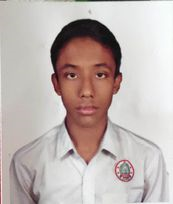
Don Bormon is a student of grade 8 in Harimohan Government High School, Chapainawabganj, Bangladesh.
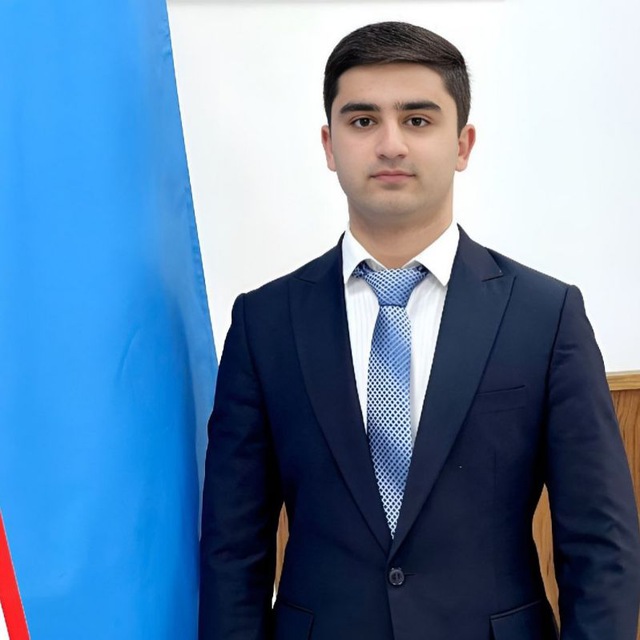
Sardor Tukhtaev, Uzbek student of world economy and diplomacy
My family is the most important thing in my life. They are my source of motivation and inspiration. They have been there for me through thick and thin, and I am so grateful for their unconditional love and support.
My parents have always been my biggest cheerleaders. They have always encouraged me to pursue my dreams and to never give up. They have always been there to pick me up when I fall and to push me to do better. They have always been my biggest fans and have always believed in me, even when I didn’t believe in myself.
My siblings have also been a great source of motivation. They have always been there to lend an ear when I needed to talk, and to offer advice when I needed it. They have always been there to cheer me on and to celebrate my successes with me. They have always been my biggest supporters and have always been there to lift me up when I was feeling down.
My friends have also been a great source of motivation. They have always been there to listen to my ideas and to offer their support. They have always been there to encourage me to take risks and to try new things. They have always been there to celebrate my successes and to help me through my failures.
My teachers have also been a great source of motivation. They have always been there to challenge me and to push me to do better. They have always been there to offer guidance and to help me reach my goals. They have always been there to encourage me to strive for excellence and to never give up.
My mentors have also been a great source of motivation. They have always been there to offer advice and to help me stay on track. They have always been there to provide guidance and to help me reach my goals. They have always been there to encourage me to take risks and to never give up.
My family, friends, teachers, and mentors have all been a great source of motivation for me. They have all been there to support me and to help me reach my goals. They have all been there to encourage me to never give up and to always strive for excellence. They have all been there to remind me that I can do anything I set my mind to.
My motivation is my family. They have always been there for me, and I am so grateful for their unconditional love and support. They have always been my biggest cheerleaders and have always believed in me, even when I didn’t believe in myself. They have always been there to pick me up when I fall and to push me to do better. They have always been my biggest fans and have always been there to celebrate my successes with me.
My family is my motivation. They have always been there for me, and I am so thankful for their love and support. They have always been there to encourage me to pursue my dreams and to never give up. They have always been there to remind me that I can do anything I set my mind to. They have always been my biggest cheerleaders and have always believed in me, even when I didn’t believe in myself.