
Sabina Asadova
Отправлено из Почты Mail.ru

IN THE SKY OF DREAMS

    A person should set a goal for himself/herself in life... Some people set a small goal for themselves: buying a new phone, going on vacation, others for a bigger one: a million dollar turnover per month. Plans such as creating a business or building a house for his family. Some people dream of unattainable things: solving the problem of poverty in the country, living in space. That's why you should have enough intelligence to set a goal that matches your strength.

   "The goal must be to achieve happiness, otherwise the fire will not roar enough, the driving force will not be powerful enough - therefore, success will not be fully achieved," - says Theodore Dreiser.

  In fact, if a person has set a goal for himself, he should devote all his energy to it and avoid all other distractions.

      Each of you has your own place in life. The main thing for us is your desire to speak. Among the invited guests, we can see that you are more enthusiastic than others. Don't forget, it all depends on you! It's time to show yourself!

      We invite you to the world of fear! This world will be a testing world for you. In this, you will test your ability, your ability to get out of the situation in the face of difficulties and your readiness for drastic actions!

 And we will show you the ways to skillfully get out of various difficult situations and make impossible things possible. And you just move forward!

 There are people who leave the world without a dream. Such people do not swim like fish, on the contrary, the current carries them. Therefore, in the beautiful garden called life, dream of growing a flower that amazes the world with its fragrance.

    As you walk towards the goal, the difficulty increases as you get closer. So, if you have set a great goal, you will achieve it with perseverance and beautiful patience. After all, the key to achieving the goal is hard work, patience and research.
Story from Guzal Botirova
Higher Profession
Heavy rain has been falling continuously for several hours. Since it started raining, Robiyabibi was also sitting in front of the window staring at the patter of the rain.
Robiyabibi’s heart was filled with sadness, as if looking at the rain would wash away the wards in her heart. He was so engrossed in such thoughts that he did not even notice Madina’s entrance. He thought only of his words “it’s raining beautifully”. Rabiyabibi looked at Madina as if she had woken up from sleep and said:
– That’s the rain. With its beautiful rain, it has become a habit to wash away the wards in people’s hearts, – said Robiyabibi thoughtfully.
– Oh, how did you know? Madina said jokingly
– It’s just visible. Everyone knows that. Just like my mom is a doctor.
– Well, then why does nobody know your profession? Madina said
– I don’t have a profession, I’m still just a student
– In the future?
Robiyabibi looked at Madina and thought.
– My future profession… – he thought and:
– Come on, Madina Khan, let’s hear from you first, – said Robiyabibi in a sarcastic tone.
“It’s better to say that it’s not clear yet,” he said, and Madina became serious.
This conversation soon spread to Robiyabibi’s school. Now everyone was laughing at Robiyabibi. Madina, who was the closest, laughed at him and belittled him as “useless”. Even his teachers looked at him with pity.
One day they humiliated Robiyabibi and made fun of her. She left the class crying. While she was walking on the road crying, she did not see the car coming and was hit by a car…
People gathered quickly. Robiyabibi was taken away by Ambulance. But it was too late.
In an instant, the gathered people dispersed in an instant, and there was hardly anyone left on the street. However, on a single crumpled piece of paper, written in large letters, were these words:
“RESPECTFUL OF WHO A MAN WILL BE IN THE FUTURE, WHAT OCCUPATION HE WILL HAVE, HE SHOULD ALWAYS ACQUIRE HUMANITY.
MY FUTURE AND PRESENT PROFESSION IS HUMANITY.
Botirova Go’zal
Essay from Nadira Oktamavna and Umrbek Ibragimov
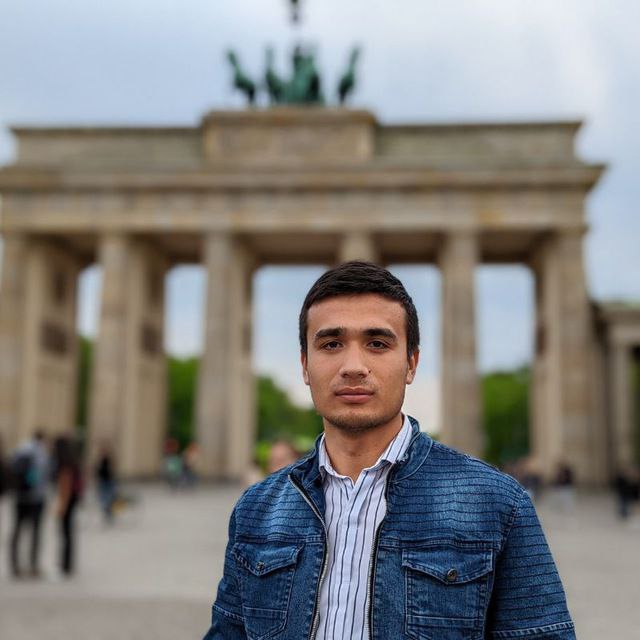
Uzbek Historiography: Tracing the Development of Central Asian History
Umrbek Ibragimov
Freie Universitaet Berlin
Nadira Kuzieva
Urgench state university
Annotation: “Uzbek Historiography: Tracing the Development of Central Asian History” This article provides a comprehensive overview of the development of Uzbek historiography, from its earliest accounts in Persian language to contemporary challenges faced by the field. The article traces the various themes and periods of Uzbek history, including the influence of Soviet-era historiography and the current efforts to promote a more inclusive understanding of Uzbekistan’s past. The article highlights the importance of Uzbek historiography in providing insights into the cultural heritage and complex history of Central Asia. It also sheds light on the challenges faced by scholars in the field, such as the lack of resources for research and the need to promote greater academic freedom and diversity of perspectives. Overall, this article is a valuable resource for anyone interested in the history and culture of Central Asia, and provides a useful introduction to the field of Uzbek historiography.
Key words: Uzbekistan, Central Asia, historiography, Silk Road, Timurid dynasty, Kazakh Khanate, Bukhara Emirate, Soviet era, independence, nationalism, inclusivity, academic freedom, cultural heritage.
Uzbekistan is a country located in the heart of Central Asia, with a rich history that dates back to the ancient Silk Road. Uzbekistan’s historical significance has been recognized by the various empires and powers that have ruled the region throughout history, such as Alexander the Great, Genghis Khan, and Tamerlane.
The study of Uzbekistan’s history, as well as Central Asian history in general, is referred to as Uzbek historiography. Uzbek historiography has been a subject of scholarly research for many years, as it provides valuable insights into the region’s past and cultural heritage. In this article, we will explore the development of Uzbek historiography, its major themes, and the challenges it faces today.
Early Uzbek Historiography: The earliest Uzbek historical accounts were written by the Persian-speaking scholars who served the Timurid dynasty, which ruled over Central Asia and Iran from the 14th to the 16th century. These accounts focused on the reigns of Timur (also known as Tamerlane) and his successors, and were written in the form of chronicles or biographies.
During the 17th century, Uzbekistan came under the rule of the Kazakh Khanate, which was followed by the Bukharan Emirate in the 18th and 19th centuries. These periods saw the development of the first written works in the Uzbek language, which mainly focused on religious and ethical themes. One notable work from this period is the “Hikmat al-Israr,” a collection of Sufi teachings and stories written by the Uzbek poet Alisher Navoi.
Soviet Era Historiography: The early 20th century saw the emergence of Soviet rule in Uzbekistan, which brought about significant changes in the field of historiography. Soviet historians emphasized the economic and social transformations that occurred during the Soviet era, such as the collectivization of agriculture, industrialization, and urbanization.
Soviet historiography also placed a strong emphasis on the role of the Communist Party in shaping the course of Uzbekistan’s history. This approach led to the creation of a new canon of Uzbek historical figures, such as the Bolshevik leaders Abdulla Oripov and Sharaf Rashidov.
Post-Soviet Historiography: Following the collapse of the Soviet Union in 1991, Uzbekistan gained independence and embarked on a new phase of historiography. The post-Soviet period saw a renewed interest in Uzbekistan’s pre-Soviet history, with scholars exploring themes such as the region’s cultural heritage, architecture, and literature.
However, the post-Soviet period has also been marked by political tensions and controversies surrounding Uzbek historiography. The Uzbek government has been criticized for promoting a nationalist narrative of Uzbek history that downplays the contributions of other ethnic groups and marginalizes critical voices. Some scholars have also expressed concern about the lack of academic freedom and the government’s control over the publication of historical works.
Challenges and Future Directions: Uzbek historiography faces several challenges in the present day, such as the lack of resources for research and the difficulty of accessing archival materials. In addition, there is a need to promote a more inclusive and nuanced understanding of Uzbekistan’s history that acknowledges the contributions of all ethnic groups and accounts for diverse perspectives.
To address these challenges, scholars and policymakers have called for greater investment in historical research and the establishment of independent research institutes. There is also a need to promote greater dialogue and exchange between Uzbek and international scholars, as well as to encourage the publication of works that reflect diverse perspectives and interpretations.
Conclusion: Uzbek historiography provides valuable insights into the rich cultural heritage and complex history of Central Asia.
REFERENCES:
1. Б.Ж.Эшов, А.А.Одилов Ўзбекистон тарихи 1-жилд – Тошкент 2014, 246-бет
2. Шихобиддин ан-Насавий Султон Жалолиддин Мангуберди хаёти тафсилоти, Тошкент: Фан 2018, 156-бет
3. Shamsutdinov R. Karimov Sh. Vatan tarixi I kitob, “Sharq” NMAK, Toshkent, 2010. 215-bet.
Poetry from Tolipova Zebuniso Ulug’bekovna

GET AWAY FROM ME…

I agree in the deposit world, from me,
Well, let's not leave the gold and the castle,
I will fill him with good deeds,
But don't let my life pass in vain.

Do not remember me as bad,
Let them say my name as Mehr.
May sweet memories remain from me,
I don't want to see other people's hatred.

If I am a handful of soil,
But let me have a lot of books.
Well, if not wealth and career,
But let the name of the poetess remain.
Synchronized Chaos September 2023: A Commemoration
First of all, we have a few announcements.

October’s issue will be curated by Kahlil Crawford and has the theme of ELECTRONICA: Sound Medicine. This includes pieces about electronic music, pieces about the intersection of art, creativity, technology and healing, or electronic music composition itself.
The Electronica issue will be published October 1st and people may submit for it anytime this month. Please feel welcome to send submissions to synchchaos@gmail.com with ‘Electronica’ in the subject line. Our September 15th issue will come out as usual.
Also, our contributor Roodly Laurore, who sends us poems from his homeland of Haiti, would like to share a link with our magazine. His family volunteers with a nonprofit Haitian school seeking sponsorship for their elementary students. $40 USD can send a student to school for an entire year.
Now, for September 2023’s first issue! Our theme is A Commemoration. As a magazine, we’re commemorating fifteen years of existence, as we published our first issue in August 2008. Our first theme was Creating Abundance Through Imagination.
In this month’s issue, some of our contributors honor loved ones or special occasions, but everyone who writes or creates art is making a commemoration in some way, placing some of their work out in the universe.
Adhamova Laylo Akmaljon describes pilaf, the national dish of Uzbekistan.
David Estringel relishes his world: lightning storms, poetry slams, even funerals and lost loves ruined like ice cream left out too long on the counter.
Dr. Shailesh Gupta Veer’s speaker seeks unity with his loved ones and with the natural world and expresses this ecstasy in bursts of poetry. Sayani Mukherjee speaks of how the very atoms of her body are part of a much larger and sanctified universe.
American poet James Penha expresses the dislocation and wonderment of his trip to Bali through a series of haikus concerning birds and waves and trees. J.D. Nelson probes the world in tiny poems that give the effect of peering over the edge to catch a glimpse of something mysterious. Daniel De Culla adds a bit of mystery to his work by superimposing a butterfly on older and newer photographs of people. Jim Meirose creates a carnivalesque atmosphere in his surreal piece about games activated via coin slot.

Don Bormon takes pride in the wondrous world around him, the natural and human beauty and heritage of his native Bangladesh. Abdullah Al Mamun celebrates the beauty of nature and reminds us to respect the natural world. Monira Mahbub speaks to and draws the beauty of ordinary life in a small country village close to nature. Channie Greenberg celebrates nature through her selection of photographic closeups of a variety of white flowers.
Isabel Gomes de Diego highlights the majesty of our world through photos of her young son with some lovely horses. She takes joy in her family as much as in nature.
Tanvir Islam highlights the love, kindness and support of his mother while Bakhora Bakhtiyorova outlines the many ways her mother has enriched her life. Nilufar Tuktaboyeva illustrates the unconditional love of parents and the sacrifices they make for their children.
Carol Pierce illustrates how a grandmother continues to teach compassion to younger members of her family even while in a physical rehab facility. Mr. Ben speaks to how parents and teachers need to give children proper guidance on how to behave, in his new book Don’t Be Stubborn.

Wazed Abdullah reflects on the educational guidance he receives at school. Mantri Pragada Markandeleyu also outlines methods for improving education through graphic design principles in his essay on “Choism.”
Lily Erkinova Nilufar also turns to principles of design to suggest ways to improve the tourist experience, and thus the economic development, of Uzbekistan. Mantri Pragada Markandeleyu’s mixed media pieces interpose American cinema glamour with life lessons on ethics, wisdom, and success.
Nurujjaman speculates on what he will become when he is an adult and finishes school.
Abdul Aziz Muhammad Inuwa speaks to the creative life force behind the pen of a poet. Mark Young’s postwoman poems address the random gifts people and life bring that can inspire an artist. Gustavo Galliano imagines that he’s being watched as he works, and this supposed mysterious figure becomes his muse.
Eva Petropoulou Lianou compares the thoughtful process of crafting a poem to a romance, while sharing the difficulty of holding onto high ideals in a world where not everyone shares them. Stephen Jarrell Williams contributes pieces replete with cyber and supernatural dangers and urges us to remember the values we knew when we were young to navigate a changing world. Annie Johnson recollects the idealism of her early childhood and the hazy early mornings next to her true love.
Jerry Langdon’s poetic speakers feel themselves dissolving, as they lose valued relationships that made them who they were or their sense of uniqueness as artificial intelligence supplants them. Rus Khomutoff’s work feels disorienting, yet reflects and spurs us on towards seeking authentic truth and becoming our real selves.

Marjorie Thelen’s spiritual poetry encourages us to leave behind ideas about God/Goddess and experience the divine and spiritual awakening for ourselves as part of a universe full of many similarly awakening beings.
Rasheed Olayemi reminds us that true religious faith should inspire love of others rather than sectarian hatred.
Abdullah Al-Mahin writes of a person who has intelligence and perhaps a form of wisdom, but lacks love and compassion. Christopher Bernard finds no vindication, but only sorrow, and pity for the man and for our world, in the mug shot of former American president Donald Trump.
Mykyta Ryzhykh probes the selfishness and inhumanity he sees in contemporary life and urges us away from various forms of illicit power and exploitation.
Mahbub Alam suggests with two poems that the world’s inhabitants can either connect together or divide with conflict. Ekpenisi Nwajesu’s poetry offers advice on how to survive both internal and external conflict and suggests that people experience both during wartime. Roodly Laurore illustrates an argument between neighbors that de-escalates when adults pay attention to the wisdom of children.
Ayodeji Michael Adeboboye interviews Nigerian political leader Jimoh Ibrahim about statecraft and national defense and peacemaking in the country.
Daniel Aondona’s fantasy tale illustrates the negative consequences of arrogance and selfishness in the life of a leader: pride goeth before a fall. Henry Ikechukwu’s supernatural action drama illustrates the violent and alienating effects of homophobia and the possibility of future survival and triumph.
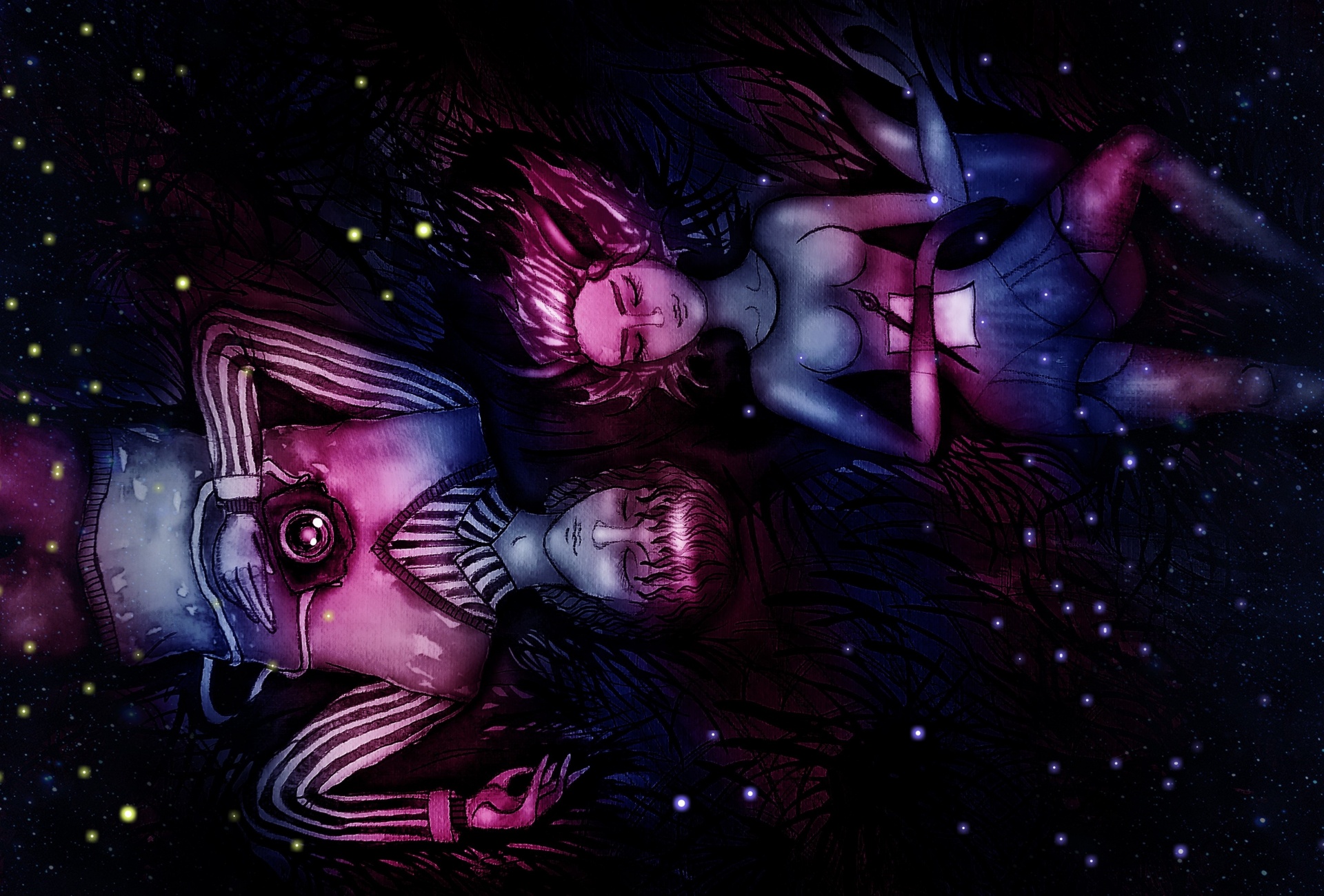
Mesfakus Salahin compares a romance to an epic drama, a dream fantasy that becomes real life.
Akhlina Ankhi presents a picture of a true and devoted romantic love that inspires a couple to work for justice and unity throughout the world. Sharipova Zuhro Sunnatovna evokes the beauty and renewing power of caring and nonjudgmental friendship and of rain. Shamsiya Khudoinasarova Turumovna illuminates the intensity of romantic passion while Elmaya Jabbarova highlights the wonderment of sincere love. Kristy Raines speaks to the way love not only welds a couple together but also burns away anything that could be a distraction to that connection.
John Edward Culp demonstrates how love, or friendship, can lift him up and call him back to himself on a bad day. David Estringel relishes the physical side of passion in his upcoming poetry collection Blue, reviewed here by Cristina Deptula. Taylor Dibbert highlights the unconditional love of his dog.
Leslie Lisbona reflects on a romance that fizzled out due to its inopportune timing and anti-Semitism.
J.J. Campbell muses on the persistence of his youthful dreams as he experiences gritty and cynical middle age. Duane Vorhees cleverly illuminates the limits of our heroism, language, and knowledge.

Sabrid Jahan Mahin muses on the brevity of life while Azemina Krehic remembers a personal loss in the time of great national grief in the Balkans. Manzar Alam grieves a young loved one who passed away. Francesco Favetta compares life to the sea, constantly roiling in motion and bringing change and grief, and takes comfort in his mother and his family.
Through her eaglet and lamb poems, Lilian Dipasupil Kunimasa exposes the danger and vulnerability inherent in our existence as well as the unnecessary cruelty we face at the hands of others. In his discussion of H.G. Wells’ novel The Time Machine, Z.I. Mahmud suggests that it is change and challenges in our environments that push us to evolve and become creative.
We hope that the experience of reading this issue pushes you to become your best and most creative self. Enjoy!
Poetry from Rasheed Olayemi
In the name of Religion

From one God, we all emerge
And to Him, our deeds we explain
A man of God, is a man that loves
Everyone he loves, religious differences, he neglects
A religion that hates, soon, would destroy
Love of people of other religions, a determinant for a man of God
A snake that bites, never can it claim to love
But a man that shows the synonym of affection,
Confirms his relationship with God
Loving God and hating man
A deception, not God's love
One who loves God,
Is water, that loves everyone
Poetry from Christopher Bernard
Trump in Chains

It is well posed,
one must give the devil credit:
defiance shouts, frozen in fury,
at the top of grievance,
as petulant as it is silent;
the furious eye, triumphant in mockery,
disdains the camera and, through its harsh lens,
you.

But there is no gratification.
A dull ache, sequela from a blow,
taken long ago,
swells in the soul
of even the most opposed
when faced with this
humiliation.

No: no gratification,
only sorrow
at this portrait
of the folly of mankind
at war with itself, nature, and the gods,
taken in the bowels of a southern jail.
There, but for the grace of the devil,
go I.

Christopher Bernard's collection The Socialist's Garden of Verses won a PEN Oakland Josephine Miles Award and was named one of the "Top 100 Indie Books of 2021" by Kirkus Reviews. His two books "for children and their adults," If You Ride a Crooked Trolley . . .  and The Judgment of Biestia, the first in the series Otherwise - will be published in November 2023.