The Wagon
So Like a man inured to failure,
We climbed aboard the wagon,
And The driver, only the driver,
Began to listen as the cadence of our deprivation
—Thud. . .. Clunk. . . and so on-
-Infiltrated the wagon’s pores,
Starting with that first dirt road.
Our lives’ parasols disappointed us
When we shared sorrows
Without fancy titles,
while Reaping lethargy and frustration.
It wasn’t only the driver, or The horse, or Our heads
That looked meager;
The wagon’s outlook did too.
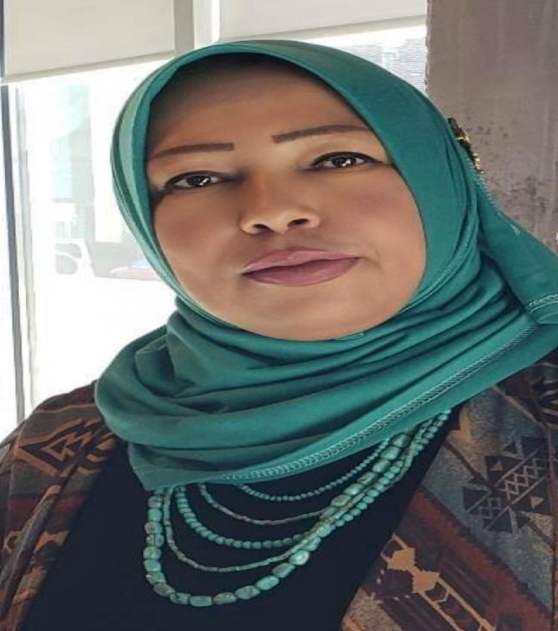
Translated by William M. HutchinsShe is a poet, teacher, editor, writer, and playwright born in Najaf, Iraq, in 1967, who now lives in the United States. Faleeha was the first woman to write poetry for children in Iraq.
She received her master's degree in Arabic literature, and has now published 26 books, her poems have been translated into English, Turkmen, Bosnian, Indian, French, Italian, German, Kurdish, Spain, Korean, Greek, Serbia, Albanian, Pakistani, Romanian, Malayalam, Chinese, ODIA, Nepali and Macedonian language. She is the Pulitzer Prize Nomination 2018, PushCart Prize Nomination 2019.
Member of International Writers and Artists Association.
Winner of the Women of Excellence Inspiration award from SJ magazine 2020, Winner of the Grand Jury Award (the Sahitto International Award for Literature 2021)
One of the Women of Excellence selection committees 2023
Winner of Women In the Arts Award 2023
Member of Who's Who in America 2023
SAHITTO AWARD, JUDGING PANEL 2023
Cultural Ambassador - Iraq, USA
Email : d.fh88@yahoo.com
First of all, here’s an announcement! Regular Synch Chaos contributor, poet Taylor Dibbert, has a newly released collection of his poetry, Invictus,available for purchase.
Also, past contributor Areg Azatyan’s novel The Flying Africanhas just been released from Frayed Edge Press! Translated from the Armenian by Nazareth Seferian, the book follows the journey of an unnamed traveler, a young Armenian writer who spends fifty-four adventurous days in Africa, one day in each of the continent’s countries.
We are also hosting a free public literary reading in conjunction with the Association of Writing Programs conference next month in Kansas City, MO. This will be at 6pm on the evening of February 7th at Prospero’s Books. All are welcome to come and hear the readers!
Now for this month’s issue: The Ecosystem of Ideas.
Terry Trowbridge probes the intricate world of pillbugs under the ground while Don Bormon looks into the hardworking and cohesive colonies of ants.
Gulsevar Xojamova draws on the rainbow as a symbol of natural beauty and urges her country’s people to embrace the beauty and pride of Uzbekistan.
Sayani Mukherjee relates the “touch and go” nature of winter, when nature is not all dormant, but awaiting a streak of warm and dry enough weather. Azemina Krehic evokes the bitter, sucking, deathly cold of winter wind and snow. Meanwhile, Uzbek writer Nosirova Gavhar regales us with the beauty of nature and her country’s folk traditions in the spring.
Brian Barbeito suggests that woodland ecosystems should be considered a living thing in their own right, not simply the sum of living species. Ali Akramov looks into the effects flooding has on mountain geology and ecosystems.
Jerry Langdon’s poetry bridges the worlds of nature and culture as he writes of the destruction wreaked by fire, lightning, and a slow-burn romantic breakup. Mahbub Alam continues in that vein by drawing on the language of marriage to express a human union with the natural world, while Mahmudul Hasan Fahim explores the emotional, ecological, and social ramifications of different cultural funerary customs.
Z.I. Mahmud explores how poets Mary Oliver and William Blake reflect the inextricable unity of humans and nature through their Romantic and spiritual poetry.
Sayani Mukherjee‘s poetry explores the world of Paris, New York and London while Mark Young humorously compares himself to pop culture icons of past and present and Odina Rustamjonova looks into the strengths and weaknesses of the mass transit systems within Uzbekistan. Maja Milojkovic highlights a little-known cultural and linguistic connection between Tunisian Arabs and Serbians.
Isabel Gomez de Diego sends up a mix of personal and grandiose moments of contemplation and holiday celebration.
Lilian Dipasupil Kunimasa highlights the value of personal development, urging us to take the daily steps to prepare our hearts and lives to be ready for extraordinary moments of grace.
Nafisa Abralova’s drama highlights the importance of education, discipline, and responsibility for children under our care while Charos Toshpulatova traces the development of the idea of and legal precedent for the rights of children.
John Mellender addresses growing up, laying aside or recognizing the limitations of one’s youthful idealism. Muhammed Aamir evokes a future world where we can regenerate our loved ones with the help of technology. John Edward Culp envisions his future great-grandchildren eating together and showing concern for each other in the same park where he’s doing the same for his loved one.
J.J. Campbell mixes a bit of nostalgia and anachronism in his monthly pieces on loneliness and despair, as he’s “playing jazz in a world of heavy metal.” Saad Ali mixes together history, poetic device, and love in his variety of experimental pieces.
Kristy Raines speaks to the emotional connection of true love while Ifora Bahramova paints a simple domestic scene of love between a mother and her young children. Ari Nystrom-Rice evokes childhood playground memories in his poem on the loss of a close friendship.
Safarova Zarnigor analyzes a delicate poem from Faynberg about love lasting over time while Sevinch Saidova relates the story of a man who struggles with addiction and health issues and the family who loves him unconditionally. Oona Haskovec reflects on her loneliness and desire for caring friendship, staring at her hands while eating alone in her kitchen.
Oaoao Pbobo reminds us of the joy of learning to read and write and the doors it can open for us. Nigora Tursunboyeva explores the depths of poetry and emotional resonance within the work of Uzbek children’s author Khudoyberdi Tokhtabayev.Aziza Umurzakova highlights the role preschool and young children’s education can play in a healthy nation.
Diyora Bakhodirovna outlines how new educational technologies may enhance student learning.
Nozima Baxtiyorova suggests that the technology used to continue children’s education during Covid-19 could be extended for their benefit as the pandemic lessens. Malika Kaxarova explores linguistic figures of speech and the role they play in cognition and the field of cognitive linguistics.
Mahbuba Juraboyeva outlines the importance of proper and professional speech to the legal profession while Bahora Baxtiyorova celebrates an important business leader in Uzbekistan who harnesses modern social media methods for communication and advertising. Elmaya Jabbarova honors the power, dignity, and beauty of her homeland of Azerbaijan while Faleeha Hassan conjures through her words a fanciful street scene complete with fish vendors and confetti and sandstorms and J.D. Nelson’s five monostichs hint at imagined vignettes from daily life.
Dilnoza Ochildiyeva outlines the history and heritage of her Uzbek homeland while Maftuna Imamova discusses strategies for enhancing Uzbekistan’s economic position in world markets.
Mesfakus Salahin dreams of a more peaceful and compassionate world in the future while Anila Bukhari illustrates how girls should be allowed education and freedom.
John Grochalski speaks to the many small and larger ways we assert our independence and existence as individuals. Skye Preston crafts a flash Gothic-esque sketch where a young woman vows not to take after her parents, and we find out why.
Sabrid Jahan Mahin points out the mysteries still unknown about how our brains work, although they are the strongest problem-solving force we have. The San Francisco Ballet’s new show Mere Mortals, here reviewed by Christopher Bernard,explores the Greek myth of Pandora and the fine line between human exploration and empowerment and human selfishness and evil.
Chimezie Ihekuna challenges himself to reconsider conventional wisdom in his frustrating search for truth. As for truth, Dr. Abdul Awal explores scientific, philosophical, and spiritual insights found within the Koran. Graciela Noemi Villaverde presents a protagonist whose heart has hardened because he no longer listens to the tender muse of compassion, mystery and poetry, while Mirta Liliana Ramirez depicts a heart that regenerates after repeated emotional destruction.
Bill Tope relates the tale of a courageous woman who rises up from near-devastation and solves her own rape, while Doug Hawley ponders whether the same person can handle the public and “beautiful” aspects of art and the more practical and business oriented features in his piece on two twin sisters.
Peter Cherches explores identity, plagiarism, the bounds of self-expression and alter egos in his short story that looks into what it can take to make it as a writer. Duane Vorhees renders the act of writing into something physical, dragging words and thoughts and other substances across the page.
Joshua Martin reviews Irene Koronas’ new collectiongnostos, which plumbs the depths of a plethora of connected areas of knowledge and thought. He also covers Daniel Y. Harris’ new bookThe Metempsychosis of Salvador Dracu, which also merges human thought in the form of code and in poetry and illustrates the permeability of our concepts of personhood.
Jim Meirose also suggests an interplay of the biological and astrobiological and linguistic in his short story while Alma Ryan’s speaker dances through a portal into an artist’s dream of beauty and precarity, where paper figures live and die among splashes of paint.
James Whitehead speculates on how concepts and language itself could become a prized economic good fought over by villages and nations.
Ahmad Al-Khatat talks of how he would give up much, but not his hard-won life experience from surviving war. Meanwhile, Norman J. Olson addresses the futility of armed conflict.
Mykyta Ryzhykh speculates on “graves without flowers” – the unremembered dead – and on “flowers without graves” – the potential of celebrations without death – and mourns the loss of human and even animal dignity in alienating modern life and warfare.
Jacques Fleury addresses the inherent systemic racism of being loved as a brand who can perform and make money for others, not as a person.
Daniel De Culla denigrates fascism wherever it may arise: Spain, Argentina, Italy, or the United States.
Biloldin Mahmudov outlines diplomatic etiquette, instructing aspiring diplomats while at the same time granting grace and dignity to the role.
Stephen Jarrell Williams expresses hope for humanity’s and Earth’s future through his science-fiction poetry.
Michael Robinson speaks to the personal, spiritual and physical renewal he found after surviving open heart surgery. Annie Johnson also delves within the individual psyche, tracing a dream journey.
Kholida Toirjonova reflects on how one day she will leave behind those who may or may not properly mourn her, and it will no longer matter.
Salomova Dilfuza brings up the brevity of life and urges us to make the most of our limited time, while Sevinch Erkinova doesn’t regret a moment of her life, joyful or sorrow-filled.
Thank you very much for reading this month’s first issue of Synchronized Chaos. We hope that you do not regret even one minute of your read, and we encourage you to comment on the submissions and engage in dialogue with the authors and artists.
New York


Merriment of London walks
Sunshines of New York
The latte amore, my Paris
I bespoke every little detail
With my buckets in hand

I go down a little
Like white swans in
Deep blue lakes
My overarching newly molten
Blues
My guitar friends like those
Who know how to tune
Into a little merriment
My forever Paris in his hand
Lakes Cities Sheds Apple branches
Spread everywhere
Like a little kid
She got her cake a blueberry almond pie
My London walking in evenings
Forevermore in bejewelled spectacle

I go up now
In New York
Amidst thousands hand clappings
I found home
A little louder
A little bird her squeaky quick
The little blueberry muffins
Understanding
London the pink world
My one day in London.
Effect of floods on geological processes in mountains
National University of Uzbekistan
Faculty of Hydrometeorology
1st year student Akramova Shiringul
Furqatjon’s daughter.
e-mail: akramovali32@gmail.com
Phone: +998995524473
Abstract: Floods have a great influence on the geological processes in the mountains. As a result of the movement of the floods, complex processes such as decay, washing, erosion occur in the mountains. This causes the geological composition of the mountains to change.
Key words: floods, geological processes, terrain, meteorological phenomena, hydrological conditions, ponds, physiography.
Key words: floods, geological processes, terrain, meteorological phenomena, hydrological conditions, ponds, physiography.
Key words: flooding, geological processes, relief, meteorological phenomena,
Hydrological conditions, water, physiography.
Floods are caused by various geophysical mechanisms in a wide range and of great power. Objectives are considered on geological time and space scales, but the main criteria of climatic, topographical and geological factors of the channel predictably influence and limit the size and extent of local floods in floodplains. Many of these effects are specific and not topographical or climatic, with damage, for example, local correlation of specific types of floods. But some are less specific measures, including geological control over the time, location, connection and magnitude of natural dam failures. In this paper, we describe the main factors that affect the magnitude or insignificance of floods and how these factors vary temporally and spatially over geologic time and spatial scales.
Or risks are addressed. Even experienced hydrologists and geologists each consider floods to be of scientific interest beyond modern experience, such as the Pleistocene Missoula floods. Such large floods are unique. 1. Due to its uniqueness and role in shaping the landscape, it played an interesting and dramatic role in phrasing 2. Flashes for inquiry and debate, but they are not and usually considered. Normal geophysical component 3. Certificate behavior.
But really, floods of any size and source can be considered a geological process on the same level as any other Earth system, so tectonics and the atmosphere have attributes, causes, effects, and even correlations. Causes processes such as circulation. Practitioners of paleoflood hydrology, who study floods of various scales and in different geologic periods and environments [Kochel et al. Baker, 1982], well-placed rates and the evaluation, description, and even quantification of these correlations. Indeed, many of the articles in this volume present examples of floods that occur under certain conditions as a result of these geological, physiographic, and climatic interactions. The purpose of this paper is to provide a general context for individual paleoflood studies on landscapes.
Systematic characterization of the spatial and temporal distribution of large floods and flood-causing mechanisms can thus provide a framework for the ecological status of floods and floods in Earth’s history. These results are consistent with the vapor and physical limits for surface flooding determined from total snow. A closer look at flood-generating processes From an empirical perspective, the magnitude, duration, and extent of river floods vary greatly depending on the source mechanism, global location, geology, and physiography, but despite this variation, how large a flood is.
There are real physical limits to what can be. Meteorological floods are caused by various types of storms that deliver a volume of water up to 1011 m3 for several days or weeks, as well as from seasonally stable climatic conditions that deliver more than 1012 m3 for several weeks or months, and the highest leads to flow. As much as 105 m³/s in large, continental-scale basins. The main limits for meteorological flooding depend, first of all, on the level and volume of precipitation, as well as on the efficiency of distribution of precipitation concentrates to channel networks.
Global and US flood records show that primarily for basins affected by individual storms, the largest flows occur in areas where atmospheric moisture or storm tracks are intercepted by local topographic relief.For larger basins, the largest fluxes result from seasonally stable climate patterns and, on a global basis, tend to be in tropical regions with more moisture. The contribution of high-relief topography to meteorological flooding is particularly noteworthy because of its dual effects of (1) raising atmospheric moisture, thereby increasing local precipitation, and (2) facilitating more rapid concentration of runoff into channels.
Floods from dam failures and terrestrial fresh water sources such as lakes and glaciers have similar total volumes to meteorological floods, up to 1013 m3, but larger 2-107 m³/s with waste. During the Pleistocene Ice Age, glaciers and changing hydrologic conditions disrupted drainage systems, causing the largest well-documented dam floods to breach ice dams and basin divides of the Great Lakes. From the Global perspective, the magnitude, duration, and extent of river floods vary greatly depending on the source mechanism, global location, geology, and physiography, but despite this variation, there are real physical limits to how large a flood can be.
Meteorological floods are caused by various types of storms that deliver a volume of water up to 1011 m3 for several days or weeks, as well as from seasonally stable climatic conditions that deliver more than 1012 m3 for several weeks or months, and the highest leads to flow. As much as 105 m³/s in large, continental-scale basins. The main limits for meteorological flooding depend, first of all, on the level and volume of precipitation, as well as on the efficiency of distribution of precipitation concentrates to channel networks.
Global and US Water Regulations indicate that the largest runoff for a basin affected by individual storms in the first instance is when atmospheric moisture or storm tracks are intercepted by topography. For the larger basins, the largest fluxes result from seasonal climate conditions and occur in the tropics, where there is more moisture on a global basis. The contribution of relief topography to meteorological flooding is particularly high because of its two-fold effect of (1) raising atmospheric moisture, thereby increasing precipitation, and (2) concentrating flow movement into channels.
Floods from external dams and terrestrial freshwater sources such as lakes and glaciers have total volumes similar to meteorological floods, up to 1013 m3, but less than 2-107 m³/s. L is greater. With. The Pleistocene glacial reglaciations disrupted fluctuating hydrologic resource systems, leading to the failure of ice dams and basin divides of the Great Lakes, the largest well-documented dam floods. From the Global perspective, the magnitude of river floods, a very global place, varies with water volume and power source mechanism, geology, and physiography, but depending on the difference, there are real physical limits to how large flood transport can be. Meteor floods are caused by seasonal climatic conditions of several days or weeks up to 1011 3, while the control of the water volume is different, leads to big. As much as 105 m³/s in large, continental-scale basins.
The main limits for meteorological flooding depend, first of all, on the level and volume of precipitation, as well as on the efficiency of distribution of precipitation concentrates to channel networks. Global and US flood records show that primarily for basins affected by individual storms, the largest flows occur in areas where atmospheric moisture or storm tracks are intercepted by local topographic relief.
For larger basins, the largest fluxes result from seasonally stable climate patterns and, on a global basis, tend to be in tropical regions with more moisture. The contribution of high-relief topography to meteorological flooding is particularly noteworthy because of its dual effects of (1) raising atmospheric moisture, thereby increasing local precipitation, and (2) facilitating more rapid concentration of runoff into channels.
Floods from dam failures and terrestrial fresh water sources such as lakes and glaciers have similar total volumes to meteorological floods, up to 1013 m3, but larger 2-107 m³/s with waste. During the Pleistocene Ice Age, glaciers and changing hydrologic conditions disrupted drainage systems, causing the largest well-documented dam floods to breach ice dams and basin divides of the Great Lakes.
From the Global perspective, the magnitude, duration, and extent of river floods vary greatly depending on the source mechanism, global location, geology, and physiography, but despite this variation, there are real physical limits to how large a flood can be. Meteorological floods are caused by various types of storms that deliver a volume of water up to 1011 m3 for several days or weeks, as well as from seasonally stable climatic conditions that deliver more than 1012 m3 for several weeks or months, and the highest leads to flow. As much as 105 m³/s in large, continental-scale basins. The main limits for meteorological flooding depend, first of all, on the level and volume of precipitation, as well as on the efficiency of distribution of precipitation concentrates to channel networks.
Global and US flood records show that primarily for basins affected by individual storms, the largest flows occur in areas where atmospheric moisture or storm tracks are intercepted by local topographic relief. For larger basins, the largest fluxes result from seasonally stable climate patterns and, on a global basis, tend to be in tropical regions with more moisture. The contribution of high-relief topography to meteorological flooding is particularly noteworthy because of its dual effects of (1) raising atmospheric moisture, thereby increasing local precipitation, and (2) facilitating more rapid concentration of runoff into channels.
Floods from dam failures and terrestrial fresh water sources such as lakes and glaciers have similar total volumes to meteorological floods, up to 1013 m3, but larger 2-107 m³/s with waste. During the Pleistocene Ice Age, glaciers and changing hydrologic conditions disrupted drainage systems, causing the largest well-documented dam floods to breach ice dams and basin divides of the Great Lakes.
From the Global perspective, the magnitude, duration, and extent of river floods vary greatly depending on the source mechanism, global location, geology, and physiography, but despite this variation, there are real physical limits to how large a flood can be. Meteorological floods are caused by various types of storms that deliver a volume of water up to 1011 m3 for several days or weeks, as well as from seasonally stable climatic conditions that deliver more than 1012 m3 for several weeks or months, and the highest leads to flow. As much as 105 m³/s in large, continental-scale basins. The main limits for meteorological flooding depend, first of all, on the level and volume of precipitation, as well as on the efficiency of distribution of precipitation concentrates to channel networks.
REFERENCES
1.E. Costa, U.S. Geological Survey, 10615 Sf Cherry Blossom
Dr., Portland OR, 97216.
G. E. Grant, USDA Forest Service, Pacific Northwest Research
Station, 3200 Jefferson Way, Corvallis. OR 97331
lE. O’Connor, U.S. Geological Survey, 10615 SE Cherry
1990 Blossom Dr., Portland OR, 97216. (oconnor(usgsgov)
J.J. Campbell (1976 – ?) is trapped in suburbia, plotting his escape. He’s been widely published over the years, most recently at Horror Sleaze Trash, The Beatnik Cowboy, The Asylum Floor, Misfit Magazine and Disturb the Universe Magazine. You can find him most days on his mildly entertaining blog, evil delights. (https://evildelights.blogspot.com)
The Space Maker


1
"Moon Walker"


Never dreamed
I would find myself
here


after so many years of life
on tender Mother Earth


rubberized boots
walking
and breathing through a mini globe


marvelling at the skin of the moon
a pitted and quiet
barren buffer against a cast
of stones and new discoveries


almost soundless
but eerie


as the distant horizon
takes on a reddest hue
bringing me to a stop


red smoke creeping toward me
settling over the mouths of craters


what could be burning
and where is it coming from?


I quicken my slow plodding
and come to the edge of a gaping crater


slow smoke reddish into a dull pink
coming out of a cave on the far wall


I consider climbing down
but something whooshes out of the cave
and flies over me


I duck
looking up as it passes


a Nazi insignia on the bottom
of an old flying saucer


war seems to be everywhere


I turn and face the sphere of earth
out there in dark space
so near I feel
I could touch it


seemingly nothing ever changes


so I wake up and wonder why
there's someone's blood in my bed.


2
Spinning


Sweet earth of blue
what have we done to you


I stand on your sister moon


squinting through space
over to your sphere


my slow spinning
mother earth
turning into a lonely


immense skull


but the great change is coming
earth reborn
with God's people.


3
Soon


All the land of all the people
all the years settled and dying


so many believing
sky, sea, and sacred places


and prayers and rapture
of saints to heavenly clouds


the Word
directing
footfall and stars


The Space Maker.
An ant

In the garden so small, yet bold,
An ant navigates, steadfast and old.
Tiny feet upon the earth they roam,
Seeking crumbs and treasures to bring home.

With strength not seen by a simple glance,
They carry burdens, they advance.
A colony working as one,
Their tasks in harmony, never undone.

Their homes underground, a bustling maze,
Where life's intricate dance always plays.
In unison, they toil and strive,
Their unity makes them truly thrive.

Oh, to be like the ant, small but strong,
To persevere when the journey seems long.
A testament to diligence and might,
The ant embodies a resilient light.

Don Bormon is a student of grade 9 in Harimohan Government High School, Chapainawabganj, Bangladesh.