
Essay from Nadira Oktamavna and Umrbek Ibragimov

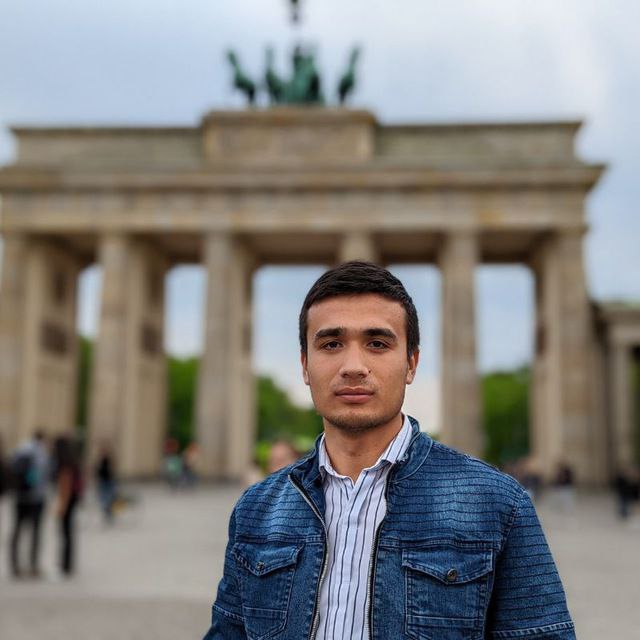
Young Central Asian man with short hair, a blue striped jacket, a white striped collared shirt. Standing in front of a stone monument with columns.
Umrbek Ibragimov
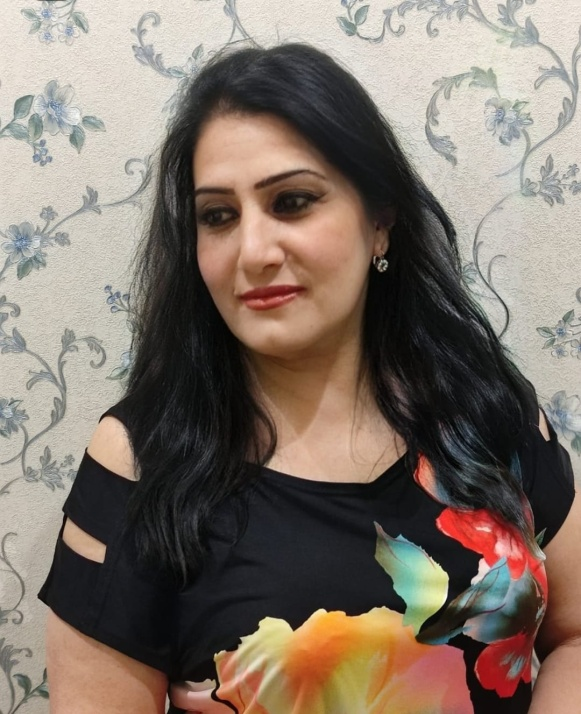
Young Central Asian woman with long straight brown hair, brown eyes and a silver necklace and white blouse.
Nadira Kuzieva

Uzbek Historiography: Tracing the Development of Central Asian History

Umrbek Ibragimov

Freie Universitaet Berlin

Nadira Kuzieva

Urgench state university

Annotation: “Uzbek Historiography: Tracing the Development of Central Asian History” This article provides a comprehensive overview of the development of Uzbek historiography, from its earliest accounts in Persian language to contemporary challenges faced by the field. The article traces the various themes and periods of Uzbek history, including the influence of Soviet-era historiography and the current efforts to promote a more inclusive understanding of Uzbekistan’s past. The article highlights the importance of Uzbek historiography in providing insights into the cultural heritage and complex history of Central Asia. It also sheds light on the challenges faced by scholars in the field, such as the lack of resources for research and the need to promote greater academic freedom and diversity of perspectives. Overall, this article is a valuable resource for anyone interested in the history and culture of Central Asia, and provides a useful introduction to the field of Uzbek historiography.

Key words: Uzbekistan, Central Asia, historiography, Silk Road, Timurid dynasty, Kazakh Khanate, Bukhara Emirate, Soviet era, independence, nationalism, inclusivity, academic freedom, cultural heritage.

Uzbekistan is a country located in the heart of Central Asia, with a rich history that dates back to the ancient Silk Road. Uzbekistan’s historical significance has been recognized by the various empires and powers that have ruled the region throughout history, such as Alexander the Great, Genghis Khan, and Tamerlane.

The study of Uzbekistan’s history, as well as Central Asian history in general, is referred to as Uzbek historiography. Uzbek historiography has been a subject of scholarly research for many years, as it provides valuable insights into the region’s past and cultural heritage. In this article, we will explore the development of Uzbek historiography, its major themes, and the challenges it faces today.

Early Uzbek Historiography: The earliest Uzbek historical accounts were written by the Persian-speaking scholars who served the Timurid dynasty, which ruled over Central Asia and Iran from the 14th to the 16th century. These accounts focused on the reigns of Timur (also known as Tamerlane) and his successors, and were written in the form of chronicles or biographies.

During the 17th century, Uzbekistan came under the rule of the Kazakh Khanate, which was followed by the Bukharan Emirate in the 18th and 19th centuries. These periods saw the development of the first written works in the Uzbek language, which mainly focused on religious and ethical themes. One notable work from this period is the “Hikmat al-Israr,” a collection of Sufi teachings and stories written by the Uzbek poet Alisher Navoi.

Soviet Era Historiography: The early 20th century saw the emergence of Soviet rule in Uzbekistan, which brought about significant changes in the field of historiography. Soviet historians emphasized the economic and social transformations that occurred during the Soviet era, such as the collectivization of agriculture, industrialization, and urbanization.

Soviet historiography also placed a strong emphasis on the role of the Communist Party in shaping the course of Uzbekistan’s history. This approach led to the creation of a new canon of Uzbek historical figures, such as the Bolshevik leaders Abdulla Oripov and Sharaf Rashidov.

Post-Soviet Historiography: Following the collapse of the Soviet Union in 1991, Uzbekistan gained independence and embarked on a new phase of historiography. The post-Soviet period saw a renewed interest in Uzbekistan’s pre-Soviet history, with scholars exploring themes such as the region’s cultural heritage, architecture, and literature.

However, the post-Soviet period has also been marked by political tensions and controversies surrounding Uzbek historiography. The Uzbek government has been criticized for promoting a nationalist narrative of Uzbek history that downplays the contributions of other ethnic groups and marginalizes critical voices. Some scholars have also expressed concern about the lack of academic freedom and the government’s control over the publication of historical works.

Challenges and Future Directions: Uzbek historiography faces several challenges in the present day, such as the lack of resources for research and the difficulty of accessing archival materials. In addition, there is a need to promote a more inclusive and nuanced understanding of Uzbekistan’s history that acknowledges the contributions of all ethnic groups and accounts for diverse perspectives.

To address these challenges, scholars and policymakers have called for greater investment in historical research and the establishment of independent research institutes. There is also a need to promote greater dialogue and exchange between Uzbek and international scholars, as well as to encourage the publication of works that reflect diverse perspectives and interpretations.

Conclusion: Uzbek historiography provides valuable insights into the rich cultural heritage and complex history of Central Asia.

REFERENCES:

1. Б.Ж.Эшов, А.А.Одилов Ўзбекистон тарихи 1-жилд – Тошкент 2014, 246-бет

2. Шихобиддин ан-Насавий Султон Жалолиддин Мангуберди хаёти тафсилоти, Тошкент: Фан 2018, 156-бет

3. Shamsutdinov R. Karimov Sh. Vatan tarixi I kitob, “Sharq” NMAK, Toshkent, 2010. 215-bet.
Micro-poems from Mantri Pragada Markandeleyu

Older South Asian man with a suit and tie and reading glasses. Image has a rainbow and ocean background and text below reads Mantri Pragada Markandeleyu, Litt. D., Author, Storyteller, and Lyricist. mrkndyl@gmail.com

FLOURISHING POINT

Few people flourish at one point of time because of their past concrete Deeds, but, at the same time, people criticize such people mercilessly for any gain without useful strategy.

EARNING FOR SUFFERANCE

People earn money for self and family happiness, but there will be no sight of happiness seen anywhere in their life, rather such people land in more & more problems with complicated tax evasion cases and ultimately such people suffer for want of peace of mind.

STRUGGLE FOR PEACE OF MIND

I don’t think so, there is Peace of Mind for any person. If anybody say’s so he has, it is sure such person is bluffing with an eye on some favor. But, it is sure that Peace of Mind cannot be purchased, but one will get the Peace of Mind by virtue of his/her good character deeds and discipline in life.

IMAGE TARNISH

The brand image of a person cannot be tarnished by anybody other than himself/herself, if his/her deeds, character and antecedents are not good.

STRATEGY FAILURE

I can’t blame anybody for my own failures, but, during the success period, had I maintained good financial management discipline and good public relations, the failure should have not dared to reach me, if my strategy in management and execution of projects was good.

NO FREE MEAL

One can’t work for free as there is no free-meal, but, free-meal can’t be given for free as at the end of the free-meal, management may ask for little donation like fund for use of developmental activities.

QUALITY OF FOOD

In olden days, the quality of food items was so good that peoples’ longevity was 100 years; whereas, these days lack of quality of food items makes the longevity to 50 years, it’s all because of adulterations and bad habits, as is evident these days.

PATIENCE IN LONG QUEUES

People can’t wait in long queues at ATMs, Banks and at Cinema Theatres, but, people wait in long queues for long hours at Temples to have a one minute God’s darshan, as this is linked to sentiment.

SATISFACTION MEMORIES

The broken stones represent the broken failures, but, molded stones are the success and concrete diamond stones.

——————–

MANTRI PRAGADA MARKANDEYULU, Litt.D.,

Poet, Novelist, Song and Story Writer (The Scholar)

B. Com, DBM, PGDCA, DCP,

(Visited Nairobi-Kenya, East Africa)

His honors and awards:

International Achievement Award in Authorship from IPRH, Philippines and Bangladesh.

·         Birland Government honored me with a One Pound Postage Stamp as an official Poet.

·         Global Honorary Advisor, Federation of World Cultural and Arts Society (FOWCASS), Singapore.

·         CIVIC EXCELLENCE AWARD 2022 FROM UHE, PERU

·         Rabindranath Tagore Literary Honor 2022

            (Government of Seychelles, Motivational Strips and SIPAY Journal)

·         CESAR VALLEJO AWARD 2021, 2022 and 2023 (3 Years) UHE, Peru for Literary Excellence WORLD WRITERS’ UNION Peru

·         Gujarat Sahitya Academy and Motivational Strips LITERARY EXCELLENCE Honor

·         Honored with “Royal Kutai Mulawarman Peace International Institute, Philippines”

·         Royal Success International Book of Records 2019 Honor, Hyderabad-

·         The Silver Shield Award from UHE, Peru for my Literary Excellence 2021.

·         2021 GOLDEN EAGLE WORLD AWARD FOR LITERARY EXCELLENCE, Peru.

·         The Scholar, Institute of Scholars Research Excellence Award-2020, Bangalore (India)

·         Hon. Doctorate in Literature from ITMUT, Brazil. (2019)

·         State of Birland at Bir Tawil Recognized Poet

 …………

·         Mr. Mantri Pragada Markandeyulu, Litt.D., is a retired Public Sector Enterprise Officer from Hyderabad (India).

·         He is the Deputy-Editor-In-Chief of www.petruska-nastamba.com (Serbia/Belgrade) eMagazine.

·         He is the Editorial Committee Member of THE PANACHE, eMagazine from Bhopal, Madhya Pradesh, India (https://www.aadhyapublication.in)

·         He has worked in few News Papers (English) in Editorial Department.

·         He is also the Trainer in Motivational Management Programs.

·         He has published 75+ books with ISBN (Stories, Novels, Poems, Articles, Short Stories, Quotes etc) English/Telugu.

·         His stories are useful for making Movies, TV series, Web Series.

Address: Plot No. 37, Anupuram, ECIL Post, Hyderabad-500062 Telangana State – India

+91-9951038802, +91-8186945103, Email: mrkndyl@gmail.com, Twitter: @mrkndyl68

Poetry from Robert Ronnow

Plate Tectonics Versus Gamma Ray Bursters

An old man remembers what he has been
yet the details are unimportant. Then
the outline disappears, and the meaning.

Good, I can die or go to work, be wise
or a jerk. Rich or poor, the wind and rain
wear us away and it’s o.k.

Ask what matters, that
question. Feeling the seasons, wearing a hat,
loving your woman, a good shit.

Children born. Two cells meet, multiply,
spiral into fetus. The mother is amazed:
an intelligence apart from herself.

The violent rainstorm kept me awake
although the lightning was still far away.
I lay in my bed and listened naked.


Cosmo's Moon

The only problem with "Moonstruck"
is Cosmo's moon could never be so large in winter,
stand for luck.

Mid-winter sledding brought joy
snow, speed, although the kids were beautiful
none were boys.

Walking the boundaries, and the old field
boundaries. Aged maples, barbed wire
past the cambium.

Northern hardwood all the way, except
less than an acre scotch pine plantation
and a few primeval spruce.

Pendant spruce cones in tree tops
colonizing the old field too. Conifers
a primitive civilization.

Lyonia has red, scaleless buds.
Shrub or small tree, maximum height 12 feet.
It's a heath, Ericaceae.

Small, white, bell-like flowers become
seamed capsules, similar to but smaller than
laurel, Kalmia.

The buds had me thinking red chokeberry,
Rosaceae, but of course the fruit
was completely wrong for a rose.

A timber stand improvement now
in the scotch pine would encourage tall
even straight trees, a cathedral.

The maples on the upper rocky slopes
where the skidders couldn't or wouldn't go
are impressive as eagles', hawks' nests.

Mid-summer, Spiraea, field of pink flowers
fully encircled by mountain ranges.
Bees working them.

Nancy, the broker, coming at five.
These 160 acres, a dream, are unnecessary.
Offer 500 dollars per acre.

Not an investment, a sanctuary.
Backed against the Taconic ridge,
real moon rising.


What Have I Seen?

1

Sunrise, late winter
skunk smell
turkey flock
playful otter, too.

The white heron
a great blue,
white phase,
in the abandoned beaver pond.

Purple clematis
its long-awned achenes
in globose heads
spidery, fiery, extravagant fruit!

To identify or classify
birds by
the complexity or beauty
of their songs.

And so
what is over that
ridge or hill
a sink-hole, a sand dune, a steep bluff.

2

What must I do. Organize
the heretofore unorganized. The rabble
of unemployed child abusers.
Molesters of their intimates.

Are there dysfunctional bird families?
Simply put, they do not survive.
We have hope
that everyone alive is essential,

consequential. We classify
and specify.
The commonplace and everyday
is sanctified.

What happens everyday?
Morning is quiet, everyone at work.
Home writing, watching birds.
Afternoon, kids come back from school.

Evening, watch tv.
Scotch and Star Trek.
Captain Picard's problems eclipse
ours who stayed behind.

3

Pray to Allah
and maybe he will spare you
when he sets the world
on fire.

Where or with whom
will I be on that day?
And how many people and adventures
will I find in the wind storm and rubble?

I may live, but will it matter
whether or not I help anyone else to live?
This is no Last Judgement.
Those who have learned or who still know how to live

will survive.
Nobody will go to hell, they will just die.
There is no limbo either.
Anyone who didn't find a way to be immortal is just dead.

So, what am I trying to do.
Organize the unemployed, the welfare mothers
and alcoholics
into a flying chevron of purposeful explorers?

4

The doctor's conscious, organized,
naive attempt to do good,
his legacy, versus the randomness
of the road and the war zone.

There his legacy is his rectitude and natural
rough compassion for the damaged people
he encounters. The difference
between planning a legacy
       
as if you knew enough to control events
and letting the legacy arise
from events themselves, controlling,
insofar as you are able, only

your own actions and reactions.
The doctor's leadership role such as it was
grew out of not his material possessions
like the car

but his mission, his personal quest
to find the young doctors he had naively trained
and sent into the war zone
where all died.

5

July-a cold city
not as great or as gritty
as I thought, summer theater left
the shoe shine bereft of customers

eyes cold as a bureaucrat's
except for our soles
and their leather. Sweat-soaked
girls, the beautiful ones left town.

Emotionless as a bus.
Sparrows, no chickadees.
All that's important happens indoors.
Exercise to philosophies.

You get what you see.
The panhandlers ask
just once, won't risk
friendship, justice.

No sale today
in the finite city
where, for the shoe shine,
pedestrians are infinite, times two shoes.

6

Faith = wait + trust.
But don't anticipate.
Popper prohibits prediction.
Niebuhr expects destruction.

I believe in God
doesn't mean there's a sketch
of a man in my head. It must mean
all will be well in the end.

Satisfied with snow
or summer. And now
with dying old or younger.
Gold or paper clips. Gulps or sips.

In the final resting place
in the city of the dead
are there all night card games
and sometimes open swims?

Each inch, square, or cube of Earth
brim with grasses and sedges, dragonflies and spiders,
      sparrows and eagles.
The tiger lily and the water lily and the lily of the valley,
      the calla lily.
When a girl on a bicycle smiles, that is a smile.

Robert Ronnow’s most recent poetry collections are New & Selected Poems: 1975-2005 (Barnwood Press, 2007) and Communicating the Bird (Broken Publications, 2012). Visit his web site at www.ronnowpoetry.com.

Poetry from Elmaya Jabbarova

White woman with long black hair and a black blouse with flowers on it.
Elmaya Jabbarova

There are good things too!
 
Friends and acquaintances who loved us true, 
Beloved birds chirping with cheerful glee, 
Once again on that shore, sands askew, 
Love's feast they've set, inviting you and me. 
See how long it's been since our paths diverged, 
No arrivals, no tidings brought our way, 
Sweet desires dwindling, barely emerged, 
Arriving at your intent, missing the day. 
Frail souls, blinded by grudges and spite, 
One day the wedding you boasted will rot, 
Fueled by hatred and greed's endless fight, 
The jug will shatter, unable to be sought.
Let's momentarily forget the days that passed, 
Observe the skies, the moonlit night's dance, 
Shake off the dust, let go of the past, 
Rooting our hearts anew, in this fresh chance.

Elmaya Jabbarova - was born in Azerbaijan. She is poet, writer, reciter, translator. Her poems were published in the regional newspapers «Shargin sesi», «Ziya», «Hekari», literary collections «Turan», «Karabakh is Azerbaijan!», «Zafar», «Buta», foreign Anthologies «Silk Road Arabian Nights», «Nano poem for
Africa», «Juntos por las Letras 1;2», «Kafiye.net» in Turkey, in the African's CAJ magazine, Bangladesh's Red Times magazine, «Prodigy Published» magazine. She performed her poems live on Bangladesh Uddan TV, at the II Spain Book Fair 1ra Feria Virtual del Libro Panama, Bolivia, Uruguay, France, Portugal, USA.

Poetry from Ali Haider

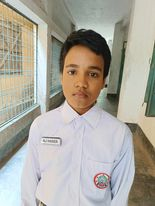
Young South Asian boy with short brown hair and a collared white school uniform shirt. He's standing in a hallway with a window.
Ali Haider

Evil Brothers

Once upon a time two brothers lived in a village. The elder brother was very hardworking but the younger brother never worked. They had a cow farm. There were ten cows in the farm. Five younger brothers and five elder brothers. The elder brother used to take care of ten cows alone and the younger brother used to rest all day. If the milk of ten cows were sold the younger brother would take half of the money. This continued for several years. One day suddenly the elder brother got upset and said, "I can’t handle your cow anymore." This
started a fight between the two brothers. After the quarrel was over the elder brother decided to sell his cows and go abroad. So that day he sold his cows. On the other hand the younger brother decided to kill his elder brother’s cows. So he went to the farm at midnight
and killed five cows. Next morning his elder brother told him good bye and went abroad.

Hearing the younger brother said “Where did you get the money to go abroad?” The elder brother said he had sold the cows. Hearing this, the younger brother ran to the farm and saw the dead cows and started crying. And said what happened to me while harming to others.

Moral lesson: If you want to harm others, you harm yourself.


Ali Haider is a student of grade 7 in Harimohan Government High School, Chapainawabganj, Bangladesh.

Synchronized Chaos September 2023: A Commemoration

First of all, we have a few announcements.

Abstract purple matter, like neurons, connected to each other.
Image c/o Okan Caliskan

October’s issue will be curated by Kahlil Crawford and has the theme of ELECTRONICA: Sound Medicine. This includes pieces about electronic music, pieces about the intersection of art, creativity, technology and healing, or electronic music composition itself.

The Electronica issue will be published October 1st and people may submit for it anytime this month. Please feel welcome to send submissions to synchchaos@gmail.com with ‘Electronica’ in the subject line. Our September 15th issue will come out as usual.

Also, our contributor Roodly Laurore, who sends us poems from his homeland of Haiti, would like to share a link with our magazine. His family volunteers with a nonprofit Haitian school seeking sponsorship for their elementary students. $40 USD can send a student to school for an entire year.

Now, for September 2023’s first issue! Our theme is A Commemoration. As a magazine, we’re commemorating fifteen years of existence, as we published our first issue in August 2008. Our first theme was Creating Abundance Through Imagination.

In this month’s issue, some of our contributors honor loved ones or special occasions, but everyone who writes or creates art is making a commemoration in some way, placing some of their work out in the universe.

Adhamova Laylo Akmaljon describes pilaf, the national dish of Uzbekistan.

David Estringel relishes his world: lightning storms, poetry slams, even funerals and lost loves ruined like ice cream left out too long on the counter.

Dr. Shailesh Gupta Veer’s speaker seeks unity with his loved ones and with the natural world and expresses this ecstasy in bursts of poetry. Sayani Mukherjee speaks of how the very atoms of her body are part of a much larger and sanctified universe.

American poet James Penha expresses the dislocation and wonderment of his trip to Bali through a series of haikus concerning birds and waves and trees. J.D. Nelson probes the world in tiny poems that give the effect of peering over the edge to catch a glimpse of something mysterious. Daniel De Culla adds a bit of mystery to his work by superimposing a butterfly on older and newer photographs of people. Jim Meirose creates a carnivalesque atmosphere in his surreal piece about games activated via coin slot.

Vintage image of a redheaded bird with red and black and brown and tan wings and a black curved beak on a tree branch on a sunny day. Tree is leafing out and there are other trees in the background.
Image c/o Andrea Stockel

Don Bormon takes pride in the wondrous world around him, the natural and human beauty and heritage of his native Bangladesh. Abdullah Al Mamun celebrates the beauty of nature and reminds us to respect the natural world. Monira Mahbub speaks to and draws the beauty of ordinary life in a small country village close to nature. Channie Greenberg celebrates nature through her selection of photographic closeups of a variety of white flowers.

Isabel Gomes de Diego highlights the majesty of our world through photos of her young son with some lovely horses. She takes joy in her family as much as in nature.

Tanvir Islam highlights the love, kindness and support of his mother while Bakhora Bakhtiyorova outlines the many ways her mother has enriched her life. Nilufar Tuktaboyeva illustrates the unconditional love of parents and the sacrifices they make for their children.

Carol Pierce illustrates how a grandmother continues to teach compassion to younger members of her family even while in a physical rehab facility. Mr. Ben speaks to how parents and teachers need to give children proper guidance on how to behave, in his new book Don’t Be Stubborn.

Silhouetted family, two adults and two kids, on a beach at sunset. Mountains across the lake.
Mohamed Mahmoud Hassan

Wazed Abdullah reflects on the educational guidance he receives at school. Mantri Pragada Markandeleyu also outlines methods for improving education through graphic design principles in his essay on “Choism.”

Lily Erkinova Nilufar also turns to principles of design to suggest ways to improve the tourist experience, and thus the economic development, of Uzbekistan. Mantri Pragada Markandeleyu’s mixed media pieces interpose American cinema glamour with life lessons on ethics, wisdom, and success.

Nurujjaman speculates on what he will become when he is an adult and finishes school.

Abdul Aziz Muhammad Inuwa speaks to the creative life force behind the pen of a poet. Mark Young’s postwoman poems address the random gifts people and life bring that can inspire an artist. Gustavo Galliano imagines that he’s being watched as he works, and this supposed mysterious figure becomes his muse.

Eva Petropoulou Lianou compares the thoughtful process of crafting a poem to a romance, while sharing the difficulty of holding onto high ideals in a world where not everyone shares them. Stephen Jarrell Williams contributes pieces replete with cyber and supernatural dangers and urges us to remember the values we knew when we were young to navigate a changing world. Annie Johnson recollects the idealism of her early childhood and the hazy early mornings next to her true love.

Jerry Langdon’s poetic speakers feel themselves dissolving, as they lose valued relationships that made them who they were or their sense of uniqueness as artificial intelligence supplants them. Rus Khomutoff’s work feels disorienting, yet reflects and spurs us on towards seeking authentic truth and becoming our real selves.

Still life with skulls and a skull shaped goblet and a book and sword on a table in a medieval style room.
Image c/o Kai Stachowiak

Marjorie Thelen’s spiritual poetry encourages us to leave behind ideas about God/Goddess and experience the divine and spiritual awakening for ourselves as part of a universe full of many similarly awakening beings.

Rasheed Olayemi reminds us that true religious faith should inspire love of others rather than sectarian hatred.

Abdullah Al-Mahin writes of a person who has intelligence and perhaps a form of wisdom, but lacks love and compassion. Christopher Bernard finds no vindication, but only sorrow, and pity for the man and for our world, in the mug shot of former American president Donald Trump.

Mykyta Ryzhykh probes the selfishness and inhumanity he sees in contemporary life and urges us away from various forms of illicit power and exploitation.

Mahbub Alam suggests with two poems that the world’s inhabitants can either connect together or divide with conflict. Ekpenisi Nwajesu’s poetry offers advice on how to survive both internal and external conflict and suggests that people experience both during wartime. Roodly Laurore illustrates an argument between neighbors that de-escalates when adults pay attention to the wisdom of children.

Ayodeji Michael Adeboboye interviews Nigerian political leader Jimoh Ibrahim about statecraft and national defense and peacemaking in the country.

Daniel Aondona’s fantasy tale illustrates the negative consequences of arrogance and selfishness in the life of a leader: pride goeth before a fall. Henry Ikechukwu’s supernatural action drama illustrates the violent and alienating effects of homophobia and the possibility of future survival and triumph.

Two figures with floppy hair and stripy outfits, one with a medieval suit and another with a skirt, floating in space. Both of them have a purplish blue tint.
Image c/o Victoria Borodinova

Mesfakus Salahin compares a romance to an epic drama, a dream fantasy that becomes real life.

Akhlina Ankhi presents a picture of a true and devoted romantic love that inspires a couple to work for justice and unity throughout the world. Sharipova Zuhro Sunnatovna evokes the beauty and renewing power of caring and nonjudgmental friendship and of rain. Shamsiya Khudoinasarova Turumovna illuminates the intensity of romantic passion while Elmaya Jabbarova highlights the wonderment of sincere love. Kristy Raines speaks to the way love not only welds a couple together but also burns away anything that could be a distraction to that connection.

John Edward Culp demonstrates how love, or friendship, can lift him up and call him back to himself on a bad day. David Estringel relishes the physical side of passion in his upcoming poetry collection Blue, reviewed here by Cristina Deptula. Taylor Dibbert highlights the unconditional love of his dog.

Leslie Lisbona reflects on a romance that fizzled out due to its inopportune timing and anti-Semitism.

J.J. Campbell muses on the persistence of his youthful dreams as he experiences gritty and cynical middle age. Duane Vorhees cleverly illuminates the limits of our heroism, language, and knowledge.

Cross in a cemetery under trees.
Image c/o Freddy Dendoktoor

Sabrid Jahan Mahin muses on the brevity of life while Azemina Krehic remembers a personal loss in the time of great national grief in the Balkans. Manzar Alam grieves a young loved one who passed away. Francesco Favetta compares life to the sea, constantly roiling in motion and bringing change and grief, and takes comfort in his mother and his family.

Through her eaglet and lamb poems, Lilian Dipasupil Kunimasa exposes the danger and vulnerability inherent in our existence as well as the unnecessary cruelty we face at the hands of others. In his discussion of H.G. Wells’ novel The Time Machine, Z.I. Mahmud suggests that it is change and challenges in our environments that push us to evolve and become creative.

We hope that the experience of reading this issue pushes you to become your best and most creative self. Enjoy!

Essay from Feruza Axmadjonova

Teaching English in kindergarten

As the world becomes increasingly interconnected, the ability to communicate in English is becoming more and more important. Many parents want their children to start learning English as early as possible. This is where teaching English in kindergarten comes in. Teaching English in kindergarten can be a rewarding experience for both teachers and students. It is a great opportunity to introduce children to a new language and help them develop their language skills at an early age. As for the benefits of teaching English in kindergarten are numerous. First and foremost, young children have a natural ability to learn languages. Their brains are wired to absorb new information quickly and easily. This means that if they are exposed to English at a younger age, they are more likely to become proficient in the language later in life. Additionally, learning English in kindergarten can help children develop important cognitive skills. Learning a new language requires children to use their memory, attention, and problem-solving skills. These skills can then be applied to other areas of their lives, such as math and science. Furthermore, teaching English in kindergarten can help children develop social skills. Learning a new language requires children to communicate with others and work together to understand new concepts. This can help children develop empathy and self-confidence.

Despite these benefits, teaching English in kindergarten also comes with its challenges. One of the biggest challenges is teaching young children requires a different approach than teaching older children or adults. Teachers must be patient, creative, and able to engage  children in fun and interactive activities. Another challenge is ensuring that children are not overwhelmed by the new language. Young children have limited attention spans and may become frustrated if they are expected to learn too much too quickly. Teachers must strike a balance between challenging children and keeping them motivated and engaged.

With the right approach and resources, it can be easier to teach foreign languages in the early ages. There are numerous tips to teach English for young children. Firstly, using visual aids. Visual aids are an essential tool for teaching English to young learners. Children learn best when they can see and touch things. Using flashcards, pictures, and other visual aids helps children to understand new vocabulary and concepts. Secondly, play games can be a great way. Games are a fun and effective way to teach English. If the games involve movement and interaction, such as Simon Says or Duck, Duck, Goose, it will be easy children to recognize new theme with fun way. Board games and puzzles in teaching vocabulary and grammar structures are also great tip. Moreover, storytelling, song singing are also considered effective ways.