
A JOURNEY TO THE UNKNOWN

Life is a ball which rolls different faces.
She gives you a part as a present,
You have a beginning and in this mystery
Lies also an end
Life is a journey
You are a journey, too.
Category Archives: CHAOS
Short story from David A. Douglas
The Tavern

The piano played softly. Or the soft piano played a melody to smooth out the edges of another rough week. It had an empathetic touch. She never raised her drink to her lips due to the intoxication of song. Cradled by the booth in the back corner she exhaled a deep sigh, as she tried to avoid Monday. A single glass of a local red was a Friday night ritual. But for now, contentment was beyond the grape as a crescendo built up by masterful fingers on keys of black and white.
The beast crouched outside in the dank and dark alley. Its claws grasped fear of tomorrow.

The candles brightened smiles. Or bright smiles reflected off the twenty-one candles. But the wax dripped into the cake like the tears of the birthday girl soaked into her heart. A private party of only two in the reserved back room was spotted with a mix of joy and sorrow as was painted on the face of her eldest sister. The pendulum on the clock down the hall stirred the present moment, and at the same time the grief of yesterday. They forced smiles and fought to celebrate the momentous occasion.

The beast ogled through the frosted window with eyes of red. Raised above its scarred head was anger against loss.

The bent ear heard all. Or the ear of his long-time friend was bent around the corner of the bar -- and listened. Buddies since high school. They were parked on adjacent stools for hours over a couple of pints. One soaked it all in, while the other's blood boiled. One glass was half full, while the other was half empty as he voiced his displeasure of being a useless tool. The spirit of the latter was filled by the dedication of the former. Yet, something lurked in the recesses of his mind.

The beast cracked the heavy wood door open as one foot hovered over the threshold. Hidden behind its back was hatred toward another.

While others danced their troubles into the hardwood floor, the beast charged in as it splintered the door frame. Shards of indifference pierced the ceiling and walls as a dark veil cast shadows of doubt into the minds of the patrons. Under attack, their route of escape was blocked. It smacked fear at anyone who would succumb to it. It hammered down a steady rage of anger. And from its hidden place, it swung hatred in a berserk frenzy. It preyed on their happiness.

The patrons gazed at one another, stunned by the evasion. Or it was an invasion into their refuge. A few begun to shiver and shrink into the shadow. But courage thrived in certain pockets of the tavern. Their strength came not from the spirits displayed behind the bar. Something greater than a strong proof proved a finer flavour. Out from the walls of social exclusion, there arose quality in character. Enough suffered! The fearful woman came to the aide of the birthday girl challenged with anger, while the man tempted by hate turned toward love. In turn, he offered to lighten the burden of anyone who faltered. And they all faced the beast together. For three are stronger than one, or two.


“Though one may be overpowered, two can defend themselves.
A cord of three strands is not quickly broken.” – Ecclesiastes 4:12
Poetry from Alan Catlin
War Diary of Yeugenia Belorusets, Ukraine 2022

The Beginning
Air Raids
Tense Silence
Bomb Shelter
An Extinguished City
Time to Be Brave
“It’s 3:30 p.m. and we’re still alive”
A Way of Life that Swallows Everything
“The night is still young”
A Blemish on the Landscape
Illusions
Too Tired for the Shelter
An Unexpected Gift
Rockets Over Kyiv
In War, One Thinks Only of War
Tactical Retreat
The Picture of the Man and the Cat
Deceptive Illusion
The Houses That Disappeared
“Kyiv will be as clean as Berlin”
“Risk of injury”
The Smell of Burning Forests
Here in Kyiv
Endless Cannonades
Islands of Temporary Calm
In the Nerve Center of Catastrophy
A Changed City
Laughter Returns to Kyiv
A City Drowns in Blood
“This diary cannot be completed; it can only be interrupted”


An Ya’s Ghost Music

I was certain this was a dream
Everything besides the mushroom was buried in darkness
“It’s normal that you don’t understand.” the mushroom said.
I had no choice but to trust the mushroom
It was not until later, after the sonata had ended and I was
	stepping into the shower, that I noticed the musky
	smell on my fingers.”

“Can you tell Bowen our town has turned orange?”
“I can send you a picture if you like.”
“It happened the night the dust landed on the river.”
“He fell in and nobody was there to help.”

Apparently, Julia hung herself in the middle of the night
She must have taken a shower beforehand because when they
	found her, her hair was frozen through
“From afar she looked like a giant icicle.”
“I didn’t think she was real.”

I wasn’t sleeping at all at night
I unfolded the instructions that came with one of the mushroom kits
Watch the mushrooms grow


Random Entries From R. Crumb’s Dream Journal

Dream of Burning Insects
Dream of Right-Wing Christians: I am murdered
Recurring Travel Anxiety Dream
Dream I Will Myself to Shrink in Size
Erotic Dream of Patty and Aline
Dream of Throwing Snowballs
Recurring Dream of Underground Caves
Dream of Being Captured by Government Agency
Dream of Cruel, Sarcastic Brazilian Man
Dream of Double Sex with Aline
Same Day: Dream of Zaro’s Death Ray Machine
Deam of Playing Old-Time Music with Some Young Men
	and Boys
Dream of Runaway Camel
Dream of Assertive Girl at a Party
Dream of Miniature Gothic Sculpture
Dream of Fucking a Woman
Dream of Finding Old Records and Talking to My Mother
 	on the Telephone
Dream of Scorpion and Shit
Dream of Family of Giants
Dream of Advancing Flood Waters
Nightmare of Hovering Presence
Dream of Flying Saucers and Talking to Aliens


Marianne Faithfull

You can’t always get what you want
As tears go by
This little bird
Sister morphine
Just like a woman
First person to say fuck in a mainstream movie
The Girl on the Motorcycle
Naked Under Leather
The Seven Deadly Sins
Pirate Jenny
Ophelia
Florence Nightingale
Maria Theresa
Alice in Wonderland
Irina Palm
Memories, Dreams, Reflections
Three Penny Opera
I Got You Babe Duet with David Bowie
Broken English
20 the Century Blues
A Secret Life
Dangerous Acquaintance(s)
Vagabond Ways
Easy Come, Easy Go
Kissin’ Time: Parental Warning Explicit Content
Blazing Away: Explicit Content with no Parental Warning


Myths to Live By: Official U.S. Government Booklet 1950

Your chances of surviving an atomic attack are better than
	you thought
Close to an explosion, your chances are one out of ten
Beyond a half mile, your chances of survival increase rapidly
Injury by radioactivity does not necessarily mean you are
	doomed to die or be crippled
Don’t be misled by wild talk of “super super bombs”
Doubling a bomb’s power doesn’t mean doubling the damage it
	will do
Blast and heat are the biggest dangers
To protect yourself from blast, lie down in a shielded spot
In your house lie down against a wall
Outdoors: get next to a solid building
To escape temporary blindness, bury your face in your arms
Flash burns are a serious cause of injury: shield yourself from
	the flash
Even a little material gives protection from flash burns so be
	sure to dress properly
Radioactivity is the only way besides size in which atomic bombs
	differ from ordinary ones
We know more about radioactivity than we do about colds
Injury from radioactivity depends upon the power of the rays and
	particles, how long you were exposed and much of your
	body was hit
Explosive radioactivity is the most important kind, but it is only
	for a moment
Even canned and bottled foods may be irradiated, but will be
	safe to sue them
Vomiting and diarrhea are the first signs of radioactivity sickness
Even if you should get severe radiation sickness you would have
	a better than even chance of recovery
There is little you can do to protect your house from the blast
It is better to figure on collapse of the upper floors and to take
	cover in the basement
YOU CAN SURVIVE


Aspects of Barthes' Mourning

First wedding night. But first mourning night?
She would say with relief: the night is finally over
In the sentence, “She is no longer suffering.” To what,
	to whom does she refer? What does the present
	tense mean?
Don’t say mourning. It’s too psychoanalytic: I’m not mourning.
	I am suffering.
How am I going to manage to live here all alone? And, at
	the same time, it’s clear there is no other place.
Sometimes, very briefly, a blank moment-a kind of numbness-
	which is not a moment of forgetfulness. That terries me.
…henceforth and forever, I am my mother
I was not like her, since I did not die (at the same time) as her.
The measurement of mourning. Eighteen months for mourning
 	a father, a mother.
Poetry from Mahbub Alam

For the face of Love

I gain the power to fly in the sky
The charm that always knits me
The glow of sunrise
 Of threads in a space so sweet
Unconsciously where I go and come back
No hindrance or bar to cross the Red
Only its your face of love
Make me so powerful to win the race
You stand by me and I like a phoenix
revive
For a love bird I fight from my birth
I die and survive till the last sigh
The green always smiles over
On the seedlings of the paddy
I ride on the cart and reach my home
Sing out the song
‘Bohu diner pirit go bondhu
Ekey dine vengo na’.

Chapainawabganj,  Bangladesh
18 June, 2024.


Md. Mahbubul Alam is from Bangladesh. His writer name is Mahbub John in Bangladesh. He is a Senior Teacher (English) of Harimohan Government High School, Chapainawabganj, Bangladesh. Chapainawabganj is a district town of Bangladesh. He is an MA in English Literature from Rajshahi College under National University. He has published three books of poems in Bangla. He writes mainly poems but other branches of literature such as prose, article, essay etc. also have been published in national and local newspapers, magazines, little magazines. He has achieved three times Best Teacher Certificate and Crest in National Education Week in the District Wise Competition in Chapainawabganj District. He has gained many literary awards from home and abroad. His English writings have been published in Synchronized Chaos for seven years.
Essay from Mashkhura Usmonova
Effects of mobilephones in society

Due to the fact that we live in the age of technology, today many people prefer online communication instead of face-to-face meetings.
Firstly, one of the biggest reasons for this is our smartphones and the fact that people spend so much time on social media these days.
for example, they waste time reading posts on channels in Telegram groups and as a result they do not have time for other household chores and plans.

Secondly, there are mobile phones from adults to young children and parents do not give enough time to their children.  As an example, young children watch cartoons or videos on YouTube channels from morning to night this is a leading them to grow up unkind and aggressive.

In general, socialize meetings are not popular among people today because of telephones, which in the future may cause psychological diseases such as depression, loneliness, and longing.

Usmonova Mashkhura Shukhratovna
Essay from Aziza Saparbaeva (July 15th)

Aziza Saparbaeva, student of the 3rd stage of history education, Urganch State University, Faculty of Socio-Economic Sciences, winner of the state scholarship named after Navoi.


The event that happened in the life of Amir Temur and left a scar on him for life took place in Seistan in 1362. At the suggestion of Malik Qutbiddin, governor of Seistan, two friends go to fight against his enemies. During the battle, Amir Temur was seriously injured by a bow and arrow on his right elbow and right leg. As a result, he will be lame for life.

Amir Temur remembers this in his "Tuzukoti Temuriy":

"On my way to Baktarzamin and Kandahar, I stopped and built a village [2] when I reached the Hirmand [1] river. I stood by that river for several days to rest my soldiers. At that time, about a thousand Turkish and Tajik horsemen from the Garmsir [3] region and their troops joined me. In this way, Garmsir region came under my control.
Then I decided to travel to Seistan [4]. When this news reached the governor of Seistan, he sent gifts and greetings through the ambassador and asked for my help: "My enemies oppressed me and took my seven fortresses from my hands. If they cut the hand of the enemy from me, I would supply their soldiers with food for six months.''

After consulting on my own, I decided to march towards Seistan. Seeing that I took five of the seven fortresses captured by the enemy by force and anger, fear fell into the heart of the governor of Seistan, and he took his yesterday's enemies as his friends, and held such a council among themselves: "If Amir Temur stays here as long as I stay, it is certain that the property of Seystan will be lost from our hands", saying that all the Sipah and raiyats of Seystan united and attacked me.

Because the governor of Seistan did not keep his promise, I was helpless and started fighting against them. At that moment, a bullet hit my elbow and another shot hit my leg.

Even so, I won over them in the end. But I didn't like the climate of that country, so I left there and went to Garmsir again. I stayed in that region for two months until my wounds healed."

The Spanish ambassador de Clavijo, who traveled to Samarkand in 1404, wrote that Amir Temur lost many of his troops when he faced the cavalry of Seistan. "They also knocked Temur off his horse and injured his right leg. After that, he became lame for life and got the name Temurlang," writes Claviho. He also says that Amir Temur's right hand was injured, he was paralyzed, and then he lost his finger.
Because of these injuries, the Persians called him "Temurlang". Therefore, in Russian and Western sources, his name is given as "Tamerlan", "Tamerlain".

1) Hirmand - the Helmand River in the south of present-day Afghanistan.
2) Land means residence here.
3) Garmsir (Persian - hot country) - adjacent lands of Seistan and Baluchistan.
4) Seistan is a country located in the south-east of present-day Iran and south-west of Afghanistan. In 1872, it was divided between Iran and Afghanistan. The part up to the Helmand River passed to Iran, and east of it to Afghanistan.


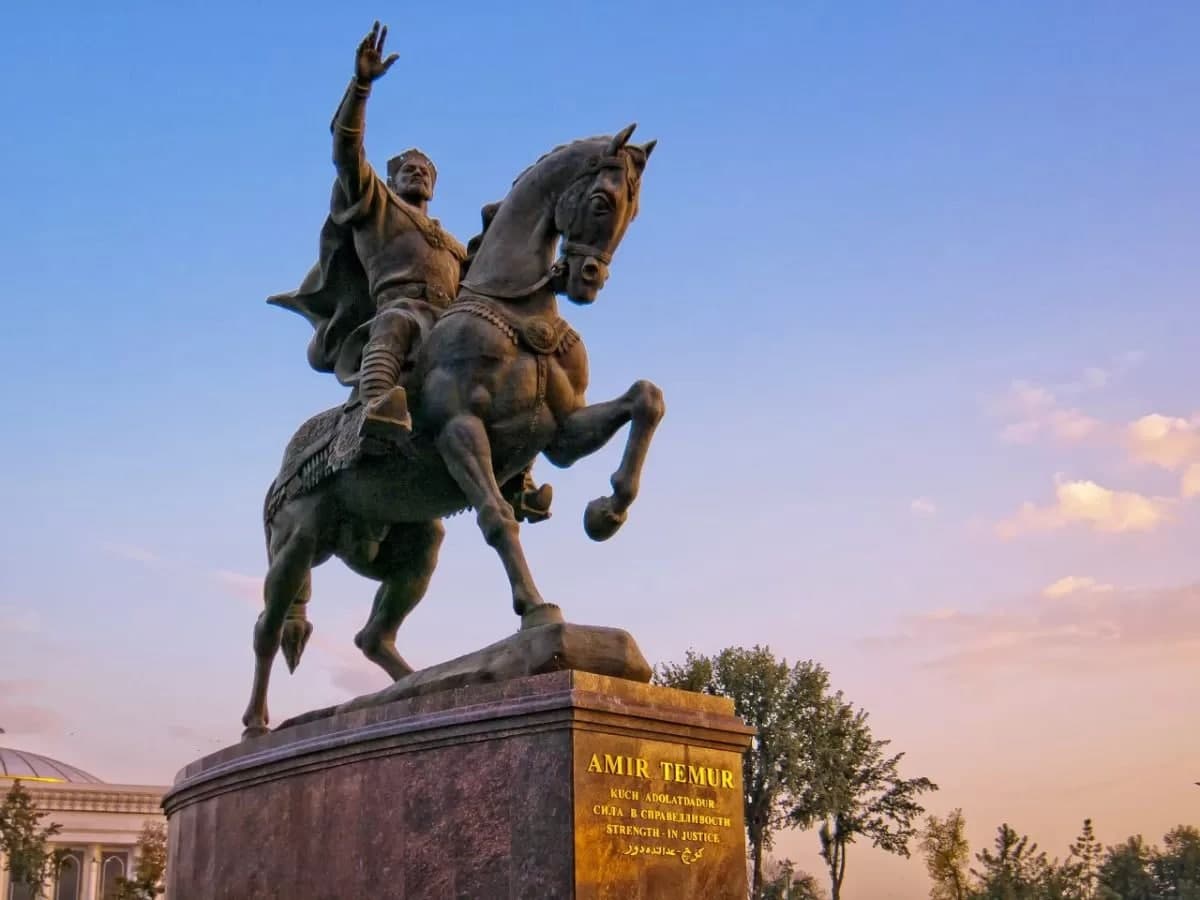
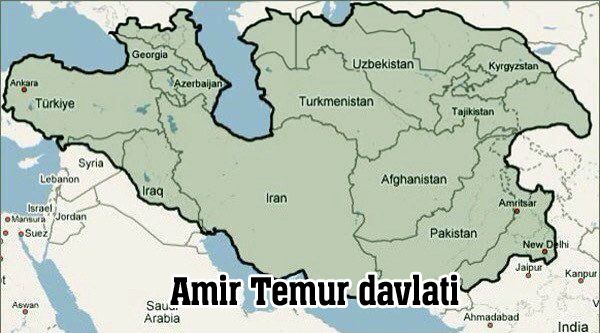
In the first and second picture, we see the statue of Amir Temur and the state he built.
Poetry from Luis Berriozabal
Into the Valley

After Gil Vicente

I go out into the valley,
out into the valley, I go,
where a nightingale
sings of lost hope.

I go out into the valley,
where bitter lemons grow.
I go out into the valley
where my rosy cheeks
have enough of the sun.

There is no fruit for
my labor. There is no love.
I go out into the valley,
out into the valley I go,
as I sing of false hope.

My gentle skin burns.
I’m too pale for the sun.
I go out into the valley
where the nightingale
sings the saddest of songs.

*

57 Going on 60

I am not
only alive
and in the present,

I am not
in the future
and the past is gone.
My memory
is the worst of all.
I might as well be dead.

I have two years left.
I have one toe in the grave.
That is the future.

I may not have two years left.
Who really knows?
The present is fleeting.
The past was a blur.
And I never believed
in the fountain of youth.

*

Moving Around

I hide at night
in a home by
a river of
debris and mice.
Of Mice and Men,
I read that book.
I used to love
The Moon is Down.
Moving around
makes me so tired.

*

Bundle of Dreams

I was born
and I will die.

I will die
and I will have dreams.

I will meet
my grandparents
on the other side.

My hair will
grow long again
and I will be young.

Isn’t it great?
This is one of my dreams.
I have a bundle of them.

*

Words

Words betray me.
I leave them stranded in retaliation.
They get dirty
with no one to tend to them.
Blank-eyed, they look
at me with numb attention.
Their false smiles sting.
The words convince me to take them
back. In a stream
of consciousness the words
start a poem
on the importance of second chances.
More poems come
out wrapped in barbed wire about
America’s wall.
I take a mop to the blood on the page.
I can’t clean it.
The killing has been going on for years.
Our life, our lives
are fed to the black night in the desert.
Off the rails, a
would be leader peddles fear to his lot.
My vote and
my words are my most useful weapon.
I take a pen.
I write down the story I have to tell.
Nobody can
stop me. I must keep faith in myself.