Essay from Z.I. Mahmud

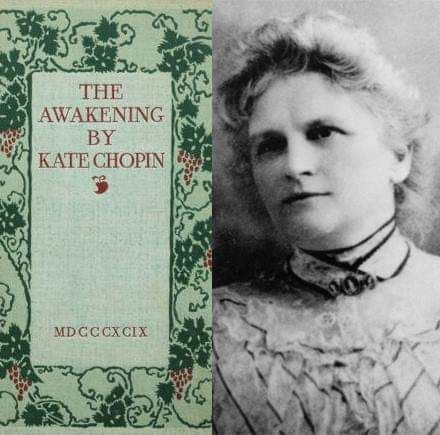
Red text of The Awakening by Kate Chopin, with wallpaperlike images of red grapes in the background. Next to the book is a black and white image of a white woman with a high-necked ruffled blouse.

Puritan England New Orleans postmodern authoress Kate Chopin’s The Awakening explores the feminine subjectivity through dichotomies and/or antitheses between the self and society unfolding maternal discourse and self-possession in corresponding light of sensuality, sexuality, autonomy and adultery. Edna Pontellier’s denial to be “reintegrated into the existing order of the bourgeoise patriarchal society […] challenges less a particular institution than the entire organization of society […] the outward existence which conforms and the inward life which questions […]Mrs. Edna Pontellier was beginning to realize her position in the universe as a human being and to recognize her relations as an individual to the world within and about her.”

In her despondent vigils the night before her bereavement, this vivid image comes to her mind, “The children appeared before her like antagonists who had overcome her; who had overpowered her and sought to drag her into the soul’s slavery for the rest of her days. But she knew a way to elude them.” Children loomed in gigantic proportions in her final meditations as slave drivers of her hallucinating mind, analogous to the white slave owners claiming ownership and possession over the bodies of quadroon’s ancestors; despite being ushered to be relocated to Iberville—the suburbs of Edna’s mother-in-law. Mrs. Pontellier, unlike her husband, hadn’t the privilege of quitting the society of Madame Lebrun when they ceased to be entertaining. “She [Mrs. Pontellier] was only a bird in a gilded cage.” Readers perception of caged birds symbolic manifestation embody Edna Pontellier’s domestic enslavement, a reading reinforced by the balladry associated to the wedding of unfortunate dame with the wealthy master with some refrain. Mr. Pontellier was very fond of walking about his house, examining its various appointments and details, possessions he greatly valued, chiefly because they were his own contrasting in juxtapositional effect with Mrs. Edna Pontellier’s approaching the flowers in a familiar spirit and making herself at home with them. This analogy appropriates Edna Pontellier’s choice of her predilections and proclivities. 

“How strange and how awful it seemed to stand naked under the sky! How delicious! She felt like some new-born creature, opening eyes in a familiar world that it had never known.” —-This quotable statements reechoes virginity and baptismal rites of birth of the holy Ghost as anticipated in her farewell from earthly life; as reciprocated in the self-authorized death. In other words, Edna Pontellier’s unfettered physical response to the sensuousness of the familiar world replenishes, renovates and regenerates herself. Dr. Mandelet thus, certifies the testimonial in the medical examination of nothing morbidity state but alleviated in repression from glance or gesture as exhortations point out, “She[Mrs. Pontellier] reminded me of some beautiful, sleek creature waking up in the sun.” However, in the penultimate liberality of the revelatory scene contrasts in juxtapositional effect of the “scene torture” in “with an inward agony, with a flaming outspoken revolt, against the ways of Nature, witnessed the scene torture” Adele Ratignolle’s physical labour of birthing, gestation, maternity and motherhood along with cultural labour of requisite image contextualize the femininity and womanhood. Adele Rontignolle’s speeches: “Think of the children, Edna. Oh, think of the children! Remember them!” the dialogism is precisely the abdicating of dispossession what she does as she evaluates the midnight vigils which follow. .    

“She [Mrs. Edna Pontellier] meant to think of that; that determination had driver into a soul like a death wound—–but not tonight. Tomorrow would be time to think of everything […] There was no human being whom she wanted to be near her except Robert Lebrun; and she even realizes that the day would come when he, too, and the though of him would melt out of her existence, leaving her alone.” Edna Pontellier imagines the fantasy of romance and promiscuous cuckolding to be metamorphoses of ephemerality; re-imagines her struggles for emancipation and freedom, quest for individuality and selfhood and self-empowered fulfillment in a world of traditional roles and values as she is confronted with this dualistic battlefield between motherhood and extra-marital affairs.

Kate Chopin’s autobiographical facetedness of stream of consciousness as a literary technique reveals the gulf experienced by Edna Pontellier’s inner world of private thoughts and rebellious emotions contrasted with outer world of self-censorship and self-containment and/or conformity. Presbyterian janus faced Kentucky stock was exposed to hypocrisy of weekday sins and Sunday repentance. Female passionlessness was hallmark avantgarde of the Victorian cult of true womanhood as reflected by Carol Gilligan’s exposition of feminist phallic power deficiency derivative in “the failure of women to fit the existing models of human growth may point to a problem in the representation, a limitation in conception of the human condition; an omission of certain truths about life.” …motherhood and womanhood…idolized their children, worshipped their husbands, esteemed it a holy privilege to efface themselves as individuals and growing wings as ministering angels.”

To Edna Pontellier bygone heroines of romance and the fair lady of dreams as embodied in the portrayal of Adele Ratignolle. Laissez-faire and free market enterprise or capitalism redeems the concept of femininity and maternity inseparable which exempts inclusion of female desire, autonomy or independent subjectivity. Motherhood imposes womanhood with societal conventions, familial obligations, stifling responsibilities and passive domesticity engendering double alienation resulting in the gulf of the traumatic estrangement from children and between the reality of her individuality and/or subjectivity. 

References

Ivy Schweitzer’s Maternal Discourse and the Romance of Possession in Kate Chopin’s The Awakening, boundary2, Spring 1990, Volume. 17, No. 1, New Americanists: Revisionist Interventions into the Canon, Spring 1990, pp. 158-186


Poetry from Pascal Lockwood-Villa

Live Unhated

Bottle of salty ocean

Take seventeen years worth of pirate slang

Add a dash of 826 Valencia

Read the first ten pages of Moby Dick

Purified to the max

In a deep rinse of kraken blood

And scurvy

Stunning all the onlookers for miles around 

Nearly blinded

McDonald’s thought you were hated enough

To make the Happy Meal Toy lineup

On your little windup Spanish Galleon

Adrift in 100% Apple juice

Poked until chipped

Mystery lying just beneath the surface

A solid blue mannequin instead of bones

A sculpt, not a skull

Leather beaten

Tanned

Pulled

To fit the consumer-based mold

Doesn’t matter if it hurts

Pebbles sell if you’re a smooth enough talker

Keeping track of the time and singing along to the same whistle in your hollow

Noggin

So wide and empty a tornado goes 

Silent in between your ears

No I’m not calling you stupid not by any means

I just want to know why you’re so gullible as to believe

That I was there for you

I’m not your goddamn scratching post

Let me wither in room temperature

Connect the dots to make a wish

But you’ve got a bit worse than a bald spot at this point

And the handkerchief is starting to chafe

Consciousness sliding round like a badly made

Cruise liner dining room

Free mimosas at ten

If you can stomach being around your friends for more than an hour

But I said too much

Please leave

Next?

Next to me was no one

Then you were

But I never asked to be the subject of your pity

I don’t even like it when I’m the subject of your still life.

It’s only because when I hold my breath

I look as if I’m ready

To be born amongst the sea

And forgive you politely 

Saying

“I was never much of a poet anyway”

Any further questions?

No?


Poetry from Kristy Raines

White middle aged woman with reading glasses and very blond straight hair resting her head on her hand.
Kristy Raines
On A Beautiful Spring Day

I met you on a Sunday, on a beautiful Spring day
You watched me from the back of the church
I just walked by you and never uttered a word.

Everything was blooming and you drove by me
You asked if I'd walk by the lake with you,
On that beautiful Spring day, I smiled and nodded, "yes".

You picked me flowers and I cherished those wild flowers...

Time went by and like flowers, so bloomed our love
A year later on a beautiful Spring day, we married
Holding a bouquet of Spring flowers, I whispered, "I Do".

One day you got ill on a beautiful Spring day
With all the beautiful flowers blooming, you passed away

Years later, I stand here on a beautiful Spring day
All the beautiful flowers blooming now remind me of you

Maybe on a beautiful Spring day with the sun shining
You'll be holding wild flowers for me at Heaven's gates.

And together we will walk again, Forever...
On A Beautiful Spring Day....  


The Wings of Love

When I feel you near, at times I can't breathe
Your presence makes me sigh, and my eyes close
trying to compose my feelings that can't be denied
No doubt that even after death this love will not die
The wings of love surround us on this beautiful night
and will lift us up above the heavens to meet the moon
This memorable evening never to be forgotten and
one that will go on and on through the passages of time
I find you even in the most unlikely places of my heart
and I have new eyes that see only the most Beautiful You
I am the sky that fills you arms and heart tonight
as we dance beautifully together between the stars.


Where Love Resides

Where golden strings play songs so sweet
and the many colors of red reside
there also resides my love 

When the song of a sparrow touches my soul
and the signs of Spring show off their colors
So also shows the colors of my love

If the rains come and clouds shadow me
and if my tears fall like the drops that stream down my window
they cleanse my heart so love can shine through again

And, what comes my way, whether happy or sad
I know tomorrow will bring a brighter day
For I look to the heavens and know, the greatest love resides there


Kristy Raines was born  in Oakland, CA, USA.  

She is a poet and prose writer. Kristy is also an advocate. for the Rohingya refugees living in Cox’s Bazar, Bangladesh.  

Kristy has five books getting ready to publish this year.  One with a prominent poet from India, Dr. Prasana Kumar Dalai,  which will launch soon called, "I Cross my Heart from East to West", two fantasy books of her own called, "Rings, Things and Butterfly Wings" and "Princess and The Lion", an anthology of poems in English, "The Passion Within Me" and her autobiography called "My Very Anomalous Life."

Kristy has received many literary awards for her unique style of writing.

Poetry from Mesfakus Salahin

South Asian man with reading glasses and red shoulder length hair. He's got a red collared shirt on.
Mesfakus Salahin

Tombstone

Tell me what should I compose 
My pen is paralyzed 
My garden turns into wasteland
My brain is fully unprofessional 
The Nature is disorder
The environment is disturbed 
The tree of loneliness is increasing 
Absence lives in presence 
Nobody can hear the heartbeat of air
I am without me
I am alone
Everyone is alone
The earth is alone
Birds do not dream 
Dream has no existence  
Flowers sleep outside the sight of butterflies

The butterflies burnt their flute
The cowboys don’t play flute
My spring has lost it's beauty 
Beauty doesn't smile 
The children have lost their silver moon
The moon doesn’t compose poems on the sky
The sky doesn't sing the song of humanity
Humanity doesn’t give water to the grasses
Grasses don’t walk on the roads
The roads are without passersby 
One fears another
 Shadow fears shadow
Life flies far away

History weeps behind civilization 
The pregnant darkness plays with darkness 
The funeral of spirituality has ended
The houses become hospitals 
The world is a graveyard 
Writing is a Tombstone   
Oh The Lord of the universe 
I am your
We are your 
Pardon us and save us.

Synchronized Chaos April 2024: Change of Seasons

Ice falls into a rocky lake from frozen waterfalls. Barren tree branches are heavy with the weight of snow.
Image c/o Peter Griffin

We are hosting our Metamorphosis gathering again! This is a chance for people to share music, art, and writing and to dialogue across different generations (hence the name, the concept of ideas morphing and changing over the years). This event is also a benefit for the grassroots Afghan women-led group RAWA, which is organized by women in Afghanistan who are currently supporting educational and income generation and literacy projects in their home county as well as assisting earthquake survivors. (We don’t charge or process the cash, you are free to donate online on your own and then attend!)

This will be Saturday April 6th, 2-4 pm in the fellowship hall of Davis Lutheran Church at 317 East 8th Street in Davis, California. It’s a nonreligious event open to all, the church has graciously allowed us to use the meeting room. You may sign up here on Eventbrite.

Also, we encourage everyone in the California area to attend the third annual Hayward Lit Hop on Saturday, April 27th. This is a public festival with different readings from different groups throughout downtown Hayward coinciding with Hayward’s choosing a new adult poet laureate, culminating in an afterparty at Hayward’s Odd Fellows Lounge. Several Synchronized Chaos contributors will read from their work at the 2024 Lit Hop.

Icon for Hayward's downtown Lit Hop, Orange background with green frog and white text reading Lit Hop, Saturday April 27th, 2-8 pm. Haywardlithop.com

This month, for April’s first issue, we’re reflecting on the change of seasons. We’re moving from winter to spring, or summer to fall in the Southern hemisphere. Much of the other work here deals with changes in moods, situations, stages of life, or with cultures and societies in times of change.

J.D. Nelson’s haiku evokes intriguing and disorienting seasonal transitions, while Jacques Fleury offers up an impressionistic reflection on a sunrise and the liminal state of consciousness between sleeping and waking. Hurliman Almuratova contributes a poetic piece about spring’s eventual return as Sayani Mukherjee glories in radiant poppies, Don Bormon listens to the symphony of natural sounds around him and Maja Milojkovic revels in the scents, colors, and renewal of spring. Annie Johnson exudes about diaphanous dawn, moonlight, and newborn creation in her poetry.

Mesfakus Salahin sees love all over the natural world around him. Kristy Raines speaks of a steady love where people know the depth of their connection even without using words. John Edward Culp writes of the tender growth of a relationship where there is trust. Davronbekova Sevinch speaks to the need to preserve integrity and trust. Graciela Noemi Villaverde writes of a gentle and silent love among the larks and lilacs. Inobat Karimova describes how her girls’ agricultural science club at school reflects the respect of her society for women, nurturing, the land, and life. Tammy Higgins’ photography concerns intersections of human culture and nature where nature remains present and vibrant.

Amirova Niginabonu’s work speaks to the cycles of nature and the ways of the mind as Michael Robinson reflects on loss and resurrection during the church season of Lent.

Female figure walks off towards a portal in a cave with an arched doorway and light.
Image c/o Gerd Altmann

Dildora Toshtemirova writes of celebrating her birthday after the loss of her parents. Sevinch Raxmanova illustrates coming of age amidst the loss of her parents and grandparents. Nosirova Gavhar’s piece focuses in on a single date to represent her grief at the loss of her mother.

Music pulls Taylor Dibbert back to thoughts of a marriage that ended, as Bill Tope describes an unconditional love that begins awkwardly but becomes very real until the title character’s death. Uzbekoyim’s poem reflects the pain of deeply caring for someone who does not return the care. Daniel De Culla comments on the vulnerability of women and children and the precarity of family life.

Surayyo Usmonova’s poetic story intermingles love, loss, and sorrow as J.J. Campbell speaks to longing and forbidden desires and Prasana Kumar conveys the pain of silence and words left unsaid. Sabina Rasulova writes of dreams dashed with reality and the absence of loved ones. John Sweet wonders what life is worth in a harsh and alienating world.

Mykyta Ryzhykh evokes the “silent emptiness” of alienation and modern warfare and Bill Tope dramatizes the toll of war and military and political oppression on civilian families and children. Azemina Krehic mourns the losses of so many mothers and the violence against women in Bosnia. Christopher Bernard highlights the folly of cycles of conflict and revenge in the Middle East. Mahbub Alam also expresses his hope that Gaza will find the peace he sees in nature. Linda Gunther reviews Ruta Sepetys’ WWII refugee survival story Salt to the Sea, exploring character development and internal and external conflict. In Nahyean Taronno’s detective story, while justice triumphs at the end, deception and violence seem a continual threat. Laylo Bakhtiyorova dramatizes the intensity of emotional pain, but reminds us that it will pass.

Muheez Ohamilekan gently encourages caution before being swept up in uncontrollable experiences as Maurizio Brancaleoni compares the uncertain journey of life to a train trip with an unstated destination.

Person with a walking stick and backpack and hat heads off at sunrise/sunset on a path towards some grass and trees and birds.
Image c/o Mohamed Mahmoud Hassan

Mark Young’s postwoman poems allude to life’s surprise gifts: one never knows what might arrive in the mail. Alan Catlin’s found poems repurpose other famous modern works in a fresh and surprising way, like Polaroids from the lives of artists.

Christina Chin, Shane Coppage, Marjorie Pezzoli and Jerome Berglund send up a group of concrete collaborative haiku that play with words and language.

Eddie Heaton crafts impressionistic takes on relationships and words and literature through long voyages of the mind. Goran Tomic alludes to a different kind of voyage through his collages of vintage images of flowers and clothes and buildings, illustrating city life in the time of the flaneurs.

Sevinch Tolquinova celebrates the value of reading and learning from books. James Whitehead illuminates the honest empathy of Richard Vargas’ poetry collection leaving a tip at the Blue Moon Motel.

Vintage image of a biplane, a steam train, a luggage cart, various people in suits and dresses, a boat and cable car and city scape, and old timey cars in front of a map of the United States and Canada.
Photo c/o Andrea Stockel

Brian Barbeito crafts a long series of character sketches and vignettes, while Noah Berlatsky’s humorous piece speculates on what sort of poet he wants to become. Ifora Olimjonova compares introverts to extroverts and suggests that many people are somewhat in the middle.

Jeffrey Spahr-Summers speaks to a society in transition with his poems on the latent cultural and racial tension in South Africa. Z.I. Mahmud writes of the power and limits of words and memory in Toni Morrison’s Beloved, and how the novel’s characters reclaim their flesh and history.

Thaalith Gimba offers up a dramatic poem of self-assertion, as John Grey crafts muscular poems on human needs and physical existence. Qurbonova Gulsanam extols the power of dedication and self-efficacy in working towards a goal as Donoxon Ibodullayeva reflects on the potential for developing Uzbek youth leadership through school and after-school organizations. Lilian Dipasupil Kunimasa’s childlike poems trace and celebrate our creative journeys through life. Dildora Toshtemirova urges readers to join her in living their dreams as Stephen Jarrell Williams speculates on whether he can bring his into reality.

Duane Vorhees’ poems of the gods and the ancients situate personal and cultural history within geological and natural timescales.

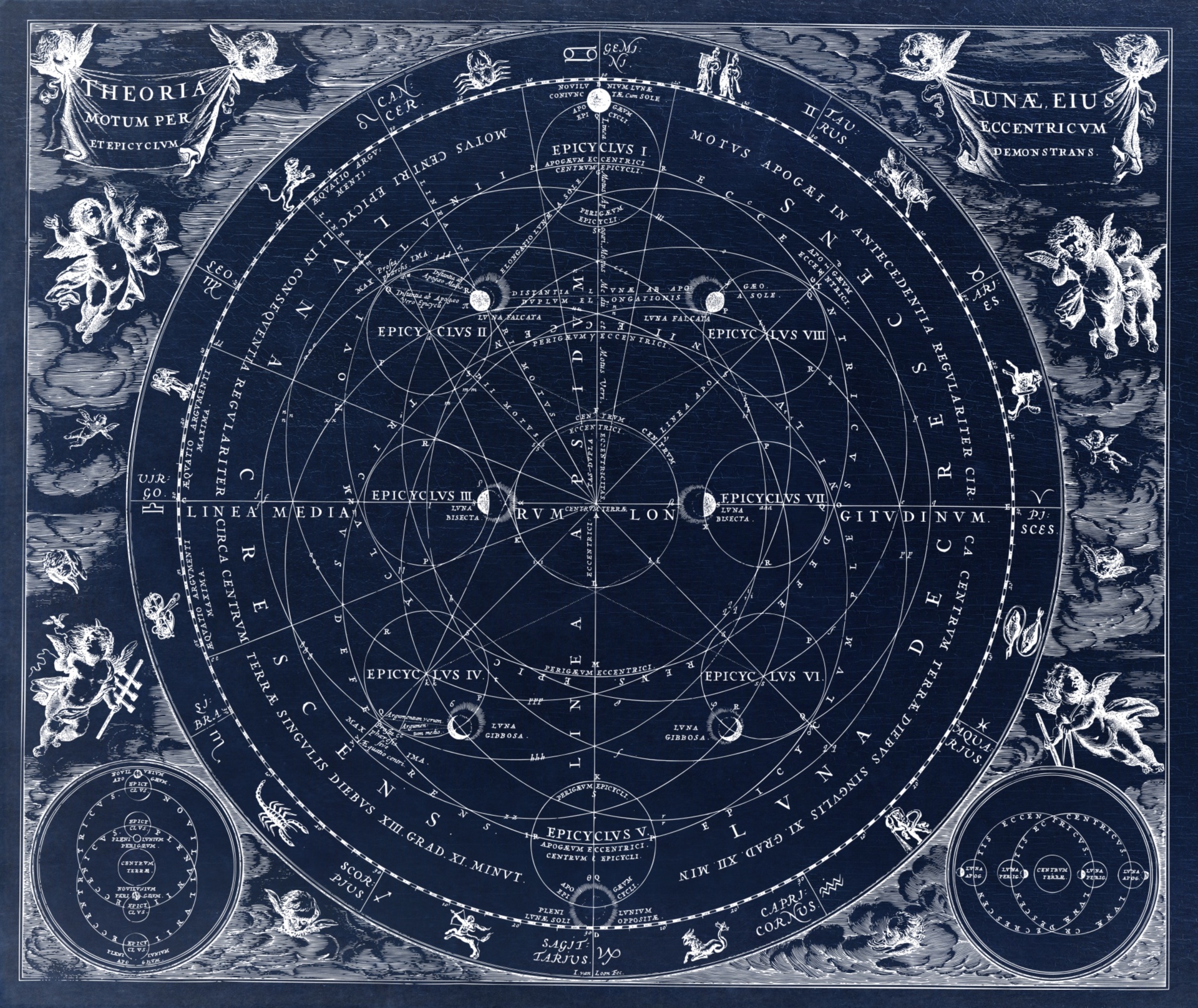
Ancient Latin star chart with writing and illustrations of cherubs in white on a dark blue background.
Image c/o Andrea Stockel

Bahramova Ifora Sunnatillayevna outlines the research of historical astronomer Mirzo Ulug’bek as Amirjonov Og’abek describes the ancient Islamic architecture of Samarkand. Wazed Abdullah commemorates the independence and pride of Bangladesh. Akhrorova Sarvinoz illuminates the historical and cultural value of cities in Uzbekistan, Rasulberdi Ashiraliyev highlights the Uzbek heritage of jurisprudence and the rule of law, Mirzo Ulugbek outlines types and structures of Uzbek businesses, and Xushroy Abdunazarova speaks to the history and beauty of the Uzbek language.

Gulsevar Xojamova encourages educators of Uzbek youth to draw on the nation’s cultural heritage in their lessons. Irodaxon Ziyoyeva discusses how to combine modern and traditional educational methods in the classroom, Shoshura Husaynova explores how to teach English with idiom and cultural context, Muhammadamin Xojamov addresses methods of mathematics instruction, Tolipova Zebuniso Ulug’bekovna draws on modern psychology and learning style theory in her recommendations for children’s education in Uzbekistan, Gulbahor Ergasheva discusses online learning technology, and Gulsevar Xojamova speaks to the role of information technology in modern Uzbek schools.

Work desk with a person's hand holding a cup of coffee above a laptop, a bunch of books, an open book, a phone, some pencils, a candle, and a notebook.
Image c/o Mohamed Mahmoud Hassan

Makhfiratkhon Abdurakhmonova and Abdullayeva Dilkhumor Abdukarimovna discuss strategies for effective early childhood education while Azi Umurzoqova highlights the importance of preschool education to her Uzbek homeland.

Uzbek writer Ruxzara Adiliqizi’s poetry carries a delicate mixture of love and patriotism. Boqijonova Madinabonu relates a story of the hard work and dedication of a mother, while Abdullayeva Feruza urges respect for parents and acknowledgement of their care. Farzona Koshimova writes of the importance of manners and respect for elders while Dilnurabonu Vayisova dreams of traveling the world with her mom.

We hope that this issue will deepen your heart and awaken your curiosity as you travel with us. Bon voyage!

Story from Dildora Toshtemirova

Diagonal shot of a young Central Asian girl with curly black hair and a blue sweater. She's standing in the corner of  a room.
Dildora Toshtemirova

I miss you

Today, my parents, is my birthday. But this birthday is not happy at all. You know, father and mother, I miss you, that innocent girl of 7 years old. I was very happy at that time. I still remember those days. I have not yet heard from anyone what I heard from you. No one could support me like you. I really miss those moments and days with you.

You know, I’m so tired of the day you left me at my grandmother’s house and went to the girl’s house. Every year when that day comes, I can’t find a place to put myself. I still remember my parents telling me “Don’t go, take me too.” And you said, “Daughter, we will definitely come tomorrow, we will bring you lots of chocolates and dolls.” Then I boasted to my grandmother and said, “Grandma, you see, tomorrow my father will bring me many toys and chocolates, they will not give them to anyone, they will bring them only for me.” Then my grandmother smiled and said, “Of course they will.” I will never forget these words.

When I woke up the next day, I was very happy that my father and mother would come today. But this feeling of joy left me. My grandmother was crying, her eyes were full of tears, she was punching the ground and crying. I went to my grandmother and said, “Don’t cry, why are you crying? Mom and dad are coming, they will be sad to see you.” My grandmother couldn’t stop the tears in her eyes and said “I won’t cry, my daughter, I won’t cry”. I could not understand why my grandmother was crying.

On this day, all our relatives came to our house. My aunt, uncle, aunt, uncle, etc. I was looking for you among them. Then I slowly went to my grandmother and asked, “Grandma, when will my father and mother come?” Then my grandmother said “Tomorrow will come tomorrow” and added “Last time” while crying softly. And I could not understand what was happening. The next morning, many people started coming to our house. Women used to come to our house wearing white veils, and men wore caps on their heads, and I didn’t like this situation. 2 months ago, many people came to the house of our neighbor Saliha’s grandmother. The people who came to their house were dressed in the same way. After that, grandmother Saliha disappeared. I was afraid when I remembered them. I cried because my father and mother would not come again, so my grandmother came to me and asked, “Why are you crying? What happened?” And I kept crying, “I need my parents, find me, I’ll go with them, where are they?” My grandmother tried to persuade me, but she could not.

All of a sudden, at that moment, the surroundings became silent. I could not understand anything as usual. I also became silent. Two big things were coming out of the door. I was wondering what it was. Now I know that it is a coffin. That’s why you were there, mom and dad. Then they took out the coffin, that is, you. After that, I did not see you again. You disappeared like grandmother Saliha. I used to harass my poor grandmother by asking for you.

You know, parents, these things will never leave my mind. Maybe when I told you not to go, if you had not left, such incidents would not have happened. Maybe we would celebrate my 17th birthday with you, I don’t know… I wouldn’t spend every day, month, year in loneliness. Now I wouldn’t miss the words “We love you girl”. I always miss the days spent with you. I love you parents. You are not with me, but I know that you are always with me from the heart, my beloved father and mother.

Essay from Azi Umurzoqova

Young Central Asian woman with earrings, a necklace, a lanyard and a white sweater, standing in front of a chair.
Azi Umurzoqova

Jizzakh State Pedagogical University 1st grade student Umurzokhova Aziza.

 A modern approach to the preschool education system.

Abstract:

The economic power of each country, the rise in the level of social and spiritual life is determined by the competitiveness of the educational system and the development of science.

Key words: 

Action strategy,preschool education system,decree and law,reforms.

Therefore, in the Strategy of Actions for the further development of the Republic of Uzbekistan, the priority is to fundamentally improve the education sector, increase the quality of education, form a generation with intellectual potential, physical fitness, in-depth training of specific sciences and training of qualified personnel for various sectors of the economy. were defined as tasks, and it was planned to create an educational system that could ultimately meet the requirements of today’s era.

As a result of reforms in the field, the management mechanism in the preschool education system was fundamentally improved, the non-state educational service provision system was reformed, the secondary special, vocational education system was revised, the quality of training of highly educated specialists was improved. improvement measures were strengthened, a two-level system of post-university education was introduced.

Preschool education. This field, which is considered the primary link of the continuous education system, is extremely important in raising a healthy and well-rounded child and preparing him for school. However, the analysis showed that in recent years, under the influence of various factors, instead of development in the pre-school education system, in terms of preparing children for school education, there have been cases of backwardness, the enrollment of preschool children in pre-school educational institutions during the year has decreased. there was no trend of increasing indicators. On the contrary, during the last 20 years, the number of state-owned preschool educational institutions has decreased by more than 45 percent, and today the coverage of children in preschool education in the republic is 30 percent.

In his speech at the solemn ceremony dedicated to the 26th anniversary of the independence of the Republic of Uzbekistan, the head of state said: “Our goal is to fully cover children of kindergarten age in our country in preschool educational institutions in the next 3-4 years, and we will definitely achieve it.” had emphasized.

In fact, in the past short period of time, the President of the Republic of Uzbekistan “On measures to further improve the preschool education system in 2017-2021”, “Measures to fundamentally improve the management of the preschool education system” on” decrees and decisions “On organizing the activities of the Ministry of Preschool Education of the Republic of Uzbekistan”, as well as

“Unprecedented work has been done on the basis of the 2017-2021 Program for the further improvement of the preschool education system and the “Road Map” for the further improvement of the preschool education system in the republic.

We are witnessing that the changes implemented in the system, along with other areas, the implementation of the tasks defined in decrees and decisions, along with other areas, are under the constant attention of the head of our state. As a result of the implementation of the adopted decrees and decisions, it is expected that by the end of the year, the coverage of children in preschool educational institutions will increase by 10%, and in 2018, the costs of maintaining preschool educational institutions will increase by 32% compared to the current year.

Yesterday, at the meeting of video selectors chaired by President Shavkat Mirziyoyev, the reforms implemented in the system were analyzed and future tasks were defined.

In particular, taking into account advanced foreign experience, creating conditions for all-round intellectual, moral, aesthetic and physical development of children, increasing the quality of preschool education, fundamentally improving the quality of children’s preparation for school in preschool educational institutions, bringing the world into the educational process the implementation of modern educational programs and technologies that are widely used in practice, and the improvement of the mechanism of training and professional development of pedagogic personnel in preschool educational institutions were set.

In particular, due to the lack of adequate conditions for the activities of preschool educational institutions, the fact that the buildings have become neglected and empty, and they are not being used effectively, seven strategic tasks have been defined, which should be implemented in the first half of 2018.

As part of them, it is planned to allocate 771 billion soums from the 2018 state budget for the construction and repair of 427 kindergartens, including the construction of 14, the reconstruction of 256, and the capital repair of 157. establishment of new type of preschool educational institutions based on partnership, starting from January 1, 2018, for 5 years, half of the funds spent by private kindergartens for natural gas and electricity will be reimbursed from the state budget, healthy feeding of children in kindergartens and in order to ensure the quality of food products provided to them, starting from 2018, 10-15 farmers will be attached to each preschool educational institution to supply quality food products at low prices,the establishment of a state enterprise that supplies high-quality ready-made hot meals to kindergartens, the development of a mechanism for the establishment of the “Catering” service, the improvement of the activities of the institute for the retraining of leaders and specialists of preschool educational institutions and their professional development, preschool education There is no doubt that setting the admission quotas of the institutions that prepare personnel for education based on real needs and the revision of the requirements for preschool education pedagogues will literally serve to bring the field to the level of world standards.retraining of preschool leaders and specialists and improvement of their professional development institute, setting admission quotas of institutions that train personnel for preschool education based on real needs, and revision of requirements for preschool education pedagogues. It will undoubtedly serve to bring the industry to the level of world standards. Retraining of preschool leaders and specialists and improvement of their professional development institute, setting admission quotas of institutions that train personnel for preschool education based on real needs, and revision of requirements for preschool education pedagogues. It will undoubtedly serve to bring the industry to the level of world standards.

The implementation of such huge tasks set in the future requires improvement of the regulatory framework of the sector. Therefore, the very urgent task of developing the draft law “On Preschool Education” based on advanced foreign experience was assigned.

It should be recognized that the development of this draft law, in turn, serves to further improve our national legislation related to the field of education, and to strengthen the legal basis of all relations related to the field.

Therefore, ensuring the implementation of the tasks set before the system requires activity and responsibility from the deputies of the Legislative Chamber. 

 References:.            

1 M.Vahidov. Child psychology. Tashkent. “Teacher ” -1882

2 Bahtiyarovna Y E Portfolio as an assessment tool for individualized insturction 2019