After forty years of snow

Do you remember the watch you gave to me wrapped in a poem?
It is still bound to my soul's meaning
The more time passes
The more the letters jump into my heart artery
My heart is now pumping flirtation
How many times I have wished
That if my city were not surrounded by graves
Then like a little girl
I would wait for you in a secret garden
Come on!
Take off this thick absence
As thick as a New Jersey coat in the winter time
Melt off the snow that has stacked on the lines of your messages
Mow the grass that has grown on your tongue
Don’t save a sea of tears for me
I am not a mermaid
Make yourself present with words
Woo me
Let me stop demanding my rights
And thrive by the touch of your fingers as they play with my hair
Let me fool myself again
And see you as center of my universe.
………………………………..


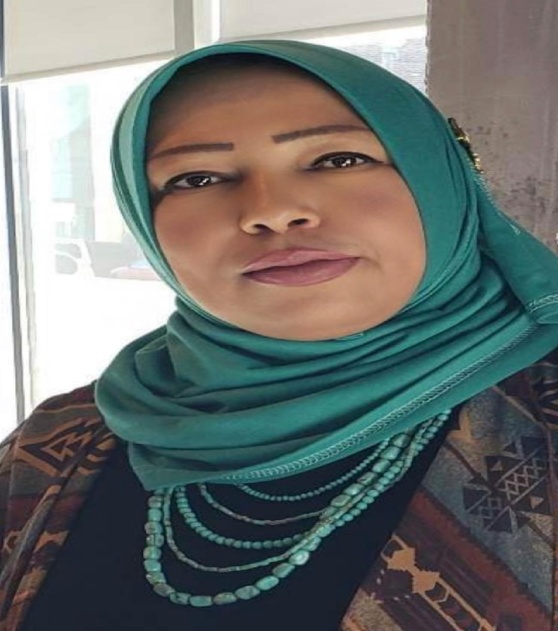
Faleeha Hassan is a poet, teacher, editor, writer, and playwright born in Najaf, Iraq, in 1967, who now lives in the United States. Faleeha was the first woman to write poetry for children in Iraq.

She received her master's degree in Arabic literature, and has now published 26 books. Her poems have been translated into English, Turkmen, Bosnian, Indian, French, Italian, German, Kurdish, Spain, Korean, Greek, Serbia, Albanian, Pakistani, Romanian, Malayalam, Chinese, ODIA, Nepali and Macedonian.

She received a Pulitzer Prize Nomination in 2018, and a PushCart Prize Nomination in 2019. She's a member of the International Writers and Artists Association, a winner of the Women of Excellence Inspiration award from SJ magazine 2020, and a winner of the Grand Jury Award (the Sahitto International Award for Literature 2021) and one of the Women of Excellence selection committee members for 2023.

She's also a winner of a Women in the Arts award for 2023, a member of Whos’ Who in America 2023, and a Sahitto Award judging panel member for 2023. She's a cultural ambassador between Iraq and the USA. Email: d.fh88@yahoo.com
Student of Karakalpak State University named after Berdakh, faculty of biology first course.
Children’s education in Uzbekistan
Today, Uzbekistan pays great attention to children’s education. Because the saying “The future is in the hands of the youth” is not in vain. This is the real reason why so much attention is paid to this education. Not only the Republic of Uzbekistan, but perhaps the whole world has paid attention to children’s education. In particular, the establishment of a step-by-step educational program for children in Uzbekistan and the establishment of free school education are proof of the trust and respect shown to them.
By 2022, the rate of admission of children to preschool education, i.e. kindergarten, has been raised in Uzbekistan. Earlier, kindergarten education was not considered mandatory, but today it is determined that it is necessary in all regions. In this regard, laws and regulations are also being adopted. Various laws have been adopted to set the age of admission to kindergarten as three years old, to manage their daily food ration, and to prevent the educators from committing various violations.
Kindergarten should be a place where every child can be taught basic knowledge, manners and respect. Laws and regulations are also being adopted in this regard. To govern the students’ daily food ration, establish the entry age to kindergarten at three years old, and stop the teachers from breaking rules, various laws have been adopted.
Every child should be able to learn fundamental information, manners and respect in kindergarten. The major objective of kindergarten education is to get kids ready for school by teaching them fundamental ideas in straightforward language.
Between 2016 and 2022, major improvements in kindergarten instruction were seen in Uzbekistan. Between 2016 and 2022, there will be a difference in the number of rural children and their kindergarten attendance.
Today, there is a wide range in the caliber of education in rural areas as well. Children receive a lot of attention because they will be the future’s leaders. For their healthy development, a variety of clubs are being organized. The tradition of Eastern thinkers places a high value on educational issues. They gave a lot of thought to the family and the upbringing of the children within it in particular.
The challenges of raising a kid in a family and solutions to those challenges are outlined in the writings of intellectuals such Abu Nasr Farabi, Abu Rayhan Beruni, Kaikovus, and Alisher Navoi.
Preschool Education is currently being attempted utilizing the strategy of deploying “mobile kindergartens” to enroll preschoolers in rural places.
Four specially equipped buses, dubbed “Aqlvoy” mobile kindergartens, were introduced to the area and are now serving children in the most remote communities in the Hazorasp, Bogot, Yangiariq, and Khiva districts.
Eleven stations in total are being set up, and a list of kids who will be taken to mobile kindergartens is being created. With the start of the new school year, this approach will enable 384 additional children to enroll in pre-school programs.
The Ugly American


He’s at the

Airport in Doha

At the gate

And waiting

For his flight,

Then an

American dude

Shows up

And starts complaining

About a couple people

Taking naps

On the floor,

The American dude

Has no idea

How silly and sad

He looks,

The ugly American,

Still a thing

After all these years.


Taylor Dibbert is a writer, journalist, and poet in Washington, DC. “Rescue Dog,” his fifth book, was published in May.
After a four-hour layover in the Buffalo bus terminal, after crossing the Peace Bridge in the middle of the night and disembarking again, an honest and earnest young man, I naively informed the customs officer I would be “earning my keep” in Canada. Big mistake. No one told me what to say. I was pulled aside, ordered to go here and sit there, and watched through the windows as the other more fortunate and savvy passengers climbed aboard the Greyhound and pulled away, privileged to be trekking into the dark expanse of Ontario.
It was during the Reagan administration. I was escaping trickle-down economics by heading toward Kingston, at the eastern end of Lake Ontario, to a little run-down farmhouse and a few out buildings, a place called “Dandelion.” It was a modest commune in the middle of nowhere, at the end of telephone and electric poles. About ten Canadian and American twenty-something men and women lived and worked together there weaving hammocks, tending an impressive garden, smoking a little pot now and then, and generally attempting to live a simple, peaceful, egalitarian life according to the utopia in B. F. Skinner’s Walden II. This, I thought, was my moment, and this might be the place where I might find an authentic sense of self – to pursue my ideals. And just maybe find love. When waiting with my dad for the bus north, the zipper on my bag split open. Dad took off his belt and cinched the whole thing closed. What was I doing? We both choked up, and my feet were heavy on the bus steps. My ideals faltered, but I found a seat.
Turned away at the border, I was dazed, lost, my future uncertain – with no idea what to do next. A taxi must have been called. The cabbie led me to the car, picked up my bag, placed it in the trunk, opened the door and motioned me into the front seat. On the way back to the U.S., he quietly provided me with instructions for another attempt at the border. He seemed to recite these directions from experience: walk nine blocks back to the Buffalo station, find the number 10 city bus to drop me near the Rainbow Bridge at Niagara Falls. Ask the bus driver. He’ll know. Try again. Lie. Keep it simple. Years later, on a nostalgic visit to Dandelion with my wife, we drove over the Peace Bridge corridor in daylight. It was all concrete and asphalt punctuated by orange construction barrels and lines of big rigs. The few grim buildings were blockish and dull, the water flat and gray. This was exactly what I felt and imagined when I travelled this way that night.
After dropping me on the U.S. side, as I watched him pull away, I realized that the soft-spoken cabbie didn’t mention the fare. Still reeling and as that was the first time I rode in a taxi and was unfamiliar with the protocol, it did not occur to me to dig out some cash. He gave me great advice and didn’t charge for the ride. What a good human being, such a contrast to the cold demeanor and the crisp, impeccable uniforms of the customs officers. The U.S. officials asked for identification and questioned my citizenship. I stated too sarcastically that I was just turned away in Canada. Where else would I go? Dawn was breaking as I quickened my step through the Buffalo neighborhoods. I wondered, what if it was raining? According to the cabbie’s prescription, I found my way to the Rainbow Bridge and though I was anxious about where to go next if I wasn’t turned away again, I paused and took in the horseshoe falls halfway across, beneath the American and Canadian flags flapping side-by-side. The vast immensity, the roar of the falls, and the swirling mist were breathtaking though fleeting. I recalled the painter Frederick Church and his portrayal of the sublime landscape. I considered, momentarily and perversely, how fortunate I was to be in this distressing predicament. At the toll booth I paid ten cents and when the pleasant woman asked about my stay in Canada I declared, “Just visiting friends – a week or two tops.” She smiled, knowingly I thought, and waved me on. Somehow, I found a bus terminal, my ticket was good for the next connection in a weird bit of luck, and I took a seat next to a kindly lady who reminded me of an aunt. We talked of Canada and Ohio on the way to Toronto. She spoke of her grandchildren. I wistfully described my grandparents’ farm in the rolling green hills of Knox County. She needed a little reassurance that I was not a runaway teenager. The passengers on this leg of the journey were a stark contrast to the rough, sullen crowd between Cleveland and Buffalo.
At the Toronto layover I browsed through the World’s Largest Bookstore and picked up a corned beef on rye at a very loud, bustling, and confusing delicatessen – my first deli experience. I was ordered by the patron to go here and stand there. From there I made it, thankfully and uneventfully, to Kingston and Dandelion. But I didn’t find love. It was all worthwhile I suppose; however, after four months of hammock weaving, jerry-rigged construction projects, wincing at residents’ attempts at self-taught guitar, and listening to pointless petty squabbles between couples, I determined that people were about the same everywhere and that my ideals could be actualized most anywhere – even Ohio. I discovered that authenticity prevailed more in the kindness and generosity of that Buffalo cabbie than in the subsequent months playing the enlightened hippie.
David Sapp, writer, artist, and professor, lives along the southern shore of Lake Erie in North America. A Pushcart nominee, he was awarded Ohio Arts Council Individual Excellence Grants for poetry and the visual arts. His poetry and prose appear widely in the United States, Canada, and the United Kingdom. His publications include articles in the Journal of Creative Behavior, chapbooks Close to Home and Two Buddha, a novel Flying Over Erie, and a book of poems and drawings titled Drawing Nirvana.
Why I am not writing

I am re-reading James Ellroy's
The Black Dahlia, am re-reading
Thomas Kuhn's The Structure
of Scientific Revolutions, am
reading the sub-titles to the
opening titles of the animated
manga Neon Genesis Evangelion
when Mayakovsky rings to say
he will not be coming around
today. I scan the TV guide
& plot an alternative itinerary.

I think about opening Word
& end up opening Solitaire
instead. I listen to the humming
of the PC but it tells me nothing.
It sounds like the refrigerator but
that only hums at intervals &
does not give me card games
as a built-in option — it is
too dedicated in its purpose.

I think about work, where I have
been listening to the presentations
of consultants to decide who
will be the anointed ones to whom
we will pay hundreds of thousands
of dollars to rewrite our planning &
information systems. I have yet
to hear anything new, decide I'm
in the wrong business. But the
arrival of the consultants is
serendipitous in that it loosely
coincides with one of the subjects
I have to do at university next
semester. I plan to use the
aggregated data in my major
assignment — at least I will get
some value from what I consider
to be an obscene outlay of money.

& I am reading & re-reading my
textbooks as the exams draw nearer.
Though they & the other books are
shelved in some sort of order, the CDs
are jumbled. I am working my way
through them from the top of the
stack on down, sorting them out
by listening to each one in turn
then putting it back in the place
where it was. I have just listened
to Sonny Rollins' Saxophone
Colossus; now I am listening
to Revolver & decide again that
this album & not Sergeant Pepper
marked the paradigm shift for The
Beatles even though for me
when I first heard them the order
was reversed. & in passing
I want to thank Thomas Kuhn
for developing the concept of
paradigm shifts & for redefining
the term paradigm. When words
change meaning they are re-
energized, & if I were writing

I would hope to be using energetic
words. But instead I am singing
along with Eleanor Rigby & the
refrigerator is humming along
in harmony & the Red Queen is
shouting from the PC "Lay me
on the Black King! Lay me!" She
is off her head. But I already knew
that, was told by Jefferson Airplane
many years ago & reminded of it
by the inclusion of White Rabbit
on the Greatest Hits of the Sixties
compilation I listened to three CDs
ago. Then Mayakovsky rings
to say he has changed his mind.
I start to tidy up the house.


October, 2002
Not Crying Baby

Under the rubble, the collapse of the wall,
Sits a three-year not crying kid,
In the screaming hell,
Like a wild beast from the sky,
Among the layers of exploding roofs.
With the stroke of eyelashes
Blood drops in the eye,
Sliding on the check.
Small hand silently rubbing the eyelid,
Palm red spots for the first time.
Stepmother- war mixes with the dust
Mop of chestnut hair tenderness.
Splinters dug into the snow white feet.
My angel, what are your faults?
Well, at least cry, baby,
I’m no longer able
To look into your innocent eyes.
You are my clean world,
You are more than all!
So you lived

I have died a hundred times!


Nigar Nurulla Khalilova is a poet, novelist, translator from Azerbaijan, Baku city, currently living in the Kingdom of Saudi Arabia. She is a member of the Azerbaijan Writers Union. Nigar N. Khalilova graduated from Azerbaijan Medical university, and holds a Ph.D degree. She has been published in books, literary magazines, anthologies and newspapers in Azerbaijan, Russia, Saudi Arabia, and the USA over the years.

Nigar N. Khalilova participated in poetry festivals and was published in international poetry festivals anthologies and in the Austin International Poetry Festival (AIPF), 2016-2017.
This month the theme is Self-Determination, having the space and power and dignity to be able to understand and shape one’s own destiny. We stand with all peoples of the world seeking self-determination.
Raafia Shaheen urges us to see people on their own terms and not just how they are useful to us.
Michael Robinson reviews and finds encouragement from Jacques Fleury’s You Are Enough: The Journey To Accepting Your Authentic Self. The book suggests that Black men worldwide should define themselves on their own rather than simply following social stereotypes.
Shahnoza Ochildiyeva tells the story of a girl who has to leave her Uzbek home due to loss but who returns home having made something of herself.
Zarina Abdulina speaks to the importance of worthwhile work to a person’s self-concept and how teaching fills the role for her. Marjona Shayimova talks about finding the courage and perseverance to achieve her goals.
Nazokat Urinboeva offers up a tribute to Uzbekistan’s strength and cultural heritage, all the way back to Mughal emperor Babur while O’tkir Kochkor enscribes poetic praise for the majesty and history of his Uzbek homeland. Mannonova Shakhnoza outlines scholarly research into the history of the Kagan Khanate in Uzbek history as Zulayho Sultonaliyeva illustrates how her culture and society can adapt for the times in her piece on the legal precedent and need for updating and modernizing Uzbekistan’s constitution.
Behruz Toshtemirov argues for the unique qualities of literature as an art form, inspired by her Uzbek cultural heritage.
Abdunazarova Khushroy gives us a poetic tribute to the heritage and language of Uzbekistan as Feruza Abdullayeva pays tribute to the many Uzbek writers whose work she admires.
Evie Petropoulou showcases an Egyptian celebration of the Greek poet Cavafy, who was known for his sensual and political poems and unconventional personal style.
Alan Catlin rearranges verbal ephemera from famous people to create unique character sketches. Jacques Fleury celebrates the good fun of the Blue Man Group while Noah Berlatsky shares a harsh and iconoclastic thought about Ezra Pound and Daniel De Culla’s poem pokes gentle fun at the wealthy and powerful.
Mark Young presents a fresh set of his signature mix of text and colorful images as Saad Ali showcases ekphrastic work in response to historical paintings, inserting his thoughts into the fabric of history.
Kylian Cubilla Gomez crafts photographic closeups of his dinosaur and tractor toys and other childhood ephemera. Habibova Mahzuna expresses nostalgia for her lost childhood.
Wayne Russell avows his allegiance to travel and adventure while Sayani Mukherjee’s poetry evokes flights of imagination around the globe.
Adam Fieled peers into the close and tempestuous relationship between an artist and a muse. Gaurav Ojha outlines his path from youthful lusts to maturity and spiritual transcendence. Sandip Saha’s pieces explore the search for mystical spirituality amidst daily life.
James Whitehead probes timeless questions about human life, ethics, and suffering. Niginabonu Amirova reflects on our mortality and the cycles of nature as Mykyta Ryzhykh crafts lowercase poems about the tragedies of quick and slower deaths and Mashhura Abduhalilova renders the experience of mental distress, showing how anxiety distorts time and sensations.
Nigar Nurulla Khalilova laments society’s being uncaring to the vulnerable while Iraqi poet Faleeha Hassan takes a quiet moment to mourn family members lost to war.
Bruce Roberts reminds us of the historic coexistence of Jews, Christians, Muslims and other people in the Middle East and laments the current violence in the region.
Bill Tope’s story exposes different levels of corruption in the nonprofit world, how greed can mess with even the best of intentions.
Z.I. Mahmud looks into scholarly literature that explores the tension between Batman’s heroism and his lawbreaking and vigilante violence.
J.J. Campbell seeks to show small kindness in an alienating world. Feruza Muzaffarova highlights the humane sensibility behind O’tkir Hashimov’s novel Between Two Doors. On a personal level, Niginabonu Amirova urges a return to common courtesy, beginning with greetings.
Tuliyeva Sarvinoz speaks to the importance of setting a good example and preparing children for the world. Diyora Tursunboyeva reminds us of the importance of encouraging children’s dreams. Niginabonu Amirova celebrates the joy of sports and athleticism for young people as Rano Babamurodova encourages children to read books and learn.
Tuliyeva Sarvinoz also outlines offerings at Uzbekistan’s vocational schools as Abdunazarova Khushroy reflects on educating herself by learning Arabic and Jumanazarova R. gives honor and respect to a dedicated teacher. Tuliyeva Sarvinoz also pays tribute to another educated and accomplished writer and teacher.
Muslima Murodova Kadyrovna pays tribute to the spiritual and compassionate love of her mother. Zuhra Ruzmetova also honors the care and encouragement and constancy of her mother. Nosirova Gavhar pays tribute to her grandfather who introduced her to books and gardening. Zilola Khamrokulova sends up a poetic love piece for her mother as Nozima Uloguva’s poetry and prose celebrates the sacrificial and dedicated love of many mothers as Dilnoza Eshqulova renders up her intense grief and spiritual angst after losing her mother.
Prasana Kumar Dalai presents the joys, pains, and trepidations of love and Mesfakus Salahin contributes delicate romantic poetry. Duane Vorhees presents various sensual love poems through the metaphors of music, literature and cosmology. Kristy Raines sends up passionate and adoring pleas to her lover to remain close.
However, Taylor Dibbert reminds us that no matter how much work you put into a relationship, it doesn’t always last forever. Perhaps the couple he describes could have heeded Madina Toxirova’s advice on the importance of psychology for young people to understand themselves before marrying. Zafar Nur contributes a poem of lament over a heartbreak as Maurizio Brancaleoni translates poetry from Italian writer Amelia Rosselli on quiet heartbreak and loneliness.
J.D. Nelson’s haiku captures spring moments of transition and in-betweenness as Isabel Gomez de Diego contributes photos of various doors and entry ways. Lynn White highlights the whole worlds going on in what we might consider the background of nature.
Mahbub Alam celebrates nature and love in his Bangladeshi homeland. Abduvohid Holikov presents a description of the cultural and natural beauty of the Denov region of Uzbekistan while Ochildiyeva Dilnoza Abdivokhid celebrates the Surkhandarya region’s cultural and natural history and her family heritage. Abduhoshim Maxamadov celebrates the geographic and biological diversity of Central Asia’s Ferghana Valley. Samadov Aziz Xasanovich encourages technology development in harmony with these natural environments in his paper on measurement techniques for constructing horizontal and inclined wells.
Graciela Noemi Villaverde captures a moment of personal and mental stillness and rest. Lilian Dipasupil Kunimasa finds her psychological rest and inspiration in water: rain and the ocean’s diversity of life. Annie Johnson speaks to calm moments with her love throughout time and seasons of nature.