Tombstone

Tell me what should I compose
My pen is paralyzed
My garden turns into wasteland
My brain is fully unprofessional
The Nature is disorder
The environment is disturbed
The tree of loneliness is increasing
Absence lives in presence
Nobody can hear the heartbeat of air
I am without me
I am alone
Everyone is alone
The earth is alone
Birds do not dream
Dream has no existence
Flowers sleep outside the sight of butterflies

The butterflies burnt their flute
The cowboys don’t play flute
My spring has lost it's beauty
Beauty doesn't smile
The children have lost their silver moon
The moon doesn’t compose poems on the sky
The sky doesn't sing the song of humanity
Humanity doesn’t give water to the grasses
Grasses don’t walk on the roads
The roads are without passersby
One fears another
 Shadow fears shadow
Life flies far away

History weeps behind civilization
The pregnant darkness plays with darkness
The funeral of spirituality has ended
The houses become hospitals
The world is a graveyard
Writing is a Tombstone
Oh The Lord of the universe
I am your
We are your
Pardon us and save us.
ECOLOGICAL PROBLEMS OF THE PRESENT TIME AND SOLUTIONS ABOUT THEM
Currently, as a result of human activity, drastic changes have occurred in the biosphere, and many environmental problems are arising as a result of these changes. Due to growth, science and technology development and increasing human needs, environmental problems have intensified.
We divide environmental problems into the following groups
1. Global (universal)
2. Regional (regional)
3. Local (local)
1. Global (universal) ecological problems can be defined as problems caused by natural and natural anthropogenic and purely anthropogenic effects observed around the world.
Let’s get acquainted with such problems
-island problem
– greenhouse effect
– fresh water problem
-problem of tropical and subtropical forests
-problem of tropical and subtropical forests
-ozone problem
– the problem of the decrease in the number of flora and fauna – the increase of carbon dioxide in the air
– excessive release of waste gases into the air
– world ocean pollution
– disappearance of fertile soil layer
– desertification
– increase of household waste – atmospheric pollution
– pollution of the lithosphere
– pollution of the hydrosphere – salinity
– the failure of pastures
THE ISLAND PROBLEM. The Aral Sea was considered one of the largest seas until recently. It was important for fishing, hunting, transportation and recreation. The development of irrigated agriculture in Amudarya and the flow of water from the Syrdarya has decreased dramatically. As a result, the Aral Sea has become an unusable area due to its high salinity level. The dried bottom area is 4.2 million hectares and has become a source of dust and salt distribution to the surrounding areas.
The amount of salt in the water is up to 112 g. Currently, the sea level is dropping by 80-110 cm. The region of the Aral Sea has become a large dust area. The problem of the island has a serious impact on the health of the people living in the area
In the last 10 years, the death rate has doubled. The amount of salts in the urine of 90% of children has increased. Anemia has occurred in 80% of women. From this area, 80 to 100 tons of dust rises into the atmosphere every year and reaches the Pamir, Tianshan, Greenland, and even the Arctic glaciers.
During the last 4 years, 1.5 million hectares of the dry part of the seabed has been turned into forest and shrubland. The addition of another 700,000 hectares shows the magnitude of the work being carried out in our country. In 2017, the United Nations established a multilateral partnership trust fund for human security. provides practical assistance to the population of the State Program for the Development of Aral Sea Regions in 2017-2021, with the relevant decisions of the Cabinet of Ministers on the creation of a “Green Belt” in the Aral Sea and Aral Sea Regions, neighboring Khorezm, Bukhara, and Navoi regions works are being carried out. The presidential decision to approve the concept of development of the forest system in our Republic until 2030 proves that these goals are strategic.
2. Regional (regional) problems are problems specific to certain regions caused by industrial sectors, enterprises and improper irrigation of land.
We will get acquainted with such problems – industrial waste of natural waters – problems in the agro-industrial complex.
Today, we are making progress in all fields in our country.
This achievement leads to the aggravation of the environmental situation along with the introduction of new technologies in industrial production. In recent years, along with the growth of industrial sectors, environmental pollution is also increasing. Due to the activities of industrial sectors, harmful dust and gaseous compounds are released into the environment in large quantities, and it is allowed to have a direct negative impact on the environment.
3. Local (native) environmental problems are problems specific to certain regions, even if they arise as a result of harmful emissions from all sectors of the national economy, industry and transport. The gases released from them damage the atmosphere and have a negative effect on human health. 70%-80% of air pollution comes from motor vehicles.
Garbage. The epidemiological and hygienic importance of keeping cities and villages clean is very great. The cleanliness and beauty of residential areas, the flow of water from irrigation canals, the presence of trees and green areas help prevent infectious diseases. leads to accumulation. In order to keep people’s residences clean, it is necessary to dispose of garbage in the garbage chute on time. Garbage and garbage not only cause various infectious and worm diseases, but also cause indigestion and nausea in people. Taking into account the sanitary and epidemiological danger of garbage when loading them into garbage trucks.
When unloading, the participation of people should be reduced as much as possible. According to a special schedule, garbage trucks take away the collected garbage. Liquid waste is removed using sewage pipes. Thus, the issue of waste is one of the important problems in ecology, and if it is collected and processed or sorted according to hygienic requirements, it has gained great importance for the environment and human health.
CONCLUSION Humanity takes all the things necessary for living and living from mother nature. Over the years, as a result of the increase in human needs, nature has been ruthlessly used, neglecting its precious benefits, using animals, plants and all natural resources as much as it wants (inappropriately) for its own selfish purposes.
We are in the vortex of huge environmental problems due to the great changes in the biosphere. In order to avoid the above problems and to improve the ecology, we must form an ecological culture in the population, form a deeper and more comprehensive understanding of caring for the environment and preserving it. teaching and, if necessary, learning is important.
Haiku For Sun


A lifetime sunset;

red-apple in sunken sea;

sunniest, nude beach.


All For Naught


Lost in the darkness,

the colors of life vanish.

They achieve nothing.


Brushing Sounds


Played picked fingerstyle.

Dyed words for Stroop effect in

unpolarized light.


Convergence


At the sea's wave touch,

words of love need convergence~

ride at a slow trot.


Ekphrastic Haiku


Wild, windy thistles,

wet, weeping words, twilight world,

fall, and falling hues.


An Echo


Blows his own trumpet,

squeals with a sense of smugness~

his ego’s echo.


Distortion


Distortion of light

and color changes in stars~

Sun's magnetic storm.


Fall


Rain adorns the cold.

The red peeks through the foliage.

Wet breezes chafe the cuts.


Biography

The Oddville Press, Sybaritic Press, Prolific Press, Silver Birch Press, Lothlorien Poetry Journal, Dashboard Horus, Al-Khemia Poetica: A Women's Arts and Writing Journal, Southern Arizona Press, Journal of the Akita International Haiku Network, The Queer Gaze, PentaCat Press, Coin-Operated Press, Mayari Literature, Ardus Publications, and others published the poems of Marieta Maglas in anthologies like Near Kin: A Collection of Words and Art Inspired by Octavia Estelle Butler, The Oddville Press Summer 2018, Nancy Drew Anthology: Writing and Art Featuring Everybody's Favorite Female Sleuth, A Midsummer Night’s Dream, Three Line Poetry, Tanka Journal, and The Aquillrelle Wall of Poetry. The editor of The Aquillrelle Wall of Poetry, Yossi Faybish edited her poetry book, Cubic Words. She is a co-author for A Divine Madness: An Anthology of Modern Love Poetry, Enchanted- Love Poems and Abstract Art, The Auroras and Blossoms PoArtMo Anthology: 2020 Edition, and Women of One World.
Your eyes are red from the traffic lights and our lack of sleep. I look over at you. Admire the way the light catches perfectly on the tops of your cheeks. A line runs from your hairline to the tip of your chin. And I look over at you and see your lashes growing into the heat. Freckles added to your iris, I don’t like symmetry, I prefer perfection. I prefer you. There’s an optical illusion I often make you into. We blend your graphite cheekbones, and a part of me always wanted to look like you.
“Would you hold me if you had to?” We ask. “I’d kill you if I had to.” “Hold me.” We touch necks in the back seat. I lean further and press my lips into the corner of your mouth.
“Did you ever get that baby removed?” “I’d rather die of an infection.” You lift my legs over yours and I wrap my arms around your torso, pulling you down with me. Your head is on my chest, my hand over your hair. Tracing the patterns of your 1920’s slicked curls. There is a tear drawn onto our cheek. And dollops of mascara in the corners of our eyes are what keeps us pretty.
“Etta baby, tell me. Where are we now? When we get home, will we love like this? Or will we drown again? Etta baby, tell me, are we rotting? Or becoming one?” You repeat it back to me. “Ann, who in our fat hearts cares?” “Etta baby, I’m just wondering if I kiss you now, or I save it for our bed.” We shift our body, ‘til our lips are nose away. I shape our mouths to your liking. We met in the womb, on the page, in the janitorial closet. I’ve never known myself, never wanted us more. Close your wrists around mine baby, tell me you’ve never loathed yourself more, we can lose the weight of one another.
We can starve each other and still have the height to melt into one. We wonder if we exchange our beauty like whores, or if our love belongs in the back seat. “Would you kill me if you had to?” We ask. “I’d hold you if I had to.” “Etta baby, hold me tonight. Etta baby, we die tonight. And in the morning, I’ll redraw you.”
I Once Wondered

What is your meaning, life?
I’m a forge,- it answered,
And you’re my steel for rifle.
But I don’t want to kill,
I’ll never be cause,
Don’t temper me, please,
For the sake of wars.
Turn me into Morality,
I’ll not bow to the golden calf.
Make me Humanity
And to all people cut.
Life finally said: Rejoice!
Work on Future, I give you a choice.


Nigar Nurulla Khalilova is a poet, novelist, translator from Azerbaijan, currently in the Kingdom of Saudi Arabia. Member of Azerbaijan Writers Union. Graduated from Azerbaijan Medical university. Holds Ph,D Degree.
We are hosting our Metamorphosis gathering again! This is a chance for people to share music, art, and writing and to dialogue across different generations (hence the name, the concept of ideas morphing and changing over the years). This event is also a benefit for the grassroots Afghan women-led group RAWA, which is organized by women in Afghanistan who are currently supporting educational and income generation and literacy projects in their home county as well as assisting earthquake survivors. (We don’t charge or process the cash, you are free to donate online on your own and then attend!)
This will be Saturday April 6th, 2-4 pm in the fellowship hall of Davis Lutheran Church at 317 East 8th Street in Davis, California. It’s a nonreligious event open to all, the church has graciously allowed us to use the meeting room. You may sign up here on Eventbrite.
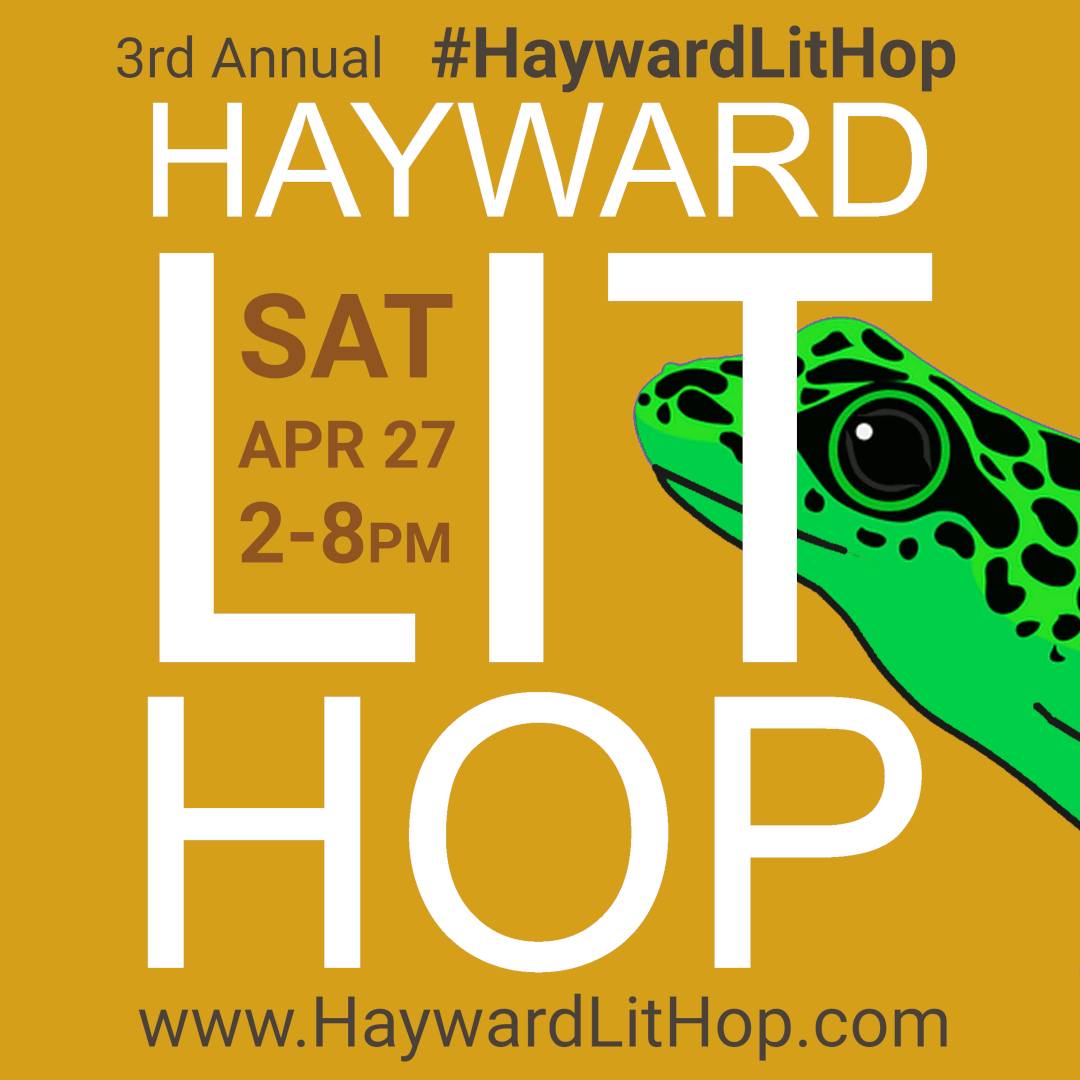
Also, we encourage everyone in the California area to attend the third annual Hayward Lit Hop on Saturday, April 27th.This is a public festival with different readings from different groups throughout downtown Hayward coinciding with Hayward’s choosing a new adult poet laureate, culminating in an afterparty at Hayward’s Odd Fellows Lounge. Several Synchronized Chaos contributors will read from their work at the 2024 Lit Hop.
This month, for April’s first issue, we’re reflecting on the change of seasons. We’re moving from winter to spring, or summer to fall in the Southern hemisphere. Much of the other work here deals with changes in moods, situations, stages of life, or with cultures and societies in times of change.
J.D. Nelson’s haiku evokes intriguing and disorienting seasonal transitions, while Jacques Fleury offers up an impressionistic reflection on a sunrise and the liminal state of consciousness between sleeping and waking. Hurliman Almuratova contributes a poetic piece about spring’s eventual return as Sayani Mukherjee glories in radiant poppies, Don Bormon listens to the symphony of natural sounds around him and Maja Milojkovic revels in the scents, colors, and renewal of spring. Annie Johnson exudes about diaphanous dawn, moonlight, and newborn creation in her poetry.
Mesfakus Salahin sees love all over the natural world around him. Kristy Raines speaks of a steady love where people know the depth of their connection even without using words. John Edward Culp writes of the tender growth of a relationship where there is trust. Davronbekova Sevinch speaks to the need to preserve integrity and trust. Graciela Noemi Villaverde writes of a gentle and silent love among the larks and lilacs. Inobat Karimova describes how her girls’ agricultural science club at school reflects the respect of her society for women, nurturing, the land, and life. Tammy Higgins’ photography concerns intersections of human culture and nature where nature remains present and vibrant.
Amirova Niginabonu’s work speaks to the cycles of nature and the ways of the mind as Michael Robinson reflects on loss and resurrection during the church season of Lent.
Dildora Toshtemirova writes of celebrating her birthday after the loss of her parents. Sevinch Raxmanova illustrates coming of age amidst the loss of her parents and grandparents. Nosirova Gavhar’s piece focuses in on a single date to represent her grief at the loss of her mother.
Music pulls Taylor Dibbert back to thoughts of a marriage that ended, as Bill Tope describes an unconditional love that begins awkwardly but becomes very real until the title character’s death. Uzbekoyim’s poem reflects the pain of deeply caring for someone who does not return the care. Daniel De Culla comments on the vulnerability of women and children and the precarity of family life.
Surayyo Usmonova’s poetic story intermingles love, loss, and sorrow as J.J. Campbell speaks to longing and forbidden desires and Prasana Kumar conveys the pain of silence and words left unsaid. Sabina Rasulova writes of dreams dashed with reality and the absence of loved ones. John Sweet wonders what life is worth in a harsh and alienating world.
Mykyta Ryzhykh evokes the “silent emptiness” of alienation and modern warfare and Bill Tope dramatizes the toll of war and military and political oppression on civilian families and children. Azemina Krehic mourns the losses of so many mothers and the violence against women in Bosnia. Christopher Bernard highlights the folly of cycles of conflict and revenge in the Middle East. Mahbub Alam also expresses his hope that Gaza will find the peace he sees in nature. Linda Gunther reviews Ruta Sepetys’ WWII refugee survival story Salt to the Sea, exploring character development and internal and external conflict. In Nahyean Taronno’s detective story, while justice triumphs at the end, deception and violence seem a continual threat. Laylo Bakhtiyorova dramatizes the intensity of emotional pain, but reminds us that it will pass.
Muheez Ohamilekan gently encourages caution before being swept up in uncontrollable experiences as Maurizio Brancaleoni compares the uncertain journey of life to a train trip with an unstated destination.
Mark Young’s postwoman poems allude to life’s surprise gifts: one never knows what might arrive in the mail. Alan Catlin’s found poems repurpose other famous modern works in a fresh and surprising way, like Polaroids from the lives of artists.
Eddie Heaton crafts impressionistic takes on relationships and words and literature through long voyages of the mind. Goran Tomic alludes to a different kind of voyage through his collages of vintage images of flowers and clothes and buildings, illustrating city life in the time of the flaneurs.
Sevinch Tolquinova celebrates the value of reading and learning from books. James Whitehead illuminates the honest empathy of Richard Vargas’ poetry collection leaving a tip at the Blue Moon Motel.
Brian Barbeito crafts a long series of character sketches and vignettes, while Noah Berlatsky’s humorous piece speculates on what sort of poet he wants to become. Ifora Olimjonova compares introverts to extroverts and suggests that many people are somewhat in the middle.
Jeffrey Spahr-Summers speaks to a society in transition with his poems on the latent cultural and racial tension in South Africa. Z.I. Mahmud writes of the power and limits of words and memory in Toni Morrison’s Beloved, and how the novel’s characters reclaim their flesh and history.
Thaalith Gimba offers up a dramatic poem of self-assertion, as John Grey crafts muscular poems on human needs and physical existence. Qurbonova Gulsanam extols the power of dedication and self-efficacy in working towards a goal as Donoxon Ibodullayeva reflects on the potential for developing Uzbek youth leadership through school and after-school organizations. Lilian Dipasupil Kunimasa’s childlike poems trace and celebrate our creative journeys through life. Dildora Toshtemirova urges readers to join her in living their dreams as Stephen Jarrell Williams speculates on whether he can bring his into reality.
Duane Vorhees’ poems of the gods and the ancients situate personal and cultural history within geological and natural timescales.
Bahramova Ifora Sunnatillayevna outlines the research of historical astronomer Mirzo Ulug’bek as Amirjonov Og’abek describes the ancient Islamic architecture of Samarkand. Wazed Abdullah commemorates the independence and pride of Bangladesh. Akhrorova Sarvinoz illuminates the historical and cultural value of cities in Uzbekistan, Rasulberdi Ashiraliyev highlights the Uzbek heritage of jurisprudence and the rule of law, Mirzo Ulugbek outlines types and structures of Uzbek businesses, and Xushroy Abdunazarova speaks to the history and beauty of the Uzbek language.
Gulsevar Xojamova encourages educators of Uzbek youth to draw on the nation’s cultural heritage in their lessons. Irodaxon Ziyoyeva discusses how to combine modern and traditional educational methods in the classroom, Shoshura Husaynova explores how to teach English with idiom and cultural context, Muhammadamin Xojamov addresses methods of mathematics instruction, Tolipova Zebuniso Ulug’bekovna draws on modern psychology and learning style theory in her recommendations for children’s education in Uzbekistan, Gulbahor Ergasheva discusses online learning technology, and Gulsevar Xojamova speaks to the role of information technology in modern Uzbek schools.
Uzbek writer Ruxzara Adiliqizi’s poetry carries a delicate mixture of love and patriotism. Boqijonova Madinabonu relates a story of the hard work and dedication of a mother, while Abdullayeva Feruza urges respect for parents and acknowledgement of their care. Farzona Koshimova writes of the importance of manners and respect for elders while Dilnurabonu Vayisova dreams of traveling the world with her mom.
We hope that this issue will deepen your heart and awaken your curiosity as you travel with us. Bon voyage!