Essay from Gulsevar Xojamova

SECRETS OF HAPPINESS AND SUCCESS

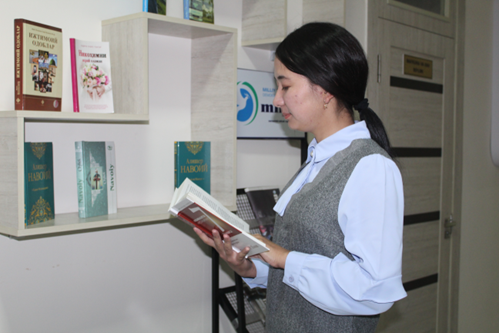
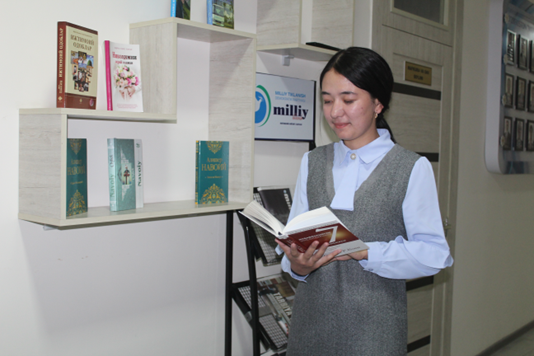
Young Central Asian woman with dark hair in a ponytail behind her head in a blue collared shirt with a gray vest stands to the side holding a book from a bookshelf open.

     Pedagogical technology is based on the use of new tools and information methods, their use, the correct introduction of pedagogical technologies in the educational process leads to the teacher acting as the main organizer or consultant in this process. This requires more independence, creativity and willpower from the teacher. Trainings conducted on the basis of pedagogical technology satisfy the desire of young people to express their attitudes to important life achievements and problems, and create an opportunity for them to think and justify their points of view. In order to achieve this, we need independent and free-thinking individuals who are able to absorb new information and evaluate their acquired knowledge by themselves.

        Therefore, the role and importance of modern teaching methods, interactive methods, and innovative technologies in the educational process of educational institutions is incomparable. Pedagogical technology and the knowledge and experience of their use in education ensure that students have knowledge and advanced skills.       

Its main criteria are informal debates, free presentation of educational material, independent reading, learning, conducting seminars, creating opportunities for students to take initiative, small group, large group, It consists of assignments, assignments, writing assignments, etc. computer communication) l On December 1, the next “Government Hour” was held in the Legislative Chamber of the Oliy Majlis. In it, the deputies discussed the issue of “Education of the patriotic generation in general education schools, the work being carried out on the organization of the newly introduced subject of “Education”.

The President of the Republic of Uzbekistan has clearly and clearly shown the ways and principles of achieving the future in several speeches and pamphlets. In particular, such works as “Independence and spirituality”, “Uzbekistan on the threshold of the 21st century”, “The dream of a perfect generation” describe the spiritual renewal and development of society, issues of education, and the basic principles of social education.

The concept of education has different meanings in different periods of the nation’s history and society’s development and has been interpreted in different ways. After Uzbekistan gained independence, an approach based on a new healthy pedagogical thinking in the interpretation of education began to be decided. Now special attention is being paid to genetic and biological aspects of education and nationality. National education is closely related to the name of the nation and its history.

                                                    Khojamova Gulsevar Abdullajanovna

Essay from Numonova Fariza

ANNOTATION: Amir Temur's life, marches to China, family, election as "GREAT AMIR", connection with Islam, descendants, marches to IRAN AND CAUCASUS. 

KEY WORDS: China, "GREAT EMIR", Islamic religion, statesman. Amir Temur, Temur, Temurbek (full name Amir Temur ibn Amir Taragay ibn Amir Barqul) (April 9, 1336 - February 18, 1405) is really a great statesman of the century, a great Turkish general, strong, Mrs. Takin was the mother of Amir Temur, the founder of the centralized state, patron of science and culture. His father, Amir Taragai, was considered one of the elders of the Turkic Barlos clan and a notable leader of the Chigatoy clan. His great ancestors ruled in Kesh region. 

Therefore, Amir Temur's father, Amir Taragai, was invited once a year to the congress of elders of the country called by the khan on the banks of the Ili River, and he regularly participated in such gatherings. At the same time, according to Sharafuddin Yazdi's emphasis, he was "mushfiq and kind to the ulama, sulaha, and muttaqi, and used to go to their gatherings...". Taragaijan Piri Shamsuddin Kulol was especially deeply respected. Later, sheikh Kulol Amir was Temur's elder. Taragaybek died in 1405. Amir Temur had an older sister, Qutlugh Turkon, and a younger sister, Shirinbeka. They died before Timur and were buried in the mausoleums of the Shahi Zinda complex in Samarkand. "According to Mu'izz al-Ansab, Temur had three more brothers: Djuki, Olim Shaykh and Suyurgatmish. Temur had one uncle, his name was Balta. 

Amir Temur's youth was spent in Kesh. When he was seven years old, his father sent him to study. Amir Temur's youth from his childhood, under the supervision of special trainers, he was engaged in horse riding, hunting, archery, and various other exercises and military games. At the same time, Amir Temur grew up to be a skilled rider who can sort out vultures and a brave horse. and he was perceptive and extremely intelligent, he quickly understood the abilities, virtues, especially sincerity in people. Because of this, he was able to attract loyal friends from among his peers even in his teenage years. Idiku Temur, Saifuddinbek, Hindushah, Qarkara, etc.) gathered, trained together, took part in competitions, gradually became skilled and united into a military group, forming a military unit. Later, they rose to the rank of commander in the army of Amir Temur. 

Supporting Amir Temur's activities, he presented him with a big drum, a tabl and a yalov, a symbol of supreme authority. Undoubtedly, this event had great political significance. Because it was a symbol of royalty. Amir Temur understood this well. That is why, before reaching Balkh, he held a council with the emir and his followers in Orpuz region. Suyurgatmish, a descendant of Genghis Khan, was placed on the throne of the kingdom of Movarounnahr by the will of the majority and according to the laws of that time. Until the army of Amir Temur reached Balkh, new forces joined him along the way. At the same time, most of the emirs left Amir Husayn. Amir Husayn's troops were defeated in the battle, after a two-day siege, on April 10, 1370, Balkh sh. Amir surrendered to Temur. Amir Husayn was captured and executed. 

After this victory, Amir Temur married Sarai Mulkhanim, the daughter of Kazan Khan, the Genghisian ruler of Movarounnahr. Amir Temur received the title of "Koragon" i.e. "son-in-law of the Khan" due to his marriage to the Khan's daughter.On April 11, 1361, in the congress held with the participation of all the begs, emirs, governors of the regions and districts, Sayyids (godsons) of Termiz, as well as Amir Temur's comrades-in-arms and elder Sayyid Baraka, who had been with him since his youth, according to tradition, Suyurgatmish Khan from Genghis Khan was declared the ruler of the country. Amir Temur managed the power himself, he managed the power in the regions through his sons, grandsons and close amirs. Samarkand became the capital of Amir Temur's state, and in the summer of the same year, the city wall and fortress were restored, palaces and palaces were built. 

RELATIONSHIP WITH ISLAM 

Timur was a Sunni Muslim, probably belonging to the Naqshbandi Sufi, Hanafi school, which was influential in Mawarinnat. His chief official religious adviser and mentor was the Hanafi scholar Abd al-Jabbar Khorazmi. In Termiz, he was influenced by the teacher of Balkh leader Sayyid Baraka, who was buried with Temur in Gur-Amir. Hazrat Timur was known for his high regard for Ali and Ahl al-Bayt and has been recognized by various scholars for his pro-Shia stance. However, he also chastised the Shias for desecrating the memories of the Companions. 

Timur is also known to have attacked Shiites on the pretext of Sunnism, and at other times to have attacked Sunnis on religious grounds. Conversely, while Timur praised the Seljuk sultan Ahmad Sanjar for attacking the Ismailis at Alamut, Timur's own attack on the Ismailis at Anjudan was equally brutal. 

IRANIAN AND CAUCASIAN MARCHES 

However, Amir Temur was not satisfied with this. Soon he set himself the goal of marching on neighboring countries and peoples, subduing them and establishing a great centralized kingdom. During this period, the socio-political situation in the Golden Horde, Khorasan and Iran was very favorable for him. Amir Temur started his military campaign from Khurasan. In 1381, he captured Herat. Sarakhs, Jam and Qawsiya cities surrendered without a fight. Khurasan, especially its capital Herat, was strategically important and served as a bridge to Iran, Iraq, Syria and other countries. During the years 1381-84, Amir Temur occupied a large part of Iran. First (1381) Kalot, Turshiz and Sabzavor, then (1383) the fortresses of Zireh, Zova, Farah and Bust of Seistan, and in 1384 the cities of Amul, Sori, Sultania and Tabriz of Astrobad region and Azerbaijan were conquered. 

MARCHES TO CHINA 

After Amir Temur returned to Samarkand from Asia Minor, on November 27, 1404, he left Samarkand with 200,000 troops for a trip to China. However, Amir Temur's death in Otror (February 18, 1405) prevented the march on China. It is known that Amir Temur died in 1405 due to a severe cold. However, there are other reasons that accelerated the death of Amir Temur. According to Ibn Arabshah (written in 1436), as a result of a severe cold, "Temur fell ill with ibrida (a disease that weakens the body due to cold), and the doctors prepared for him to taste khamr arag, which contained warming substances, aromas and berries. 

According to the historian, Khondamir, Amir Temur's death Vodka prepared by doctors as a medicine made it faster. Khondamir writes in his work "Habib us-siyar": "...the owner encouraged vodka on this basis, ordered to bring him ore, although it looked like water, it was like fire in terms of quality. His Highness Sahibqiron drank vodka for two days and nights, but did not eat at all. That's why there was a change in the client. The doctors considered this change to be a sign of evil. They gave him a glass or two again, his temperature calmed down a little, but it seems that the wine affected his body and nature, and his temperature rose again. The owner's health has deteriorated.

At that time, this drink was used only in medicine, and its intoxicating function was not mastered. Hafiz Abru, the historian of that time, also writes that Temur's illness was aggravated and vodka was consumed in large quantities.[2] Although the news of Amir Temur's death was kept secret at first, soon this unpleasant news spread throughout the country. Amir Temur's body was brought to Samarkand and buried.

Numonova Fariza 
8th grade student of                    IDUM school 1,                Samarkan city. 

Essay from Malika Oydinova

Young Central Asian woman with dark hair and a gray checkered coat over a black blouse, standing in front of a building.
Malika Oydinova
A Wide Way To The International Field Is A Deep Study Of Foreign Languages 

Annotation: Due to the growing significance of language proficiency in contemporary culture and its extensive use on global scale, this article emphasizes the value of learning foreign languages.
Key words: foreign language, disciplinary system, literature, globalized era, quality of education.

Education of the future generation in the spirit of love and allegiance to the Motherland, national pride, high morality and spirituality, pride in our old and rich heritage, and national and international values is one of the most pressing concerns of our day. 

Fundamental changes to the educational system on earth are a problem because they don't provide the right environment for undergraduates to learn foreign languages perfectly, be able to communicate in a foreign language in all situations, and improve their oral and written communication skills in a foreign language. 

UNESCO, UNICEF, and the Association of European Universities are concerned about helping students develop their ability to think in a foreign language, their right to free speech, and their capacity for intellectual engagement. There are groups involved, such the European Network for Quality Assurance in Higher Education. The evolution of this topic in general trends is crucial for the development of modernity and foreign language proficiency in the next generation and helps to boost students' creative potential in relation to issues with contemporary education. 

The coordination of curricula became the cornerstone for enhancing the higher pedagogical disciplinary system. The need of the hour is for fundamental reform of the quality of education based on outside experiences in the context of Uzbekistan, taking into account national mentality and traditions. 

It is crucial to use interactive techniques when working with young people, be able to give them high-quality instruction in a foreign language, raise the bar for higher education, and generally improve it. Consequently, the creation of a future labor force in our nation's higher education system and In order to build the ability to learn original literature in the field and to engage in conversational communication in a foreign language, foreign language classes are held in the course of gathering the information required for the intention. 

Every autonomous citizen of the Republic of Uzbekistan has his or her own, and he or she should be able to read the original copy of literature written in another language that is pertinent to his or her line of work, comprehend it, and use it in that line of work. In addition, as learning a foreign language is a must for living in the current globalized era, he should be able to openly discuss ideas on the subject with the interlocutor in that language. 

Every person living in the independent Republic of Uzbekistan should be able to read, comprehend, and apply works of literature written in a language other than his own that are relevant to his line of work. He should also be able to openly converse in a foreign language with the interlocutor about the specified topic. 

After all, in today's globalized world, learning foreign languages is required. Foreign language instruction is given great consideration in our nation, which just gained independence. Numerous foreign language teachers have been taught, the necessary conditions for workers to advance their education both domestically and abroad have been established, multimedia English, German, and French textbooks have been constructed, and electronic English learning tools have been developed. 

The creation of modern language classrooms at educational institutions is unequivocal evidence of this. The main goal is to create the conditions for the growth of international cooperation and communication, the achievements of world civilization, and the use of information resources by young people across the globe. This is done by educating the next generation in foreign languages and improving the training of specialists who can speak these languages willingly. 

As the eminent German scholar YV Von Goethe famously put it, "He who does not recognize foreign languages does not know his own." 

For this reason, learning foreign languages and willingly communicating ideas in them are thought to be among the most important responsibilities by both external language specialists and all prospective cadre studying in higher education institutions that do not specialize in languages. Our folks have a saying that goes, "He who notices the language knows." 

A person who speaks a foreign language will, in fact, have a wealth of options and advantages. Today, great language skills are one of the most important qualifications for employees. Priority areas for research on teaching foreign languages to students at institutes of higher learning without a language concentration include the following: The teaching of foreign languages to pupils in accordance with the European CEFR standards enhances the pedagogical mechanisms of education, including instructional technology, the objectivity of control, and the organization of independent education outside the audience. 

Higher education has a specific aim for teaching foreign languages, and all foreign language instructors should specify it beforehand. For after all, "the goals of foreign language teaching determine the content, means, methods, and principles of teaching," as scientists O. Khoshimov and I. Yakubov wrote in the book "Methodology of English Language Teaching." education at the higher level that does not focus on languages. 

The importance of teaching a foreign language in foreign institutions cannot be overstated because doing so will help students become more mature individuals in all spheres.

Malika Oydinova student of Uzbekistan State World Languages University of English faculty of Foreign Languages and Literature

Essay from Kurbanova Saodat Ismatkulovna

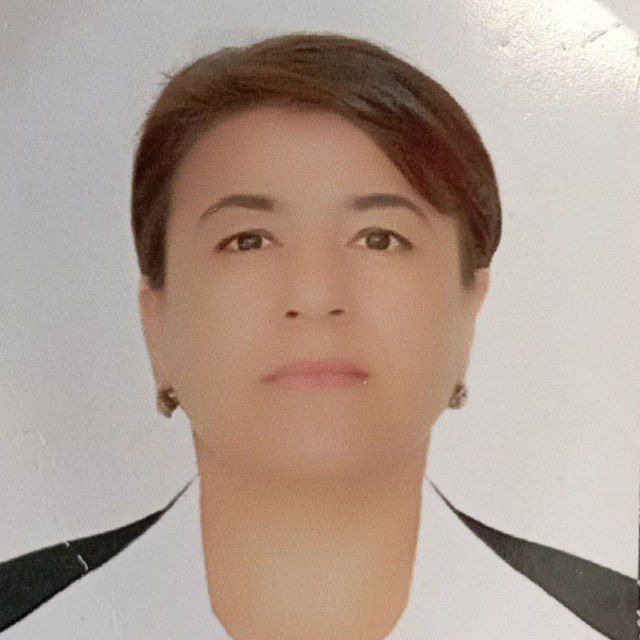
Middle aged Central Asian woman with short brown hair, brown eyes, and a white blouse and black coat.

A COUNTRY OF VERY HAPPY PEOPLE

 My trip to the Amudarya district of the Republic of Karakalpakstan prompted me to write an article on this topic.  At the entrance to the Amudarya district, I watched the surroundings with interest as the cars moved slowly along the Panton Bridge (a floating bridge designed for the passage of people and vehicles) over the Amudarya. 

The bridge is a little old (built in 1938) and due to its narrowness, cars pass in a row.  At the beginning of the bridge, a beautiful wall like a tall monument caught my attention.  I was happy to see that “Uzbekistan is the land of the happy” written on this monument.  These words did not leave my mind during the whole trip.


    Indeed, happy Uzbekistan is the country of the happiest and happiest people.  Our country was ranked among the 50 happiest countries out of 156 countries in the world and took 44th place.  Among the countries of the Commonwealth of Independent States, Uzbekistan ranks first as the country of the happiest people.  On March 20, “World Happiness” published a new report entitled “The happiest Uzbeks among the CIS countries”.


    What do we mean by happiness or a happy person?
    Happiness cannot be measured by wealth.


    Happiness is an inner feeling, we cannot grasp it with our hands, but we feel it with our heart.  Everyone has a different interpretation of happiness.  Happiness can be found only in a country where peace and tranquility prevail.  Happy people live free and free in a beautiful land like paradise.  The sky of Uzbekistan is clear, the waters are clear, the people are kind and hospitable.  If anyone doubts our happiness, let them come to a paradise-like country like Uzbekistan and see with their own eyes that people live happily in the arms of happiness!


    During the development of modern technology, the description of beautiful Uzbekistan spread to the whole world.  Foreign tourists who have heard about the incomparable beauty of our country dream of traveling to our heavenly homeland.
    I am proud to be a child of a peaceful and prosperous, beautiful paradise-like country called Uzbekistan, and to be a happy citizen of this country.

Kurbanova Saodat Ismatkulovna

Teacher of school 18, Nishan district, Kashkadarya region, Republic of Uzbekistan

Essay from Shokhida Jurayeva

Give the child a book….

A book statue has been erected in one of the small Norwegian towns. Amazing! “We will remember you, we will not forget you, book” is written on the statue. It’s almost like a memory. This is how they expressed their attitude to the book, what did we do? Like a young child, we are still arguing about whether it is a book or a phone. Although we don’t give children books… we don’t write as many books as before…

Today, “My child looks at the phone a lot, does not read books. There were no current books, is this a book?” there are more people who scold him. There are many parents who say, “Son, read a book.” Many people don’t like me writing about a book when the phone is in fashion. Because they don’t read books themselves.

The girl next door made me write this article. Once when I asked him what book he was reading, he laughed at me strangely, and I will never forget that laugh. The representative of this generation, who has never opened a book other than a textbook, made me uneasy. I’m not feeling well now. In the book… I will not write about the value of the book, how much it is food for human spirituality. After all, a lot has been written about it. I agree with Jorge Luis Borges that heaven must be a place like a book. Because books that most people consider lifeless can prove to them how illiterate they are. There are many such examples today…

“A book should be given to a child at school. If he grows up with a book, he will be a friend even when he grows up. I lead the Kitosevarlar circle. Most of the young people who attend my club read the book for a purpose, not for spiritual pleasure. Someone wants to win a Spark, another wants to study. I am afraid of the need for books for this materiality… I am surprised that some countries still do not give up books. Italians stop watching television for their children after the age of five. In Japan, a seven-year-old child must know at least 10 fairy tales. The use of these methods by the countries that make it possible to read books will be effective if they are introduced to us as well.


Poetry from Shahlo Abuhamidova

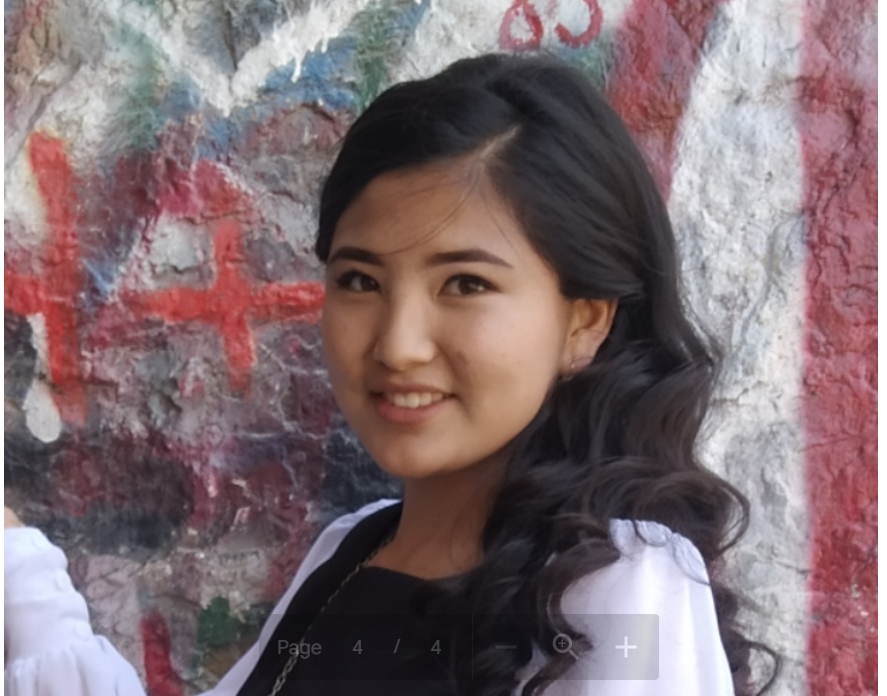
Central Asian teen girl with long dark curly hair, a white ruffly coat over a black undershirt. She's in front of a rock wall painted white and red with different graffiti.
Shahlo Abuhamidova

At the table

Every morning at the table,
The bread that my mother covered is only milk.
My father opens his hands to pray,
Get out of out of our house.

My brother and I hurry to school,
My father rides to the office.
When watching us, my mother says,
May you all return safely.

Elite roads lead us to different destinations,
In the dream, the wheel spins in different ways.
My heard falls in love with my house,
Study and work when finished.

My sister and I will set the table,
When he cooks, he brings bread.
I look forward to the rest,
Even as expected dear guest.

Gathered at the table again,
Let’s share the joyful concern.
victory over sorrows,
The heard is filled with joy and forgets sorrow.

Shahlo Abduhamidova Ergash gril is an 11th grade student of school 54 and a member of “Qaqnus” club of Barkamol Avlod children’s school.

Synchronized Chaos Mid-May 2024: Self-Determination

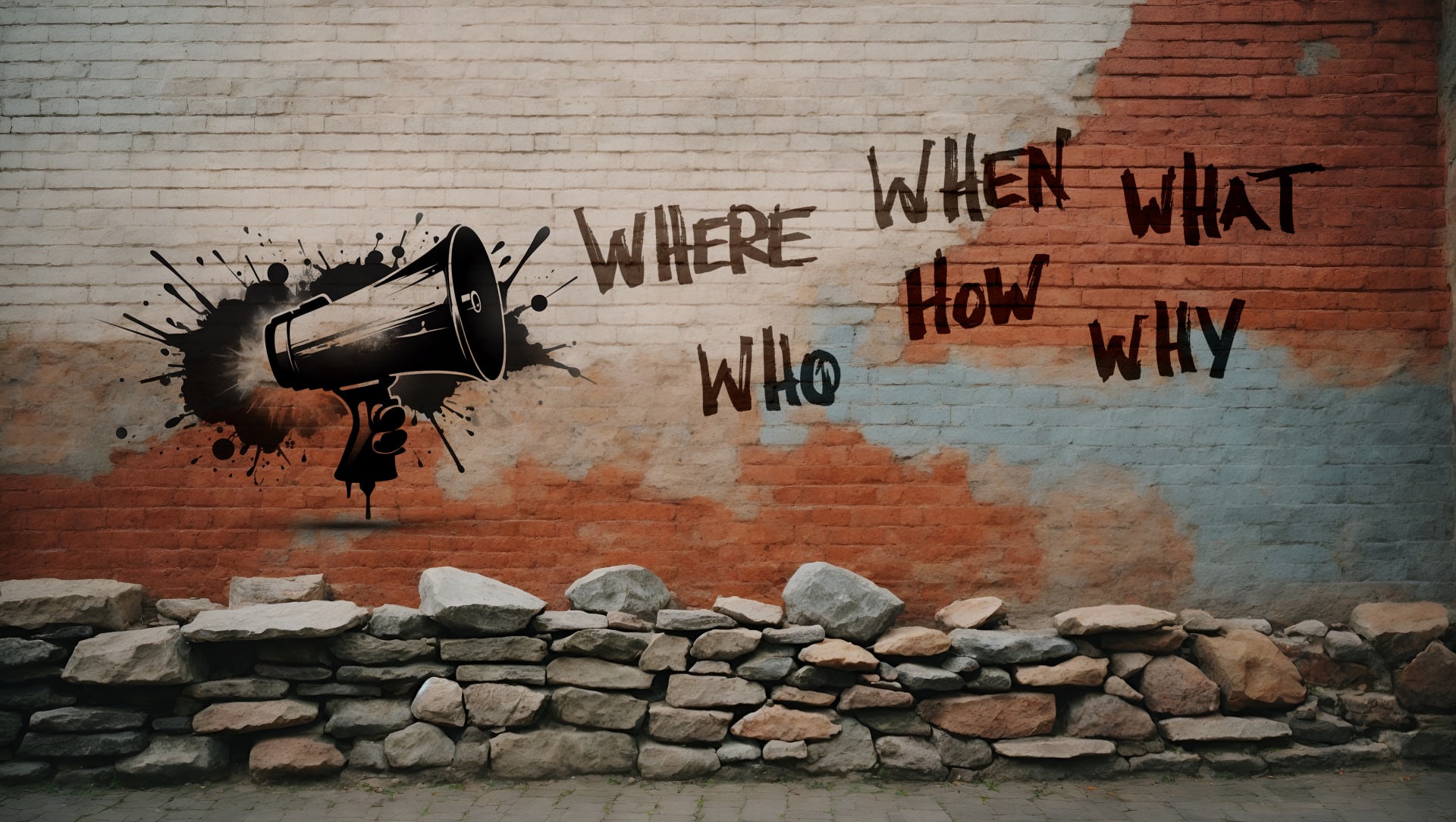
Image of a megaphone painted onto a wall and the words "Where, When, Who, How, What, and Why" scrawled in black to its right. Wall is brick with splotches of blue and white paint over the red bricks and the gray and tan stones below.
Image c/o Gerd Altmann

Welcome, readers, to May 2024’s second issue!

This month the theme is Self-Determination, having the space and power and dignity to be able to understand and shape one’s own destiny. We stand with all peoples of the world seeking self-determination.

Raafia Shaheen urges us to see people on their own terms and not just how they are useful to us.

Michael Robinson reviews and finds encouragement from Jacques Fleury’s You Are Enough: The Journey To Accepting Your Authentic Self. The book suggests that Black men worldwide should define themselves on their own rather than simply following social stereotypes.

Shahnoza Ochildiyeva tells the story of a girl who has to leave her Uzbek home due to loss but who returns home having made something of herself.

Person silhouetted against the sunbeams on a cloudy day leaping from one rock to another towards another person holding a bag who's waiting for them.
Image c/o Mahmoud Mohamed Hassan

Zarina Abdulina speaks to the importance of worthwhile work to a person’s self-concept and how teaching fills the role for her. Marjona Shayimova talks about finding the courage and perseverance to achieve her goals.

Nazokat Urinboeva offers up a tribute to Uzbekistan’s strength and cultural heritage, all the way back to Mughal emperor Babur while O’tkir Kochkor enscribes poetic praise for the majesty and history of his Uzbek homeland. Mannonova Shakhnoza outlines scholarly research into the history of the Kagan Khanate in Uzbek history as Zulayho Sultonaliyeva illustrates how her culture and society can adapt for the times in her piece on the legal precedent and need for updating and modernizing Uzbekistan’s constitution.

Behruz Toshtemirov argues for the unique qualities of literature as an art form, inspired by her Uzbek cultural heritage.

Abdunazarova Khushroy gives us a poetic tribute to the heritage and language of Uzbekistan as Feruza Abdullayeva pays tribute to the many Uzbek writers whose work she admires.

Evie Petropoulou showcases an Egyptian celebration of the Greek poet Cavafy, who was known for his sensual and political poems and unconventional personal style.

Mosaic of jagged images melding into each other in a rainbow with red in the middle and yellows, greens, and blues on the right and pinks, purples, and indigo on the left.
Image c/o Tony Melena

Alan Catlin rearranges verbal ephemera from famous people to create unique character sketches. Jacques Fleury celebrates the good fun of the Blue Man Group while Noah Berlatsky shares a harsh and iconoclastic thought about Ezra Pound and Daniel De Culla’s poem pokes gentle fun at the wealthy and powerful.

Mark Young presents a fresh set of his signature mix of text and colorful images as Saad Ali showcases ekphrastic work in response to historical paintings, inserting his thoughts into the fabric of history.

Kylian Cubilla Gomez crafts photographic closeups of his dinosaur and tractor toys and other childhood ephemera. Habibova Mahzuna expresses nostalgia for her lost childhood.

Wayne Russell avows his allegiance to travel and adventure while Sayani Mukherjee’s poetry evokes flights of imagination around the globe.

Adam Fieled peers into the close and tempestuous relationship between an artist and a muse. Gaurav Ojha outlines his path from youthful lusts to maturity and spiritual transcendence. Sandip Saha’s pieces explore the search for mystical spirituality amidst daily life.

White candles lit on a cloth out at night near a globe that's partly illuminated.
Image c/o Gerd Altmann

James Whitehead probes timeless questions about human life, ethics, and suffering. Niginabonu Amirova reflects on our mortality and the cycles of nature as Mykyta Ryzhykh crafts lowercase poems about the tragedies of quick and slower deaths and Mashhura Abduhalilova renders the experience of mental distress, showing how anxiety distorts time and sensations.

Nigar Nurulla Khalilova laments society’s being uncaring to the vulnerable while Iraqi poet Faleeha Hassan takes a quiet moment to mourn family members lost to war.

Bruce Roberts reminds us of the historic coexistence of Jews, Christians, Muslims and other people in the Middle East and laments the current violence in the region.

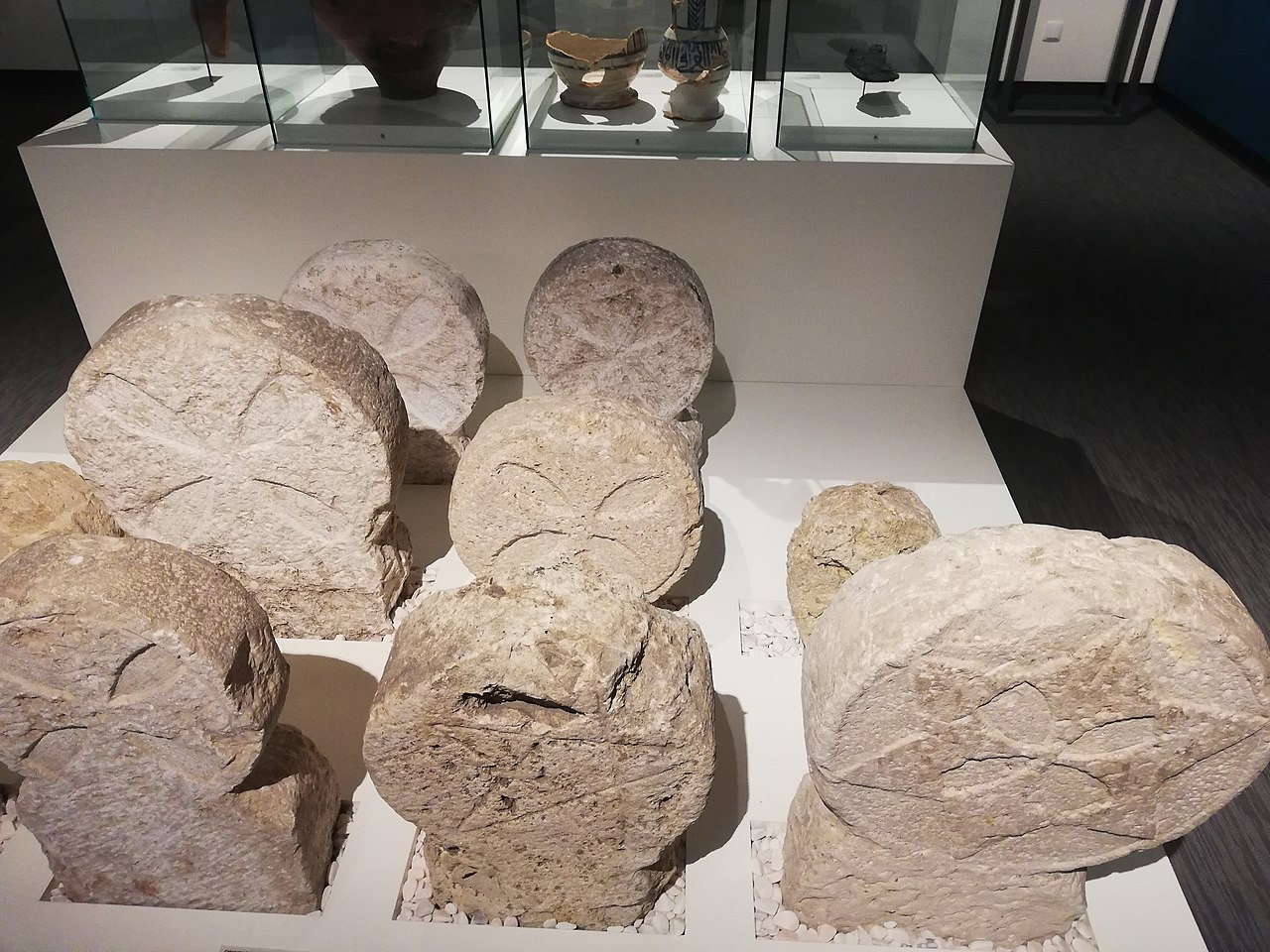
Medieval concrete grave markers on display in the Museum of Lisbon. There are stars of David, crosses, and Muslim pentagrams implying people of different religions and cultures lived together.
By Sheila1988 – Own work, CC BY-SA 4.0,

Grave markers from medieval Lisbon, showing Christian crosses, Muslim pentagrams and Jewish Stars of David. (Museu de Lisboa)

Bill Tope’s story exposes different levels of corruption in the nonprofit world, how greed can mess with even the best of intentions.

Z.I. Mahmud looks into scholarly literature that explores the tension between Batman’s heroism and his lawbreaking and vigilante violence.

J.J. Campbell seeks to show small kindness in an alienating world. Feruza Muzaffarova highlights the humane sensibility behind O’tkir Hashimov’s novel Between Two Doors. On a personal level, Niginabonu Amirova urges a return to common courtesy, beginning with greetings.

Tuliyeva Sarvinoz speaks to the importance of setting a good example and preparing children for the world. Diyora Tursunboyeva reminds us of the importance of encouraging children’s dreams. Niginabonu Amirova celebrates the joy of sports and athleticism for young people as Rano Babamurodova encourages children to read books and learn.

Foregrounded hand holding an open book in a library with desks and chairs and books on bookshelves in the background.
Image c/o Mohamed Mahmoud Hassan

Tuliyeva Sarvinoz also outlines offerings at Uzbekistan’s vocational schools as Abdunazarova Khushroy reflects on educating herself by learning Arabic and Jumanazarova R. gives honor and respect to a dedicated teacher. Tuliyeva Sarvinoz also pays tribute to another educated and accomplished writer and teacher.

Muslima Murodova Kadyrovna pays tribute to the spiritual and compassionate love of her mother. Zuhra Ruzmetova also honors the care and encouragement and constancy of her mother. Nosirova Gavhar pays tribute to her grandfather who introduced her to books and gardening. Zilola Khamrokulova sends up a poetic love piece for her mother as Nozima Uloguva’s poetry and prose celebrates the sacrificial and dedicated love of many mothers as Dilnoza Eshqulova renders up her intense grief and spiritual angst after losing her mother.

Prasana Kumar Dalai presents the joys, pains, and trepidations of love and Mesfakus Salahin contributes delicate romantic poetry. Duane Vorhees presents various sensual love poems through the metaphors of music, literature and cosmology. Kristy Raines sends up passionate and adoring pleas to her lover to remain close.

Red wooden heart with a shiny smooth surface up against gray wood.
Image c/o George Hodan

However, Taylor Dibbert reminds us that no matter how much work you put into a relationship, it doesn’t always last forever. Perhaps the couple he describes could have heeded Madina Toxirova’s advice on the importance of psychology for young people to understand themselves before marrying. Zafar Nur contributes a poem of lament over a heartbreak as Maurizio Brancaleoni translates poetry from Italian writer Amelia Rosselli on quiet heartbreak and loneliness.

Maheshwar Das exults in love, faith, and nature as Brian Barbeito outlines a poetic and pastoral journey in the rain and Brian Barbeito also shares closeups of spring flowers.

J.D. Nelson’s haiku captures spring moments of transition and in-betweenness as Isabel Gomez de Diego contributes photos of various doors and entry ways. Lynn White highlights the whole worlds going on in what we might consider the background of nature.

Aerial view of a city and natural area with a river and boats through the center.
Image c/o Omar Sahel

Mahbub Alam celebrates nature and love in his Bangladeshi homeland. Abduvohid Holikov presents a description of the cultural and natural beauty of the Denov region of Uzbekistan while Ochildiyeva Dilnoza Abdivokhid celebrates the Surkhandarya region’s cultural and natural history and her family heritage. Abduhoshim Maxamadov celebrates the geographic and biological diversity of Central Asia’s Ferghana Valley. Samadov Aziz Xasanovich encourages technology development in harmony with these natural environments in his paper on measurement techniques for constructing horizontal and inclined wells.

Graciela Noemi Villaverde captures a moment of personal and mental stillness and rest. Lilian Dipasupil Kunimasa finds her psychological rest and inspiration in water: rain and the ocean’s diversity of life. Annie Johnson speaks to calm moments with her love throughout time and seasons of nature.