Advanced women in our society!
As each person is born and matures, his mother, who prays behind him, and his teachers at school help him. Where do you think the necessary personnel, teachers, scientists and poets will come from or how will they appear in our rapidly developing society today? Of course, such people are brought up by mothers who are advanced in all aspects, passionate teachers. I know one such woman…
Shirin Sultanova works as the deputy director for spiritual and educational affairs at the 54th general secondary school in the Beruni district of the Republic of Karakalpakstan. Shirin Sultanova was born on March 8, 1967 in Beruni district of the Republic of Karakalpakstan. Studied at school 57.
From 1986 to the present, more than 60 articles and 30 poems have been published in international and republican newspapers and magazines. On July 3, 2010, the "NATURE: yesterday, today, tomorrow" conference of the Republic's youth was held by the "BIOEKOSAN" educational and methodological complex of the Republic of Uzbekistan's Ministry of Public Education. Her student Khidiboyev Nursultan was awarded an honorable Diploma for taking the honorable 1st place and Sultanova Shirin for her article on the same topic. On October 24, 2015, the Republic of Karakalpakstan was awarded a diploma for its proud participation in the 2nd stage of the contest "The Best Spiritualist of the Year" in the field of public education.
In 2015, Khudayarova Maftuna, a 9th-grade student of the 54th school, participated in the stage of the Republic of Uzbekistan, took 3rd place and was awarded a diploma.
On October 20, 2020, on the occasion of the 31st anniversary of the Law "On the State Language" in Uzbekistan and the Uzbek language holiday on October 21, "May your mother tongue be respected!! Beruniy was awarded with a certificate of honor by the district governor A. Saparboyev for taking the 1st place in the district with the song "Ona tilim" in the republic competition.
On October 25, 2021, in connection with the October 25 internal affairs workers' day, in the competition held under the slogan "Let's unite the youth of new Uzbekistan", his student Makhmudzhanova was awarded with a letter of thanks for taking the proud 1st place in the popular drawing competition.
On January 14, 2022, he was awarded a diploma in the category "Best creative work" for the poem "My Motherland" in the online competition "Guardian of my country - a symbol of peace" on the Ustoz channel of the Republic of Uzbekistan.
In April 2020, in the competition held within the Republic of Uzbekistan, he was awarded with a diploma of the highest degree for his scientific article on the topic "The role of teachers in the education of a perfect person".
In March 2020, he was awarded the 1st degree diploma for his scientific article on the topic "The role of scientific circles in raising a perfect generation" in the contest held on the channel of the Intellectuals of the Republic of Uzbekistan.
In June 2020, he was awarded a certificate for his scientific article on the topic "Interpretation of negative and positive images in the story of Genghis Khan's White Cloud" at the 17th multidisciplinary scientific conference of the Republic on the topic "Scientific and practical research in Uzbekistan".
In November 2022, a scientific article on the topic "Improvement of spiritual and educational work in modernizing Uzbekistan" was published in the Russian journal "MEJDUNARODNIY SOVREMENNIY NAUCHNO-PRAKTICHESKIY JOURNAL" NAUCHNIY IMPULS.
In 2022-2023, in the Republic of Karakalpakstan, Makhmudzhanova, an 11th-grade student of school 54, participated in the contest "We are against violence" and took 2nd and 3rd places and was awarded a diploma.
Not only the students of this teacher won a place in the republic, but also his children took pride of place. Sultanova Shirin Yuldashevna is not indifferent to the future of her children in raising them to be educated, knowledgeable, intelligent, intelligent. In 2016, sons Khasan and Husan Tuliyev participated in the "Rekord-Uz" program of the Sport TV channel of the Republic of Uzbekistan with exercises of unique acrobatic skills and won the 1st place and were awarded with a statuette.
Khusan, one of the smallest "Dorbozchilar" in the Republic of Karakalpakstan, plays the simdar, Hassan is engaged in acrobatic, martial arts, bessuyakboza, fantamime exercises. Currently, they are studying at the 3rd stage at the Institute of Culture of the Republic of Karakalpakstan. He works in the department of culture in Beruni district.
Sultanova Shirin Yuldashevna's 3rd child Tuliyeva Sarvinoz is one of the creative girls. He writes poetry and articles. On March 7, 2019, Tuliyeva Sarvinoz personally received the State Award named after Zulfiya from the President of the Republic of Uzbekistan Sh.M. Mirziyoyev. In 2019-2023, he studied at the Tashkent State University of Uzbek Language and Literature named after Alisher Navoi. Currently, he works as a teacher of native language and literature at the vocational school of Shaikhontohur district of Tashkent city. Every mother loves her children. He is proud and even more happy when he sees their achievements.
One of the most important achievements of Shirin Sultanova is that on October 1, 2010, she was awarded the badge of the Republic of Karakalpakstan "Excellence of Public Education".
Shirin Sultanova has been teaching young people for 38 years. She is proud of her good deeds during her life, because looking back, all of them are a purposeful path for the development of the country and society.
The fact that she faithfully fulfilled her duty to the society, was always faithful, raised young people to become perfect and mature individuals, and served well-rounded people is an example for women in our society. As long as there are such passionate teachers and women, our society will improve, and many mature personnel will develop. We wish our teacher great patience and perseverance in raising children who will not be indifferent to the future of our country and will raise the flag of our country to higher heights.
Thank you for taking the time to read my article. Good luck with your work.
Tuliyeva Sarvinoz. She was born on November 8, 1999 in the Beruni district of the Republic of Karakalpakstan. Graduated from Alisher Navoi Tashkent State University of Uzbek Language and Literature (2023).
The winner of the state award named after Zulfia (2019).
Teacher of native language and literature at Shaikhontohur District Vocational School, Tashkent.
She is the author of the poetry books "Song of Peace", "I am a Girl of Truth", "Morning Poem".
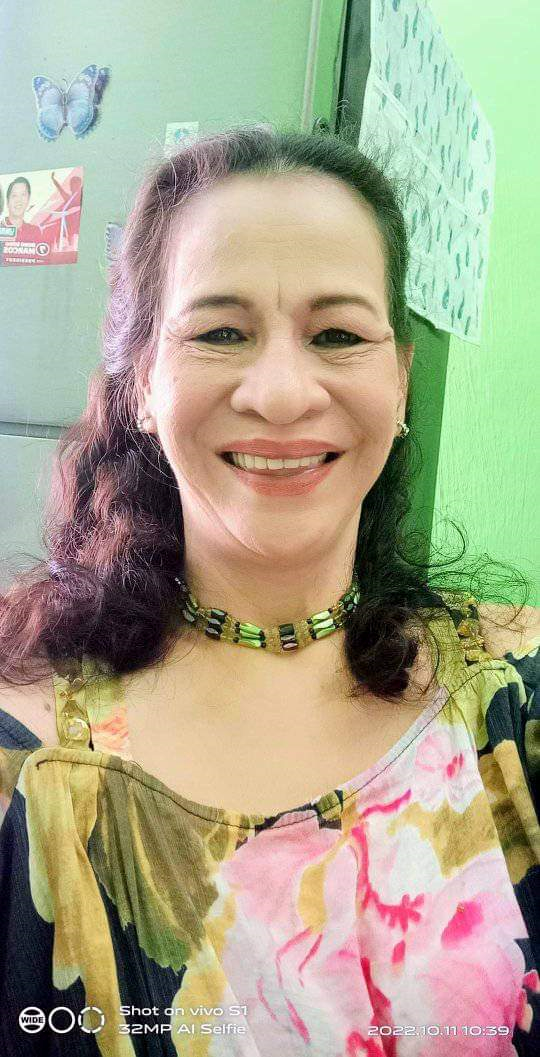
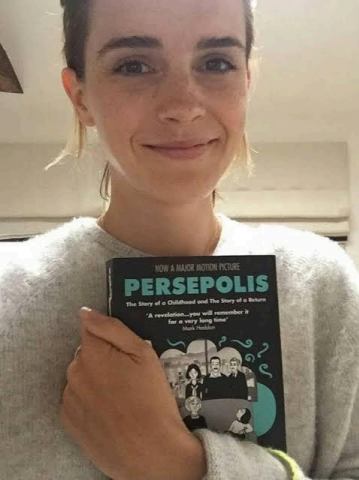
I leave a picture of me and my mother.
From Sex to Super-consciousness
(Musings of an anonymous MAN on sex, spirituality and everything else in between)
As I am wasting my monotonous days, reminiscences began creeping in of those sex-full days of wondrous, wanton lust, languidly fueling up my torn-up moods of boredom with something magical. And I allowed these emotions to distressingly float along the milky way of guilt and joy, dreads and dreams, being and becoming, and the suppressions and exuberance of an immaturely coming of age man in the city of never-ending little circles.
It combines everything together in a banquet of marvelous delight. I remember my love for that cheeky, whore-like colleague, one with brown black hair, a white-like face, and not-so-soft skin, for the pain of pushing, pulling, falling, digging, eating, and at the end, throwing something from my pocket and something for my horse-like thing—no wonder they call me a real hunter; I was always loaded on with my pestle those days, ready for a fire. Too cool, I thought, or perhaps just a fool.
I allowed my life to remain as an itchy despair.
I, the Hunter, as my colleagues have marked me, am a lone employee in the financial sector of the economy, working in little boxes in big buildings, counting and recounting huge cash with nothing in the hand, kind of analogy, here, eating and getting nothing wearing a leather cap. This kind of situation is so easy to put me off. I would shake and spring out life every night.
For those days, I considered myself a sex seeker; I was a sex guru's imperfect disciple, but out of resentment, the gaze of “the other” fixed me as a hunter or for some a Billy goat. Yes, I was addicted in sex, but what does it mean for a man of twenty-four to have this addiction in comparison to those horribly ugly things that everybody watches without any disgust? No, I never abused, manipulated or harassed any one for my lust, it was all straight or nothing, all my passions were congenial partners or affordable professionals.
My habit of chasing fantasies began during my college days. They, with rugged cheeks and a bit of soft, tight tissues, all had to come down to this dull valley to make something out there to survive for their families. For happy buck goats like us, we were a pack of four back then. It was the days of abundance; they were everywhere and we were pushing, pulling, and throwing, and they were grabbing, blowing, dunking, and bucking. It was all white and blue.
Anyway, it all started in a small wooden box. She had a soft smile. I put my hand all over her and then sucked from her nipple. It tasted awfully sweet. I was already high. I emptied my pocket and walked home alone.
In those days of thoughtless sex, I was there almost all the time, at the intersection of seven distinct turns inside the old house.
Sometimes even the prostitutes found it hard to take my push; her juices were not enough.
After some time, my lousy friend arrived from Australia—wow, it was already down under—to find a young girl who would sleep with him for his foreign gate pass. The first thing I said to him was, Have you done it yet? He was perplexed. I still remember that docile rat running away from his horny girl when she wanted to kiss her. It's vivid, and I wanted to take him to my place, a new and recent one I have found near the holy place. Shiva X, and what next?
They were ripe from the village and falling down in the valley with soft and sharp breasts; it was too good to miss. Again, what next? As the white explosions continued, I told my lucky-less friend to join me in my exuberance, but he was a bit too human, not half a kind of animal. I was sure that he had come back to Kathmandu to sharpen a dull pencil on a virgin cutter. He had a magical card to juice up any girl out there. That magical thing works for every middle-class girl?
I can’t understand the black line of separation between middle-class young girls and my better-loved prostitutes; they both easily give up, don’t they? One for the money, two for a show, and three for a pass to fly away. All the same, I am not mistaken between a few thousand and a hard card.
My friend said, I am in search of a life partner to work with and sleep down under. I searched with the face of a sober hunter and found a young woman who was bright, glassy-eyed, restless, and tired of her stepmother and a confused father. I asked her, Are you interested in traveling to Australia? I was not surprised when I got her close, and she agreed. After a few cups of coffee, the deal was done; things will never be the same again.
However, I the hunter was not called for the marriage; I was not bothered, and can’t you see it? What an embarrassment it would be for them to find the presence of a hunter when both of them were thinking about goating each other.
My friend slept with his wife, and that evening, without any disgust, I did the same with a girl in exchange for cash. It was relaxing.
After a while, a thought came rushing into my mind of that soft-skinned pale girl my friend was digging in all the while. What made her so lovely was that she was pretty and tall, like a slate pole. I wouldn’t reach for her hole; it seemed too tight and obstructed for me. Every time Prakash did something with her, it felt as if my spirit was being rapped through my asshole.
It was too much and too big for that girl, Sony, and my boy, Prakash. They traveled across the long lane to the filthy resorts to do that thing. Am I going to tell you more about Sony? Probably NO. Sony was among the girls I dropped for, but she was hunted down by my friend, and I would only say to myself that her grapes are tasteless and sour.
Still, I remember the day of her marriage; it was astrologically supported and arranged, and I even saw tears in her eyes. Her husband was dissimilar as my friend, but he was another kind of hunter; he was rich, round, dull, and bit of hairless in front.
As I go through the news these days, I realize that sex has indeed become a bit too complicated and dangerous because people are too either curious or judgmental. It’s a looming disaster when sex ceases to become straight and spontaneous and begins as a point of abuse and bargain. What if you bump into a stranger who can trap you with lust and completely wreck you?
You may say I got away because I am not a celebrity; I was young and too fit, fine, smooth, and healthy, but I say to them I was an addict because without sex in that zone of quantity, I wouldn't have survived. I have never undermined a woman; even if I had bumped off a feminist, she would have never complained, because there were no tactics, tricks, abuse, false promises, or power involved; it was my nature; no betrayal. And thanks to my ocean guru I never turned into a suicidal man or a suppressed serial killer.
I don't know how I ended up in a marriage—from which side I don't know—but that was the day, around thirty-two, I realized the hunter also got hunted out and the Billy goat in me got castrated. I think to move out of sex addiction is something like moving up in the ladder of seven chakras, channeling that energy some more into the heart and head, and allowing those impulses to find their expressions on something else; there is no need to push or pull so much as these days, I paint, poet, music, focus more on math, and meditate; my guru would say take that leap from sex to super-consciousness.
Oh, my master, I have not touched it yet; I am hanging in between. But I have realized that in the cosmic scheme of things, a sage moon as he was, my master Rajneesh spoke that the urge for sex is an unconscious way of searching for your soul. Indeed, it gives a sense of transcendence to be with the mind, not obsessed with sex.
(Gaurav Ojha is a writer, researcher, and educator at different educational institutions.)
The Girl of Lugansk
Barefooted walking girl on the street
In prickly frost of morning hours
On icy slippery scald- head of the earth
With broken bloody knees.
Standing up and falling down,
Going alone nowhere.
Teared away from the world and herself.
Becoming more wicked.
Cold touching upon the bones
Of the kept silent victim.
Passers- by not finding any word.
Somebody tightly hiding the neck
Under fox collar,
Feeling sorry deep in the heart,
But not asking her anything.
Another one looks askance at the girl,
Expressing the contempt.
…O, Umpire judge!
Sometimes we can hang
The lock of indifference,
Not hear the dumb scream for help.
We are deaf, as caterpillars,
No demand from us,
And the conscience
Becoming blind,
The fire in the eyes is gone.
Nigar Nurulla Khalilova is a poet, novelist, translator from Azerbaijan, currently in the Kingdom of Saudi Arabia. She is a member of Azerbaijan Writers Union. She graduated from Azerbaijan Medical University and holds a Ph.D.
Happy Mother’s Day! This issue celebrates motherhood, parenthood, nurturance, and love.
Orzogul Gofurova offers up a sweet poem as a tribute to their mother, while Gulsanam Qurbonova’s essay highlights the true dignity of the complex homemaking and family-building work her mother performs in their household.
Sarvinoz Giyosova draws on spiritual language to express her respect for her mom, as Orzigul Sherova shares her eternal and sentimental love for her mother.
Abramat Faizulloev pays tribute to his honorable and caring mother as Ismailova Orastabonu honors the resilience and nurturance of Uzbek women. Lola Hotamova celebrates the love of mothers and the long heritage of honoring them in Uzbekistan while Xushroy Abdunazarova reminds us of the importance of kindness and respect for parents in the Islamic faith. Gulhayo Karimova urges all people, no matter how busy they are, to make time to honor their mothers and parents.
Nosirova Gavhar writes of a father’s sacrificial love for his young daughter as Don Bormon speaks to the beauty of friendship. Taylor Dibbert’s poetic speaker reflects on finding solace at a local dive bar after the end of a marriage.
Shahnoza Ochildiyeva relates a tale of kindness to a couple traveling with a sick child.
Dr. Prasana Kumar Dalai’s solo poetry illustrates the intensity of romantic feelings while Kristy Raines‘ poems highlight the power of romantic love and emotion to affect one’s life, whether or not the relationship lasts. Ike Boat’s piece is the plea of a lover not to be forgotten.
Christine Tabaka’s concrete poetry deals with loss: of one’s sense of self, of life during war, and the passing of the “golden age” in art and cinema. Avaungwa Jemgbagh vividly remembers the day their father passed away.
Duane Vorhees writes of the passage of world history and of loves past their lusty prime that have evolved into sources of solace and comfort. Gulmira Nurmuhamedova reflects on the passage of time, her memories of her past and how her present will also, in time, become a memory. Not all changes that happen with time are necessarily losses.
Faleeha Hassan mourns a friend lost to war as J.J. Campbell evokes his feelings of powerlessness in a personally alienating world. Tuyet Van Do’s haikus capture the grisly atmosphere of Gaza as Mykyta Ryzhykh mourns the world’s casual violence and homophobia through a variety of metaphors, including a dead kitten.
Karol Nielsen writes of the effects of the Vietnam War through the eyes of an American child left behind to play while his father fights. While less tragic on the surface than other pieces that present death and suffering, it still shows the separation caused by war.
In her poetry, Lidia Popa urges humanity to care for each other and the natural world.
Mahbub Alam laments the increasing heat and changing climate of Bangladesh and urges a return to environmental stewardship.
Sayani Mukherjee evokes the comforting presence of innocence and delicate natural beauty in a world that also contains genocide and war. Muslima Murodova finds peace by looking up into the vastness of the sky.
John Lloyd Casoy describes a moment of contemplation out at low tide in the wetlands while Lorraine Caputo recollects moments and interactions from her Central and South American travels in her “postcards,” J.D. Nelson notices small moments of surprise and relief in nature and human society, and Dr. Maheshwar Das sends up elegant poems of nature and spirituality.
Devika Mathur contributes an evocative description of the experience of meditation. Mark Young also turns inward, with his systemically generated poems from bits of text, recipes and instruction manuals, regurgitating life in the subconscious. Shamsiya Khudoynazarova Turumovna probes the depths of meaning hidden behind silence. Vernon Frazer’s jazzlike syncopated rhythms of poetry adorn this issue, while Steve Brisendine explores our perceptions and artistic inspirations.
Muntasir Mamun Kiron crafts a poetic ode to the elegance and joy of technology: the creativity it represents and that it can make possible.
In a more satirical take on technology and global politics, Terry Trowbridge satirizes world governments’ battle over the cultural “real estate” of social media.
Referencing battles much earlier in American history between government and media companies over press freedom and defamation, Michael Ceraolo dramatizes controversies and contradictions in early American history through his poetry.
Jim Meirose crafts an off-kilter piece about neighbors and friends playing with different communications and entertainment technology.
Maja Milojkovic highlights the power of poets’ words to turn the world towards justice, compassion, and inclusion.
In a thoughtful essay, Jacques Fleury urges Black men to embrace a more complex, diverse, and expansive idea of gender and masculinity.
Bill Tope’s story critiques the way our society tolerates, but does not fully embrace, “others” such as older women and people with disabilities. Brian Barbeito’s piece reflects on a lonely hawk and on the solitary elderly, while Noah Berlatsky explores and lampoons the self-absorption at the heart of some self-improvement schemes.
In another exploration of nuance, A. Iwasa interviews essayist Rikki Bransen about her piece “Faith and Authority: A Generation X Spiritual Journey” published in Microcosm Publishing’s zine Proud to be Retarded, where she discusses her individual relationship to autism, Christian religious practice, being female, and being middle-aged.
In another look at the journey of an individual towards wholeness and personal achievement, Adkhamova Laylo Akmaljon encourages readers to have confidence and enthusiasm in the pursuit of their dreams. Akramov also highlights the importance of perseverance in achieving one’s life goals.
Abdurazakova Murad offers tribute to an important teacher who showed her the value of daily practice for the skills she wanted to learn. Charos Maqsudova outlines how teachers can support the mental health as well as the academic promise of their students.
Dilfuza Namazova speaks of the importance of learning foreign languages, English in particular. Norsafarova Nilufar outlines the role of various parts of speech in Uzbek sentence construction.
Ogultuvak Atajanova highlights the importance of early education and enrichment for preschoolers and kindergarteners and the value placed on children in Uzbekistan. Botirali Sayifov highlights the importance of universal education to a free and productive society.
We at Synchronized Chaos intend our publication to celebrate literacy, education, and the diversity of experiences from people around the world. We hope that you enjoy and learn from this issue.
A precious fruit
Holding an apple is
History circulating in motion
The first fall,
The first digital revolution,
The doctors' one way.
It serves purposes of many.
But i hold an apple
With my pocket knife
Make art out of a fruit
A nice butterfly, smartly knitted
A map of my origin
It can be moulded in many
It can divide nations too
Wage a war
Genocide and what not
An imaginative flair
Of so many realities.
Objects then are not objects
But a history
Fighting against the white crown
The sun down ruling
Tearing the flag with just
A pinch of writing.
An apple can do wonders-
It saved my neighbour's
Life
A sickening days of chewing
The flesh and the core
The lady is now walking fast.
Then I have heard
A boy of merely ten
Fell to a dark depth
A big precipice of high altitude
He was picking apples
An apple served his death.
A precious fruit, I thought
And stopped my pen.
May Days
Rains in May days are like coins
The surplus is warm
The last drop, Tangy
-An orange flush
Over my cheeks
To remind me
Flush away and heal
The poison ivy.
In the afternoons
I look up,
The violet vast spreads
In the open.
A rainbow makes my sensitivity
A beautiful pool
Of coloured waters.
Then I know howling storms pour
To mirror the humane
Blanketed deep around
A vulnerable, little child
Coiled in wintry rage
The eyes are afraid to look open
And taste the earthly paradise.
At night I walk open
The night plains
winged with doors of magic blind
A stairway to a fountain
The tails swim in the mermaid bliss
Funnel like, the soma
Wets the green flush
and weed out the darkening thrush.
Then, the castle of
The mountain
Where cherubs lie in ditsy water
And sprinkle the purplish hymn
Of Almighty
And his blessed lamb
In surplus rain of
May days.
Spectral Shadows
A small child of buried past
Pocketed her memories
over her little watch-
Ping out the unhinged wall
Over the bricks,
Little tulips here and there
Lying flat over
A cauldron
Of Holocaust Shrieks
And template of dehumanized
Silence.
The sudden fall of
The writer
And institutions that zipped
Up his lips
Over testimonies
Later, he wrote a book
On linguistic silence.
His fall failed back
Between two worlds
Masked and silenced
Words of Jews and
Zeroes.
Dates of people
She remembered well
Her taped
Eyes that grew up
Upon Seeing flashes
To Spectres
In a whim
Of seated big men,
Eating away within
The ruptured channel.
On Monday,
she met a friend
Of her past school
Swaying by the river walk
Of little feet dangling above.
Rosebuds after the summer haul
And she made friends
From one to many
And chalked out their birthdays
Like her favourite puzzle-
Two of them stringed out
She could remember too much
She touched the thumb
And cut the string
And sat down by the last bench
With her little flowy skirt
And loosened net shoes.
"I sat and counted
One two three
I can remember all of them-
Her favourite way to dance in the hall
And how she made her first cut out
I sat then and became invisible
A whole bunch of rosebuds
In the afternoon fall
The fallen petals, the trampled buds
And i sat at the end
Tallest and i counted
One petals two and three
With my bag of rosebuds after
The classroom went dingy
And i was alone
And it rained hard
Then I gave them my
Umbrella and my favourite petals
As I sat with my
Spectral shadows
With my pocketed watch.
Sayani Mukherjee is a poet hailing from Chandannagar, a former French colony in West Bengal. She received her post graduation degree in English literature from Banaras Hindu University, Varanasi. Her creative works have appeared in various international and national magazines like Medusa's kitchen poetry, Litterateurrw, Beatnik Cowboy magazine, Third Eye Butterfly press, Writers workshop, Synchronized chaos magazines, Fiction niche, The quiver review, The Chakkar , Literary cognizance , Literary Horizon, Horroscope press , The romantic breeze including the literary magazine of her alma mater and several others. She is also part of various anthologies of poems i. e. ''Paradise on earth'', " Bleeding hearts and Mumbling Minds' ' etc. Recently her debut poetry collection ''ODE TO MERAKI'' got published by Authorspress, New Delhi. She likes to engage her leisure in photography, cinema and arts.
***
guilty nails torn off by a scream glued to a dead kitten
graveyard inside is a bedroom
the kitten sleeps and sees a red night in a dream
abdominal memories won't come out
dead kitten inside belly overcame fear of water
drowned in non-birth drinks as imperceptibly as he breathes
but where is the cat jesus christ?
***
How to be a corpse in a big house?
How to be a frame in a big house?
How to be small in a big house?
How to properly shoot neighbors in an apartment building?
How to scream in a very large house?
How to be silent? What is the right way to cry?
How to die right? How to be a child?
How to be an animal? I am overgrown-furry
I'm overgrown with a stub of a church candle
I grow like a tree for my grandparents
The apple tree is a Christmas tree on the neck of a drowned man
***
The water is silent: therefore it is on the lips, on the eyelashes, on the forehead, on the corpse. Water is a stone, and stone is silence and restraint. Remember how we were stones before we were born. Stone and tear: this is called patience. Thinking stretches like a silkworm over a wet path. Where are we going? Where does the rain fall? The dew conquers the grass. Tear after tear. Grass after grass. Face after face. Everything around is a reflection. Mirrors are silent because they reflect. God is silent because it is necessary. The person is silent because it is necessary. Man is the god of death, oh Lord. We put a candle for your repose, oh Lord.
***
black night knocks
on the skull box
and opens the crystal door
windy garden of silence
look carefully at your feet
***
Lonely kitten lost on the street
Lonely kitten with my eyes all alone on the street
Lonely kitten with my name is lost
Lonely kitten with my heart is killed
Lonely kitten is alone with the street
Loneliness vs solitude
The stars above are calling me on way
***
iron sheet in the eyes of hunger
fish float up and hang suicides on a tree
holocaust coast in the cold forest
the bones of the crucified on the branches in the cold forest
***
Black birds don't let the bushes bleed
Black nights prevent the grass from publicly crying
Blue skies forbid hiding scars in the dark
And in a room closed from the inside
Тhe continuous winter revels
Іn the broken bone of a dying man
***
аnd when the soldier fell
there was no one
who could help him up
***
people don't want to die and I hate them because they die
pigeons compete with children in the race for breadcrumbs
oil in a pipeline competes with itself in the blackness
children compete with each other in false growing up
candy wrappers of the night in the red throat of the abyss
***
the imperceptible sky became a guinea pig
dove pretended to be kissing a dove
stone age everywhere
otherwise why were two guys in love pelted
with stones and not with wedding cards
***
axiom
of emptiness
in the cemetery