We continue to express sorrow over what’s happening in so many different parts of the world and encourage our readers to support people and the planet.
Also, we are hosting our Metamorphosis gathering again! This is a chance for people to share music, art, and writing and to dialogue across different generations (hence the name, the concept of ideas morphing and changing over the years). So far photographer Rebecca Kelly and English/Spanish bilingual poet Bridgett Rex are part of the lineup and more are welcome! This event is also a benefit for the grassroots Afghan women-led group RAWA, which is currently supporting educational and income generation and literacy projects in Afghanistan as well as assisting earthquake survivors. (We don’t charge or process the cash, you are free to donate online on your own and then attend!)
This will be Sunday, December 31st, 2-4 pm in the fellowship hall of Davis Lutheran Church at 317 East 8th Street in Davis, California. It’s a nonreligious event open to all, the church has graciously allowed us to use the meeting room.
This issue draws us into a full sensory experience, surrounding us with places and worlds larger and more vast than ourselves.
Vernon Frazer’s pieces rumble with a smorgasbord of rhythmic and clanging instruments and sounds while Joshua Martin sends up a plethora of sonic syllables. Mahbub Alam stares and contemplates the beauty of nature and the Taj Mahal. Christina Poythress highlights through tactile details the rich nightlife within the world’s soil. Kathleen Hulser draws on mathematical concepts as metaphors for how life changes affect and circumscribe our lives.
Jim Meirose illuminates the sensory experience of playing outside on the grass on a nice sunny day while Lorraine Caputo wanders off trail in South America: evenings, out-of-the-way streets, and less crowded areas.
Rafiul Islam speculates on inter-planetary relations in a society where multiple sentient species inhabit multiple planets.
Bekzod Quodirov outlines ways to make ammonium nitrate safer and more stable as a fertilizer and an industrial tool.
Even our own, more human-scale worlds contain more detail that we often grasp at first glance.
Sophia Fastaia remembers the joy, wonder, comfort and danger of childhood, all in one birthday party.
Chloe Schoenfeld’s piece probes opposites and finding and befriending one’s shadow self. Pascal Lockwood-Villa surveys a vacation in the tropics through the lens of photos that reflect different dimensions of human nature.
Susan Hodara details the common sensory experience of drying off after a shower while J.D. Nelson observes daily life and snacks within a homeless shelter.
Philip Butera describes with sensory details the underside of a circus after the show, referencing the work of repackaging the illusion.
Duane Vorhees’ work explores coupling and fertility from several big-picture spiritual and grounded, natural angles. Aklima Ankhi describes the search for an intense emotional connection with a lover that goes beyond the fleeting happiness of the everyday.
Slavica Pejovic ponders love, closeness, completeness, and connection. Aasma Tahir rhapsodizes about the subconscious worlds of nighttime, romance, and the imagination. Kristy Ann Raines describes the intense emotional experiences of love lost and regained.
While our universe can be glorious, it can also be tragic, with forces beyond our control.
Ari Nystrom-Rice reflects on the fragility of his knowledge and sense of place in his world through the metaphor of a child’s toy boat exposed to the elements.
Nilufar Ergasheva illustrates the dangers of the winter season in rural villages, with cold and wild animals on the prowl, while Christopher Bernard renders appendicitis and surgery into poetry.
Mykyta Ryzhykh probes where we can find meaning and tenderness in a war-ravaged world where death seems frequent and life seems meaningless. Atagulla Satbaev shares how we delude ourselves into thinking love is eternal: time and death separate everyone. Michael Lee Johnson reflects on his own mortality and attempts to find eternal love in living death, rather than in the capriciousness of life.
Graciela Noemi Villaverde’s piece renders grief into somnambulant surrealism, a panoply of dream images while Alden Joe evokes the pain of lost love with imagery of tigers and predation. Suleiman Gado Mansir sends up a surreal dream sequence illustrating how our minds attempt to process the world’s violence.
Sometimes, we wonder what place we have in such a large world. Will the universe overwhelm and consume us?
Alma Ryan explores the season of fall with a meditation on falling, death, and the ways we let ourselves go. J.J. Campbell’s work turns solemn this month as he ponders various kinds of death and forms of passing away.
Zahro Shamsiyya reflects on the brevity of life and the need to savor the experience. Jerry Langdon reflects on the changing of seasons and the passing of a friend.
Gabriel Flores Benard shows the tragic ways continued abuse can shape a still-forming personality.
Even apart from mortality and injustice, everyday human psychology can be a mysterious and unmapped landscape.
Zosia Mosur illustrates how we sculpt and train and also harm and punish our physical selves.
Taylor Dibbert’s speaker speculates on what his midlife decades will bring, while Noah Berlatsky highlights the common human experience of procrastination and Shirley Smothers relates her efforts to maintain inner peace.
Shamsiya Khudoynazarova Turumovna laments that real life can’t be like the novels she reads. Azemina Krehic compares herself to a linden tree and wishes she possessed its strength, but finds herself instead in the tree’s biological complexity.
Yet, we as humans do not have to be passive in the face of such a large and grand universe. There are roles we can play, even as individuals, that allow us selfhood and transcendence.
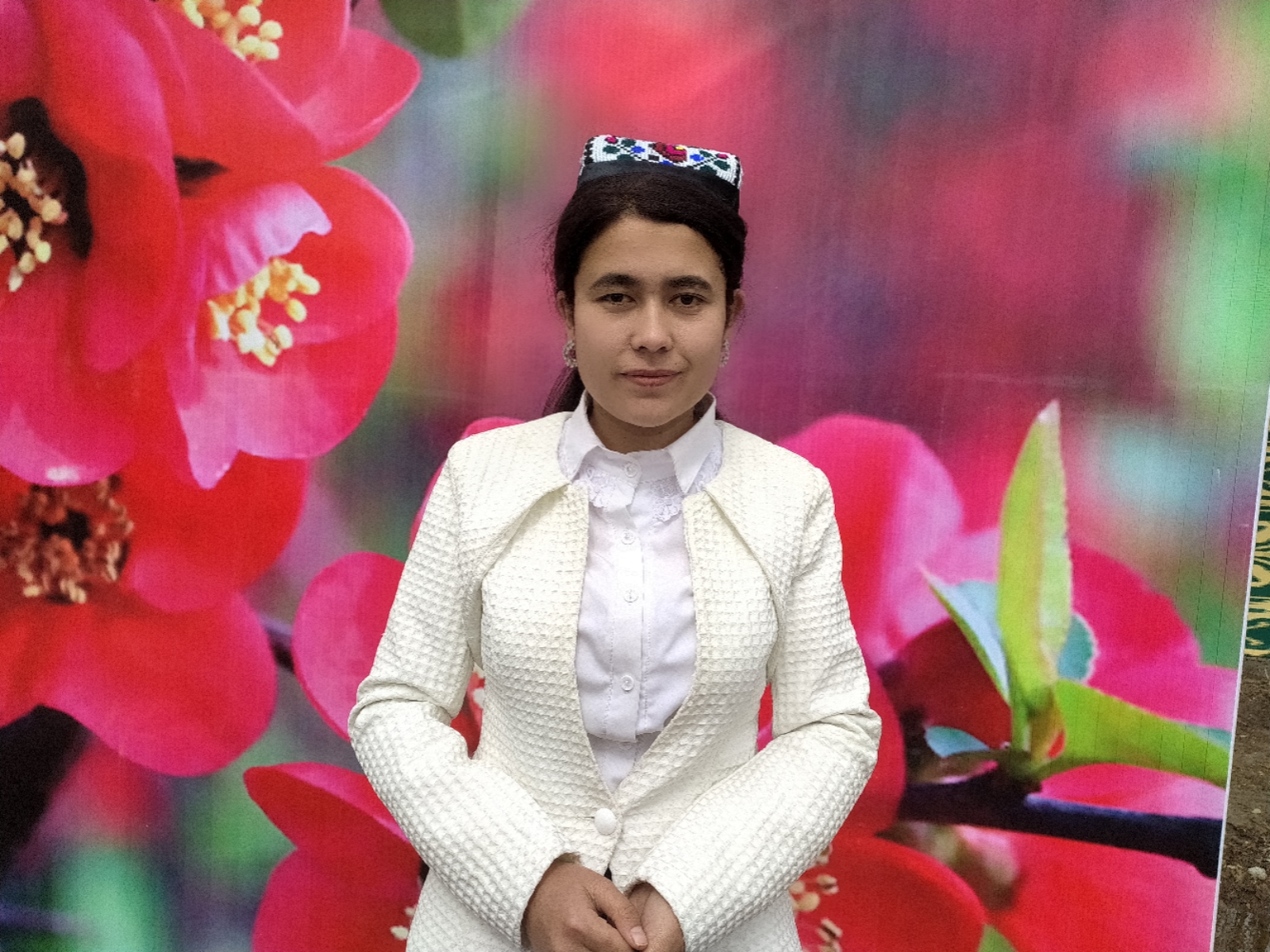
Diyora Abdujabborova’s reflects on the value of women’s leadership and nurturing roles in Uzbek society. Anila Bukhari speaks to the earnest desire of girls living in poverty to get an education.
Christina Chin and Uchechukwu Onyedikam collaborate on haikus that are translated into English, Taiwanese, and Igbo and highlight moments of people collaborating with nature. Nery Santos Gomez illustrates the joy she takes moving in unison while riding a beloved horse.
Daniel De Culla’s photography focuses on low-key ways we alter or adjust our environment: clothes, sketches, bushes we plant. Isabel Gomez de Diego illustrates moments where nature (small children and plants) integrates into our built environments.
Sayedur Rahman demonstrates the resilience and strength of refugees creating new lives in their new homelands. Jacques Fleury asserts his place in the world as a Black man, self confident even in spaces not created with him in mind.
Christina Chin and Paul Callus also collaborate on further haikus translated into English, Mandarin and Maltese that celebrate the mastery of crafts: cooking and painting.
Annie Johnson speaks to the transcendent immortality she finds through stepping out of herself to create art that will outlast her.
Mark Young reflects on the values and accomplishments of his Boomer generation in terms of shaping society while questioning the uses of similar government power today.
Z.I. Mahmud outlines Jane Eyre’s character growth and self-assertion in Charlotte Bronte’s novel while Shokirova Zarnigor Shuhratjanovna urges patience for people seeking the meaning of their lives.
Orzigul Sherova shares how she learned to draw on her fantasies as an inspiration rather than as a way to avoid achieving her real-world goals.
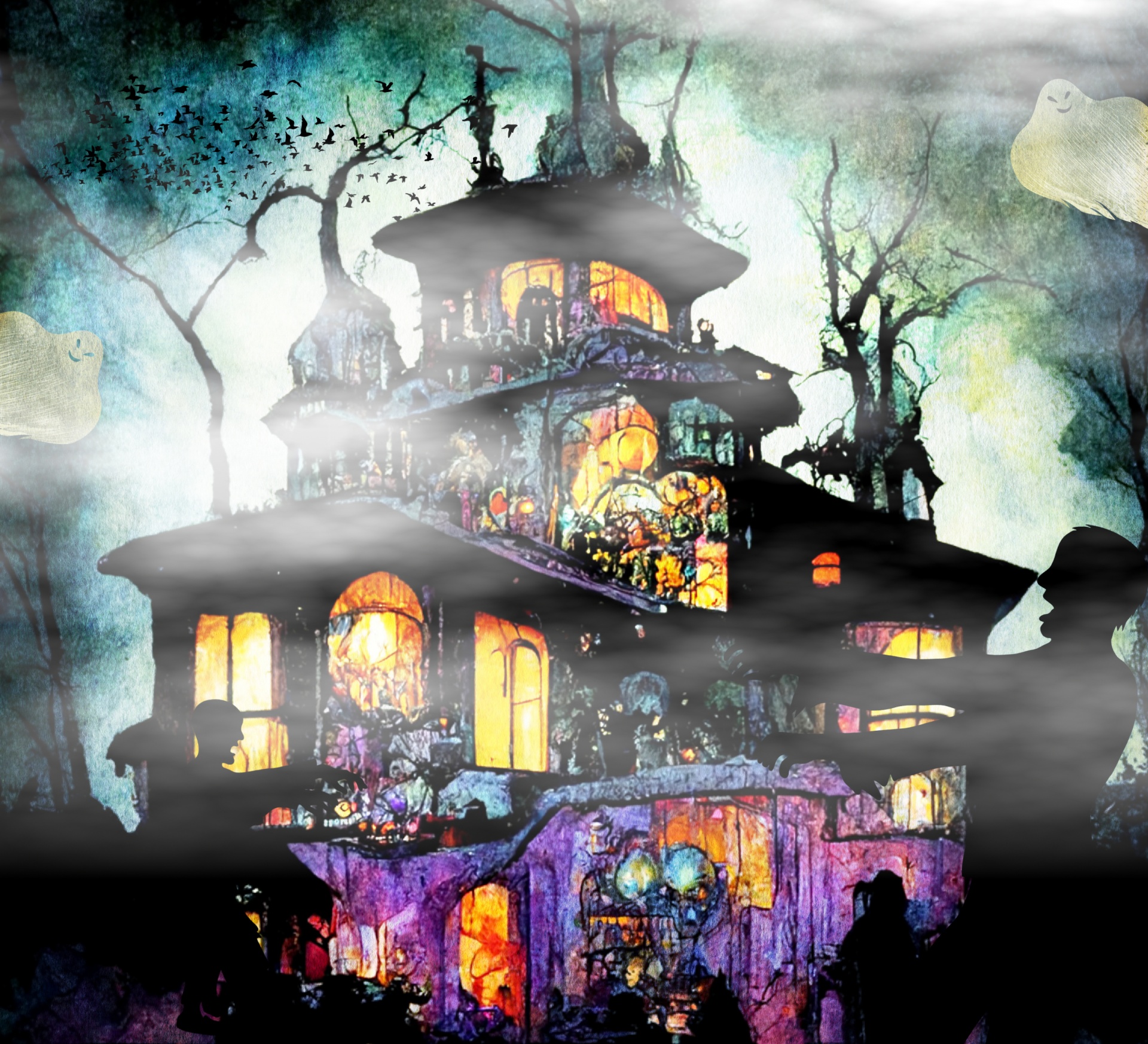
In Nahyean Bin Khalid’s take on a haunted mansion horror tale, his protagonist frees undead souls trapped in the home, but stays to become their caretaker rather than escaping, getting killed, or kicking the ghosts out.
Jaylan Salah reviews Daniel Radcliffe’s new HBO show The Boy who Lived, about David Holmes, his stunt double who became paralyzed after an injury on set and who worked with quiet courage and dignity to rebuild his life.
Even if our places in the universe are relatively small in the grand scheme of things, it matters how we fill our places because our behavior and choices affect those around us.
Rasheed Olayemi’s poem demonstrates how corruption at both individual and governmental levels weakens a country’s economy.
Daniel De Culla calls out the hypocrisy of people who focus more on looking good at charity balls rather than helping others, especially in wartime.
Mesfakus Salahin’s narrators are wise beyond their years in terms of their ability to love and respect and connect with other people. Salahin urges adult world leaders to hold to that level of maturity.
Elmaya Jabbarova urges the world to wake up and turn back towards life and justice.
Lilian Dipasupil Kunimasa fondly remembers her low-tech but fun childhood visits to her grandparents’ country town, and urges compassion for those with HIV/AIDS.
Family, culture, love, and heritage can be vital to grounding us and giving us the strength to withstand a rough universe.
Aziza Gayratova expresses respect for her parents and the strength family love gives her to endure life’s injustices.
Wazed Abdullah reminds us of how essential love and caring is to life while Faleeha Hassan speaks to a mother’s wish to protect her son during wartime in her poem, translated by William Hutchins.
Shahnoza Ochildiyeva offers up a colorful paean to her native Uzbekistan while Yahya Azeroglu pays tribute to Ataturk, the founder of modern Turkey.
Fahimrelates a story of courage and loyalty among Bangladeshi soldiers at the country’s founding.
Finally, to come back to nature and the vast universe outside of our own species, Brian Barbeito reflects on the wisdom of nature to outlast humanity. He also considers how mysterious the sea remains, even after millennia of sailing.
We love to map our lives on geometry. Work is a grid of many discrete boxes. Play is the tangent refreshing the unpredictable impulse. Romance is a Venn diagram where overlap turbocharges the heart. Friendship plots to X and Y where the point of intersection undulates in the great sine curve of closeness. Aging is an arc bending towards infinity. Fibonacci numbers shape our thoughts into graceful proportions, an echo chamber of golden ratios. The fractals of enthusiasm bump against the paisley of tenderness. Euclid and Pythagoras made the body Earth’s measure, and Nature harmonizes our internal geometry.
####
Kathleen Hulser is a poet, writer and public historian who lives in the Bronx and Connecticut, and has participated in many public art projects and activist groups as well as curating history exhibitions such as Slavery in New York and Petropolis: Urban Animal Companions.
You lock into your history, your past, withdrawal,
taste honeycomb, then cow salt lick.
All your life, you have danced in your soft shoes.
Find free lottery tickets in the pockets of poor men and strangers.
Numbers rhyme like winners, but they are just losers.
Positive numbers tug like gray blankets, poor horses coming in 1st.
Private angry walls; desperate is the night.
You control intellect, josser men.
You take them in, push them out,
circle them with silliness.
Everything turns indigo blue in grief.
I hear your voice, fragmented words in thunder.
An actress buried in degrees of lousy weather and blindness.
I leave you alone, wander the prairie path by myself.
Pray for wildflowers, the simple types. No one cares.
Purple colors, false colors, hibiscus on guard,
lilacs are freedom seekers, now no howls in death.
You are the cookie crumble of my dreams.
Three marriages in the past.
I hear you knocking my walls down, heaven stars creating dreams.
Once beautiful in the rainbow sun, my face, even snow
now cast in banners, blank, fire, and flames.
I cycle a self-absorbed nest of words.
Casket of Love (V3)
This moon, clinging to a cloudless sky,
offers the light by which we love.
In this park, grass knees high, tickling bare feet,
offers the place we pass pleasant smiles.
Sir Winston Churchill would have
saluted the stately manner this fog lifts,
marching in time across this pond
layering its ghostly body over us
cuddled by the water’s edge,
as if we are burdened by this sealed
casket called love.
Frogs in the marsh, crickets beneath the crocuses
trumpet the last farewell.
A flock of Canadian geese flies overhead
in military V formation.
Yet how lively your lips tremble
against my skin in a manner no
sane soldier dare deny.
Michael Lee Johnson lived ten years in Canada during the Vietnam era. Today he is a poet in the greater Chicagoland area, IL. He has 295 YouTube poetry videos. Michael Lee Johnson is an internationally published poet in 44 countries, a song lyricist, has several published poetry books, has been nominated for six Pushcart Prize awards, and six Best of the Net nominations. He is editor-in-chief of three poetry anthologies, all available on Amazon, and has several poetry books and chapbooks. He has over 453 published poems. Michael is the administrator of 6 Facebook Poetry groups. Member Illinois State Poetry Society: http://www.illinoispoets.org/. Remember to consider me for Best of the Net or Pushcart nomination!
An Ode to My Appendix

O you useless thing! excrescence waggling
at the dead end of the bag of anatomy
that sits like a judge’s wig on the maze of small
snaking intestine, waiting there like a bandit
to trap the unsuspecting on their long journey to the sewer,
and then inflate out of all proportion to sense or nonsense,
cause earthquakes across the belly’s terra firma,
send waves of fever to cloud the imperious mind,
and bring the mighty down over an undigested tomato seed!

O rag of flesh! O slippery traitor! O itchy little Finger of Fate!
O miserable reminder of our weakness and God’s power!
One cannot get rid of you soon enough!

What a miserable twenty-four hours! Convulsed at 7 pm,
to the hospital next day for hours of tests,
then off to the ER, in suspense among a fluttering crowd
of nurses, MAs, doctors, surgeons, new patients,
then spirited to pre-op and OR, in suspense awaiting the outcome
of two emergency caesarians (women and children first!),
then, the last thing before going under, a glance
at a big clock showing ten minutes to midnight . . .

No one still knows any reason
an appendix was ever there in the first place. Some say
it had something to do with the “immune system.” I say,
if that case, it was made to help immunize the world from the likes of us!

No, you are probably just one of God’s little jokes:
to give idle surgeons something to keep their hands busy
when they don’t have anything better to do on a Friday at midnight.

_____

Christopher Bernard’s collection The Socialist’s Garden of Verses won a PEN Oakland Josephine Miles Award and was named one of the “Top 100 Indie Books of 2021” by Kirkus Reviews. His two “tales for children and their adults” – If You Ride A Crooked Trolley . . . and The Judgment Of Biestia – will be available in December 2023.
black beans for dinner . . . I didn’t go outside of the shelter today
—
rain on warehouse roof . . . orange Fanta frenzy at the homeless shelter
—
middle of the night . . . the shelter’s vending machine declines debit card
—
sips of a cold Sprite outside of the laundromat . . . ambulance sirens
—
today they will spray the homeless shelter for bugs— popcorn in my shoe
bio/graf
J. D. Nelson is the author of ten print chapbooks and e-books of poetry, including Cinderella City (The Red Ceilings Press, 2012). His first full-length collection is in ghostly onehead (Post-Asemic Press, 2022). Visit his website, MadVerse.com, for more information and links to his published work. Nelson lives in Colorado, USA.
Linden tree

I wish I was as strong and indifferent as the linden tree in my yard.

To let go of the long stamen veins - all the way to the hellish corridors deep in the earth and not be touched by the embers!

And on the surface, let me be mischievous and timid only when you want me to.

You would never be able to understand how much and why my leaves and my impatient flower can flutter.
Azemina Krehić was born on October 14, 1992 in Metković, Republic of Croatia. Winner of several international awards for poetry, including: Award of university professors in Trieste, 2019.,„Mak Dizdar“ award, 2020. Award of the Publishing Foundation of the Federation of Bosnia and Herzegovina, 2021. „Fra Martin Nedić“ Award, 2022. She is represented in several international anthologies of poetry.